




Best Reverse Osmosis Water Filter System: How to Choose Right
- Best Reverse Osmosis Water Filter System: How to Choose Right
- How reverse osmosis works — understanding the core of the best reverse osmosis water filter system
- Key selection criteria for the best reverse osmosis water filter system
- Understanding water testing and contaminant removal when choosing the best reverse osmosis water filter system
- Commercial focus: Why capacity and reliability matter when choosing the best reverse osmosis water filter system
- 500 LPH Reverse Osmosis (RO) Water Purification Machine TWV - 412 — product overview
- Pre-treatment, post-treatment, and system staging for the best reverse osmosis water filter system
- Maintenance, operating costs, and lifecycle — realistic expectations for the best reverse osmosis water filter system
- Certifications and standards to verify when choosing the best reverse osmosis water filter system
- Return on investment and lifecycle benefits of selecting the best reverse osmosis water filter system
- Brand advantages: why choose a trusted commercial RO like TWV - 412
- Practical checklist: steps to pick the best reverse osmosis water filter system for your site
- FAQ — Common questions about the best reverse osmosis water filter system and TWV - 412
- Contact & Call to Action
- Authoritative references and further reading

Best Reverse Osmosis Water Filter System: How to Choose Right
How reverse osmosis works — understanding the core of the best reverse osmosis water filter system
Reverse osmosis (RO) is a physical separation process that uses semi-permeable membranes to remove dissolved solids, organic compounds, and a wide range of contaminants from water. In the context of selecting the best reverse osmosis water filter system, knowing how RO operates helps you match system capabilities to your water quality needs. Feed water is pressurized and forced through an RO membrane: pure water (permeate) passes through, while concentrated contaminants (reject or concentrate) are diverted to drain or to a recovery loop. After learning how to select the best reverse osmosis water filter system, many users want to understand the real-world benefits. One of the most noticeable advantages is how a well-designed RO system enhances flavor, which is explained in detail in how the best reverse osmosis water filter system improves taste.
Key selection criteria for the best reverse osmosis water filter system
Choosing the best reverse osmosis water filter system isn’t just about quoted capacity. Consider these practical criteria:
- Required capacity and flow rate: Match system output to peak demand. For commercial applications, systems are rated in liters per hour (LPH) or gallons per day (GPD). A 500 LPH system will supply substantially more than a typical residential unit and fits many small-to-medium commercial uses.
- Feed water quality: Measure total dissolved solids (TDS), hardness, iron, manganese, chlorine, and biological load. High TDS or special contaminants may require pre-treatment (softening, dechlorination, or antiscalant dosing).
- Recovery and wastewater ratio: Higher recovery reduces waste but may require higher energy or more sophisticated membranes.
- Membrane type & stages: Look for high-quality thin-film composite membranes and multi-stage treatment (sediment/carbon/pre-filter) to protect membranes and improve taste.
- Build quality & materials: Stainless steel frames, commercial-grade pumps, and quality piping extend lifetime and reduce maintenance.
- Maintenance requirements & operating costs: Filter and membrane replacement intervals, energy consumption, and labor for servicing affect total cost of ownership.
- Certifications & standards: Compliance with standards from recognized bodies (NSF, ANSI, EPA, local health authorities) provides assurance on performance claims.
- Installation footprint & integration: For businesses the footprint, skid-mounting, and ease of integration into existing plumbing matter greatly.
Understanding water testing and contaminant removal when choosing the best reverse osmosis water filter system
Before selecting the best reverse osmosis water filter system, test your incoming water. Typical parameters to test include TDS, hardness, turbidity, chlorine, iron, and microbiological indicators. RO membranes are highly effective for dissolved salts and many organic compounds but rely on upstream pre-treatment for chlorine and turbidity control.
| Contaminant | RO Removal Effectiveness | Notes |
|---|---|---|
| Total Dissolved Solids (TDS) | High (>90% typically) | Depends on membrane and recovery rate |
| Heavy metals (lead, arsenic) | High | Pre-treatment may be required for particulates |
| Chlorine | Low (membranes damaged by chlorine) | Carbon pre-filter required |
| Microorganisms (bacteria, viruses) | Variable — RO reduces many, but not a guaranteed sterilizer | Post-disinfection or UV may be needed for safety |
| Hardness (Ca/Mg) | Moderate to high | Pre-softening recommended for very hard water |
Sources: National and international water quality guidance and testing standards recommend professional sampling for commercial RO selection (see references at end).
Commercial focus: Why capacity and reliability matter when choosing the best reverse osmosis water filter system
In commercial settings—food & beverage, hospitality, manufacturing, laboratories—the best reverse osmosis water filter system must deliver consistent flow and quality with minimal downtime. Look for systems with:
- Redundant or service-friendly components to minimize outages
- Automated controls and alarms (TDS monitors, pressure sensors)
- Scalable designs so additional membranes or pumps can be added
- Easy-to-access filter housings and skid-mounted frames for fast servicing
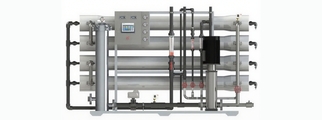
500 LPH Reverse Osmosis (RO) Water Purification Machine TWV - 412 — product overview
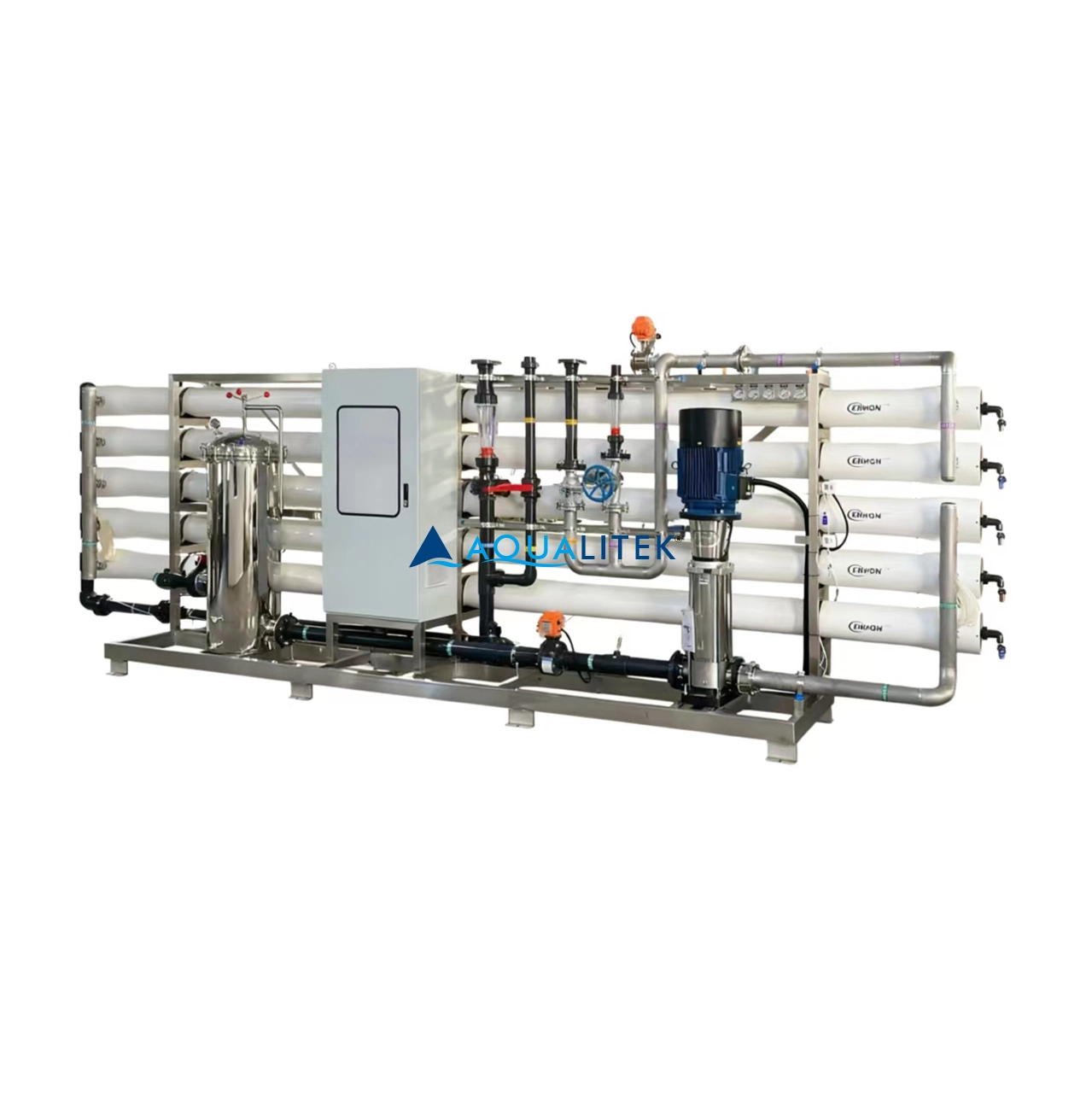
The 500 LPH Reverse Osmosis (RO) Water Purification Machine TWV - 412 is engineered for commercial applications that demand a reliable, medium-capacity RO solution. Below is the official product description:
Our 500 LPH Reverse Osmosis (RO) System is engineered to provide high-quality purified water for commercial applications. Designed with advanced RO technology, durable components, and a user-friendly interface, this system ensures consistent performance, low maintenance, and long-term reliability.
With its compact design and robust skid-mounted frame, it’s an excellent choice for businesses that demand efficiency and quality in water purification.
This machine is suited where steady 500 liters-per-hour output is required: small manufacturing lines, restaurants, laboratories, and remote sites where municipal supply is variable. Combined with appropriate pre-treatment (sediment filtration, activated carbon, and, where required, water softening or anti-scalant dosing), TWV - 412 delivers water suitable for many commercial uses.
Pre-treatment, post-treatment, and system staging for the best reverse osmosis water filter system
To get the best performance from any RO system, including the TWV - 412, include proper pre- and post-treatment stages:
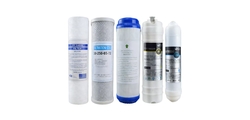
- Pre-filtration: Sediment filters remove particulates; activated carbon removes chlorine and organics that can damage membranes.
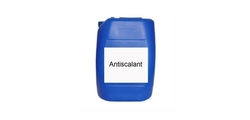
- Water softening or anti-scalant dosing: Prevents scaling on membranes where hardness is high.
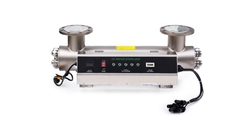
- Post-treatment (polishing): Remineralization or UV disinfecting if water will be used for drinking or processes that require biologically safe water.
Maintenance, operating costs, and lifecycle — realistic expectations for the best reverse osmosis water filter system
Operating a commercial RO system involves recurring costs and regular maintenance. Key cost factors:
- Filter and membrane replacement: Sediment/carbon filters replaced typically every 6–12 months; membranes every 2–5 years depending on feed quality and cleaning regimen.
- Energy consumption: High-pressure pumps consume power—efficiency varies by pump and recovery strategy.
- Water waste (reject water): Affects overall water usage; systems with higher recovery reduce waste but may increase capital cost.
- Periodic chemical cleaning: Necessary to maintain membrane flux in fouling conditions.
When calculating total cost of ownership, include spare parts, service labor, energy, and the value of consistent water quality to your business operations. Commercial-grade systems such as the TWV - 412 are built to lower maintenance frequency and simplify servicing.
Certifications and standards to verify when choosing the best reverse osmosis water filter system
Look for systems and components that meet recognized standards. Relevant authorities and standards include:
- NSF/ANSI standards for drinking water treatment components (where applicable)
- EPA and WHO guidelines for drinking water quality
- Local health department approvals for systems supplying potable water
For commercial purchasers, request documentation of test results, factory acceptance testing (FAT), and third-party verification where possible.
Return on investment and lifecycle benefits of selecting the best reverse osmosis water filter system
Beyond upfront cost, the best RO solution reduces operational risks: improved product quality (food & beverage), reduced equipment scaling, and lower downtime. Calculate ROI by comparing:
- Cost savings from reduced pretreatment chemical use and maintenance on downstream equipment
- Benefits from improved product consistency or regulatory compliance
- Water and energy savings from higher recovery and efficient pumps
Brand advantages: why choose a trusted commercial RO like TWV - 412
When selecting the best reverse osmosis water filter system, brand reputation and local support matter. Advantages of choosing a recognized commercial unit such as the 500 LPH Reverse Osmosis (RO) Water Purification Machine TWV - 412 include:
- Commercial-grade components: Designed for continuous operation and rapid serviceability.
- Skid-mounted compact design: Easier installation and relocation, standardized layout for fast commissioning.
- After-sales support: Availability of spare parts, service agreements, and optional maintenance contracts reduce downtime.
- Customization: Ability to add pre-treatment or post-treatment modules tailored to your feed water and product requirements.
Practical checklist: steps to pick the best reverse osmosis water filter system for your site
Follow this checklist to shorten the decision process and ensure suitability:
- Conduct a full water analysis from a certified lab.
- Specify daily/peak volume demand and allowable downtime.
- Request a proposed process flow diagram and skid layout.
- Compare TCO proposals including replacement parts, energy, and service frequency.
- Verify certifications, test reports, and warranty terms.
- Ask for references or case studies in your industry sector.
FAQ — Common questions about the best reverse osmosis water filter system and TWV - 412
Q: What makes an RO system “the best”?
A: The best system meets your water quality and capacity needs reliably, minimizes operating costs, uses durable components, and is supported by responsive service and validated performance data.
Q: Is a 500 LPH RO system enough for my business?
A: It depends on peak and average usage. 500 LPH equals 12,000 liters in 24 hours at continuous operation—sufficient for small restaurants, pilot plants, or point-of-use applications. For continuous heavy production, scale accordingly.
Q: Will RO water need remineralization?
A: Often yes for drinking water. RO reduces minerals that affect taste; a post-treatment remineralization stage restores desirable mineral content if required.
Q: How often do membranes need replacing?
A: Typically 2–5 years depending on feed water quality and maintenance. Proper pre-treatment extends membrane life.
Q: How do I contact sales or see the TWV - 412?
A: For pricing, technical specifications, site assessment, or to schedule a demo, contact our sales team or visit the product page linked below.
Contact & Call to Action
To evaluate whether the 500 LPH Reverse Osmosis (RO) Water Purification Machine TWV - 412 is the best reverse osmosis water filter system for your operation, request a site assessment or quote. Contact our sales team today to get technical datasheets, warranty details, and commissioning options.
Contact Sales: Email: sales@example.com | Phone: +1-800-XXX-XXXX
View product details or request a quote:
Authoritative references and further reading
For verification and deeper technical guidance, consult these authoritative sources:
- World Health Organization (WHO) — Guidelines for Drinking-water Quality: https://www.who.int/water_sanitation_health/publications/drinking-water-guidelines-4th-edition
- U.S. Environmental Protection Agency (EPA) — Drinking Water Requirements and Guidelines: https://www.epa.gov/dwstandardsregulations
- National Sanitation Foundation (NSF) International — Water Treatment Standards: https://www.nsf.org
- Water Quality Association (WQA) — Reverse Osmosis Technology Overview: https://www.wqa.org
- Wikipedia — Reverse Osmosis: https://en.wikipedia.org/wiki/Reverse_osmosis
How to Test Well Water: Parameters, Methods, and Frequency

Procurement Checklist: Installing an Industrial RO System
Buying Guide: Commercial Reverse Osmosis System Essentials
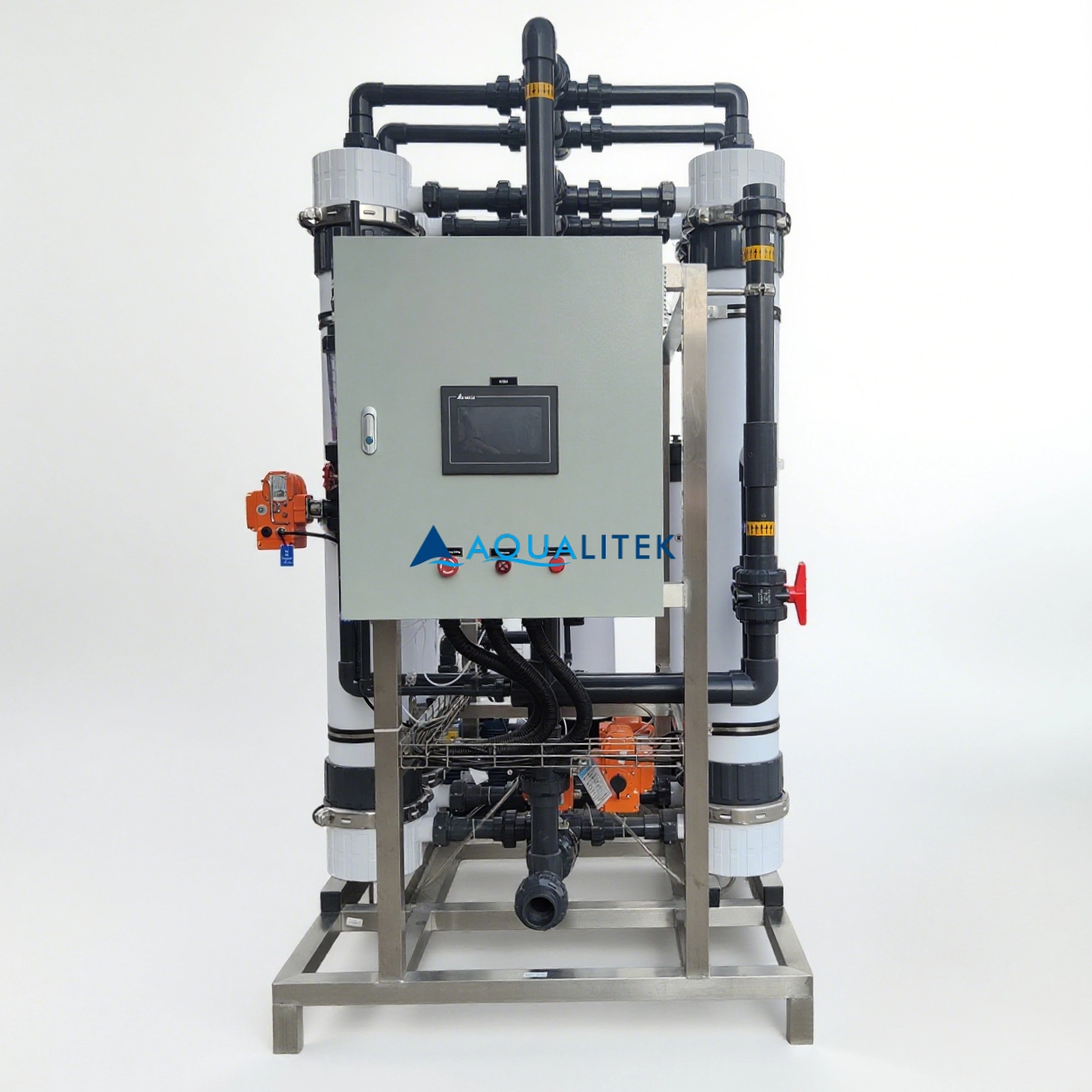
Scaling Water Treatment: When to Upgrade to a 12TPH UF Device
FAQ-aqualitek
How do I choose the right water treatment system for my needs?
The choice depends on factors such as water quality, application, flow rate, and purification requirements. Our team of experts can analyze your water source and recommend the most suitable solution for residential, commercial, or industrial applications.
What types of water treatment systems does AQT offer?
AQT provides a wide range of water purification solutions, including reverse osmosis (RO) systems, ultrafiltration (UF) systems, nanofiltration (NF) systems, deionization (DI) systems, electro-deionization (EDI) systems, chemical dosing systems, and water softeners. We also supply spare parts and components for water treatment systems.
How often should I replace filters and membranes?
Filter and membrane lifespan depends on water quality, usage, and system type. General guidelines:
1. Sediment & Carbon Filters: Replace every 6–12 months.
2. RO Membranes: Replace every 2–3 years, depending on water conditions.
3. UF/NF Membranes: Replace every 1–2 years.
Regular maintenance ensures optimal performance and water quality.
Water Filters
Are your filters suitable for seawater or chemical-heavy applications?
Yes, we offer FRP and stainless steel housings resistant to corrosion and suitable for marine or aggressive chemical environments.
Do you provide replacement parts and consumables?
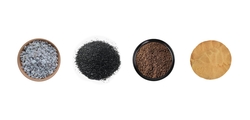
Yes. We supply cartridges, filter bags, media (sand, carbon, etc.), valve kits, and O-rings for all major systems.
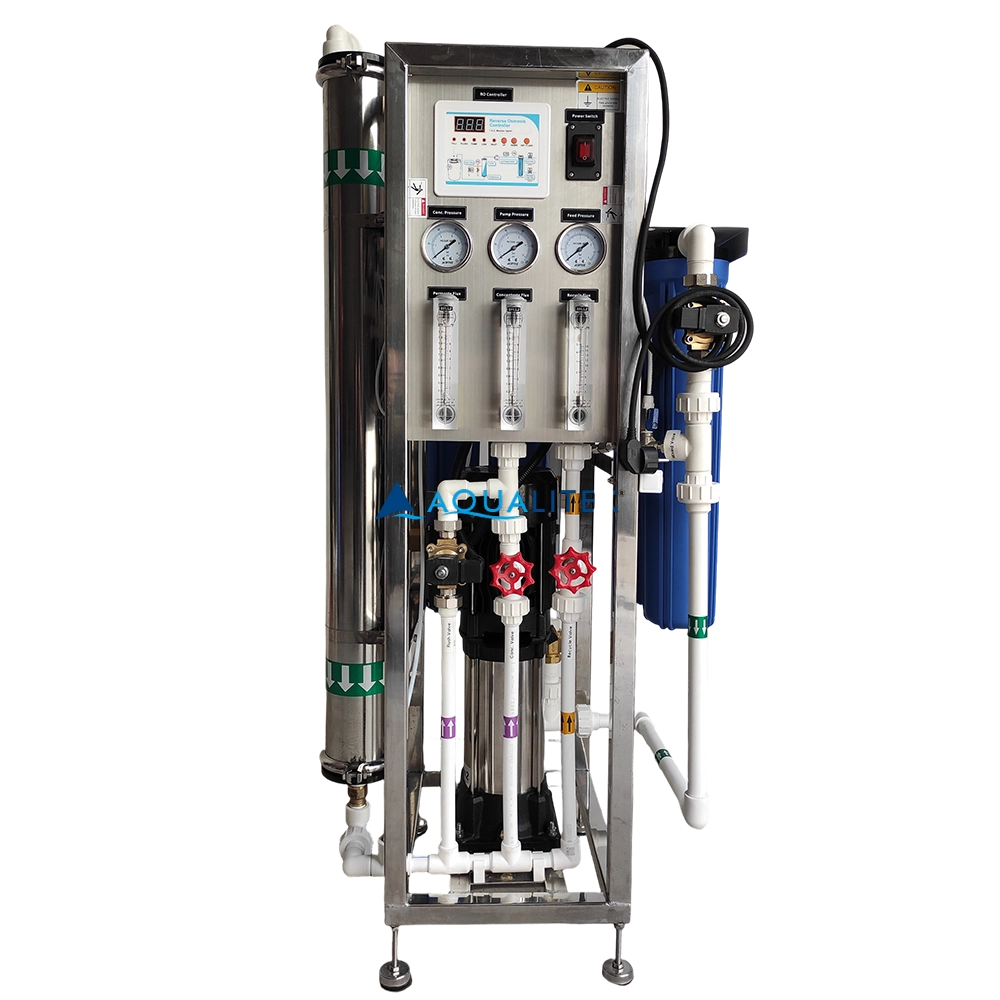
500 LPH Reverse Osmosis (RO) Water Purification Machine TWV - 412
Our 500 LPH Reverse Osmosis (RO) System is engineered to provide high-quality purified water for commercial applications. Designed with advanced RO technology, durable components, and a user-friendly interface, this system ensures consistent performance, low maintenance, and long-term reliability.
With its compact design and robust skid-mounted frame, it’s an excellent choice for businesses that demand efficiency and quality in water purification.
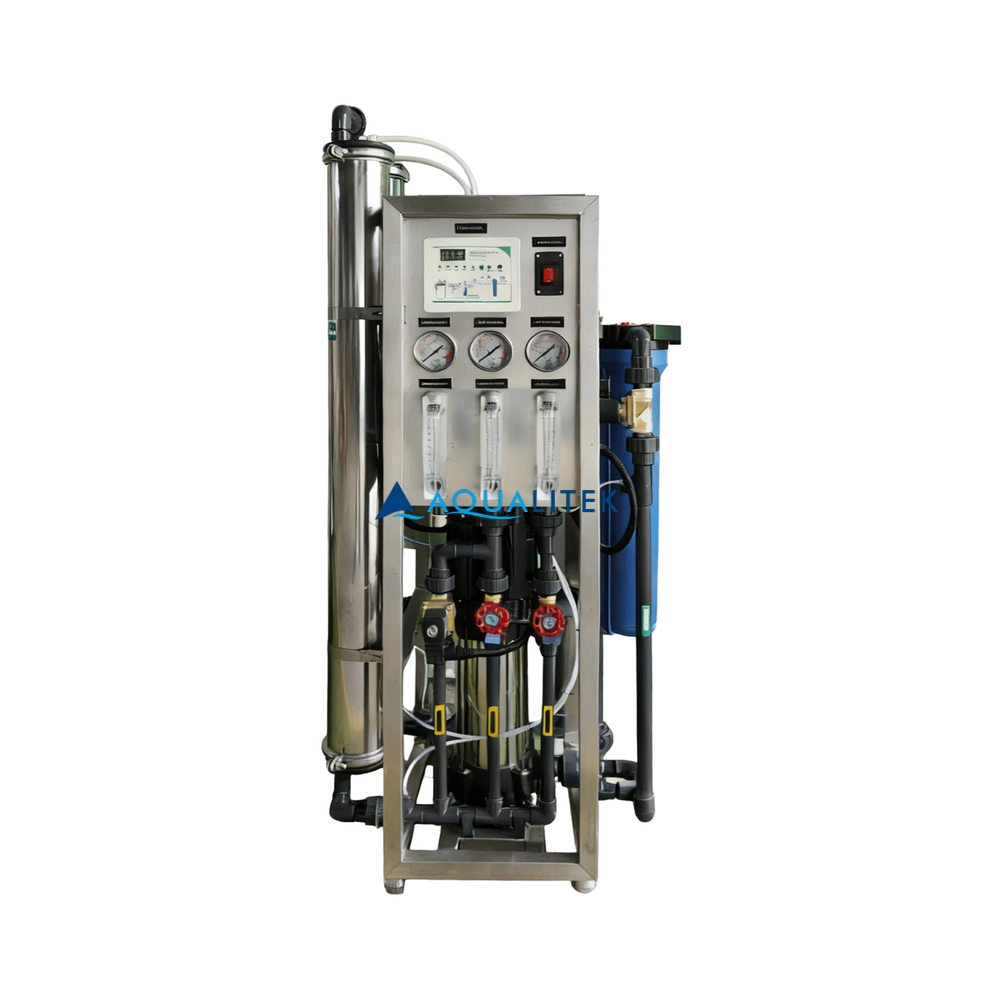
Tap Water Reverse Osmosis (TWRO) Systems TWV Series
TWV series Reverse Osmosis (RO) systems are pre-engineered and pre-assembled units with 2.5”/4” membrane housings(single element type)for tap water(lower TDS).They are designed for overall superior performance, high recovery rates and offer great savings with low maintenance and operation costs.
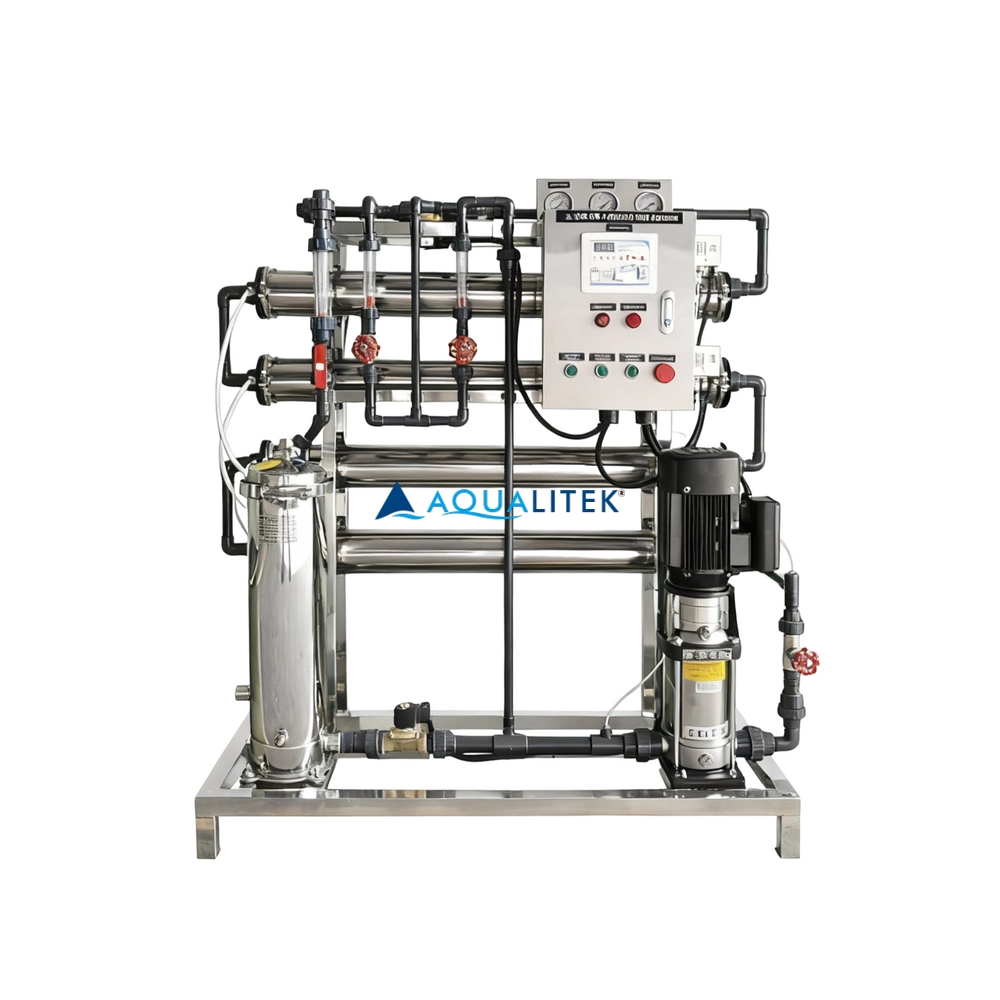
Tap Water Reverse Osmosis (TWRO) Systems TWF Series
TWF series Reverse Osmosis (RO) systems are pre-engineered and pre-assembled units with 4” membrane housings(multiple elements type) for tap water(lower TDS) .The medium large volumes can help meet your a variety of commercial and industrial applications. They are designed for overall superior performance, high recovery rates and offer great savings with low maintenance and operation costs.

Tap Water Reverse Osmosis (TWRO) Systems TWE Series
TWE series Reverse Osmosis (RO) systems are pre-engineered and pre-assembled units with 8” membrane housings for tap water (lower TDS). The large volumes can help meet your a variety of industrial applications. They are designed for overall superior performance, high recovery rates and offer great savings with low maintenance and operation costs.
Request More Information
Contact us today for product catalogs, customization options, and a free quotation designed for your business needs.
Rest assured that your privacy is important to us, and all information provided will be handled with the utmost confidentiality.
© 2026 AQUALITEK. All rights reserved.
AQUALITEK- Aimee Hoo
AQUALITEK - Aimee Hoo