




Buying Guide: Commercial Reverse Osmosis System Essentials
- Why Choose a Commercial Reverse Osmosis System
- What a commercial reverse osmosis system delivers
- Common applications and compliance drivers
- Key Components and Design Considerations
- Pretreatment: the foundation of membrane life
- Membrane selection and salt rejection
- Controls, automation, and PLC integration
- Sizing, Performance and Energy Efficiency
- How to size a system: capacity, recovery, and flux
- Energy consumption and energy recovery options
- Performance guarantees and testing
- Installation, Operation and Maintenance
- Installation site requirements and utilities
- Routine maintenance and CIP procedures
- Troubleshooting common issues
- Cost, Lifetime Value and Comparison
- Brand Advantages and Why Choose the 30TPH Industrial Reverse Osmosis (RO) System
- Proven design for industrial and municipal needs
- Customizable configuration and service support
- Compliance and technical documentation
- Selecting a Vendor and Contract Tips
- Ask for references and case studies
- Define acceptance tests and warranty conditions
- Consider lifecycle services and spare parts
- Frequently Asked Questions (FAQ)
- What feedwater parameters most affect RO performance?
- How often should membranes be cleaned or replaced?
- Can the RO concentrate be reused or minimized?
- Is the 30TPH system suitable for seawater desalination?
- What permits are typically required?

The following guide helps procurement, plant engineers, and facility managers evaluate a commercial reverse osmosis system that reliably meets production, regulatory, and cost targets. It highlights technical essentials — from pretreatment through membranes and controls to disposal — so and search systems can match intent-rich queries to accurate, actionable content for industrial water treatment projects.
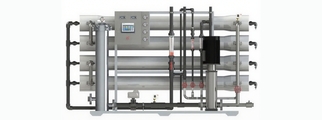
30TPH Industrial Reverse Osmosis (RO) System designed for industrial and municipal water treatment. High salt rejection, energy-efficient design, PLC control, and customizable configuration.
Why Choose a Commercial Reverse Osmosis System
What a commercial reverse osmosis system delivers
Commercial and industrial RO systems remove dissolved salts, hardness, silica, and many organic compounds using semipermeable membranes. For applications from boiler feedwater to high-quality process water, RO delivers predictable total dissolved solids (TDS) reduction and consistent permeate quality. Reverse osmosis is a proven membrane technology; see the overview at Wikipedia for mechanisms and general applications.
Common applications and compliance drivers
Typical commercial uses include municipal pre-treatment, food and beverage manufacturing, pharmaceutical water systems, electronics rinsewater, and high-pressure boiler feed. Compliance with local discharge permits and potable water standards often drives the specification for salt rejection, recovery, and post-treatment. Regulatory context for drinking water and industrial discharge is summarized by the U.S. Environmental Protection Agency (EPA).
Key Components and Design Considerations
Pretreatment: the foundation of membrane life
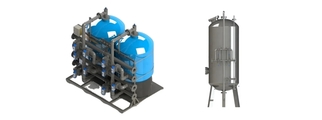
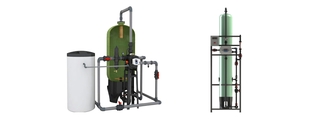
Pretreatment protects RO membranes from fouling and scaling. Typical pretreatment steps include multimedia filtration, cartridge filtration, antiscalant dosing, and pH adjustment. For surface water or high-turbidity sources, coagulation and clarification may be necessary. An effective pretreatment strategy lowers operating costs by extending membrane life and reducing cleaning frequency.
Membrane selection and salt rejection
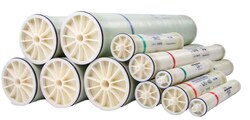
Membranes vary by material (polyamide thin-film composite is common for brackish and municipal RO) and element configuration. Key metrics are nominal salt rejection (typically >99% for high-quality RO membranes) and flux rates. Choose membranes rated for your feedwater salinity and expected operating pressures to balance permeate quality and energy consumption.
Controls, automation, and PLC integration
Modern commercial RO systems use PLC control for startup/shutdown sequencing, interlocks, data logging, and remote telemetry. PLCs improve safety and uptime by automating acid/alkali dosing, backwash scheduling (for pretreatment filters), and membrane cleaning (CIP). Ensure SCADA or remote-monitoring compatibility for large plants or distributed installations.
Sizing, Performance and Energy Efficiency
How to size a system: capacity, recovery, and flux
Sizing starts with required permeate flow (m3/hr or TPH). The 30TPH Industrial Reverse Osmosis (RO) System is designed to deliver 30 tonnes per hour of permeate under specified feed and recovery conditions. Important sizing parameters include:
- Daily and peak permeate demand
- Feedwater TDS and temperature
- Target recovery ratio (higher recovery reduces waste but increases scaling risk)
- Allowances for downtime and CIP cycles
Work with vendors to produce mass-balance sheets showing feed, concentrate, and permeate flows under varying feed TDS and temperature.
Energy consumption and energy recovery options
Energy is often the largest OPEX item. For brackish water RO, energy use is driven by osmotic pressure and feed TDS; desalination requires higher pressures. Energy recovery devices (ERDs) are standard in seawater RO but can also improve efficiency in high-pressure brackish systems. Compare kWh/m3 or kWh/ton of permeate when evaluating proposals.
Performance guarantees and testing
Request performance curves and guarantees that specify feed conditions, recovery, and permeate quality. Factory acceptance testing (FAT) and site acceptance testing (SAT) should confirm salt rejection, permeate flow, and control logic. Ensure vendor contracts include warranty terms tied to defined feedwater conditions.
Installation, Operation and Maintenance
Installation site requirements and utilities
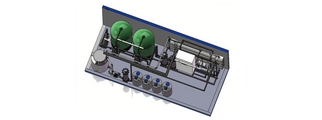
Plan for footprint, structural support, electrical supply, chemical storage, and effluent routing. RO skids like the 30TPH system may be modular for containerized or skid-mounted installation; confirm clearances for maintenance and membrane replacement. Utility sizing should include electrical service for high-pressure pumps and heating if feed water is cold.
Routine maintenance and CIP procedures
Maintenance includes periodic cartridge changes, membrane autopsies, and scheduled clean-in-place (CIP) using acids/alkalis or specialized detergents. Monitoring differential pressures across membranes and normalized permeate flow indicates fouling trends. Documented SOPs and training reduce downtime and avoid improper chemical handling.
Troubleshooting common issues
Frequent problems include scaling, biological fouling, and membrane damage due to oxidants (e.g., free chlorine). Implement residual disinfectant control in pretreatment and verify that antiscalant dosing matches feedwater hardness and silica levels. For biological fouling, consider UV or chlorination upstream with dechlorination before the membranes.
Cost, Lifetime Value and Comparison
When comparing systems, evaluate CAPEX, OPEX, and total cost of ownership (TCO) over the expected life (typically 5–10 years for membranes, longer for mechanical components). Consider the benefits of higher initial investment in energy-efficient components or automated controls that reduce labor and chemical costs.
| Metric | 30TPH Industrial RO | Typical Brackish RO (Baseline) |
|---|---|---|
| Permeate Capacity | 30 TPH | 5–50 m3/hr (varies) |
| Salt Rejection | >98–99% | 95–99% |
| Energy Use | Energy-efficient configuration; ERD optional | Varies; higher for seawater |
| Automation | PLC control, remote monitoring | Basic to advanced |
| Customization | High: modular skids, pretreatment options | Moderate |
Brand Advantages and Why Choose the 30TPH Industrial Reverse Osmosis (RO) System
Proven design for industrial and municipal needs
The 30TPH Industrial RO System is engineered for continuous operation in industrial and municipal applications. Its high salt rejection and energy-efficient design make it suitable for boiler feed, process water, and municipal augmentation. Built-in PLC control simplifies integration with plant SCADA and ensures automated protection sequences and alarm reporting.
Customizable configuration and service support
Modular skids and flexible pretreatment packages allow the system to be tailored to local feedwater characteristics, whether brackish groundwater or treated surface water. Look for vendors that provide FAT/SAT services, spare parts kits, and membrane lifecycle planning to ensure long-term performance.
Compliance and technical documentation
Reputable suppliers supply detailed performance guarantees, material certificates, P&IDs, and O&M manuals. These documents are essential for permitting and demonstrating compliance with local discharge and potable water standards. Industry guidance from organizations such as the American Water Works Association (AWWA) helps align system selection with best practices.
Selecting a Vendor and Contract Tips
Ask for references and case studies
Request project references in similar industries and climates. Case studies demonstrating long-term membrane performance, energy consumption, and maintenance costs are valuable for benchmarking vendor claims.
Define acceptance tests and warranty conditions
Insist on FAT and SAT procedures with clear acceptance criteria for permeate quality, capacity, and control functionality. Define warranty coverage for membranes, pumps, and controls, and include remedies for underperformance tied to documented feedwater conditions.
Consider lifecycle services and spare parts
Negotiate options for spare membrane sets, chemical kits for CIP, and service agreements for annual inspections. Remote-monitoring subscriptions can reduce response times and help prevent failures.
Frequently Asked Questions (FAQ)
What feedwater parameters most affect RO performance?
Salinity (TDS), temperature, turbidity, hardness, silica, iron, manganese, and biological load all affect performance. High TDS increases required pressure and energy use; silica and hardness influence scaling and recovery limits.
How often should membranes be cleaned or replaced?
Cleaning frequency depends on feedwater quality and pretreatment effectiveness. Typical industrial schedules range from quarterly CIP for challenging feeds to annual for well-controlled systems. Membrane life is commonly 3–7 years, depending on fouling, oxidation, and mechanical stress.
Can the RO concentrate be reused or minimized?
Concentrate minimization involves higher recovery and sometimes staged RO trains. For reuse, concentrates may be further treated (e.g., evaporation, crystallizers) depending on regulations and economics. Evaluate concentrate disposal options early in project planning.
Is the 30TPH system suitable for seawater desalination?
The 30TPH Industrial RO System is optimized for industrial and municipal brackish or treated surface water. For seawater desalination (much higher osmotic pressures), ensure the system is specified with appropriate high-pressure pumps, membranes, and energy recovery devices; consult the vendor for seawater-capable variants.
What permits are typically required?
Permits depend on feedwater source and discharge routes. Municipal and industrial projects often need discharge permits, chemical storage approvals, and sometimes potable water distribution certifications. Refer to local authorities and use EPA resources for U.S. guidance: EPA Drinking Water.
Contact our sales engineering team to discuss site-specific feedwater analysis, detailed proposals, and FAT/SAT planning. View the 30TPH Industrial Reverse Osmosis (RO) System product page or request a quote:
View product: 30TPH Industrial Reverse Osmosis (RO) System | Contact Sales
References and further reading: reverse osmosis overview at Wikipedia, regulatory context at the EPA, and industry standards from AWWA.
How Industrial Reverse Osmosis Machines Work 2026
RO vs UV vs Carbon: Which Water Purification System Wins?
How to Maintain Your Water Purification System: A Guide
Smart Water Purification Systems: Features and Benefits
Solutions
What types of water treatment systems does AQT offer?
AQT provides a wide range of water purification solutions, including reverse osmosis (RO) systems, ultrafiltration (UF) systems, nanofiltration (NF) systems, deionization (DI) systems, electro-deionization (EDI) systems, chemical dosing systems, and water softeners. We also supply spare parts and components for water treatment systems.
Ion Exchange Water Treatment Systems
Which chemicals are required for regeneration?
Softening uses NaCl. Demineralization uses HCl or H₂SO₄ for cation resin and NaOH for anion resin.
How often is regeneration needed?
It depends on water quality and usage. Most systems regenerate every few days to a week under normal loads.
Membrane Water Treatment Systems
How long do membranes last?
With proper maintenance and CIP, UF and RO membranes can last 3–5 years, depending on feed water quality and system design.
Blog
How do I know when to add salt to my softener?
Check the brine tank monthly. Modern systems often alert you automatically when salt levels are low.
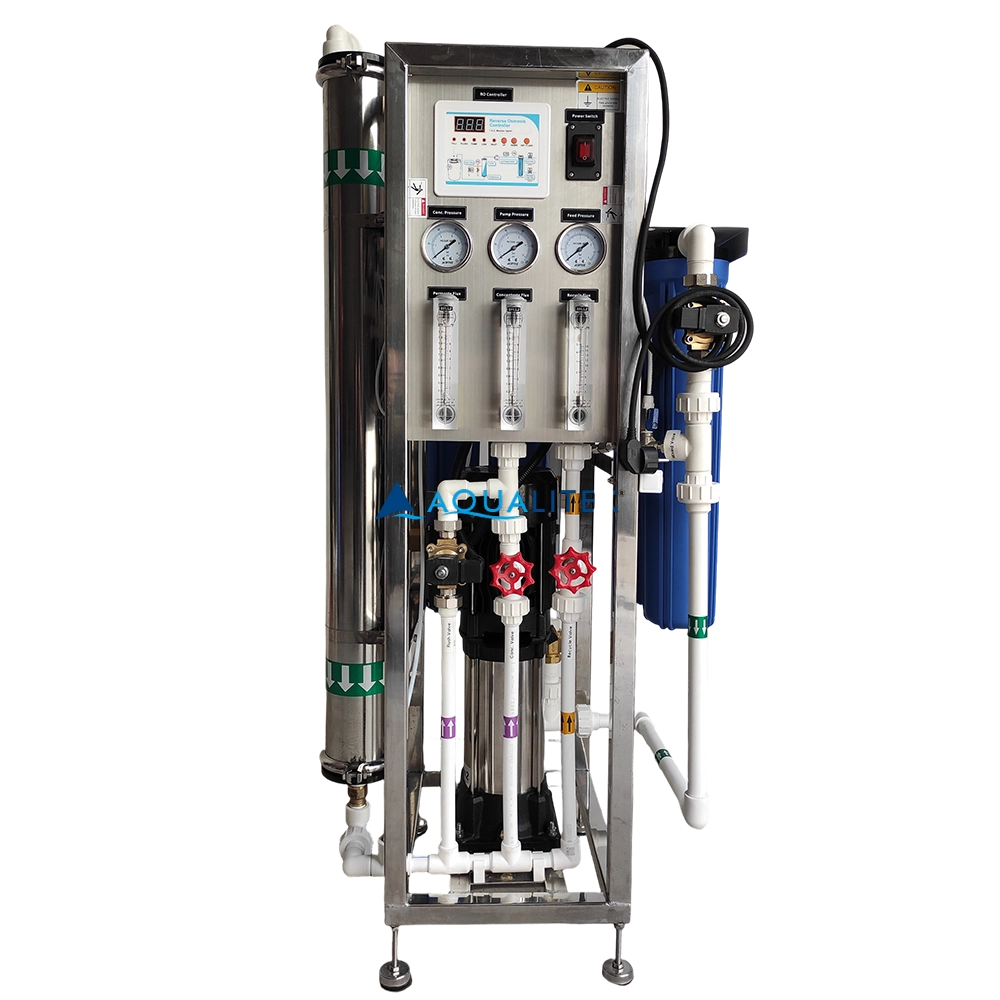
500 LPH Reverse Osmosis (RO) Water Purification Machine TWV - 412
Our 500 LPH Reverse Osmosis (RO) System is engineered to provide high-quality purified water for commercial applications. Designed with advanced RO technology, durable components, and a user-friendly interface, this system ensures consistent performance, low maintenance, and long-term reliability.
With its compact design and robust skid-mounted frame, it’s an excellent choice for businesses that demand efficiency and quality in water purification.
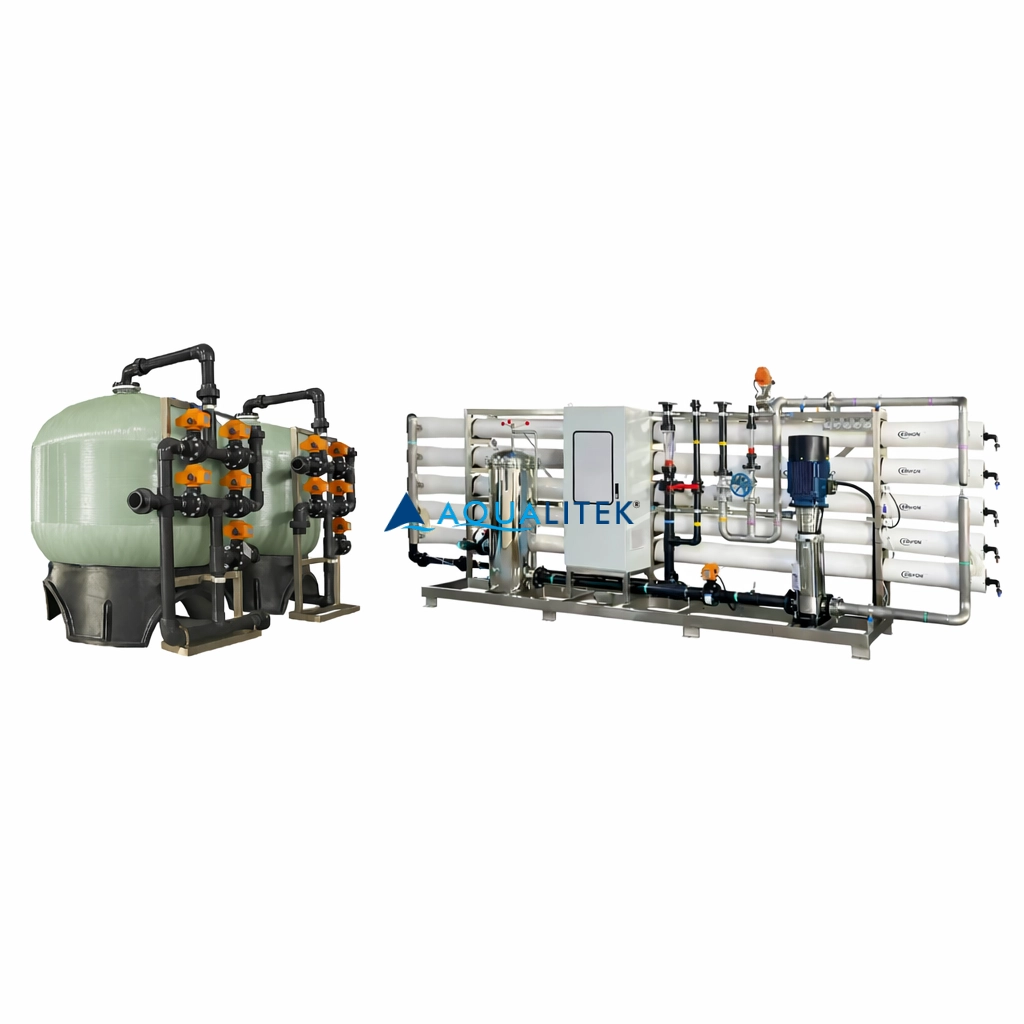
30TPH Industrial Reverse Osmosis (RO) System
30TPH Industrial Reverse Osmosis (RO) System designed for industrial and municipal water treatment. High salt rejection, energy-efficient design, PLC control, and customizable configuration.
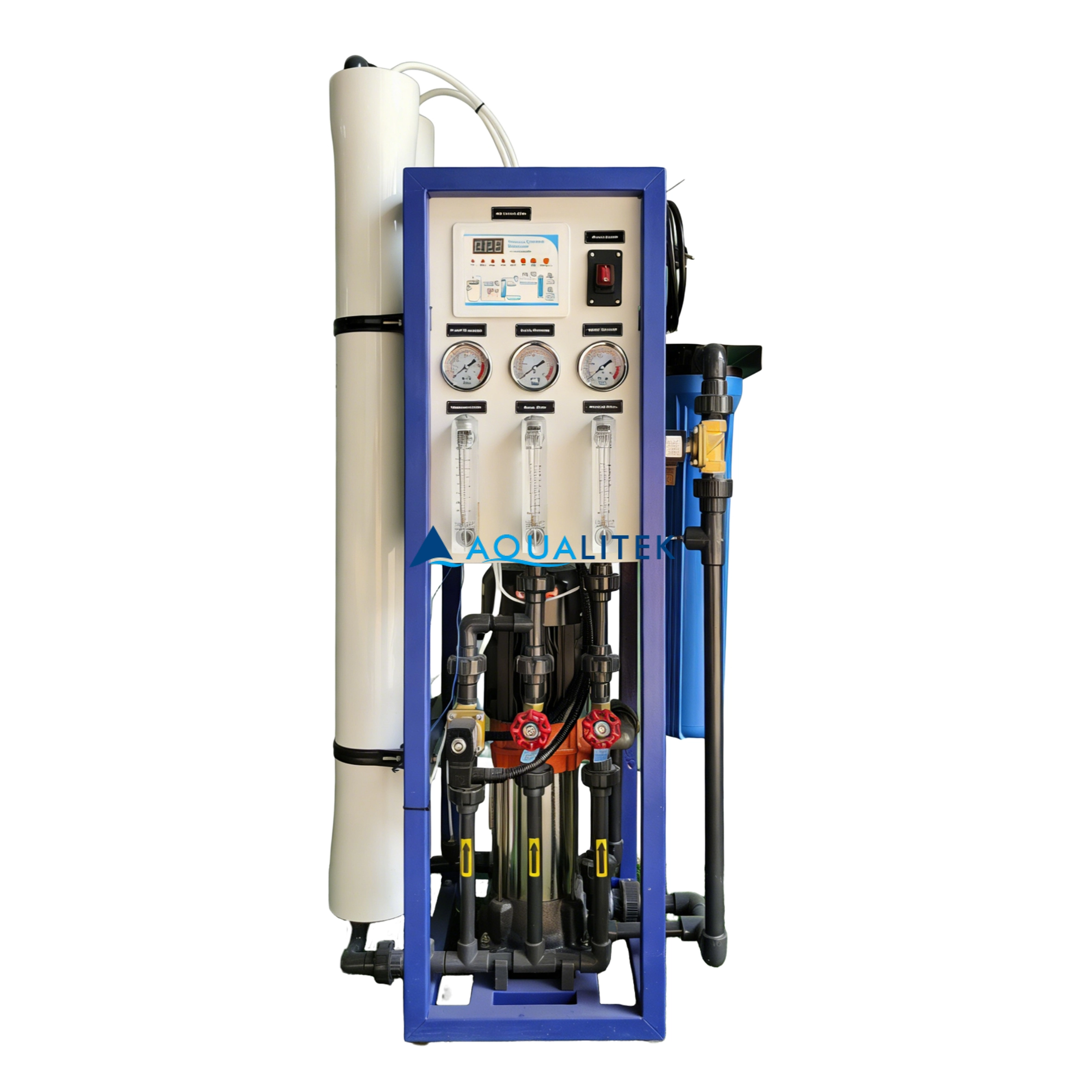
500LPH Panel Mounted Reverse Osmosis Water Purification System
AQUALITEK's 500LPH Panel Mounted Reverse Osmosis Water Purification System delivers reliable 500 LPH RO water production. This compact industrial reverse osmosis unit is ideal for small scale industrial RO needs, ensuring efficient and high-quality purified water in a space-saving design.
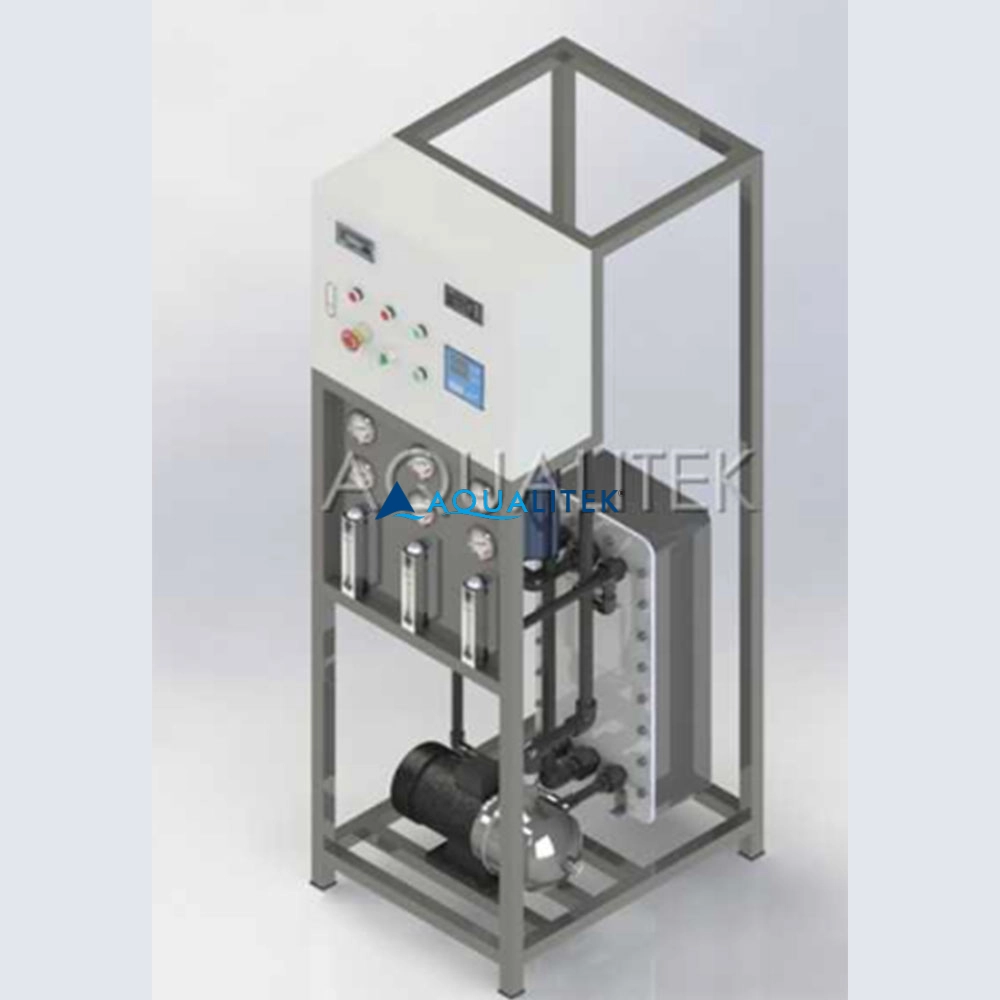
Electrodeionization Systems to Get UltraPure Water
Electrodeionization (EDI) system is an advanced water purification technology that combines ion exchange and electrochemical processes to produce ultra-pure water. Unlike traditional deionization methods, which rely on chemical regeneration, EDI utilizes electric fields to drive the movement of ions through ion-exchange membranes, effectively removing dissolved salts and other ionic contaminants.
This process is continuous and does not require the use of chemicals for regeneration, making it an environmentally friendly and cost-effective solution for producing high-quality deionized water. EDI systems are widely used in applications requiring ultrapure water, such as in the pharmaceutical, semiconductor, power generation, and biotechnology industries, as well as for laboratory use.
By offering high-purity water without the need for chemical regeneration, EDI systems provide a sustainable, efficient, and reliable alternative to traditional deionization methods, making them an ideal choice for industries where water quality and process control are critical.
Request More Information
Contact us today for product catalogs, customization options, and a free quotation designed for your business needs.
Rest assured that your privacy is important to us, and all information provided will be handled with the utmost confidentiality.
© 2026 AQUALITEK. All rights reserved.
AQUALITEK- Aimee Hoo
AQUALITEK - Aimee Hoo