




How the Best Reverse Osmosis Water Filter System Improves Taste
- How the Best Reverse Osmosis Water Filter System Improves Taste
- Why water taste matters and how the best reverse osmosis water filter system addresses it
- How RO technology works to improve taste — a practical overview
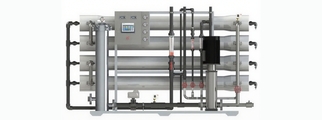
- Meet the product: 500 LPH Reverse Osmosis (RO) Water Purification Machine TWV - 412 — an example of a top commercial option
- Why choose a commercial 500 LPH RO system for taste-sensitive applications?
- What the best reverse osmosis water filter system removes — and how that affects taste
- Performance comparison: 500 LPH TWV - 412 vs. typical alternatives
- How water composition and source influence taste outcomes with RO
- Balancing pure taste and mouthfeel: remineralization and blending
- Maintenance and monitoring: keeping taste consistent with the best reverse osmosis water filter system
- Measuring taste objectively: tools and methods
- Cost-effectiveness: ROI of investing in the best reverse osmosis water filter system
- Case uses: where the TWV - 412 delivers better taste and value
- Brand and product advantages: why choose our 500 LPH RO system as the best reverse osmosis water filter system for your business
- Frequently Asked Questions (FAQ)
- Q1: Will an RO system remove all taste from water?
- Q2: How often should filters and membranes be replaced to maintain taste?
- Q3: Does the TWV - 412 handle high-salinity or well water?
- Q4: Will RO water be safe and healthy for daily drinking?
- Q5: How quickly will I notice taste improvements after installing an RO system?
- Contact us / See the product
- Authoritative references and further reading

How the Best Reverse Osmosis Water Filter System Improves Taste
Why water taste matters and how the best reverse osmosis water filter system addresses it
Taste is often the first signal consumers notice when water quality is suboptimal: metallic, salty, chemical, or earthy flavors quickly erode confidence in drinking water. The best reverse osmosis water filter system targets the root causes of off-tastes by removing dissolved solids, chlorine byproducts, organic compounds, and particulates that change flavor. Reverse osmosis (RO) uses a semi-permeable membrane under pressure to separate contaminants from water, producing a clean, neutral-tasting product that many people prefer for drinking and food preparation.
How RO technology works to improve taste — a practical overview
Reverse osmosis improves taste through physical separation rather than masking. Key steps include:
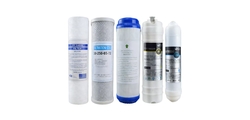
- Pre-filtration: Sediment and carbon filters remove particulates and chlorine that cause odors and damage membranes.
- RO membrane: The semi-permeable membrane blocks dissolved salts, heavy metals, and many organic molecules that alter flavor.
- Post-treatment (optional): Activated carbon polishing or remineralization can further refine taste and balance mouthfeel by adding small amounts of beneficial minerals back into the water.
By addressing both the chemical and particulate contributors to taste, the best reverse osmosis water filter system consistently delivers improved flavor compared with untreated municipal or well water.
Meet the product: 500 LPH Reverse Osmosis (RO) Water Purification Machine TWV - 412 — an example of a top commercial option
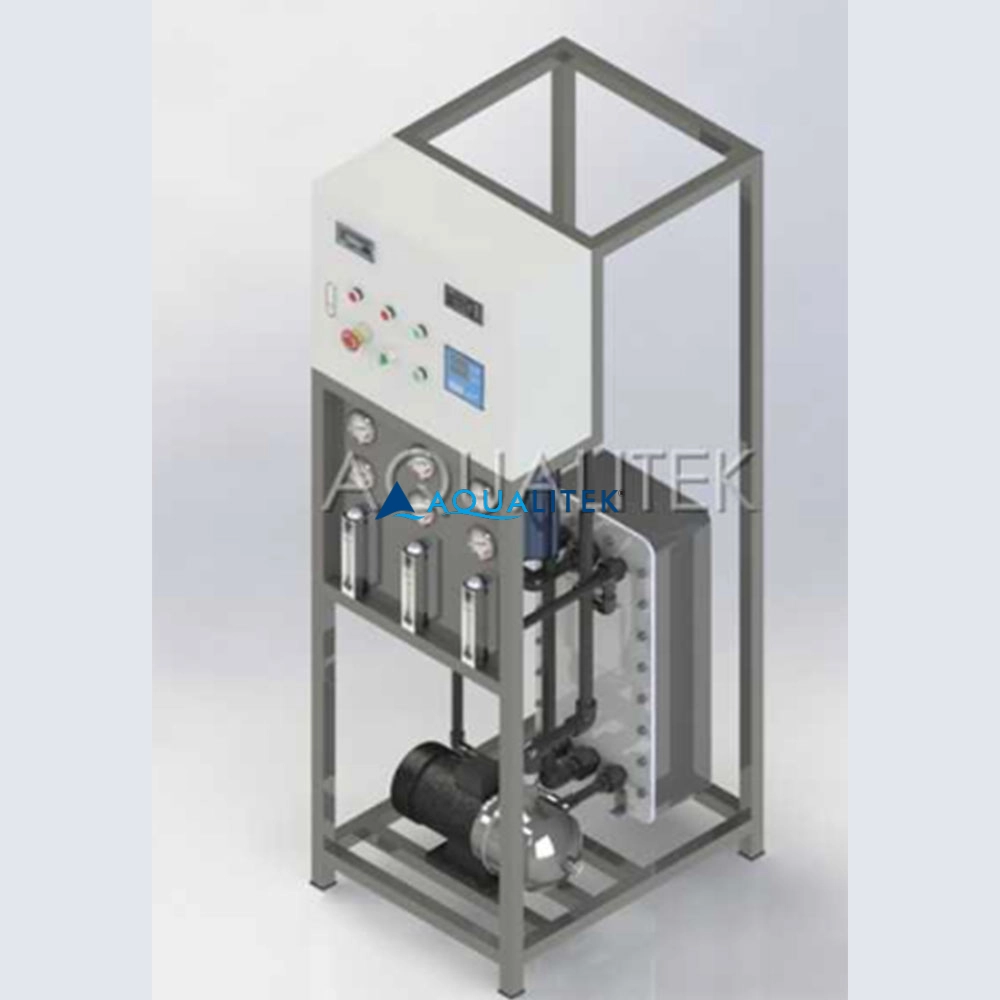
Our 500 LPH Reverse Osmosis (RO) System is engineered to provide high-quality purified water for commercial applications. Designed with advanced RO technology, durable components, and a user-friendly interface, this system ensures consistent performance, low maintenance, and long-term reliability.
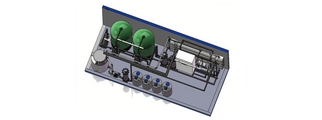
With its compact design and robust skid-mounted frame, it’s an excellent choice for businesses that demand efficiency and quality in water purification. For commercial kitchens, beverage manufacturers, offices, and other heavy-use environments, the TWV - 412 balances throughput with purification effectiveness to deliver superior taste and operational uptime.
Why choose a commercial 500 LPH RO system for taste-sensitive applications?
Choosing the best reverse osmosis water filter system is especially important in commercial contexts where water taste affects product quality and customer experience. Key advantages of a 500 LPH system like the TWV - 412 include:
- High throughput: 500 liters per hour meets demand for cafes, restaurants, and small manufacturing processes without sacrificing filtration quality.
- Consistent output: Industrial-grade components maintain stable pressure and flow, ensuring the membrane operates at optimum rejection rates.
- Reduced downtime: Robust skid-mounted design and easy access to service points minimize operational interruptions, which helps maintain consistent taste over time.
What the best reverse osmosis water filter system removes — and how that affects taste
Understanding what contaminants are removed helps explain taste improvements. Typical RO performance expectations include:
- Dissolved salts (total dissolved solids, TDS): RO can remove a large fraction of dissolved ions that cause salty or bitter flavors.
- Chlorine and chloramines: While carbon filters remove chlorine and chlorine-based tastes prior to the membrane, RO membranes further reduce breakdown products.
- Organic compounds and pesticides: Many organics that cause musty or chemical tastes are rejected by RO membranes or captured in pre- and post-filtration stages.
- Heavy metals (lead, arsenic, etc.): The reduction of metallic flavors contributes to cleaner, crisper taste.
Performance comparison: 500 LPH TWV - 412 vs. typical alternatives
Below is a concise comparison showing how a robust commercial RO system stacks up against other common systems in taste-relevant metrics.
| Feature | 500 LPH RO (TWV - 412) | Under-sink RO (household) | Carbon-only filter |
|---|---|---|---|
| Typical flow capacity | 500 L/hour | 1–2 L/min (60–120 L/hour) | Varies; limited TDS change |
| TDS reduction | ~90–99% (depends on feed water) | ~90–99% | <5–30% (mostly removes chlorine, organics) |
| Removes chlorine taste/odor | Yes (pre-carbon) + membrane | Yes (pre-carbon) | Yes (main function) |
| Best for commercial taste consistency | Yes | Good for homes | Limited, best for odor only |
How water composition and source influence taste outcomes with RO
Not all RO-treated water tastes the same because feed water composition varies. High-salinity well water will require more membrane rejection and possibly additional post-treatment remineralization to avoid a flat taste. Municipal water with residual chlorine will taste markedly better after an RO system with carbon pre- and post-filters. The best reverse osmosis water filter system design adapts to source conditions by using appropriate pre-treatment and optional post-treatment to produce an optimal flavor profile.
Balancing pure taste and mouthfeel: remineralization and blending
Pure RO water can taste very neutral or even slightly flat because many dissolved minerals that contribute to mouthfeel are removed. For consumers who prefer a rounded taste, the best reverse osmosis water filter system often incorporates post-treatment options such as:
- Remineralization cartridges (adds calcium, magnesium).
- Alkaline filters (adjust pH and add trace minerals).
- Controlled blending systems (mix treated water with a portion of bypassed or re-mineralized water for desired TDS).
The TWV - 412 can be paired with post-treatment modules to achieve a balanced taste tailored to specific commercial needs — for beverages, food production, or customer drinking water.
Maintenance and monitoring: keeping taste consistent with the best reverse osmosis water filter system
Consistent taste requires routine maintenance. Key practices include:
- Regular replacement of pre- and post-filters to prevent breakthrough of chlorine or particulates.
- Periodic membrane cleaning or replacement depending on fouling and scaling.
- Monitoring TDS and pressure differentials to detect performance drift early.
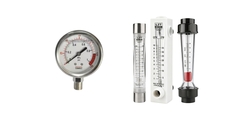
For commercial systems like the TWV - 412, the skid-mounted design simplifies service access, and built-in pressure gauges and flow meters make it easier to schedule maintenance before taste issues arise.
Measuring taste objectively: tools and methods
While taste is subjective, objective measures help ensure the best reverse osmosis water filter system is performing properly:
- TDS meters: Show dissolved solids levels and can indicate membrane or filter degradation.
- Conductivity meters: Correlate with ionic content that affects taste.
- Organoleptic testing: Controlled taste panels for beverage or food producers to validate sensory quality.
Combining instrument-based monitoring with occasional sensory checks creates a robust quality program for businesses concerned about taste.
Cost-effectiveness: ROI of investing in the best reverse osmosis water filter system
For commercial users, investing in a 500 LPH RO unit offers measurable returns when taste impacts product quality or customer satisfaction. Benefits include:
- Improved product consistency for food and beverage operations.
- Reduced returns and complaints in bottled or prepared products.
- Lower maintenance and equipment corrosion due to reduced mineral content.
When evaluated against ongoing bottled water purchases or product spoilage due to poor water quality, a well-specified RO system often provides a favorable payback period.
Case uses: where the TWV - 412 delivers better taste and value
Typical applications where the 500 LPH Reverse Osmosis (RO) Water Purification Machine TWV - 412 excels:
- Cafés and restaurants where beverage flavor is directly tied to customer satisfaction.
- Bottled water and beverage production facilities requiring consistent taste profiles.
- Commercial kitchens and food processing plants where water taste impacts recipes and final products.
- Offices and hospitality where high throughput and low maintenance are priorities.
Brand and product advantages: why choose our 500 LPH RO system as the best reverse osmosis water filter system for your business
In addition to delivering excellent taste improvement, the TWV - 412 offers several differentiators:
- Commercial-grade throughput (500 LPH) without compromising removal efficiency.
- Durable, skid-mounted construction for easy installation and servicing.
- Advanced control and monitoring to maintain optimal membrane performance and taste consistency.
- Scalable design with available post-treatment options for customized taste profiles.
Frequently Asked Questions (FAQ)
Q1: Will an RO system remove all taste from water?
A1: RO systems remove the majority of dissolved solids, chlorine byproducts, and many organics that cause off-flavors. This often results in a neutral, clean taste. If you prefer a mineralized mouthfeel, a remineralization stage or alkaline filter can be added.
Q2: How often should filters and membranes be replaced to maintain taste?
A2: Pre- and post-filters typically require replacement every 3–12 months depending on feed water quality and usage. RO membranes generally last 2–5 years but should be monitored via TDS and differential pressure to determine the exact timing.
Q3: Does the TWV - 412 handle high-salinity or well water?
A3: The TWV - 412 is suitable for many commercial feed waters, but high-salinity or heavily fouled sources may require additional pre-treatment (softening, antiscalant dosing) to protect membrane life and maintain taste outcomes. A site water analysis helps specify the right pre-treatment.
Q4: Will RO water be safe and healthy for daily drinking?
A4: RO water is safe to drink and removes harmful contaminants. Because it reduces minerals, some users prefer remineralization for taste and to restore beneficial minerals. Regulatory guidelines (WHO, EPA) explain that RO-treated water is acceptable when properly maintained.
Q5: How quickly will I notice taste improvements after installing an RO system?
A5: Taste improvements are usually immediate once treated water is produced, assuming pre- and post-filters are correctly installed and the system is operating within design parameters.
Contact us / See the product
Taste improvement often depends on system capacity and operating design. To better understand these differences, it helps to compare commercial and residential setups, such as in TWV-412 500 LPH RO machine vs home RO: capacity & maintenance.To learn more about the 500 LPH Reverse Osmosis (RO) Water Purification Machine TWV - 412 and how the best reverse osmosis water filter system can improve taste in your operation, contact our sales team for a free consultation and customized quotation. Click to inquire or request a product datasheet.
Authoritative references and further reading
- Reverse osmosis — Wikipedia: https://en.wikipedia.org/wiki/Reverse_osmosis
- EPA — Drinking Water and Health: https://www.epa.gov/environmental-topics/drinking-water
- WHO — Household Water Treatment: https://www.who.int/water_sanitation_health/publications/household_water/en/
- NSF International — Water Treatment Standards: https://www.nsf.org/consumer-resources/water-quality
- USGS — Total Dissolved Solids in Water: https://www.usgs.gov/mission-areas/water-resources/science/total-dissolved-solids-water
References were used to ensure accuracy on RO performance characteristics, health guidance, and practical maintenance recommendations.
Industrial Reverse Osmosis Machine Costs 2026
Buyer’s Guide: Electrodeionization Systems for Ultrapure Water
Water Softener Installation Cost: Complete Breakdown
Industrial RO vs Ultrafiltration Comparison 2026
Solutions
Can I use AQT’s water treatment systems for seawater desalination?
Yes! We provide seawater desalination systems using advanced reverse osmosis (RO) technology, specifically designed to convert seawater into fresh, drinkable water. These systems are ideal for coastal communities, marine applications, and industrial desalination projects.
Are AQT’s water treatment products certified?
Yes! Our products comply with international quality and safety standards, including ISO, CE, and NSF certifications. We prioritize high-quality materials, advanced technology, and strict quality control to ensure superior performance and reliability.
FAQ-aqualitek
Can AQT provide custom water treatment solutions?
Yes! We specialize in OEM/ODM water treatment solutions and can design custom filtration systems tailored to your business, industry, or brand requirements. Our team can assist with system design, branding, private labeling, and technical support.
Blog
How long does a water softener system last?
Most systems last 10–15 years with proper maintenance. Resin beads may need replacement after 8–10 years.
Is softened water safe to drink?
Yes, but those on low-sodium diets should consider potassium-based softeners or install a separate drinking water filter.
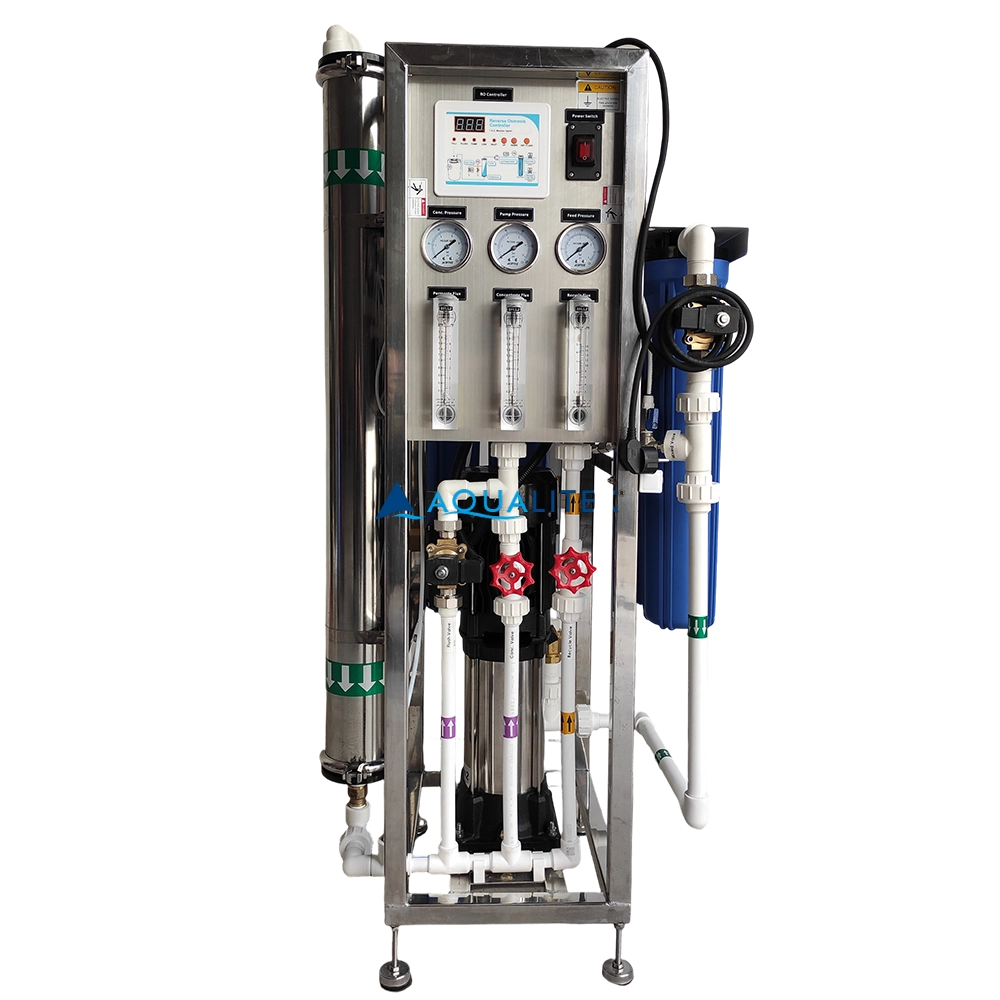
500 LPH Reverse Osmosis (RO) Water Purification Machine TWV - 412
Our 500 LPH Reverse Osmosis (RO) System is engineered to provide high-quality purified water for commercial applications. Designed with advanced RO technology, durable components, and a user-friendly interface, this system ensures consistent performance, low maintenance, and long-term reliability.
With its compact design and robust skid-mounted frame, it’s an excellent choice for businesses that demand efficiency and quality in water purification.
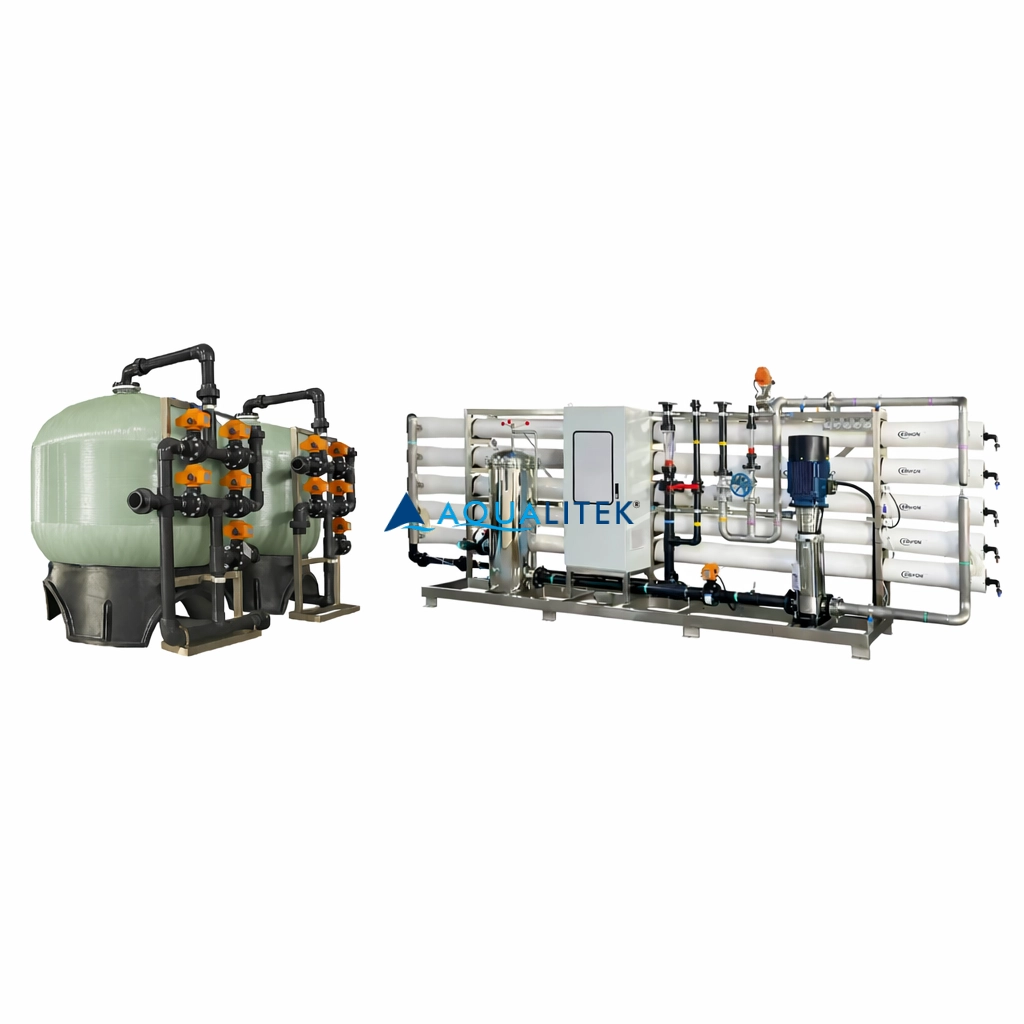
30TPH Industrial Reverse Osmosis (RO) System
30TPH Industrial Reverse Osmosis (RO) System designed for industrial and municipal water treatment. High salt rejection, energy-efficient design, PLC control, and customizable configuration.
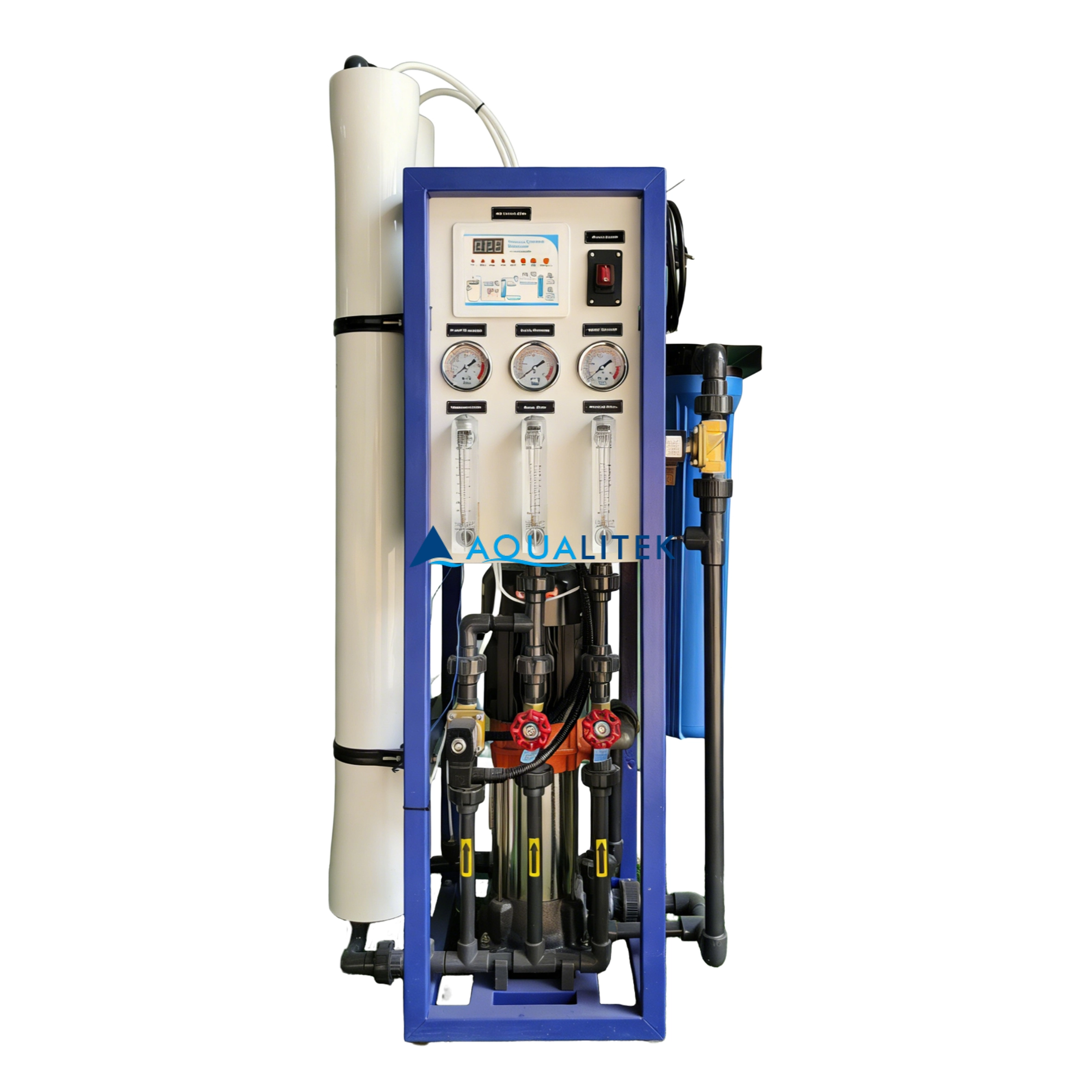
500LPH Panel Mounted Reverse Osmosis Water Purification System
AQUALITEK's 500LPH Panel Mounted Reverse Osmosis Water Purification System delivers reliable 500 LPH RO water production. This compact industrial reverse osmosis unit is ideal for small scale industrial RO needs, ensuring efficient and high-quality purified water in a space-saving design.
Electrodeionization Systems to Get UltraPure Water
Electrodeionization (EDI) system is an advanced water purification technology that combines ion exchange and electrochemical processes to produce ultra-pure water. Unlike traditional deionization methods, which rely on chemical regeneration, EDI utilizes electric fields to drive the movement of ions through ion-exchange membranes, effectively removing dissolved salts and other ionic contaminants.
This process is continuous and does not require the use of chemicals for regeneration, making it an environmentally friendly and cost-effective solution for producing high-quality deionized water. EDI systems are widely used in applications requiring ultrapure water, such as in the pharmaceutical, semiconductor, power generation, and biotechnology industries, as well as for laboratory use.
By offering high-purity water without the need for chemical regeneration, EDI systems provide a sustainable, efficient, and reliable alternative to traditional deionization methods, making them an ideal choice for industries where water quality and process control are critical.
Request More Information
Contact us today for product catalogs, customization options, and a free quotation designed for your business needs.
Rest assured that your privacy is important to us, and all information provided will be handled with the utmost confidentiality.
© 2026 AQUALITEK. All rights reserved.
AQUALITEK- Aimee Hoo
AQUALITEK - Aimee Hoo