




TWV - 412 500 LPH RO Machine vs Home RO: Capacity & Maintenance
- TWV - 412 500 LPH RO Machine vs Home RO: Capacity & Maintenance
- Introduction: Why choose the best reverse osmosis water filter system?
- Product profile: 500 LPH Reverse Osmosis (RO) Water Purification Machine TWV - 412
- Understanding capacity: commercial 500 LPH vs home RO
- Detailed capacity comparison table
- How design differences affect real-world capacity
- Maintenance overview: daily, monthly and annual tasks for RO systems
- Maintenance comparison table: TWV - 412 vs Home RO
- Maintenance impact on operating costs
- Water quality and performance: what each system delivers
- Energy use and efficiency considerations
- Installation, footprint and integration
- Choosing based on use case: decision guide
- Brand advantage and why TWV - 412 is a strong commercial choice
- Cost of ownership: comparing total operating expense
- Service, warranty and support considerations
- Regulation, certification and water safety
- FAQ (Frequently Asked Questions)
- Q: Is the TWV - 412 suitable for a small restaurant?
- Q: How often do RO membranes need replacement?
- Q: Can a home RO be scaled up for business use?
- Q: What are typical consumables I should budget for?
- Q: Does the TWV - 412 include monitoring for TDS and alarms?
- Contact us / View product
- Authoritative references and further reading

TWV - 412 500 LPH RO Machine vs Home RO: Capacity & Maintenance
Introduction: Why choose the best reverse osmosis water filter system?
When selecting water purification equipment, buyers often weigh small home RO systems against commercial-grade units like the 500 LPH Reverse Osmosis (RO) Water Purification Machine TWV - 412. Users searching for the best reverse osmosis water filter system want clear answers on capacity, maintenance effort, total cost of ownership, reliability, and the quality of treated water. This article — written from industry experience in water treatment system design and operation — compares these options to help commercial and institutional buyers make an informed decision. Once capacity differences are clear, many buyers want a closer look at specific industrial models. A comprehensive breakdown is available in the 500 LPH reverse osmosis TWV-412 (RO) in-depth review, covering performance, components, and applications.
Product profile: 500 LPH Reverse Osmosis (RO) Water Purification Machine TWV - 412
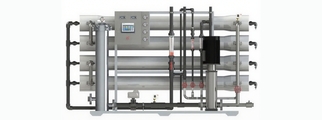
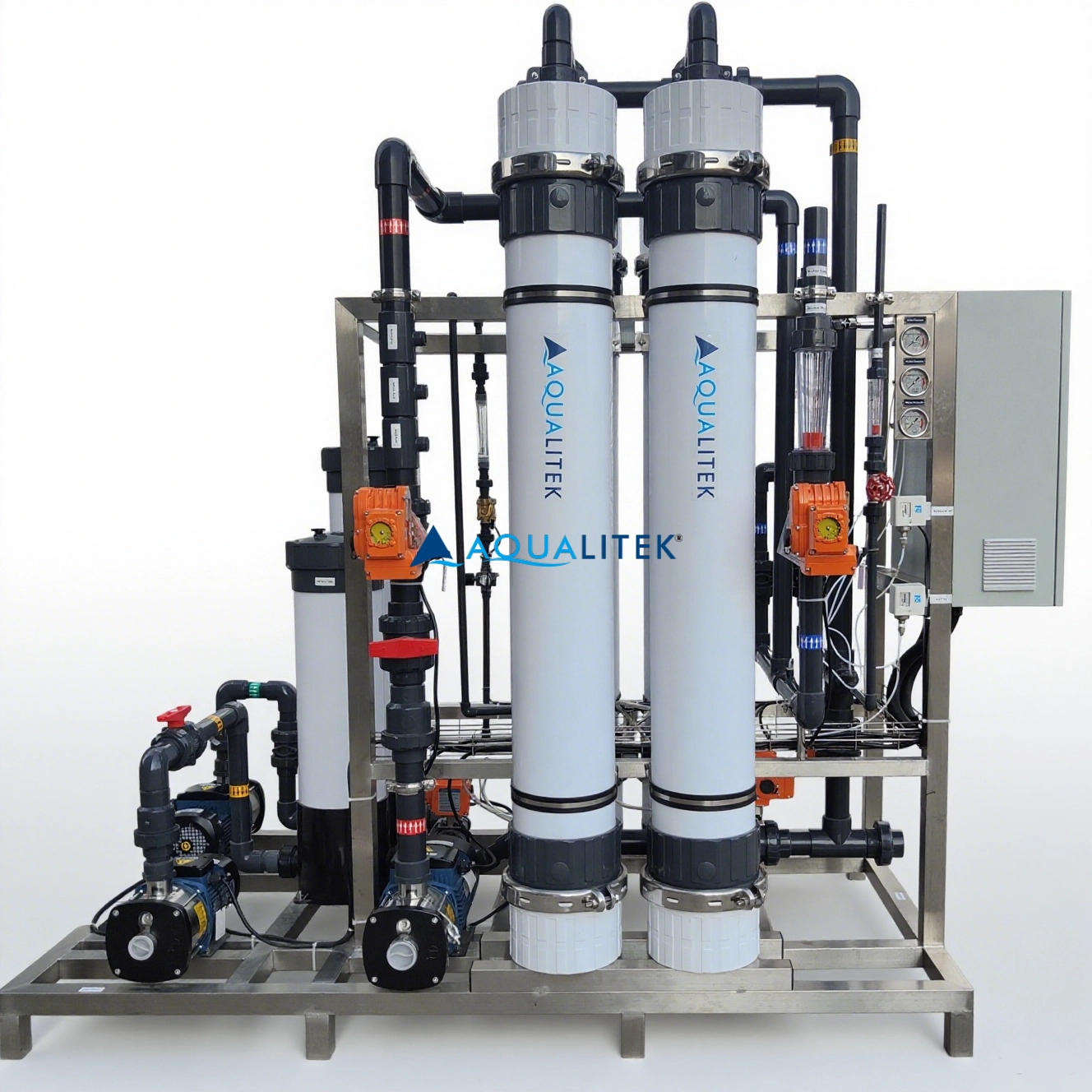
Our 500 LPH Reverse Osmosis (RO) System is engineered to provide high-quality purified water for commercial applications. Designed with advanced RO technology, durable components, and a user-friendly interface, this system ensures consistent performance, low maintenance, and long-term reliability.
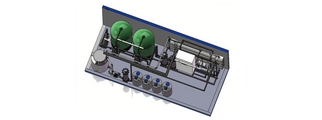
With its compact design and robust skid-mounted frame, it’s an excellent choice for businesses that demand efficiency and quality in water purification.
Understanding capacity: commercial 500 LPH vs home RO
Capacity is the most visible difference between commercial units and home RO systems. A typical under-sink home RO unit produces between 50 and 150 liters per day (roughly 2–6 LPH when considering effective usable flow under real conditions). The TWV - 412, rated at 500 liters per hour (LPH), delivers up to 12,000 liters per day under continuous operation — a scale suitable for restaurants, small manufacturing plants, offices, healthcare clinics, and other commercial users.
Detailed capacity comparison table
| Feature | TWV - 412 (500 LPH) | Typical Home RO |
|---|---|---|
| Nominal output | 500 LPH (up to 12,000 L/day continuous) | 50–150 L/day (2–6 LPH effective) |
| Intended use | Commercial / light industrial | Household drinking & cooking |
| Recovery rate | 40–60% (system-dependent, can be optimized) | 20–50% (depends on membrane and pump) |
| Storage needed | Large tanks (commercial storage) or direct feed | Small pressurized tank (8–12 L typical) |
| Redundancy | Designed for replaceable modules, parallelization | Limited redundancy |
How design differences affect real-world capacity
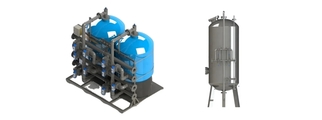
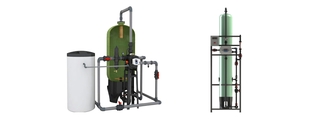
Commercial systems like the TWV - 412 include higher-capacity high-pressure pumps, larger membrane surface area, pre-treatment skids, and controls that allow continuous operation and higher recovery. Home RO units are optimized for low footprint, energy savings, and intermittent demand — suitable for small households but insufficient for business needs that require reliable, high-volume supply.
Maintenance overview: daily, monthly and annual tasks for RO systems
Maintenance determines long-term reliability and the effective cost of any RO installation. The best reverse osmosis water filter system should minimize maintenance frequency while providing easy serviceability. Maintenance tasks fall into three buckets: daily/operational checks, periodic consumable replacement, and annual preventive service.
Maintenance comparison table: TWV - 412 vs Home RO
| Maintenance Area | TWV - 412 (500 LPH) | Typical Home RO |
|---|---|---|
| Daily checks | System alarms, inlet pressure, permeate quality (TDS), pump status | Visual leak check, tank pressure (infrequent) |
| Pre-treatment filters | Large-capacity cartridge or multimedia filters; replace intervals 3–12 months depending on feed water | Small sediment and carbon filters; replace every 6–12 months |
| RO membrane | Industrial membranes: replace every 2–5 years depending on feed water and cleaning regimen; easier access for cartridge swaps | Household membranes: replace every 2–3 years |
| Cleaning & chemical maintenance | Scheduled CIP (clean-in-place) for fouling/scaling; requires trained technicians | Occasional sanitization; typically homeowner or service tech |
| Serviceability | Designed for modular servicing; remote monitoring options available | Simple cartridge swaps; limited diagnostics |
Maintenance impact on operating costs
Commercial installations usually have higher direct maintenance costs due to larger consumables and more complex cleaning procedures, but the cost per liter of purified water is typically much lower because of the high capacity and economies of scale. For businesses, planned preventive maintenance and remote diagnostics (available on many commercial systems including TWV models) reduce downtime and lifecycle expense.
Water quality and performance: what each system delivers
Reverse osmosis removes dissolved salts, many organics, and a broad range of contaminants. Commercial units like the TWV - 412 typically include robust pre-treatment (sand, carbon, anti-scaling dosing) and post-treatment steps (UV, remineralization) to meet regulatory and process-specific quality targets. Home RO units focus on producing safe drinking water and often include a carbon post-filter for taste improvement.
Energy use and efficiency considerations
Energy consumption scales with capacity and feed-water salinity. The TWV - 412 uses higher-power pumps optimized for efficiency at scale and often includes energy-recovery options in larger configurations. Home RO units are low-power but also low-output. When considering the best reverse osmosis water filter system, assess the energy per cubic meter of permeate and potential for energy recovery or efficiency modes in commercial systems.
Installation, footprint and integration
Home RO systems install under a sink or in a small utility area. The TWV - 412 is skid-mounted for compact footprint relative to its capacity, but still requires allocated floor space, electrical supply, inlet/outlet plumbing, and often a treated-water buffer tank. Commercial installation may require coordination with building services, wastewater routing, and space for pre-treatment equipment.
Choosing based on use case: decision guide
Use this rule-of-thumb to decide which is the best reverse osmosis water filter system for you:
- If your daily demand is under 200 L/day and your primary need is drinking water for a household: choose a home RO.
- If you need consistent supply for multiple points (cafeterias, labs, process water), require 500 LPH or more, or need scalability and professional support: choose a commercial unit like the 500 LPH TWV - 412.
- Consider lifecycle cost (installation + maintenance + consumables) rather than just upfront price.
Brand advantage and why TWV - 412 is a strong commercial choice
As an experienced water treatment provider, we design the TWV - 412 to be the best reverse osmosis water filter system for small-to-medium commercial operations delivering high throughput with low downtime. Key advantages include:
- High, reliable capacity (500 LPH) suitable for continuous commercial use.
- Skid-mounted, compact design for easier integration and reduced installation time.
- Modular components to simplify maintenance and lower total cost of ownership.
- Advanced controls and monitoring for rapid diagnostics and reduced downtime.
- Robust pre-treatment and post-treatment options to meet diverse water quality demands.
Cost of ownership: comparing total operating expense
Below is a simplified cost comparison over a 5-year horizon illustrating that although initial capital cost for a system such as the TWV - 412 is higher, the cost per liter can be substantially lower when serving commercial demand.
| Item | TWV - 412 (Commercial) | Home RO |
|---|---|---|
| Typical capital cost | High (industrial equipment) | Low |
| 5-year maintenance & consumables | Medium-High (but split over large output) | Low |
| Cost per liter (example) | Low (economies of scale) | Higher |
Service, warranty and support considerations
Commercial buyers should evaluate vendor services: remote monitoring, scheduled preventive maintenance, spare parts supply and response times. The TWV family of machines is supplied with service options that include factory-trained technicians, extended warranty plans, and parts availability — all important for preserving uptime in commercial settings.
Regulation, certification and water safety
For any RO system, compliance with local water regulations and certification (where applicable) matters. Specifications such as material compatibility (NSF-certified components), proper waste handling, and documented performance testing should be provided by vendors. The best reverse osmosis water filter system vendors provide test reports and support to meet regulatory inspections.
FAQ (Frequently Asked Questions)
Q: Is the TWV - 412 suitable for a small restaurant?
A: Yes. At 500 LPH it can supply water for cooking, beverage stations, and cleaning needs for many small-to-medium restaurants—provided proper pre-treatment and storage are sized for peak demands.
Q: How often do RO membranes need replacement?
A: Membrane life depends on feed water quality and maintenance: typical replacement ranges from 2 to 5 years for commercial membranes with regular cleaning and proper pre-treatment.
Q: Can a home RO be scaled up for business use?
A: Not practically. Home units lack the flow, durability, and service features required for commercial throughput and continuous duty. For business use, a commercial unit like the TWV - 412 is the recommended option.
Q: What are typical consumables I should budget for?
A: Pre-treatment cartridges, anti-scalant chemicals, membranes, cleaning chemicals and periodic pump/service parts. Budgeting depends on feed water quality and throughput; consult supplier for site-specific estimates.
Q: Does the TWV - 412 include monitoring for TDS and alarms?
A: The TWV - 412 platform offers integrated controls and monitoring; TDS meters and alarm systems can be standard or optional depending on configuration. Ask your supplier for the specific control package.
Contact us / View product
If you need a reliable solution for commercial water purification, contact our sales team to discuss how the 500 LPH Reverse Osmosis (RO) Water Purification Machine TWV - 412 can meet your needs, request a quotation, or schedule a site assessment. For immediate details and ordering, please contact our customer support or request a product datasheet.
Authoritative references and further reading
- Reverse osmosis — Wikipedia
- WHO — Drinking-water
- U.S. EPA — Water Research
- Water Quality Association (WQA)
- NSF International — Standards for Water Treatment
Note: For site-specific design, feed water analysis is essential. Contact us for a free consultation and professional recommendation tailored to your facility.
RO vs UV vs Carbon: Which Water Purification System Wins?
Installation and Integration Guide for 12TPH UF Systems in Plants
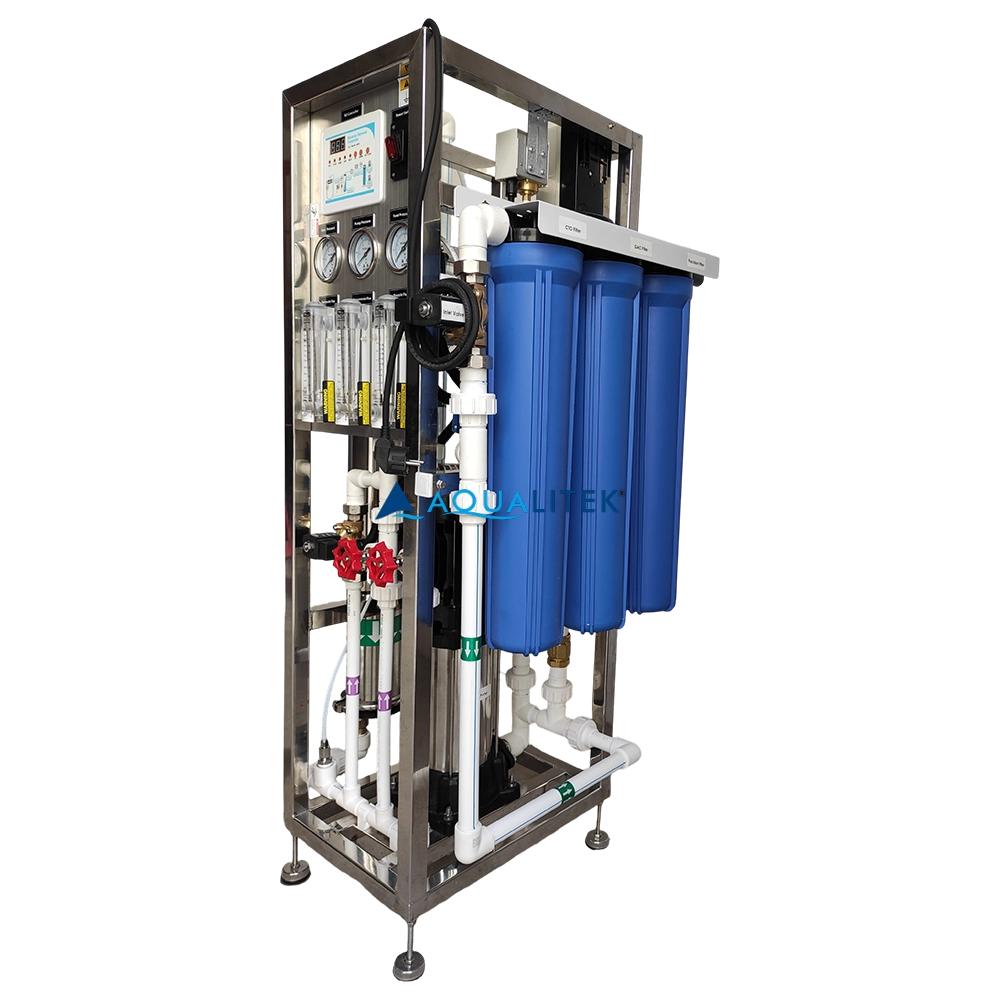
Key Certifications for a Best Reverse Osmosis Water Filter System
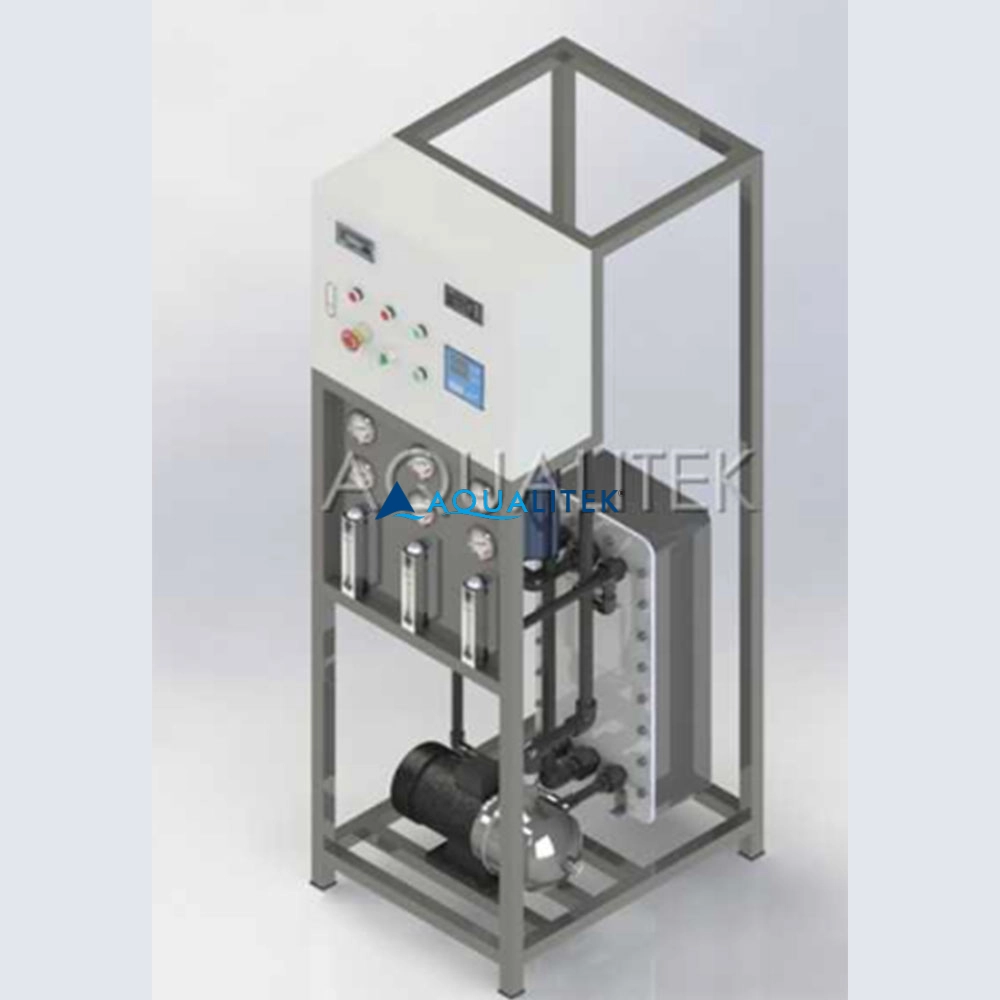
Operating Best Practices for Electrodeionization Systems
Solutions
What industries does AQT serve?
We provide water treatment solutions for a wide range of industries, including:
1. Industrial Manufacturing – Process water treatment, cooling water, and boiler feed.
2. Hospitality & Commercial – Hotels, restaurants, and office buildings.
3. Residential Applications – Drinking water purification and softening.
4. Healthcare & Pharmaceuticals – Ultra-pure water for laboratories and hospitals.
5. Municipal & Public Utilities – Water supply and wastewater treatment.
6. Food & Beverage Processing – Filtration for beverage p
What is the difference between Reverse Osmosis (RO), Ultrafiltration (UF), and Nanofiltration (NF)?
1. Reverse Osmosis (RO): Removes up to 99.9% of contaminants, including salts, bacteria, viruses, and heavy metals.
2. Ultrafiltration (UF): Uses a membrane filtration process to remove bacteria and particles, while retaining essential minerals.
3. Nanofiltration (NF): Falls between RO and UF, removing some salts and organic compounds while allowing certain minerals to pass through.
Ion Exchange Water Treatment Systems
Can ion exchange work with seawater or high-TDS water?
Ion exchange is more suitable for low to moderate TDS water. High-TDS applications often use RO as a primary treatment.
Water Filters
What is the expected lifespan of a water filter?
Cartridge filters generally last 1–3 months. Media filters require periodic backwashing and media replacement every 1–2 years, depending on usage.
Do you provide replacement parts and consumables?
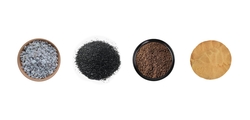
Yes. We supply cartridges, filter bags, media (sand, carbon, etc.), valve kits, and O-rings for all major systems.
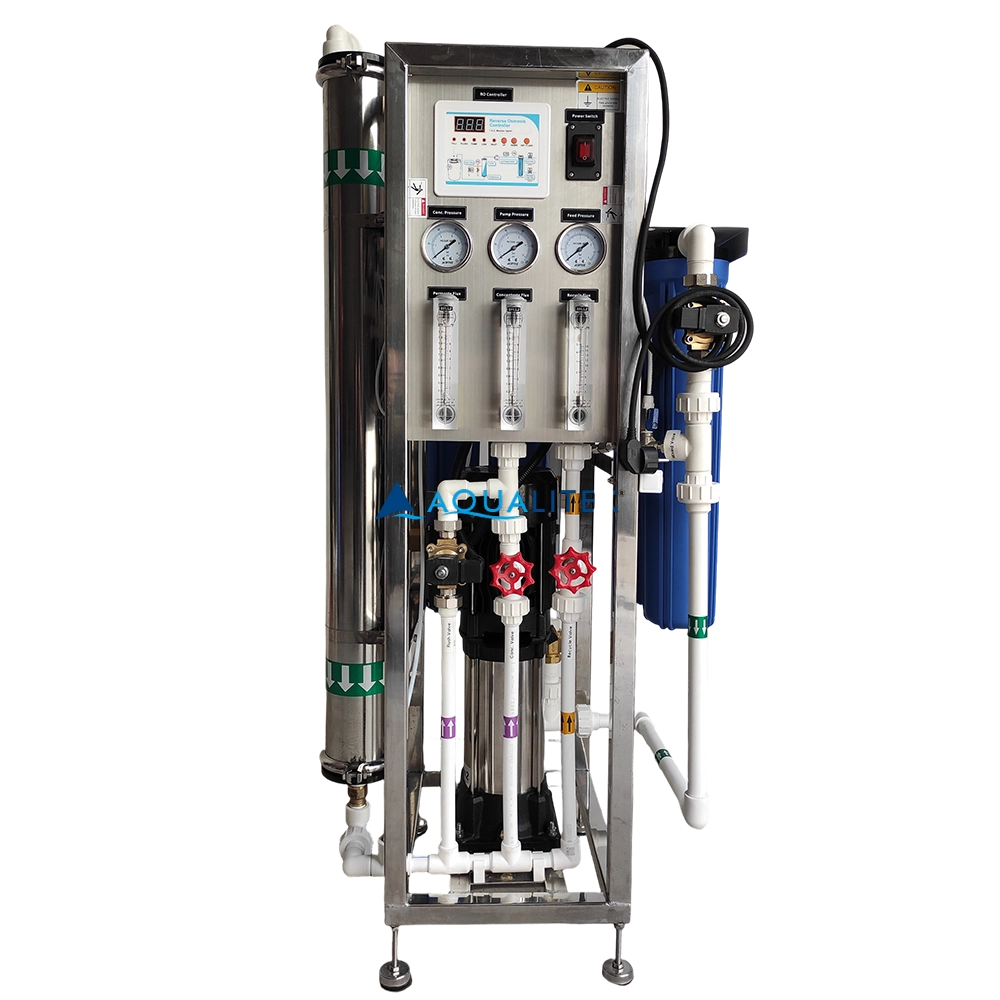
500 LPH Reverse Osmosis (RO) Water Purification Machine TWV - 412
Our 500 LPH Reverse Osmosis (RO) System is engineered to provide high-quality purified water for commercial applications. Designed with advanced RO technology, durable components, and a user-friendly interface, this system ensures consistent performance, low maintenance, and long-term reliability.
With its compact design and robust skid-mounted frame, it’s an excellent choice for businesses that demand efficiency and quality in water purification.
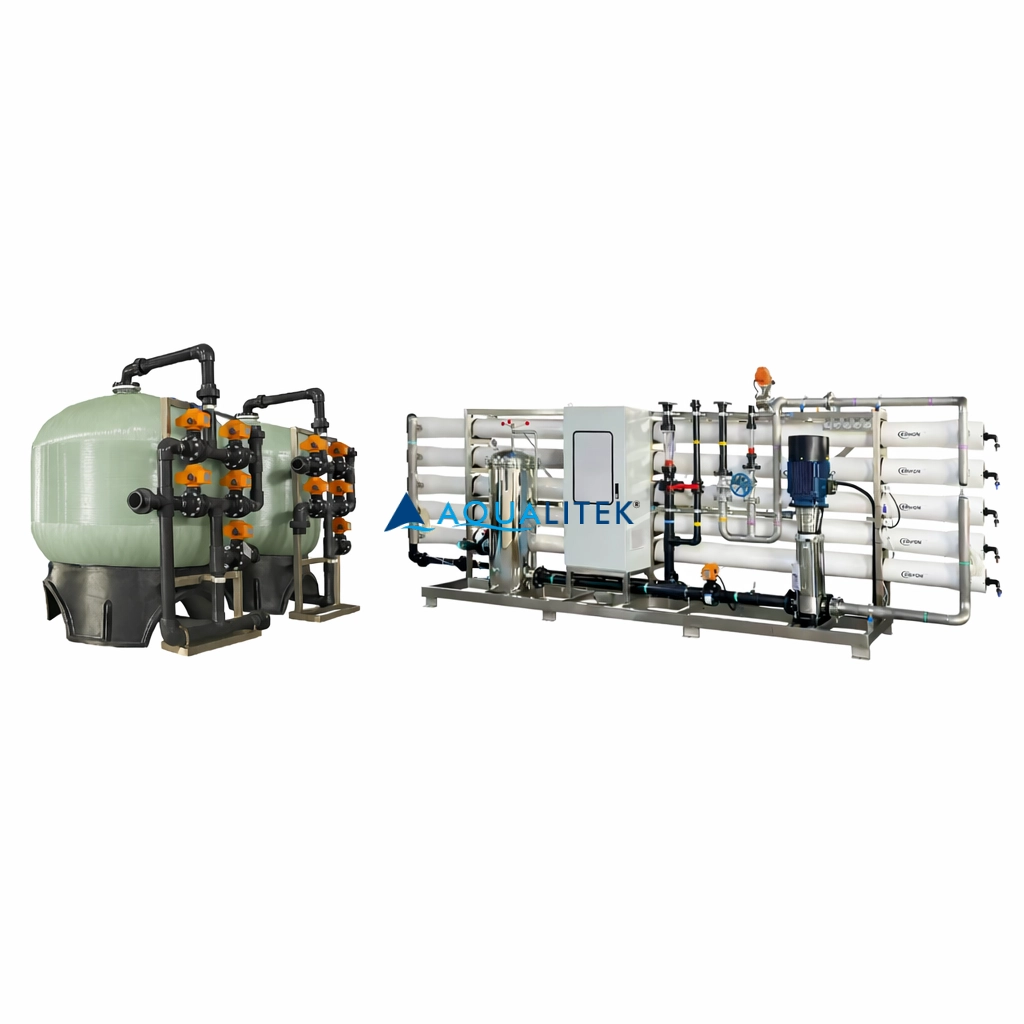
30TPH Industrial Reverse Osmosis (RO) System
30TPH Industrial Reverse Osmosis (RO) System designed for industrial and municipal water treatment. High salt rejection, energy-efficient design, PLC control, and customizable configuration.
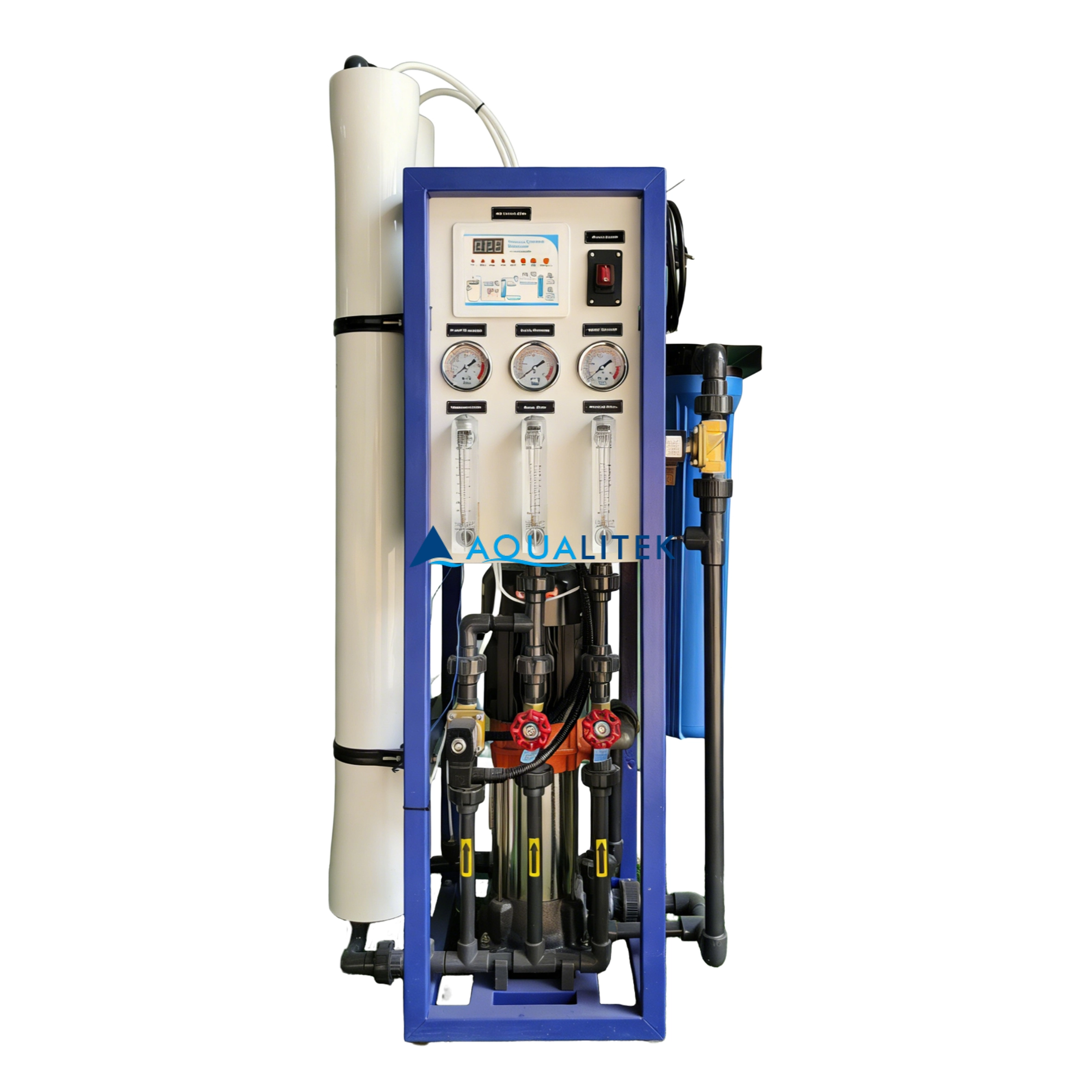
500LPH Panel Mounted Reverse Osmosis Water Purification System
AQUALITEK's 500LPH Panel Mounted Reverse Osmosis Water Purification System delivers reliable 500 LPH RO water production. This compact industrial reverse osmosis unit is ideal for small scale industrial RO needs, ensuring efficient and high-quality purified water in a space-saving design.
Electrodeionization Systems to Get UltraPure Water
Electrodeionization (EDI) system is an advanced water purification technology that combines ion exchange and electrochemical processes to produce ultra-pure water. Unlike traditional deionization methods, which rely on chemical regeneration, EDI utilizes electric fields to drive the movement of ions through ion-exchange membranes, effectively removing dissolved salts and other ionic contaminants.
This process is continuous and does not require the use of chemicals for regeneration, making it an environmentally friendly and cost-effective solution for producing high-quality deionized water. EDI systems are widely used in applications requiring ultrapure water, such as in the pharmaceutical, semiconductor, power generation, and biotechnology industries, as well as for laboratory use.
By offering high-purity water without the need for chemical regeneration, EDI systems provide a sustainable, efficient, and reliable alternative to traditional deionization methods, making them an ideal choice for industries where water quality and process control are critical.
Request More Information
Contact us today for product catalogs, customization options, and a free quotation designed for your business needs.
Rest assured that your privacy is important to us, and all information provided will be handled with the utmost confidentiality.
© 2026 AQUALITEK. All rights reserved.
AQUALITEK- Aimee Hoo
AQUALITEK - Aimee Hoo