




Operating Best Practices for Electrodeionization Systems
- Fundamentals Before Operation: Feedwater and System Preparation
- Feedwater quality requirements and pre-treatment
- System flushing and initial checks
- Start-up and Stable Operation: Electrical and Hydraulic Best Practices
- Applying voltage and ramp-up procedures
- Hydraulic balance, flow distribution and pressure control
- Monitoring, Control and Troubleshooting Key Performance Indicators
- Critical online parameters to monitor
- Troubleshooting common issues
- Maintenance, Cleaning and Lifecycle Optimization
- Preventative maintenance schedule
- Cleaning procedures and chemical compatibility
- Performance Metrics, Economics and Comparisons
- Key performance indicators (KPIs) to track
- Comparison: EDI vs. conventional mixed-bed deionization
- Application-Specific Considerations and Regulatory Guidance
- Industry applications and water quality specifications
- TOC and organic control
- Brand Advantages and Why Choose Our Electrodeionization Systems
- Product overview: Electrodeionization Systems to Get UltraPure Water
- Why our EDI systems stand out
- Practical Checklists and Commissioning Template
- Commissioning checklist
- Operator quick-reference actions
- FAQs
- Q: How long do EDI stacks last?
- Q: Can EDI handle high silica or hardness?
- Q: Is EDI suitable for pharmaceutical WFI production?
- Q: What is the typical recovery and energy consumption?

Electrodeionization (EDI) is a continuous, chemical-free process that couples ion-exchange resins with an applied electric field to produce ultrapure water. For facilities deploying Electrodeionization Systems to Get UltraPure Water, understanding operational best practices is essential to maximize water quality, uptime, and membrane longevity. This guide distills practical steps—from pre-treatment and startup to monitoring parameters and preventative maintenance—backed by industry references and designed for plant operators, water treatment engineers, and procurement specialists. Even with best practices in place, deviations can occur, so understanding troubleshooting common electrodeionization performance issues helps minimize downtime and risk.
Fundamentals Before Operation: Feedwater and System Preparation
Feedwater quality requirements and pre-treatment
EDI performance depends heavily on stable, well-conditioned feedwater. Typical upstream components include reverse osmosis (RO) or electrodeionization pre-polishing steps. Key feedwater parameters to control are:
- Conductivity / resistivity (low conductivity improves EDI current efficiency)
- Hardness and silica (prevent scaling of membranes and resin)
- Chlorine / oxidants (must be removed to protect ion-exchange resins and membranes)
- Particulate and silt density (prevent fouling and channeling)
As a rule of thumb, RO permeate conductivity should be consistently low and silica levels should meet manufacturer recommendations (often <0.5–2 mg/L, depending on application). For general guidance on membrane protection and feedwater conditioning, see the Water Quality Association guidance on pre-treatment (WQA).
System flushing and initial checks
Before applying voltage, perform a thorough hydraulic flushing to remove shipping preservatives and fines from resins and membranes. Steps include:
- Flush at design flow for 30–60 minutes or per OEM instructions
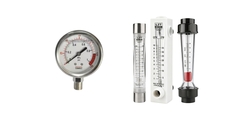
- Inspect and confirm all valves, pressure gauges, and flow meters are functioning
- Check electrode rinse circuits and confirm deionizer stack orientation
Failing to flush properly can lead to early fouling and false readings during commissioning.
Start-up and Stable Operation: Electrical and Hydraulic Best Practices
Applying voltage and ramp-up procedures
Electrical control is central to EDI. Start-up should use a controlled ramp of current density rather than immediate full-load voltage to avoid osmotic shocks to membranes and resins. Typical approach:
- Begin at 25–50% of nominal current density for 15–30 minutes
- Monitor product resistivity and stack temperatures closely
- Increase current in steps to reach steady-state setpoint while observing stability
Document the ramp profile and retain logs to help diagnose performance drift over time.
Hydraulic balance, flow distribution and pressure control
Uniform flow through the EDI stack prevents channeling and ensures even resin utilization. Maintain recommended operating pressures and minimize trans-membrane differentials. Use flow balancing valves and install differential pressure gauges across stacks to detect blockages early.
Monitoring, Control and Troubleshooting Key Performance Indicators
Critical online parameters to monitor
For reliable operation, continuously monitor:
- Product resistivity (MΩ·cm) or conductivity (µS/cm)
- Feed conductivity and temperature
- Stack current and voltage (A, V) and current density (A/cm²)
- Pressure drop across the stack and differential pressures
- Electrode rinse flow and quality
Trends are more valuable than single readings. A gradual rise in product conductivity while current and feedwater remain unchanged usually signals membrane fouling or resin exhaustion.
Troubleshooting common issues
Common operational problems and quick diagnostics:
| Symptom | Likely cause | Immediate action |
|---|---|---|
| Product resistivity drops | Feedwater spikes, membrane fouling, leaks, improper current | Check feed conductivity/temperature; inspect for leaks; review current density |
| High stack voltage | Scaling or fouling, low conductivity feed, dry channels | Inspect for scale, perform cleaning if required, ensure adequate feed conductivity |
| Excessive pressure drop | Particulate blockage or biofilm | Backwash / replace pre-filter; clean feed lines; check pretreatment |
Maintenance, Cleaning and Lifecycle Optimization
Preventative maintenance schedule
Regular preventive maintenance preserves membrane and resin life and avoids unplanned downtime. A recommended schedule (subject to OEM variation) includes:
- Daily: Check product resistivity, feed conductivity and stack current logs
- Weekly: Inspect electrode rinse system and verify flow rates
- Monthly: Check pressure drops and clean pre-filters
- Quarterly: Visual inspection of stacks for leaks and instrumentation calibration
- Annually: OEM performance review and possible partial stack refurbishment
Cleaning procedures and chemical compatibility
When fouling occurs, cleaning may be needed. Common contaminants: silica scaling, metal oxides, organic fouling and biofouling. Use only chemicals compatible with membrane and resin materials per OEM guidance. Typical cleaning agents include dilute acids for scaling and oxidant-free detergents for organics; oxidizing cleaners can damage standard ion-exchange resins and membranes. Always follow safety and disposal regulations (see US EPA resources on wastewater management EPA).
Performance Metrics, Economics and Comparisons
Key performance indicators (KPIs) to track
Track the following KPIs to evaluate EDI efficiency and lifecycle cost:
- Product resistivity and % recovery
- Specific energy consumption (kWh/m³ of product water)
- Stack lifetime (months/years until refurbishment or replacement)
- Chemical consumption saved compared to mixed-bed regeneration
Comparison: EDI vs. conventional mixed-bed deionization
Electrodeionization offers continuous deionization without chemical regenerants. The table below summarizes typical differences:
| Feature | EDI | Mixed-Bed (Chemical Regeneration) |
|---|---|---|
| Regeneration | Chemical-free, continuous | Periodic chemical regeneration (acid/caustic) |
| Operational continuity | High (continuous) | Interrupted during regeneration |
| Operating cost | Lower chemical costs; energy for current | Higher chemical and waste-disposal costs |
| Typical applications | Ultrapure water polishing for pharma, semiconductor, power | General laboratory and industrial water polishing |
Application-Specific Considerations and Regulatory Guidance
Industry applications and water quality specifications
EDI is used where consistent ultrapure water is critical—semiconductor fabs require extremely low ionic and TOC levels, pharmaceutical water for injection (WFI) and process water need validated, reproducible quality. For industry-specific standards, consult the relevant guidance such as pharmacopeias for pharmaceutical water or semiconductor standards (SEMI) for ultrapure water specifications. General education on EDI's principles is available on Wikipedia's EDI page (Wikipedia).
TOC and organic control
While EDI is highly effective for ionic removal, controlling Total Organic Carbon (TOC) may require upstream activated carbon, UV, or specific TOC polishing steps depending on application requirements. For sensitive applications, validate TOC removal strategies in tandem with EDI performance testing.
Brand Advantages and Why Choose Our Electrodeionization Systems
Product overview: Electrodeionization Systems to Get UltraPure Water
Electrodeionization Systems to Get UltraPure Water is an advanced water purification technology that combines ion exchange and electrochemical processes to produce ultra-pure water. Unlike traditional deionization methods, which rely on chemical regeneration, EDI utilizes electric fields to drive the movement of ions through ion-exchange membranes, effectively removing dissolved salts and other ionic contaminants.
This process is continuous and does not require the use of chemicals for regeneration, making it an environmentally friendly and cost-effective solution for producing high-quality deionized water. EDI systems are widely used in applications requiring ultrapure water, such as in the pharmaceutical, semiconductor, power generation, and biotechnology industries, as well as for laboratory use.
By offering high-purity water without the need for chemical regeneration, EDI systems provide a sustainable, efficient, and reliable alternative to traditional deionization methods, making them an ideal choice for industries where water quality and process control are critical.
Why our EDI systems stand out
- Engineered for high recovery and low specific energy consumption using optimized current density control.
- Modular designs for easy scaling and redundancy in critical operations.
- Robust monitoring and PLC/SCADA integration for trend analysis and alarm management.
- OEM-backed maintenance programs and spare-part availability to minimize downtime.
Practical Checklists and Commissioning Template
Commissioning checklist
Use this short commissioning checklist when bringing an EDI system online:
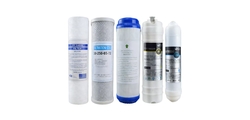
- Verify pre-treatment performance (RO permeate quality, filters, UV, carbon)
- Complete hydraulic flushing and visual inspection
- Calibrate conductivity/resistivity probes and pressure sensors
- Perform stepwise electrical ramp-up and record logs
- Confirm product water meets specification at steady state
Operator quick-reference actions
For daily operations, operators should follow these simple steps:
- Check and log product resistivity and feedwater conductivity
- Verify electrode rinse flows and stack current
- Inspect pre-filters and change per schedule
- Review alarm logs and investigate any drift immediately
FAQs
Q: How long do EDI stacks last?
A: Stack lifetime varies with feedwater quality and operating discipline. With proper pretreatment and maintenance, stacks commonly last 3–7 years; OEM refurbishment can extend usable life.
Q: Can EDI handle high silica or hardness?
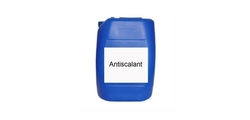
A: EDI is sensitive to scaling from hardness and silica. Use RO-based pretreatment and silica control (e.g., antiscalants, softening) to protect membranes. Consult manufacturer thresholds for allowable silica.
Q: Is EDI suitable for pharmaceutical WFI production?
A: EDI is widely used for ultrapure water polishing and as part of multi-barrier systems for pharmaceutical applications. However, regulatory pathways differ by region—validate system performance against applicable pharmacopeia requirements.
Q: What is the typical recovery and energy consumption?
A: Recoveries depend on system design and feed conditions; many modern EDI systems operate at high recoveries (70–90%) when paired with efficient RO. Specific energy varies; track kWh/m³ to determine cost competitiveness versus chemical regeneration.
For detailed specifications, customized system sizing, or to schedule an on-site survey, contact our technical sales team or view product details for Electrodeionization Systems to Get UltraPure Water. Click here to contact us or request a quote: Contact Sales / View Product.
References: Electrodeionization overview and operational principles: Wikipedia - Electrodeionization. Guidance on water treatment and pretreatment best practices: Water Quality Association (WQA). Regulatory and wastewater considerations: US EPA.
How Industrial Reverse Osmosis Machines Work 2026
What are the Top Vendors for Customized Industrial Water Solutions?
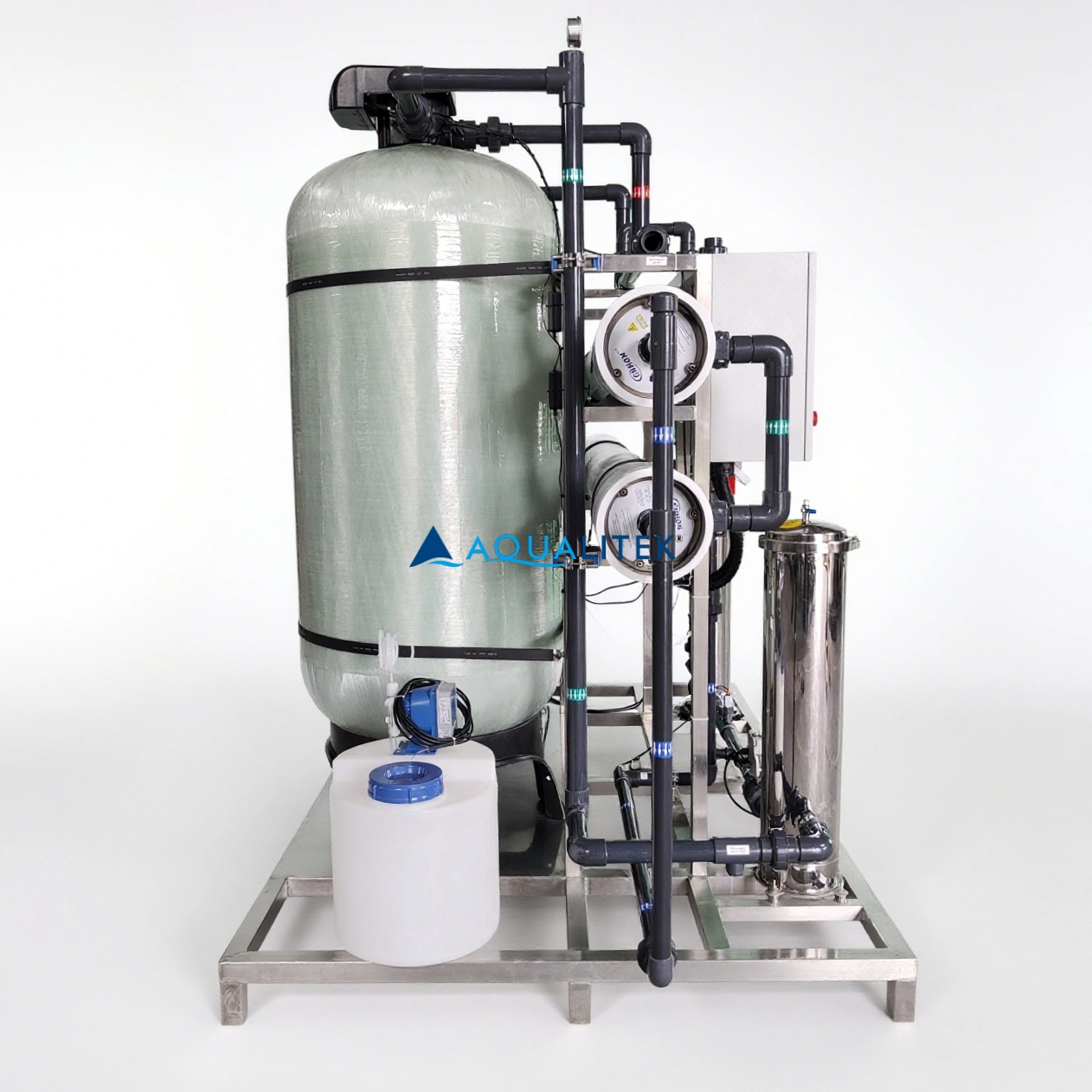
Key Specs to Evaluate in an Industrial RO System Purchase
Top 10 water treatment equipment Manufacturers and Supplier Brands
FAQ-aqualitek
How often should I replace filters and membranes?
Filter and membrane lifespan depends on water quality, usage, and system type. General guidelines:
1. Sediment & Carbon Filters: Replace every 6–12 months.
2. RO Membranes: Replace every 2–3 years, depending on water conditions.
3. UF/NF Membranes: Replace every 1–2 years.
Regular maintenance ensures optimal performance and water quality.
How do I choose the right water treatment system for my needs?
The choice depends on factors such as water quality, application, flow rate, and purification requirements. Our team of experts can analyze your water source and recommend the most suitable solution for residential, commercial, or industrial applications.
Membrane Water Treatment Systems
Do you offer plug-and-play solutions?
Absolutely. We offer containerized membrane systems that are factory-tested, compact, and quick to deploy.
Ion Exchange Water Treatment Systems
Are mixed bed systems better than two-bed systems?
Mixed bed polishers are used for final polishing after RO or two-bed deionization to achieve ultra-pure water.
Water Filters
Can I automate the filter cleaning process?
Absolutely. Our automatic backwash filters come with timer-based or differential pressure-triggered controls.
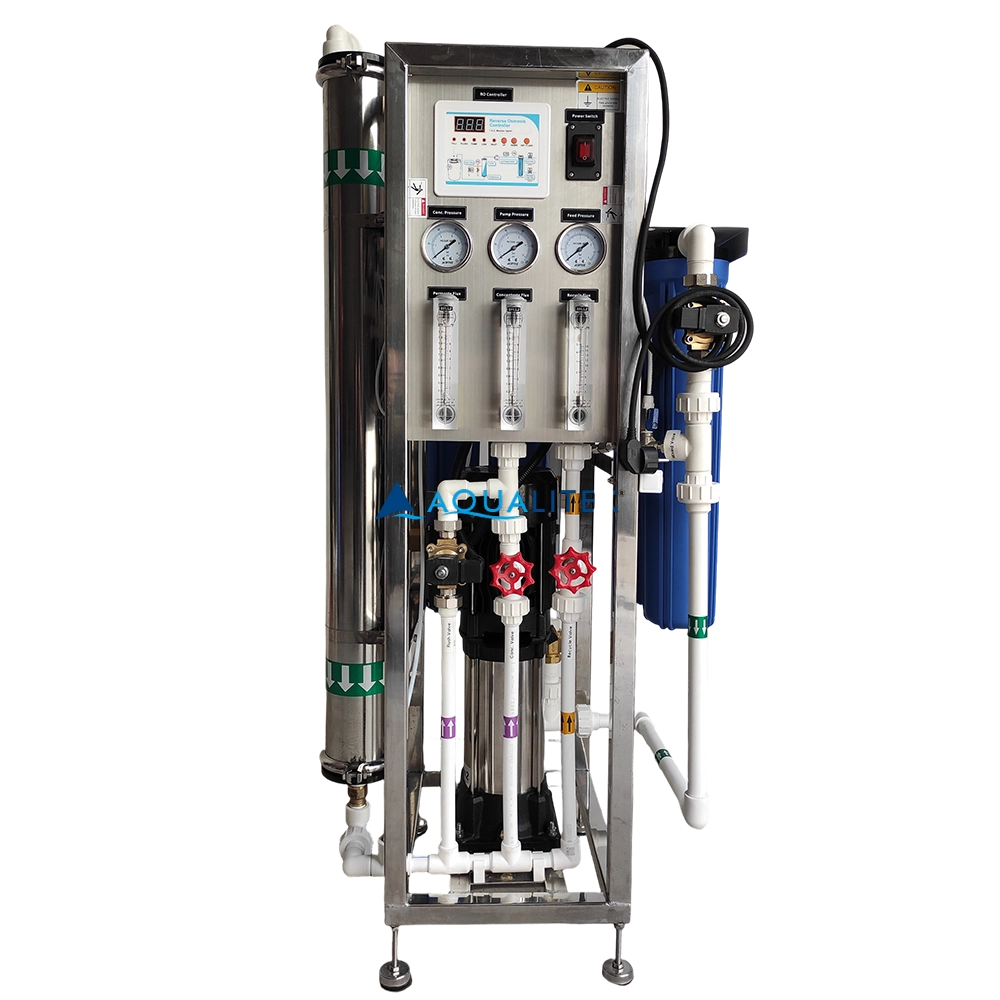
500 LPH Reverse Osmosis (RO) Water Purification Machine TWV - 412
Our 500 LPH Reverse Osmosis (RO) System is engineered to provide high-quality purified water for commercial applications. Designed with advanced RO technology, durable components, and a user-friendly interface, this system ensures consistent performance, low maintenance, and long-term reliability.
With its compact design and robust skid-mounted frame, it’s an excellent choice for businesses that demand efficiency and quality in water purification.
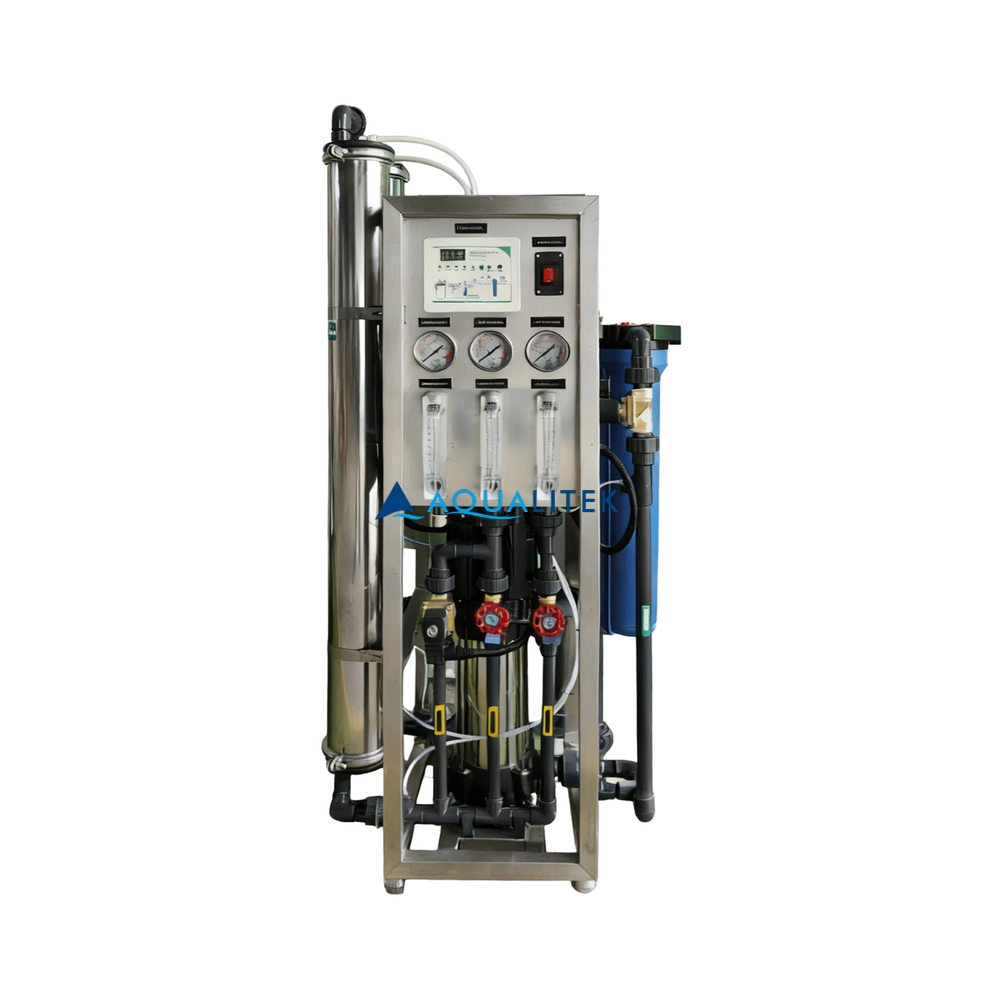
Tap Water Reverse Osmosis (TWRO) Systems TWV Series
TWV series Reverse Osmosis (RO) systems are pre-engineered and pre-assembled units with 2.5”/4” membrane housings(single element type)for tap water(lower TDS).They are designed for overall superior performance, high recovery rates and offer great savings with low maintenance and operation costs.
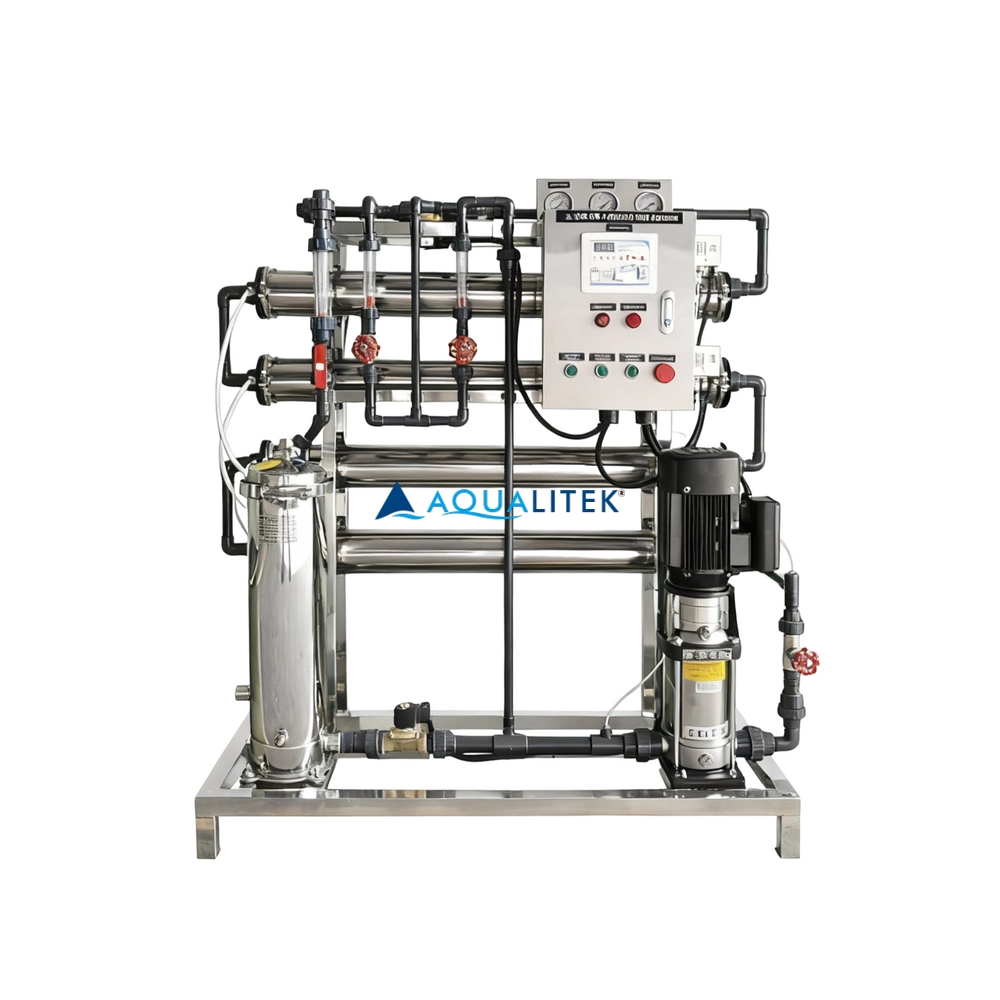
Tap Water Reverse Osmosis (TWRO) Systems TWF Series
TWF series Reverse Osmosis (RO) systems are pre-engineered and pre-assembled units with 4” membrane housings(multiple elements type) for tap water(lower TDS) .The medium large volumes can help meet your a variety of commercial and industrial applications. They are designed for overall superior performance, high recovery rates and offer great savings with low maintenance and operation costs.

Tap Water Reverse Osmosis (TWRO) Systems TWE Series
TWE series Reverse Osmosis (RO) systems are pre-engineered and pre-assembled units with 8” membrane housings for tap water (lower TDS). The large volumes can help meet your a variety of industrial applications. They are designed for overall superior performance, high recovery rates and offer great savings with low maintenance and operation costs.
Request More Information
Contact us today for product catalogs, customization options, and a free quotation designed for your business needs.
Rest assured that your privacy is important to us, and all information provided will be handled with the utmost confidentiality.
© 2026 AQUALITEK. All rights reserved.
AQUALITEK- Aimee Hoo
AQUALITEK - Aimee Hoo