




Troubleshooting Common Electrodeionization Performance Issues
- How Electrodeionization Works and Key Performance Metrics
- Basic principles of electrodeionization
- Critical performance indicators
- Product introduction: Electrodeionization Systems to Get UltraPure Water
- Diagnosing Common Electrodeionization Performance Problems
- 1. Rising product conductivity (loss of purity)
- 2. Silica or weakly ionized species breakthrough
- 3. Scaling and precipitation inside modules
- Practical Remedies, Maintenance and Optimization
- Preventive pretreatment strategies
- Cleaning procedures and chemical compatibility
- Electrical and operational optimization
- Comparisons, Case Studies and Brand Advantages
- EDI vs. conventional chemical regeneration and mixed-bed DI
- Case example: Recurrent silica breakthrough
- Our brand advantages for Electrodeionization Systems to Get UltraPure Water
- Advanced Troubleshooting: Step-by-Step Guides
- Quick checklist for a conductivity rise
- Handling membrane fouling or resin discoloration
- When to call technical support
- FAQ — Frequently Asked Questions
- Q1: How often should an EDI system be cleaned or serviced?
- Q2: Can EDI handle RO permeate with residual hardness or silica?
- Q3: What are common instrument errors that mimic EDI failure?
- Q4: How long do EDI membranes and resins typically last?
- Q5: Is EDI environmentally friendly compared with conventional DI?

Electrodeionization (EDI) is a reliable, chemical-free method to produce ultra-pure water for industries such as pharmaceuticals, semiconductors, and power generation. This guide helps operators and plant engineers quickly diagnose and resolve common electrodeionization performance issues — from conductivity drift and silica breakthrough to membrane fouling and flow irregularities — and explains how proper pretreatment, monitoring, and maintenance extend membrane life and ensure consistent ultrapure water quality. These troubleshooting insights are especially valuable when selecting electrodeionization systems for semiconductor and lab use, where purity tolerances are extremely tight.
How Electrodeionization Works and Key Performance Metrics
Basic principles of electrodeionization
Electrodeionization combines ion exchange and electrochemical migration to remove ionic contaminants continuously. An electric field drives ions through ion-exchange resins and ion-exchange membranes into concentrating compartments, producing a dilute (product) stream and a concentrate stream. For a technical overview, see Electrodeionization — Wikipedia.
Critical performance indicators
When troubleshooting EDI, monitor these key metrics: product conductivity/resistivity (µS/cm or MΩ·cm), total organic carbon (TOC), silica, current density (A/m2), feed water pressure and flow, temperature, and differential pressure across modules. Sudden or gradual changes in these parameters point to distinct failure modes like fouling, scaling, or membrane degradation.
Product introduction: Electrodeionization Systems to Get UltraPure Water
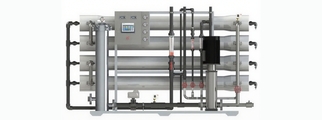
Electrodeionization (EDI) system is an advanced water purification technology that combines ion exchange and electrochemical processes to produce ultra-pure water. Unlike traditional deionization methods, which rely on chemical regeneration, EDI utilizes electric fields to drive the movement of ions through ion-exchange membranes, effectively removing dissolved salts and other ionic contaminants.
This process is continuous and does not require the use of chemicals for regeneration, making it an environmentally friendly and cost-effective solution for producing high-quality deionized water. EDI systems are widely used in applications requiring ultrapure water, such as in the pharmaceutical, semiconductor, power generation, and biotechnology industries, as well as for laboratory use.
By offering high-purity water without the need for chemical regeneration, EDI systems provide a sustainable, efficient, and reliable alternative to traditional deionization methods, making them an ideal choice for industries where water quality and process control are critical.
Diagnosing Common Electrodeionization Performance Problems
1. Rising product conductivity (loss of purity)
Symptom: Product conductivity or decreased resistivity gradually increases or shows spikes. This is the most common operational complaint and can result from multiple causes.
Likely causes and diagnostics:
- Feed water quality deterioration — check feed conductivity, silica, TOC, hardness and make-up RO performance. A sudden rise in feed TDS or silica often precedes EDI breakthrough.
- Insufficient pretreatment — confirm RO permeate quality and softening schedules. EDI is not a replacement for RO; it polishes RO-quality water. See Water Quality Association for pretreatment guidance.
- Membrane or resin exhaustion/fouling — inspect for irreversible fouling (organic, particulate) and monitor differential pressure and color changes in the resin compartments.
- Electrical issues — check DC power supply voltage/current stability and electrode stacks for uniform current distribution.
2. Silica or weakly ionized species breakthrough
Silica and certain weakly ionized species (e.g., boron at high pH) can pass through if pretreatment is inadequate or when current density is insufficient.
Troubleshooting steps:
- Measure silica in feed and product. A gradual increase signifies loading; an abrupt change suggests pretreatment failure.
- Adjust current density within the EDI design range to enhance migration of weakly ionized species.
- Consider additional pretreatment such as RO stage polishing, coagulation/filtration, or specific silica-removal units ahead of EDI.
3. Scaling and precipitation inside modules
Symptoms: Increased differential pressure, visual deposits during inspection, sudden conductivity spikes. Common scalants include calcium, magnesium, and silica.
Diagnosis and fixes:
- Check hardness and antiscalant dosing upstream (RO softeners or antiscalant performance). EDI requires low hardness feed; otherwise scaling risk rises.
- Perform acid cleaning when compatible with membranes and resins; follow vendor cleaning protocols to avoid damaging ion-exchange membranes or electrode coatings.
- Install better pretreatment (e.g., softener or ion-exchange polisher) if scaling recurs frequently.
Practical Remedies, Maintenance and Optimization
Preventive pretreatment strategies
EDI performs best when RO permeate meets tight specifications — typically low conductivity (<50 µS/cm), low silica, low TOC, and negligible hardness. Maintain RO membrane integrity, use antiscalant properly, and employ cartridge/ultra-filtration to limit particulates. For reference on membrane pretreatment practices, review industry resources such as the Reverse Osmosis — Wikipedia article and Water Quality Association materials (WQA).
Cleaning procedures and chemical compatibility
Regular cleaning programs (CIP) reduce organic and inorganic fouling. Typical steps:
- Rinse with low-conductivity water to remove loose particulates.
- Use acid-based cleaners for inorganic scale and alkaline cleaners for organics, following vendor compatibility charts.
- Avoid oxidizers (e.g., free chlorine) unless membranes and resins are resistant; oxidizing agents can damage ion-exchange components and electrode surfaces.
Electrical and operational optimization
Maintain correct current density and continuous monitoring — both under-current and over-current conditions impair performance. Implement automated control of voltage/current and alarms for anomalies. Monitor stack temperature; excessive heat reduces efficiency and can accelerate membrane deterioration. Ensure consistent flow distribution and avoid air pockets by proper venting.
Comparisons, Case Studies and Brand Advantages
EDI vs. conventional chemical regeneration and mixed-bed DI
Table: Performance and operational comparison
| Feature | Electrodeionization (EDI) | Chemical Regenerated Mixed-Bed DI | RO + EDI |
|---|---|---|---|
| Regeneration method | Chemical-free, continuous via electric field | Periodic chemical regeneration (acid/caustic) | RO reduces load; EDI polishes to ultrapure |
| Operational continuity | Continuous, minimal downtime | Offline during regeneration | Continuous when properly designed |
| OPEX | Lower long-term OPEX (no chemicals), electrical cost applies | Higher OPEX due to chemicals and disposal | Moderate — adds RO power but reduces EDI load |
| Water quality | Stable ultrapure (high resistivity) | High-quality but regeneration cycles affect continuity | Best for feed water with variable quality |
Case example: Recurrent silica breakthrough
Situation: A semiconductor fab saw silica breakthrough during high-load periods. Root causes were intermittent RO antiscalant failure and low current density during peak demand. Solutions implemented: revised antiscalant dosing, added RO cartridge polishing, increased EDI module capacity, and installed automated current control. Result: silica levels dropped to acceptable process limits and downtime related to EDI cleaning decreased by 70%.
Our brand advantages for Electrodeionization Systems to Get UltraPure Water
When selecting a vendor, look for these capabilities:
- Proven module design with uniform flow distribution and robust electrode stacks to minimize hotspots and uneven current density.
- Integrated monitoring and control systems (SCADA-ready) for real-time conductivity, TOC, current, and temperature alarms.
- Comprehensive service: start-up support, scheduled CIP plans, spare parts, and certified technicians for membrane/resin replacement.
- Customization to match feed water characteristics and process demand — modular skids allow capacity scaling and redundancy (N+1 designs).
Our Electrodeionization Systems to Get UltraPure Water deliver these benefits: chemical-free operation, continuous ultrapure production, lower lifecycle costs, and tailored pretreatment packages to reduce fouling and scaling risk.
Advanced Troubleshooting: Step-by-Step Guides
Quick checklist for a conductivity rise
- Verify instrument calibration (conductivity cell verification) — false readings are common.
- Measure feed water quality (conductivity, silica, TOC, hardness).
- Confirm RO performance (percent rejection, permeate conductivity).
- Check DC power supply and current density across modules.
- Inspect for fouling or scaling signs and execute CIP if indicated.
Handling membrane fouling or resin discoloration
Fouling is typically organic (biofilm, TOC), particulate, or inorganic. Actions:
- Stop the system and flush with low-conductivity water.
- Perform appropriate chemical cleaning per vendor instructions (alkaline for organics, acid for inorganics).
- If resistant fouling remains, contact supplier for membrane/resin replacement guidance.
When to call technical support
Escalate to vendor support if:
- Cleaning fails to restore quality or pressure differential continues to increase.
- There is visible membrane damage, electrode corrosion, or resin breakdown.
- Unexplained electrical anomalies persist after basic checks.
FAQ — Frequently Asked Questions
Q1: How often should an EDI system be cleaned or serviced?
A1: Recommended maintenance intervals depend on feed water quality and operating hours. Typical schedules: visual and instrumentation checks daily, CIP frequency monthly to quarterly, and full module inspection annually. High TOC or silica feeds may require more frequent attention.
Q2: Can EDI handle RO permeate with residual hardness or silica?
A2: EDI requires low hardness and controlled silica. Residual hardness should be near zero; silica must be below design limits. If feed water occasionally exceeds limits, install a polishing step (ion-exchange softener or specialized silica removal) ahead of EDI.
Q3: What are common instrument errors that mimic EDI failure?
A3: Miscalibrated conductivity cells, fouled probes, or improper temperature compensation can mimic performance loss. Always verify instrumentation before undertaking intrusive troubleshooting.
Q4: How long do EDI membranes and resins typically last?
A4: With proper pretreatment and maintenance, membranes and resins commonly last 3–7 years. Life depends on feed water quality, chemical exposure (especially oxidizers), and operating conditions like current density and temperature.
Q5: Is EDI environmentally friendly compared with conventional DI?
A5: Yes. EDI eliminates the need for acid and caustic regeneration chemicals, reducing hazardous waste and chemical handling risks. It consumes electrical energy, but lifecycle assessments typically show lower environmental impact compared with repeatedly regenerated mixed-bed systems.
Need help diagnosing an EDI issue or want to see our Electrodeionization Systems to Get UltraPure Water in action? Contact our technical team for a free process assessment or request a datasheet and customized quote: View product details & request a quote. For immediate support, Contact us or email support@yourcompany.com.
References: Electrodeionization overview — Wikipedia; Pretreatment and water quality best practices — Water Quality Association.
Choosing Filtration Systems for Sediment and Turbidity
RO vs UV vs Carbon: Which Water Purification System Wins?
Common Well Water Contaminants Removed by BWRO BWE Series
Sustainable Water Purification: Reduce Waste and Energy — Practical Guide by Aqualitek
Water Filters
How do I choose between a media filter and a micron filter?
Media filters are ideal for high-volume solids removal and can be backwashed. Micron filters offer precise filtration for fine particles and are best for polishing applications.
Do you provide replacement parts and consumables?
Yes. We supply cartridges, filter bags, media (sand, carbon, etc.), valve kits, and O-rings for all major systems.
Can I automate the filter cleaning process?
Absolutely. Our automatic backwash filters come with timer-based or differential pressure-triggered controls.
FAQ-aqualitek
What industries does AQT serve?
We provide water treatment solutions for a wide range of industries, including:
Industrial Manufacturing – Process water treatment, cooling water, and boiler feed.
Hospitality & Commercial – Hotels, restaurants, and office buildings.
Residential Applications – Drinking water purification and softening.
Healthcare & Pharmaceuticals – Ultra-pure water for laboratories and hospitals.
Municipal & Public Utilities – Water supply and wastewater treatment.
Food & Beverage Processing – Filtration for beverage production and food safety.
Solutions
What types of water treatment systems does AQT offer?
AQT provides a wide range of water purification solutions, including reverse osmosis (RO) systems, ultrafiltration (UF) systems, nanofiltration (NF) systems, deionization (DI) systems, electro-deionization (EDI) systems, chemical dosing systems, and water softeners. We also supply spare parts and components for water treatment systems.
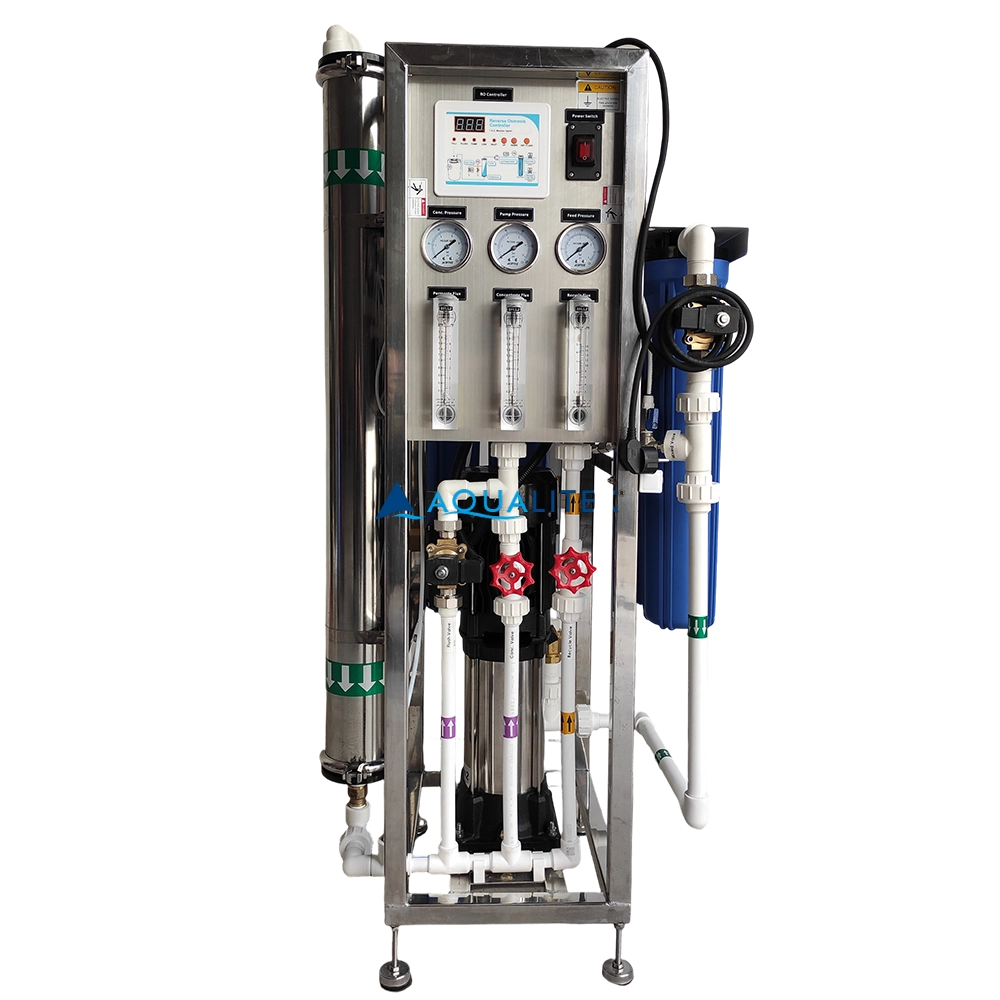
500 LPH Reverse Osmosis (RO) Water Purification Machine TWV - 412
Our 500 LPH Reverse Osmosis (RO) System is engineered to provide high-quality purified water for commercial applications. Designed with advanced RO technology, durable components, and a user-friendly interface, this system ensures consistent performance, low maintenance, and long-term reliability.
With its compact design and robust skid-mounted frame, it’s an excellent choice for businesses that demand efficiency and quality in water purification.
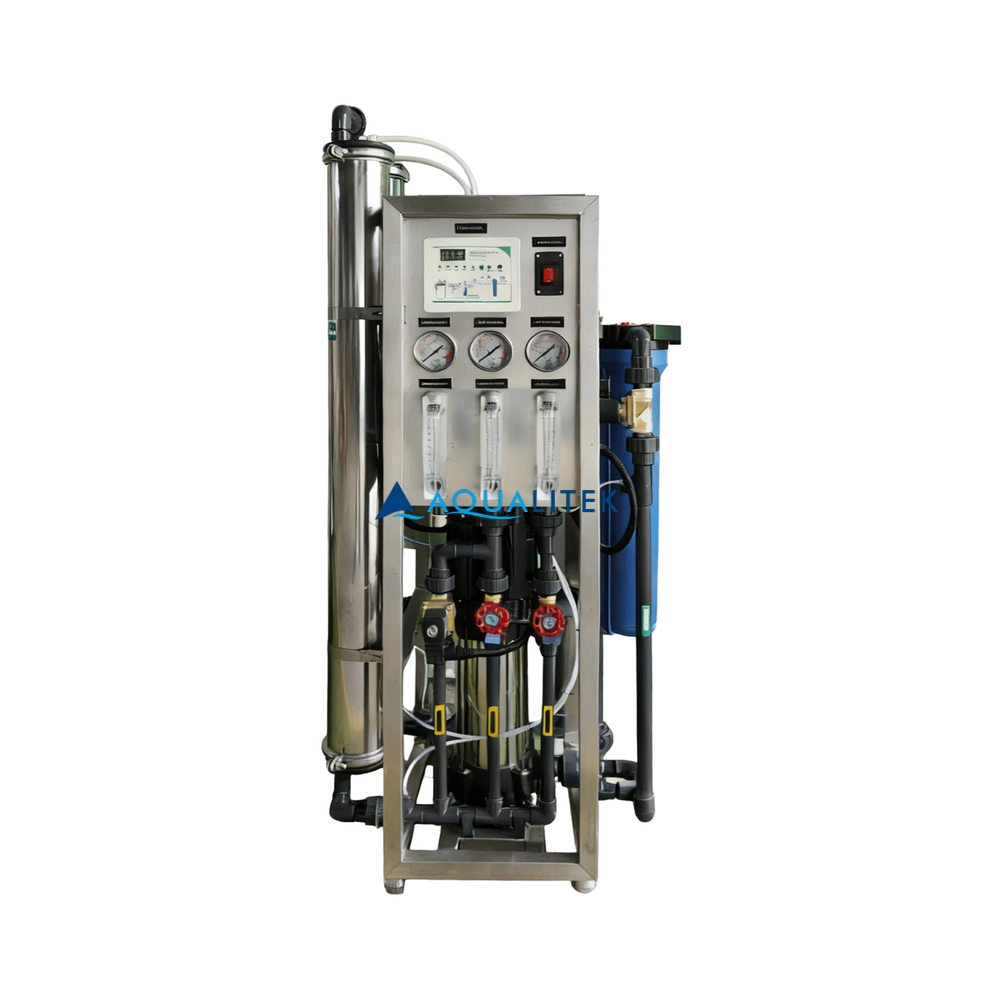
Tap Water Reverse Osmosis (TWRO) Systems TWV Series
TWV series Reverse Osmosis (RO) systems are pre-engineered and pre-assembled units with 2.5”/4” membrane housings(single element type)for tap water(lower TDS).They are designed for overall superior performance, high recovery rates and offer great savings with low maintenance and operation costs.
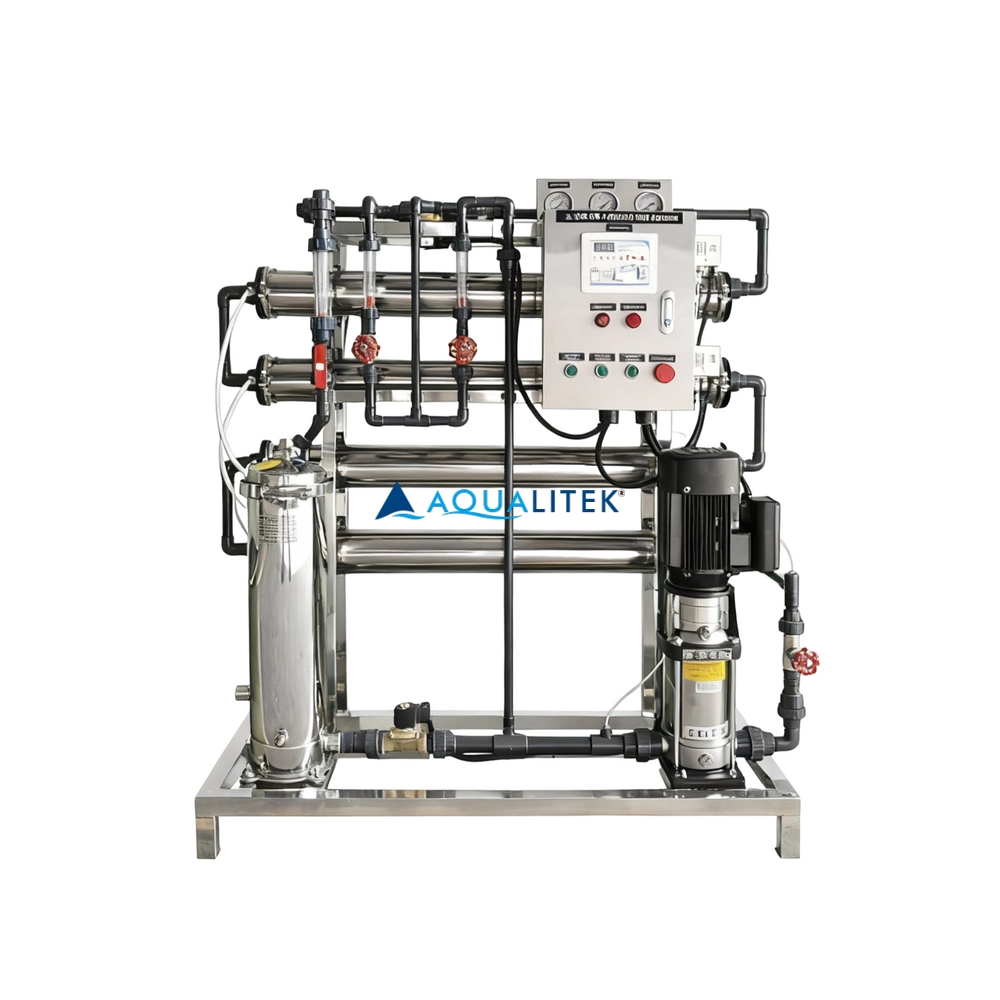
Tap Water Reverse Osmosis (TWRO) Systems TWF Series
TWF series Reverse Osmosis (RO) systems are pre-engineered and pre-assembled units with 4” membrane housings(multiple elements type) for tap water(lower TDS) .The medium large volumes can help meet your a variety of commercial and industrial applications. They are designed for overall superior performance, high recovery rates and offer great savings with low maintenance and operation costs.

Tap Water Reverse Osmosis (TWRO) Systems TWE Series
TWE series Reverse Osmosis (RO) systems are pre-engineered and pre-assembled units with 8” membrane housings for tap water (lower TDS). The large volumes can help meet your a variety of industrial applications. They are designed for overall superior performance, high recovery rates and offer great savings with low maintenance and operation costs.
Request More Information
Contact us today for product catalogs, customization options, and a free quotation designed for your business needs.
Rest assured that your privacy is important to us, and all information provided will be handled with the utmost confidentiality.
© 2026 AQUALITEK. All rights reserved.
AQUALITEK- Aimee Hoo
AQUALITEK - Aimee Hoo