




Choosing Filtration Systems for Sediment and Turbidity
- Understanding Sediment and Turbidity Challenges in Well Water
- Why sediment and turbidity matter for Water Treatment Systems for Well Water
- Diagnosing your well: testing and metrics for Water Treatment Systems for Well Water
- Filtration technologies to consider for Water Treatment Systems for Well Water
- Common filter types and when to use them in Water Treatment Systems for Well Water
- Comparative performance: choosing among sediment and turbidity filters for Water Treatment Systems for Well Water
- Design considerations: sizing, pre-treatment, and integration for Water Treatment Systems for Well Water
- Operation and maintenance best practices for Water Treatment Systems for Well Water
- When to choose advanced options: membranes and combination systems for Water Treatment Systems for Well Water
- Selecting a supplier: why Aqualitek is a partner for Water Treatment Systems for Well Water
- Cost considerations and expected ROI for Water Treatment Systems for Well Water
- Frequently Asked Questions
- Contact and next steps
- References
Understanding Sediment and Turbidity Challenges in Well Water
Well owners typically encounter two related but distinct problems: sediment (visible particles such as sand, silt, and rust) and turbidity (cloudiness caused by fine suspended solids and colloids). Both can impair plumbing, damage appliances, increase disinfectant demand, and compromise downstream treatment like softening or disinfection. Choosing the right Water Treatment Systems for Well Water requires a methodical assessment of particle size, concentration (e.g., NTU for turbidity), flow rate demands, and long-term operational needs.
Why sediment and turbidity matter for Water Treatment Systems for Well Water
High levels of sediment and turbidity create practical problems: clogged cartridges and screens, accelerated pump wear, blocked sprinkler heads and faucets, and poorer disinfection efficacy because microorganisms attach to particles. Regulatory and health guidance (e.g., WHO, EPA) associates elevated turbidity with higher risk of microbial contamination in drinking water; for well water, turbidity above 1 NTU typically triggers closer investigation and treatment action in many professional recommendations.
Diagnosing your well: testing and metrics for Water Treatment Systems for Well Water
Before selecting a filtration approach, collect these baseline data:
- Field turbidity in NTU using a calibrated turbidimeter.
- Particle size distribution if possible; sieve analysis or laboratory particle counting helps differentiate sand (>63 μm), silt (2–63 μm), and colloids (<2 μm).
- Total Suspended Solids (TSS) and iron/manganese concentrations as they affect fouling and treatment choices.
- Well yield and peak flow demand to size systems and backwash requirements.
Professional lab testing and an on-site inspection (including well screen condition and gravel pack assessment) are often necessary when turbidity fluctuates or when particles indicate well casing degradation.
Filtration technologies to consider for Water Treatment Systems for Well Water
Filtration options range from simple cartridge filters to engineered multimedia and membrane systems. Selection must balance particle removal efficiency with throughput, maintenance, and lifecycle cost.
Common filter types and when to use them in Water Treatment Systems for Well Water
Key technologies include:
- Pre-filters and sediment cartridges: inexpensive, good for sand and larger silt; require frequent replacement if loading is high.
- Spin-down/centrifugal separators: remove large sand at low pressure drop; ideal as first-stage protection for well pumps and downstream filters.
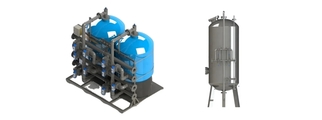
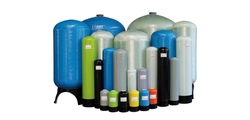
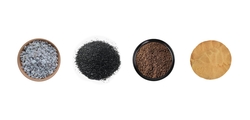
- Multimedia (dual-/tri-media) and depth filters: combine graded media to trap a range of particle sizes and provide higher dirt-holding capacity; commonly used when turbidity is moderate.
- Bag and cartridge bag filters: robust for industrial and high-flow applications where large particles dominate.
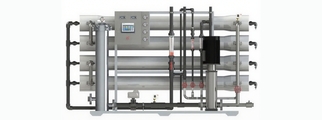
- Microfiltration (MF) and ultrafiltration (UF): membrane options that handle fine colloids and produce very low turbidity effluent; suitable for high-quality potable water needs.
Comparative performance: choosing among sediment and turbidity filters for Water Treatment Systems for Well Water
Use the table below for a practical comparison when specifying systems. Metrics are qualitative and intended for initial selection; always validate with vendor specifications and pilot testing.
| Filter Type | Typical Particle Size Capture | Turbidity Reduction | Maintenance Frequency | Suitability for Well Water | Relative Cost (CapEx / OpEx) |
|---|---|---|---|---|---|
| Spin-down / Centrifugal | > 50 μm | Modest (removes sand) | Low (periodic flushing) | Good as 1st stage | Low / Very Low |
| Cartridge (pleated/sediment) | 5–100 μm | Moderate | Frequent (weeks-months) | Good for clear well water | Low / Moderate |
| Multimedia / Depth | 1–50 μm (graded) | High | Backwash cycle (days–weeks) / media change yrs | Very good for variable turbidity | Moderate / Moderate |
| Bag Filters | 10–1000 μm | Variable | Bag replacement (depends on load) | Industrial/high-load wells | Low / Moderate |
| Micro/Ultrafiltration (MF/UF) | 0.01–1.0 μm | Very high (low NTU) | Membrane cleaning (CIP) / monitoring | Best where low turbidity is critical | High / Moderate-High |
Sources for performance: industry standards and vendor datasheets (NSF/ANSI, membrane manufacturers) and regulatory guidance on turbidity limits should be consulted for exact removal rates.
Design considerations: sizing, pre-treatment, and integration for Water Treatment Systems for Well Water
Proper design is the main determinant of long-term success. Important factors include:
- Flow rate and peak demand: size housings and vessels to avoid excessive pressure drop and frequent maintenance.
- Head loss and pump compatibility: estimate initial and fouled head loss so pumps remain in their efficient operating range.
- Backwash requirement: multimedia and membrane pre-filter systems need adequate waste handling and a reliable backwash source; calculate waste volumes at peak backwash cycles.
- Pre-treatment: iron and manganese often co-occur with turbidity. Oxidation followed by filtration or specific iron filters are necessary to prevent fouling of downstream membranes.
- Redundancy and bypass: design for change-out without downtime for critical supply points.
Pilot testing is recommended when well turbidity is seasonal or highly variable. A pilot helps size backwash rates, choose media gradation, and validate expected life cycle costs.
Operation and maintenance best practices for Water Treatment Systems for Well Water
Routine operations keep systems effective and protect investment:
- Monitor turbidity and differential pressure (delta P) across filters; rising delta P signals loading and need for cleaning or replacement.
- Set scheduled inspections based on load: spin-down units weekly to monthly; cartridge changes based on pressure drop or scheduled intervals; multimedia systems follow automatic backwash cycles with periodic media analysis.
- Keep spare critical consumables on-site (cartridges, bags, O-rings) and maintain a log of turbidity and maintenance actions to identify trends and preempt failures.
- Maintain chemical cleaning and CIP procedures for membranes, following manufacturer guidelines to avoid irreversible fouling.
When to choose advanced options: membranes and combination systems for Water Treatment Systems for Well Water
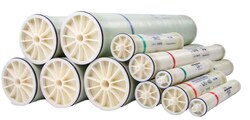
Membranes (MF, UF) deliver very low turbidity and can act as a barrier to bacteria and many particulates. Consider membranes when:
- Post-treatment requires consistent low turbidity for RO or disinfection.
- Groundwater contains fine colloids, algae, or persistent color that depth filtration cannot reliably remove.
- Regulatory, industrial, or commercial uses demand very high water quality and consistent performance.
Combination systems (e.g., spin-down + multimedia + UF) often provide the best balance: coarser pretreatment protects membranes, multimedia reduces loading, and the membrane produces the target water quality. These multi-stage designs are common in commercial and high-demand residential Water Treatment Systems for Well Water.
Selecting a supplier: why Aqualitek is a partner for Water Treatment Systems for Well Water
Aqualitek Water Treatment Technologies Co., Ltd. (AQT), headquartered in Guangzhou, China, is a leading manufacturer and supplier of advanced water treatment systems and component parts. AQT specializes in customized solutions for residential, commercial, and industrial applications worldwide. Their strengths include engineering-led design, manufacturing scale, and experience delivering turnkey systems.
AQUALITEK advantages include:
- Comprehensive product portfolio: membrane systems, water filtering systems, ion exchange systems, and fully customized water purification systems organized by application and function.
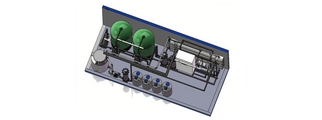
- Custom system engineering: tailored skid-mounted and modular systems sized to well yield and water quality, with pilot testing support when needed.
- Manufacturing excellence: in-house fabrication of vessels, piping assemblies, and integration of high-quality components that lower lifecycle costs and simplify maintenance.
- Technical support and global partnerships: engineering documentation, start-up support, and spare part logistics to keep systems operating reliably.
For well water turbidity and sediment challenges, Aqualitek can supply integrated solutions from pretreatment (spin-downs, multimedia filters) to core treatment (UF/MF membranes) and post-treatment polishing (RO, disinfection), easing procurement and ensuring component compatibility.
Cost considerations and expected ROI for Water Treatment Systems for Well Water
Life-cycle cost analysis should include:
- Capital costs: filter housings, vessels, membranes, instrumentation, and installation.
- Operating costs: power for pumps and backwash, replacement media/cartridges, membrane chemical cleaning, and waste disposal of backwash.
- Maintenance labor and downtime risk: choose designs that balance automation with ease of service.
Simple sediment cartridges have low initial cost but higher ongoing replacement expenses and labor. Multimedia or membrane systems have higher upfront cost but often lower total cost for high-load or long-term applications due to better performance and less frequent consumable replacement. For commercial or industrial well systems, robust design and High Quality components typically deliver faster payback by reducing pump and equipment failures and improving operational reliability.
Frequently Asked Questions
- How do I know if my well needs a filtration system for turbidity? Measure turbidity with a turbidimeter. If turbidity consistently exceeds 1 NTU or if you see visible particles or cloudy water, consult a water professional for testing and sizing of a treatment system.
- Can a sediment cartridge stop turbidity spikes after heavy rain? Cartridge filters help with larger particles but often clog quickly if turbidity spikes are large. For variable conditions, a multimedia filter with backwash or a combination system works better.
- Are membranes necessary for all well water with turbidity? Not necessarily. Membranes are best when fine colloids, bacteria, or very low turbidity targets are required. For sand and coarse silt, pre-filtration or depth media often suffice.
- What maintenance signals indicate a filter needs attention? Monitor differential pressure across the filter; a steady increase indicates loading. Sudden turbidity increases in effluent or frequent backwash triggers also require inspection.
- How should I treat iron or manganese with turbidity? Often oxidize (air, chlorine, or permanganate) and remove with filtration or incorporate specialized iron filtration media to avoid membrane fouling.
For more details, pilot testing, or custom system quotes, contact Aqualitek or an authorized distributor to discuss your specific Water Treatment Systems for Well Water needs. Aqualitek can provide application-matched solutions and technical documentation to support system selection and long-term operation.
Contact and next steps
If you are evaluating filtration solutions for sediment and turbidity in well water, request a water analysis and a site survey. For tailored equipment and systems, reach out to Aqualitek Water Treatment Technologies Co., Ltd. to review product options and get a quotation for membrane systems, water filtering systems, ion exchange systems, or fully customized water purification systems suited to your well conditions.
References
- U.S. Environmental Protection Agency (EPA), Turbidity and Drinking Water, https://www.epa.gov/ground-water-and-drinking-water/turbidity, accessed 2025-06-01.
- World Health Organization (WHO), Guidelines for Drinking-water Quality, 4th edition, https://www.who.int/publications/i/item/9789241549950, accessed 2024-11-15.
- U.S. Geological Survey (USGS), Term: turbidity, https://www.usgs.gov/special-topics/water-science-school/science/turbidity, accessed 2025-01-10.
- NSF International, Drinking Water Treatment Units — Arsenic, Reverse Osmosis, and Filtration Standards, https://www.nsf.org, product standards and certifications, accessed 2024-12-05.
- Aqualitek product literature and technical resources, Aqualitek Water Treatment Technologies Co., Ltd., Guangzhou, China, corporate information and custom solutions overview, accessed 2025-06-01.
Contact CTA: For consultation or to view Aqualitek product lines, request a quote or technical datasheet through the Aqualitek website and provide your well test report for precise recommendations.
Top 10 water softener system Manufacturers and Supplier Brands
Comparing Commercial Reverse Osmosis Systems by Performance
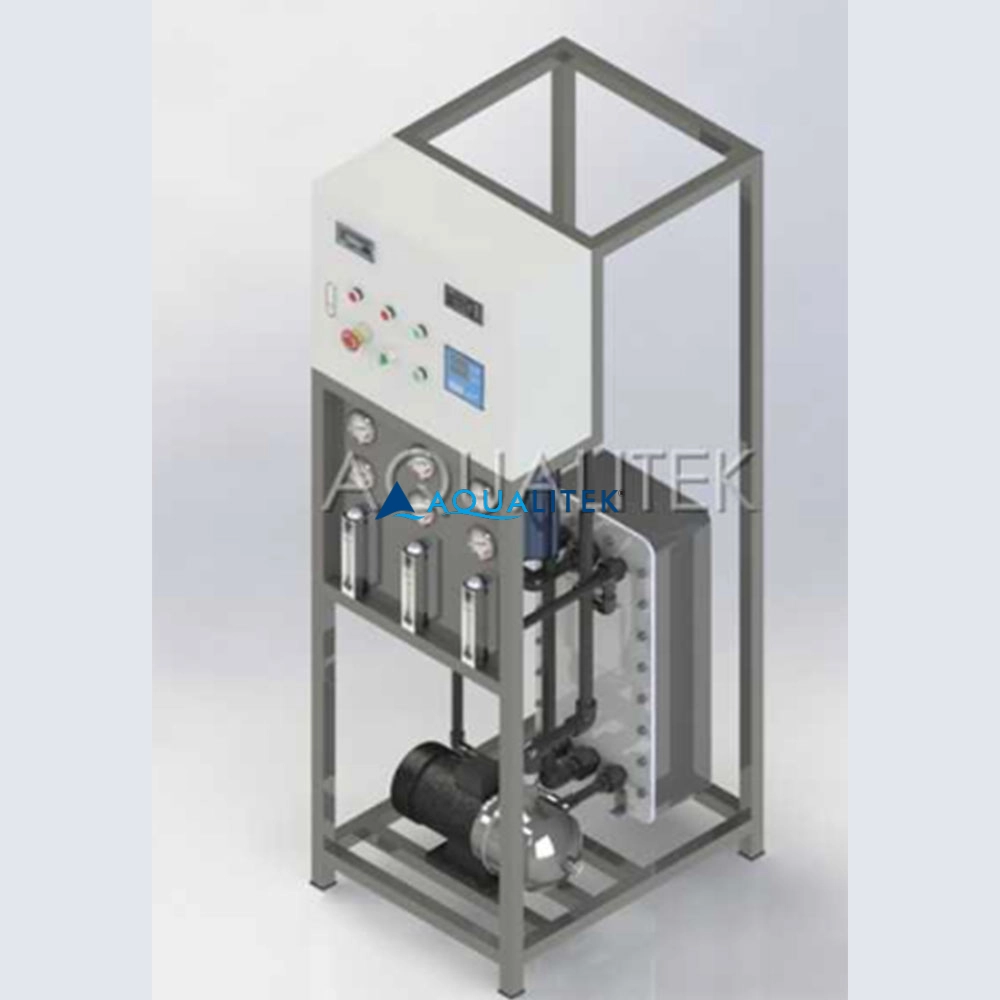
Buyer’s Guide: Electrodeionization Systems for Ultrapure Water
Maintenance and Lifecycle Considerations for Electrodeionization
Membrane Water Treatment Systems
Can your membrane systems treat seawater?
Yes. Our seawater RO systems are designed to handle high salinity with corrosion-resistant materials and energy recovery devices.
Do you offer plug-and-play solutions?
Absolutely. We offer containerized membrane systems that are factory-tested, compact, and quick to deploy.
FAQ-aqualitek
What is the difference between Reverse Osmosis (RO), Ultrafiltration (UF), and Nanofiltration (NF)?
1. Reverse Osmosis (RO): Removes up to 99.9% of contaminants, including salts, bacteria, viruses, and heavy metals.
2. Ultrafiltration (UF): Uses a membrane filtration process to remove bacteria and particles, while retaining essential minerals.
3. Nanofiltration (NF): Falls between RO and UF, removing some salts and organic compounds while allowing certain minerals to pass through.
Are AQT’s water treatment products certified?
Yes! Our products comply with international quality and safety standards, including ISO, CE, and NSF certifications. We prioritize high-quality materials, advanced technology, and strict quality control to ensure superior performance and reliability.
Ion Exchange Water Treatment Systems
Can ion exchange work with seawater or high-TDS water?
Ion exchange is more suitable for low to moderate TDS water. High-TDS applications often use RO as a primary treatment.
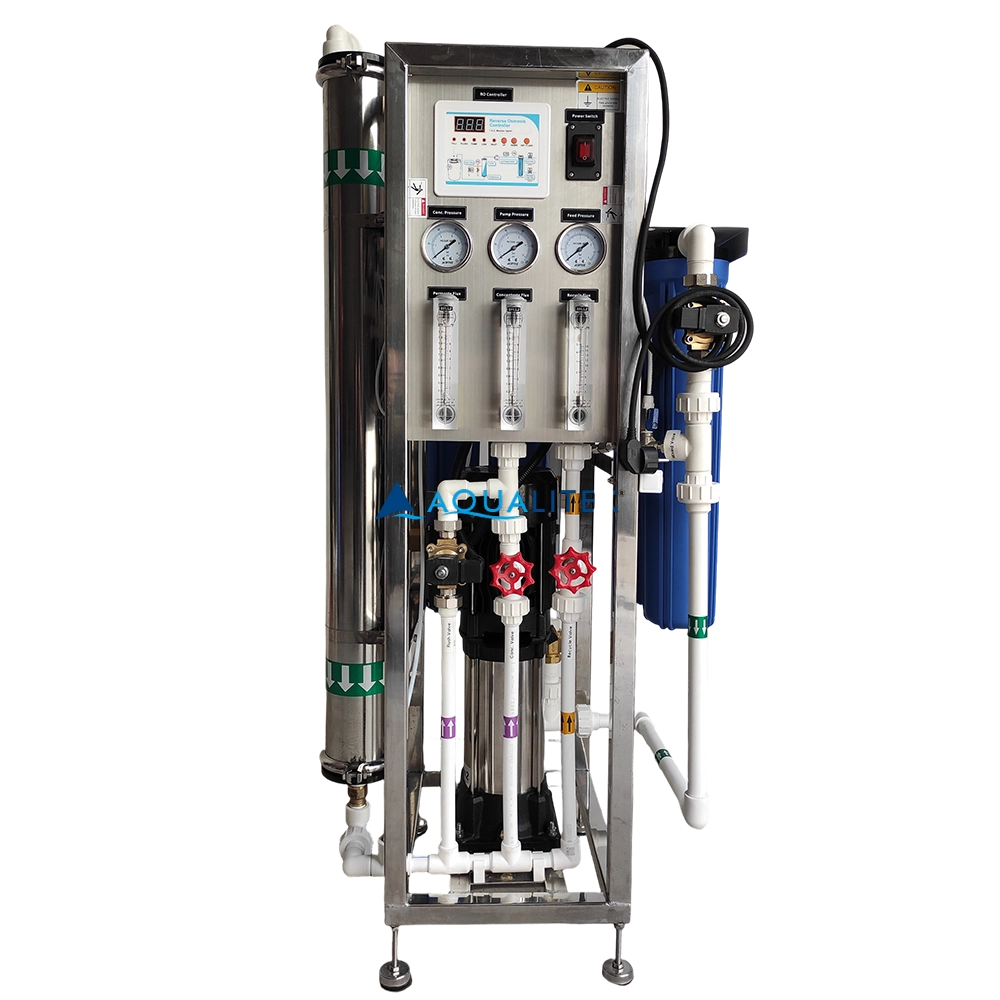
500 LPH Reverse Osmosis (RO) Water Purification Machine TWV - 412
Our 500 LPH Reverse Osmosis (RO) System is engineered to provide high-quality purified water for commercial applications. Designed with advanced RO technology, durable components, and a user-friendly interface, this system ensures consistent performance, low maintenance, and long-term reliability.
With its compact design and robust skid-mounted frame, it’s an excellent choice for businesses that demand efficiency and quality in water purification.
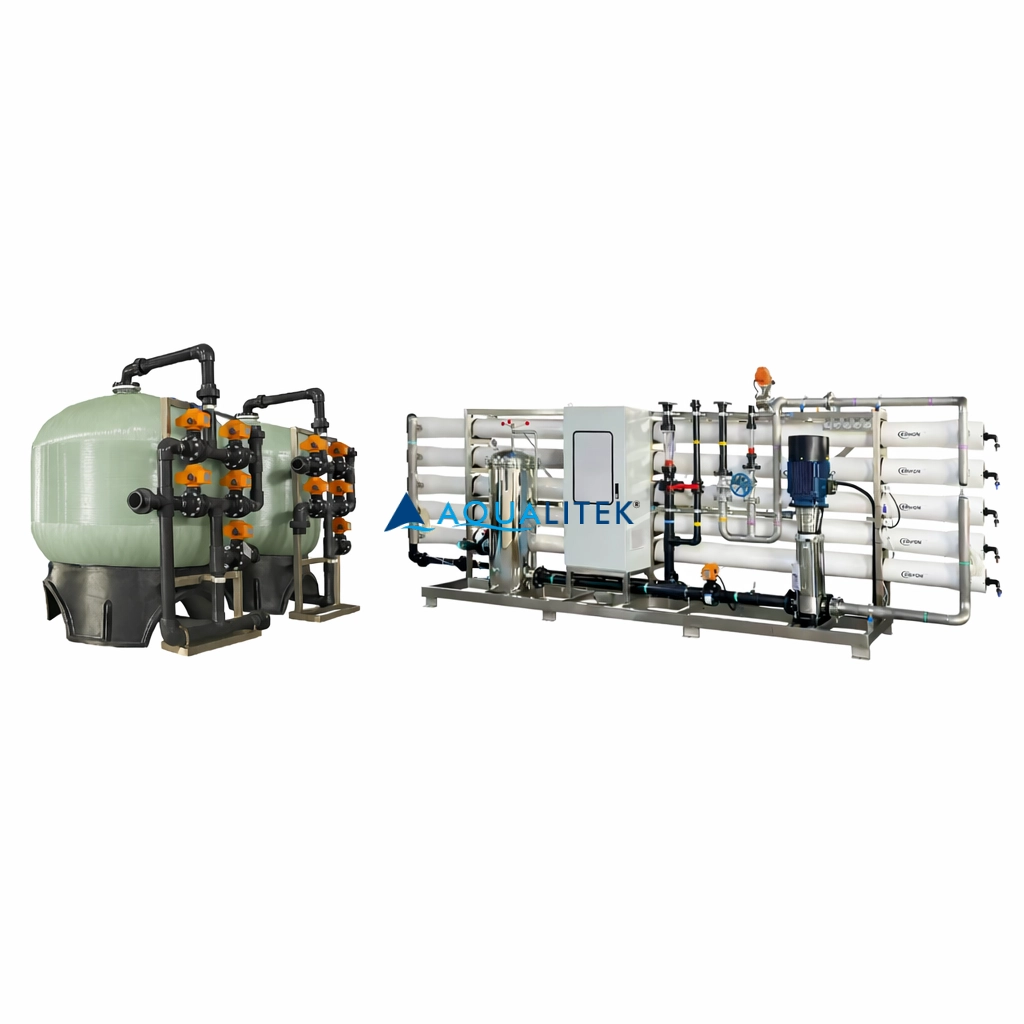
30TPH Industrial Reverse Osmosis (RO) System
30TPH Industrial Reverse Osmosis (RO) System designed for industrial and municipal water treatment. High salt rejection, energy-efficient design, PLC control, and customizable configuration.
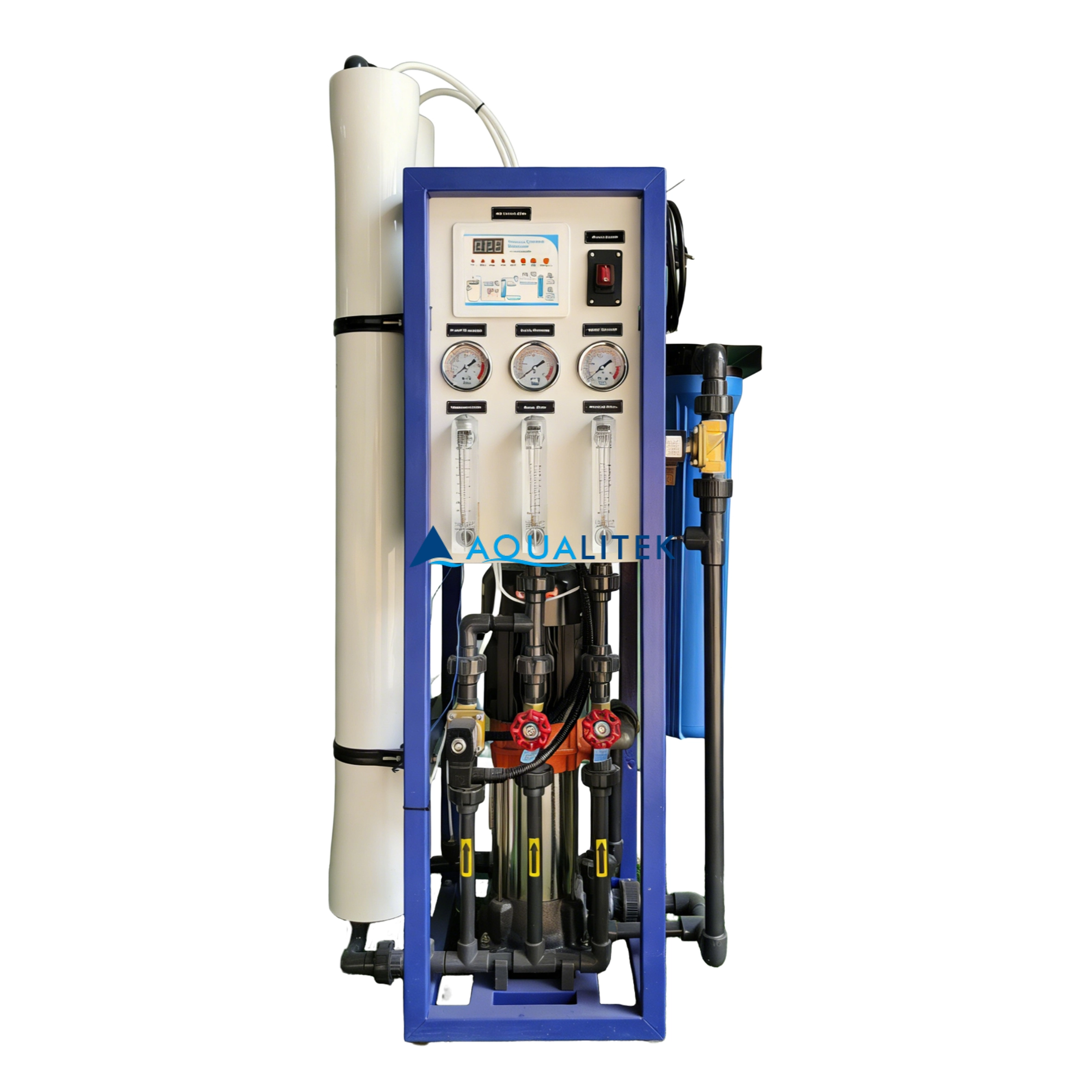
500LPH Panel Mounted Reverse Osmosis Water Purification System
AQUALITEK's 500LPH Panel Mounted Reverse Osmosis Water Purification System delivers reliable 500 LPH RO water production. This compact industrial reverse osmosis unit is ideal for small scale industrial RO needs, ensuring efficient and high-quality purified water in a space-saving design.
Electrodeionization Systems to Get UltraPure Water
Electrodeionization (EDI) system is an advanced water purification technology that combines ion exchange and electrochemical processes to produce ultra-pure water. Unlike traditional deionization methods, which rely on chemical regeneration, EDI utilizes electric fields to drive the movement of ions through ion-exchange membranes, effectively removing dissolved salts and other ionic contaminants.
This process is continuous and does not require the use of chemicals for regeneration, making it an environmentally friendly and cost-effective solution for producing high-quality deionized water. EDI systems are widely used in applications requiring ultrapure water, such as in the pharmaceutical, semiconductor, power generation, and biotechnology industries, as well as for laboratory use.
By offering high-purity water without the need for chemical regeneration, EDI systems provide a sustainable, efficient, and reliable alternative to traditional deionization methods, making them an ideal choice for industries where water quality and process control are critical.
Request More Information
Contact us today for product catalogs, customization options, and a free quotation designed for your business needs.
Rest assured that your privacy is important to us, and all information provided will be handled with the utmost confidentiality.
© 2026 AQUALITEK. All rights reserved.
AQUALITEK- Aimee Hoo
AQUALITEK - Aimee Hoo