




Scaling Water Treatment: When to Upgrade to a 12TPH UF Device
- Scaling Water Treatment: When to Upgrade to a 12TPH UF Device
- Understanding Ultrafiltration Water Treatment and Where It Fits
- When to Consider Upgrading: Common Operational Triggers
- Key Technical Criteria: How to Evaluate UF Capacity Needs
- Product Spotlight: 12TPH Industrial UF Water Treatment Device with High Throughput
- Benefits of Upgrading to a 12TPH UF Device
- Economic Comparison: Costs, Energy, and ROI
- Operational Considerations: Fouling, Backwash, and Pretreatment
- Installation and Integration: What Plant Managers Should Plan For
- Maintenance, Lifespan, and Spare Parts
- Applications and Case Examples: Where 12TPH Delivers Value
- Selecting a Vendor: What to Ask Before Buying
- AQUALITEK Advantages: Why Consider the UFL-4 12TPH Series
- FAQ — Frequently Asked Questions
- Q: How do I know if a 12TPH UF device is right for my plant?
- Q: What pretreatment is required for the AQUALITEK 12TPH UF?
- Q: How often will I need to perform chemical cleanings (CIP)?
- Q: Is the 12TPH UF suitable as sole treatment for potable reuse?
- Q: What is the expected membrane life?
- Contact Us / View Product
- Authoritative References and Further Reading

Scaling Water Treatment: When to Upgrade to a 12TPH UF Device
Understanding Ultrafiltration Water Treatment and Where It Fits
Ultrafiltration water treatment (UF) is a membrane-based separation process that removes suspended solids, bacteria, colloids, and high-molecular-weight substances from water. UF is commonly used as pretreatment for reverse osmosis (RO), for polishing treated wastewater, and in standalone applications where reliable turbidity reduction and microbial control are required. Ultrafiltration Water Treatment delivers consistent water quality with a relatively small footprint and predictable operating costs compared with some conventional clarification systems. For many industrial and commercial operations, the question is not whether UF is appropriate, but which UF capacity and configuration best match evolving throughput and regulatory needs.
When to Consider Upgrading: Common Operational Triggers
Deciding to upgrade to a 12TPH Industrial UF Water Treatment Device with High Throughput is driven by measurable operational triggers rather than guesswork. Typical indicators include:
- Consistently exceeding existing system flow capacity during peak periods.
- Higher feed turbidity or solids load than the current train was designed for, leading to reduced run-times and increased backwash frequency.
- Increased regulatory requirements for effluent turbidity, microbial removal, or reuse standards.
- Expanding production lines, new process units, or additional facilities requiring centralized treatment.
- Escalating maintenance and chemical cleaning costs that make smaller or older systems uneconomic.
When one or more of these factors persist, upgrading to a higher-throughput UF device becomes a strategic investment to stabilize operations and reduce total cost of ownership.
Key Technical Criteria: How to Evaluate UF Capacity Needs
Before selecting a 12TPH UF unit, define your technical requirements in clear terms. Important parameters include:
- Average and peak flow rates (m3/h or TPH). The 12TPH name indicates nominal throughput up to 12 tons per hour (approx. 12 m3/h for water), so confirm alignment with peak demand.
- Feed water quality: turbidity (NTU), suspended solids, organic load (TOC/UV254), and microbial counts. Higher fouling loads require robust pretreatment or higher-rated membrane modules.
- Required permeate quality: target turbidity, microbial log-reduction, and compatibility with downstream RO or reuse standards.
- Operating conditions: temperature range, pH, presence of oils or solvents, and available cleaning agents.
- Availability of utilities: power for pumps, compressed air for backwash (if required), space for equipment and access for maintenance.
Matching these criteria to a device such as the 12TPH Industrial UF Water Treatment Device with High Throughput ensures reliable performance without oversizing or undersizing the investment.
Product Spotlight: 12TPH Industrial UF Water Treatment Device with High Throughput
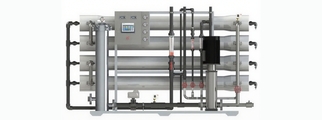
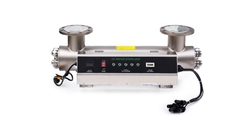
AQUALITEK 12TPH Industrial UF Water Treatment Device (UFL-4 Series) delivers high-efficiency, high-throughput ultrafiltration with Automatic Backwash Technology, high fouling-resistance membrane modules for efficient pretreatment and turbidity reduction in industrial and commercial applications.
This product is designed for operators who need continuous performance, predictable water quality, and lower manual intervention. Key features include automatic backwash cycles to reduce fouling, modular membranes that tolerate common industrial feedwater challenges, and controls that integrate with plant SCADA or PLC systems.
Benefits of Upgrading to a 12TPH UF Device
Upgrading to a larger, modern UF unit delivers multiple operational and economic advantages:
- Higher throughput: meets peak demands and supports future growth without staging additional trains.
- Improved reliability: modern membranes and automatic backwash systems keep differential pressures lower and maintain flux rates longer.
- Lower maintenance labor: automation reduces manual clean-in-place (CIP) frequency and emergency interventions.
- Enhanced pretreatment for RO and reuse: stable permeate quality protects downstream membranes and reduces overall treatment costs.
- Space efficiency: compact modular designs reduce footprint compared to older clarifier/filtration trains.
Economic Comparison: Costs, Energy, and ROI
Evaluating an upgrade requires comparing lifecycle costs (CAPEX + OPEX). The table below shows a simplified comparison between a smaller legacy UF train, a 12TPH Industrial UF device, and a conventional multimedia filtration system when treating the same peak load.
| Metric | Legacy Small UF (4–6 TPH) | 12TPH Industrial UF Device | Conventional Multimedia Filtration |
|---|---|---|---|
| Nominal Capacity | 4–6 TPH | 12 TPH | 8–12 TPH |
| Footprint | Small | Compact modular | Large (clarifiers & filters) |
| Typical OPEX (chemicals & labor) | High (fouling, frequent CIP) | Moderate (automatic backwash, less CIP) | Moderate–High (backwash wastes, coagulants) |
| Permeate Quality | Good | Excellent (stable turbidity & microbial control) | Variable (depends on coagulant dosing) |
| Estimated Payback | Long if expansion needed | 2–5 years (depending on avoided downtime & RO protection) | 3–7 years (chemical & sludge handling costs) |
Note: These are indicative comparisons. A site-specific techno-economic analysis is required to calculate precise payback and lifecycle costs.
Operational Considerations: Fouling, Backwash, and Pretreatment
Membrane fouling is the primary operational challenge for any UF system. The 12TPH Industrial UF Water Treatment Device with High Throughput mitigates fouling risk through:
- Automatic Backwash Technology that periodically clears the membrane surface and restores flux without operator intervention.
- High fouling-resistance membrane modules that tolerate variable feed conditions better than older membranes.
- Recommended pretreatment (sand filtration, coagulation/flocculation, or media filtration) when feed turbidity or organics exceed design limits.
Best practice is to monitor transmembrane pressure (TMP), permeate flux, and recovery rates and to use alarms and trending to trigger scheduled CIP only when needed. Automatic backwash can significantly extend the interval between chemical cleanings and reduce chemical consumption and waste handling costs.
Installation and Integration: What Plant Managers Should Plan For
Upgrading to a 12TPH UF unit requires planning across mechanical, electrical, and control domains. Key checklist items include:
- Pad or skid space and structural support for the skid-mounted UF unit.
- Power supply sized for feed and recirculation pumps and control panels.
- Process piping for feed, permeate, concentrate (reject), and backwash waste lines.
- Integration with plant PLC/SCADA for remote monitoring and alarm handling.
- Access for periodic maintenance, membrane replacement, and chemical storage for CIP.
Working with a vendor that provides precommissioning support and site commissioning reduces downtime and speeds ramp-up to steady-state performance.
Maintenance, Lifespan, and Spare Parts
Membrane life depends on feedwater quality, cleaning protocols, and operating stress. Typical UF membranes last 5–8 years when properly maintained. To optimize lifespan:
- Follow manufacturer-recommended automatic backwash schedules and CIP protocols.
- Monitor key indicators: TMP, flux, turbidity breakthrough, and permeate conductivity (if relevant).
- Keep essential spares: valves, pressure sensors, and at least one spare membrane module element for critical installations.
Vendors who support local spare part inventories and offer service contracts typically deliver better uptime and predictable maintenance costs.
Applications and Case Examples: Where 12TPH Delivers Value
Typical applications where a 12TPH Industrial UF Water Treatment Device is appropriate include:
- Industrial process water pretreatment for RO systems in chemical, pharmaceutical, and food & beverage plants.
- Effluent polishing for reuse in cooling towers, boilers (with additional treatment), or irrigation.
- Municipal or decentralized water systems requiring robust turbidity and microbial control.
- Commercial facilities (hotels, hospitals) requiring high-quality reuse water with low operational complexity.
Real-world benefits often include reduced RO fouling, lowered chemical use downstream, fewer shutdowns for cleaning, and better compliance with discharge or reuse standards.
Selecting a Vendor: What to Ask Before Buying
When evaluating suppliers for a 12TPH UF device, focus on service, evidence, and data:
- Request performance data for feedwater similar to yours (turbidity, TSS, TOC) and independent test reports if available.
- Ask about automatic backwash logic, PLC/SCADA compatibility, and remote diagnostics capabilities.
- Clarify warranty terms, membrane replacement policy, and availability of local service engineers.
- Confirm availability of spare parts and typical lead times for consumables.
AQUALITEK Advantages: Why Consider the UFL-4 12TPH Series
AQUALITEK's 12TPH Industrial UF Water Treatment Device (UFL-4 Series) is built with industrial scale and automation in mind. Key brand advantages include:
- Automatic Backwash Technology to reduce manual intervention and extend runtime between CIP cycles.
- High fouling-resistance membrane modules that are suited for challenging industrial feedwaters.
- Modular design for easier installation, scalability, and lower footprint compared with traditional systems.
- Integration-ready controls for seamless connection to plant automation systems and remote monitoring.
- Comprehensive aftermarket support and spare parts provisioning to minimize downtime.
FAQ — Frequently Asked Questions
Q: How do I know if a 12TPH UF device is right for my plant?
A: Start by measuring your current and peak flow rates, feed turbidity, and reasons for existing system shortfalls. If peaks exceed your current UF capacity, or if you face high fouling/CIP frequency, a 12TPH UF unit can stabilize operations and lower lifecycle costs.
Q: What pretreatment is required for the AQUALITEK 12TPH UF?
A: Many installations use simple screening and sedimentation or multimedia filtration. For very high turbidity or oily feeds, coagulation/flocculation or dissolved air flotation (DAF) ahead of UF may be recommended. The exact pretreatment depends on feedwater characteristics.
Q: How often will I need to perform chemical cleanings (CIP)?
A: With Automatic Backwash Technology and proper pretreatment, CIP frequency is typically reduced. Many sites can operate months between chemical cleanings. Actual frequency depends on feedwater fouling propensity.
Q: Is the 12TPH UF suitable as sole treatment for potable reuse?
A: Ultrafiltration provides excellent turbidity and microbial control but often needs disinfection and additional treatment steps to meet potable reuse criteria. For potable reuse, combine UF with additional processes as required by local regulations.
Q: What is the expected membrane life?
A: With proper operation and maintenance, UF membranes commonly last 5–8 years. Life expectancy depends on feedwater quality, cleaning regimen, and operating conditions.
Contact Us / View Product
If your operation is experiencing capacity constraints, frequent fouling, or you are preparing for expansion, the AQUALITEK 12TPH Industrial UF Water Treatment Device (UFL-4 Series) could be the right upgrade. Contact our sales team for a site evaluation, pilot testing options, and a tailored techno-economic analysis. View product datasheets and request a quote to compare expected payback and lifecycle savings. Before committing to expansion, procurement teams should apply structured criteria by selecting vendors and what B2B buyers should ask about UF systems.
Authoritative References and Further Reading
For readers who want to verify technical principles or review standards, consult these authoritative sources:
- International Water Association (IWA) — membrane technology resources: https://iwa-network.org
- World Health Organization (WHO) — Ultraviolet Disinfection and Membrane Filtration references: https://www.who.int
- U.S. Environmental Protection Agency (EPA) — Water Treatment Manuals and Membrane Processes: https://www.epa.gov
- Wikipedia — Ultrafiltration overview: https://en.wikipedia.org/wiki/Ultrafiltration
For more information, full product specifications, or to arrange a pilot, contact AQUALITEK sales or your authorized distributor.
Top 10 Water Softeners for Home Use in 2025
Design considerations for industrial carbon filtration systems
Top Industrial Reverse Osmosis Machines 2026
Maintenance Checklist for Your Water Purification System: Practical Guide for Reliable Performance
Blog
How do I know when to add salt to my softener?
Check the brine tank monthly. Modern systems often alert you automatically when salt levels are low.
FAQ-aqualitek
How often should I replace filters and membranes?
Filter and membrane lifespan depends on water quality, usage, and system type. General guidelines:
1. Sediment & Carbon Filters: Replace every 6–12 months.
2. RO Membranes: Replace every 2–3 years, depending on water conditions.
3. UF/NF Membranes: Replace every 1–2 years.
Regular maintenance ensures optimal performance and water quality.
Are AQT’s water treatment products certified?
Yes! Our products comply with international quality and safety standards, including ISO, CE, and NSF certifications. We prioritize high-quality materials, advanced technology, and strict quality control to ensure superior performance and reliability.
What types of water treatment systems does AQT offer?
AQT provides a wide range of water purification solutions, including reverse osmosis (RO) systems, ultrafiltration (UF) systems, nanofiltration (NF) systems, deionization (DI) systems, electro-deionization (EDI) systems, chemical dosing systems, and water softeners. We also supply spare parts and components for water treatment systems.
Ion Exchange Water Treatment Systems
What is the difference between softening and deionization?
Softening removes only hardness ions (Ca²⁺, Mg²⁺), while deionization removes both cations and anions to produce high-purity water.
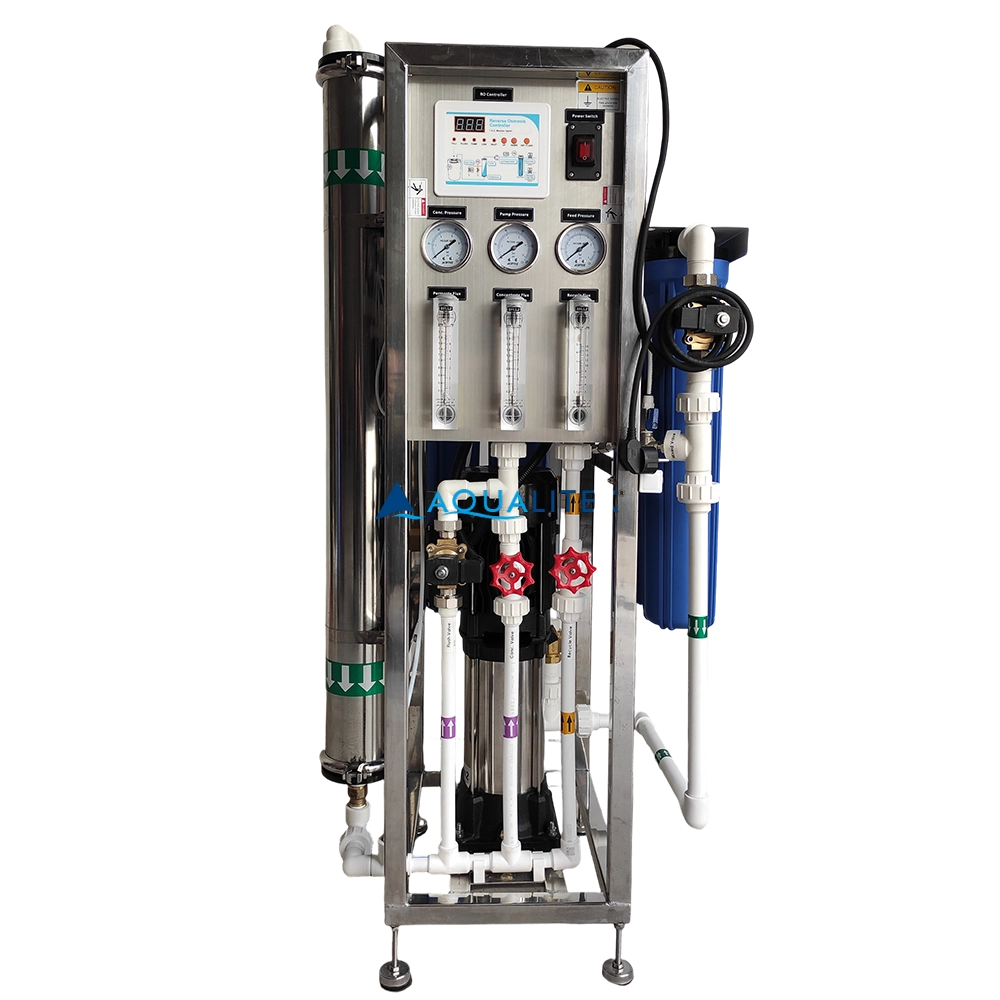
500 LPH Reverse Osmosis (RO) Water Purification Machine TWV - 412
Our 500 LPH Reverse Osmosis (RO) System is engineered to provide high-quality purified water for commercial applications. Designed with advanced RO technology, durable components, and a user-friendly interface, this system ensures consistent performance, low maintenance, and long-term reliability.
With its compact design and robust skid-mounted frame, it’s an excellent choice for businesses that demand efficiency and quality in water purification.
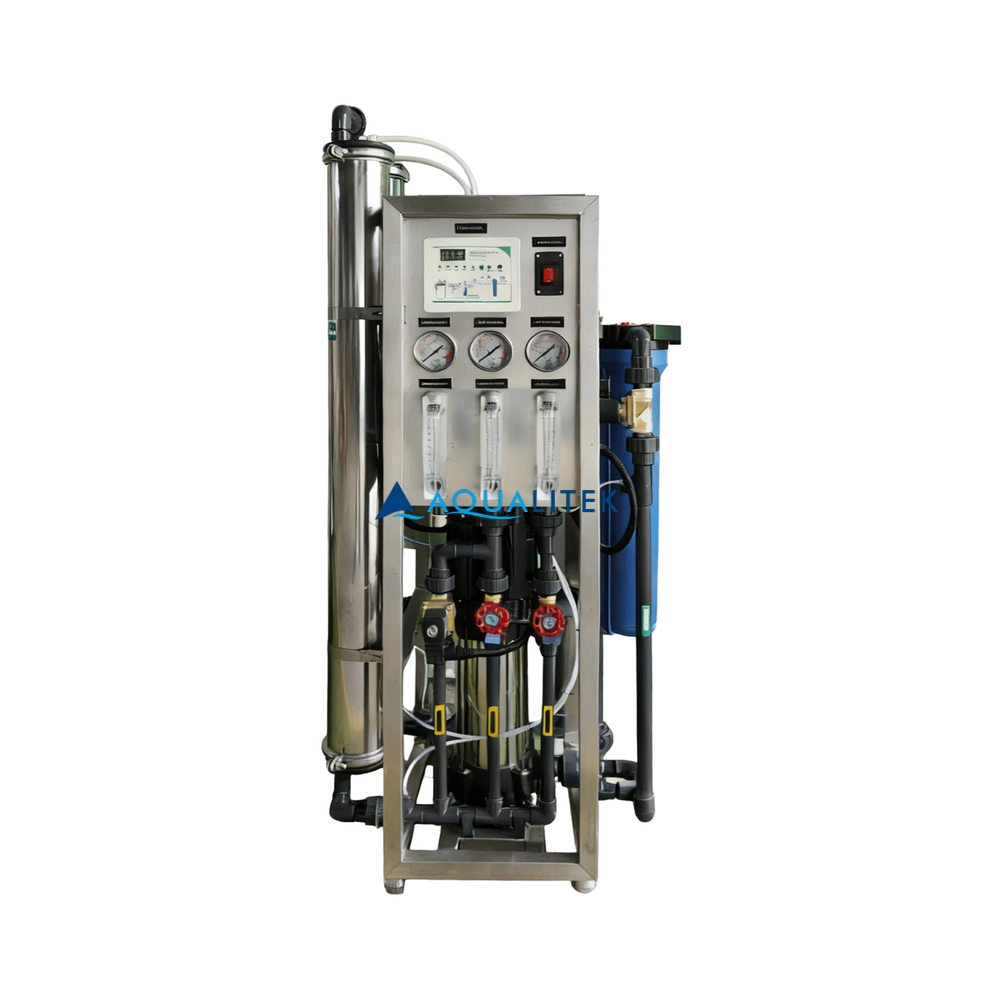
Tap Water Reverse Osmosis (TWRO) Systems TWV Series
TWV series Reverse Osmosis (RO) systems are pre-engineered and pre-assembled units with 2.5”/4” membrane housings(single element type)for tap water(lower TDS).They are designed for overall superior performance, high recovery rates and offer great savings with low maintenance and operation costs.
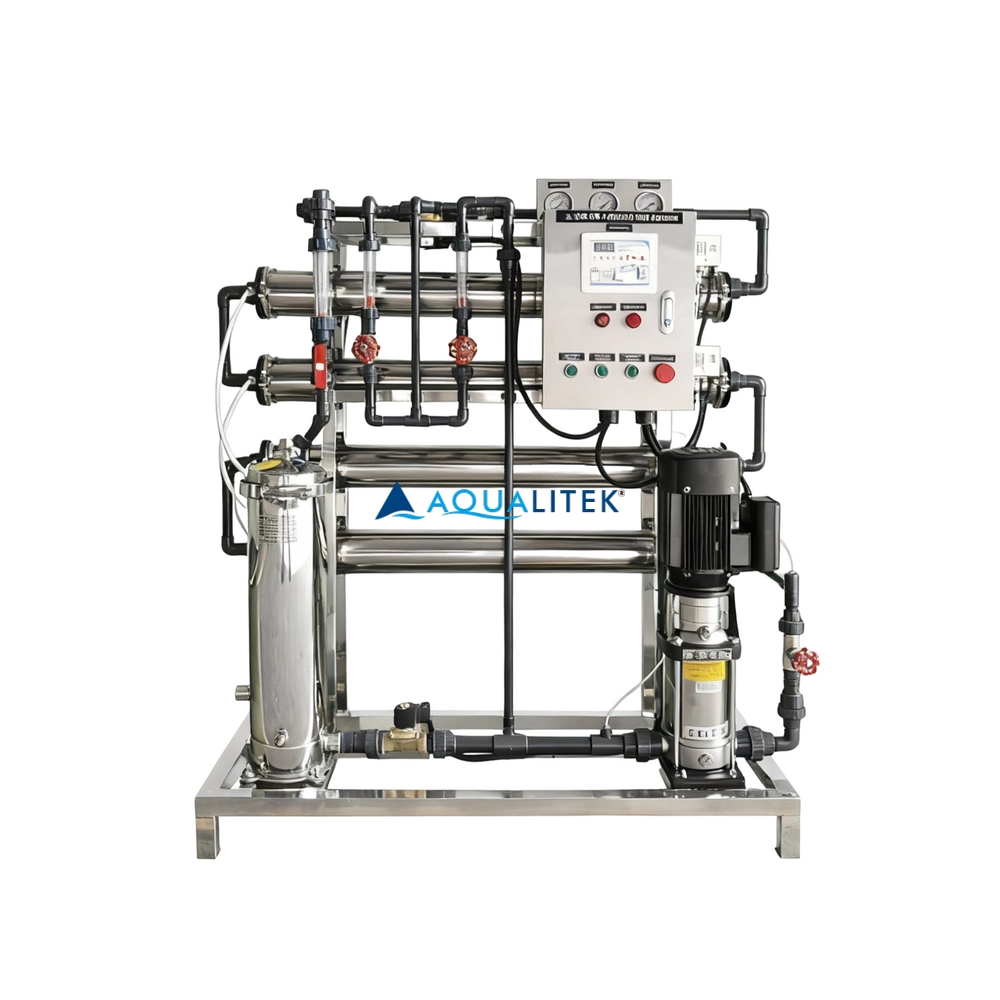
Tap Water Reverse Osmosis (TWRO) Systems TWF Series
TWF series Reverse Osmosis (RO) systems are pre-engineered and pre-assembled units with 4” membrane housings(multiple elements type) for tap water(lower TDS) .The medium large volumes can help meet your a variety of commercial and industrial applications. They are designed for overall superior performance, high recovery rates and offer great savings with low maintenance and operation costs.

Tap Water Reverse Osmosis (TWRO) Systems TWE Series
TWE series Reverse Osmosis (RO) systems are pre-engineered and pre-assembled units with 8” membrane housings for tap water (lower TDS). The large volumes can help meet your a variety of industrial applications. They are designed for overall superior performance, high recovery rates and offer great savings with low maintenance and operation costs.
Request More Information
Contact us today for product catalogs, customization options, and a free quotation designed for your business needs.
Rest assured that your privacy is important to us, and all information provided will be handled with the utmost confidentiality.
© 2026 AQUALITEK. All rights reserved.
AQUALITEK- Aimee Hoo
AQUALITEK - Aimee Hoo