




Top 10 Water Softeners for Home Use in 2025
- Top 10 Water Softeners for Home Use in 2025
- Why selecting the right water softener system matters
- How to choose the best water softener system for your home
- Top 10 water softener system models and why they made the list
- 1. Fleck 5600SXT (Salt-based, DIY-friendly valve)
- 2. Kinetico K5 Drinking Water Station (Non-electric, twin-tank)
- 3. Culligan High Efficiency (HE) Series (Salt-based, professional service option)
- 4. Whirlpool WHES40 (Salt-based, consumer-friendly)
- 5. Morton System Saver M30 (Salt-based, proven resin)
- 6. Pelican NaturSoft / Pentair Salt-Free Systems (TAC salt-free option)
- 7. Nuvo H2O (Salt-free, KDF+polymer approach)
- 8. Aquasana Rhino Whole House (Salt-free + filtration hybrid)
- 9. GE Appliances Smart Softener (Connected, smart regeneration)
- 10. Aqualitek Residential Ion Exchange System (Customizable solution)
- Comparison table: Top 10 water softener systems (summary)
- Installation and maintenance: practical advice for homeowners
- Salt-based vs salt-free: which water softener system should you pick?
- Cost, savings, and ROI of a water softener system
- Why choose Aqualitek (AQT) for customized water softener system solutions
- Final recommendations for 2025 buyers of water softener systems
- FAQ — Common questions about water softener system selection and use
- Q: How do I know if I need a water softener system?
- Q: What is the difference between grain capacity and flow rate?
- Q: Are salt-free systems maintenance-free?
- Q: Will a water softener system remove iron?
- Q: How much salt does a typical salt-based system use?
- Need help choosing or viewing products?
- Sources and references
Top 10 Water Softeners for Home Use in 2025
Why selecting the right water softener system matters
Hard water — water with high levels of calcium and magnesium — shortens appliance life, leaves scale on fixtures, reduces soap performance and can change the feel of skin and hair. Choosing the right water softener system prevents these problems, improves household efficiency, and often saves money over the long term. In 2025, more homeowners are balancing performance, water efficiency, and sustainability when selecting systems. This guide helps you evaluate options through performance, type (ion-exchange vs salt-free), maintenance needs, and total cost of ownership.
How to choose the best water softener system for your home
Before purchasing a water softener system, test your water hardness (grains per gallon, gpg) and consider household flow demands and space. Key factors to evaluate include:
- Water hardness level (gpg): informs capacity sizing
- Household size and peak flow rate (gallons per minute — gpm)
- Regeneration style: time-clock, meter-based (demand-initiated), or continuous (twin-tank)
- Type: salt-based ion exchange vs salt-free (template-assisted crystallization or TAC) vs electronic descalers
- Maintenance frequency and salt or media costs
- Certifications (NSF/ANSI for materials and performance where applicable)
Matching capacity to demand avoids early regeneration and reduces waste. For most families, a system rated 24,000–40,000 grain capacity is a practical starting point depending on hardness and water usage.
Top 10 water softener system models and why they made the list
Below are reliable systems and design approaches that consistently meet homeowner needs in 2025. I include salt-based, salt-free, and hybrid solutions to reflect varied preferences and regulatory environments.
1. Fleck 5600SXT (Salt-based, DIY-friendly valve)
Why it ranks: The Fleck 5600SXT control valve is one of the most popular, flexible valves for residential ion-exchange softeners. It supports meter-based regeneration, is serviceable by technicians and knowledgeable homeowners, and is compatible with many tank sizes.
Best for: DIYers and homeowners who want a proven, parts-available system and adjustable regeneration logic.
2. Kinetico K5 Drinking Water Station (Non-electric, twin-tank)
Why it ranks: Kinetico’s twin-tank, non-electric design provides continuous soft water without downtime during regeneration. The K5 also targets improved drinking water quality when combined with their drinking-water cartridges.
Best for: Homes that value continuous soft water and high-end, low-maintenance design.
3. Culligan High Efficiency (HE) Series (Salt-based, professional service option)
Why it ranks: Culligan offers bundled service options with professionally installed, high-efficiency softeners. Their HE models are designed for lower salt and water use during regeneration.
Best for: Homeowners who prefer a service-backed solution and local dealer support.
4. Whirlpool WHES40 (Salt-based, consumer-friendly)
Why it ranks: Whirlpool’s residential softeners are widely available with a strong balance of price, capacity, and straightforward controls. Suitable for mid-size households.
Best for: Value-conscious buyers seeking a recognizable brand with broad availability.
5. Morton System Saver M30 (Salt-based, proven resin)
Why it ranks: Morton-branded systems use well-known resin and offer competitive capacity for many homes. Morton has long-standing reputation in ion-exchange softening media and salt supply.
Best for: Buyers who prefer established resin and simple operation.
6. Pelican NaturSoft / Pentair Salt-Free Systems (TAC salt-free option)
Why it ranks: Salt-free systems using template-assisted crystallization (TAC) reduce scale formation without sodium discharge. They are lower-maintenance and attractive where salt discharge is restricted.
Best for: Environments with regulations on brine discharge and homeowners wanting low-maintenance scale control rather than true softening (note: salt-free does not remove hardness ions).
7. Nuvo H2O (Salt-free, KDF+polymer approach)
Why it ranks: Nuvo H2O uses a proprietary cartridge media to reduce scale and is popular for point-of-entry installs with lower maintenance and no salt required.
Best for: Small households or renters who need an easy, salt-free scale control option.
8. Aquasana Rhino Whole House (Salt-free + filtration hybrid)
Why it ranks: Combines salt-free scale control with filtration to reduce chlorine and sediment. Ideal for homeowners who want integrated whole-house filtration plus reduced scaling.
Best for: Homes requiring both filtration and scale control with a single footprint.
9. GE Appliances Smart Softener (Connected, smart regeneration)
Why it ranks: Modern smart models offer app connectivity, usage tracking, and optimized regeneration schedules to reduce salt and water waste.
Best for: Tech-forward homeowners who want usage insights and remote control.
10. Aqualitek Residential Ion Exchange System (Customizable solution)
Why it ranks: Aqualitek (AQT) manufactures high-quality ion exchange systems and components, offering customizable solutions tailored to local water conditions and household needs. Their engineering and manufacturing capability delivers competitive performance and component availability.
Best for: Buyers seeking a tailored system, OEM-quality components, or bulk/custom installations backed by technical engineering support.
Comparison table: Top 10 water softener systems (summary)
| Model / Type | Type | Salt-based? | Best for | Notable feature |
|---|---|---|---|---|
| Fleck 5600SXT | Ion-exchange valve | Yes | DIY / flexible installs | Programmable meter-based regeneration |
| Kinetico K5 | Non-electric twin-tank | Yes | Continuous soft water | No electricity, twin-tank design |
| Culligan HE | Ion-exchange | Yes | Service-backed installs | Dealer support & efficiency focus |
| Whirlpool WHES40 | Ion-exchange | Yes | Value buyers | Good balance of price & capacity |
| Morton System Saver M30 | Ion-exchange | Yes | Simple, proven resin | Trusted media brand |
| Pelican NaturSoft (Pentair) | TAC / salt-free | No | Low-maintenance scale control | No salt, low upkeep |
| Nuvo H2O | Salt-free cartridge | No | Small households, renters | Easy cartridge changes |
| Aquasana Rhino | Hybrid filtration + TAC | No | Filtration + scale control | Integrated whole-house system |
| GE Smart Softener | Ion-exchange, connected | Yes | Smart-home users | App control, data tracking |
| Aqualitek Residential Ion Exchange | Custom ion-exchange systems | Yes / configurable | Custom installs, OEM projects | Manufacturing & engineering support |
Notes: The table summarizes typical positioning and does not replace model-specific datasheets. Performance metrics (flow rate, exact grain capacity) vary by tank and resin choice—consult product datasheets or manufacturers for model specs.
Installation and maintenance: practical advice for homeowners
Installation complexity ranges from simple point-of-entry cartridge swaps to full whole-house ion-exchange systems requiring plumbing and electrical connections. Consider these guidelines:
- Get a water test first (hardness, iron levels, TDS). Iron above ~0.3 ppm often requires pre-treatment to protect resin.
- For salt-based systems, plan space for a brine tank and allow easy access for salt top-ups.
- Meter-based (demand) regeneration saves salt and water vs time-clock systems.
- Schedule resin replacement or resin-cleaning when performance drops (years vary by water quality and load).
- Keep records of salt consumption and regeneration frequency to evaluate efficiency.
Salt-based vs salt-free: which water softener system should you pick?
Salt-based (ion-exchange) systems remove hardness ions (calcium and magnesium), delivering true soft water and reducing soap scum and scale inside plumbing and water heaters. Salt-free systems (TAC) change hardness ions into microscopic crystals that do not stick to surfaces, reducing scale formation but not removing hardness minerals — so they are not a direct replacement for ion-exchange where true soft water is required.
Choose salt-based if you need true soft water for appliances, laundry, or comfort. Choose salt-free where regulations limit brine discharge or where homeowners want reduced maintenance and primarily aim to minimize scale buildup.
Cost, savings, and ROI of a water softener system
Upfront costs typically range from $600 for basic consumer salt-based systems to several thousand dollars for High Quality non-electric twin-tank or whole-house hybrid systems. Add installation (professional install often recommended) and ongoing salt or media costs. Estimated savings come from longer appliance life, reduced energy use in water heaters, and lower detergent usage. Most homeowners recoup costs in 3–7 years depending on use, water hardness, and local water costs.
Why choose Aqualitek (AQT) for customized water softener system solutions
Aqualitek Water Treatment Technologies Co., Ltd. (AQT), headquartered in Guangzhou, China, is a leading manufacturer and supplier of advanced water treatment systems and high-quality component parts. We specialize in delivering customized solutions for residential, commercial, and industrial applications, meeting diverse water purification needs worldwide.
With a strong foundation in engineering expertise, cutting-edge technology, and manufacturing excellence, AQT is committed to delivering innovative, reliable, and cost-effective water treatment solutions to global partners. The company offers a comprehensive range of water treatment products and system solutions, organized by application needs and technical functions — from pretreatment equipment to core treatment units and end-use recycling systems — making it easy to find efficient, reliable, and sustainable solutions.
Key product categories from AQUALITEK include:
- Membrane systems — RO and UF solutions for high-purity water and desalination projects.
- Water filtering systems — multi-stage filtration for whole-house and point-of-use applications.
- Ion exchange systems — residential and commercial softeners and specialty resins tailored to local water chemistry.
- Customized water purification systems — engineered systems for specific industrial or municipal needs.
Core competitive advantages:
- Engineering-driven customization — systems sized and configured to local water profiles and usage.
- Manufacturing excellence — in-house component production for quality control and faster lead times.
- Comprehensive product range — from pre-treatment to core treatment and recycling, enabling integrated systems.
- Global support and after-sales service — technical assistance and spare-part availability.
Summary recommendation: If you need a tailored residential ion-exchange system or OEM components, Aqualitek is a strong partner that combines manufacturing scale with engineering depth to deliver competitive, reliable solutions.
Final recommendations for 2025 buyers of water softener systems
1) Start with a certified water test. 2) Match system capacity to household demand and hardness. 3) Choose salt-based ion exchange if you want true soft water and measurable appliance protection. 4) Choose salt-free if brine discharge or low maintenance is the priority. 5) Factor in smart controls or meter-based regeneration to reduce waste. 6) Consider reputable manufacturers and look for warranty, local service, and parts availability.
FAQ — Common questions about water softener system selection and use
Q: How do I know if I need a water softener system?
A: Perform a water hardness test. If hardness is above ~7 gpg you’ll likely see scale and may benefit from a softener. Visible scale, soap scum, dry skin, or short appliance life are practical signs.
Q: What is the difference between grain capacity and flow rate?
A: Grain capacity indicates how much hardness the softener can remove before regeneration. Flow rate (gpm) determines whether the system can supply multiple fixtures simultaneously without pressure loss. Both matter: size the system for both household peak flow and daily hardness load.
Q: Are salt-free systems maintenance-free?
A: Not completely. Salt-free systems typically require periodic cartridge or media replacement, but they avoid salt top-ups and brine tank maintenance. They also do not produce true softened water; they control scale formation.
Q: Will a water softener system remove iron?
A: Some softeners remove low levels of ferrous iron; higher iron concentrations usually require pre-treatment (oxidation/filtration) to protect resin and maintain performance. Always test for iron and consult a specialist.
Q: How much salt does a typical salt-based system use?
A: Salt consumption varies widely based on system efficiency, household water use, and hardness. Modern high-efficiency systems and properly sized units minimize salt use; meter-based regeneration reduces unnecessary brine cycles.
Need help choosing or viewing products?
Contact Aqualitek’s technical sales team to discuss your water test results and see customized, high-performance water softener systems and components. For tailored solutions, visit Aqualitek’s product pages or request a quote from their engineering team — their expertise in membrane systems, water filtering systems, ion exchange systems, and customized purification systems ensures you get the right, reliable solution for your home.
Sources and references
- U.S. Environmental Protection Agency (EPA) — Information on water hardness and effects.
- Water Quality Association (WQA) — Best practices for water softeners and certification standards.
- Manufacturer product literature: Fleck, Kinetico, Culligan, Whirlpool, Morton, Pentair/Pelican, Nuvo H2O, Aquasana, GE Appliances.
- Industry buyer guides and testing summaries (professional trade publications and consumer reports for water treatment).
Installation Step-by-Step: Under-Sink Purification System
Selecting the Right BWRO BWE System for Your Well Water Needs
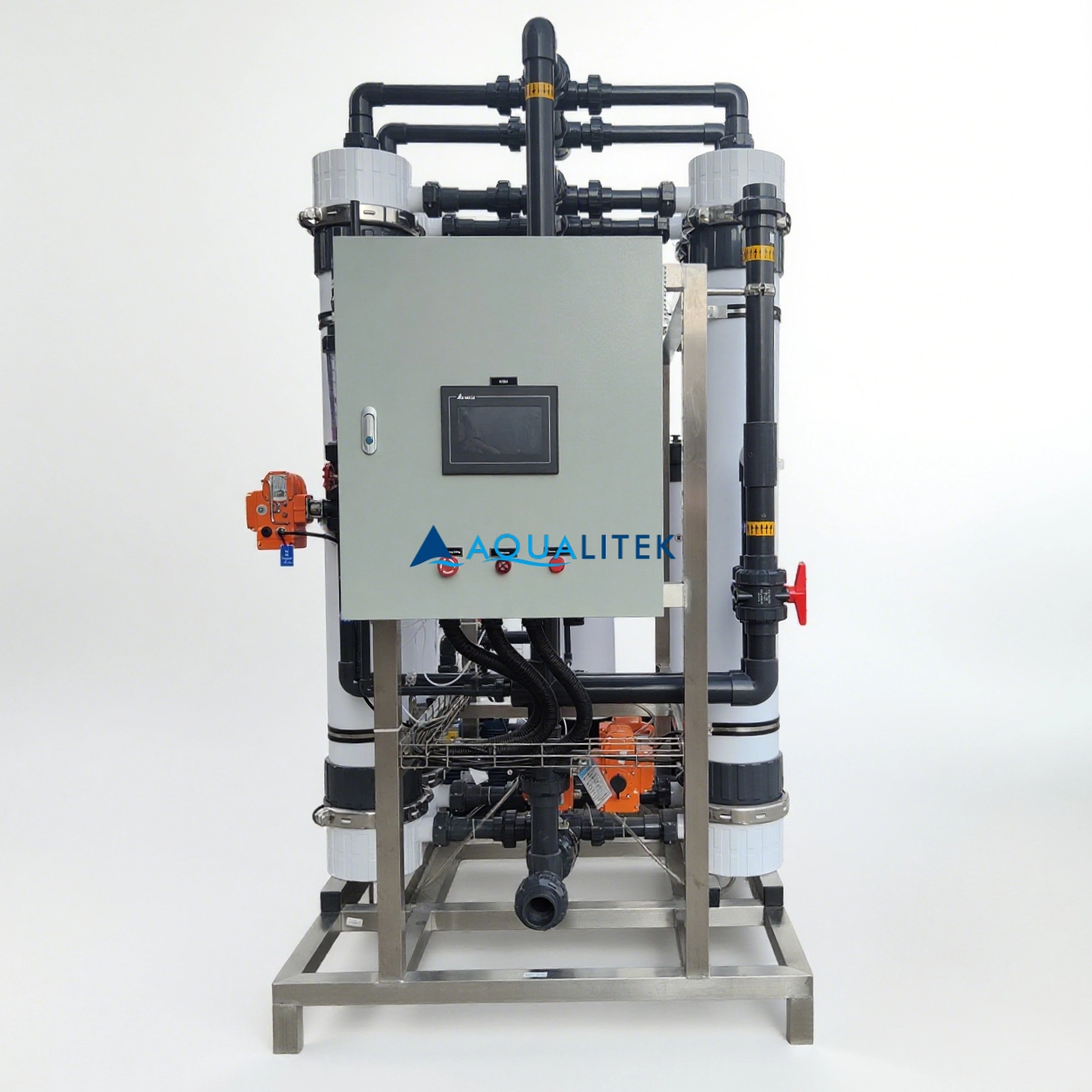
Scaling Water Treatment: When to Upgrade to a 12TPH UF Device
Top 10 water treatment systems Manufacturers and Supplier Brands
Solutions
Can I use AQT’s water treatment systems for seawater desalination?
Yes! We provide seawater desalination systems using advanced reverse osmosis (RO) technology, specifically designed to convert seawater into fresh, drinkable water. These systems are ideal for coastal communities, marine applications, and industrial desalination projects.
What is the difference between Reverse Osmosis (RO), Ultrafiltration (UF), and Nanofiltration (NF)?
1. Reverse Osmosis (RO): Removes up to 99.9% of contaminants, including salts, bacteria, viruses, and heavy metals.
2. Ultrafiltration (UF): Uses a membrane filtration process to remove bacteria and particles, while retaining essential minerals.
3. Nanofiltration (NF): Falls between RO and UF, removing some salts and organic compounds while allowing certain minerals to pass through.
Blog
How do I know when to add salt to my softener?
Check the brine tank monthly. Modern systems often alert you automatically when salt levels are low.
Ion Exchange Water Treatment Systems
Are mixed bed systems better than two-bed systems?
Mixed bed polishers are used for final polishing after RO or two-bed deionization to achieve ultra-pure water.
FAQ-aqualitek
What industries does AQT serve?
We provide water treatment solutions for a wide range of industries, including:
Industrial Manufacturing – Process water treatment, cooling water, and boiler feed.
Hospitality & Commercial – Hotels, restaurants, and office buildings.
Residential Applications – Drinking water purification and softening.
Healthcare & Pharmaceuticals – Ultra-pure water for laboratories and hospitals.
Municipal & Public Utilities – Water supply and wastewater treatment.
Food & Beverage Processing – Filtration for beverage production and food safety.
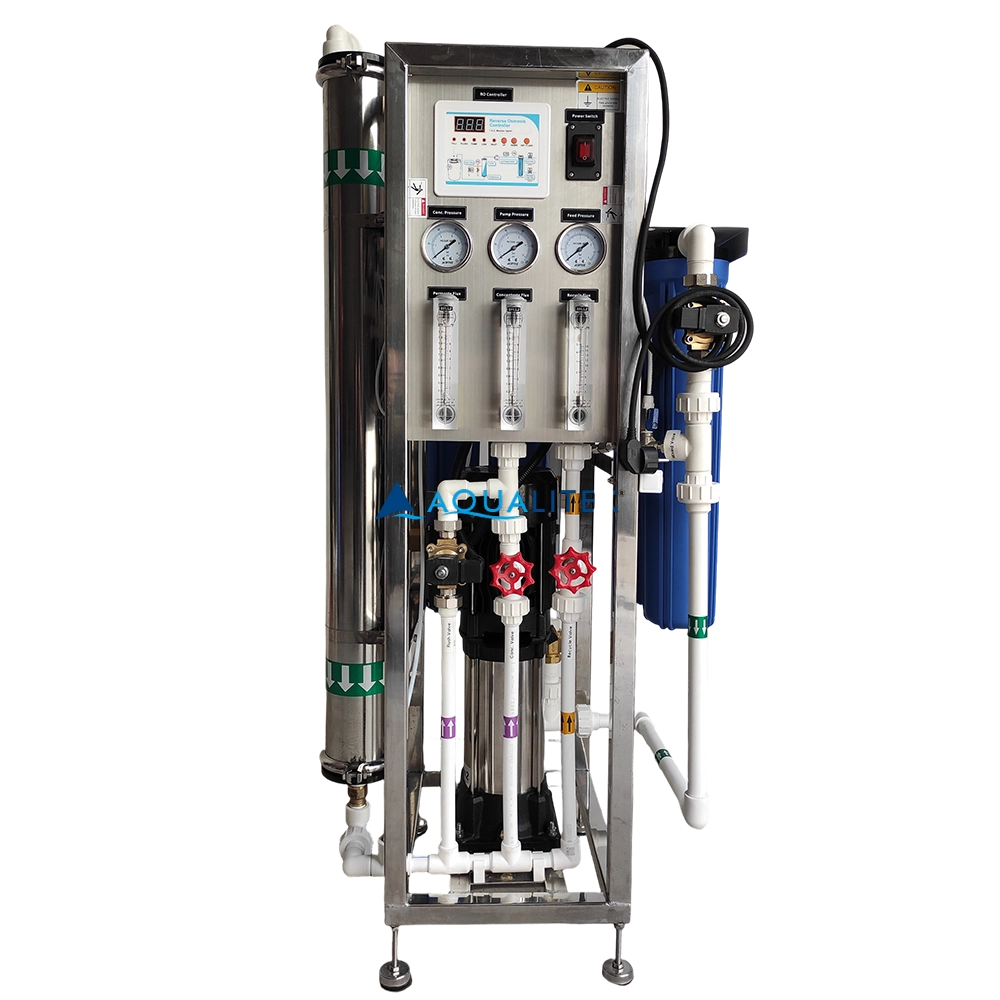
500 LPH Reverse Osmosis (RO) Water Purification Machine TWV - 412
Our 500 LPH Reverse Osmosis (RO) System is engineered to provide high-quality purified water for commercial applications. Designed with advanced RO technology, durable components, and a user-friendly interface, this system ensures consistent performance, low maintenance, and long-term reliability.
With its compact design and robust skid-mounted frame, it’s an excellent choice for businesses that demand efficiency and quality in water purification.
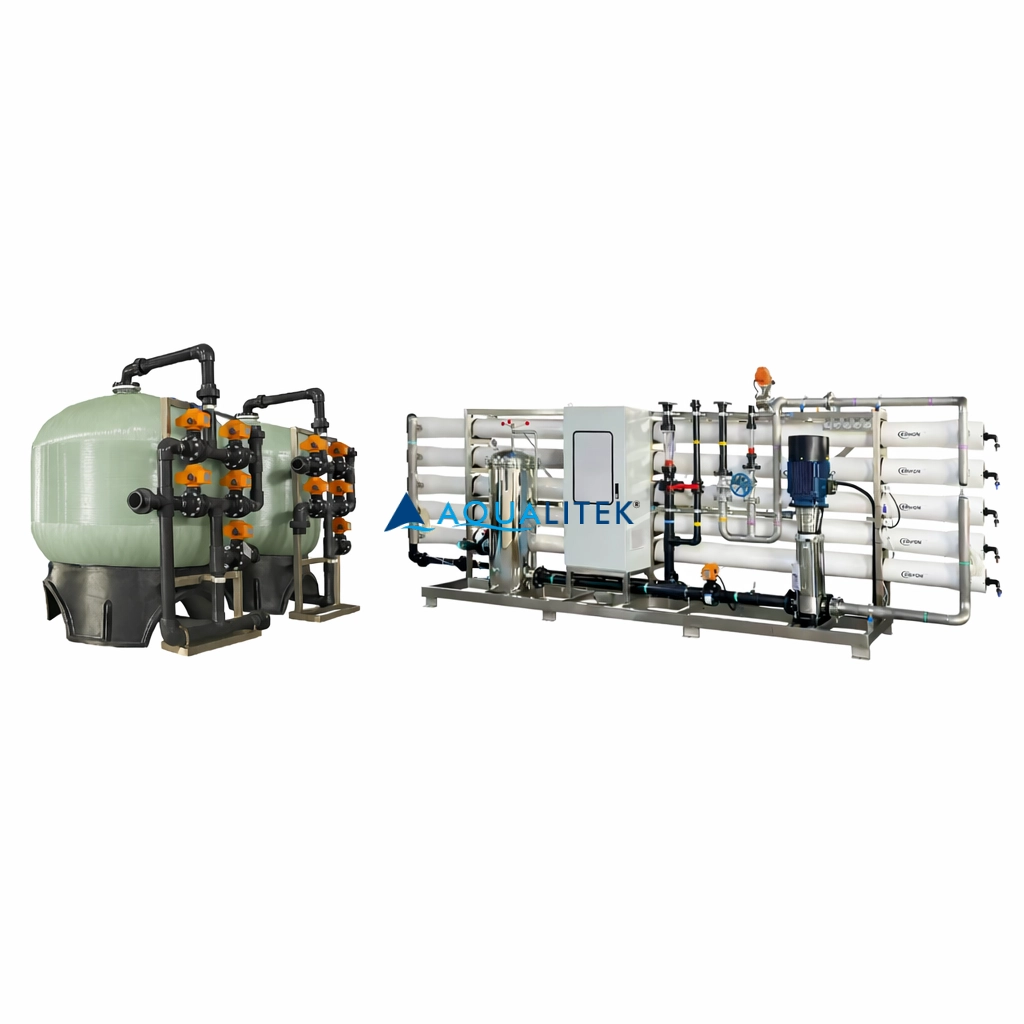
30TPH Industrial Reverse Osmosis (RO) System
30TPH Industrial Reverse Osmosis (RO) System designed for industrial and municipal water treatment. High salt rejection, energy-efficient design, PLC control, and customizable configuration.
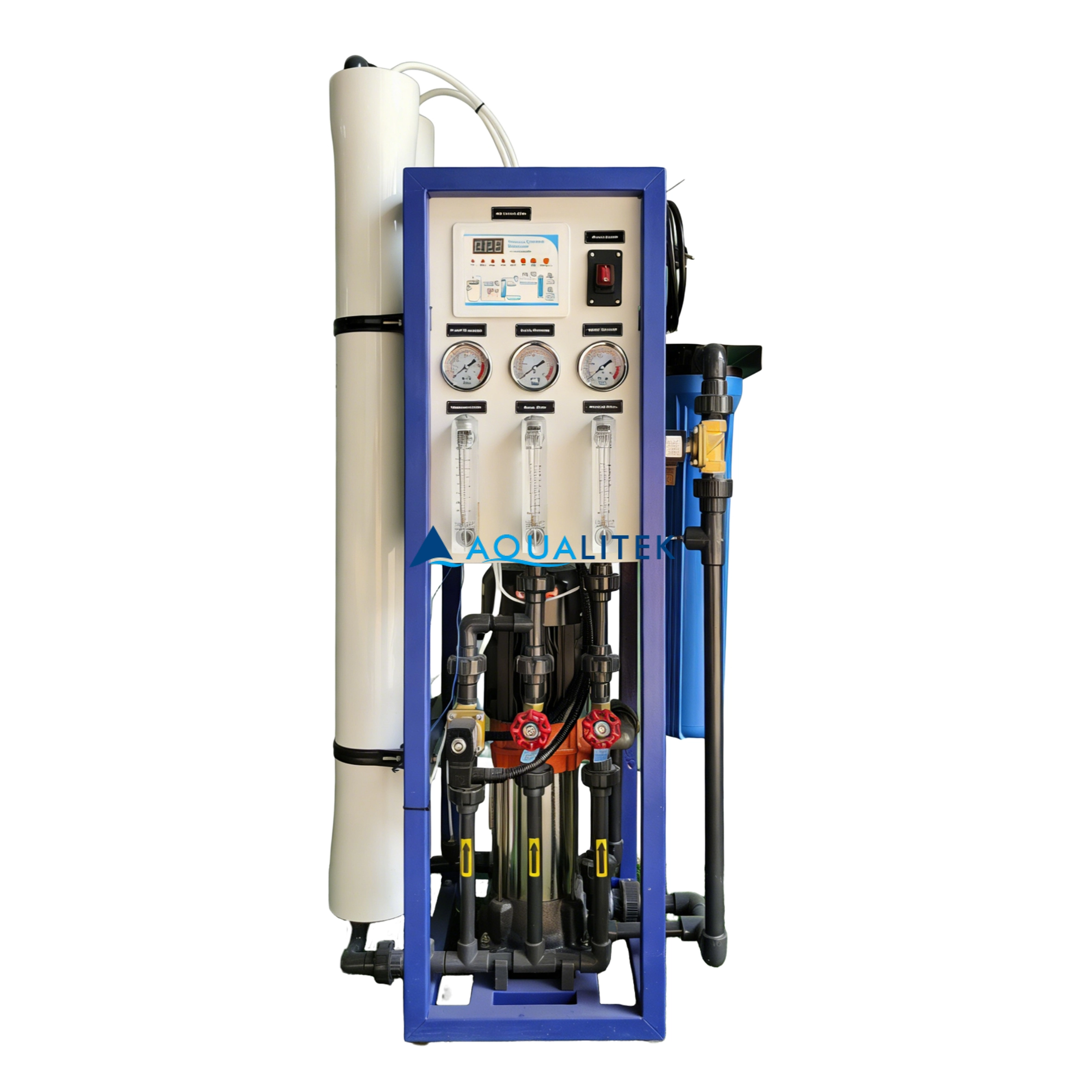
500LPH Panel Mounted Reverse Osmosis Water Purification System
AQUALITEK's 500LPH Panel Mounted Reverse Osmosis Water Purification System delivers reliable 500 LPH RO water production. This compact industrial reverse osmosis unit is ideal for small scale industrial RO needs, ensuring efficient and high-quality purified water in a space-saving design.
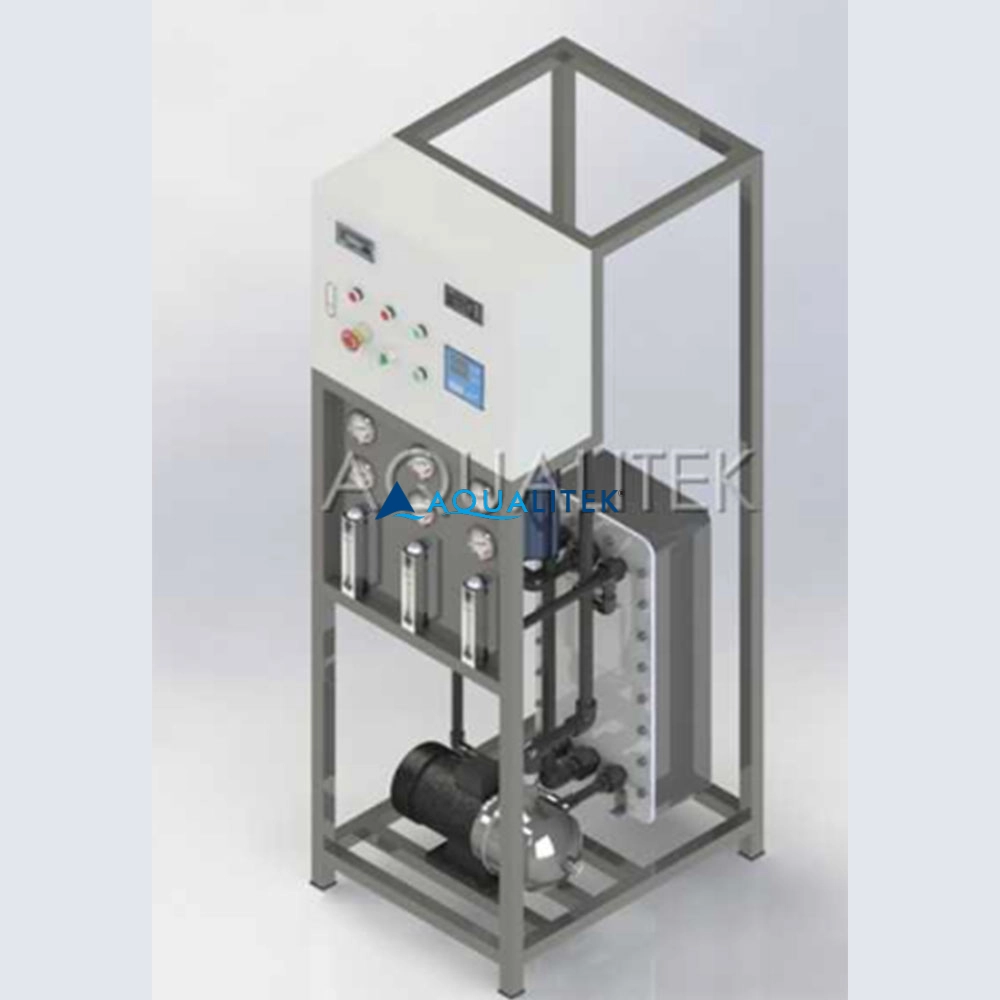
Electrodeionization Systems to Get UltraPure Water
Electrodeionization (EDI) system is an advanced water purification technology that combines ion exchange and electrochemical processes to produce ultra-pure water. Unlike traditional deionization methods, which rely on chemical regeneration, EDI utilizes electric fields to drive the movement of ions through ion-exchange membranes, effectively removing dissolved salts and other ionic contaminants.
This process is continuous and does not require the use of chemicals for regeneration, making it an environmentally friendly and cost-effective solution for producing high-quality deionized water. EDI systems are widely used in applications requiring ultrapure water, such as in the pharmaceutical, semiconductor, power generation, and biotechnology industries, as well as for laboratory use.
By offering high-purity water without the need for chemical regeneration, EDI systems provide a sustainable, efficient, and reliable alternative to traditional deionization methods, making them an ideal choice for industries where water quality and process control are critical.
Request More Information
Contact us today for product catalogs, customization options, and a free quotation designed for your business needs.
Rest assured that your privacy is important to us, and all information provided will be handled with the utmost confidentiality.
© 2026 AQUALITEK. All rights reserved.
AQUALITEK- Aimee Hoo
AQUALITEK - Aimee Hoo