




Emergency Measures for Damaged RO Membrane Elements or Leaking Seals | Insights by AQUALITEK
This Best-style guide explains the emergency actions required when an RO membrane element is damaged or when a seal is leaking. It covers how to identify symptoms, immediate safety steps, temporary operating strategies, risks of continued use, and proper replacement procedures.
- Introduction
- 1. Identify the Symptoms of Damage or Leakage
- 2. Immediate Emergency Response Steps
- Step 1: Stop the High-Pressure Pump
- Step 2: Flush the System With Low-Pressure Feedwater
- Step 3: Isolate the Affected Pressure Vessel
- Step 4: Relieve Pressure and Safely Open the Pressure Vessel
- 3. Inspection and On-Site Diagnosis
- (1)Membrane Element Condition
- (2)Interconnector Seals
- 4. Emergency Temporary Solutions
- Option A: Remove the damaged element and install a blind spacer
- Option B: Install any compatible spare membrane temporarily
- Option C: Bypass the entire pressure vessel
- 5. Permanent Corrective Measures
- (1)Replace the Damaged Membrane
- (2) Replace All Associated Seals
- (3) Re-Lubricate Seals Properly
- 6. Risks of Continuing Operation Without Repair
- 7. Preventive Measures
- Conclusion
Introduction
A damaged RO membrane element or leaking seal (such as O-rings or interconnector seals) is one of the most critical issues in industrial reverse osmosis systems. If not handled promptly, it can lead to:
•Poor permeate quality
•Water contamination
•Cross-flow leakage between permeate and concentrate
•System pressure loss
•Severe damage to adjacent membrane elements
Understanding what to do immediately can prevent serious system failures, protect water quality, and avoid costly downtime.
This article summarizes the best emergency measures for RO operators, engineers, and maintenance teams.
1. Identify the Symptoms of Damage or Leakage
Common Signs of a Damaged Membrane
•Sudden increase in permeate conductivity or TDS
•Sharp drop in differential pressure
•Unexplained increase in permeate flow
•Presence of particles or off-odor in product water
•Membrane telescoping or mechanical deformation
Typical Signs of Seal Leakage
•High conductivity from a single pressure vessel
•Significant permeate backflow into concentrate (or vice versa)
•Abnormal pressure equalization between stages
•Moisture or water found around end caps
Early identification is crucial before taking action.
2. Immediate Emergency Response Steps
Step 1: Stop the High-Pressure Pump
If membrane or seal damage is suspected, immediately:
•Shut down the high-pressure pump
•Close the relevant isolation valves
This prevents further mechanical stress and prevents contaminated water from entering the permeate line.
Step 2: Flush the System With Low-Pressure Feedwater
Run a low-pressure flush for several minutes:
•Removes loose particles
•Reduces internal pressure
•Minimizes contamination spread
Flush until the pressure is fully equalized and the system is safe to open.
Step 3: Isolate the Affected Pressure Vessel
If you know which vessel shows abnormal readings:
•Close the inlet and outlet valves
•Bypass the affected vessel if possible
•Allow the rest of the RO system to continue safely
This avoids full system downtime.
Step 4: Relieve Pressure and Safely Open the Pressure Vessel
Before opening:
•Confirm zero internal pressure
•Follow lockout/tagout procedures
•Prepare clean workspace and protective tools
Safety is essential—pressure vessels can cause injury if opened under pressure.
3. Inspection and On-Site Diagnosis
After opening the pressure vessel, check:
(1)Membrane Element Condition
•Mechanical deformation (telescoping)
•Physical cracks or broken permeate tubes
•Damaged glue lines
•Oxidation marks or melted areas
•Biological slime or foulants
(2)Interconnector Seals
Inspect:
O-rings
•Brine seals
•Interconnector gaskets
•End-cap seals
Typical issues include:
•Wear or aging
•Incorrect installation direction
•Chemical corrosion
•Missing or broken seals
4. Emergency Temporary Solutions
If a replacement membrane is not immediately available, operators may use:
Option A: Remove the damaged element and install a blind spacer
This:
•Restores pressure integrity
•Temporarily bypasses filtration
•Prevents mixing between flows
Option B: Install any compatible spare membrane temporarily
Even if not the same brand or model, a compatible element:
•Maintains system flow balance
•Prevents water quality collapse
Option C: Bypass the entire pressure vessel
If no replacement option exists, bypass the vessel and continue operating at:
•Lower flow
•Lower recovery
•Reduced system capacity
Always monitor permeate conductivity closely.
5. Permanent Corrective Measures
(1)Replace the Damaged Membrane
Always use:
•The same model
•Identical design specifications
•Properly stored new elements
(2) Replace All Associated Seals
Replace:
•O-rings
•Brine seals
•Interconnectors
•End-cap gaskets
Replacing all seals at once prevents repeated shutdowns.
(3) Re-Lubricate Seals Properly
Use only:
•Silicone-based lubricant
•RO-membrane-compatible products
Never use petroleum-based greases.
6. Risks of Continuing Operation Without Repair
Operating with a damaged membrane or seal can cause:
•Severe water contamination
•Complete failure of adjacent membranes
•Pressure vessel flooding
•Product water not meeting quality standards
•System sterilization failure and microbial growth
•Unexpected shutdowns
•High repair and labor cost
Immediate repair is always the best choice.
7. Preventive Measures
To minimize future incidents:
✔ Regularly check differential pressure trends
✔ Perform scheduled membrane inspections
✔ Verify brine seal installation direction
✔ Avoid rapid pressure fluctuations
✔ Ensure pretreatment operates properly
✔ Keep spare elements and seals in stock
✔ Maintain detailed operation logs
Prevention is always cheaper than emergency repair.
Conclusion
When an RO membrane element is damaged or when seals leak, quick and correct emergency measures are critical to protecting system performance and water quality. Stopping the system, isolating the affected vessel, inspecting components, and applying temporary solutions help avoid severe downtime and costly membrane loss.
A well-trained operator and a clear emergency procedure are key to long-term RO system reliability.


Request More Information or Expert Advice
Share a few details, and we’ll provide deeper insights, tailored suggestions, or product support.
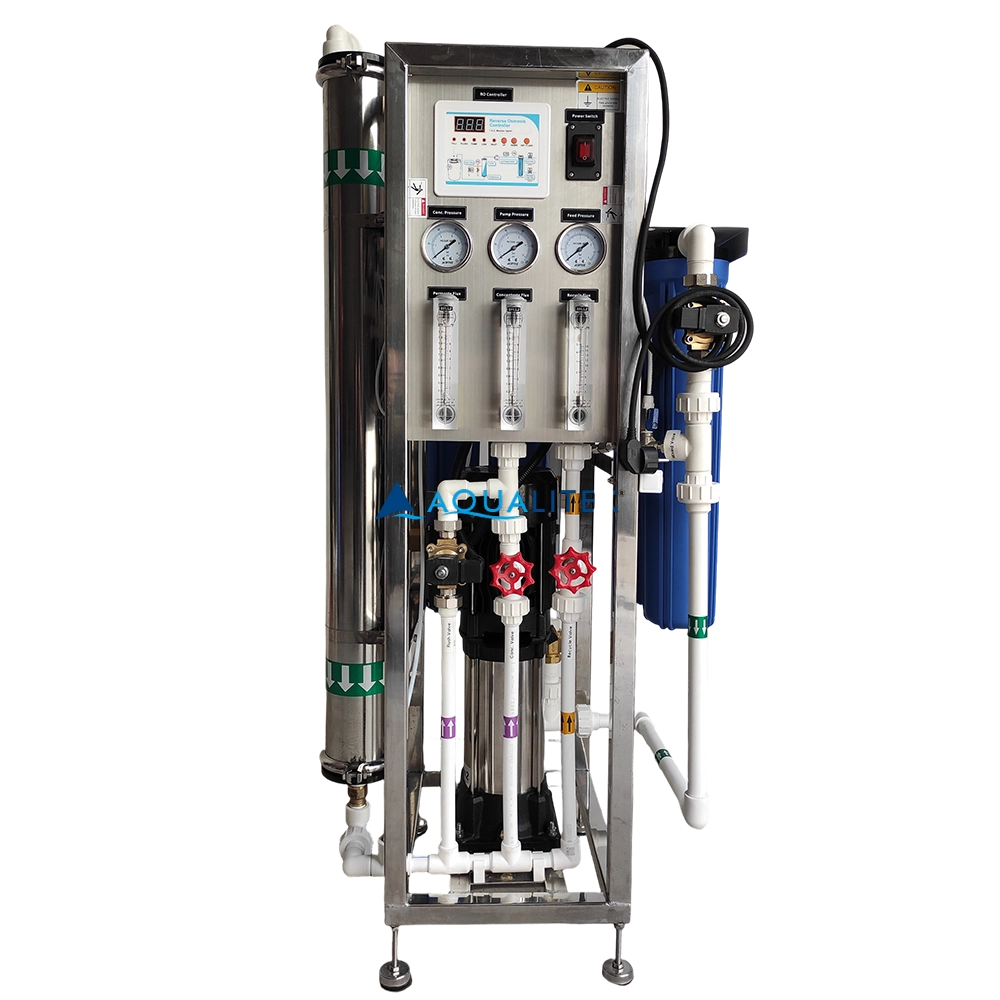
Our 500 LPH Reverse Osmosis (RO) System is engineered to provide high-quality purified water for commercial applications. Designed with advanced RO technology, durable components, and a user-friendly interface, this system ensures consistent performance, low maintenance, and long-term reliability.
With its compact design and robust skid-mounted frame, it’s an excellent choice for businesses that demand efficiency and quality in water purification.
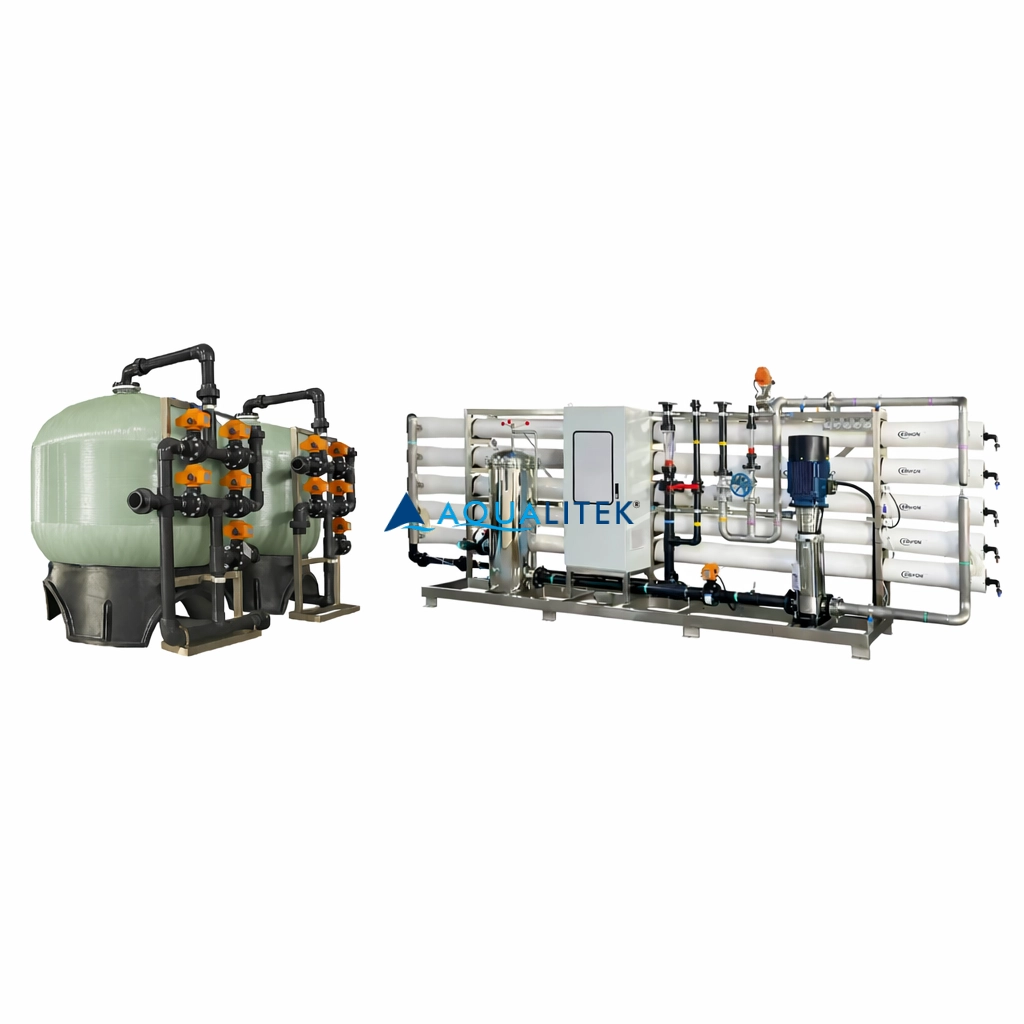
30TPH Industrial Reverse Osmosis (RO) System designed for industrial and municipal water treatment. High salt rejection, energy-efficient design, PLC control, and customizable configuration.
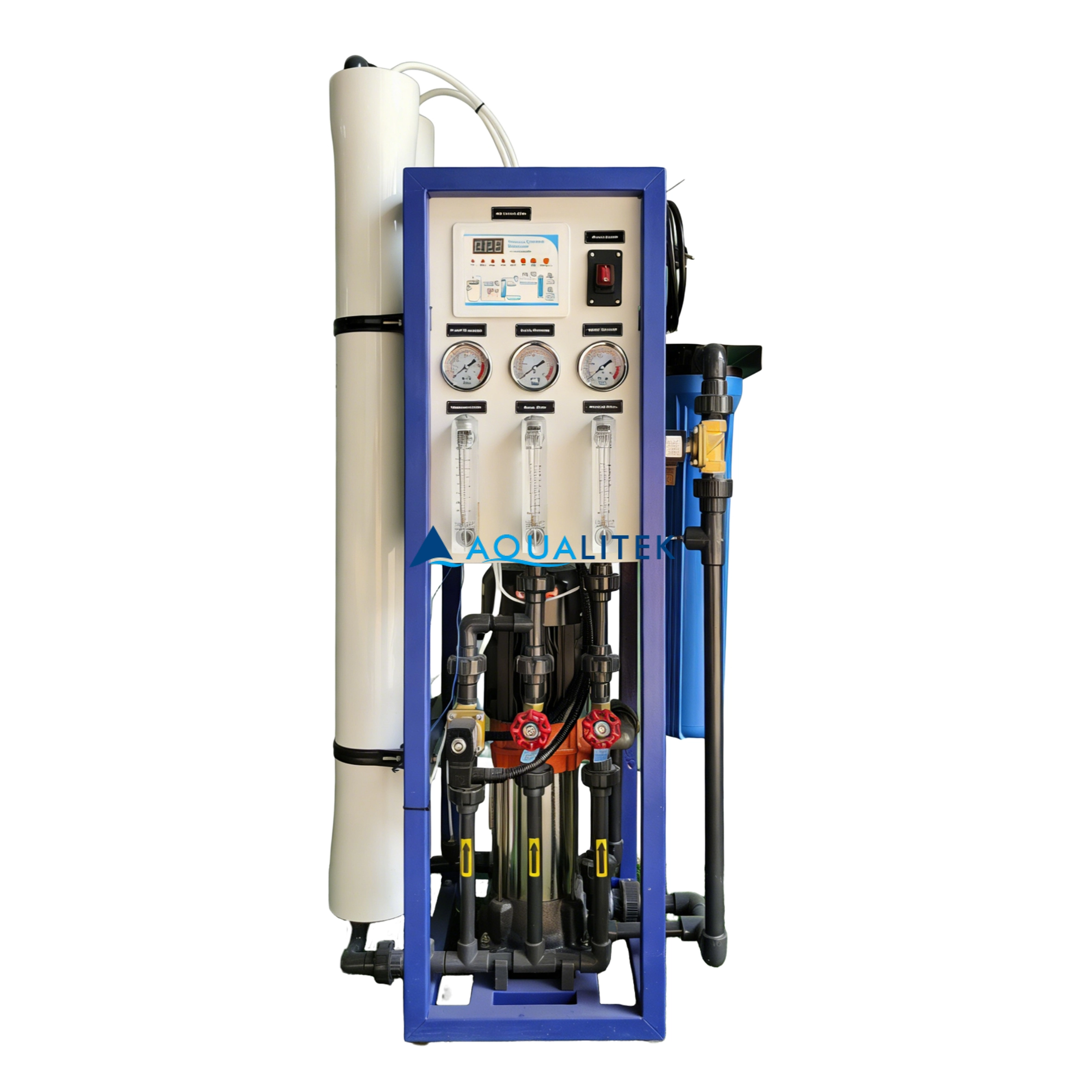
AQUALITEK's 500LPH Panel Mounted Reverse Osmosis Water Purification System delivers reliable 500 LPH RO water production. This compact industrial reverse osmosis unit is ideal for small scale industrial RO needs, ensuring efficient and high-quality purified water in a space-saving design.
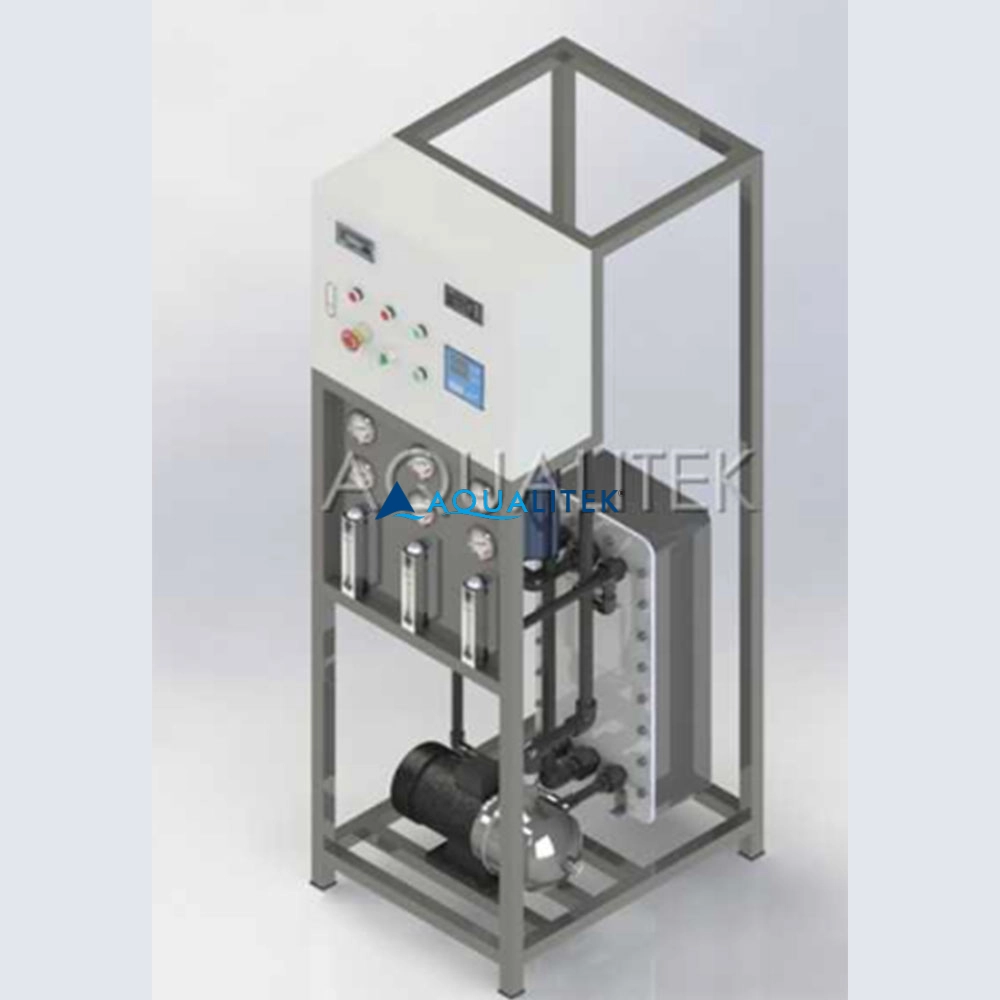
Electrodeionization (EDI) system is an advanced water purification technology that combines ion exchange and electrochemical processes to produce ultra-pure water. Unlike traditional deionization methods, which rely on chemical regeneration, EDI utilizes electric fields to drive the movement of ions through ion-exchange membranes, effectively removing dissolved salts and other ionic contaminants.
This process is continuous and does not require the use of chemicals for regeneration, making it an environmentally friendly and cost-effective solution for producing high-quality deionized water. EDI systems are widely used in applications requiring ultrapure water, such as in the pharmaceutical, semiconductor, power generation, and biotechnology industries, as well as for laboratory use.
By offering high-purity water without the need for chemical regeneration, EDI systems provide a sustainable, efficient, and reliable alternative to traditional deionization methods, making them an ideal choice for industries where water quality and process control are critical.
© 2026 AQUALITEK. All rights reserved.
AQUALITEK- Aimee Hoo
AQUALITEK - Aimee Hoo