



Can the Inlet End and Concentrate End of an RO Pressure Vessel Be Interchanged During Installation?| Insights by AQUALITEK
Interchanging the inlet and concentrate ends of an RO pressure vessel can cause severe performance and safety issues. Learn why RO pressure vessels are direction-specific and how incorrect installation affects membranes and seals.
- Introduction
- Short Answer: No, They Should Not Be Interchanged
- Why RO Pressure Vessels Are Direction-Specific
- 1. Different End Structures and Sealing Designs
- 2. Thrust Force Direction of the Membrane Elements
- 3. Anti-Telescoping Device (ATD) Orientation
- 4. Internal Flow Distribution Design
- 5. Seal and O-Ring Stress Direction
- What Happens If the Ends Are Interchanged?
- How to Identify the Correct Orientation
- 1. Manufacturer Markings
- 2. System Piping Design
- 3. Membrane Element Markings
- Are There Any Exceptions?
- Best Practice Recommendations
- Conclusion
Introduction
During RO system installation or maintenance, especially when replacing membrane elements or reassembling pressure vessels, a common question arises:
Can the inlet (feed) end and the concentrate (brine) end of an RO pressure vessel be interchanged?
At first glance, RO pressure vessels may appear symmetrical. However, in most industrial RO systems, the inlet and concentrate ends are NOT interchangeable.
This article explains why RO pressure vessels are direction-specific, what can go wrong if they are installed incorrectly, and how to verify the correct orientation.
Short Answer: No, They Should Not Be Interchanged
In standard RO system design, the inlet end and concentrate end of a pressure vessel are designed for specific flow directions and functions.
Interchanging them can lead to:
•Seal failure
•Internal leakage
•Membrane damage
•Reduced system performance
•Safety risks
Why RO Pressure Vessels Are Direction-Specific
1. Different End Structures and Sealing Designs
RO pressure vessels typically have:
•A feed inlet end designed to withstand direct high-pressure inflow
•A concentrate outlet end designed for brine discharge
Key differences include:
•End plate structure
•Thrust ring placement
•Seal arrangement
•Pressure load direction
These components are engineered for one-way hydraulic force.
2. Thrust Force Direction of the Membrane Elements
During operation:
•High-pressure feed water generates axial thrust on membrane elements
•Thrust is transferred toward the concentrate end
If the vessel is reversed:
•Thrust rings may not support the load correctly
•Membranes can shift, deform, or telescope
•Internal damage may occur rapidly
3. Anti-Telescoping Device (ATD) Orientation
RO membranes include anti-telescoping devices designed to:
•Resist axial compression
•Function in a specific flow direction
Incorrect vessel orientation can:
•Disable ATD effectiveness
•Increase the risk of membrane telescoping
•Cause irreversible membrane damage
4. Internal Flow Distribution Design
The internal geometry of a pressure vessel:
•Guides feed water evenly into membrane elements
•Controls pressure distribution
Reversing the vessel can:
•Create uneven flow
•Increase local pressure drop
•Accelerate fouling or scaling
5. Seal and O-Ring Stress Direction
Seals and O-rings are:
•Designed to be compressed in a specific pressure direction
If reversed:
•Seals may lift instead of compress
•Internal bypass leakage may occur
•Concentrated water may contaminate permeate channels
What Happens If the Ends Are Interchanged?
Common consequences include:
•Sudden drop in salt rejection
•Unstable operating pressure
•Increased differential pressure
•Leakage at end plates
•Shortened membrane lifespan
These failures are often misdiagnosed as “membrane quality problems,” when the real cause is incorrect vessel orientation.
How to Identify the Correct Orientation
1. Manufacturer Markings
Most pressure vessels are clearly marked:
•“IN” / “OUT”
•“FEED” / “BRINE”
•Flow direction arrows
Always follow manufacturer labeling.
2. System Piping Design
In most RO systems:
•Feed enters from one end
•Concentrate exits from the opposite end
Check consistency with:
•P&ID diagrams
•Original installation drawings
3. Membrane Element Markings
Membrane elements themselves have:
•Feed-end markings
•Flow direction indicators
The vessel orientation must match membrane installation direction.
Are There Any Exceptions?
Some specialized pressure vessels:
•Are designed for bi-directional use
•Are explicitly labeled as reversible
⚠ Unless the manufacturer explicitly states this, assume the vessel is NOT reversible.
Best Practice Recommendations
✔ Never assume symmetry equals reversibility
✔ Always follow pressure vessel manufacturer instructions
✔ Confirm orientation before inserting membrane elements
✔ Train installation personnel on flow direction logic
✔ Record vessel orientation in installation checklists
Conclusion
Although an RO pressure vessel may look symmetrical, its inlet and concentrate ends are not interchangeable in standard industrial RO systems.
Incorrect installation can lead to:
•Seal failure
•Membrane damage
•Performance decline
•Safety risks
Correct orientation ensures:
•Proper thrust management
•Reliable sealing
•Stable long-term operation
In RO systems, installation direction is not a detail—it is a design requirement.


Request More Information or Expert Advice
Share a few details, and we’ll provide deeper insights, tailored suggestions, or product support.
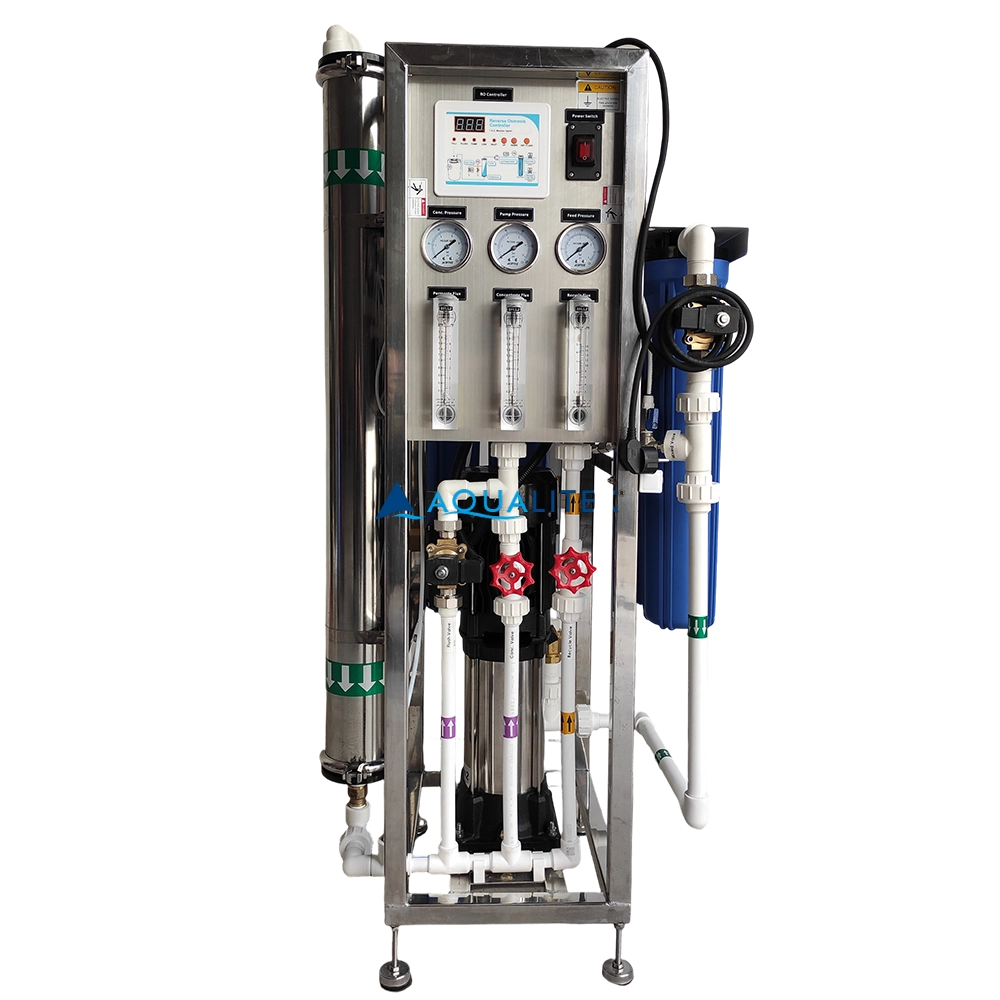
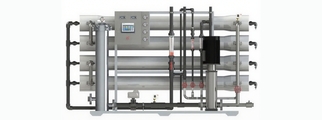
Our 500 LPH Reverse Osmosis (RO) System is engineered to provide high-quality purified water for commercial applications. Designed with advanced RO technology, durable components, and a user-friendly interface, this system ensures consistent performance, low maintenance, and long-term reliability.
With its compact design and robust skid-mounted frame, it’s an excellent choice for businesses that demand efficiency and quality in water purification.

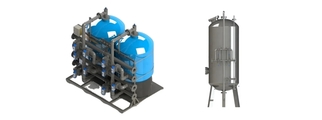
Cartridge filter housing is a critical component in liquid filtration systems, designed to securely hold and protect filter cartridges while allowing liquids to flow through the filter media. These housings are essential for industries that require reliable filtration solutions to remove contaminants from liquids, such as water treatment, pharmaceuticals, food and beverage processing, chemicals, and industrial applications.
Cartridge filter housings are typically constructed from durable materials like stainless steel, polypropylene, or fiber glass, providing excellent resistance to corrosion and ensuring long-term performance. They are available in a variety of configurations, including single or multi-cartridge designs, to accommodate different flow rates and filtration needs. These housings are engineered to securely seal the filter cartridges, preventing any bypass of unfiltered liquid, ensuring the integrity of the filtration process.
Designed for easy maintenance, cartridge filter housings offer the flexibility to replace or clean filter cartridges quickly, making them a convenient solution for systems requiring regular maintenance. Their efficiency and versatility make them ideal for applications where precise filtration is crucial for improving the quality of liquids, whether for industrial processes, potable water production, or high-purity applications.

Introduction to Manganese Sand Filter
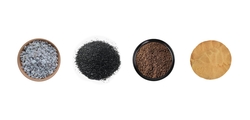
Manganese Sand Filter (MSF) is an efficient water filtration system specifically designed to remove iron, manganese, and hydrogen sulfide from water.
The filter utilizes a special manganese dioxide-coated sand media, which acts as an oxidizing agent to convert dissolved iron and manganese into solid particles, allowing them to be easily trapped and removed during the filtration process.
Manganese Sand Filters are commonly used in residential, commercial, and industrial water treatment applications where high levels of these contaminants are present. By improving water quality, preventing staining, and reducing unpleasant tastes and odors, Manganese Sand Filters provide a reliable and cost-effective solution for maintaining clean, clear, and safe water.
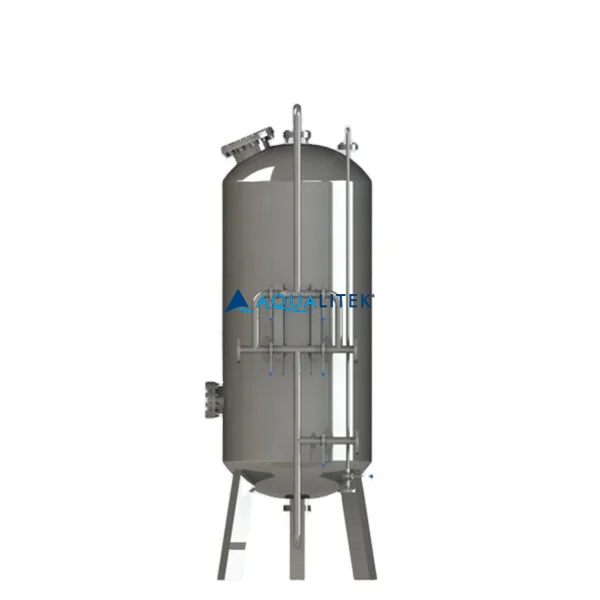
Introduction to Green Sand Filter (GSF)
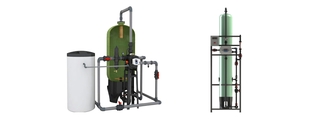
Green Sand Filter (GSF) is an effective water filtration system designed to remove iron, manganese, and hydrogen sulfide from water. Utilizing a specially treated green sand media, this filter works through the process of oxidation and adsorption, where impurities are trapped within the filter media, ensuring clean, clear water. Green Sand Filters are widely used in both residential and industrial applications where water contains high levels of iron and other minerals that can cause staining, unpleasant odors, and corrosion. By providing an efficient and cost-effective solution for water purification, Green Sand Filters help protect plumbing systems, appliances, and enhance water quality for various applications.
© 2026 AQUALITEK. All rights reserved.
AQUALITEK- Aimee Hoo
AQUALITEK - Aimee Hoo