




Validating Electrodeionization Systems for Pharmaceutical Water
- Regulatory and quality expectations for pharmaceutical water
- Understanding water types and applicable standards
- Key quality attributes to validate
- Regulatory expectations and documentation
- Design, installation, and pre-qualification considerations
- Siting and pre-treatment requirements
- System components and materials of construction
- Plumbing, loop design and heat sanitization
- Qualification and validation protocols (IQ/OQ/PQ)
- Installation Qualification (IQ)
- Operational Qualification (OQ)
- Performance Qualification (PQ)
- Monitoring, microbial control, and lifecycle management
- Online monitoring and alarm strategy
- Microbial control and biofilm prevention
- Routine maintenance and requalification
- Performance comparison and risk-based decision making
- EDI vs. traditional deionization and distillation
- Case-by-case assessment
- Troubleshooting common validation failures
- Product spotlight and brand advantage
- Electrodeionization Systems to Get UltraPure Water — product overview
- Why choose our EDI solution — brand strengths
- Service, training, and documentation
- Frequently Asked Questions (FAQ)
- Is EDI suitable for producing Water for Injection (WFI)?
- How often should an EDI system be requalified?
- What are the most important sensors to validate?
- How to control microbial contamination in EDI systems?
- Where can I find more authoritative guidance on water standards?
- Get started / Contact us

The pharmaceutical industry increasingly adopts electrodeionization (EDI) to produce high-purity water because it delivers continuous, chemical-free deionization with stable conductivity and low operating costs. Validating EDI systems for pharmaceutical use requires a clear understanding of regulatory expectations for Purified Water (PW) and Water for Injection (WFI), robust installation and commissioning, and structured IQ/OQ/PQ protocols that cover chemical, microbial and operational performance. This guide walks QA, validation engineers, and facility managers through the full validation lifecycle for EDI, addressing common pitfalls and providing actionable checks to ensure compliance, reliability, and consistent ultrapure water quality. Achieving this level of reliability in real-world facilities depends heavily on proper design, making integration tips for electrodeionization in water treatment plants a key next consideration. Once validated, sustained compliance depends on disciplined execution, making operating best practices for electrodeionization systems essential for daily plant management.
Regulatory and quality expectations for pharmaceutical water
Understanding water types and applicable standards
Pharmaceutical facilities must distinguish between Purified Water (PW) and Water for Injection (WFI). While EDI is widely accepted for producing Purified Water and can be part of a WFI production train (often following a distillation step or ultrafiltration/pervaporation in some regions), direct replacement of distillation for WFI depends on regional pharmacopeia and regulatory acceptance. Refer to authoritative descriptions of electrodeionization and water purification for background: Electrodeionization (Wikipedia) and Water purification (Wikipedia).
Key quality attributes to validate
Validation must demonstrate the EDI system consistently meets critical quality attributes (CQAs) such as conductivity/resistivity, total organic carbon (TOC), endotoxins, microbial limits (heterotrophic plate count), and specific ion concentrations when required. For ultrapure water intended for lab and process applications, typical targets include resistivity > 18.2 MΩ·cm at 25°C for ultrapure product (point-of-use may be slightly lower), TOC < 50 ppb for high-purity systems, and low bacterial counts (<10 CFU/100 mL for distribution loops, tighter for critical endpoints). Define acceptance criteria in your PQ based on pharmacopeial requirements and risk assessment.
Regulatory expectations and documentation
Prepare a validation master plan (VMP) that references relevant pharmacopeial chapters and regional guidance. Include risk assessments (e.g., FMEA), design specifications, acceptance criteria, and a lifecycle approach covering design, commissioning, qualification (IQ/OQ/PQ), and routine monitoring. Maintain traceability of materials and components to facilitate audits and support E-E-A-T (experience, expertise, authority, trustworthiness) in documentation.
Design, installation, and pre-qualification considerations
Siting and pre-treatment requirements
Proper upstream pre-treatment is essential for EDI performance and longevity. Typical pre-treatment includes multimedia filtration, activated carbon to remove chlorine, softening or ion exchange to reduce hardness, and microfiltration or ultrafiltration to reduce suspended solids and microbial load. Chlorine dioxide and free chlorine can damage ion exchange membranes and resins; therefore, monitor and control oxidants before EDI. A robust feed water specification helps define alarms and interventions.
System components and materials of construction
To minimize leachables and biofilm risk, select materials compatible with pharmaceutical practice: high-grade stainless steel (316L) for distribution piping, sanitary fittings (tri-clamp), and FDA/USP-compliant elastomers. Validate that ion-exchange membranes, resin compartments, and electrode stacks meet manufacturer specifications and are traceable. Where appropriate, include ultrafiltration (UF) or continuous electrodeionization-polishing (cEDI) as point-of-use barriers to microbes and endotoxins.
Plumbing, loop design and heat sanitization
Design the distribution loop to minimize dead legs, ensure turbulent flow (Reynolds number guidance), and permit periodic sanitization. Many pharmaceutical EDI systems are paired with hot water sanitizable loops (>80°C) or chemical sanitization protocols. Specify sample locations (following PDA and WHO guidance) and include isolation valves to support clean-in-place (CIP) and sanitization operations.
Qualification and validation protocols (IQ/OQ/PQ)
Installation Qualification (IQ)
IQ verifies the system is installed per design and manufacturer requirements. Document serial numbers, certificates of analysis for membranes and resins, electrical and grounding checks, calibration status of instrumentation (conductivity, TOC, flow meters), and piping material certificates. Record software versions and network connectivity for SCADA or DCS integration.
Operational Qualification (OQ)
OQ demonstrates the EDI system operates across its design envelope. Test conductivity/resistivity response to varied feed conductivity, confirm voltage/current regulation, flow-rate setpoints, alarm thresholds, and interlocks. Evaluate the system's ability to recover production after disturbances (feed conductivity spikes, power interruptions) and verify automated controls. Include challenge tests for TOC spikes and ionic load to confirm removal efficiency and control strategies.
Performance Qualification (PQ)
PQ demonstrates sustained production of water meeting predefined acceptance criteria under routine operational conditions. Typical PQ runs last several weeks to months, collecting daily conductivity/resistivity, TOC, bacterial counts, endotoxin, and plating for HPC at critical points. Validate that the system maintains required resistivity (or conductivity) and TOC, and that microbial levels are controlled by distribution loop design and sanitization regimen. Document trending and statistical analysis to show process capability.
Monitoring, microbial control, and lifecycle management
Online monitoring and alarm strategy
Install continuous monitors for conductivity/resistivity, temperature, and TOC where applicable, and set alarms for deviations. Use redundant sensors or periodic calibration verification as part of preventive maintenance. Data logging and secure electronic records should meet ALCOA+ principles (attributable, legible, contemporaneous, original, accurate, plus complete, consistent, enduring, and available).
Microbial control and biofilm prevention
Microbial control is one of the most common challenges. Combine mechanical controls (UF membranes, point-of-use filters), chemical or heat sanitization, and good sanitary design to minimize biofouling. Establish acceptance criteria for HPC and endotoxins. Regularly scheduled sanitization (hot or chemical) should be validated and monitored for effectiveness via pre- and post-sanitization sampling.
Routine maintenance and requalification
Create procedures for resin/membrane replacement, electrode inspection, and preventive maintenance of power supplies and instrumentation. Plan periodic requalification activities balanced by risk: major changes, repeated excursions, or planned modifications require requalification steps. Maintain a spare-parts strategy for critical components to reduce downtime.
Performance comparison and risk-based decision making
EDI vs. traditional deionization and distillation
Use a risk-based approach when choosing EDI. EDI offers continuous deionization without chemical regeneration, lower operating costs for many applications, and stable ionic removal. Distillation remains a gold standard for WFI in many jurisdictions. The table below summarizes major characteristics:
| Feature | Electrodeionization (EDI) | Mixed-bed Ion Exchange (MB/DI) | Distillation |
|---|---|---|---|
| Chemical regeneration | No (electrochemical regeneration) | Yes (acid/base) | No |
| Continuous operation | Yes | No (batch/regenerate) | Continuous or batch |
| Biofouling risk | Moderate (membranes/resin) | Low to moderate | Low (thermal sanitization inherent) |
| Operating cost | Typically lower (no chemicals) | Higher (chemicals, handling) | Variable (energy-intensive) |
| Regulatory acceptance for WFI | Limited/conditional (depends on region) | Used for PW | Widely accepted for WFI |
Case-by-case assessment
Perform a formal risk assessment comparing EDI to alternatives, including capital and life-cycle costs, environmental impact (avoiding regeneration chemicals), and process requirements. For applications requiring WFI, consult local pharmacopeial guidance and regulators before relying solely on EDI; EDI often functions as an effective polishing step.
Troubleshooting common validation failures
Common issues during validation include unexpected TOC spikes, conductivity drift, and elevated HPC. Typical root causes: inadequate pre-treatment, chlorine breakthrough damaging membranes, biofilm formation in the loop, or sensor calibration drift. Address by strengthening pre-treatment, adding UF or activated carbon, improving sanitization frequency or method, and verifying sensor calibration traceability.
Product spotlight and brand advantage
Electrodeionization Systems to Get UltraPure Water — product overview
Electrodeionization Systems to Get UltraPure Water
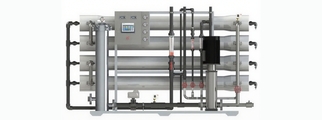
Electrodeionization (EDI) system is an advanced water purification technology that combines ion exchange and electrochemical processes to produce ultra-pure water. Unlike traditional deionization methods, which rely on chemical regeneration, EDI utilizes electric fields to drive the movement of ions through ion-exchange membranes, effectively removing dissolved salts and other ionic contaminants.
This process is continuous and does not require the use of chemicals for regeneration, making it an environmentally friendly and cost-effective solution for producing high-quality deionized water. EDI systems are widely used in applications requiring ultrapure water, such as in the pharmaceutical, semiconductor, power generation, and biotechnology industries, as well as for laboratory use.
By offering high-purity water without the need for chemical regeneration, EDI systems provide a sustainable, efficient, and reliable alternative to traditional deionization methods, making them an ideal choice for industries where water quality and process control are critical.
Why choose our EDI solution — brand strengths
Our EDI systems are designed with pharmaceutical validation in mind: sanitary materials, validated instrumentation packages (conductivity, TOC, temperature), and options for hot water sanitization and ultrafiltration integration. We provide ready-made IQ/OQ/PQ protocols, FAT/SAT support, and on-site validation assistance to accelerate regulatory acceptance. Our systems include remote data logging, alarm management, and secure access to support ALCOA+ compliance. Combined with lifecycle support and spare parts, we reduce operational risk and total cost of ownership.
Service, training, and documentation
We deliver comprehensive documentation (design specs, traceability, material certificates), operator and maintenance training, and preventive maintenance packages. Our validation documentation templates and on-site coaching help QA teams implement robust VMPs, and our technical support assists with trending analysis and remedial actions when excursions occur.
Frequently Asked Questions (FAQ)
Is EDI suitable for producing Water for Injection (WFI)?
EDI is commonly used for Purified Water (PW) and as a polishing step in WFI production trains. Many regulators still require distillation for WFI or highly specific validation demonstrating equivalency. Consult the regional pharmacopeia (e.g., USP, Ph. Eur.) and engage regulators early if planning to rely on non-distillation methods.
How often should an EDI system be requalified?
Requalification frequency depends on risk and change control. Routine requalification can be scheduled annually or when significant changes occur (major repairs, process changes, repeated excursions). Maintain continuous monitoring and trend analysis to trigger earlier requalification if needed.
What are the most important sensors to validate?
Validate conductivity/resistivity sensors, TOC analyzers, temperature probes, and flow meters. Ensure calibration traceability and perform cross-checks (bench resistivity measurements, TOC standards) during OQ and PQ stages.
How to control microbial contamination in EDI systems?
Use a combination of strategies: effective pre-treatment, sanitary construction, regular sanitization (hot or chemical), point-of-use ultrafiltration, and routine microbiological monitoring. Trending HPC results is critical to identify slow-developing biofilm issues.
Where can I find more authoritative guidance on water standards?
Refer to pharmacopeial monographs and regulatory guidance. Background on technologies can be found at reputable sources such as the Electrodeionization page on Wikipedia: https://en.wikipedia.org/wiki/Electrodeionization and general water purification resources: https://en.wikipedia.org/wiki/Water_purification. For regulatory specifics, consult the USP, Ph. Eur., and regional regulatory agencies.
Get started / Contact us
If you are planning to validate an EDI system or want a consultation tailored to your pharmaceutical facility, contact our validation team to schedule a site assessment, request IQ/OQ/PQ templates, or see product specifications for Electrodeionization Systems to Get UltraPure Water. Our experts can provide FAT/SAT support, on-site validation assistance, and lifecycle service agreements to ensure sustained compliance.
Compliance and Quality Standards for Ultrafiltration Water Systems

Flowmeters and Sensors for RO Monitoring
Selecting Vendors: What B2B Buyers Should Ask About UF Systems
Top 10 water treatment equipment Manufacturers and Supplier Brands
Membrane Water Treatment Systems
Can your membrane systems treat seawater?
Yes. Our seawater RO systems are designed to handle high salinity with corrosion-resistant materials and energy recovery devices.
Do you offer plug-and-play solutions?
Absolutely. We offer containerized membrane systems that are factory-tested, compact, and quick to deploy.
Water Filters
Are your filters suitable for seawater or chemical-heavy applications?
Yes, we offer FRP and stainless steel housings resistant to corrosion and suitable for marine or aggressive chemical environments.
How do I choose between a media filter and a micron filter?
Media filters are ideal for high-volume solids removal and can be backwashed. Micron filters offer precise filtration for fine particles and are best for polishing applications.
Solutions
Can AQT provide custom water treatment solutions?
Yes! We specialize in OEM/ODM water treatment solutions and can design custom filtration systems tailored to your business, industry, or brand requirements. Our team can assist with system design, branding, private labeling, and technical support.
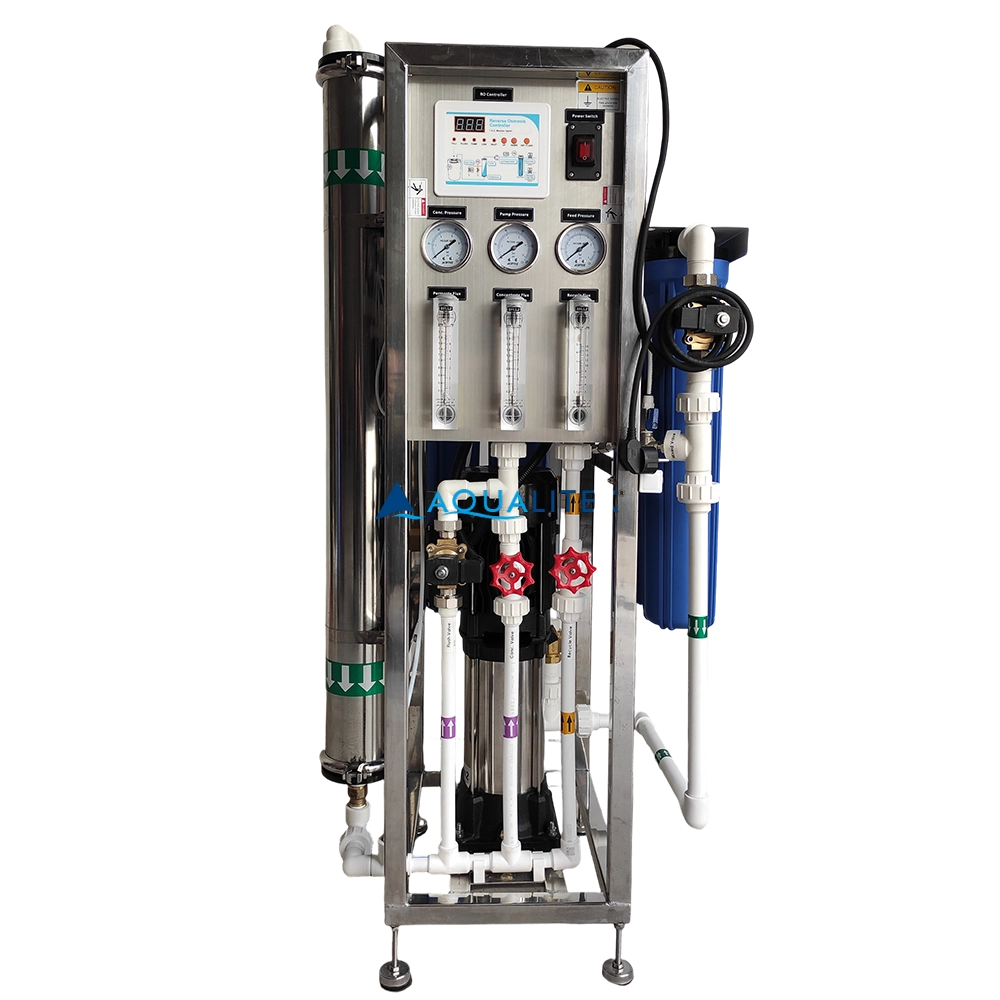
500 LPH Reverse Osmosis (RO) Water Purification Machine TWV - 412
Our 500 LPH Reverse Osmosis (RO) System is engineered to provide high-quality purified water for commercial applications. Designed with advanced RO technology, durable components, and a user-friendly interface, this system ensures consistent performance, low maintenance, and long-term reliability.
With its compact design and robust skid-mounted frame, it’s an excellent choice for businesses that demand efficiency and quality in water purification.
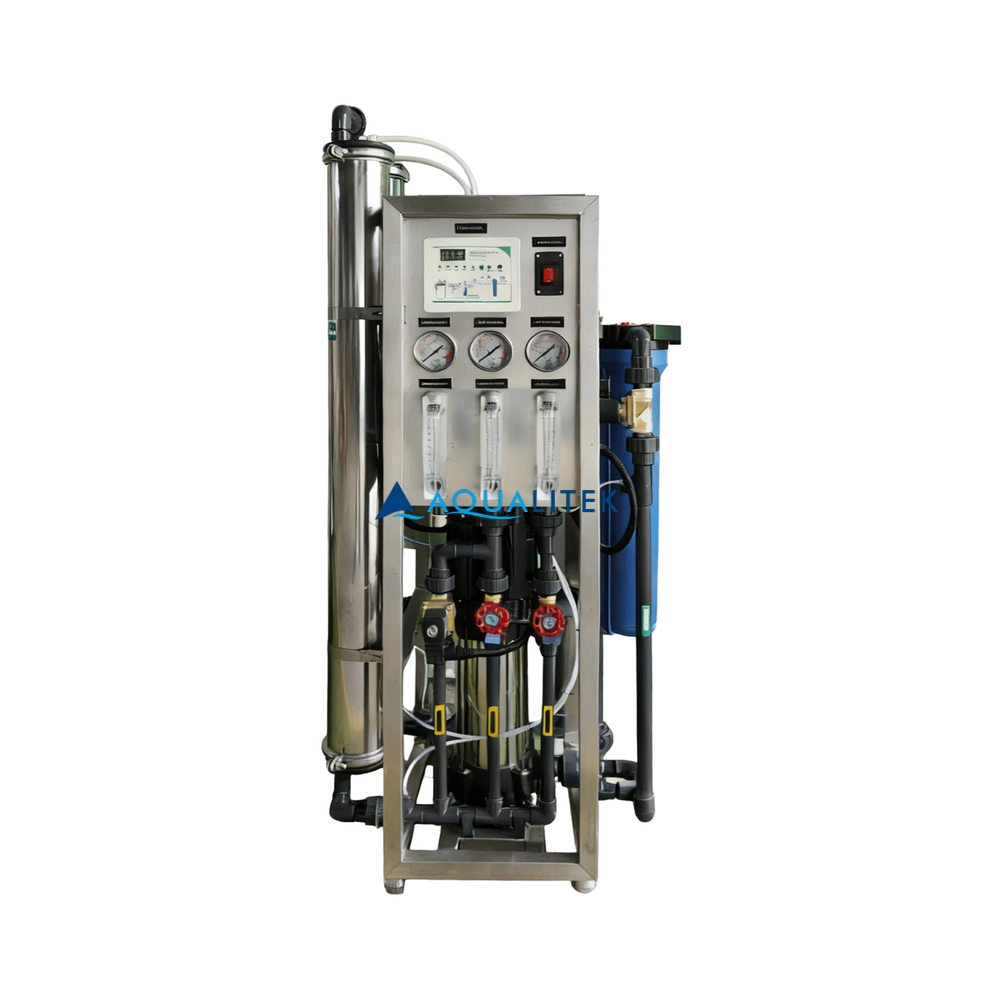
Tap Water Reverse Osmosis (TWRO) Systems TWV Series
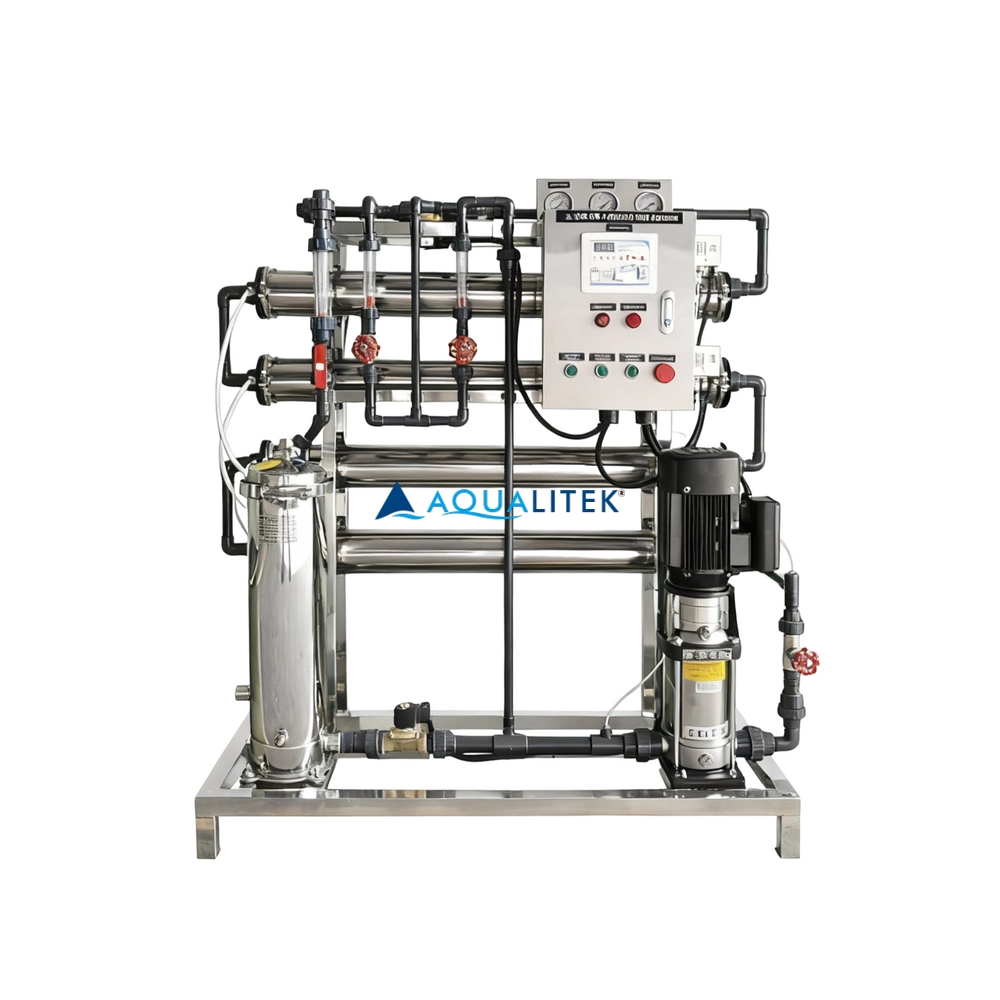
TWV series Reverse Osmosis (RO) systems are pre-engineered and pre-assembled units with 2.5”/4” membrane housings(single element type)for tap water(lower TDS).They are designed for overall superior performance, high recovery rates and offer great savings with low maintenance and operation costs.
Tap Water Reverse Osmosis (TWRO) Systems TWF Series
TWF series Reverse Osmosis (RO) systems are pre-engineered and pre-assembled units with 4” membrane housings(multiple elements type) for tap water(lower TDS) .The medium large volumes can help meet your a variety of commercial and industrial applications. They are designed for overall superior performance, high recovery rates and offer great savings with low maintenance and operation costs.

Tap Water Reverse Osmosis (TWRO) Systems TWE Series
TWE series Reverse Osmosis (RO) systems are pre-engineered and pre-assembled units with 8” membrane housings for tap water (lower TDS). The large volumes can help meet your a variety of industrial applications. They are designed for overall superior performance, high recovery rates and offer great savings with low maintenance and operation costs.
Request More Information
Contact us today for product catalogs, customization options, and a free quotation designed for your business needs.
Rest assured that your privacy is important to us, and all information provided will be handled with the utmost confidentiality.
© 2026 AQUALITEK. All rights reserved.
AQUALITEK- Aimee Hoo
AQUALITEK - Aimee Hoo