




ROI and TCO Analysis for a 12TPH Industrial UF Water Treatment Device
- Introduction: Why ROI and TCO Matter for Ultrafiltration Water Treatment
- Product Snapshot: AQUALITEK 12TPH Industrial UF Water Treatment Device
- Understanding Ultrafiltration Water Treatment and Its Value
- Key Components of TCO for a 12TPH Industrial UF System
- Operational Assumptions for a Practical 12TPH Example
- Example Annual OPEX Breakdown (12TPH UF)
- Notes on Assumptions
- Calculating Payback and ROI: A Worked Example
- 10-Year TCO Comparison: UF vs. Purchased Water
- Interpretation
- Comparison vs. Alternative Pretreatment Options
- How to Improve ROI and Reduce TCO for Your UF System
- Brand Advantages: Why Choose AQUALITEK 12TPH Industrial UF Device
- Frequently Asked Questions (FAQ)
- Q: What is the expected membrane life for the AQUALITEK 12TPH UF device?
- Q: How much energy does a 12TPH UF plant consume?
- Q: How does Automatic Backwash Technology affect operating costs?
- Q: What is a realistic payback period?
- Q: Can the UF system handle variable loads?
- Contact & Next Steps — Evaluate Your Site
- Authoritative References and Further Reading
- Final Remarks

Introduction: Why ROI and TCO Matter for Ultrafiltration Water Treatment
Industrial decision-makers evaluating water treatment solutions need clear financial insight: beyond technical performance, what are the lifecycle costs and financial returns? This article focuses on Ultrafiltration Water Treatment and provides a practical ROI and TCO analysis for the 12TPH Industrial UF Water Treatment Device with High Throughput — specifically the AQUALITEK UFL-4 Series. You will get a transparent cost model, assumptions, a 10-year TCO table, and strategies to improve payback, all tailored to industrial and commercial operators. With financial viability confirmed, project teams should move into execution planning using an installation and integration guide for 12TPH UF systems in plants.
Product Snapshot: AQUALITEK 12TPH Industrial UF Water Treatment Device
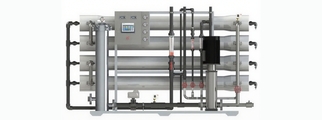
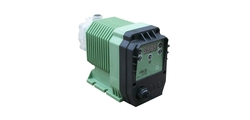
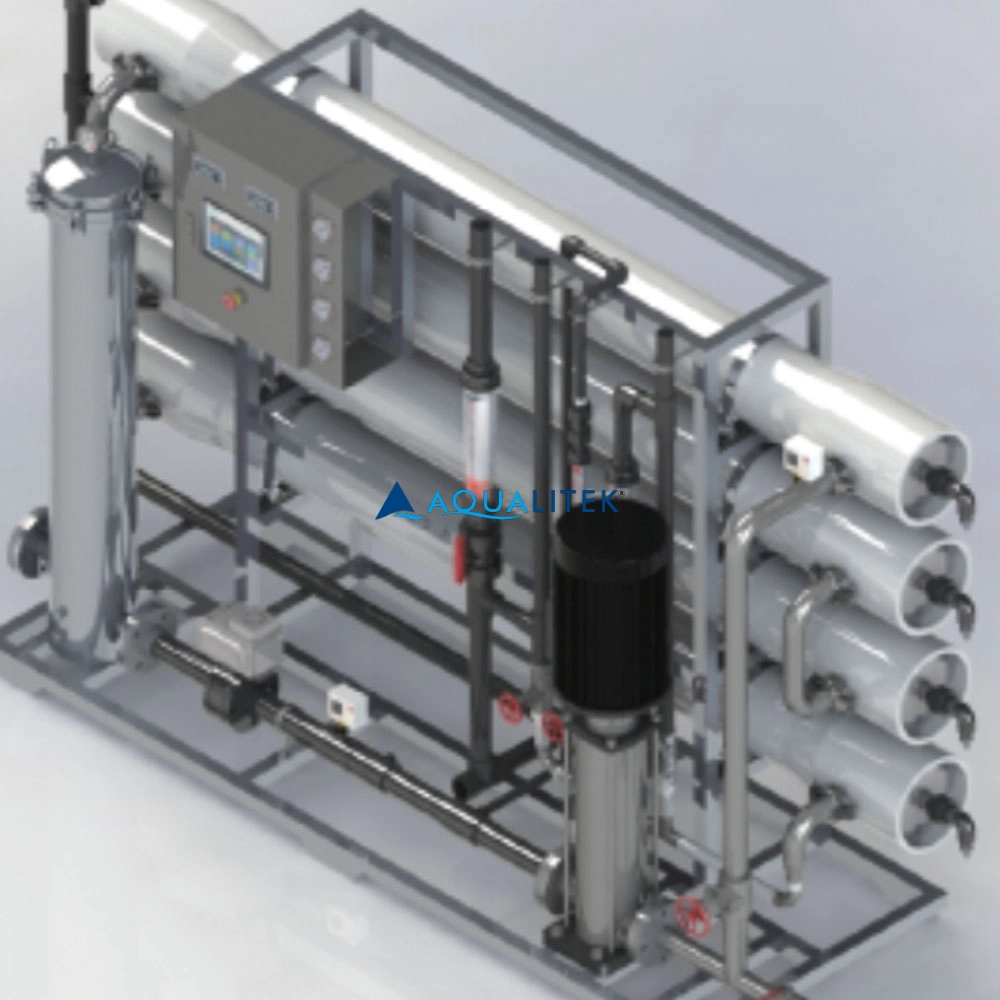
AQUALITEK 12TPH Industrial UF Water Treatment Device (UFL-4 Series) delivers high-efficiency, high-throughput ultrafiltration with Automatic Backwash Technology, high fouling-resistance membrane modules for efficient pretreatment and turbidity reduction in industrial and commercial applications.
Understanding Ultrafiltration Water Treatment and Its Value
Ultrafiltration (UF) is a low-pressure membrane process that removes suspended solids, colloids, and many pathogens while maintaining high flux and water recovery. For industries requiring consistent pretreatment (boiler feed, cooling towers, food & beverage, chemical process water), UF reduces downstream fouling, chemical demand, and process interruptions — all of which translate into measurable cost savings. When analyzing ROI and TCO, UF’s benefits include improved process uptime, reduced chemical usage, lower maintenance of downstream equipment, and water reclamation.
Key Components of TCO for a 12TPH Industrial UF System
To create a reliable TCO model, include the following categories:
- CAPEX: equipment purchase, site works, installation, skid framing, instrumentation, and control systems.
- Membrane lifecycle costs: replacement frequency, module costs, disposal, and recycling.
- Energy: feed pumps, backwash pumps, and control equipment (kWh consumption).
- Chemicals & CIP: periodic cleaning, anti-fouling pretreatment, biocide, and neutralization.
- Water losses & recovery: blowdown/backwash volumes, bleed-off, and cost of makeup water.
- Labor & maintenance: routine inspections, preventive maintenance, and spare parts.
- Downtime & performance risk: cost of production losses if the unit underperforms.
Quantifying these gives the most realistic TCO and informs ROI (savings vs. baseline scenario).
Operational Assumptions for a Practical 12TPH Example
To make calculations concrete, we use a representative set of assumptions for a 12 TPH (12 m3/h) UF device operating continuously in an industrial setting. Note: adapt values to your local costs and site conditions.
- Nominal capacity: 12 TPH = 12 m3/h; continuous operation: 24 hours/day => 288 m3/day => ~105,120 m3/year (assuming 365 days).
- Installed CAPEX (including skid, instrumentation, piping, and civil works): USD 150,000 (mid-range estimate for packaged 12 m3/h UF with automatic backwash).
- Membrane module cost replacement: USD 15,000 every 5 years (membrane life 5 years). Annualized membrane cost: USD 3,000/year.
- Energy consumption: 0.25 kWh/m3 (feed pumps and backwash system). Annual energy: 0.25 * 105,120 = 26,280 kWh/year. Energy cost: USD 0.10/kWh => USD 2,628/year.
- Backwash/recovery losses: 3% of throughput => 3,153.6 m3/year of makeup water. Makeup water cost: USD 0.5/m3 => USD 1,576.8/year.
- Chemicals & CIP: USD 2,500/year (periodic CIP and pretreatment chemicals).
- Labor & maintenance: one operator share and routine maintenance USD 20,000/year.
- Spare parts/other maintenance: 5% of CAPEX per year => USD 7,500/year.
Example Annual OPEX Breakdown (12TPH UF)
The following table summarizes annual operating costs based on the assumptions above.
| OPEX Item | Calculation/Notes | Annual Cost (USD) |
|---|---|---|
| Energy | 26,280 kWh * $0.10/kWh | 2,628 |
| Membrane replacement (annualized) | $15,000/5 years | 3,000 |
| Makeup water (3% loss) | 3,153.6 m3 * $0.50/m3 | 1,577 |
| Chemicals & CIP | Periodic cleaning & consumables | 2,500 |
| Labor & operations | Operator share, routine checks | 20,000 |
| Spares & maintenance (5% CAPEX) | 5% of $150,000 | 7,500 |
| Total Annual OPEX | 37,205 |
Notes on Assumptions
These figures are illustrative. Actual energy use may be lower or higher depending on site head, pump efficiencies, and control strategy. Membrane life depends on feedwater quality and cleaning protocol; high-fouling waters may shorten life. Labor costs vary by region and automation level.
Calculating Payback and ROI: A Worked Example
Assume the alternative to installing UF is purchasing treated water at USD 0.80/m3 or using a conventional clarification + sand filtration pretreatment costing less CAPEX but higher ongoing chemicals, sludge disposal, and lower recovery.
- Annual delivered water demand: 105,120 m3/year.
- Cost of bought water: 105,120 * $0.80 = $84,096/year.
- Annual OPEX for UF (from table): $37,205/year.
- Annual savings with UF: $84,096 - $37,205 = $46,891/year.
Simple payback on CAPEX ($150,000): Payback = CAPEX / Annual Savings = 150,000 / 46,891 ≈ 3.2 years.
ROI (annual) = Annual Savings / CAPEX = 46,891 / 150,000 = 31.3% per year (simple ROI, not discounted).
10-Year TCO Comparison: UF vs. Purchased Water
Below is a 10-year Total Cost comparison using the example assumptions. For clarity we use nominal (undiscounted) values.
| Item / Scenario | UF System (10 years) | Purchased Water (10 years) |
|---|---|---|
| CAPEX (one-time) | $150,000 | $0 |
| OPEX (annual *10) | $37,205 * 10 = $372,050 | $84,096 * 10 = $840,960 |
| Membrane replacements (years 5 & 10) | $15,000 * 2 = $30,000 | $0 |
| Total 10-year Cost | $552,050 | $840,960 |
| Net Savings over 10 years | $288,910 (UF cheaper) | |
Interpretation
Under these assumptions, the UF solution recovers its investment within approximately 3–4 years and yields nearly $289k in nominal savings over 10 years. Incorporating discounting (NPV) will reduce nominal savings somewhat, but with a 3.2-year payback the investment remains attractive in most cost-of-capital scenarios.
Comparison vs. Alternative Pretreatment Options
Industrial buyers often compare UF vs. traditional clarification + sand filtration or cartridge filtration. Key considerations:
- Water quality: UF provides consistent reduction in turbidity, colloids, and some pathogens without coagulation, often outperforming sand filters for fine colloids.
- Footprint: UF skids are compact compared to large clarifiers and filter beds.
- Sludge and disposal: Clarifiers generate sludge requiring handling and disposal; UF backwash solids are typically lower volume and more concentrated.
- Operational complexity: UF is automated (especially with Automatic Backwash Technology) and may require less day-to-day operator attention.
| Feature | 12TPH UF (AQUALITEK) | Clarifier + Sand Filter |
|---|---|---|
| Typical CAPEX | Moderate ($150k example) | Moderate to high (civil works, larger footprint) |
| Typical OPEX | Lower (less chemicals, less sludge) | Higher (coagulants, sludge handling) |
| Footprint | Compact (skid-mounted) | Large |
| Water Recovery | High (low losses with optimized backwash) | Lower (higher backwash and sludge losses) |
How to Improve ROI and Reduce TCO for Your UF System
To maximize return and minimize lifecycle cost consider these operational best practices:
- Optimize automatic backwash scheduling to balance flux and water recovery.
- Implement a preventive maintenance program and membrane monitoring (TMP, flux) to avoid unplanned downtime.
- Pre-treat feedwater with coarse filtration or multimedia filters if feed contains large solids to reduce fouling stress.
- Use targeted CIP chemistries and intervals based on fouling type (organic, inorganic, biofouling) to extend membrane life.
- Monitor energy consumption and use variable speed drives (VSDs) to reduce pump energy during partial-load conditions.
Brand Advantages: Why Choose AQUALITEK 12TPH Industrial UF Device
When selecting a UF provider, AQUALITEK's UFL-4 Series brings specific advantages that influence ROI and TCO:
- Automatic Backwash Technology: reduces fouling, extends run times between CIP, and lowers water loss.
- High Fouling-Resistance Membrane Modules: longer membrane life reduces replacement frequency and annualized costs.
- High Throughput with Compact Footprint: lowers site civil and installation costs compared to large conventional systems.
- Integrated Controls & Monitoring: enable remote diagnostics and predictive maintenance — reducing labor and downtime costs.
- Proven Industrial Performance: designed for robust pretreatment and turbidity reduction across industrial sectors.
Frequently Asked Questions (FAQ)
Q: What is the expected membrane life for the AQUALITEK 12TPH UF device?
A: Typical membrane life is 5 years under normal operating and CIP regimes, but with optimized pretreatment and cleaning intervals membranes can last longer. Membrane life depends on feedwater quality and operation.
Q: How much energy does a 12TPH UF plant consume?
A: Energy consumption for a well-designed UF skid is commonly in the range of 0.1–0.5 kWh/m3 including pumps and backwash. In our example we used 0.25 kWh/m3. Actual consumption depends on site head and pump efficiency.
Q: How does Automatic Backwash Technology affect operating costs?
A: Automatic backwash extends membrane runtime and reduces manual intervention. It can reduce fouling-related downtime and CIP frequency, lowering chemical and labor costs while slightly increasing backwash water and energy usage.
Q: What is a realistic payback period?
A: In our example comparing UF to purchasing water at $0.80/m3, the simple payback was ~3.2 years. Real payback depends on local water costs, CAPEX specifics, operating regime, and alternative baseline costs.
Q: Can the UF system handle variable loads?
A: Yes. Modern UF units like the AQUALITEK UFL-4 Series are designed with control systems and variable-speed pumping to efficiently handle variable load profiles with minimal efficiency loss.
Contact & Next Steps — Evaluate Your Site
If you'd like a customized ROI and TCO model for your site, AQUALITEK can provide a site survey, feedwater analysis, and a tailored financial model. Contact our sales engineering team to arrange a feasibility study, CAPEX quote, and projected payback tailored to your actual water usage and local costs.
CTA: Contact AQUALITEK Sales to request a quotation or site evaluation for the 12TPH Industrial UF Water Treatment Device (UFL-4 Series).
Authoritative References and Further Reading
Sources used to inform the technical and economic guidance in this
- Ultrafiltration — Wikipedia: https://en.wikipedia.org/wiki/Ultrafiltration
- U.S. EPA — Membrane Technology overview: https://www.epa.gov/water-research/membrane-technology
- International Water Association (IWA): https://iwa-network.org/
- World Health Organization — Water quality and treatment guidance: https://www.who.int/water_sanitation_health/publications
Final Remarks
Ultrafiltration offers a compact, high-recovery solution for industrial pretreatment and water reuse. With automated features and durable membranes, the AQUALITEK 12TPH Industrial UF Water Treatment Device can deliver compelling ROI and an attractive 10-year TCO compared with purchased water or traditional pretreatment. Use the model and best practices above to develop a site-specific assessment and to optimize lifecycle performance.
Maintenance Guide for BWRO BWE Series in Well Water Applications
Scaling and Fouling Control Strategies for BWRO BWE Systems
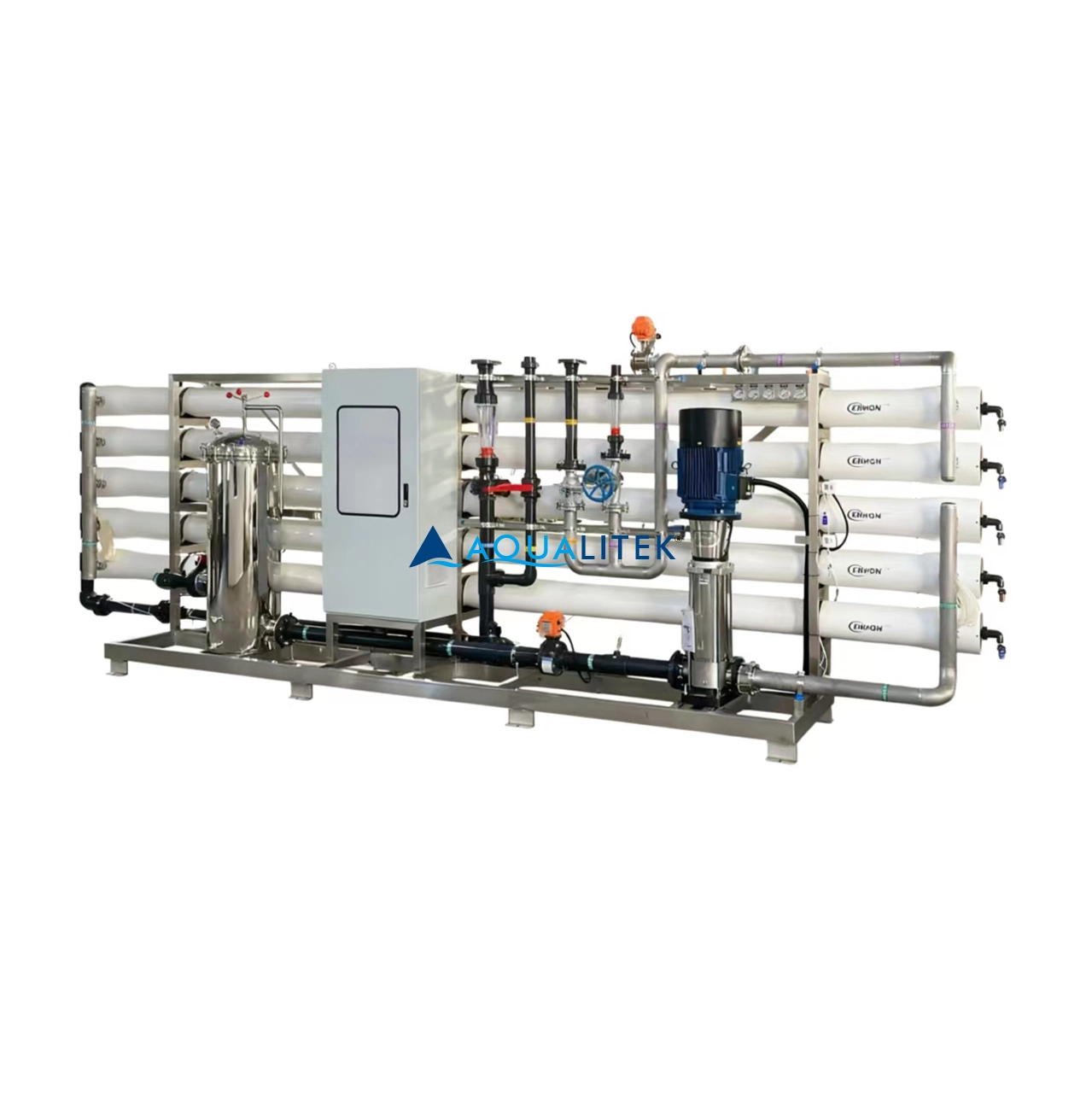
Scaling and Expansion: Integrating a 30TPH Industrial RO System
Top Innovations from Reverse Osmosis System Manufacturers 2025
Membrane Water Treatment Systems
How long do membranes last?
With proper maintenance and CIP, UF and RO membranes can last 3–5 years, depending on feed water quality and system design.
Solutions
Can AQT provide custom water treatment solutions?
Yes! We specialize in OEM/ODM water treatment solutions and can design custom filtration systems tailored to your business, industry, or brand requirements. Our team can assist with system design, branding, private labeling, and technical support.
How often should I replace filters and membranes?
Filter and membrane lifespan depends on water quality, usage, and system type. General guidelines:
1. Sediment & Carbon Filters: Replace every 6–12 months.
2. RO Membranes: Replace every 2–3 years, depending on water conditions.
3. UF/NF Membranes: Replace every 1–2 years.
Regular maintenance ensures optimal performance and water quality.
Are AQT’s water treatment products certified?
Yes! Our products comply with international quality and safety standards, including ISO, CE, and NSF certifications. We prioritize high-quality materials, advanced technology, and strict quality control to ensure superior performance and reliability.
FAQ-aqualitek
Are AQT’s water treatment products certified?
Yes! Our products comply with international quality and safety standards, including ISO, CE, and NSF certifications. We prioritize high-quality materials, advanced technology, and strict quality control to ensure superior performance and reliability.
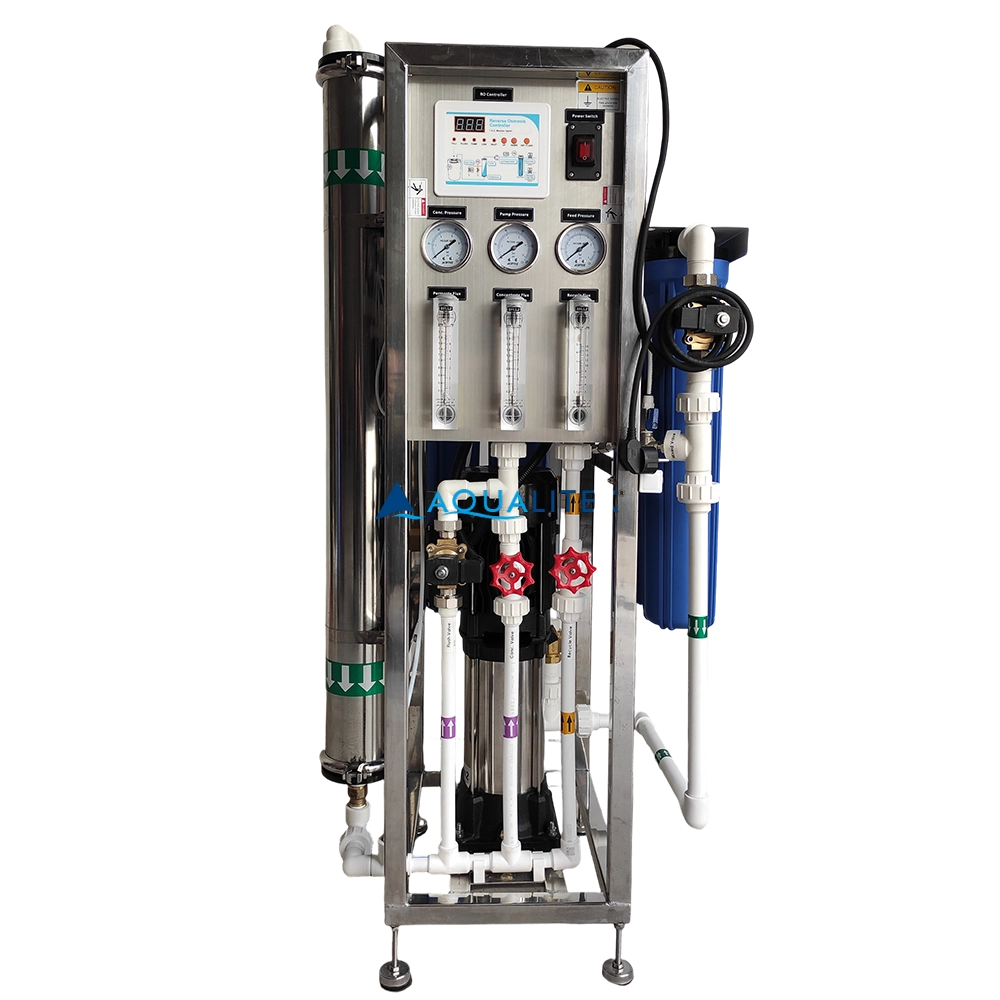
500 LPH Reverse Osmosis (RO) Water Purification Machine TWV - 412
Our 500 LPH Reverse Osmosis (RO) System is engineered to provide high-quality purified water for commercial applications. Designed with advanced RO technology, durable components, and a user-friendly interface, this system ensures consistent performance, low maintenance, and long-term reliability.
With its compact design and robust skid-mounted frame, it’s an excellent choice for businesses that demand efficiency and quality in water purification.
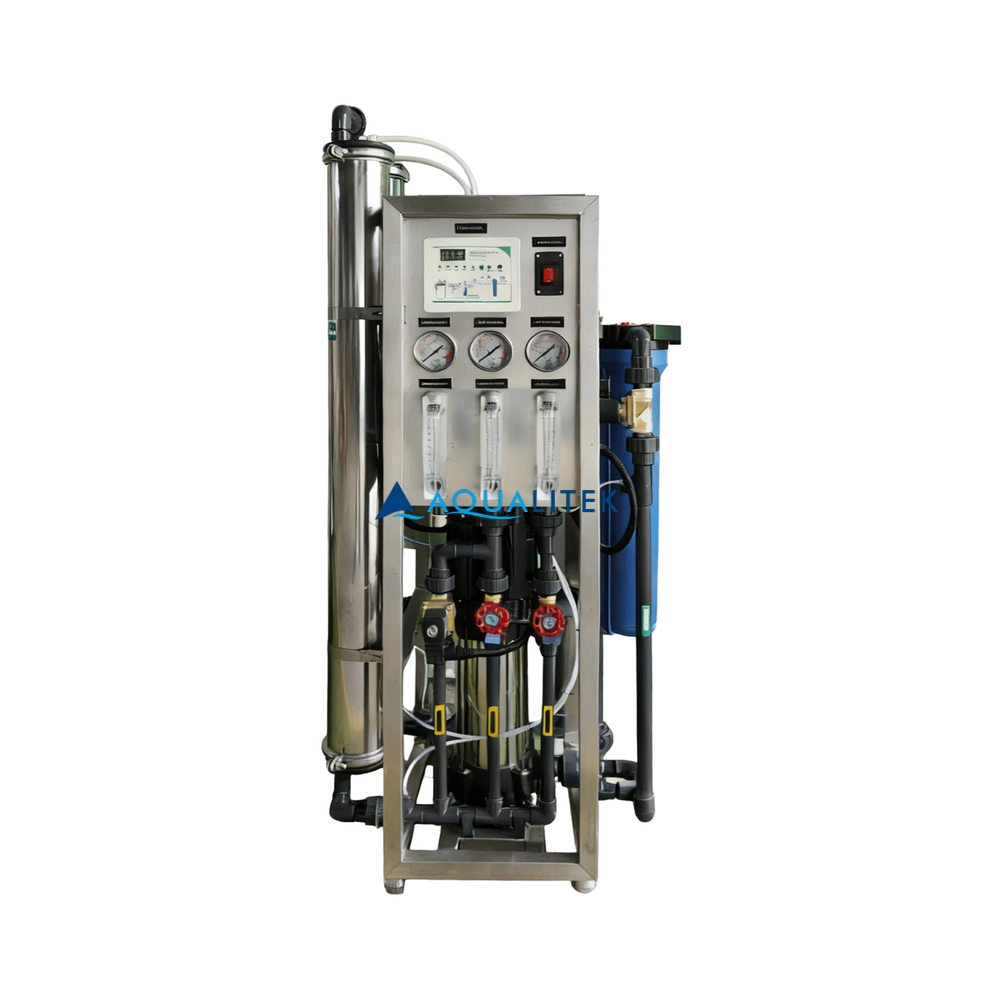
Tap Water Reverse Osmosis (TWRO) Systems TWV Series
TWV series Reverse Osmosis (RO) systems are pre-engineered and pre-assembled units with 2.5”/4” membrane housings(single element type)for tap water(lower TDS).They are designed for overall superior performance, high recovery rates and offer great savings with low maintenance and operation costs.
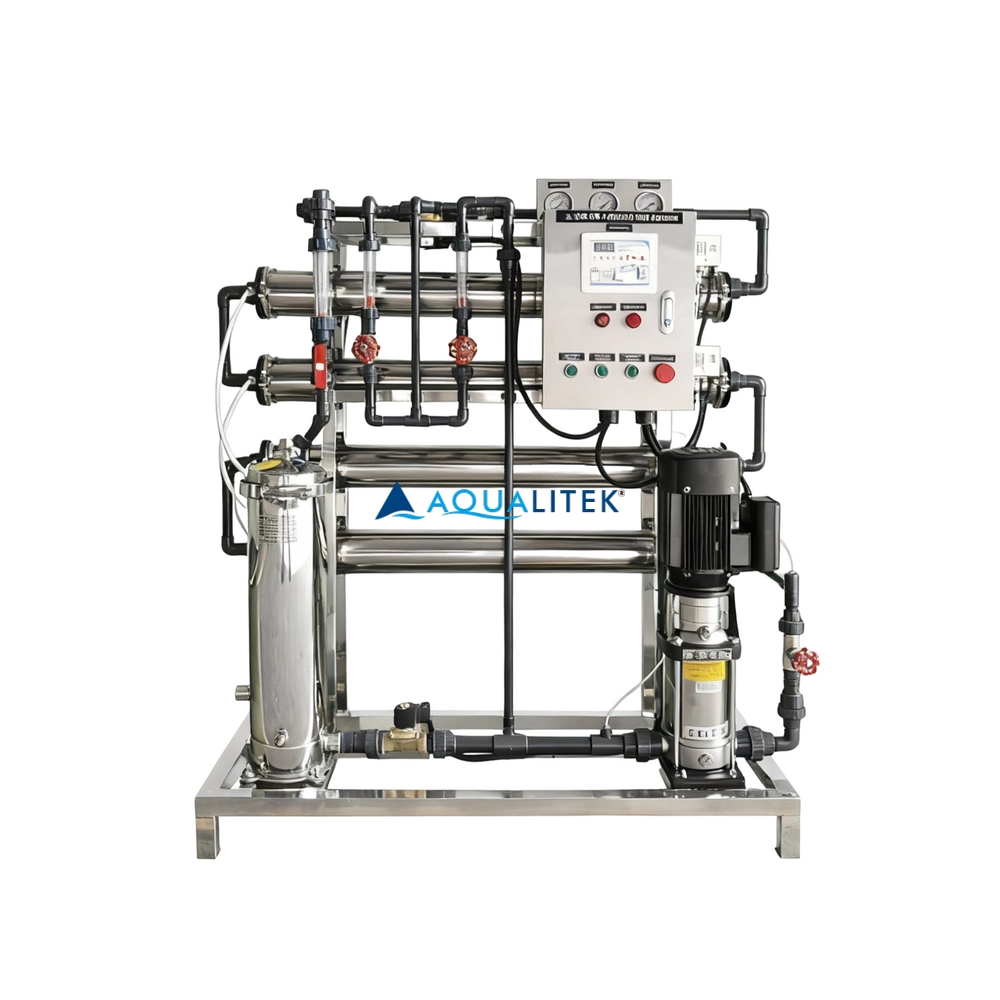
Tap Water Reverse Osmosis (TWRO) Systems TWF Series
TWF series Reverse Osmosis (RO) systems are pre-engineered and pre-assembled units with 4” membrane housings(multiple elements type) for tap water(lower TDS) .The medium large volumes can help meet your a variety of commercial and industrial applications. They are designed for overall superior performance, high recovery rates and offer great savings with low maintenance and operation costs.

Tap Water Reverse Osmosis (TWRO) Systems TWE Series
TWE series Reverse Osmosis (RO) systems are pre-engineered and pre-assembled units with 8” membrane housings for tap water (lower TDS). The large volumes can help meet your a variety of industrial applications. They are designed for overall superior performance, high recovery rates and offer great savings with low maintenance and operation costs.
Request More Information
Contact us today for product catalogs, customization options, and a free quotation designed for your business needs.
Rest assured that your privacy is important to us, and all information provided will be handled with the utmost confidentiality.
© 2026 AQUALITEK. All rights reserved.
AQUALITEK- Aimee Hoo
AQUALITEK - Aimee Hoo