




Why Is the Recovery Rate of Seawater RO Limited to 40–50%?| Insights by AQUALITEK
Why is the single-pass recovery rate of seawater reverse osmosis (SWRO) systems typically limited to 40–50%? This in-depth guide explains the physical, chemical, hydraulic, and operational reasons, and provides engineering design principles, optimization strategies, and best practices for stable long-term operation.
- Introduction – Why Recovery Rate Matters in Seawater RO Systems
- 1. What Is Recovery Rate in Seawater RO?
- 2. The Core Reason: Extremely High Osmotic Pressure of Seawater
- 2.1 Osmotic Pressure Limits System Recovery
- 3. Scaling Risk Increases Exponentially at High Recovery
- 3.1 Major Scaling Components in Seawater
- 4. Hydraulic and Mechanical Constraints of High-Pressure Systems
- 4.1 Pressure Vessel & Membrane Mechanical Limits
- 5. Energy Consumption Increases Non-Linearly
- 6. Biofouling and Organic Fouling Intensify at High Recovery
- 7. Why 40–50% Is the Best Engineering Balance Point
- 8. Can We Increase Recovery Beyond 50%?
- Engineering Solutions:
- 9. Best Engineering Practices for Recovery Optimization
- Conclusion
- FAQ – Frequently Asked Questions
Introduction – Why Recovery Rate Matters in Seawater RO Systems
In seawater desalination projects, recovery rate is one of the most critical design parameters. It directly affects:
•Freshwater production capacity
•Energy consumption
•System stability
•Membrane lifespan
•Overall operational cost
Unlike brackish water RO systems, which often operate at 70–85% recovery, seawater reverse osmosis (SWRO) systems are typically designed with a single-pass recovery rate of only 40–50%.
This relatively low recovery often raises questions from plant owners, engineers, and project investors:
Why can’t seawater RO systems operate at higher recovery rates?
Is it technically possible to increase recovery beyond 50%?
This article provides a complete engineering-level explanation.
1. What Is Recovery Rate in Seawater RO?
Recovery rate (%) = Permeate flow / Feed water flow × 100%
For example:
•Feed water: 100 m³/h
•Product water: 45 m³/h
•Recovery rate = 45%
In seawater desalination, the industry-standard single-pass recovery rate is 40–50%, depending on:
•Feed seawater salinity
•Temperature
•Pretreatment performance
•Membrane type
•Energy recovery configuration
2. The Core Reason: Extremely High Osmotic Pressure of Seawater
2.1 Osmotic Pressure Limits System Recovery
Typical seawater TDS: 32,000–38,000 mg/L
This corresponds to an osmotic pressure of approximately:
26–30 bar (380–435 psi)
As recovery increases, salt concentration inside the membrane module increases dramatically, causing:
•Rapid rise in osmotic pressure
•Exponential increase in required operating pressure
•Significant energy consumption surge
At 50% recovery, brine salinity can easily reach 65,000–70,000 mg/L, pushing osmotic pressure beyond 55 bar.
Beyond this point:
•Energy efficiency drops sharply
•Mechanical stress on membranes increases
•High-pressure pump load rises steeply
Thus, 40–50% recovery becomes the optimal economic and technical balance point.
3. Scaling Risk Increases Exponentially at High Recovery
3.1 Major Scaling Components in Seawater
Seawater contains high levels of:
•Calcium (Ca²⁺)
•Magnesium (Mg²⁺)
•Sulfate (SO₄²⁻)
•Bicarbonate (HCO₃⁻)
At higher recovery:
•Ion concentration multiplies
•Saturation indices increase
•Scaling tendency rises sharply
The most dangerous scaling forms:
|
Scale Type |
Risk Level |
|
CaCO₃ (Calcium carbonate) |
High |
|
CaSO₄ (Calcium sulfate) |
Very high |
|
Mg(OH)₂ |
High |
|
Silica scale |
Extreme |
At recoveries above 50%, scaling risk often becomes uncontrollable, even with antiscalant dosing.
4. Hydraulic and Mechanical Constraints of High-Pressure Systems
4.1 Pressure Vessel & Membrane Mechanical Limits
Operating pressure of SWRO systems:
55–70 bar (800–1,000 psi)
At higher recovery:
•Feed pressure must exceed 70–80 bar
•Pipe stress increases
•Membrane compaction risk increases
•O-ring sealing risks rise
•System safety margin sharply declines
Thus, 40–50% recovery ensures long-term mechanical safety.
5. Energy Consumption Increases Non-Linearly
Energy cost typically represents 40–60% of total desalination operating cost.
|
Recovery Rate |
Specific Energy Consumption |
|
40% |
3.0–3.5 kWh/m³ |
|
45% |
3.2–3.8 kWh/m³ |
|
50% |
3.5–4.2 kWh/m³ |
|
>55% |
>4.8 kWh/m³ |
Beyond 50%, energy consumption rises faster than water output gains, making higher recovery economically unattractive.
6. Biofouling and Organic Fouling Intensify at High Recovery
Higher recovery leads to:
•Higher concentration of:
Organics
Microorganisms
Colloids
•Increased concentration polarization
•Higher fouling rates
Result:
•Faster membrane flux decline
•More frequent chemical cleaning
•Shortened membrane lifespan
7. Why 40–50% Is the Best Engineering Balance Point
Combining all factors:
|
Factor |
Effect |
|
Osmotic pressure |
Limits achievable flux |
|
Scaling risk |
Exponential increase |
|
Energy consumption |
Rapid cost growth |
|
Mechanical safety |
Pressure constraints |
|
Membrane lifespan |
Fouling & compaction |
40–50% recovery offers the best balance between:
•Water output
•Energy efficiency
•System safety
•Operational reliability
•Total lifecycle cost
8. Can We Increase Recovery Beyond 50%?
Yes — but not by single-pass RO alone.
Engineering Solutions:
1.Two-pass SWRO + BWRO process
2.Brine concentration RO (BCRO)
3.High-efficiency energy recovery devices (PX, DWEER, Turbocharger)
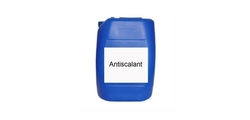
4.Advanced antiscalant + real-time scaling control
These allow overall system recovery of 55–70%, but:
•Capital cost increases
•System complexity increases
•Operation difficulty rises
Thus, single-pass systems remain at 40–50% for reliability and economy.
9. Best Engineering Practices for Recovery Optimization
To safely approach 50% recovery:
•High-efficiency pretreatment (UF + multimedia filtration)
•SDI15 ≤ 3
•Real-time scaling monitoring
•High-performance antiscalant dosing
•Stable temperature & pressure control
•High-efficiency energy recovery devices (≥96%)
Conclusion
The typical 40–50% recovery design of seawater RO systems is not a limitation of technology, but rather the optimal engineering equilibrium between:
Performance × Energy × Reliability × Cost × Safety
Blindly pursuing higher recovery will result in:
•Rapid membrane fouling
•High scaling risk
•Energy waste
•Increased downtime
•Shortened system lifespan
Professional system design always prioritizes long-term stability over short-term output gains.
FAQ – Frequently Asked Questions
Q1: Why can brackish water RO reach 75–85% recovery?
Because brackish water has much lower salinity and osmotic pressure, allowing higher recovery without extreme pressure or scaling risks.
Q2: Can antiscalant alone allow higher recovery?
No. Antiscalants delay scaling but cannot overcome osmotic pressure and hydraulic limits.
Q3: What is the highest recovery achieved in real projects?
Using multi-stage systems, overall recovery can reach 65–70%, but rarely higher.


Request More Information or Expert Advice
Share a few details, and we’ll provide deeper insights, tailored suggestions, or product support.
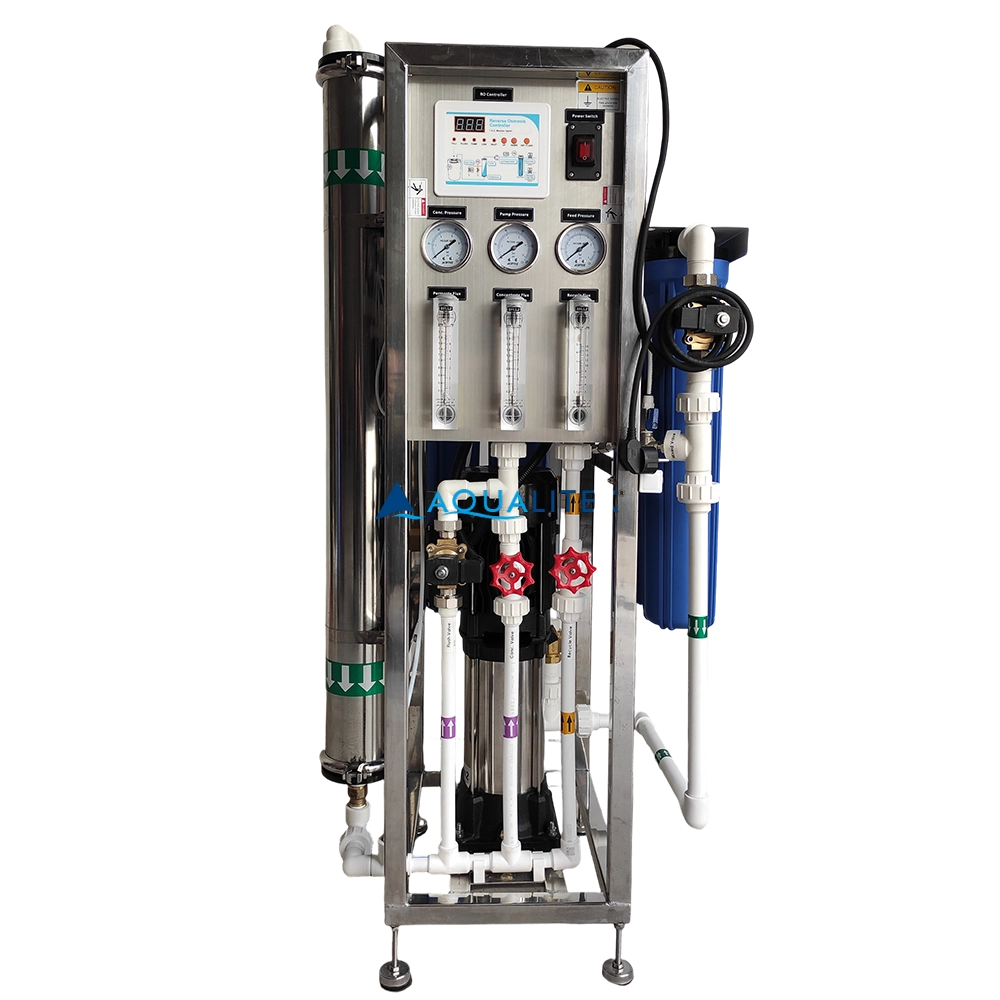
Our 500 LPH Reverse Osmosis (RO) System is engineered to provide high-quality purified water for commercial applications. Designed with advanced RO technology, durable components, and a user-friendly interface, this system ensures consistent performance, low maintenance, and long-term reliability.
With its compact design and robust skid-mounted frame, it’s an excellent choice for businesses that demand efficiency and quality in water purification.
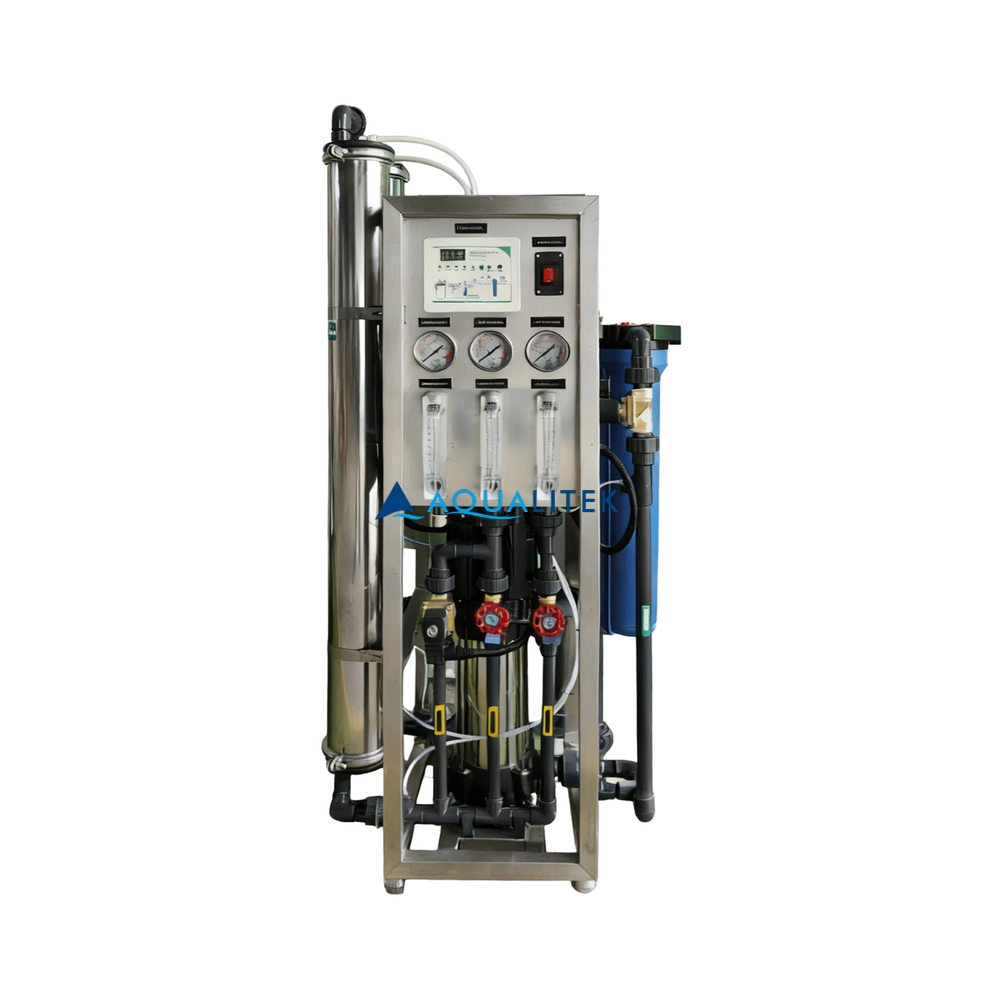
TWV series Reverse Osmosis (RO) systems are pre-engineered and pre-assembled units with 2.5”/4” membrane housings(single element type)for tap water(lower TDS).They are designed for overall superior performance, high recovery rates and offer great savings with low maintenance and operation costs.
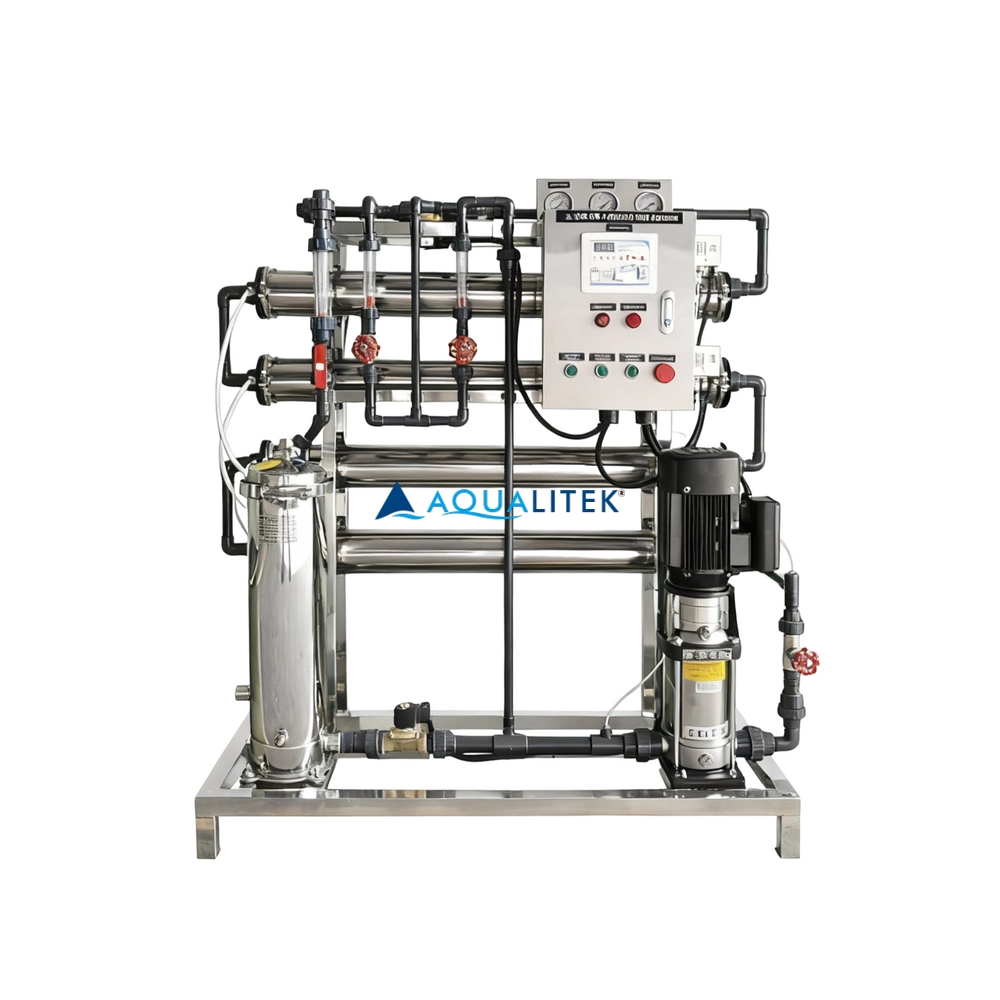
TWF series Reverse Osmosis (RO) systems are pre-engineered and pre-assembled units with 4” membrane housings(multiple elements type) for tap water(lower TDS) .The medium large volumes can help meet your a variety of commercial and industrial applications. They are designed for overall superior performance, high recovery rates and offer great savings with low maintenance and operation costs.

TWE series Reverse Osmosis (RO) systems are pre-engineered and pre-assembled units with 8” membrane housings for tap water (lower TDS). The large volumes can help meet your a variety of industrial applications. They are designed for overall superior performance, high recovery rates and offer great savings with low maintenance and operation costs.
© 2026 AQUALITEK. All rights reserved.
AQUALITEK- Aimee Hoo
AQUALITEK - Aimee Hoo