




When Should You Plan to Completely Replace Seawater RO Membranes?| Insights by AQUALITEK
Learn when and why seawater RO membranes should be fully replaced, including performance indicators, operating life, warning signs, and best engineering practices.
- Introduction
- 1. Typical Service Life of Seawater RO Membranes
- Main influencing factors:
- 2. Key Indicators That Trigger Replacement Planning
- 2.1 Continuous Permeate Flux Decline (>20–25%)
- 2.2 Salt Rejection Decline (>2–3%)
- 2.3 Operating Pressure Increase (>15–20%)
- 2.4 CIP Cleaning Frequency Shortens Significantly
- 2.5 Mechanical Damage or Irreversible Fouling
- 3. Economic Replacement Threshold (Life Cycle Cost Approach)
- Replacement is recommended when:
- 4. Typical Warning Signs Before Replacement
- 5. Replacement Planning Strategy (Best Practices)
- 5.1 Staggered Replacement Strategy
- 5.2 Performance-Based Replacement
- 5.3 Predictive Maintenance Model
- 6. Common Membrane Failure Mechanisms
- 7. Typical Replacement Cycle by Application
- 8. How to Extend SWRO Membrane Life
- Conclusion
Introduction
In seawater reverse osmosis (SWRO) desalination systems, membrane elements are the core components that directly determine:
•Water production
•Product water quality
•Energy consumption
•System reliability
•Operating cost
Although modern SWRO membranes are designed for long-term operation, they are still consumable components.
So, under what circumstances should we start planning to completely replace seawater RO membranes?
This article provides a comprehensive engineering guide, covering:
•Standard service life
•Key performance degradation indicators
•Replacement decision thresholds
•Economic optimization strategies
1. Typical Service Life of Seawater RO Membranes
Under proper design and operation:
Normal membrane lifespan: 3 – 5 years
Industry average: 2– 4 years
Main influencing factors:
•Feed water quality
•Pretreatment efficiency
•Operating pressure
•Cleaning frequency
•Chemical exposure
•Maintenance quality
2. Key Indicators That Trigger Replacement Planning
2.1 Continuous Permeate Flux Decline (>20–25%)
If normalized permeate flow decreases by over 20–25% even after multiple chemical cleanings:
→ Indicates irreversible fouling or membrane compaction
Engineering rule:
Recovery < 75–80% of original design → replacement recommended
2.2 Salt Rejection Decline (>2–3%)
If salt passage increases by >50% or salt rejection drops below 98.5%, then:
→ Membrane active layer damaged or chemically degraded
This results in:
•Higher product water TDS
•Higher boron leakage
•Failure to meet drinking water standards
2.3 Operating Pressure Increase (>15–20%)
If normalized differential pressure or feed pressure increases by 15–20%:
→ Indicates severe fouling, biofouling, or scaling
If CIP no longer restores performance → replacement needed
2.4 CIP Cleaning Frequency Shortens Significantly
|
CIP Frequency |
Condition |
|
Once every 6–12 months |
Normal |
|
Every 2–3 months |
Warning |
|
Monthly or more |
Severe fouling → replace |
2.5 Mechanical Damage or Irreversible Fouling
Including:
•Telescoping
•Delamination
•Fiberglass damage
•Permanent organic fouling
•Biofilm penetration
These defects cannot be repaired.
3. Economic Replacement Threshold (Life Cycle Cost Approach)
Sometimes membranes are technically operable but economically inefficient.
Replacement is recommended when:
|
Parameter |
Threshold |
|
Specific energy increases |
>10–15% |
|
Chemical cost increases |
>20% |
|
CIP downtime increases |
>30% |
|
Total OPEX increase |
>15% |
At this point, replacement becomes economically optimal.
4. Typical Warning Signs Before Replacement
|
Symptom |
Root Cause |
|
Rapid pressure rise |
Scaling / fouling |
|
High boron leakage |
Membrane aging |
|
Poor salt rejection |
Oxidative damage |
|
Frequent CIP |
Biofouling |
|
Uneven pressure drop |
Channel blockage |
5. Replacement Planning Strategy (Best Practices)
5.1 Staggered Replacement Strategy
Replace 25–33% of elements per year, ensuring:
•Stable water quality
•Controlled CAPEX
•Reduced system disturbance
5.2 Performance-Based Replacement
Use normalized data trending:
•Flow
•Salt rejection
•Pressure drop
Make replacement decision based on real performance, not calendar age.
5.3 Predictive Maintenance Model
Using:
•AI trend analysis
•Digital twins
•SCADA data modeling
•→ Predict end-of-life (EOL) accurately.
6. Common Membrane Failure Mechanisms
|
Failure Mode |
Root Cause |
|
Oxidation |
Residual chlorine |
|
Biofouling |
Inadequate pretreatment |
|
Scaling |
High recovery |
|
Compaction |
Excessive pressure |
|
Organic fouling |
Oil & COD |
7. Typical Replacement Cycle by Application
|
Application |
Replacement Cycle |
|
Municipal desalination plants |
4–6 years |
|
Industrial SWRO |
3–5 years |
|
Offshore platforms |
2–4 years |
|
Island systems |
4–6 years |
8. How to Extend SWRO Membrane Life
✔ High-efficiency pretreatment
✔ Strict SDI ≤ 3
✔ Proper antiscalant dosing
✔ Zero chlorine entry
✔ Optimized CIP program
✔ Gradual pressurization
Conclusion
Seawater RO membranes should be planned for complete replacement when:
•Normalized flow declines >20–25%
•Salt rejection drops >2–3%
•Operating pressure rises >15–20%
•CIP frequency becomes excessive
•OPEX rises beyond economic thresholds
In well-designed systems, 4–6 years of stable operation is the industry benchmark.
A data-driven, performance-based replacement strategy ensures minimum life-cycle cost and maximum system reliability.


Request More Information or Expert Advice
Share a few details, and we’ll provide deeper insights, tailored suggestions, or product support.
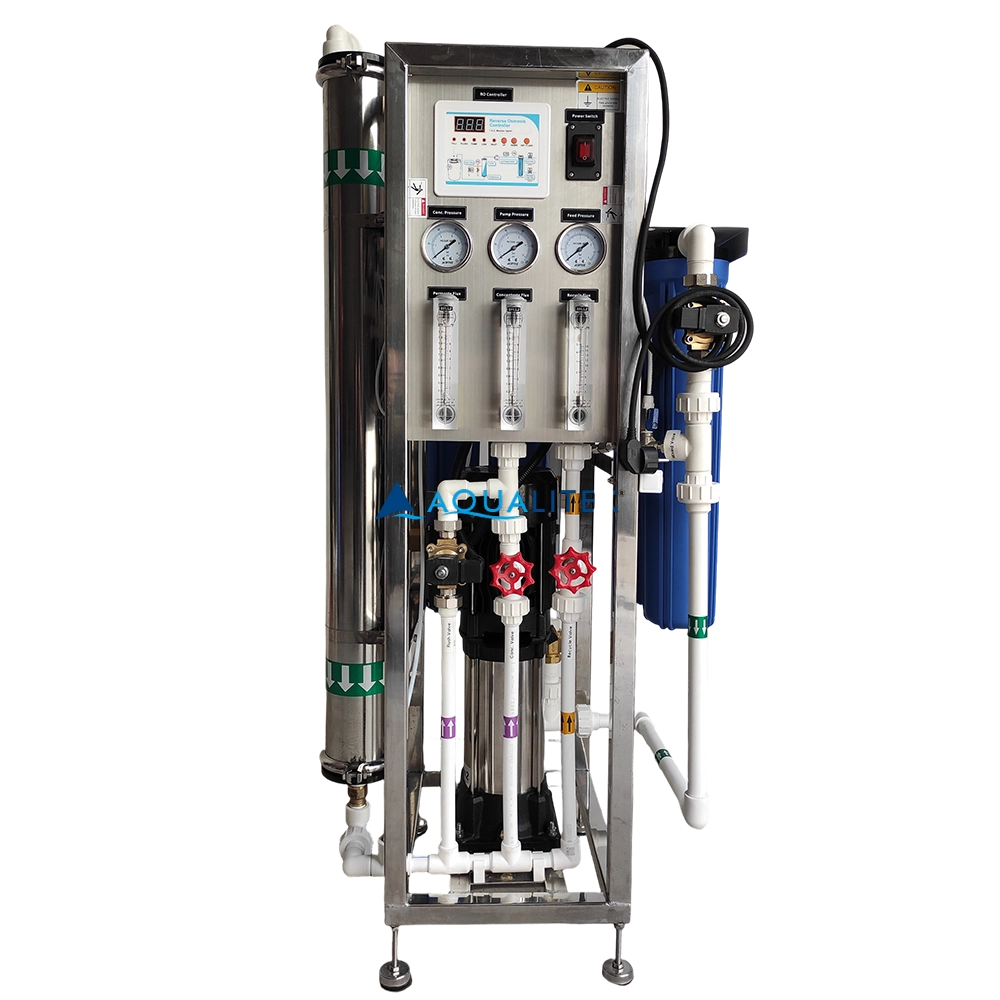
Our 500 LPH Reverse Osmosis (RO) System is engineered to provide high-quality purified water for commercial applications. Designed with advanced RO technology, durable components, and a user-friendly interface, this system ensures consistent performance, low maintenance, and long-term reliability.
With its compact design and robust skid-mounted frame, it’s an excellent choice for businesses that demand efficiency and quality in water purification.
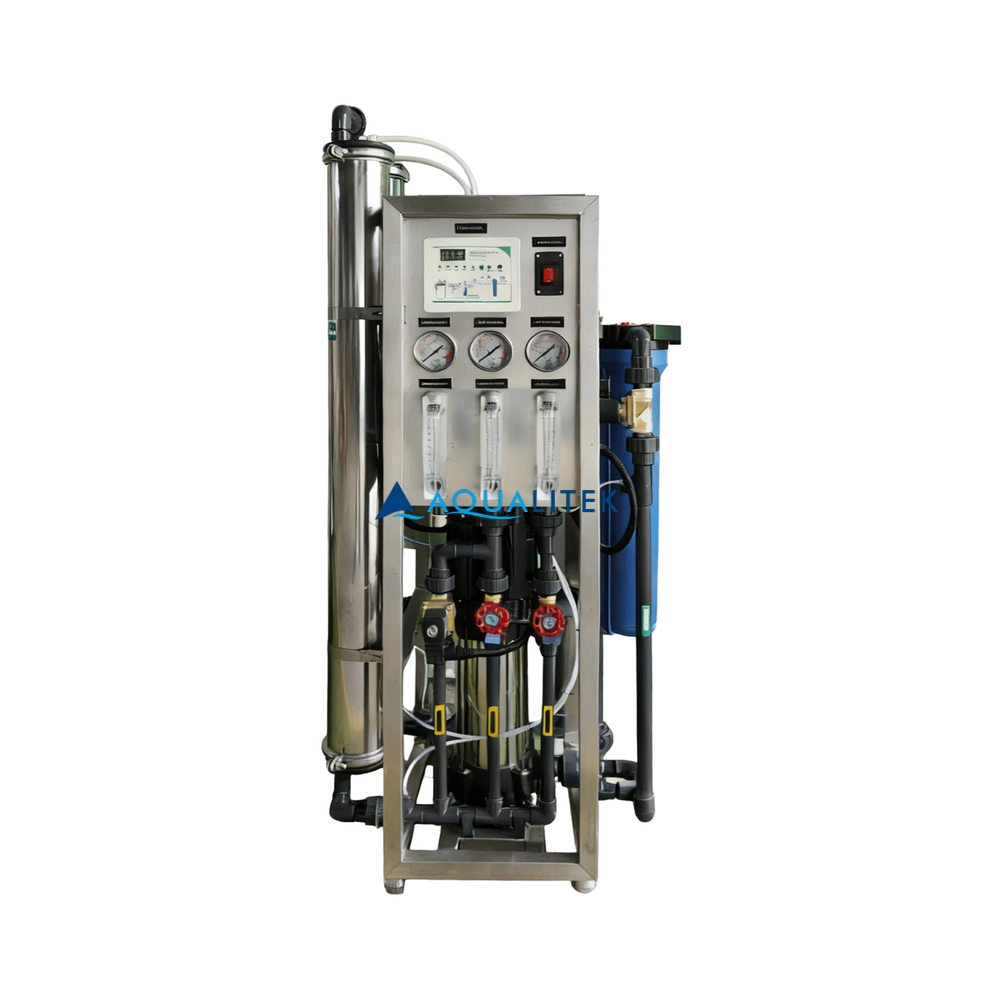
TWV series Reverse Osmosis (RO) systems are pre-engineered and pre-assembled units with 2.5”/4” membrane housings(single element type)for tap water(lower TDS).They are designed for overall superior performance, high recovery rates and offer great savings with low maintenance and operation costs.
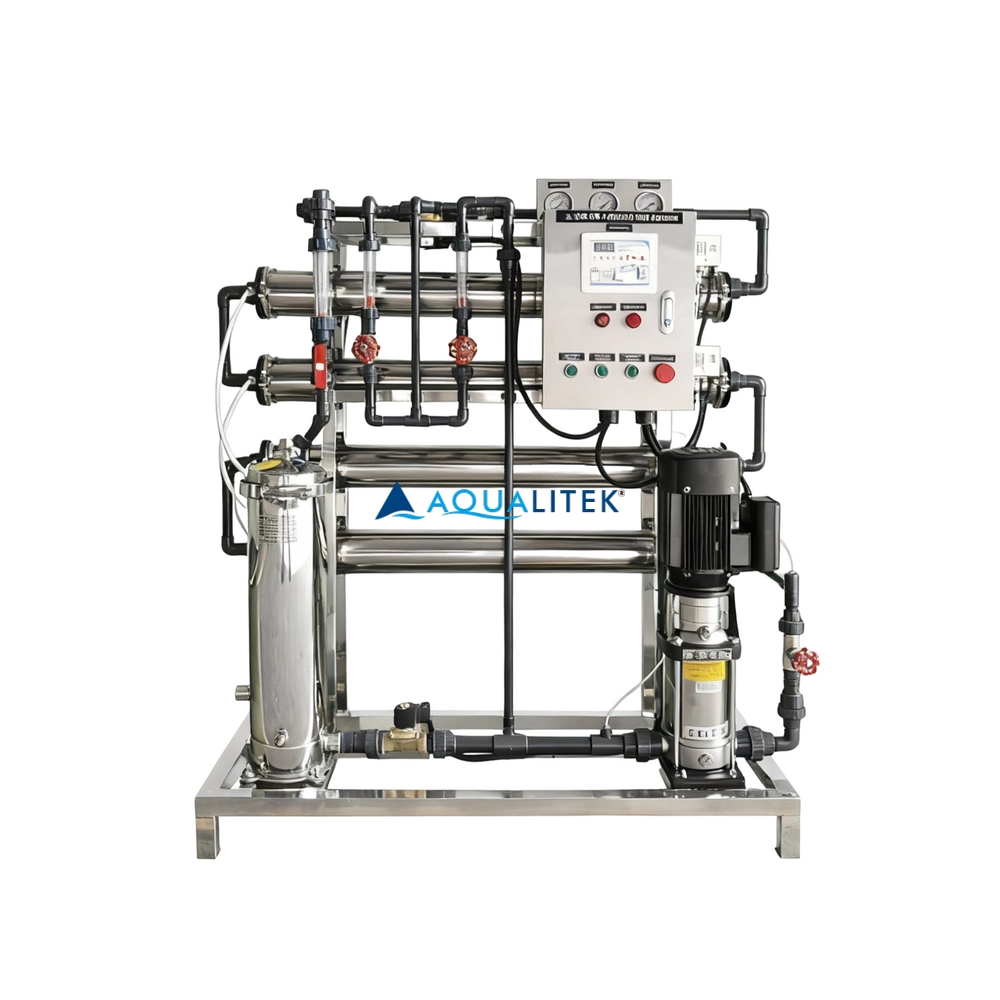
TWF series Reverse Osmosis (RO) systems are pre-engineered and pre-assembled units with 4” membrane housings(multiple elements type) for tap water(lower TDS) .The medium large volumes can help meet your a variety of commercial and industrial applications. They are designed for overall superior performance, high recovery rates and offer great savings with low maintenance and operation costs.

TWE series Reverse Osmosis (RO) systems are pre-engineered and pre-assembled units with 8” membrane housings for tap water (lower TDS). The large volumes can help meet your a variety of industrial applications. They are designed for overall superior performance, high recovery rates and offer great savings with low maintenance and operation costs.
© 2026 AQUALITEK. All rights reserved.
AQUALITEK- Aimee Hoo
AQUALITEK - Aimee Hoo