




What Is the Typical Design Recovery Rate for a Single-Stage Seawater RO System?| Insights by AQUALITEK
Discover the typical design recovery rate of single-stage seawater RO systems, influencing factors, engineering limits, optimization strategies, and best practice design ranges.
- Introduction
- 1. Quick Answer: Typical Design Recovery Rate
- Typical design recovery rate for single-stage SWRO systems:
- 2. Why Is Recovery Rate Limited in Seawater RO?
- 3. Engineering Design Rationale for 35–45%
- 3.1 Osmotic Pressure Constraint
- 3.2 Scaling Risk Control
- 3.3 Energy Optimization
- 4. Typical Industry Design Standards
- 5. Single-Stage vs Two-Stage SWRO Recovery Comparison
- 6. Key Factors Affecting Design Recovery Rate
- 6.1 Feed Water Salinity
- 6.2 Feed Water Temperature
- 6.3 Pretreatment Efficiency
- 6.4 Membrane Technology Level
- 7. Typical Design Example
- 8. Why Exceeding 45% Is Usually Not Recommended
- 9. Best Engineering Practices for Recovery Design
- Conclusion
Introduction
In seawater reverse osmosis (SWRO) desalination systems, recovery rate is one of the most critical design parameters. It directly impacts:
•System energy consumption
•Operating pressure
•Membrane lifespan
•Scaling risk
•Overall project economics
Among all SWRO configurations, the single-stage RO system is the most widely applied process layout due to its reliability, simplicity, and cost-effectiveness.
So, what is the typical design recovery rate for a single-stage seawater RO system?
This article provides a complete engineering explanation, covering:
•Standard design ranges
•Limiting technical factors
•Industry best practices
•Design optimization strategies
1. Quick Answer: Typical Design Recovery Rate
Typical design recovery rate for single-stage SWRO systems:
35% – 45%
Most commonly: 40% – 42%
This range achieves an optimal balance between water production, energy consumption, membrane safety, and system reliability.
2. Why Is Recovery Rate Limited in Seawater RO?
Unlike brackish water RO systems (which can reach 70–85% recovery), SWRO systems operate under strict recovery constraints due to:
|
Limiting Factor |
Impact |
|
High salinity (~35,000 mg/L TDS) |
High osmotic pressure |
|
High scaling tendency |
Increased precipitation risk |
|
Severe concentration polarization |
Rapid fouling |
|
High operating pressure |
Mechanical stress |
|
Membrane material limits |
Salt passage & oxidation |
3. Engineering Design Rationale for 35–45%
3.1 Osmotic Pressure Constraint
At 35,000 mg/L seawater, osmotic pressure is ~27 bar (390 psi).
At 40% recovery, brine salinity increases to ~58,000–60,000 mg/L, pushing osmotic pressure beyond 40 bar.
Higher recovery → exponentially higher pressure → higher energy consumption.
3.2 Scaling Risk Control
At high recovery, ion concentrations exceed solubility limits:
•CaCO₃
•CaSO₄
•BaSO₄
•SrSO₄
•Mg(OH)₂
Thus, 40% recovery is the safest operating balance.
3.3 Energy Optimization
|
Recovery |
Operating Pressure |
Specific Energy |
|
30% |
Lower |
Higher overall energy |
|
40% |
Optimal |
Lowest net kWh/m³ |
|
50% |
Excessive |
Rapid energy increase |
4. Typical Industry Design Standards
|
Application |
Design Recovery |
|
Municipal SWRO plants |
40% – 45% |
|
Large coastal plants (>100,000 m³/d) |
40% – 42% |
|
Industrial SWRO |
35% – 40% |
|
Offshore platforms |
30% – 38% |
|
Island desalination plants |
38% – 42% |
5. Single-Stage vs Two-Stage SWRO Recovery Comparison
|
System Type |
Typical Recovery |
|
Single-stage SWRO |
35–45% |
|
Two-stage SWRO |
45–60% |
|
SWRO + BWRO hybrid |
55–70% |
Single-stage design prioritizes simplicity, stability, and reliability.
6. Key Factors Affecting Design Recovery Rate
6.1 Feed Water Salinity
|
TDS (mg/L) |
Typical Recovery |
|
30,000 |
42–45% |
|
35,000 |
38–42% |
|
40,000+ |
35–38% |
6.2 Feed Water Temperature
Every 1°C drop in seawater temperature:
→ 3% flux reduction
→ Requires higher pressure
Cold seawater → Lower recovery recommended.
6.3 Pretreatment Efficiency
Better pretreatment → Lower SDI → Higher allowable recovery.
6.4 Membrane Technology Level
High-flux membranes allow slightly higher recovery but still within ≤45%.
7. Typical Design Example
Feed: 1000 m³/h seawater
Recovery: 40%
•Product water: 400 m³/h
•Concentrate: 600 m³/h
•Final brine TDS: ~60,000 mg/L
8. Why Exceeding 45% Is Usually Not Recommended
|
Risk |
Consequence |
|
Severe scaling |
Rapid membrane fouling |
|
Very high pressure |
Pump overload |
|
Frequent CIP |
High OPEX |
|
Short membrane life |
High replacement cost |
|
Unstable operation |
Downtime risk |
9. Best Engineering Practices for Recovery Design
✔ Standard design: 38–42%
✔ Conservative design: 35–38%
✔ Advanced optimized plants: 42–45%
Conclusion
The typical design recovery rate for single-stage seawater RO systems is 35–45%, with 40–42% being the industry gold standard.
This range ensures:
•High system reliability
•Controlled scaling risk
•Optimal energy efficiency
•Long membrane lifespan
•Stable long-term operation
Single-stage SWRO systems remain the most reliable configuration for large-scale seawater desalination projects worldwide.


Request More Information or Expert Advice
Share a few details, and we’ll provide deeper insights, tailored suggestions, or product support.
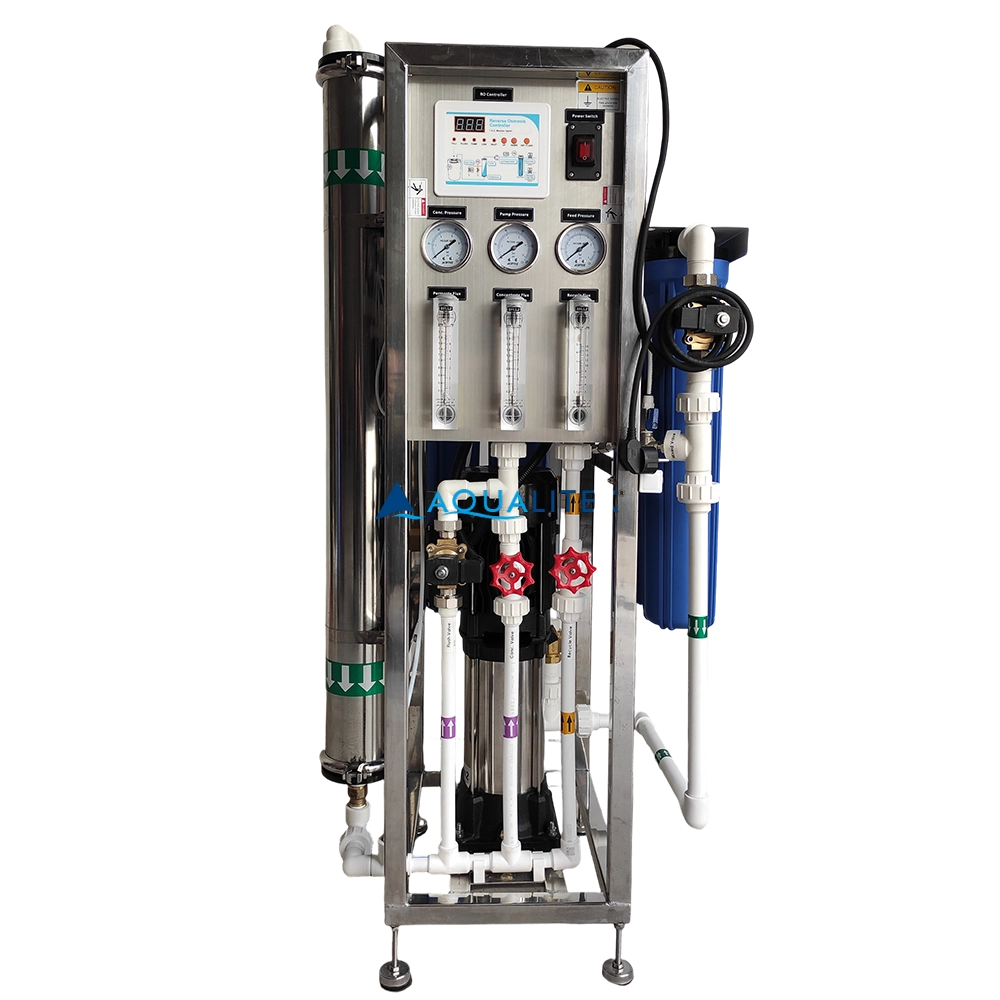
Our 500 LPH Reverse Osmosis (RO) System is engineered to provide high-quality purified water for commercial applications. Designed with advanced RO technology, durable components, and a user-friendly interface, this system ensures consistent performance, low maintenance, and long-term reliability.
With its compact design and robust skid-mounted frame, it’s an excellent choice for businesses that demand efficiency and quality in water purification.
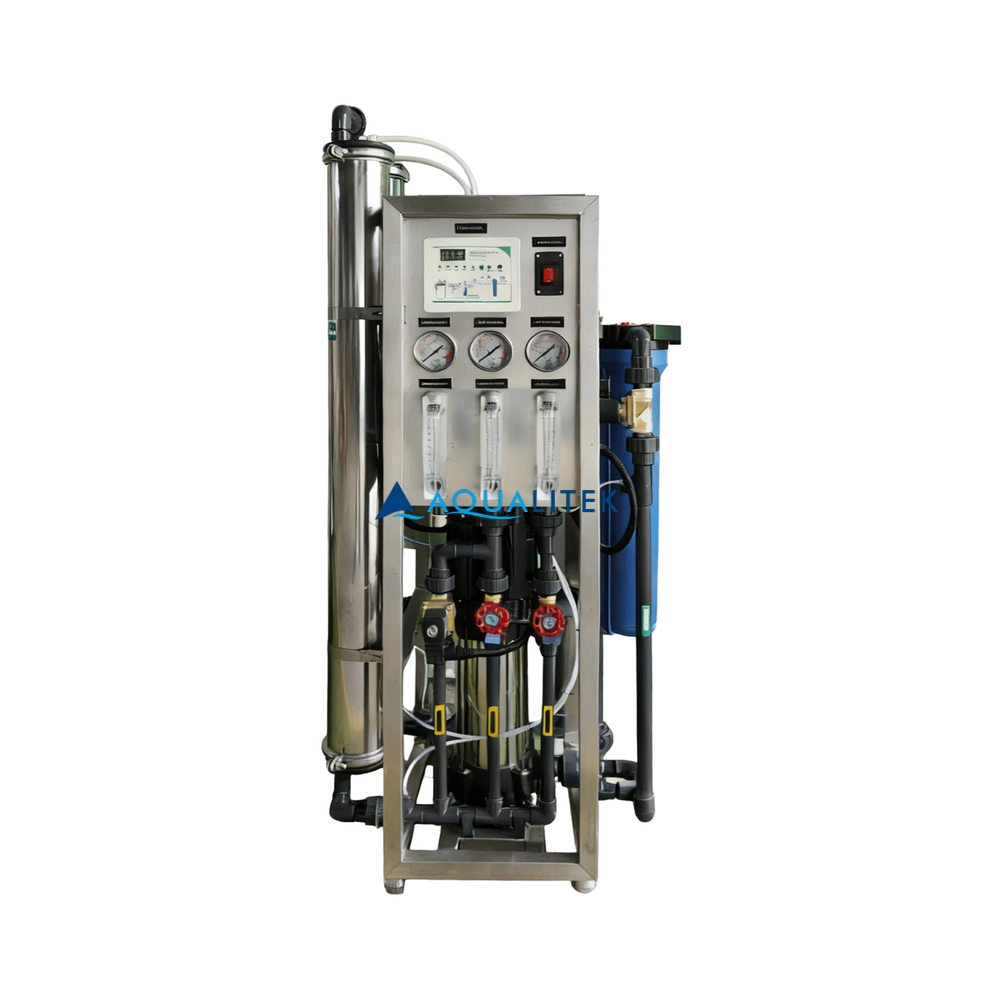
TWV series Reverse Osmosis (RO) systems are pre-engineered and pre-assembled units with 2.5”/4” membrane housings(single element type)for tap water(lower TDS).They are designed for overall superior performance, high recovery rates and offer great savings with low maintenance and operation costs.
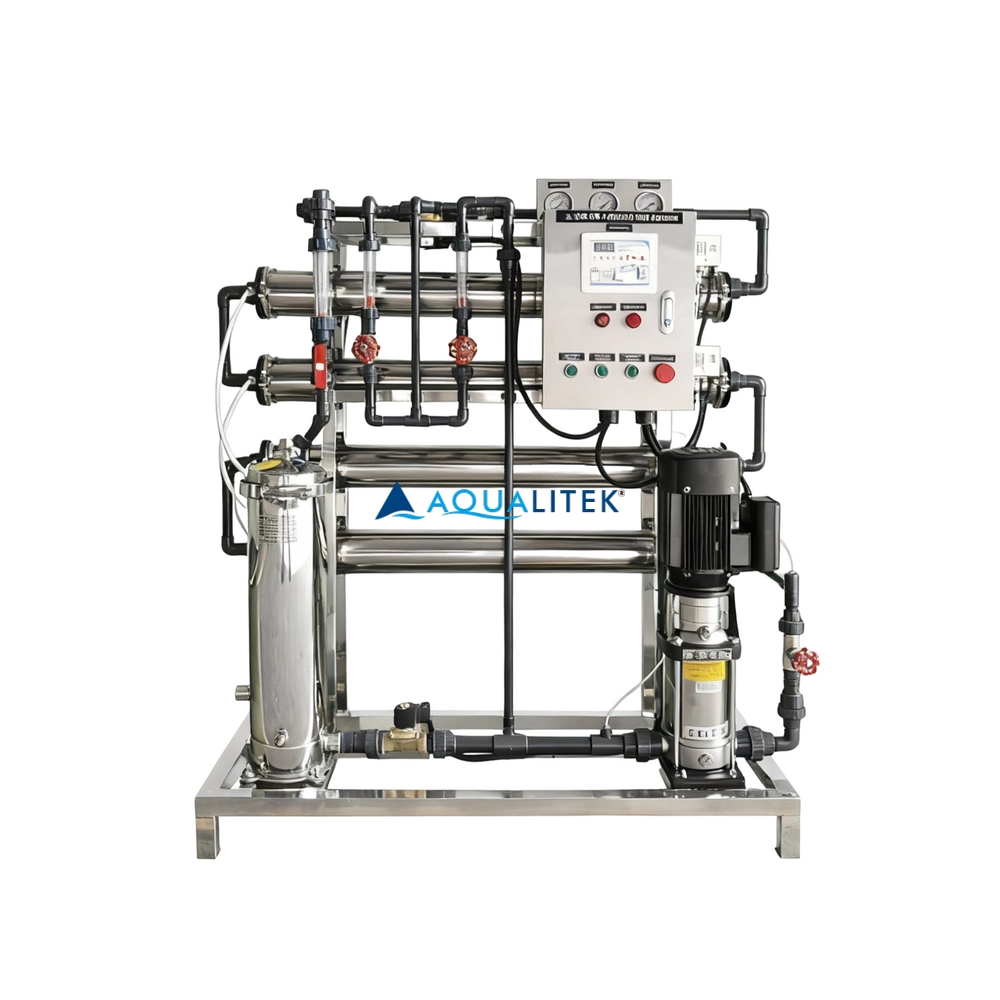
TWF series Reverse Osmosis (RO) systems are pre-engineered and pre-assembled units with 4” membrane housings(multiple elements type) for tap water(lower TDS) .The medium large volumes can help meet your a variety of commercial and industrial applications. They are designed for overall superior performance, high recovery rates and offer great savings with low maintenance and operation costs.

TWE series Reverse Osmosis (RO) systems are pre-engineered and pre-assembled units with 8” membrane housings for tap water (lower TDS). The large volumes can help meet your a variety of industrial applications. They are designed for overall superior performance, high recovery rates and offer great savings with low maintenance and operation costs.
© 2026 AQUALITEK. All rights reserved.
AQUALITEK- Aimee Hoo
AQUALITEK - Aimee Hoo