




Key Differences Between Cleaning Agent Formulations for Seawater RO Membranes and Brackish Water RO Membranes| Insights by AQUALITEK
Explore the critical differences between seawater RO and brackish water RO membrane cleaning formulations, including fouling types, chemical strength, pH ranges, and cleaning strategies.
- Introduction
- 1. Fundamental Difference: Fouling Characteristics
- Seawater RO (SWRO) Membranes
- Brackish Water RO (BWRO) Membranes
- 2. Difference in Alkaline Cleaning Agent Formulations
- 2.1 SWRO Alkaline Cleaners
- 2.2 BWRO Alkaline Cleaners
- 3. Difference in Acid Cleaning Agent Formulations
- 3.1 SWRO Acid Cleaners
- 3.2 BWRO Acid Cleaners
- 4. Difference in Oxidant and Biocide Considerations
- SWRO Cleaning Formulations
- BWRO Cleaning Formulations
- 5. Difference in Cleaning Frequency and Strategy
- SWRO Cleaning Strategy
- BWRO Cleaning Strategy
- 6. Summary Table: SWRO vs BWRO Cleaning Agent Differences
- Conclusion
Introduction
Chemical cleaning is an unavoidable part of reverse osmosis (RO) membrane operation.
However, cleaning agent formulations used for seawater RO (SWRO) membranes differ significantly from those used for brackish water RO (BWRO) membranes.
These differences are driven by:
•Feed water chemistry
•Operating pressure and salinity
•Dominant fouling mechanisms
•Membrane material tolerance and aging behavior
Understanding these distinctions is essential for effective cleaning, membrane protection, and long-term operating cost control.
1. Fundamental Difference: Fouling Characteristics
The most important reason for different cleaning formulations lies in fouling composition.
Seawater RO (SWRO) Membranes
Dominant fouling types:
•Biological fouling (biofilms, EPS)
•Colloidal and particulate fouling
•Organic fouling (marine organics)
•Calcium sulfate and mixed salt scaling
Brackish Water RO (BWRO) Membranes
Dominant fouling types:
•Calcium carbonate scaling
•Iron and manganese fouling
•Silica scaling
•Organic fouling (terrestrial sources)
SWRO fouling is more complex and mixed, requiring broader-spectrum and more robust cleaning formulations.
2. Difference in Alkaline Cleaning Agent Formulations
2.1 SWRO Alkaline Cleaners
SWRO alkaline cleaners are typically:
•Stronger in formulation
•Designed to attack biofilms and marine organics
Common components include:
•High-performance surfactants
•Dispersants
•Biofilm penetration agents
•Enzyme-enhanced additives (in some cases)
Typical pH range:
•pH 11.0–12.0
Key objectives:
•Break down extracellular polymeric substances (EPS)
•Remove organic slime layers
•Disperse colloidal deposits
2.2 BWRO Alkaline Cleaners
BWRO alkaline cleaners are generally:
•Milder in formulation
•Focused on organic and iron-related fouling
Common components include:
•Standard surfactants
•Mild dispersants
Typical pH range:
•pH 10.5–11.5
BWRO membranes rarely experience the dense biofilms common in SWRO systems, allowing gentler chemistry.
3. Difference in Acid Cleaning Agent Formulations
3.1 SWRO Acid Cleaners
SWRO acid cleaners must address:
•Calcium sulfate (gypsum)
•Mixed sulfate scaling
•Iron deposits embedded in biofilms
Common acids used:
•Citric acid
•Phosphoric acid
•Specialized organic acid blends
Typical pH range:
•pH 1.5–2.5
Key design considerations:
•Controlled dissolution of sulfate scale
•Corrosion inhibition for high-alloy materials
•Compatibility with high-pressure membrane elements
3.2 BWRO Acid Cleaners
BWRO acid cleaning focuses primarily on:
•Calcium carbonate
•Iron hydroxide
•Mild inorganic scaling
Common acids used:
•Citric acid
•Hydrochloric acid (more common than in SWRO)
Typical pH range:
•pH 2.0–3.0
BWRO systems tolerate stronger mineral acids due to lower chloride concentrations.
4. Difference in Oxidant and Biocide Considerations
SWRO Cleaning Formulations
•Strong restrictions on oxidants
•Oxidative cleaning agents are generally avoided
•Biofouling is addressed chemically via surfactants and enzymes rather than oxidants
Reason:
•SWRO membranes operate in extremely high chloride environments
•Oxidants dramatically accelerate membrane degradation
BWRO Cleaning Formulations
•More flexibility in oxidant use
•Short-term exposure to certain oxidants may be allowed under controlled conditions
•Iron fouling sometimes benefits from oxidative cleaning
5. Difference in Cleaning Frequency and Strategy
SWRO Cleaning Strategy
•Less frequent but more intensive cleanings
•Longer soak times
•Multi-step alkaline → acid cleaning sequences
•Higher solution circulation volumes
BWRO Cleaning Strategy
•More frequent but milder cleanings
•Shorter contact times
•Often single-step cleaning is sufficient
6. Summary Table: SWRO vs BWRO Cleaning Agent Differences
|
Aspect |
SWRO Membranes |
BWRO Membranes |
|
Main Fouling |
Biofouling, colloids, sulfates |
Carbonates, iron, silica |
|
Alkaline Cleaner Strength |
Higher |
Moderate |
|
Alkaline pH |
11.0–12.0 |
10.5–11.5 |
|
Acid Cleaner Focus |
Sulfates & mixed scale |
Carbonates & iron |
|
Acid pH |
1.5–2.5 |
2.0–3.0 |
|
Oxidant Tolerance |
Very low |
Relatively higher |
|
Cleaning Complexity |
High |
Moderate |
Conclusion
The cleaning agent formulations used for seawater RO membranes differ fundamentally from those for brackish water membranes due to more severe biofouling, higher salinity, and complex mixed fouling conditions.
Using BWRO-style cleaning chemicals in SWRO systems often results in:
•Incomplete fouling removal
•Accelerated membrane aging
•Increased cleaning frequency
Optimized SWRO cleaning formulations must be stronger, broader in action, and more carefully controlled to balance cleaning efficiency and membrane protection.


Request More Information or Expert Advice
Share a few details, and we’ll provide deeper insights, tailored suggestions, or product support.
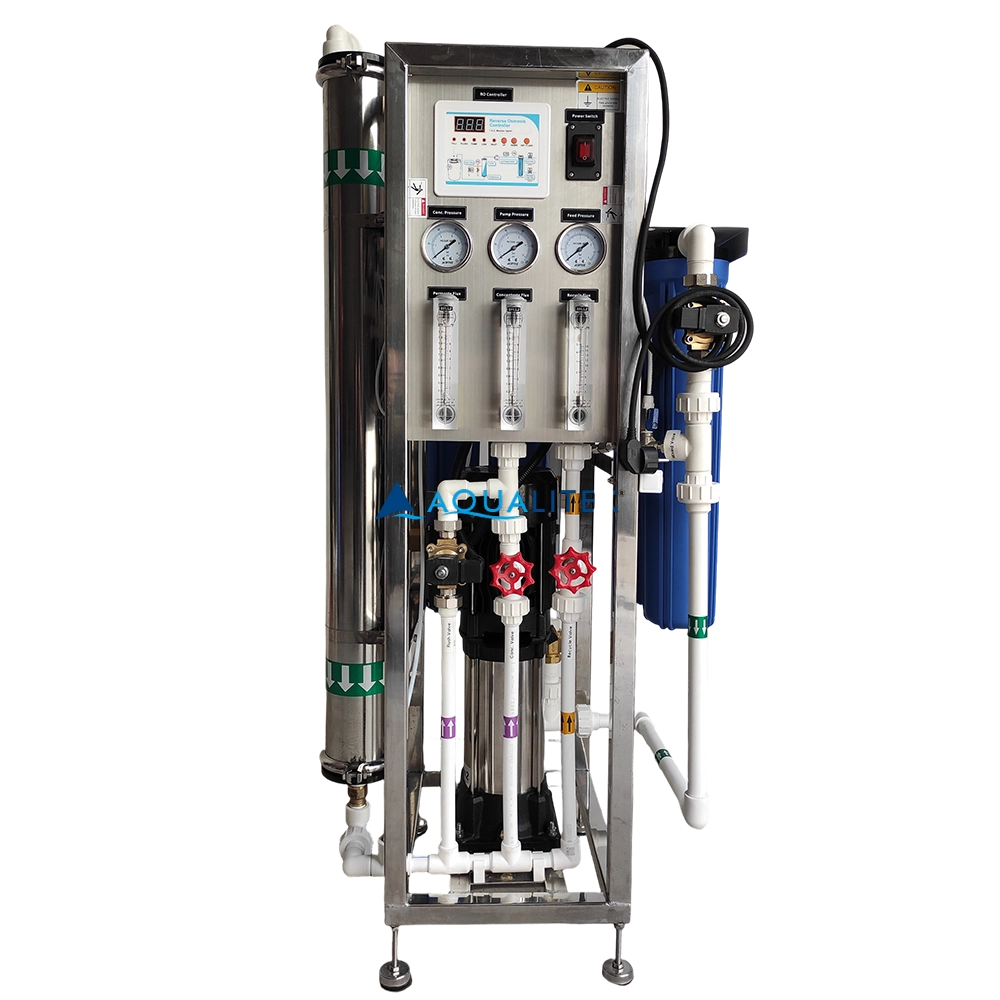
Our 500 LPH Reverse Osmosis (RO) System is engineered to provide high-quality purified water for commercial applications. Designed with advanced RO technology, durable components, and a user-friendly interface, this system ensures consistent performance, low maintenance, and long-term reliability.
With its compact design and robust skid-mounted frame, it’s an excellent choice for businesses that demand efficiency and quality in water purification.
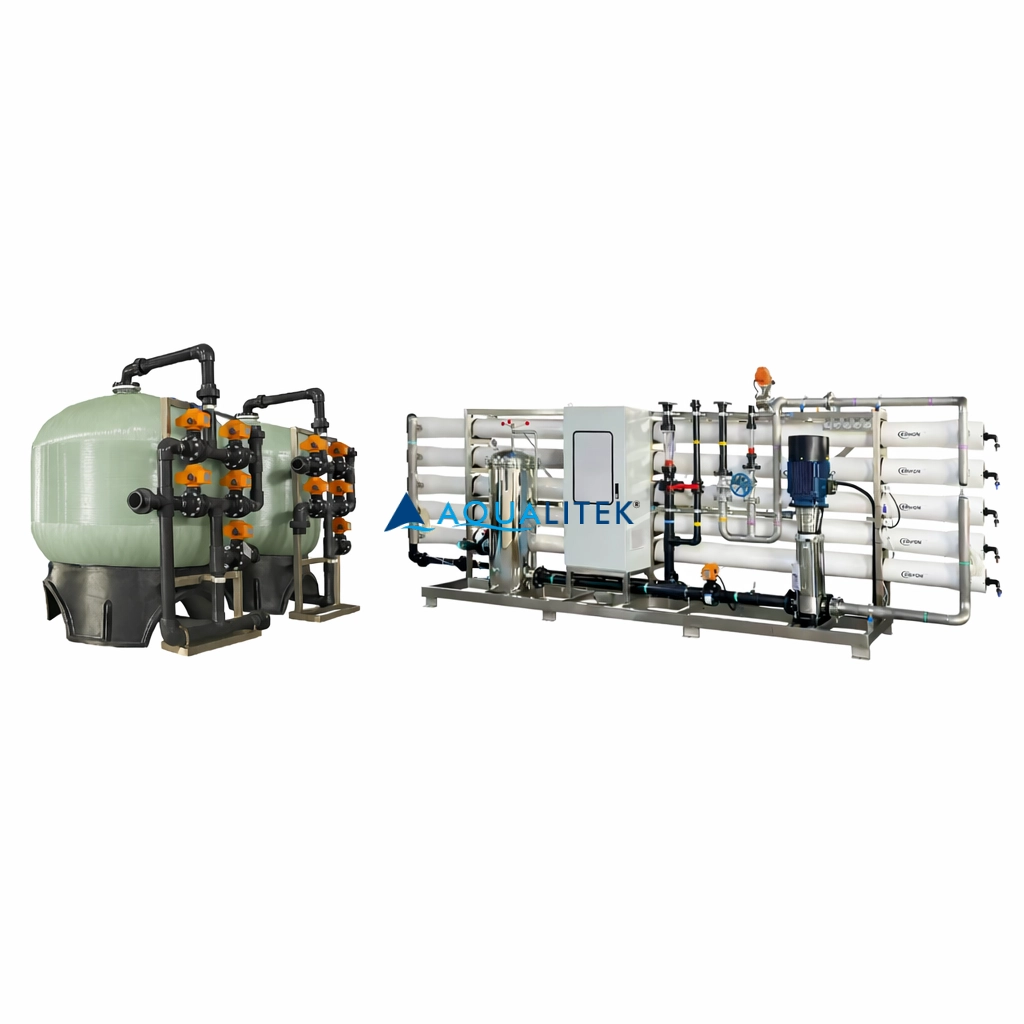
30TPH Industrial Reverse Osmosis (RO) System designed for industrial and municipal water treatment. High salt rejection, energy-efficient design, PLC control, and customizable configuration.
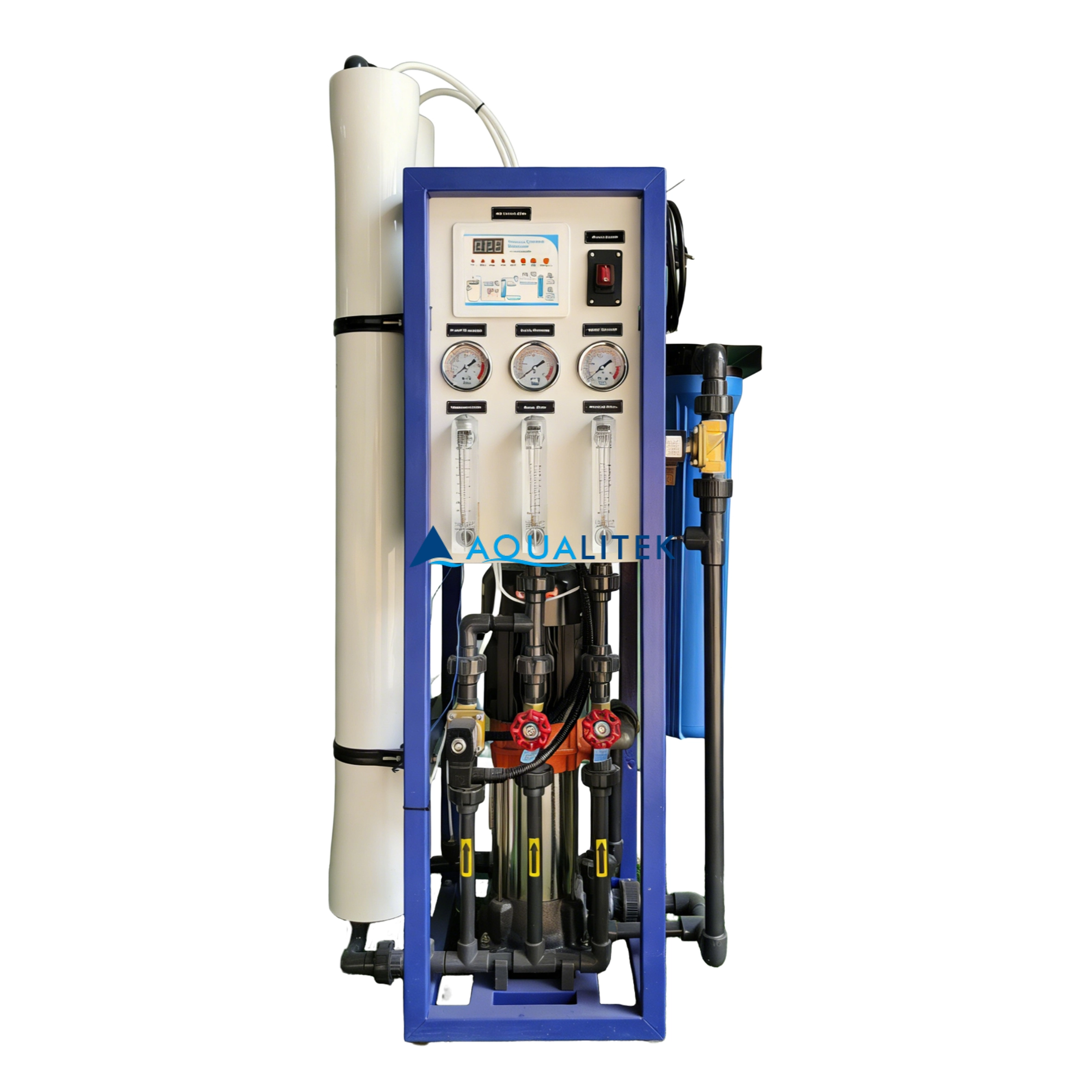
AQUALITEK's 500LPH Panel Mounted Reverse Osmosis Water Purification System delivers reliable 500 LPH RO water production. This compact industrial reverse osmosis unit is ideal for small scale industrial RO needs, ensuring efficient and high-quality purified water in a space-saving design.
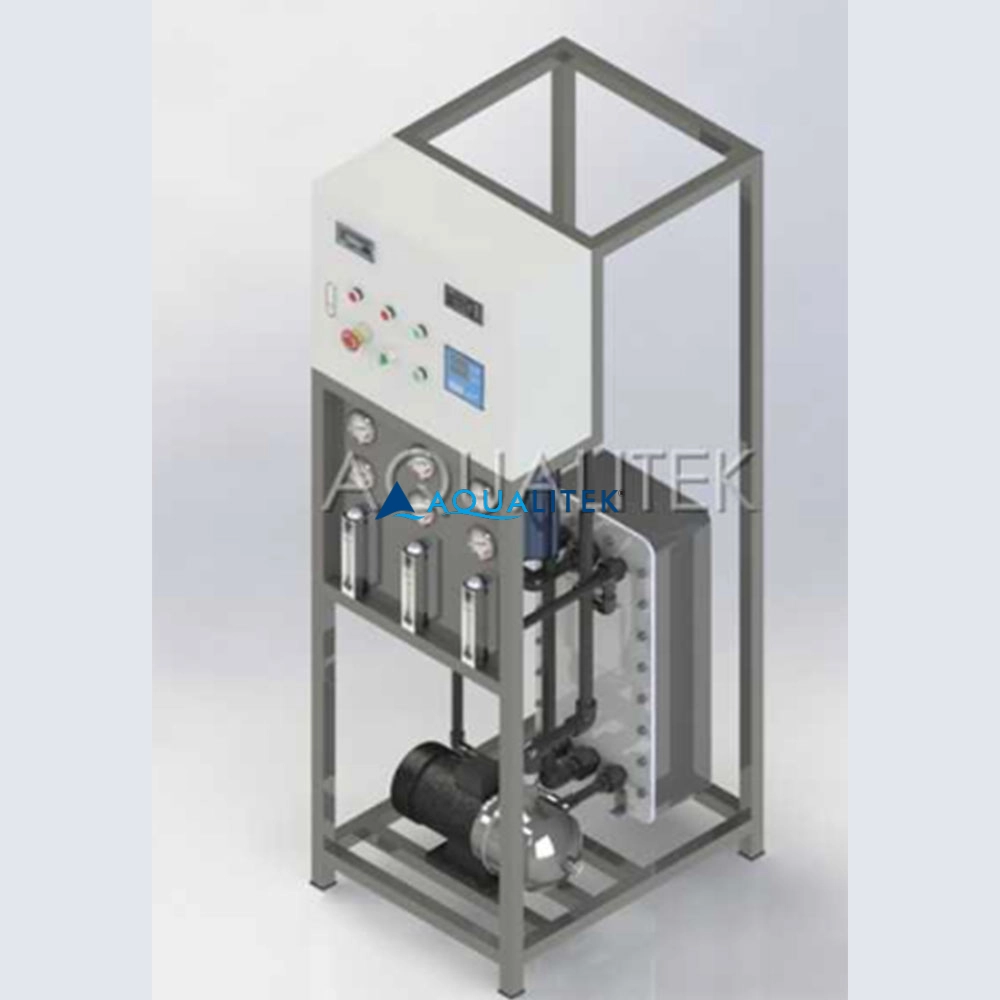
Electrodeionization (EDI) system is an advanced water purification technology that combines ion exchange and electrochemical processes to produce ultra-pure water. Unlike traditional deionization methods, which rely on chemical regeneration, EDI utilizes electric fields to drive the movement of ions through ion-exchange membranes, effectively removing dissolved salts and other ionic contaminants.
This process is continuous and does not require the use of chemicals for regeneration, making it an environmentally friendly and cost-effective solution for producing high-quality deionized water. EDI systems are widely used in applications requiring ultrapure water, such as in the pharmaceutical, semiconductor, power generation, and biotechnology industries, as well as for laboratory use.
By offering high-purity water without the need for chemical regeneration, EDI systems provide a sustainable, efficient, and reliable alternative to traditional deionization methods, making them an ideal choice for industries where water quality and process control are critical.
© 2026 AQUALITEK. All rights reserved.
AQUALITEK- Aimee Hoo
AQUALITEK - Aimee Hoo