



7 Critical Industrial Media Filter Mistakes That Are Ruining Your System’s Efficiency (2026 Guide)
- Key Takeaways: Optimizing Media Filter Performance
- What Determines Industrial Media Filter Efficiency?
- Mistake 1: Relying Solely on Time-Based Backwashing
- The Solution: Differential Pressure (DP)
- Mistake 2: Ignoring Bed Expansion Rates During Backwash
- Critical Parameters:
- Mistake 3: Neglecting Media Stratification (The 'Unmixed' Bed)
- Consequences of a Mixed Bed:
- Mistake 4: Overlooking Channeling and Short-Circuiting
- Why it happens:
- Mistake 5: Incorrect Chemical Pre-Treatment Dosing
- Mistake 6: Failing to Inspect the Underdrain System
- Maintenance Protocol:
- Mistake 7: Using the Wrong Media for the Application
- Gap Analysis: Future-Proofing with Smart Filtration (2026 Trends)
- Conclusion
- FAQ
- How often should an industrial media filter be backwashed?
- What causes media loss during backwashing?
- What is channeling in a media filter?
- How long does industrial filter media last?
- Why is differential pressure important in filtration?
- Can media filters remove dissolved solids (TDS)?
- What is the role of air scour in media filtration?
- What is the difference between single and multi-media filters?
Key Takeaways: Optimizing Media Filter Performance
- Efficiency Impact: The 7 mistakes listed below directly increase Operational Expenditure (OPEX) by up to 30% due to water waste and energy loss.
- Quick Diagnostic:
- High Delta P: Likely under-backwashing or stratification.
- Turbidity Breakthrough: Likely channeling or incorrect media size.
- Media Loss: Excessive backwash flow rates.
- The Shift: Moving from reactive "fix-it-when-broken" habits to predictive maintenance using Differential Pressure (DP) and IoT monitoring is standard for 2026.
What Determines Industrial Media Filter Efficiency?
Industrial media filter efficiency is defined as the ratio of suspended solids (TSS) removal to the energy and water input required to maintain that removal, heavily dependent on bed stratification and hydraulic loading. Efficiency is not just about clear water; it is about maximizing run length between backwashes while maintaining stable turbidity levels (often < 0.1 NTU).
Why do standard rules fail? Modern industrial wastewater streams are complex. Simply applying a "rule of thumb" used for a swimming pool or a small pond filter media setup will result in catastrophic clogging in high-pressure industrial vessel applications. Real efficiency requires balancing chemical pre-treatment with physical filtration mechanics.
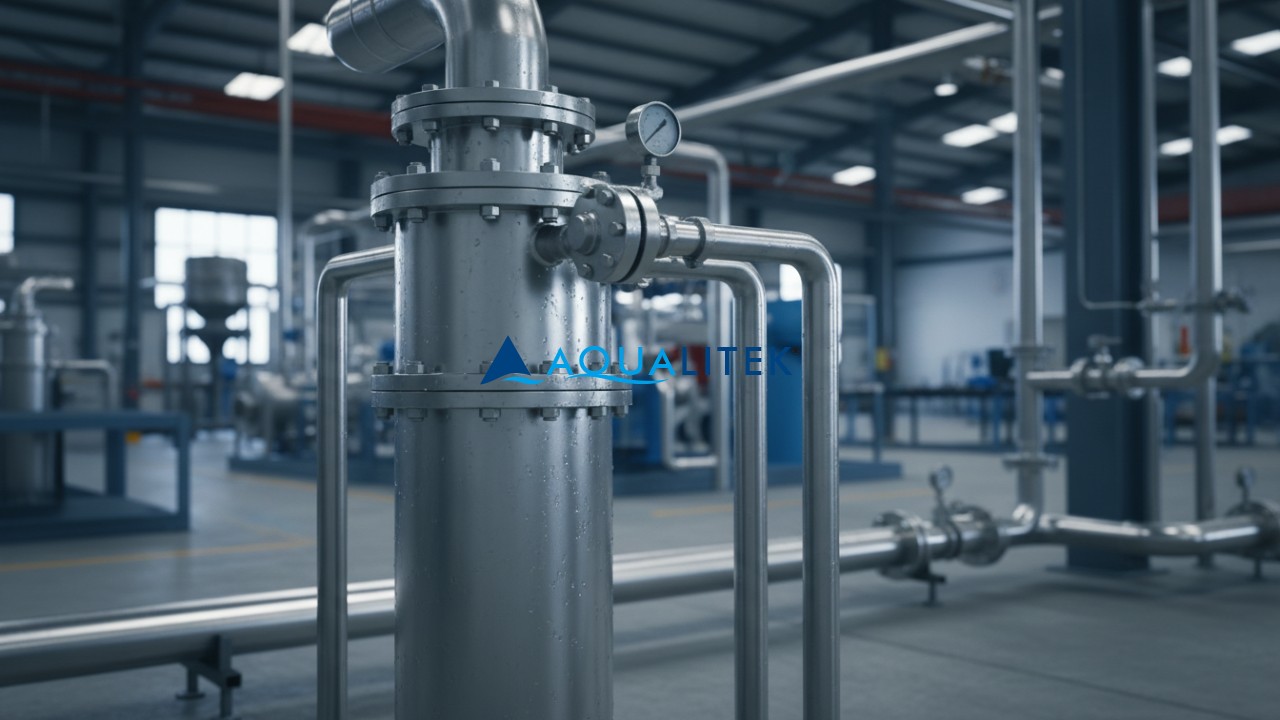
Mistake 1: Relying Solely on Time-Based Backwashing
Relying on a timer to trigger backwashing ignores the actual sediment load on the filter bed, leading to either water waste (backwashing too early) or breakthrough (backwashing too late).
In 2026, efficient systems must prioritize physics over clocks. When you backwash based on time (e.g., every 24 hours), you are guessing. If the influent water is cleaner than usual, you waste thousands of gallons of process water cleaning a clean filter. If the water is dirtier, the filter clogs before the timer goes off, forcing contaminants through the bed.
The Solution: Differential Pressure (DP)
Instead, use a Differential Pressure (DP) switch. As the water filter media captures particles, the pressure drop across the bed increases. Monitoring this allows you to initiate a cycle exactly when the bed is full.
- Efficiency Gain: Reduces wastewater volume by 15-20%.
- Rule of Thumb: A backwash should ideally be triggered when the differential pressure reaches 15-30 PSID, preventing mechanical failure or media crushing.
Mistake 2: Ignoring Bed Expansion Rates During Backwash
Bed expansion is the vertical rise and separation of the filter media grains during the backwash cycle, which is necessary to release trapped suspended solids.
If the bed does not expand enough, the grains do not rub against each other to scrub off the dirt (mudballs form). If it expands too much, you wash your expensive media down the drain. This is a common issue in sand media filter systems where flow rates are not calibrated.
Critical Parameters:
- Minimum Expansion: According to the Washington State Department of Health, a minimum bed expansion of 20% is required to adequately clean the filter media during backwashing.
- Viscosity Factors: Cold water is more viscous and lifts media higher/faster than warm water. Operators often fail to adjust flow rates in winter, leading to massive media loss.
Mistake 3: Neglecting Media Stratification (The 'Unmixed' Bed)
Stratification refers to the layers of media settling back into their correct order after backwashing—heaviest at the bottom, lightest at the top—to prevent rapid clogging.
In a multi-media filter, you typically have heavy Garnet at the bottom, Sand in the middle, and light Anthracite at the top. This creates a "tapered" void structure where large particles are caught at the top and fine particles at the bottom. If the bed gets mixed (due to violent air scour or improper settling), the fine sand moves to the top.
Consequences of a Mixed Bed:
- Surface Blinding: The fine sand at the top catches everything instantly.
- Short Runs: Cycle times drop from 24 hours to 4 hours.
For a deeper dive into why this layering is non-negotiable for high-efficiency systems, read our guide on Why Filter Media Are Arranged in Tiers Based on Particle Size in Multi-Media Filters.
Mistake 4: Overlooking Channeling and Short-Circuiting
Channeling occurs when water carves a path of least resistance through the media bed (like a wormhole), effectively bypassing the filtration process entirely.
This is a silent killer of efficiency. Your pressure gauges might look normal, but your effluent turbidity spikes because the water isn't actually being filtered—it's just rushing through a hole in the sand.
Why it happens:
- Clogged Underdrains: Uneven flow distribution forces water into specific spots.
- Surface Matting: Oils or biological growth crust over the top layer.
- Calcification: Calcification and organic fouling can cause sand to clump, forcing water to bypass the media around the edges (perimeter channeling).
Diagnostic Tip: Drain the filter and inspect the bed surface. If you see hills, valleys, or craters, you have channeling.
Mistake 5: Incorrect Chemical Pre-Treatment Dosing
Chemical pre-treatment involves adding coagulants or flocculants to combine small particles into larger ones that the media can easily capture.
A sediment water filter creates a physical barrier, but it cannot catch microscopic particles on its own. However, overdosing chemicals is just as bad as underdosing.
- Overdosing: "Glues" the top inch of the media shut immediately (blinding).
- Underdosing: Allows fine particles to pass through (breakthrough).
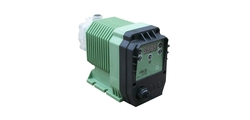
At Aqualitek Water Treatment Technologies, we often see facilities utilizing generic dosing pumps that don't adjust for flow. Integrating smart dosing systems that pace with the influent flow rate is crucial for modern water filter media longevity.
Mistake 6: Failing to Inspect the Underdrain System
The underdrain system acts as the foundation of the filter, collecting filtered water during the service cycle and distributing backwash water evenly during cleaning.
If a lateral pipe cracks or a nozzle clogs, the entire hydraulic balance of the vessel is destroyed. This is often why operators find sand in their downstream equipment or stainless steel water filter housings.
Maintenance Protocol:
- Annual Inspection: Ideally, media should be removed or vacuumed down to the gravel layer every 3-5 years to inspect laterals.
- Symptom: Uneven bubbling during the air scour cycle is a tell-tale sign of underdrain failure.
Mistake 7: Using the Wrong Media for the Application
Selecting the wrong media type, size, or uniformity coefficient for your specific water chemistry ensures the system will never operate at peak efficiency.
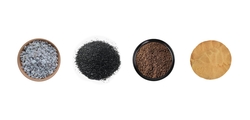
Not all sand is created equal. A common error is using standard silica sand when the application requires aggressive iron removal (needing Green Sand) or organic removal (needing Activated Carbon). Furthermore, in 2026, relying on outdated media for critical systems like pre-treatment for Reverse Osmosis is risky.
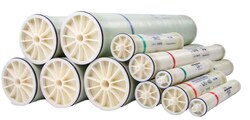
To ensure downstream protection, especially when preparing water for sensitive membranes, it is vital to pair the right media with advanced polishing systems. Check out our analysis on the Best Reverse Osmosis Water Filter Systems for industry in 2026 to see how media choice impacts RO life.
AQUALITEK specializes in matching high-performance bio filter media and ceramic media to specific industrial pollutants, ensuring that your reverse osmosis water filter replacement costs remain low by protecting the membranes effectively.
Gap Analysis: Future-Proofing with Smart Filtration (2026 Trends)
Smart filtration involves integrating IoT sensors and AI-driven analytics to predict media life and optimize backwash cycles automatically.
While traditional guides focus on manual checks, the 2026 standard is digital integration. Unlike a simple media air filter that you check visually, industrial water filters are enclosed vessels.
- Real-Time Profiling: New sensors can detect the exact depth of the media bed without opening the vessel.
- Predictive Maintenance: Algorithms analyze Delta P trends to predict exactly when channeling is starting to occur.
AQUALITEK's Approach: As a leader in Guangzhou and globally, Aqualitek integrates these smart feedback loops into our custom purification systems, ensuring our partners aren't just filtering water—they are managing data to reduce OPEX.
Conclusion
Optimizing industrial filtration requires a balance of hydraulic physics, chemical precision, and consistent maintenance. By avoiding these 7 critical mistakes—from time-based backwashing to neglecting underdrains—you can extend the life of your equipment and significantly reduce water waste. Efficiency is not an accident; it is an engineered outcome. Contact our engineering team at Aqualitek today to optimize your media filter strategy and audit your system for maximum efficiency.
FAQ
How often should an industrial media filter be backwashed?
Ideally, backwashing should be triggered by a pressure differential setpoint (e.g., 10-15 psi) or effluent turbidity limits, rather than a fixed time schedule, to ensure efficiency. This prevents water waste and ensures the bed is only cleaned when it is actually dirty.
What causes media loss during backwashing?
Media loss typically occurs due to excessive backwash flow rates or temperature changes affecting water viscosity. Cold water lifts media more easily; if flow rates aren't adjusted down in winter, lighter media like anthracite will be flushed out of the vessel.
What is channeling in a media filter?
Channeling happens when water finds a path of least resistance through the media bed, bypassing the filtration process and allowing contaminants to pass through untreated. It is often caused by clogged underdrains, surface caking, or insufficient backwashing.
How long does industrial filter media last?
Depending on the influent water quality and maintenance, high-quality media typically lasts 3 to 5 years before requiring replacement or topping off. However, in harsh chemical environments or with abrasive solids, this lifespan may be shorter.
Why is differential pressure important in filtration?
Differential pressure indicates the load on the filter. A rising DP shows the bed is effectively capturing solids; ignoring it leads to reduced flow and potential breakthrough, where dirt is forced through the filter.
Can media filters remove dissolved solids (TDS)?
No, standard media filters remove Suspended Solids (TSS). Removal of Dissolved Solids (TDS) requires membrane technologies like Reverse Osmosis. Media filters are often used as pre-treatment to protect these membranes.
What is the role of air scour in media filtration?
Air scour assists during the backwash cycle by aggressively agitating the media bed to break up compacted solids and mudballs before the water rinse. This improves cleaning efficiency and reduces the volume of water needed for backwashing.
What is the difference between single and multi-media filters?
Single-media filters use one material (usually sand), while multi-media filters use layers (garnet, sand, anthracite) to filter progressively smaller particles. This stratification allows for higher flow rates, deeper bed penetration, and better water quality.


Request More Information or Expert Advice
Share a few details, and we’ll provide deeper insights, tailored suggestions, or product support.
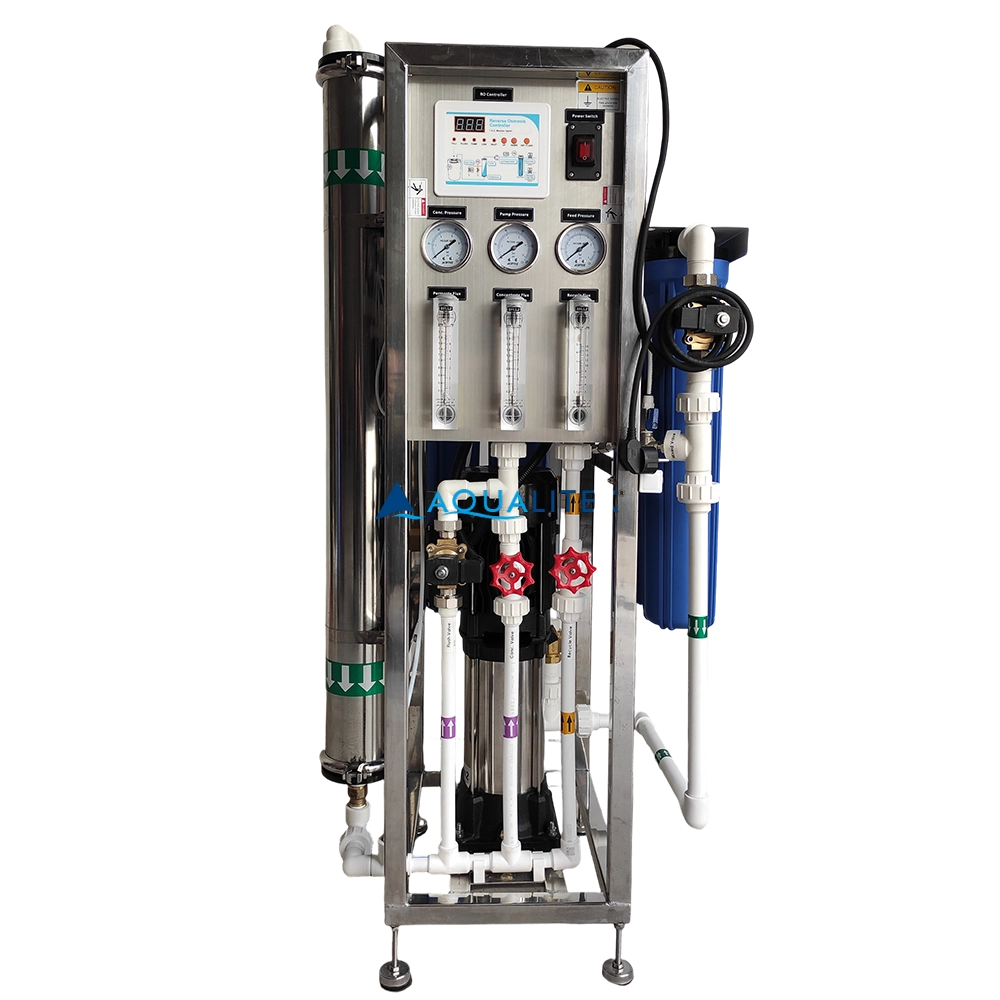
Our 500 LPH Reverse Osmosis (RO) System is engineered to provide high-quality purified water for commercial applications. Designed with advanced RO technology, durable components, and a user-friendly interface, this system ensures consistent performance, low maintenance, and long-term reliability.
With its compact design and robust skid-mounted frame, it’s an excellent choice for businesses that demand efficiency and quality in water purification.
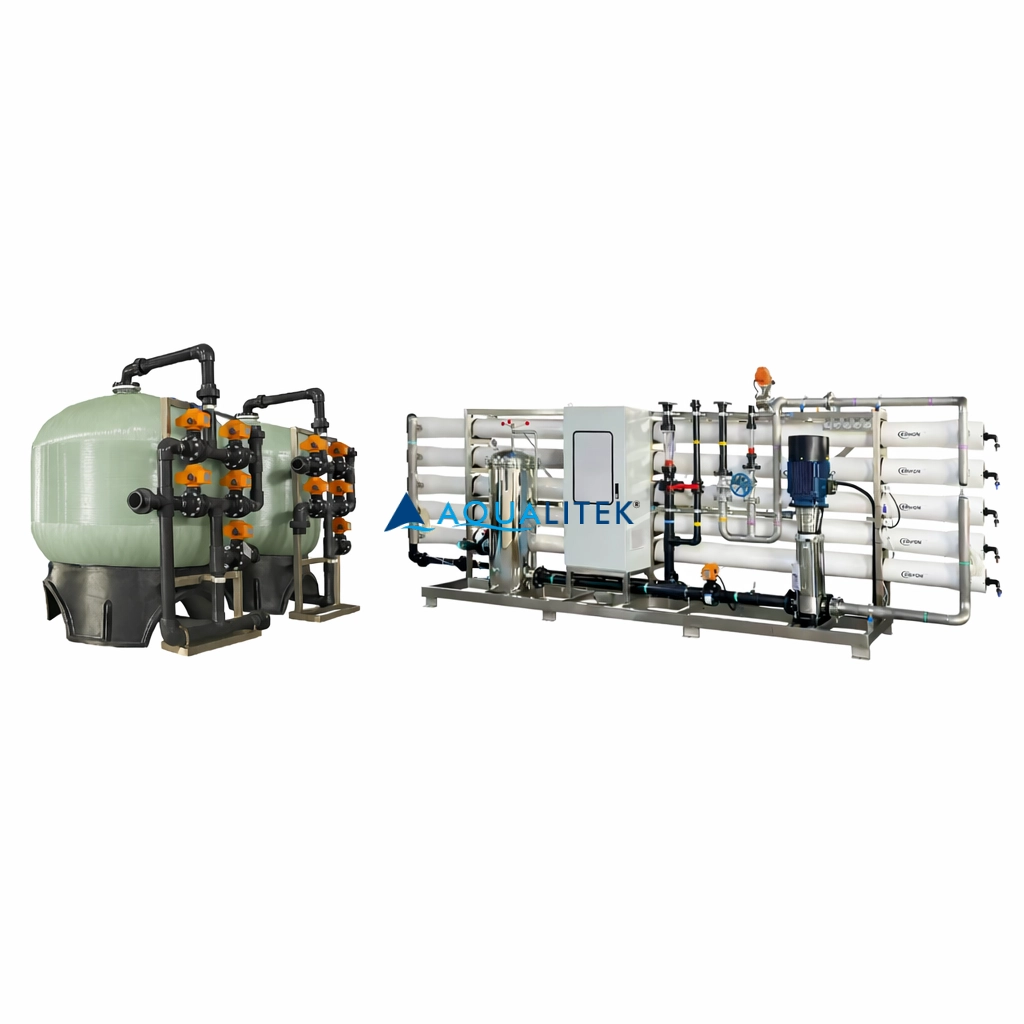
30TPH Industrial Reverse Osmosis (RO) System designed for industrial and municipal water treatment. High salt rejection, energy-efficient design, PLC control, and customizable configuration.
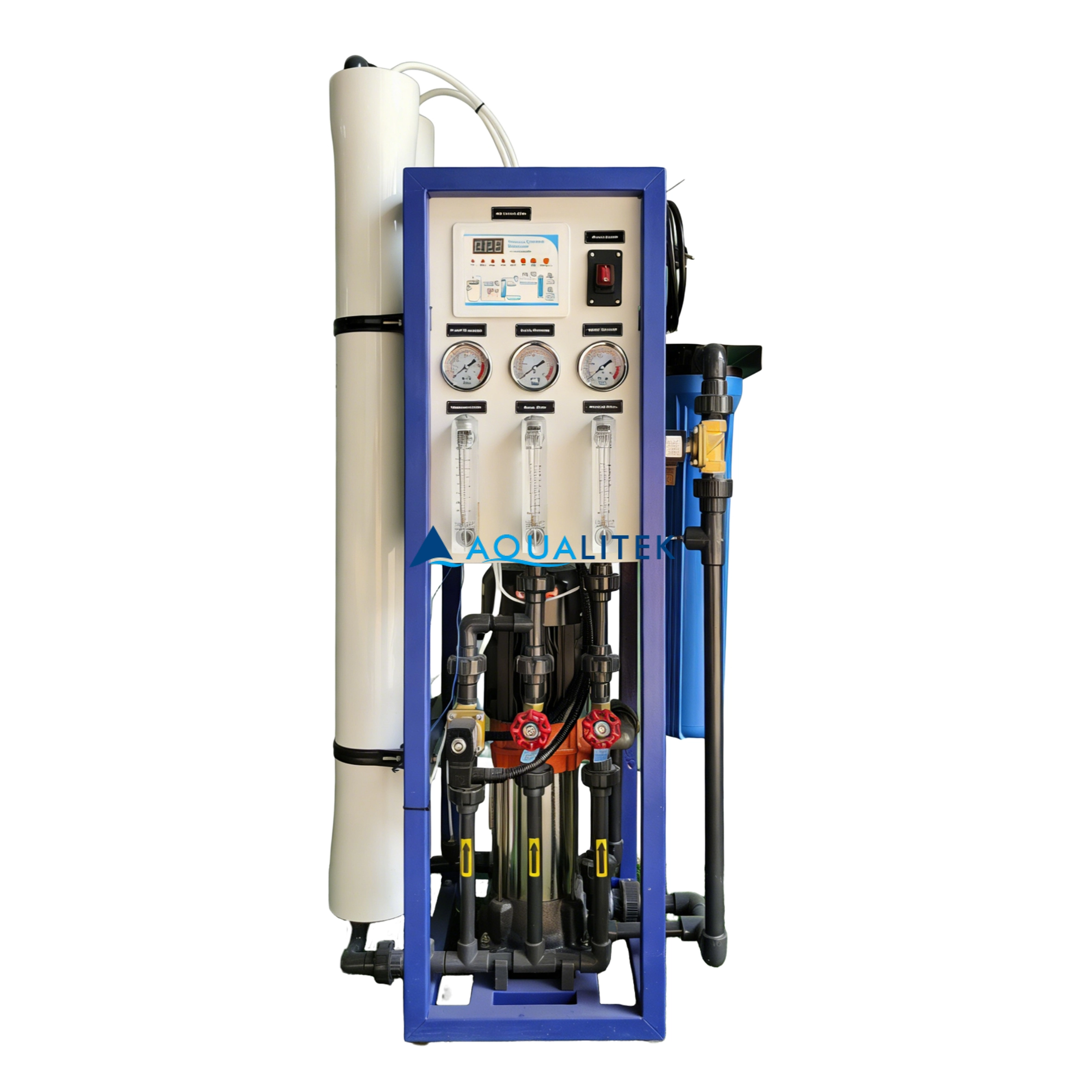
AQUALITEK's 500LPH Panel Mounted Reverse Osmosis Water Purification System delivers reliable 500 LPH RO water production. This compact industrial reverse osmosis unit is ideal for small scale industrial RO needs, ensuring efficient and high-quality purified water in a space-saving design.
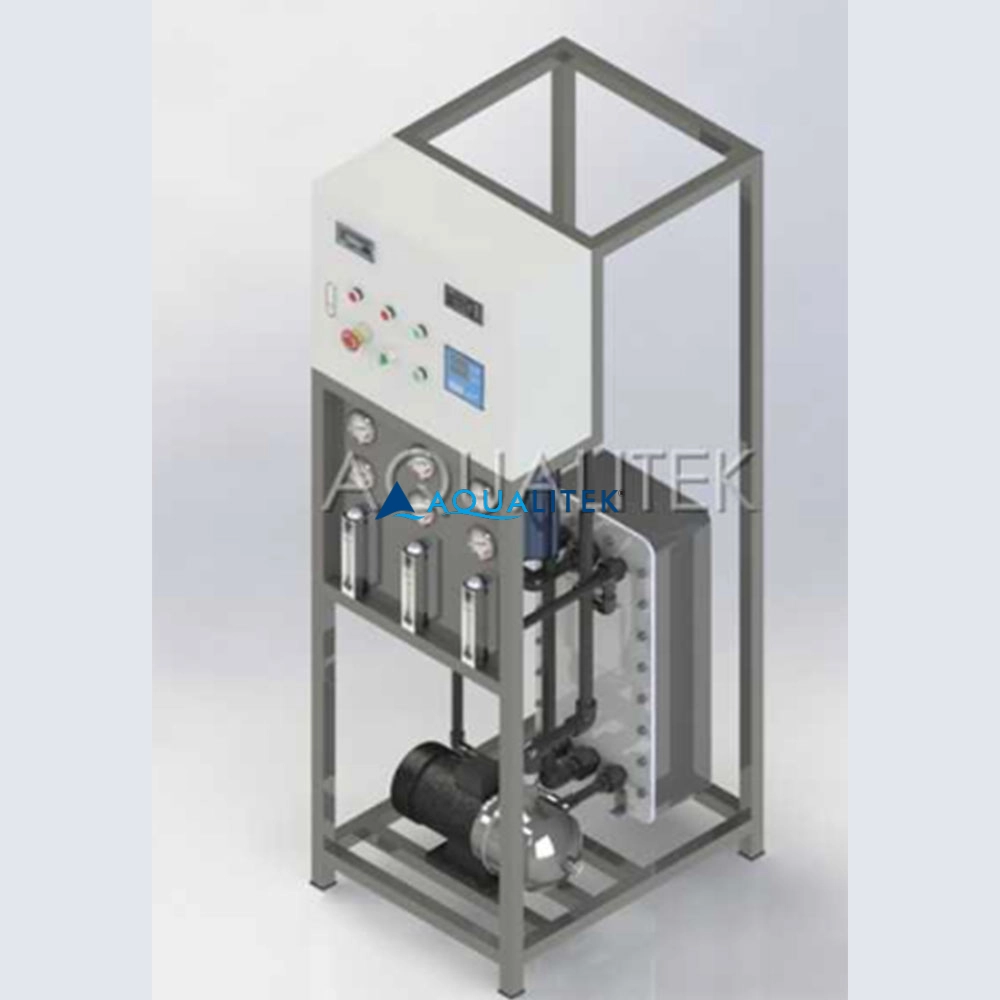
Electrodeionization (EDI) system is an advanced water purification technology that combines ion exchange and electrochemical processes to produce ultra-pure water. Unlike traditional deionization methods, which rely on chemical regeneration, EDI utilizes electric fields to drive the movement of ions through ion-exchange membranes, effectively removing dissolved salts and other ionic contaminants.
This process is continuous and does not require the use of chemicals for regeneration, making it an environmentally friendly and cost-effective solution for producing high-quality deionized water. EDI systems are widely used in applications requiring ultrapure water, such as in the pharmaceutical, semiconductor, power generation, and biotechnology industries, as well as for laboratory use.
By offering high-purity water without the need for chemical regeneration, EDI systems provide a sustainable, efficient, and reliable alternative to traditional deionization methods, making them an ideal choice for industries where water quality and process control are critical.
© 2026 AQUALITEK. All rights reserved.
AQUALITEK- Aimee Hoo
AQUALITEK - Aimee Hoo