




The Two Most Common Pollutants in Seawater That Pose the Greatest Threat to RO Membranes| Insights by AQUALITEK
Discover the two most dangerous types of seawater pollutants for RO membranes—particulate/colloidal matter and biological contaminants—and learn why they dominate fouling risks in seawater desalination.
- Introduction
- 1. Suspended and Colloidal Particles – The Primary Physical Threat
- 1.1 What Are They?
- 1.2 Why They Are So Dangerous to RO Membranes
- 1.3 Industry Evidence
- 2. Biological Contaminants – The Most Complex and Persistent Threat
- 2.1 What Are Biological Pollutants?
- 2.2 Why Biofouling Is Especially Harmful
- 2.3 Synergistic Fouling Effect
- 3. Why Dissolved Salts Are Not the Main Threat
- 4. Implications for Seawater Pretreatment Design
- For Particulates:
- For Biological Contaminants:
- 5. Summary: The Two Most Dangerous Seawater Pollutants
- Conclusion
Introduction
In seawater reverse osmosis (SWRO) desalination systems, RO membranes are the core and most vulnerable components.
Although seawater contains a wide range of dissolved salts, organics, and microorganisms, only a few pollutant categories pose the most serious and immediate threat to membrane performance and lifespan.
From decades of operational data worldwide, the two most common and most damaging pollutant types in seawater are:
1.Suspended & colloidal particulate matter
2.Biological contaminants (biofouling agents)
Understanding why these two dominate membrane fouling is essential for pretreatment design, system reliability, and operating cost control.
1. Suspended and Colloidal Particles – The Primary Physical Threat
1.1 What Are They?
Suspended and colloidal pollutants in seawater typically include:
•Fine sand and silt
•Clay minerals
•Iron and manganese oxides
•Corrosion particles
•Organic colloids
•Algae fragments and debris
These particles often range from sub-micron to several tens of microns, making them difficult to remove without advanced pretreatment.
1.2 Why They Are So Dangerous to RO Membranes
Unlike dissolved salts, particulate matter:
•Deposits directly on the membrane surface
•Blocks membrane pores and feed channels
•Increases pressure drop rapidly
Key impacts include:
•Sharp rise in differential pressure (ΔP)
•Rapid flux decline
•Uneven flow distribution
•Accelerated membrane fouling and scaling
Once compacted under high pressure, particulate fouling becomes difficult or impossible to fully remove by chemical cleaning.
1.3 Industry Evidence
Globally, high SDI (Silt Density Index) caused by particulates is the number one cause of early SWRO membrane failure, which is why SWRO pretreatment typically targets:
•SDI₁₅ ≤ 3–5
•Turbidity ≤ 1 NTU (often ≤ 0.5 NTU)
2. Biological Contaminants – The Most Complex and Persistent Threat
2.1 What Are Biological Pollutants?
Biological contaminants include:
•Bacteria
•Algae
•Plankton
•Fungi
•Microbial extracellular polymeric substances (EPS)
Even seawater that looks clear may contain millions of microorganisms per milliliter.
2.2 Why Biofouling Is Especially Harmful
Biofouling is considered the most difficult fouling type to control because:
•Microorganisms reproduce rapidly
•Biofilms protect microbes from cleaning chemicals
•EPS acts as a glue, trapping particles and nutrients
Once established, biofouling leads to:
•Continuous pressure drop increase
•Accelerated membrane degradation
•Higher cleaning frequency
•Shortened membrane life
In many SWRO plants, biofouling—not scaling—defines membrane replacement cycles.
2.3 Synergistic Fouling Effect
Biological fouling rarely acts alone. Biofilms:
•Capture suspended solids
•Promote localized scaling
•Increase organic fouling severity
This creates compound fouling, which is far more destructive than single-type fouling.
3. Why Dissolved Salts Are Not the Main Threat
Although seawater contains extremely high TDS:
•Sodium, chloride, magnesium, and sulfate are designed targets of RO membranes
•Dissolved salts do not directly foul membranes
•Scaling only occurs when solubility limits are exceeded
By contrast:
Particles and microorganisms attack the membrane physically and biologically, making them far more dangerous during normal operation.
4. Implications for Seawater Pretreatment Design
Because these two pollutant types dominate risk, SWRO pretreatment focuses on:
For Particulates:
•Coagulation–flocculation
•Multimedia filtration
•Ultrafiltration (UF)
For Biological Contaminants:
•Continuous or intermittent chlorination (followed by dechlorination)
•Biocide control strategies
•Low nutrient environments
•Frequent low-pressure flushing
5. Summary: The Two Most Dangerous Seawater Pollutants
|
Pollutant Type |
Threat Level |
Primary Damage Mechanism |
|
Suspended & Colloidal Particles |
Very High |
Physical blockage & pressure rise |
|
Biological Contaminants |
Very High |
Biofilm formation & irreversible fouling |
Together, these two pollutant categories account for the majority of RO membrane failures in seawater desalination plants worldwide.
Conclusion
In seawater desalination systems, the greatest threats to RO membranes are not dissolved salts, but suspended/colloidal particles and biological contaminants.
Effective control of these two pollutant types:
•Determines membrane lifespan
•Reduces operating pressure and energy use
•Minimizes chemical cleaning frequency
•Ensures long-term system stability
For any SWRO project, pretreatment design must prioritize particulate removal and biofouling control above all else.


Request More Information or Expert Advice
Share a few details, and we’ll provide deeper insights, tailored suggestions, or product support.
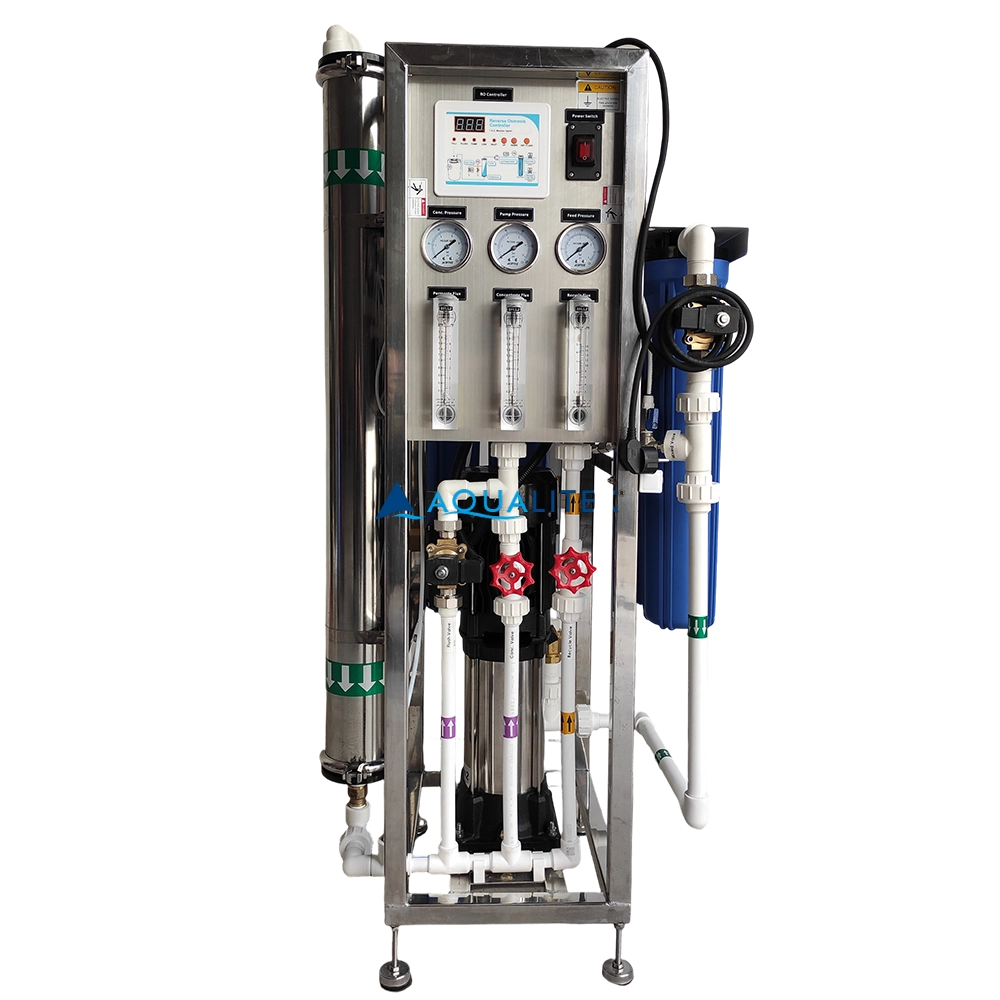
Our 500 LPH Reverse Osmosis (RO) System is engineered to provide high-quality purified water for commercial applications. Designed with advanced RO technology, durable components, and a user-friendly interface, this system ensures consistent performance, low maintenance, and long-term reliability.
With its compact design and robust skid-mounted frame, it’s an excellent choice for businesses that demand efficiency and quality in water purification.
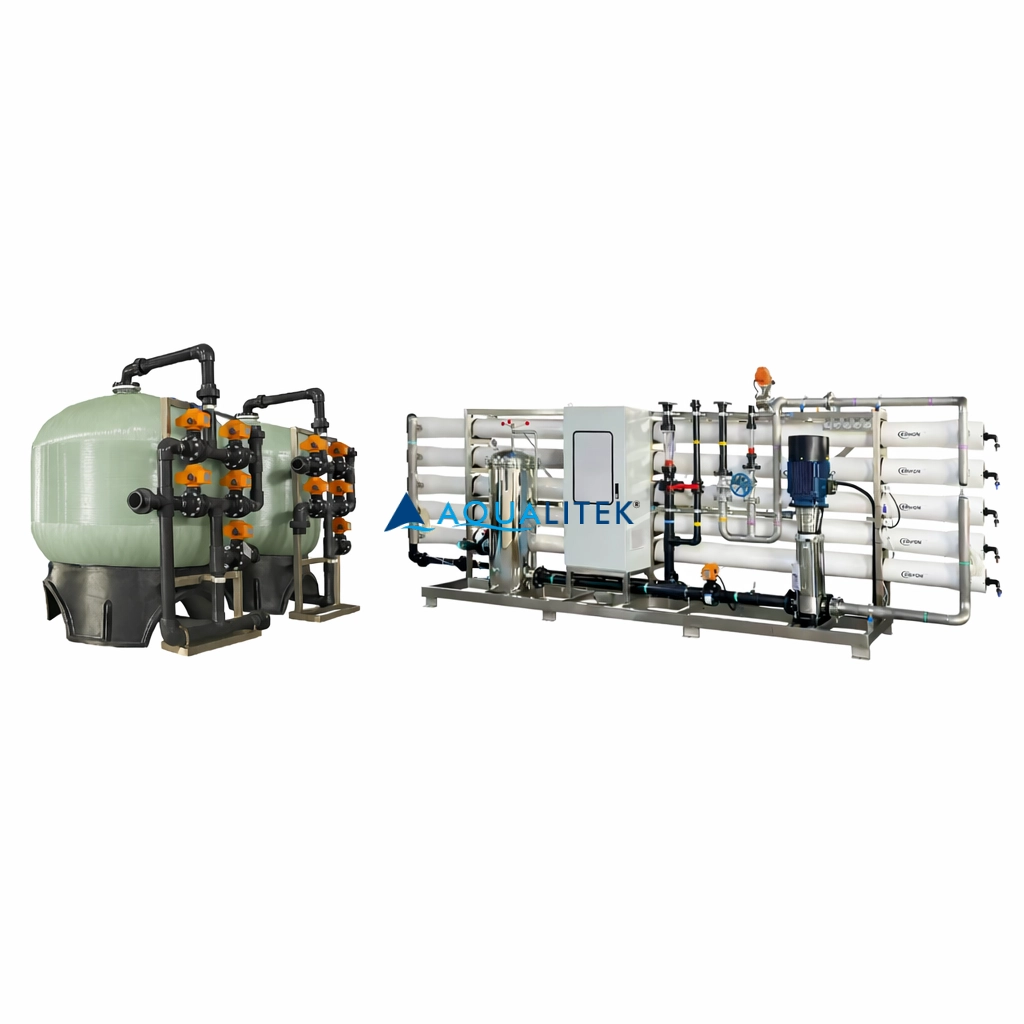
30TPH Industrial Reverse Osmosis (RO) System designed for industrial and municipal water treatment. High salt rejection, energy-efficient design, PLC control, and customizable configuration.
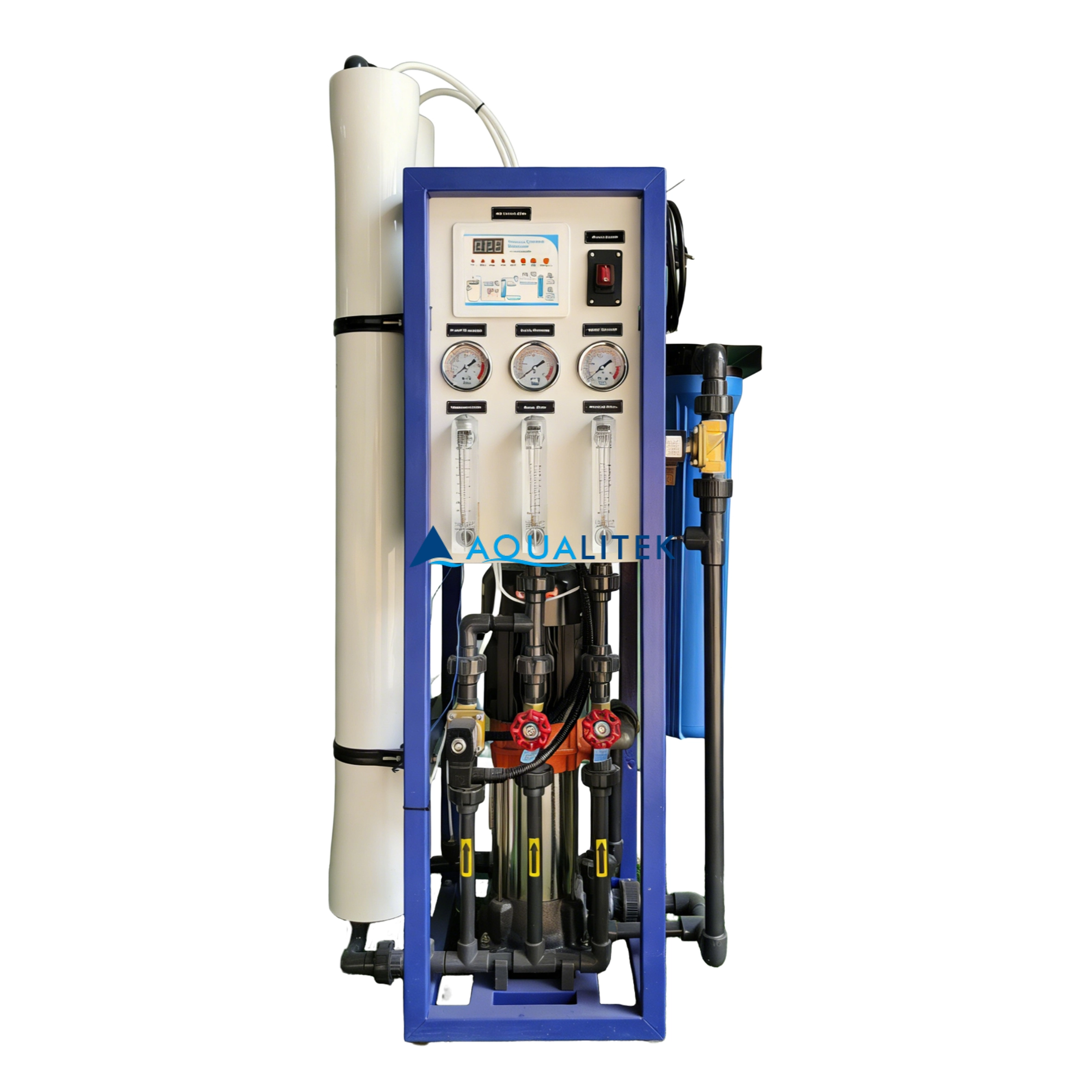
AQUALITEK's 500LPH Panel Mounted Reverse Osmosis Water Purification System delivers reliable 500 LPH RO water production. This compact industrial reverse osmosis unit is ideal for small scale industrial RO needs, ensuring efficient and high-quality purified water in a space-saving design.
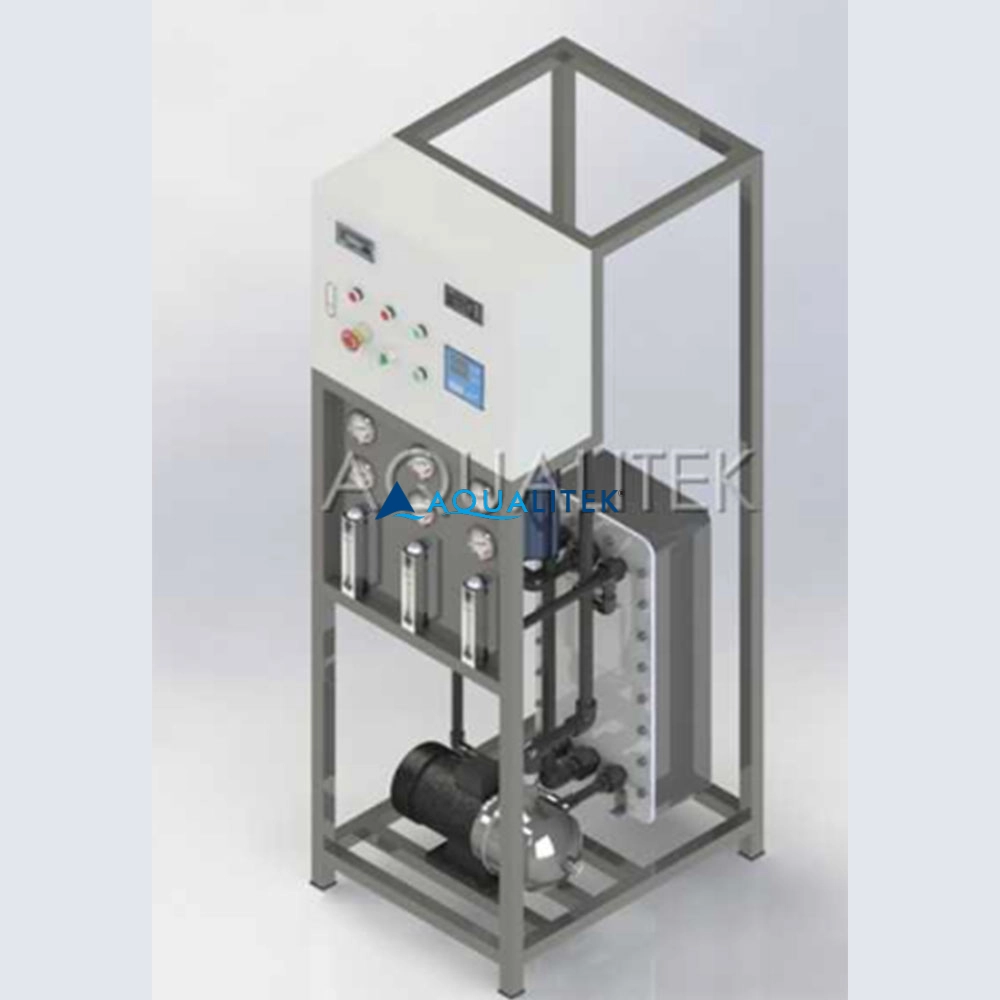
Electrodeionization (EDI) system is an advanced water purification technology that combines ion exchange and electrochemical processes to produce ultra-pure water. Unlike traditional deionization methods, which rely on chemical regeneration, EDI utilizes electric fields to drive the movement of ions through ion-exchange membranes, effectively removing dissolved salts and other ionic contaminants.
This process is continuous and does not require the use of chemicals for regeneration, making it an environmentally friendly and cost-effective solution for producing high-quality deionized water. EDI systems are widely used in applications requiring ultrapure water, such as in the pharmaceutical, semiconductor, power generation, and biotechnology industries, as well as for laboratory use.
By offering high-purity water without the need for chemical regeneration, EDI systems provide a sustainable, efficient, and reliable alternative to traditional deionization methods, making them an ideal choice for industries where water quality and process control are critical.
© 2026 AQUALITEK. All rights reserved.
AQUALITEK- Aimee Hoo
AQUALITEK - Aimee Hoo