




Why Is Boron Removal from Seawater So Challenging?| Insights by AQUALITEK
Boron removal is one of the most difficult challenges in seawater desalination. This article explains why boron is hard to remove and reviews the best available treatment methods used in modern RO systems.
- Introduction
- Why Is Boron Removal from Seawater So Difficult?
- 1. Boron Exists Mainly as Undissociated Boric Acid
- 2. Small Molecular Size
- 3. Stringent Boron Limits in Drinking Water
- 4. High Salinity Limits Operating Flexibility
- Best Treatment Methods for Boron Removal from Seawater
- 1. Two-Pass RO with Interstage pH Adjustment (Best Overall Solution)
- 2. High-pH Single-Pass RO (Limited Application)
- 3. Boron-Selective Ion Exchange Resin (Polishing Step)
- 4. Membrane Blending Strategies
- 5. Emerging Technologies (Currently Limited Use)
- Best Practice Recommendations
- Conclusion
Introduction
As seawater desalination becomes a critical solution for freshwater scarcity, boron removal has emerged as one of the most technically challenging aspects of reverse osmosis (RO) system design and operation. Unlike salts such as sodium chloride, boron behaves very differently in seawater and exhibits poor rejection by conventional RO membranes.
This article explains why boron is difficult to remove from seawater and provides a best-practice overview of the most effective boron removal technologies currently used in seawater desalination plants.
Why Is Boron Removal from Seawater So Difficult?
1. Boron Exists Mainly as Undissociated Boric Acid
In seawater (pH ≈ 8.0–8.2), boron is present primarily as boric acid (H₃BO₃) rather than as a charged ion.
•Boric acid is electrically neutral
•RO membranes reject ions more effectively than neutral molecules
•As a result, boric acid passes through standard RO membranes more easily
This fundamental chemical behavior is the core reason boron removal is difficult.
2. Small Molecular Size
Boric acid has a very small molecular size, close to the pore size of RO membranes. Even high-rejection seawater RO membranes struggle to block it completely, especially at normal operating pressures.
3. Stringent Boron Limits in Drinking Water
Many international standards impose strict boron limits:
•WHO guideline: ≤ 2.4 mg/L
•EU & some national standards: ≤ 1.0 mg/L
•Agricultural irrigation water: often ≤ 0.5 mg/L
Raw seawater typically contains 4–6 mg/L of boron, meaning standard single-pass RO is insufficient.
4. High Salinity Limits Operating Flexibility
Raising pressure or recovery excessively to improve boron rejection increases:
•Energy consumption
•Scaling risk
•Membrane fouling
•Equipment stress
This limits how aggressively boron can be removed in a single RO pass.
Best Treatment Methods for Boron Removal from Seawater
1. Two-Pass RO with Interstage pH Adjustment (Best Overall Solution)
How it works:
•First pass: Conventional seawater RO removes most salts
•pH is increased (typically to 9.0–10.5)
•Second pass RO removes boron more effectively
Why it works:
•Higher pH converts boric acid into borate ions (B(OH)₄⁻)
•Borate ions are charged and easily rejected by RO membranes
Advantages:
•Proven and widely adopted
•High reliability
•Suitable for large municipal plants
Disadvantages:
•Higher CAPEX and OPEX
•Requires chemical dosing and pH control
✅ Industry standard for potable desalination
2. High-pH Single-Pass RO (Limited Application)
How it works:
•Operating seawater RO at elevated pH (≈ 9.5–10)
Advantages:
•Simpler system design
•Lower capital cost
Limitations:
•Severe scaling risk
•Increased membrane fouling
•Limited boron removal efficiency
⚠️ Typically only used for non-potable or blended water applications
3. Boron-Selective Ion Exchange Resin (Polishing Step)
How it works:
•Uses boron-specific chelating resins
•Applied after RO as a polishing unit
Advantages:
•Very high boron removal efficiency
•Can achieve ultra-low boron levels
Disadvantages:
•Resin regeneration required
•Sensitive to water quality
•Higher operational complexity
✅ Best suited for small flows or high-purity water requirements
4. Membrane Blending Strategies
How it works:
•Mix low-boron permeate with higher-boron streams
•Achieves target concentration without full removal
Advantages:
•Reduced system cost
•Lower energy demand
Disadvantages:
•Limited flexibility
•Not suitable for strict drinking water standards
5. Emerging Technologies (Currently Limited Use)
•Specialized boron-rejecting membranes
•Forward osmosis hybrid systems
•Advanced electrochemical separation
⚠️ These are still not mainstream due to cost, reliability, or scale limitations.
Best Practice Recommendations
|
Application |
Recommended Boron Removal Method |
|
Municipal drinking water |
Two-pass RO with pH adjustment |
|
Agricultural irrigation |
High-pH RO or blending |
|
Industrial high-purity water |
RO + ion exchange polishing |
|
Small-scale desalination |
RO + selective resin |
Conclusion
Boron removal from seawater is challenging due to its neutral chemical form, small molecular size, and strict regulatory limits. Conventional RO alone is insufficient to meet modern drinking water standards.
Among all available technologies, two-pass RO with interstage pH adjustment remains the most effective, reliable, and widely accepted solution for boron removal in seawater desalination. Selecting the right approach depends on water quality targets, system scale, and operational priorities.


Request More Information or Expert Advice
Share a few details, and we’ll provide deeper insights, tailored suggestions, or product support.
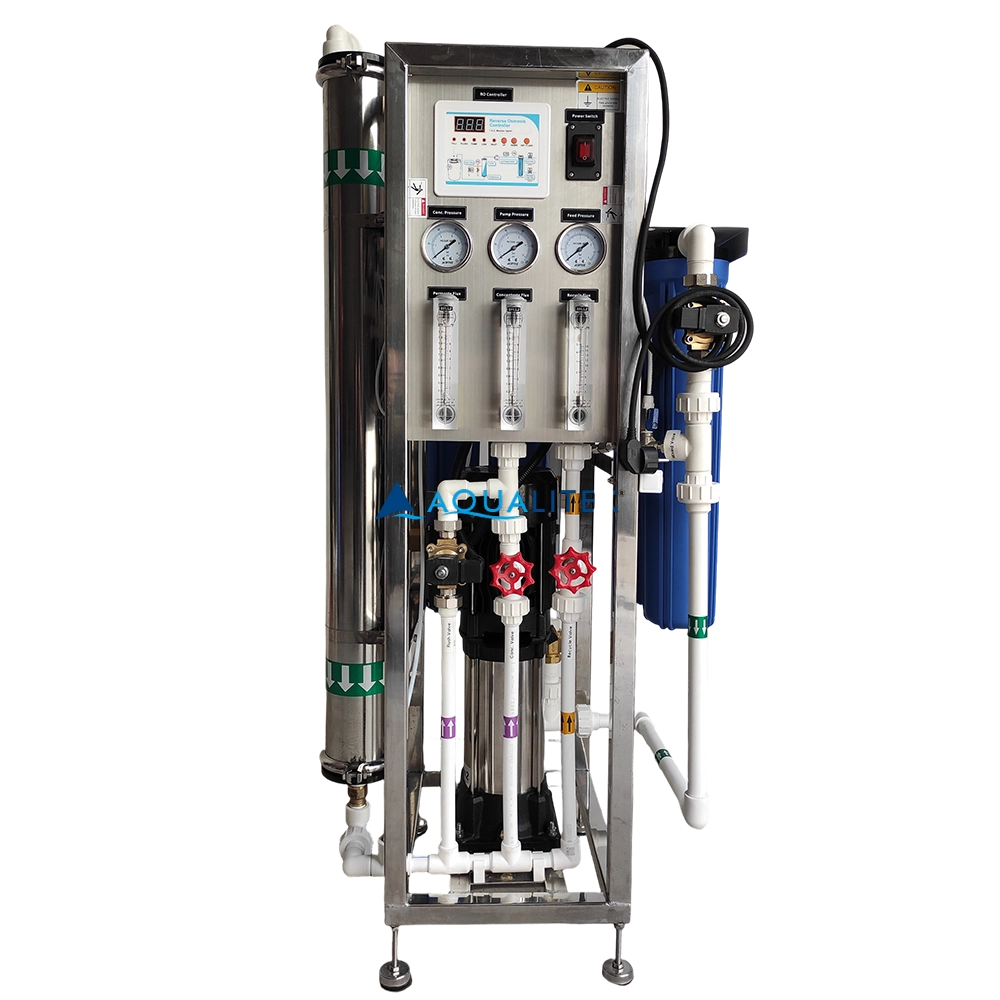
Our 500 LPH Reverse Osmosis (RO) System is engineered to provide high-quality purified water for commercial applications. Designed with advanced RO technology, durable components, and a user-friendly interface, this system ensures consistent performance, low maintenance, and long-term reliability.
With its compact design and robust skid-mounted frame, it’s an excellent choice for businesses that demand efficiency and quality in water purification.
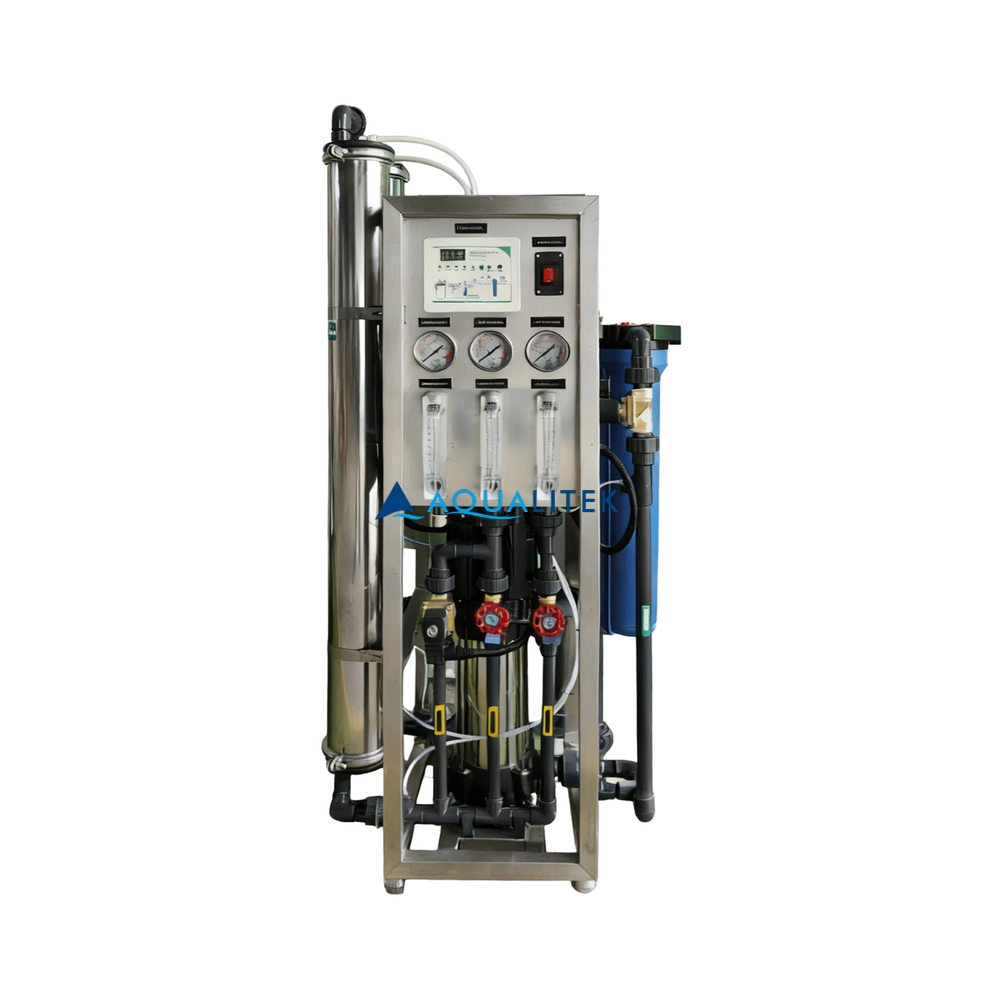
TWV series Reverse Osmosis (RO) systems are pre-engineered and pre-assembled units with 2.5”/4” membrane housings(single element type)for tap water(lower TDS).They are designed for overall superior performance, high recovery rates and offer great savings with low maintenance and operation costs.
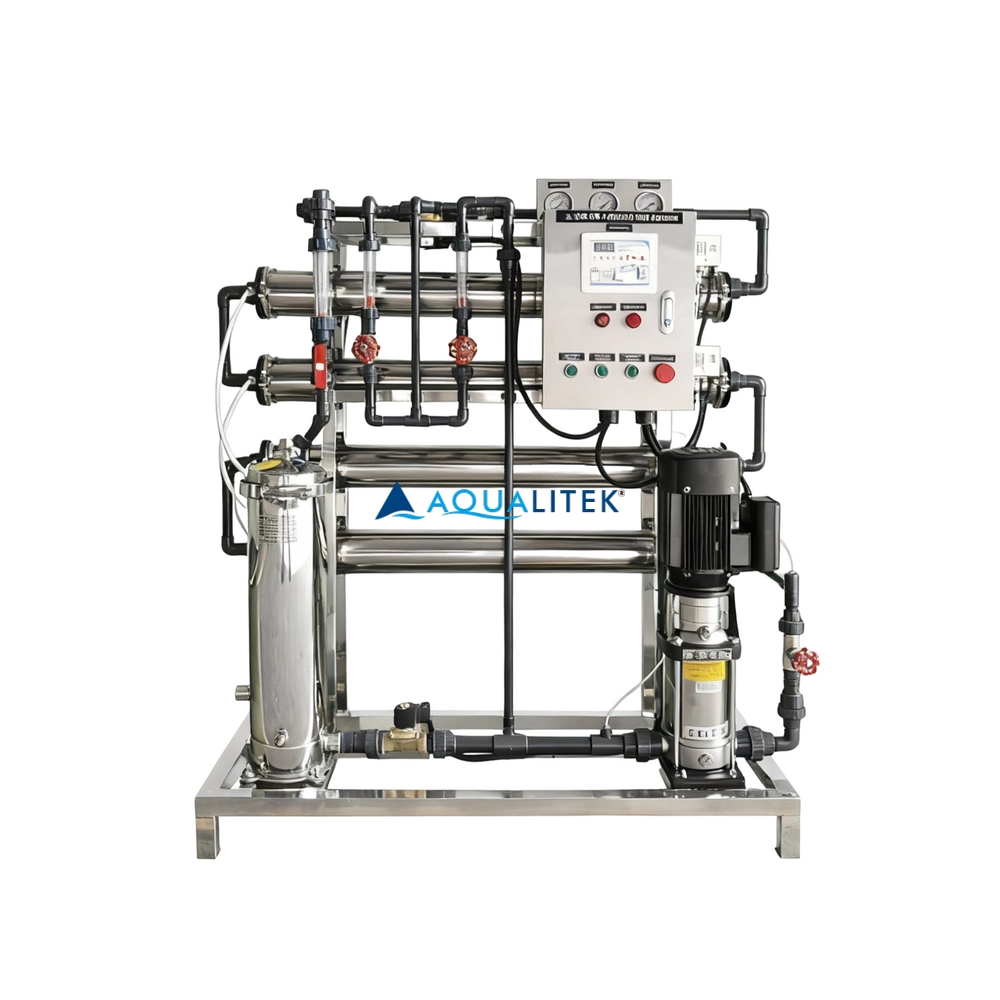
TWF series Reverse Osmosis (RO) systems are pre-engineered and pre-assembled units with 4” membrane housings(multiple elements type) for tap water(lower TDS) .The medium large volumes can help meet your a variety of commercial and industrial applications. They are designed for overall superior performance, high recovery rates and offer great savings with low maintenance and operation costs.

TWE series Reverse Osmosis (RO) systems are pre-engineered and pre-assembled units with 8” membrane housings for tap water (lower TDS). The large volumes can help meet your a variety of industrial applications. They are designed for overall superior performance, high recovery rates and offer great savings with low maintenance and operation costs.
© 2026 AQUALITEK. All rights reserved.
AQUALITEK- Aimee Hoo
AQUALITEK - Aimee Hoo