




Why Must Seawater Inside RO Membranes Be Immediately Replaced with Low-Salinity Water After an Emergency Shutdown?| Insights by AQUALITEK
After a sudden shutdown of a seawater desalination RO system, immediate flushing with low-salinity water is critical. Learn why this step is essential to protect membranes and system integrity.
- Introduction
- 1. What Happens Inside an SWRO Membrane During Sudden Shutdown
- 2. Risk #1: Extreme Local Salt Concentration and Scaling
- 2.1 Concentration Polarization Continues Without Crossflow
- 3. Risk #2: Osmotic Backflow and Membrane Compaction
- 3.1 Reverse Osmotic Pressure Gradient
- 4. Risk #3: Accelerated Chemical Attack at High Salinity
- 5. Risk #4: Rapid Biofouling Under Stagnant Conditions
- 6. Why Low-Salinity Water Is the Correct Replacement Medium
- 6.1 Rapid Dilution of Concentrated Salts
- 6.2 Elimination of Osmotic Stress
- 6.3 Reduced Corrosive and Chemical Aggression
- 6.4 Suppression of Biological Activity
- 7. Industry Best Practice for Emergency Shutdown Protection
- 8. Consequences of Skipping Post-Shutdown Flushing
- Conclusion
Introduction
In seawater desalination (SWRO) systems, emergency shutdowns can occur due to power failures, pump trips, valve malfunctions, or safety interlocks.
While stopping the system may be unavoidable, what happens immediately after the shutdown is critical to membrane health.
One of the most important post-shutdown actions is:
Immediately replacing the high-salinity seawater trapped inside the RO membranes with low-salinity water (permeate or product water).
Failure to do so can result in rapid, irreversible membrane damage, even if the downtime is relatively short.
This article explains why this flushing step is mandatory, what risks it prevents, and how it protects SWRO membranes.
1. What Happens Inside an SWRO Membrane During Sudden Shutdown
When a seawater RO system shuts down abruptly:
•High-pressure seawater remains trapped inside membrane elements
•Flow stops, but osmotic processes continue
•Concentration polarization intensifies near the membrane surface
•Local salinity becomes significantly higher than normal operating conditions
Unlike normal shutdown procedures, emergency stops do not allow controlled depressurization or flushing, making the situation particularly dangerous.
2. Risk #1: Extreme Local Salt Concentration and Scaling
2.1 Concentration Polarization Continues Without Crossflow
Even without feed pressure:
•Diffusion continues across the membrane
•Salt accumulates at the membrane surface
•Local TDS may far exceed design values
This creates supersaturation conditions, leading to rapid precipitation of:
•Calcium carbonate (CaCO₃)
•Calcium sulfate (CaSO₄)
•Magnesium hydroxide (Mg(OH)₂)
Once scale forms under static conditions, it is:
•More compact
•More strongly bonded
•Much harder to clean
3. Risk #2: Osmotic Backflow and Membrane Compaction
3.1 Reverse Osmotic Pressure Gradient
After shutdown:
•Concentrated seawater remains on the feed side
•Permeate side contains much lower salinity water
•A strong osmotic pressure gradient develops
This can cause:
•Reverse water flux
•Membrane layer stress
•Accelerated membrane compaction
Over time, this results in:
•Permanent flux loss
•Reduced salt rejection
•Shortened membrane life
4. Risk #3: Accelerated Chemical Attack at High Salinity
High-salinity, stagnant seawater is chemically aggressive.
Under these conditions:
•Oxidative residues become more reactive
•Local pH shifts can occur
•Polyamide membranes are more vulnerable
Extended exposure significantly increases the risk of:
•Membrane surface degradation
•Loss of selectivity
•Irreversible permeability changes
5. Risk #4: Rapid Biofouling Under Stagnant Conditions
Seawater naturally contains:
•Bacteria
•Algae
•Organic nutrients
When flow stops:
•Stagnant seawater promotes microbial attachment
•Biofilm formation accelerates
•Subsequent restart becomes more difficult
High salinity combined with stagnation creates ideal conditions for biofouling initiation, especially in warm climates.
6. Why Low-Salinity Water Is the Correct Replacement Medium
Immediately flushing with low-salinity water (typically RO permeate or treated freshwater) provides multiple protective benefits:
6.1 Rapid Dilution of Concentrated Salts
•Reduces local supersaturation
•Prevents scale nucleation
•Stops crystal growth
6.2 Elimination of Osmotic Stress
•Equalizes salinity across the membrane
•Prevents reverse diffusion
•Protects membrane structure
6.3 Reduced Corrosive and Chemical Aggression
•Lower ionic strength
•More stable pH environment
•Safer for membrane materials
6.4 Suppression of Biological Activity
•Low nutrient availability
•Less favorable conditions for microorganisms
7. Industry Best Practice for Emergency Shutdown Protection
Leading SWRO design and operation standards recommend:
•Automatic low-pressure flushing systems
•Immediate membrane flushing within minutes of shutdown
•Use of:
RO permeate
Post-treated freshwater
•Complete replacement of seawater inside all pressure vessels
This is often integrated as:
•A fail-safe control sequence
•A UPS-backed flushing system
•A gravity-fed permeate tank solution
8. Consequences of Skipping Post-Shutdown Flushing
If seawater is left inside membranes after shutdown, operators commonly observe:
•Sudden differential pressure increase on restart
•Immediate flux loss
•Rapid scaling and fouling
•Shortened cleaning intervals
•Premature membrane replacement
In many cases, damage occurs within hours, not days.
Conclusion
Immediately replacing seawater inside RO membranes with low-salinity water after an emergency shutdown is not optional—it is essential.
This practice:
•Prevents scaling under static conditions
•Eliminates osmotic stress
•Reduces chemical and biological attack
•Preserves membrane performance and lifespan
In seawater desalination systems, what you do after stopping the system can be just as important as how you operate it during production.


Request More Information or Expert Advice
Share a few details, and we’ll provide deeper insights, tailored suggestions, or product support.
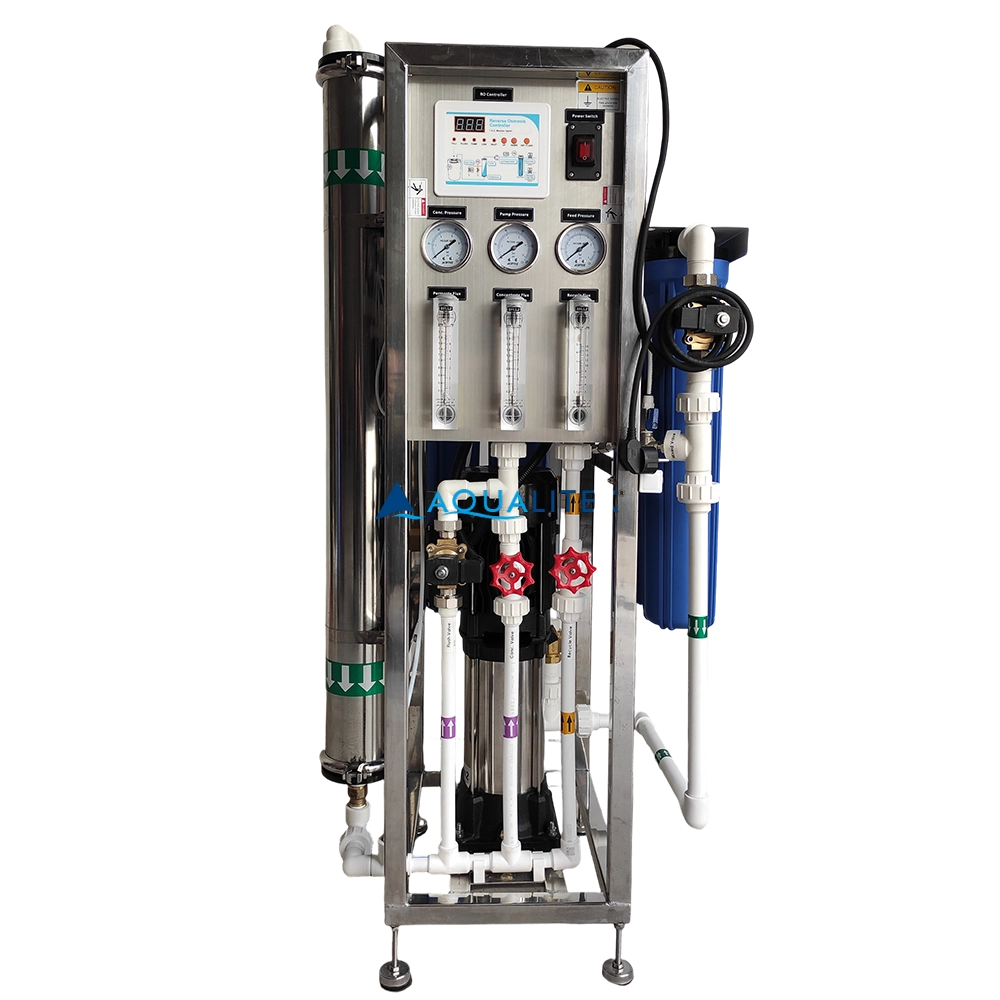
Our 500 LPH Reverse Osmosis (RO) System is engineered to provide high-quality purified water for commercial applications. Designed with advanced RO technology, durable components, and a user-friendly interface, this system ensures consistent performance, low maintenance, and long-term reliability.
With its compact design and robust skid-mounted frame, it’s an excellent choice for businesses that demand efficiency and quality in water purification.
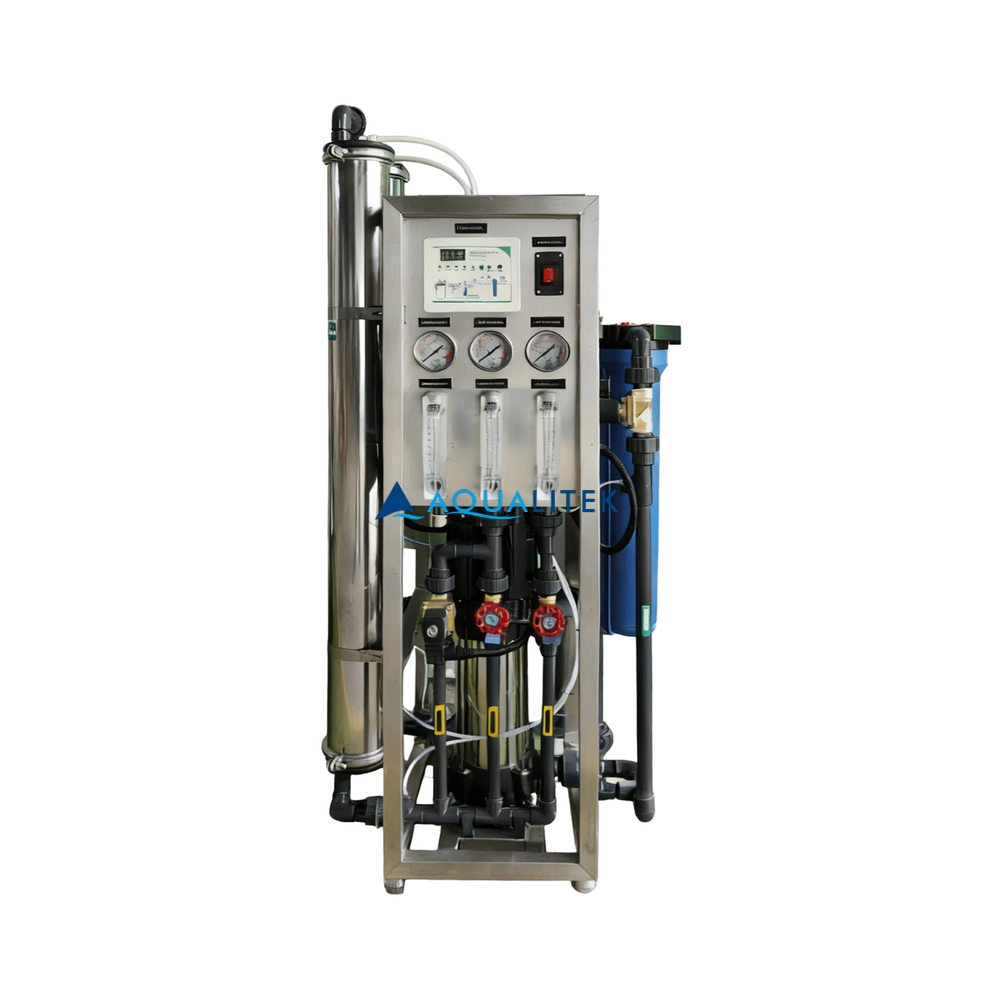
TWV series Reverse Osmosis (RO) systems are pre-engineered and pre-assembled units with 2.5”/4” membrane housings(single element type)for tap water(lower TDS).They are designed for overall superior performance, high recovery rates and offer great savings with low maintenance and operation costs.
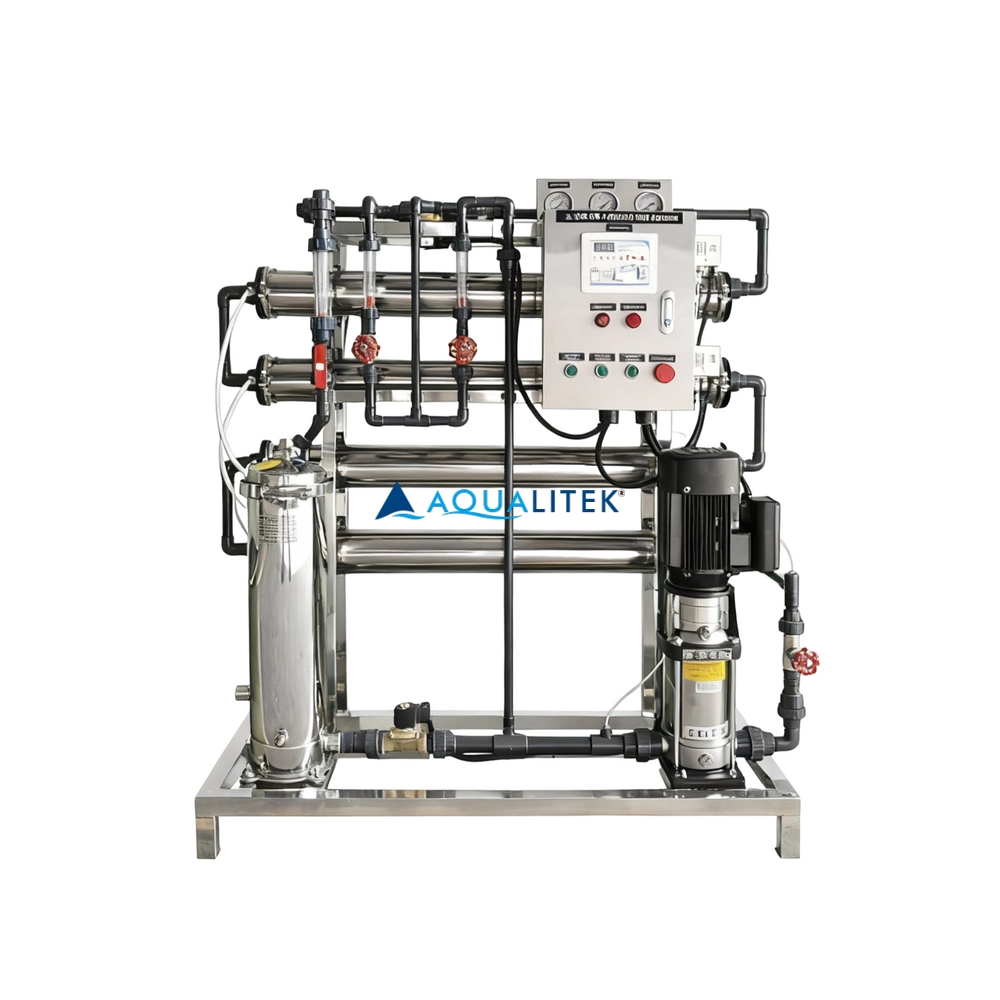
TWF series Reverse Osmosis (RO) systems are pre-engineered and pre-assembled units with 4” membrane housings(multiple elements type) for tap water(lower TDS) .The medium large volumes can help meet your a variety of commercial and industrial applications. They are designed for overall superior performance, high recovery rates and offer great savings with low maintenance and operation costs.

TWE series Reverse Osmosis (RO) systems are pre-engineered and pre-assembled units with 8” membrane housings for tap water (lower TDS). The large volumes can help meet your a variety of industrial applications. They are designed for overall superior performance, high recovery rates and offer great savings with low maintenance and operation costs.
© 2026 AQUALITEK. All rights reserved.
AQUALITEK- Aimee Hoo
AQUALITEK - Aimee Hoo