
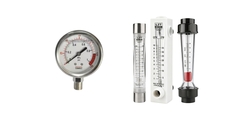




Why Does the High-Pressure Pump Outlet Pressure Gauge Pointer Vibrate Violently?
Violent vibration of the pressure gauge pointer at the outlet of a high-pressure pump is a serious operating warning in RO systems. This Best-practice guide explains the most common causes, how to distinguish hydraulic from mechanical problems, and what actions should be taken to prevent equipment damage.
- Why Pressure Gauge Pointer Vibration Matters
- Main Causes of Violent Pressure Gauge Pointer Vibration
- 1. Cavitation in the High-Pressure Pump (Most Common Cause)
- 2. Air Entrapment in the System
- 3. Malfunctioning or Poorly Installed Pressure Gauge
- 4. High-Pressure Pump Mechanical Faults
- 5. Unstable Flow Control or Valve Oscillation
- 6. Blocked or Partially Closed Downstream Piping
- Quick Diagnosis Table
- Best Immediate Response Checklist
- What Should Never Be Done
- Conclusion
Why Pressure Gauge Pointer Vibration Matters
A violently oscillating pressure gauge is not a normal fluctuation. It usually indicates:
•Unstable hydraulic conditions
•Mechanical problems inside the pump
•Air or cavitation issues
•Instrument installation faults
Ignoring this symptom can lead to:
•Pump bearing failure
•Seal damage
•Membrane shock loading
•Sudden system shutdown
Main Causes of Violent Pressure Gauge Pointer Vibration
1. Cavitation in the High-Pressure Pump (Most Common Cause)
Why It Happens
•Insufficient inlet pressure
•Blocked or undersized suction piping
•Clogged pretreatment or cartridge filters
•Excessive pump speed
Cavitation creates vapor bubbles that collapse violently, causing pressure pulsation.
Typical Symptoms
•Loud rattling or “gravel” noise
•Pressure pointer oscillates rapidly
•Pump current fluctuates
Immediate Action
•Stop the pump
•Check inlet pressure and suction line
•Clean or replace blocked filters
2. Air Entrapment in the System
Why It Happens
•Poor venting after maintenance
•Leaking suction-side joints
•Low tank water level
Air compresses and expands under pressure, leading to violent pointer movement.
How to Confirm
•Bubbles in sight glass
•Pressure fluctuation synchronized with flow changes
3. Malfunctioning or Poorly Installed Pressure Gauge
Common Issues
•No pressure snubber installed
•Gauge installed directly on pulsating line
•Damaged internal mechanism
Solution
•Install a pressure snubber or pulsation damper
•Replace the gauge if internal damage is suspected
4. High-Pressure Pump Mechanical Faults
Possible Problems
•Worn bearings
•Damaged plungers or pistons
•Loose coupling
These faults cause uneven torque and pressure pulsation.
Associated Signs
•Abnormal noise
•Elevated motor current
•Temperature rise
5. Unstable Flow Control or Valve Oscillation
Typical Causes
•Rapidly opening/closing concentrate control valve
•Faulty automatic control valve
•PID tuning issues in automated systems
This causes sudden pressure swings transmitted to the gauge.
6. Blocked or Partially Closed Downstream Piping
Why It Causes Vibration
•Sudden backpressure variations
•Intermittent flow restriction
Check:
•RO membrane fouling
•Incorrect valve positions
Quick Diagnosis Table
|
Symptom |
Likely Cause |
|
Loud noise + vibration |
Cavitation |
|
Bubbles visible |
Air ingress |
|
Gauge only vibrates |
Instrument issue |
|
High current + vibration |
Mechanical fault |
|
Pressure swings during valve movement |
Control instability |
Best Immediate Response Checklist
✔ Reduce pump speed or stop pump
✔ Verify inlet pressure
✔ Inspect pretreatment filters
✔ Vent air from system
✔ Check gauge installation
✔ Inspect pump condition
What Should Never Be Done
❌ Ignore the vibration
❌ Continue long-term operation
❌ Assume the gauge is faulty without verification
❌ Increase pressure to “stabilize” the reading
Conclusion
Violent vibration of the high-pressure pump outlet pressure gauge is a clear warning of unstable operating conditions. The most common causes are cavitation, air entrainment, mechanical pump issues, and gauge installation problems. Prompt diagnosis and corrective action are essential to prevent pump and membrane damage.


Request More Information or Expert Advice
Share a few details, and we’ll provide deeper insights, tailored suggestions, or product support.
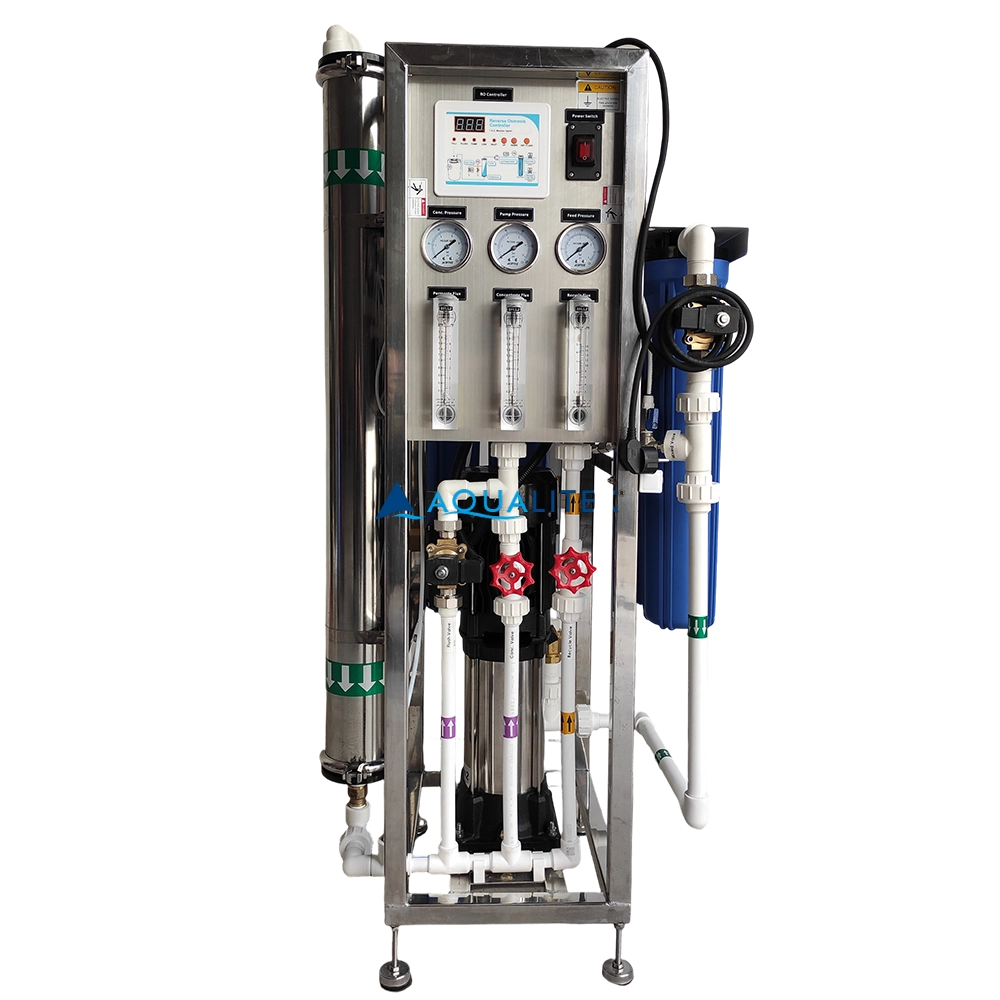
Our 500 LPH Reverse Osmosis (RO) System is engineered to provide high-quality purified water for commercial applications. Designed with advanced RO technology, durable components, and a user-friendly interface, this system ensures consistent performance, low maintenance, and long-term reliability.
With its compact design and robust skid-mounted frame, it’s an excellent choice for businesses that demand efficiency and quality in water purification.
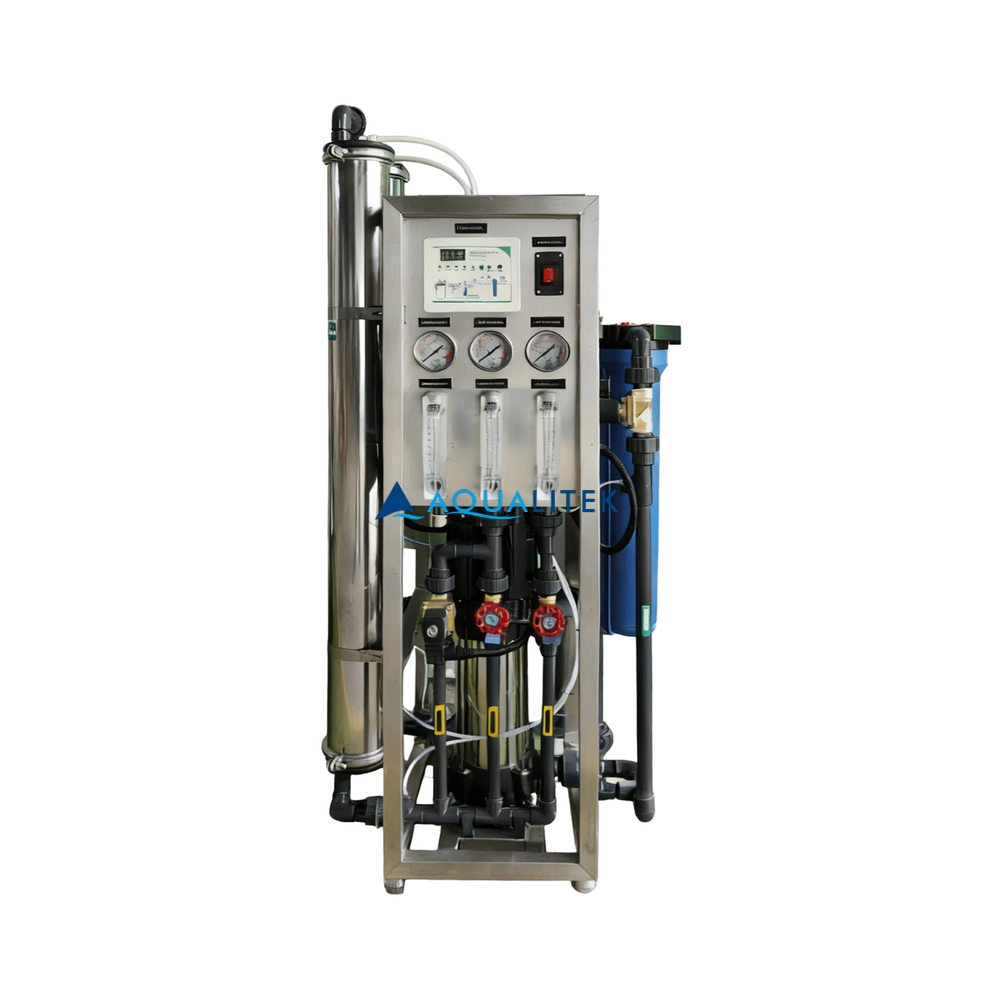
TWV series Reverse Osmosis (RO) systems are pre-engineered and pre-assembled units with 2.5”/4” membrane housings(single element type)for tap water(lower TDS).They are designed for overall superior performance, high recovery rates and offer great savings with low maintenance and operation costs.
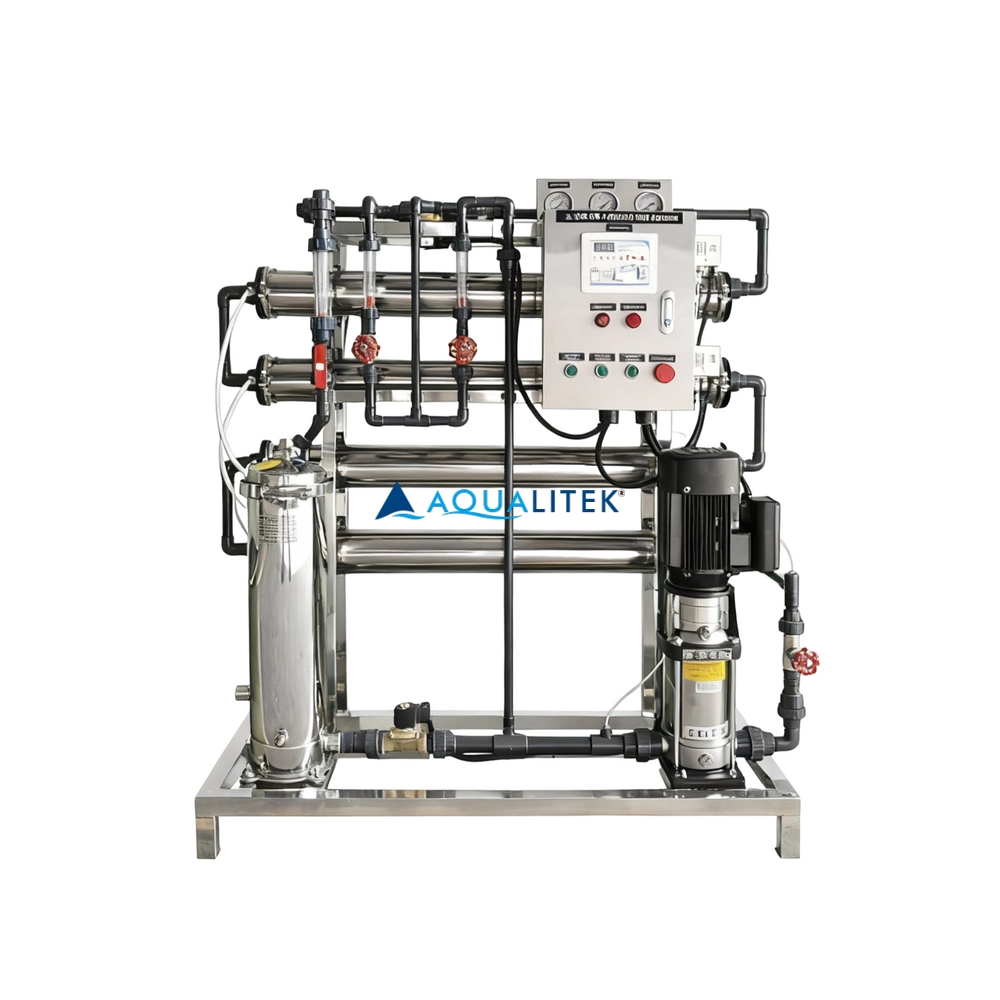
TWF series Reverse Osmosis (RO) systems are pre-engineered and pre-assembled units with 4” membrane housings(multiple elements type) for tap water(lower TDS) .The medium large volumes can help meet your a variety of commercial and industrial applications. They are designed for overall superior performance, high recovery rates and offer great savings with low maintenance and operation costs.

TWE series Reverse Osmosis (RO) systems are pre-engineered and pre-assembled units with 8” membrane housings for tap water (lower TDS). The large volumes can help meet your a variety of industrial applications. They are designed for overall superior performance, high recovery rates and offer great savings with low maintenance and operation costs.
© 2026 AQUALITEK. All rights reserved.
AQUALITEK- Aimee Hoo
AQUALITEK - Aimee Hoo