




Impact of Winter Seawater Temperature Drop on RO Desalination Water Production and Operating Pressure| Insights by AQUALITEK
Explore how winter seawater temperature drops affect RO desalination systems, including water production decline, pressure increase, energy consumption changes, and practical optimization strategies for stable plant operation.
- Introduction
- 1. Why Seawater Temperature Matters in RO Desalination Systems
- 2. Effect of Winter Temperature Drop on Water Production
- 2.1 Decrease in Membrane Flux
- 2.2 Reduced System Water Output
- 2.3 Lower Recovery Efficiency
- 3. Effect of Winter Temperature Drop on Operating Pressure
- 3.1 Increased Hydraulic Resistance
- 3.2 Pressure Compensation Requirement
- 3.3 Higher Energy Consumption
- 4. Combined Impact on System Energy Efficiency
- 5. Temperature Correction Factor (TCF): Key Design Parameter
- 5.1 What Is TCF?
- 5.2 Practical TCF Values
- 6. Engineering Design Strategies for Winter Operation
- 6.1 Oversized System Design
- 6.2 Variable Frequency Drive (VFD) Control
- 6.3 High-Permeability Membrane Selection
- 6.4 Optimized Pretreatment
- 7. Operational Optimization Strategies in Winter
- 7.1 Adjust Operating Pressure Gradually
- 7.2 Optimize Recovery Rate
- 7.3 Increase Chemical Cleaning Frequency (If Necessary)
- 7.4 Energy Recovery Device (ERD) Optimization
- 8. Practical Industry Case Example
- 9. Future Technologies for Low-Temperature Desalination
- Conclusion
Introduction
Seawater reverse osmosis (SWRO) desalination systems are widely used to produce freshwater in coastal and island regions. However, seasonal variations—especially the significant drop in seawater temperature during winter—can strongly impact system performance.
A decrease in seawater temperature directly affects membrane permeability, water viscosity, osmotic pressure, and hydraulic conditions. As a result, water production rate declines while operating pressure and energy consumption rise. Understanding these effects is crucial for system design, operation optimization, and energy efficiency management.
This article provides a comprehensive analysis of how winter seawater temperature drop impacts water production and operating pressure, explores the underlying physical principles, and offers effective operational strategies.
1. Why Seawater Temperature Matters in RO Desalination Systems
RO membrane performance is highly temperature-dependent. Temperature influences:
•Water viscosity
•Diffusion coefficient of water molecules
•Membrane permeability
•Osmotic pressure behavior
In general, higher temperature improves water permeability, leading to higher flux and lower pressure demand. Conversely, lower temperature significantly reduces membrane flux, resulting in reduced water production and higher operating pressure.
2. Effect of Winter Temperature Drop on Water Production
2.1 Decrease in Membrane Flux
As temperature drops, water viscosity increases, reducing water molecule mobility inside membrane pores. This directly leads to lower membrane flux.
Typical performance rule:
For every 1°C decrease, permeate flow decreases by 2–3%.
Example:
•Summer seawater temperature: 25°C
•Winter seawater temperature: 15°C
•Temperature drop: 10°C
•Expected production decline: 20–30%
2.2 Reduced System Water Output
At constant operating pressure:
•Lower temperature → Lower flux → Reduced daily water production
If pressure is not adjusted, total plant capacity can drop significantly, which may lead to supply shortages, especially in municipal desalination projects.
2.3 Lower Recovery Efficiency
Cold seawater also slightly increases osmotic pressure, limiting achievable recovery rate and requiring conservative operation to protect membrane integrity.
3. Effect of Winter Temperature Drop on Operating Pressure
3.1 Increased Hydraulic Resistance
Colder water becomes more viscous, increasing flow resistance across membrane modules and pipelines, resulting in higher feed pressure demand.
3.2 Pressure Compensation Requirement
To maintain the same production rate during winter, operators must increase high-pressure pump output.
Typical pressure compensation:
|
Temperature Drop |
Pressure Increase |
|
5°C |
+3–6 bar |
|
10°C |
+6–12 bar |
This significantly increases energy consumption and mechanical stress.
3.3 Higher Energy Consumption
Because pump power is proportional to pressure and flow:
•Higher operating pressure → Increased electricity consumption
•Winter operation energy costs may increase by 10–30%
4. Combined Impact on System Energy Efficiency
Winter seawater conditions result in:
•Reduced membrane permeability
•Higher pump pressure demand
•Lower recovery efficiency
Together, these lead to:
•Increased specific energy consumption (SEC)
•Reduced overall system efficiency
•Higher operating cost per ton of produced water
This explains why winter is typically the most energy-intensive season for seawater desalination plants.
5. Temperature Correction Factor (TCF): Key Design Parameter
5.1 What Is TCF?
TCF (Temperature Correction Factor) is used to normalize membrane performance at different temperatures.
Standard reference temperature: 25°C
TCF formula:
TCF=e(2640×(1/298−1/(273+T)))
Where T = water temperature (°C)
5.2 Practical TCF Values
|
Temperature (°C) |
TCF |
|
25 |
1.00 |
|
20 |
0.78 |
|
15 |
0.62 |
|
10 |
0.48 |
At 15°C, production capacity drops to only 62% of rated output at 25°C.
6. Engineering Design Strategies for Winter Operation
6.1 Oversized System Design
Design systems based on worst-case winter temperatures, ensuring:
•Adequate membrane area
•Higher pump pressure margin
6.2 Variable Frequency Drive (VFD) Control
VFD pumps allow:
•Dynamic pressure adjustment
•Improved energy efficiency
•Reduced mechanical stress
6.3 High-Permeability Membrane Selection
New-generation SWRO membranes provide:
•Higher flux at low temperatures
•Lower operating pressure
•Better winter performance
6.4 Optimized Pretreatment
Good pretreatment reduces fouling, which is especially critical in winter when low temperatures worsen fouling recovery.
7. Operational Optimization Strategies in Winter
7.1 Adjust Operating Pressure Gradually
Avoid sudden pressure increases to protect membranes and piping systems.
7.2 Optimize Recovery Rate
Operate at slightly lower recovery to maintain system stability and reduce fouling risk.
7.3 Increase Chemical Cleaning Frequency (If Necessary)
Cold water may promote biofouling and scaling. Timely CIP ensures stable performance.
7.4 Energy Recovery Device (ERD) Optimization
Proper ERD tuning helps offset increased energy consumption caused by higher pressure demand.
8. Practical Industry Case Example
A 20,000 m³/day SWRO plant:
•Summer seawater temperature: 27°C
•Winter seawater temperature: 14°C
Results:
•Water production drops by ~25%
•Operating pressure increases from 58 bar → 67 bar
•Energy consumption rises from 3.1 → 3.9 kWh/m³
This clearly demonstrates the strong influence of temperature on desalination economics.
9. Future Technologies for Low-Temperature Desalination
•Ultra-high permeability RO membranes
•Graphene-based membranes
•Advanced pressure exchanger ERDs
•AI-based predictive control systems
These technologies aim to minimize winter performance penalties and improve overall system stability.
Conclusion
The drop in seawater temperature during winter significantly affects SWRO system performance, causing:
•Reduced water production
•Increased operating pressure
•Higher energy consumption
•Lower system efficiency
Through proper system design, membrane selection, energy recovery optimization, and intelligent control strategies, desalination plants can effectively mitigate winter performance challenges and maintain stable, energy-efficient operation year-round.


Request More Information or Expert Advice
Share a few details, and we’ll provide deeper insights, tailored suggestions, or product support.
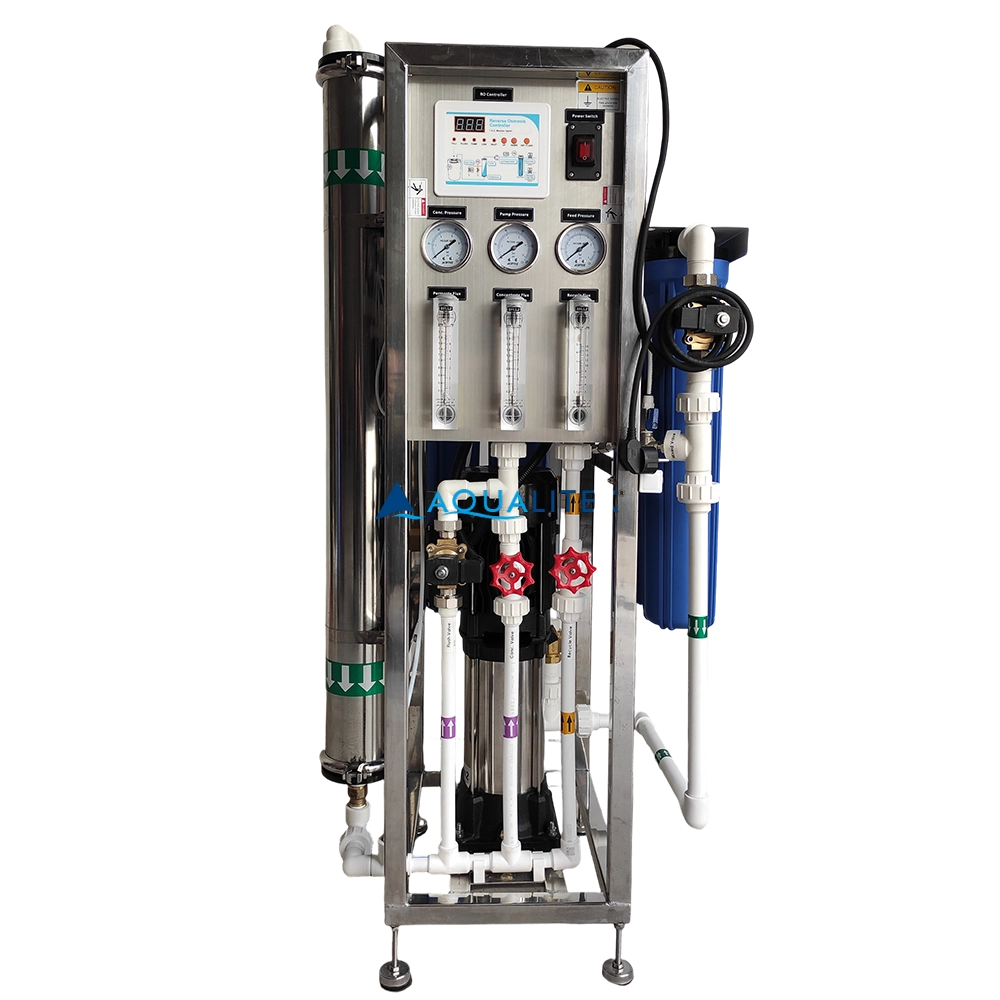
Our 500 LPH Reverse Osmosis (RO) System is engineered to provide high-quality purified water for commercial applications. Designed with advanced RO technology, durable components, and a user-friendly interface, this system ensures consistent performance, low maintenance, and long-term reliability.
With its compact design and robust skid-mounted frame, it’s an excellent choice for businesses that demand efficiency and quality in water purification.
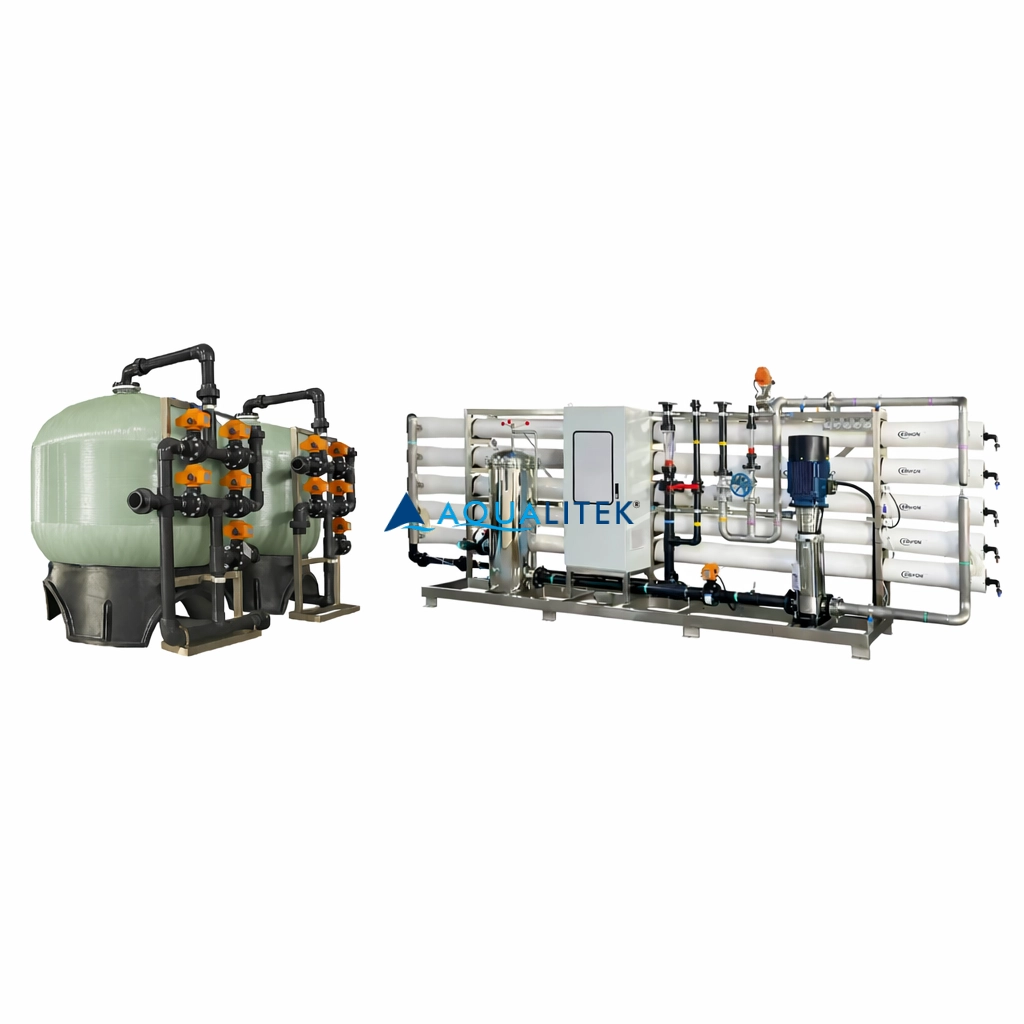
30TPH Industrial Reverse Osmosis (RO) System designed for industrial and municipal water treatment. High salt rejection, energy-efficient design, PLC control, and customizable configuration.
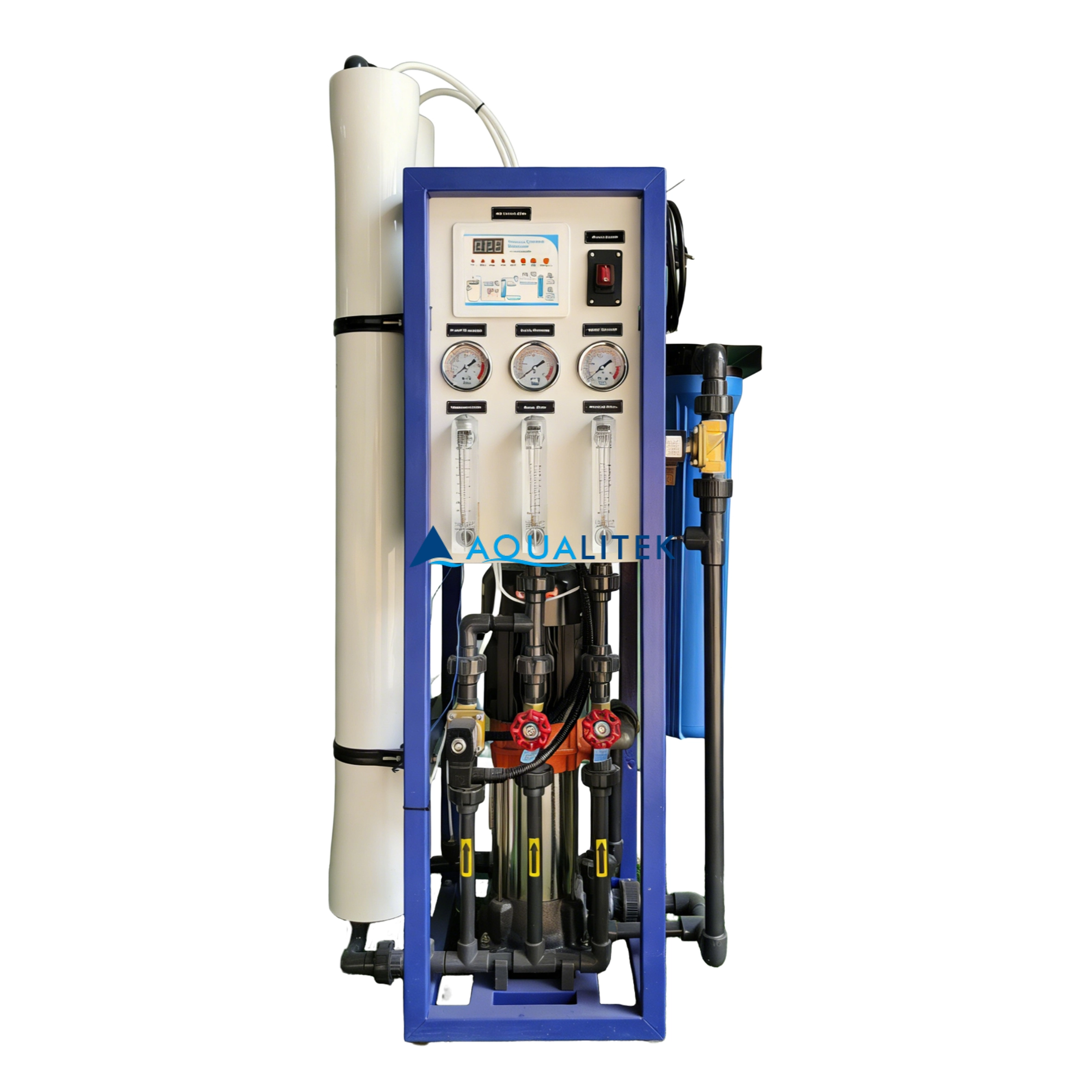
AQUALITEK's 500LPH Panel Mounted Reverse Osmosis Water Purification System delivers reliable 500 LPH RO water production. This compact industrial reverse osmosis unit is ideal for small scale industrial RO needs, ensuring efficient and high-quality purified water in a space-saving design.
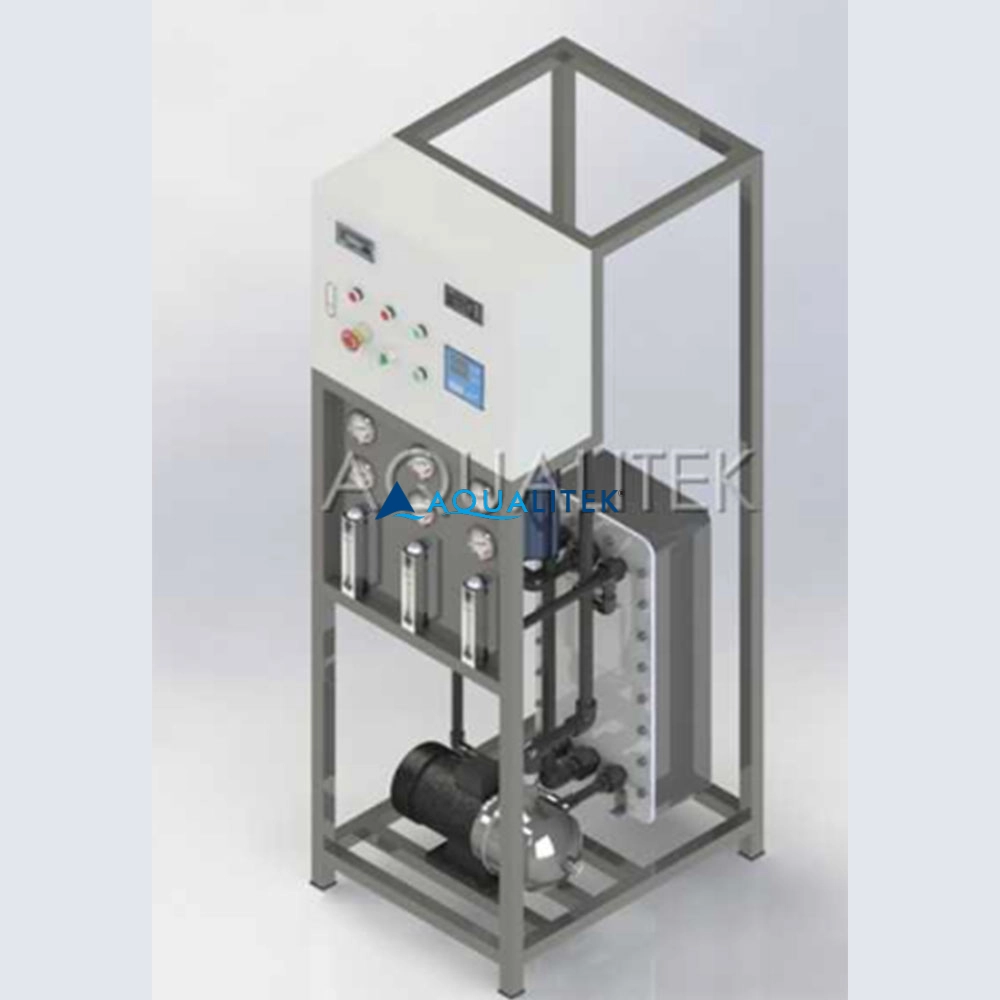
Electrodeionization (EDI) system is an advanced water purification technology that combines ion exchange and electrochemical processes to produce ultra-pure water. Unlike traditional deionization methods, which rely on chemical regeneration, EDI utilizes electric fields to drive the movement of ions through ion-exchange membranes, effectively removing dissolved salts and other ionic contaminants.
This process is continuous and does not require the use of chemicals for regeneration, making it an environmentally friendly and cost-effective solution for producing high-quality deionized water. EDI systems are widely used in applications requiring ultrapure water, such as in the pharmaceutical, semiconductor, power generation, and biotechnology industries, as well as for laboratory use.
By offering high-purity water without the need for chemical regeneration, EDI systems provide a sustainable, efficient, and reliable alternative to traditional deionization methods, making them an ideal choice for industries where water quality and process control are critical.
© 2026 AQUALITEK. All rights reserved.
AQUALITEK- Aimee Hoo
AQUALITEK - Aimee Hoo