




Best Guide: Can the Recovery Rate of an RO System Be Arbitrarily Increased?| Insights by AQUALITEK
Many operators hope to increase the recovery rate of an RO system to reduce wastewater and improve efficiency. However, raising recovery is not unlimited—beyond certain thresholds it harms membrane performance, increases fouling risk, and shortens system lifespan. This guide explains the principles, limitations, risks, and best practices for setting an appropriate RO recovery rate.
- 1. What Is RO System Recovery Rate?
- 2. Can the Recovery Rate Be Arbitrarily Increased?
- 3. What Happens When Recovery Rate Is Too High?
- (1) Accelerated Membrane Scaling
- (2) Increased Fouling
- (3) Higher Osmotic Pressure → Higher Energy Consumption
- (4) Reduced Permeate Quality
- (5) Risk of Membrane Damage
- 4. What Determines the Maximum Safe Recovery Rate?
- (1) Feedwater salinity
- (2) Scaling tendency (LSI/S&DSI)
- (3) Silica concentration
- (4) Membrane array design
- (5) Antiscalant selection
- 5. Practical Recovery Rate Guidelines
- 6. How to Increase Recovery Safely
- (1) Improve pretreatment
- (2) Use high-quality antiscalant
- (3) Optimize membrane array design
- (4) Monitor key indices
- (5) Implement periodic chemical cleaning
- 7. Conclusion: Recovery Should Be Optimized, Not Maximized
1. What Is RO System Recovery Rate?
Recovery rate is the percentage of feedwater that becomes permeate.
Recovery (%) = Permeate Flow ÷ Feed Flow × 100%
Example:
If 10 m³/h feed → 6 m³/h permeate, recovery = 60%.
A higher recovery rate means:
•Less wastewater
•Lower feedwater consumption
•Lower operating costs
But higher is not always better.
2. Can the Recovery Rate Be Arbitrarily Increased?
No.
The RO recovery rate cannot be increased arbitrarily.
RO membranes operate based on osmotic pressure and concentration dynamics. The higher the recovery:
•The more concentrated salts and foulants become in the brine
•The higher the risk of scaling, fouling, and membrane damage
•The greater the pressure required to maintain flux
Each RO system has a safe recovery limit, determined by:
•Feedwater TDS
•Scaling indices (LSI, S&DSI, CSI)
•SDI/turbidity
•Hardness and silica levels
•System configuration (1-stage, 2-stage, 2-pass, etc.)
•Antiscalant dosing capability
•Operating pressure limits
3. What Happens When Recovery Rate Is Too High?
(1) Accelerated Membrane Scaling
High recovery concentrates:
•Calcium carbonate
•Calcium sulfate
•Barium/strontium sulfate
•Silica
•Iron/manganese oxides
Once scaling occurs, membrane flux drops rapidly.
(2) Increased Fouling
High recovery increases:
•Suspended solids concentration
•Organic fouling
•Biofouling
This results in more frequent chemical cleaning and decreased lifespan.
(3) Higher Osmotic Pressure → Higher Energy Consumption
More concentration = higher osmotic pressure.
Therefore the high-pressure pump must work harder, increasing:
•Power consumption
•Operating pressure
•Equipment wear
(4) Reduced Permeate Quality
High recovery increases ion concentration at the membrane surface, causing:
•Lower rejection
•Higher conductivity
•More permeate fluctuations
(5) Risk of Membrane Damage
Extreme recovery may cause:
•Physical stress
•Fouling that cannot be cleaned
•Irreversible performance loss
4. What Determines the Maximum Safe Recovery Rate?
(1) Feedwater salinity
•Brackish water RO: typically 50–80%
•Seawater RO: 35–45%
•High-silica or high-hardness water: much lower
(2) Scaling tendency (LSI/S&DSI)
Systems with high LSI require:
•Lower recovery
•More antiscalant
•Stronger softening pretreatment
(3) Silica concentration
Silica-based scaling is often irreversible; recovery must remain safely controlled.
(4) Membrane array design
Stage configurations limit how much pressure and concentration the system can handle.
(5) Antiscalant selection
Advanced formulations allow higher recoveries, but never unlimited.
5. Practical Recovery Rate Guidelines
|
Water Type |
Typical Safe Recovery |
|
Surface water (clean) |
60–75% |
|
Groundwater (hardness) |
50–70% |
|
Brackish water |
50–80% |
|
High-silica feed |
40–60% |
|
Seawater |
35–45% |
|
Wastewater RO |
50–80% (depends heavily on pretreatment) |
Always base the value on lab-scale analysis and design calculations.
6. How to Increase Recovery Safely
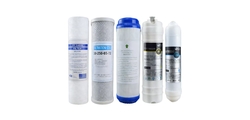
(1) Improve pretreatment
•Multi-media filtration
•UF membrane
•Activated carbon
•Softening
•Iron/manganese removal
Cleaner feedwater = more stable recovery.
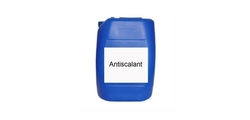
(2) Use high-quality antiscalant
Choose a formulation based on:
•Calcium
•Sulfate
•Silica
•Iron content
(3) Optimize membrane array design
•Add a second stage
•Use hybrid configurations
•Reduce feed flow per membrane element
(4) Monitor key indices
•ΔP (differential pressure)
•Normalized permeate flow
•Scaling indices
•Conductivity trends
(5) Implement periodic chemical cleaning
Before fouling becomes severe.
7. Conclusion: Recovery Should Be Optimized, Not Maximized
Increasing recovery reduces wastewater and saves money, but excessive recovery leads to irreversible damage.
The correct approach is to aim for a balanced, stable, and long-term economically optimal recovery, not the maximum possible value.



Request More Information or Expert Advice
Share a few details, and we’ll provide deeper insights, tailored suggestions, or product support.
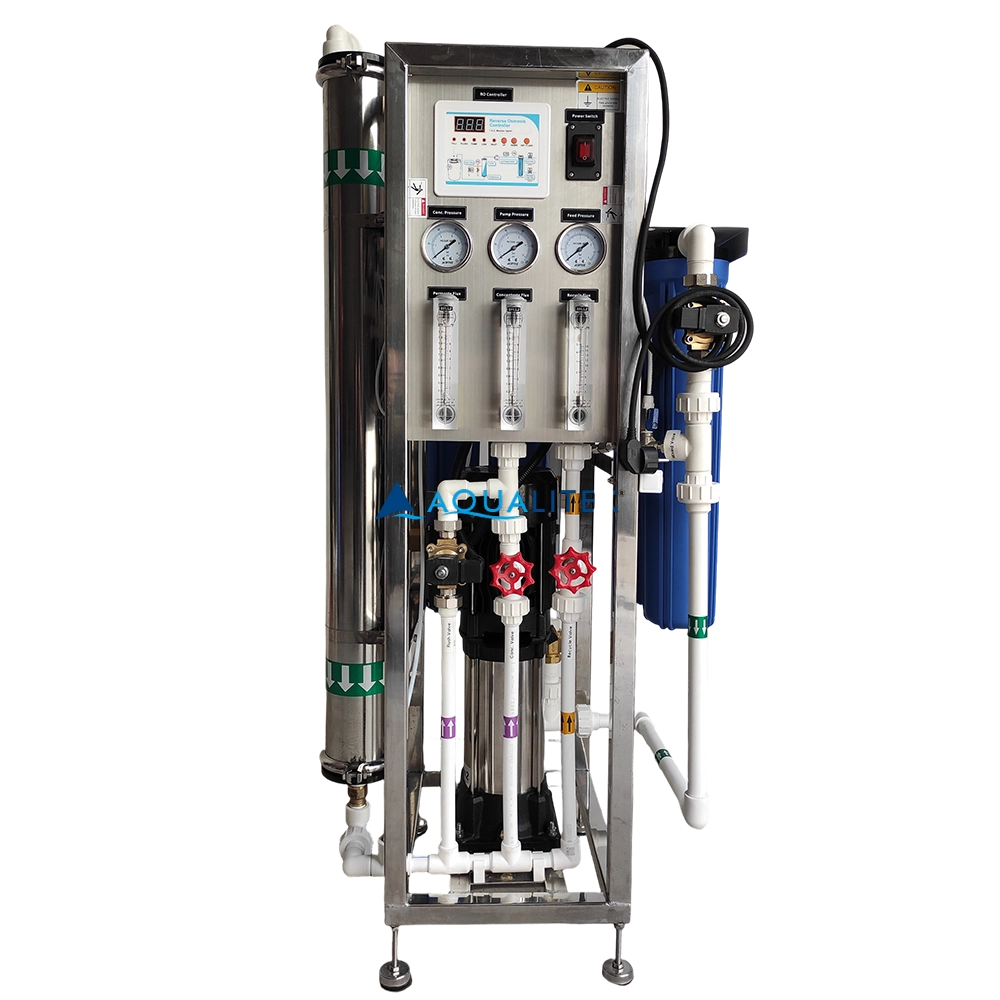
Our 500 LPH Reverse Osmosis (RO) System is engineered to provide high-quality purified water for commercial applications. Designed with advanced RO technology, durable components, and a user-friendly interface, this system ensures consistent performance, low maintenance, and long-term reliability.
With its compact design and robust skid-mounted frame, it’s an excellent choice for businesses that demand efficiency and quality in water purification.
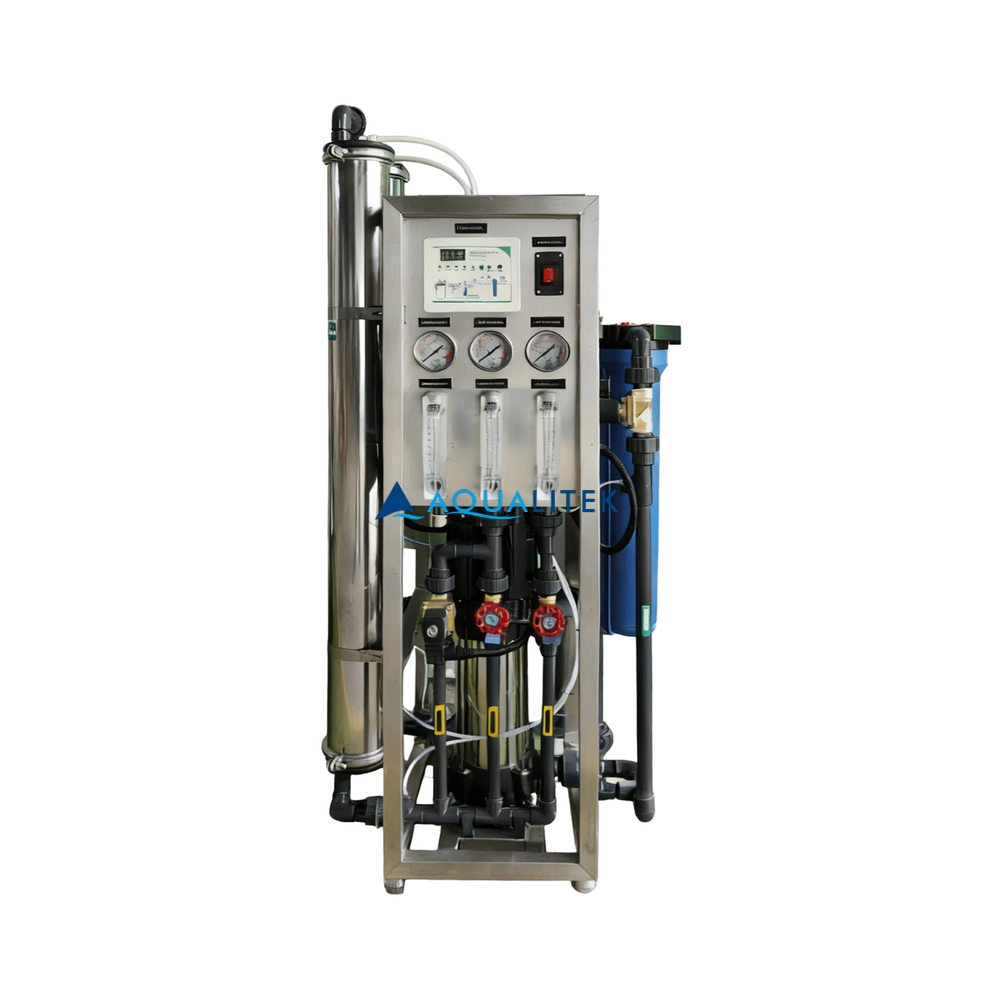
TWV series Reverse Osmosis (RO) systems are pre-engineered and pre-assembled units with 2.5”/4” membrane housings(single element type)for tap water(lower TDS).They are designed for overall superior performance, high recovery rates and offer great savings with low maintenance and operation costs.
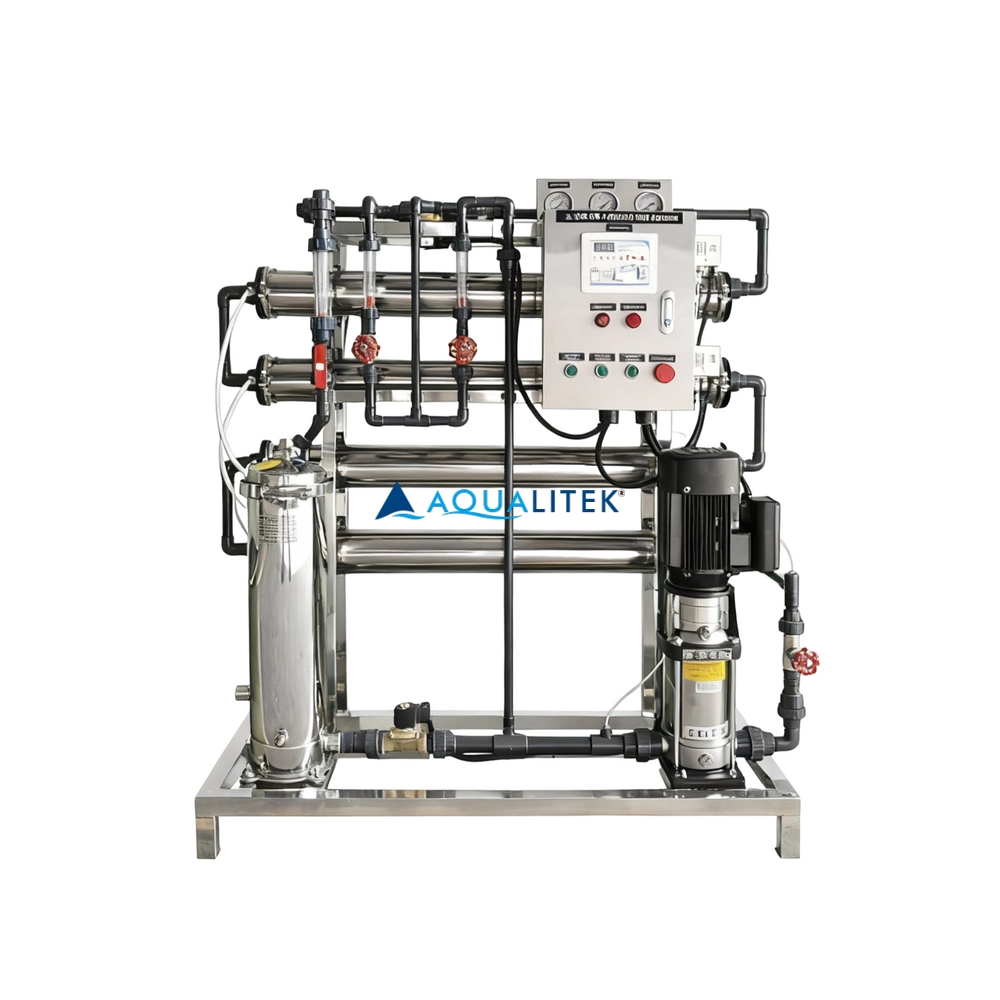
TWF series Reverse Osmosis (RO) systems are pre-engineered and pre-assembled units with 4” membrane housings(multiple elements type) for tap water(lower TDS) .The medium large volumes can help meet your a variety of commercial and industrial applications. They are designed for overall superior performance, high recovery rates and offer great savings with low maintenance and operation costs.

TWE series Reverse Osmosis (RO) systems are pre-engineered and pre-assembled units with 8” membrane housings for tap water (lower TDS). The large volumes can help meet your a variety of industrial applications. They are designed for overall superior performance, high recovery rates and offer great savings with low maintenance and operation costs.
© 2026 AQUALITEK. All rights reserved.
AQUALITEK- Aimee Hoo
AQUALITEK - Aimee Hoo