




Which Direction Should RO Membrane Markings Face During Installation?| Insights by AQUALITEK
Incorrect orientation of an RO membrane element during installation can lead to internal leakage, reduced salt rejection, and even mechanical damage. This Best-practice guide clearly explains which side of the membrane markings should face, why it matters, and how to avoid common installation mistakes.
- Correct Orientation: Which Side Should the Markings Face?
- Why the Marked End Must Face the Feed Side
- 1. The Brine Seal Is Designed for One-Way Flow
- 2. Pressure Forces the Brine Seal to Expand Correctly
- 3. Prevents Mechanical Damage During Operation
- What Happens If the Membrane Is Installed Backwards?
- Conclusion
Correct Orientation: Which Side Should the Markings Face?
Short Answer (Best Practice)
The end of the RO membrane element with printed markings should face the feed water inlet (upstream side) of the membrane housing.
This rule applies to:
•Most standard 2.5", 4", and 8" spiral-wound RO membrane elements
•Leading brands such as Dow (DuPont), Hydranautics, Toray, LG, Vontron, Huitong, and similar manufacturers
Why the Marked End Must Face the Feed Side
1. The Brine Seal Is Designed for One-Way Flow
The membrane’s brine seal is installed near the marked end. Its purpose is to:
•Prevent feed water from bypassing the membrane
•Force water to flow through the membrane envelope
If installed backwards:
•Feed water bypasses the membrane
•Salt rejection drops sharply
•System recovery and performance collapse
2. Pressure Forces the Brine Seal to Expand Correctly
When installed correctly:
•Feed pressure pushes the brine seal outward
•A tight seal forms against the pressure vessel wall
If reversed:
•Pressure collapses the seal inward
•Internal leakage occurs immediately
3. Prevents Mechanical Damage During Operation
Incorrect orientation can cause:
•Brine seal tearing
•Telescoping of membrane leaves
•Uneven pressure distribution
•Premature membrane failure
How to Identify the Marked End Correctly
Typical markings include:
•Manufacturer name or logo
•Model number
•Serial number
•Flow direction arrow (on some models)
Rule of Thumb:
If you can read the label clearly, that end usually faces the feed inlet.
What Happens If the Membrane Is Installed Backwards?
|
Issue |
Impact |
|
Internal bypass |
High permeate conductivity |
|
Poor rejection |
Water quality failure |
|
Reduced pressure drop |
Misleading diagnostics |
|
Brine seal damage |
Permanent membrane damage |
|
Shortened membrane life |
Increased replacement cost |
Once the brine seal is damaged, cleaning cannot fix the problem.
Installation Best Practices (Highly Recommended)
•Always lubricate O-rings and brine seals with food-grade glycerin
•Insert membranes slowly to avoid rolling or tearing seals
•Confirm feed inlet direction before insertion
•Follow the pressure vessel manufacturer’s flow direction markings
•Never force a membrane into the housing
Special Notes for Multi-Element Pressure Vessels
•All membranes must face the same direction
•Feed spacer orientation must be consistent
•Incorrect orientation of even one element affects the entire vessel
Conclusion
When installing an RO membrane element, the end with printed markings must always face the feed water inlet. This ensures proper sealing, prevents internal leakage, and protects the membrane from irreversible damage.
Correct installation orientation is one of the simplest yet most critical steps in RO system reliability.


Request More Information or Expert Advice
Share a few details, and we’ll provide deeper insights, tailored suggestions, or product support.
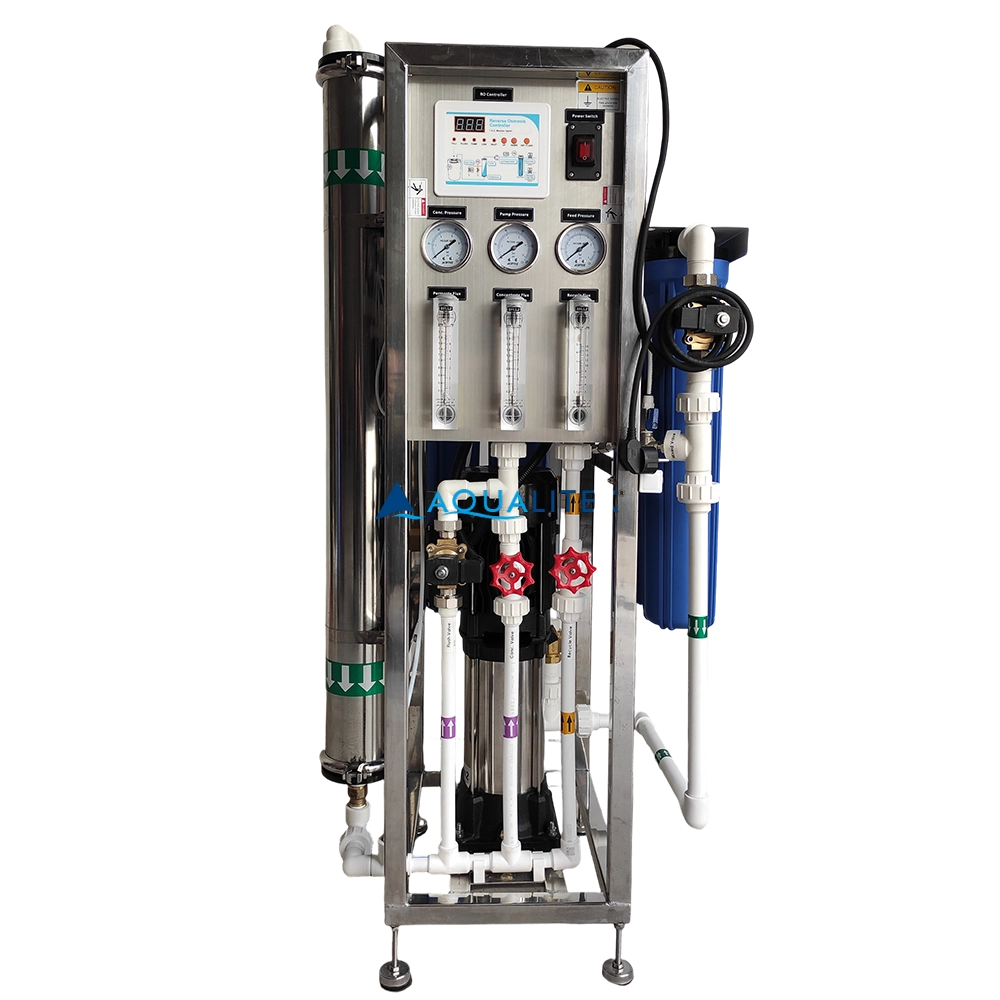
Our 500 LPH Reverse Osmosis (RO) System is engineered to provide high-quality purified water for commercial applications. Designed with advanced RO technology, durable components, and a user-friendly interface, this system ensures consistent performance, low maintenance, and long-term reliability.
With its compact design and robust skid-mounted frame, it’s an excellent choice for businesses that demand efficiency and quality in water purification.
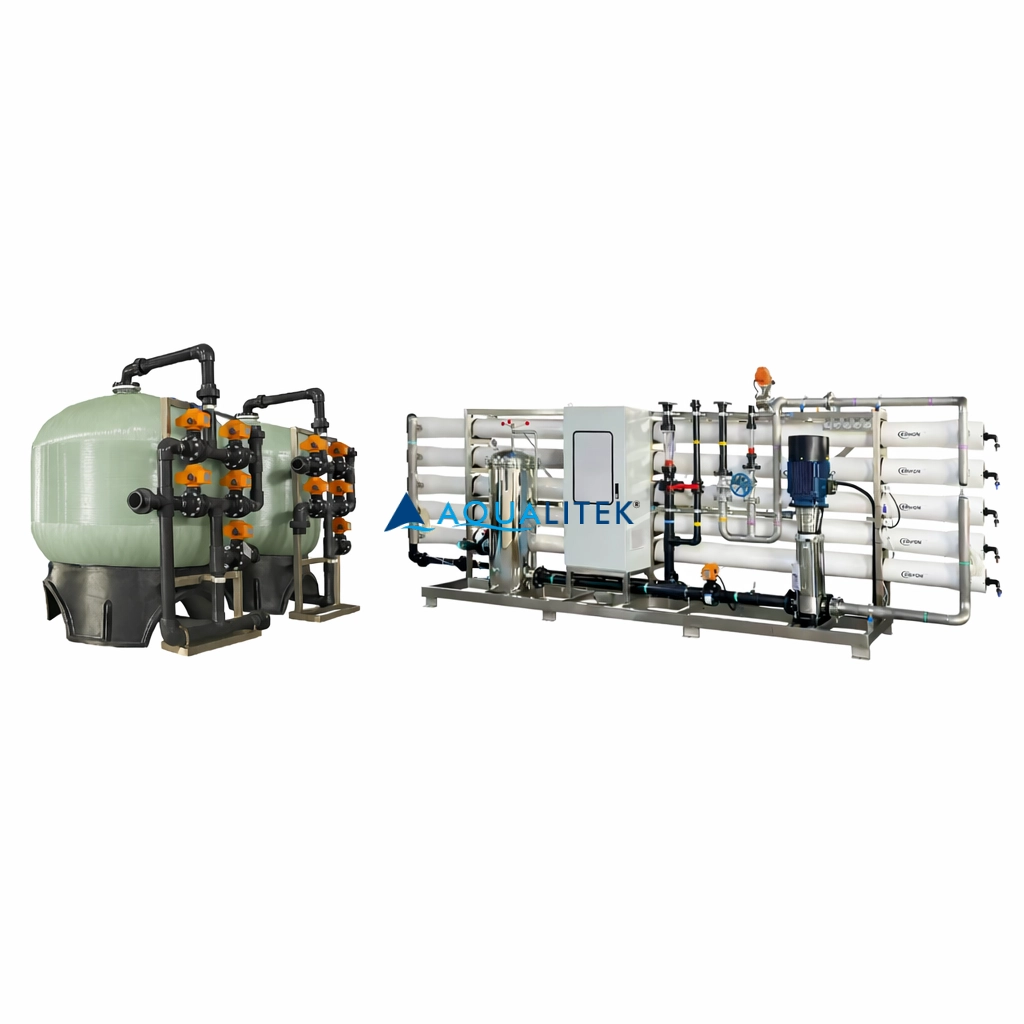
30TPH Industrial Reverse Osmosis (RO) System designed for industrial and municipal water treatment. High salt rejection, energy-efficient design, PLC control, and customizable configuration.
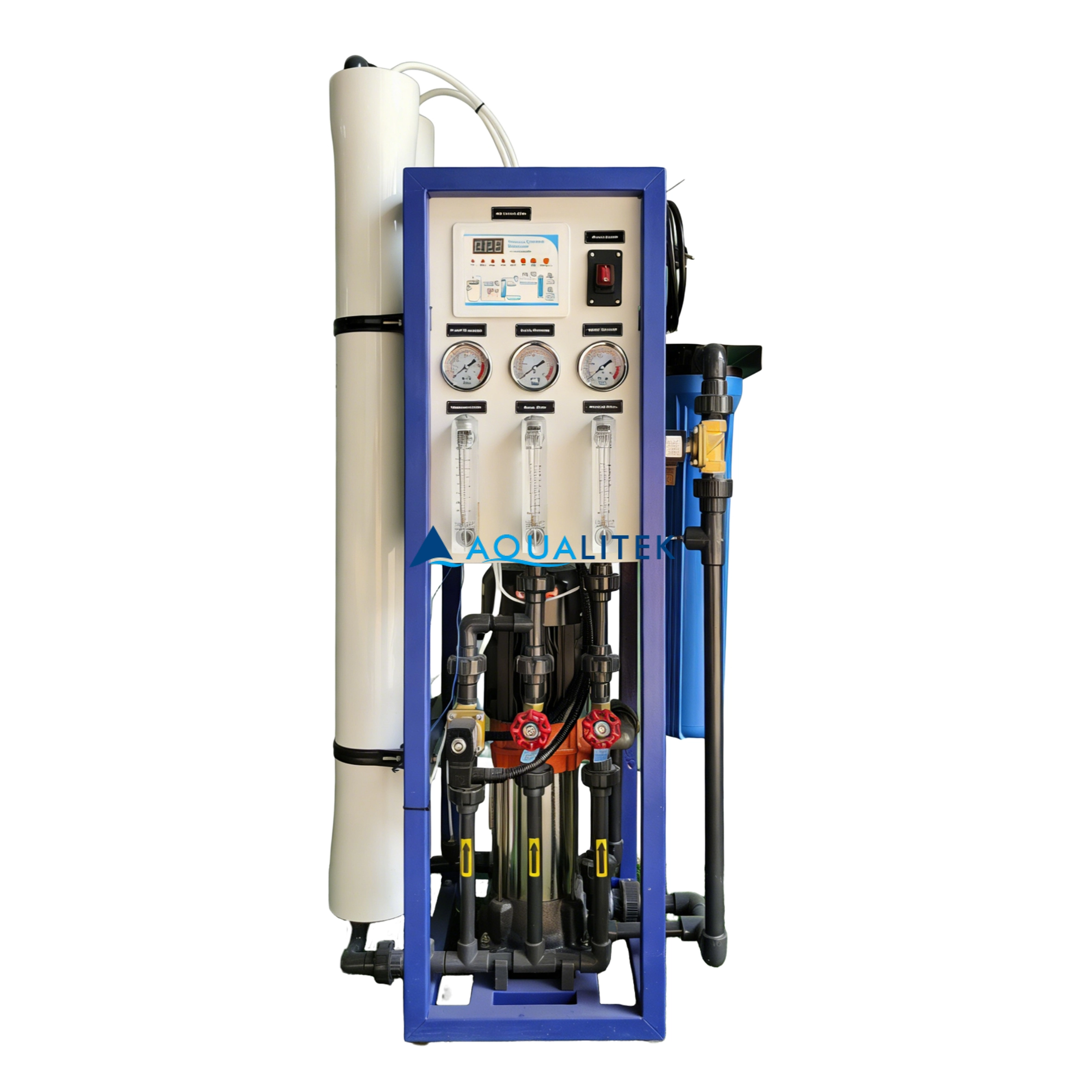
AQUALITEK's 500LPH Panel Mounted Reverse Osmosis Water Purification System delivers reliable 500 LPH RO water production. This compact industrial reverse osmosis unit is ideal for small scale industrial RO needs, ensuring efficient and high-quality purified water in a space-saving design.
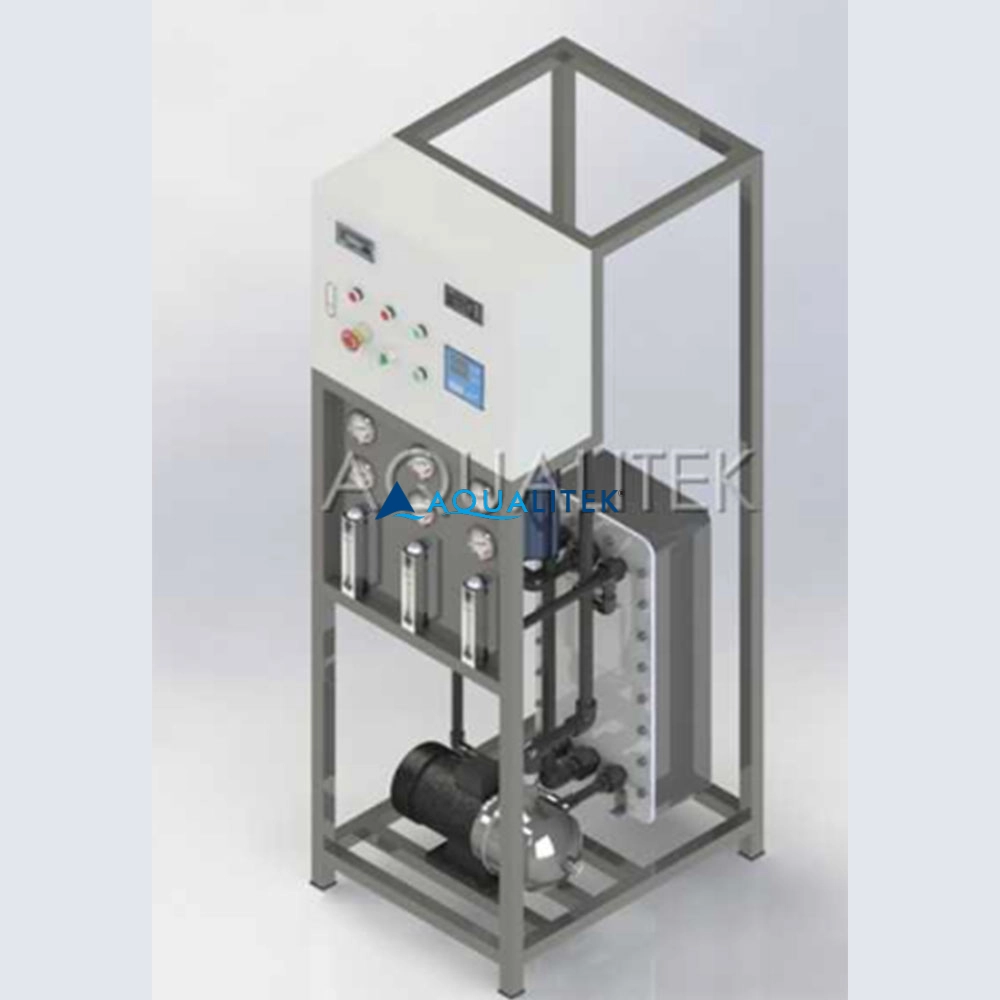
Electrodeionization (EDI) system is an advanced water purification technology that combines ion exchange and electrochemical processes to produce ultra-pure water. Unlike traditional deionization methods, which rely on chemical regeneration, EDI utilizes electric fields to drive the movement of ions through ion-exchange membranes, effectively removing dissolved salts and other ionic contaminants.
This process is continuous and does not require the use of chemicals for regeneration, making it an environmentally friendly and cost-effective solution for producing high-quality deionized water. EDI systems are widely used in applications requiring ultrapure water, such as in the pharmaceutical, semiconductor, power generation, and biotechnology industries, as well as for laboratory use.
By offering high-purity water without the need for chemical regeneration, EDI systems provide a sustainable, efficient, and reliable alternative to traditional deionization methods, making them an ideal choice for industries where water quality and process control are critical.
© 2026 AQUALITEK. All rights reserved.
AQUALITEK- Aimee Hoo
AQUALITEK - Aimee Hoo