




What Must Be Confirmed Before Adding Chemicals to an RO System| Insights by AQUALITEK
Adding scale inhibitors or bactericides without proper verification can cause irreversible RO membrane damage and system failure. This Best-practice guide explains the critical checks that must be completed before dosing any chemicals into an RO system.
- Why Pre-Confirmation Is Critical
- Mandatory Confirmations Before Adding Any Chemicals
- 1. Confirm Membrane Chemical Compatibility
- 2. Confirm the Purpose of Chemical Dosing
- 3. Confirm Actual Water Quality Data (Not Assumptions)
- 4. Confirm Correct Chemical Type and Grade
- 5. Confirm Proper Dosing Location
- 6. Confirm Dosing Equipment Functionality
- 7. Confirm No Incompatible Chemicals Are Present
- 8. Confirm Emergency Shutdown and Monitoring Are Active
- 9. Confirm Manufacturer and Supplier Documentation
- Conclusion
Why Pre-Confirmation Is Critical
RO membranes are chemically sensitive.
Incorrect chemical selection, concentration, or dosing location can result in:
•Permanent membrane oxidation
•Loss of salt rejection
•Accelerated fouling
•Safety and compliance risks
Therefore, chemical addition must never be done blindly.
Mandatory Confirmations Before Adding Any Chemicals
1. Confirm Membrane Chemical Compatibility
Must Verify
•Membrane material (polyamide, CTA, etc.)
•Maximum allowable oxidant exposure
•Acceptable pH range (continuous vs. CIP)
•Temperature limits
Why It Matters
Many membranes:
•Cannot tolerate chlorine or oxidants
•Have strict pH and temperature constraints
Always check the membrane manufacturer’s chemical compatibility chart.
2. Confirm the Purpose of Chemical Dosing
Clearly Define the Goal
•Scale inhibition?
•Biofouling control?
•Iron or silica stabilization?
•Cleaning support?
Why It Matters
Using:
•Biocide when scaling is the problem
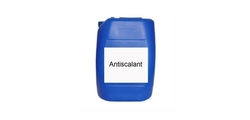
•Antiscalant when biological fouling dominates
…will not solve the issue and may worsen fouling.
3. Confirm Actual Water Quality Data (Not Assumptions)
Required Data
•Hardness (Ca²⁺, Mg²⁺)
•Alkalinity
•TDS and conductivity
•pH and temperature
•Iron, manganese, silica
•SDI / turbidity
Why It Matters
Chemical dosing rates are calculated, not guessed.
Outdated or incorrect water analysis leads to:
•Under-dosing → scaling
•Over-dosing → fouling and membrane damage
4. Confirm Correct Chemical Type and Grade
Verify
•Chemical is RO-compatible
•Free of oxidizing agents
•Approved for potable or industrial use (as required)
•Shelf life and storage condition
Common Mistake
Using:
•Cooling tower chemicals
•Boiler treatment chemicals
•Unknown generic biocides
These are often not membrane-safe.
5. Confirm Proper Dosing Location
Best Practices
•Dose upstream of cartridge filters, not directly before the membrane
•Ensure adequate mixing time
•Avoid dead zones
Why It Matters
Poor dosing location causes:
•Local overdosing
•Chemical shock to membranes
•Uneven protection
6. Confirm Dosing Equipment Functionality
Check
•Dosing pump calibration
•Flow-paced vs. time-based dosing
•Injection quill condition
•Check valves and backflow prevention
A perfectly selected chemical can still fail if dosing equipment is faulty.
7. Confirm No Incompatible Chemicals Are Present
Examples of Dangerous Combinations
•Biocide + reducing agent
•Oxidant + antiscalant
•Chlorine + polyamide membranes
Mixing incompatible chemicals can:
•Generate heat or gas
•Destroy membranes instantly
•Create safety hazards
8. Confirm Emergency Shutdown and Monitoring Are Active
Before Dosing
Ensure:
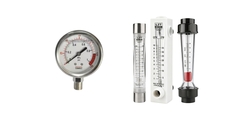
•Conductivity alarms are active
•Flow and pressure monitoring is operational
•Operators are present or notified
This allows immediate response if abnormal behavior occurs.
9. Confirm Manufacturer and Supplier Documentation
Required Documents
•MSDS / SDS
•Technical Data Sheet (TDS)
•Application guidelines
•Recommended dosage range
Never rely solely on verbal recommendations.
What Should Never Be Done
❌ Never add chemicals without compatibility confirmation
❌ Never increase dosage to “see if it works”
❌ Never mix chemicals in the feed line
❌ Never dose upstream of membranes without mixing verification
Best Practice Summary
✔ Confirm membrane compatibility
✔ Verify real-time water quality
✔ Choose the correct chemical type
✔ Verify dosing location and equipment
✔ Ensure monitoring and safety interlocks
Conclusion
Before adding any chemical—whether scale inhibitors, bactericides, or specialty treatments—operators must confirm compatibility, purpose, dosage, location, and monitoring readiness. Chemical dosing is a precision task, not a trial-and-error process.
Correct pre-confirmation protects membranes, stabilizes performance, and prevents irreversible system damage.



Request More Information or Expert Advice
Share a few details, and we’ll provide deeper insights, tailored suggestions, or product support.
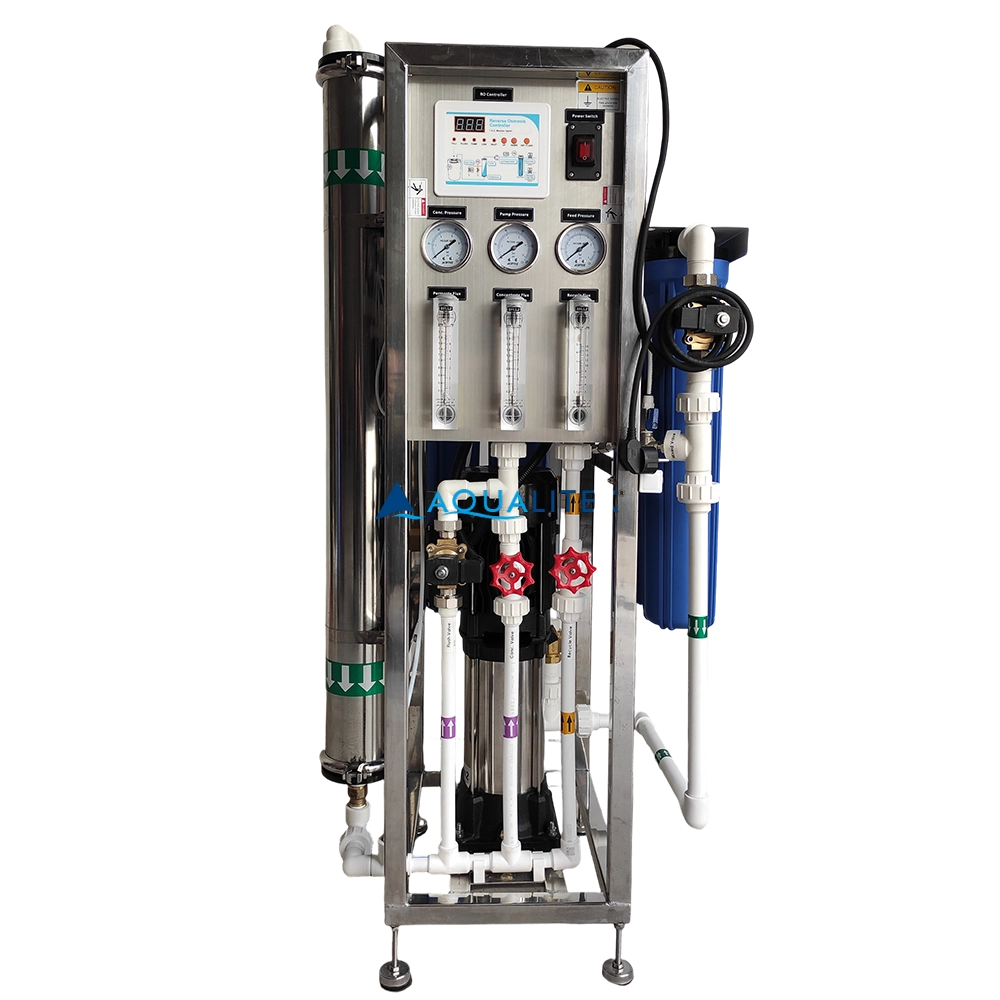
Our 500 LPH Reverse Osmosis (RO) System is engineered to provide high-quality purified water for commercial applications. Designed with advanced RO technology, durable components, and a user-friendly interface, this system ensures consistent performance, low maintenance, and long-term reliability.
With its compact design and robust skid-mounted frame, it’s an excellent choice for businesses that demand efficiency and quality in water purification.
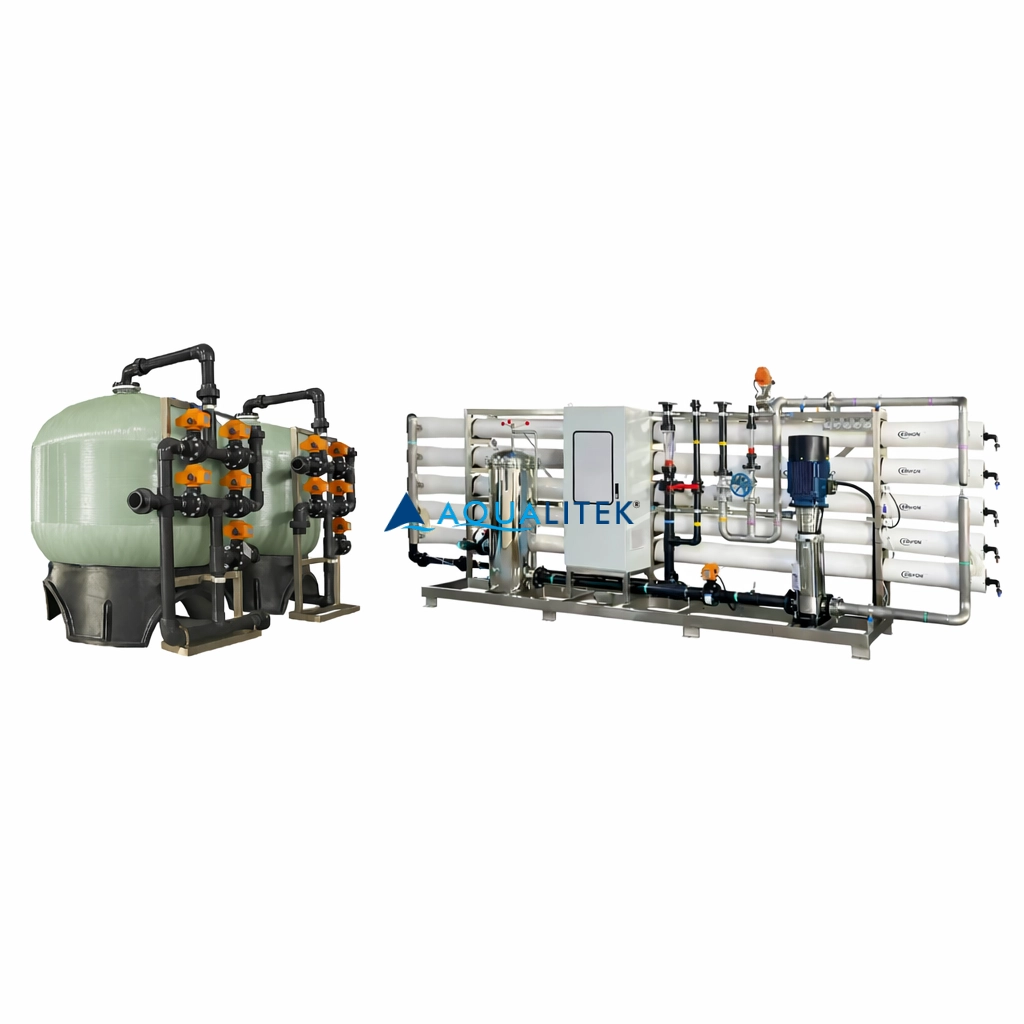
30TPH Industrial Reverse Osmosis (RO) System designed for industrial and municipal water treatment. High salt rejection, energy-efficient design, PLC control, and customizable configuration.
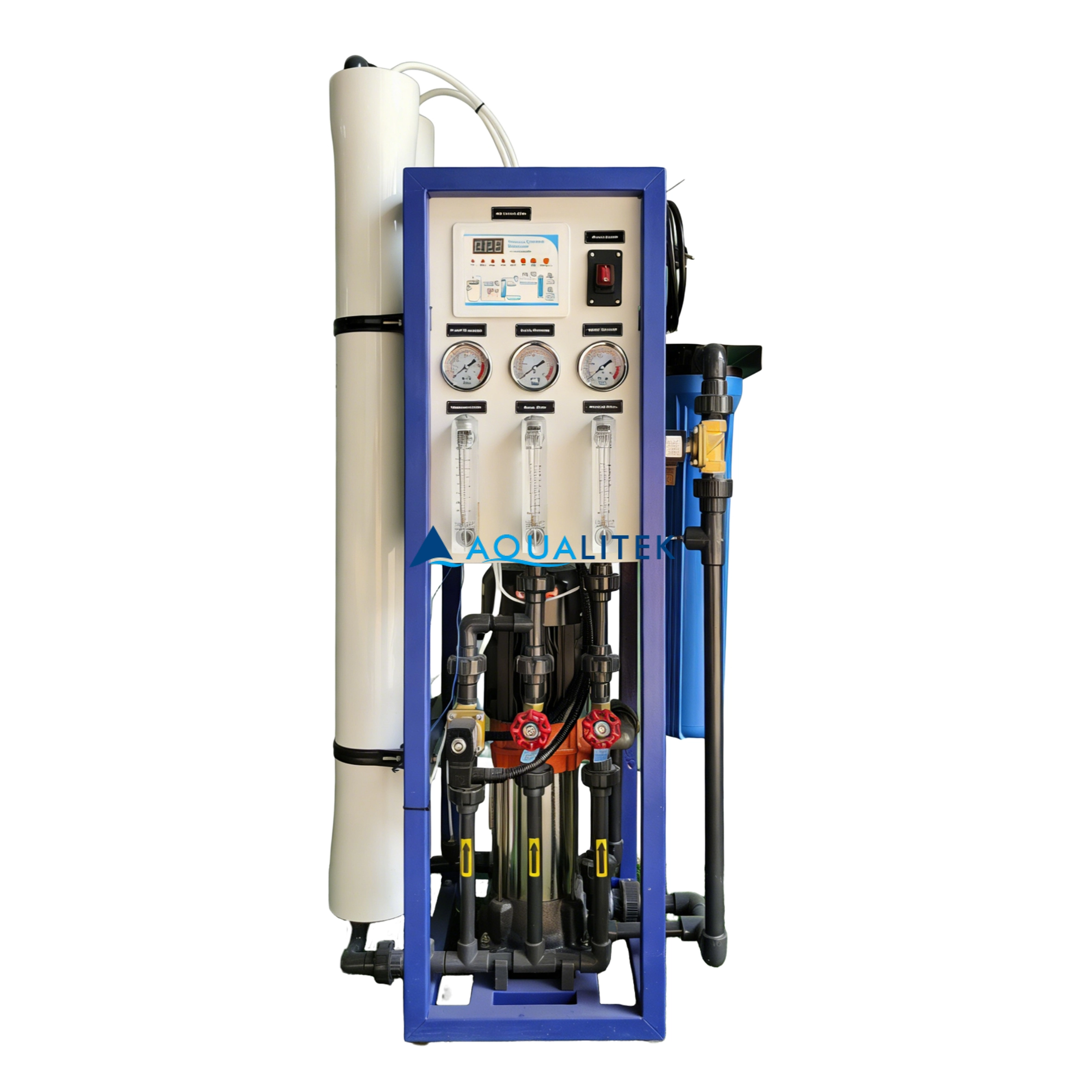
AQUALITEK's 500LPH Panel Mounted Reverse Osmosis Water Purification System delivers reliable 500 LPH RO water production. This compact industrial reverse osmosis unit is ideal for small scale industrial RO needs, ensuring efficient and high-quality purified water in a space-saving design.
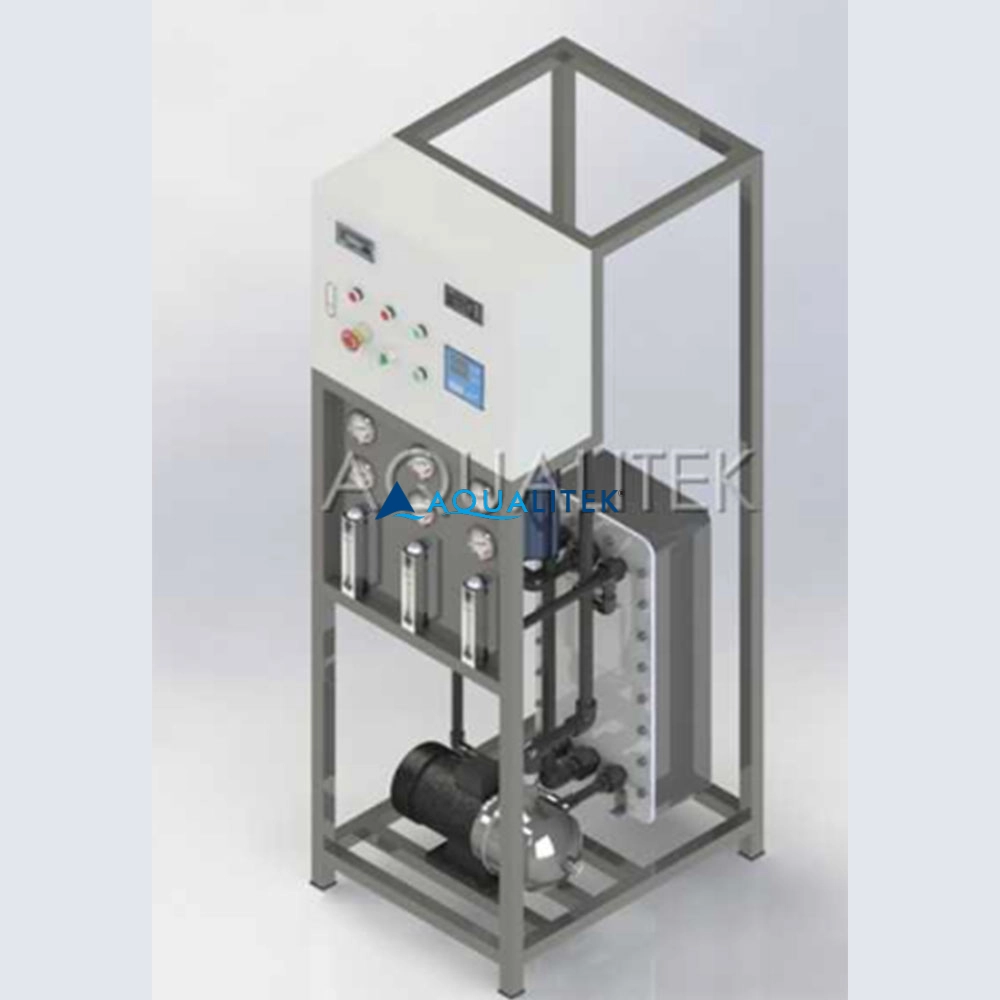
Electrodeionization (EDI) system is an advanced water purification technology that combines ion exchange and electrochemical processes to produce ultra-pure water. Unlike traditional deionization methods, which rely on chemical regeneration, EDI utilizes electric fields to drive the movement of ions through ion-exchange membranes, effectively removing dissolved salts and other ionic contaminants.
This process is continuous and does not require the use of chemicals for regeneration, making it an environmentally friendly and cost-effective solution for producing high-quality deionized water. EDI systems are widely used in applications requiring ultrapure water, such as in the pharmaceutical, semiconductor, power generation, and biotechnology industries, as well as for laboratory use.
By offering high-purity water without the need for chemical regeneration, EDI systems provide a sustainable, efficient, and reliable alternative to traditional deionization methods, making them an ideal choice for industries where water quality and process control are critical.
© 2026 AQUALITEK. All rights reserved.
AQUALITEK- Aimee Hoo
AQUALITEK - Aimee Hoo