




Best Corrosion-Resistant Materials for Pipes and Components in Seawater Desalination Systems| Insights by AQUALITEK
This comprehensive guide explains the most commonly used corrosion-resistant materials for pipes and components in seawater desalination systems, including their advantages, limitations, and selection criteria, helping engineers and project owners choose the optimal materials for long-term stable operation.
- Introduction
- Why Corrosion Resistance Is Critical in Seawater Desalination
- Most Commonly Used Corrosion-Resistant Materials
- 1. Duplex Stainless Steel (DSS & SDSS)
- 2. Titanium and Titanium Alloys
- 3. Glass Fiber Reinforced Plastic (FRP / GRP)
- 4. High-Density Polyethylene (HDPE)
- 5. Copper-Nickel Alloys (Cu-Ni 90/10, 70/30)
- 6. Rubber-Lined Carbon Steel
- Comparison of Common Materials
- Material Selection Principles for Seawater Desalination Systems
- 1. Operating Pressure
- 2. Corrosion Severity
- 3. Life Cycle Cost (LCC)
- 4. Installation Conditions
- 5. Maintenance Requirements
- Future Trends in Corrosion-Resistant Materials
- Conclusion
Introduction
Seawater desalination systems operate in one of the most aggressive industrial environments. High salinity, dissolved oxygen, microorganisms, temperature fluctuations, and high operating pressures combine to create severe corrosion risks for pipes, valves, pumps, and pressure vessels.
Material selection is therefore a critical engineering decision. Choosing the right corrosion-resistant materials can significantly improve system reliability, extend service life, reduce maintenance costs, and enhance overall economic performance.
In this article, we provide a comprehensive overview of the most commonly used corrosion-resistant materials for seawater desalination systems, their performance characteristics, application scenarios, and selection principles.
Why Corrosion Resistance Is Critical in Seawater Desalination
Seawater typically contains:
•3.5% dissolved salts
•High chloride ion concentration
•Dissolved oxygen
•Marine microorganisms
•Suspended solids
These factors cause:
•Pitting corrosion
•Crevice corrosion
•Stress corrosion cracking
•Microbiologically influenced corrosion (MIC)
Without proper material selection, components can rapidly degrade, leading to:
•System leakage
•Reduced performance
•Frequent shutdowns
•High maintenance and replacement costs
Most Commonly Used Corrosion-Resistant Materials
1. Duplex Stainless Steel (DSS & SDSS)
Typical Grades: 2205, 2507 (Super Duplex)
Advantages:
•Excellent resistance to chloride-induced corrosion
•High mechanical strength
•Good resistance to pitting and crevice corrosion
•Long service life
Applications:
•High-pressure pipelines
•Pump casings
•Valves
•High-pressure manifolds
Limitations:
•High material cost
•Requires skilled welding techniques
Best Use Case:
High-pressure RO systems and critical seawater handling components.
2. Titanium and Titanium Alloys
Common Grades: Grade 2, Grade 5
Advantages:
•Outstanding corrosion resistance in seawater
•Excellent resistance to biofouling
•Extremely long service life (30+ years)
Applications:
•Heat exchangers
•Condensers
•Evaporators
•Critical piping
Limitations:
•Very high cost
•Limited availability
Best Use Case:
Premium seawater desalination projects requiring maximum reliability.
3. Glass Fiber Reinforced Plastic (FRP / GRP)
Advantages:
•Excellent corrosion resistance
•Lightweight
•Low installation cost
•Smooth internal surface reduces fouling
Applications:
•Intake pipelines
•Pretreatment pipelines
•Brine discharge pipelines
Limitations:
•Lower mechanical strength than metals
•Limited temperature resistance
Best Use Case:
Large-diameter pipelines and low-to-medium pressure systems.
4. High-Density Polyethylene (HDPE)
Advantages:
•Strong chemical resistance
•Flexible and impact-resistant
•Long service life
•Low installation cost
Applications:
•Seawater intake pipelines
•Brine discharge pipelines
•Low-pressure pipelines
Limitations:
•Limited pressure capacity
•Temperature constraints
Best Use Case:
Marine pipelines and large-scale intake/discharge systems.
5. Copper-Nickel Alloys (Cu-Ni 90/10, 70/30)
Advantages:
•Excellent resistance to seawater corrosion
•Natural anti-fouling properties
•Good thermal conductivity
Applications:
•Heat exchangers
•Condenser tubes
•Cooling water pipelines
Limitations:
•High cost
•Lower mechanical strength compared to steel
6. Rubber-Lined Carbon Steel
Advantages:
•Low base material cost
•Good corrosion protection
•Easy fabrication
Applications:
•Low-pressure pipelines
•Tanks
•Brine transfer systems
Limitations:
•Limited lifespan
•Requires periodic lining replacement
Comparison of Common Materials
|
Material |
Corrosion Resistance |
Pressure Capacity |
Cost |
Typical Application |
|
Super Duplex Stainless Steel |
★★★★★ |
★★★★★ |
High |
High-pressure RO pipelines |
|
Titanium |
★★★★★ |
★★★★★ |
Very High |
Heat exchangers |
|
FRP / GRP |
★★★★☆ |
★★★☆☆ |
Medium |
Intake & discharge pipes |
|
HDPE |
★★★★☆ |
★★☆☆☆ |
Low |
Marine pipelines |
|
Cu-Ni Alloy |
★★★★☆ |
★★★☆☆ |
High |
Cooling systems |
|
Rubber-lined Steel |
★★★☆☆ |
★★★☆☆ |
Low |
Low-pressure systems |
Material Selection Principles for Seawater Desalination Systems
1. Operating Pressure
High-pressure RO sections require super duplex stainless steel or titanium.
2. Corrosion Severity
High chloride and oxygen levels demand materials with strong pitting resistance.
3. Life Cycle Cost (LCC)
Cheaper materials may result in higher long-term maintenance costs.
4. Installation Conditions
Large-diameter pipelines often favor FRP or HDPE for ease of installation.
5. Maintenance Requirements
Low-maintenance materials reduce downtime and operating costs.
Future Trends in Corrosion-Resistant Materials
•Advanced composite materials
•High-performance polymer alloys
•Enhanced duplex stainless steels
•Smart coatings with self-healing properties
These innovations aim to improve corrosion resistance, reduce energy consumption, and lower total project costs.
Conclusion
The performance, reliability, and economic efficiency of seawater desalination systems depend heavily on proper material selection. Among all options:
•Super duplex stainless steel and titanium dominate high-pressure critical components.
•FRP and HDPE are widely used in large-diameter pipelines and intake/discharge systems.
•Copper-nickel alloys and lined steel remain important for specialized applications.
Choosing the right materials ensures long service life, stable operation, and optimal investment returns.



Request More Information or Expert Advice
Share a few details, and we’ll provide deeper insights, tailored suggestions, or product support.
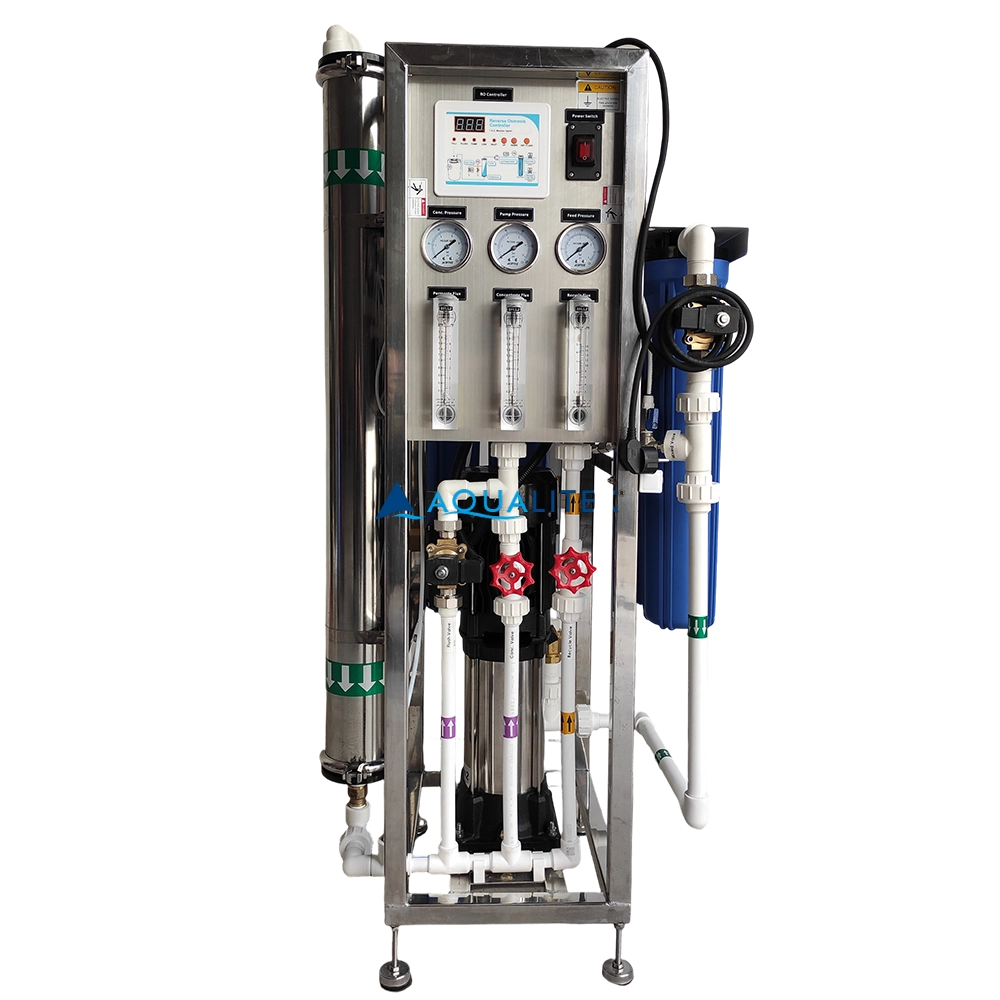
Our 500 LPH Reverse Osmosis (RO) System is engineered to provide high-quality purified water for commercial applications. Designed with advanced RO technology, durable components, and a user-friendly interface, this system ensures consistent performance, low maintenance, and long-term reliability.
With its compact design and robust skid-mounted frame, it’s an excellent choice for businesses that demand efficiency and quality in water purification.
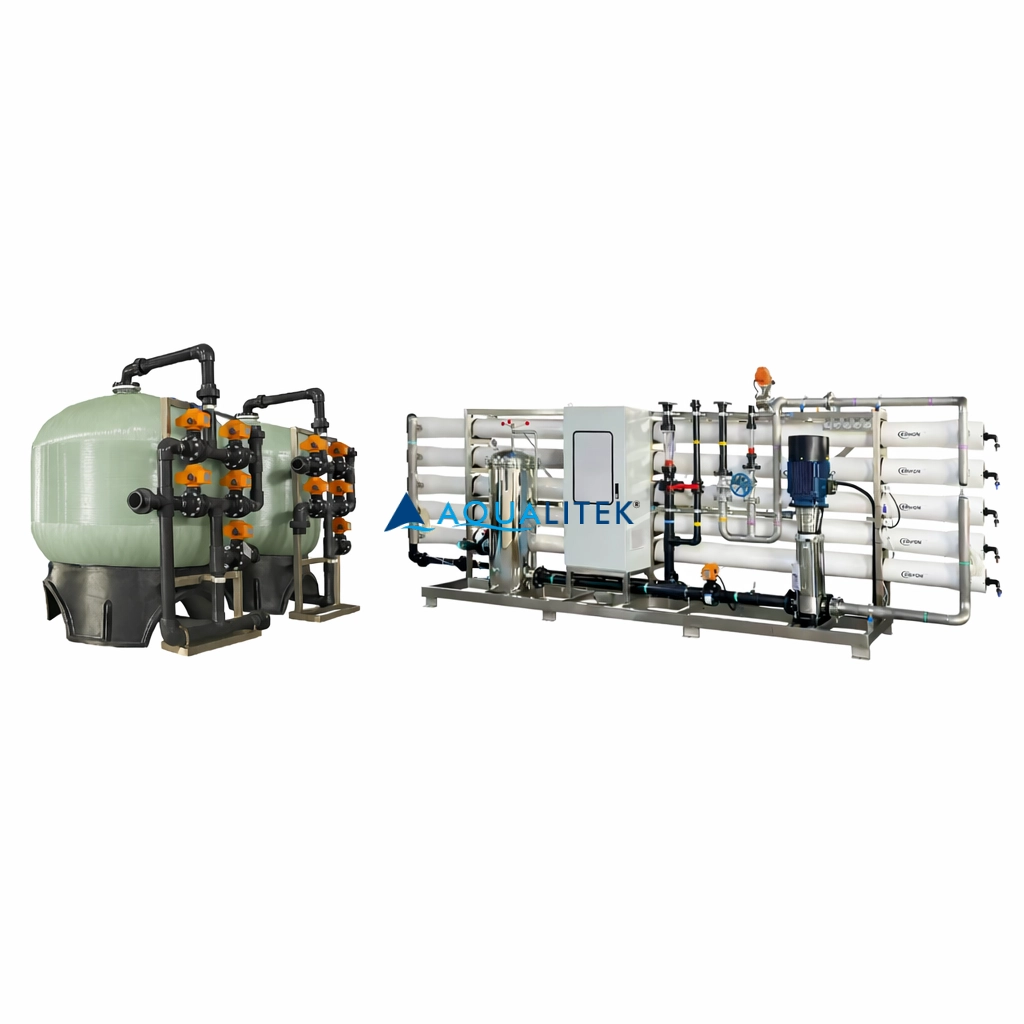
30TPH Industrial Reverse Osmosis (RO) System designed for industrial and municipal water treatment. High salt rejection, energy-efficient design, PLC control, and customizable configuration.
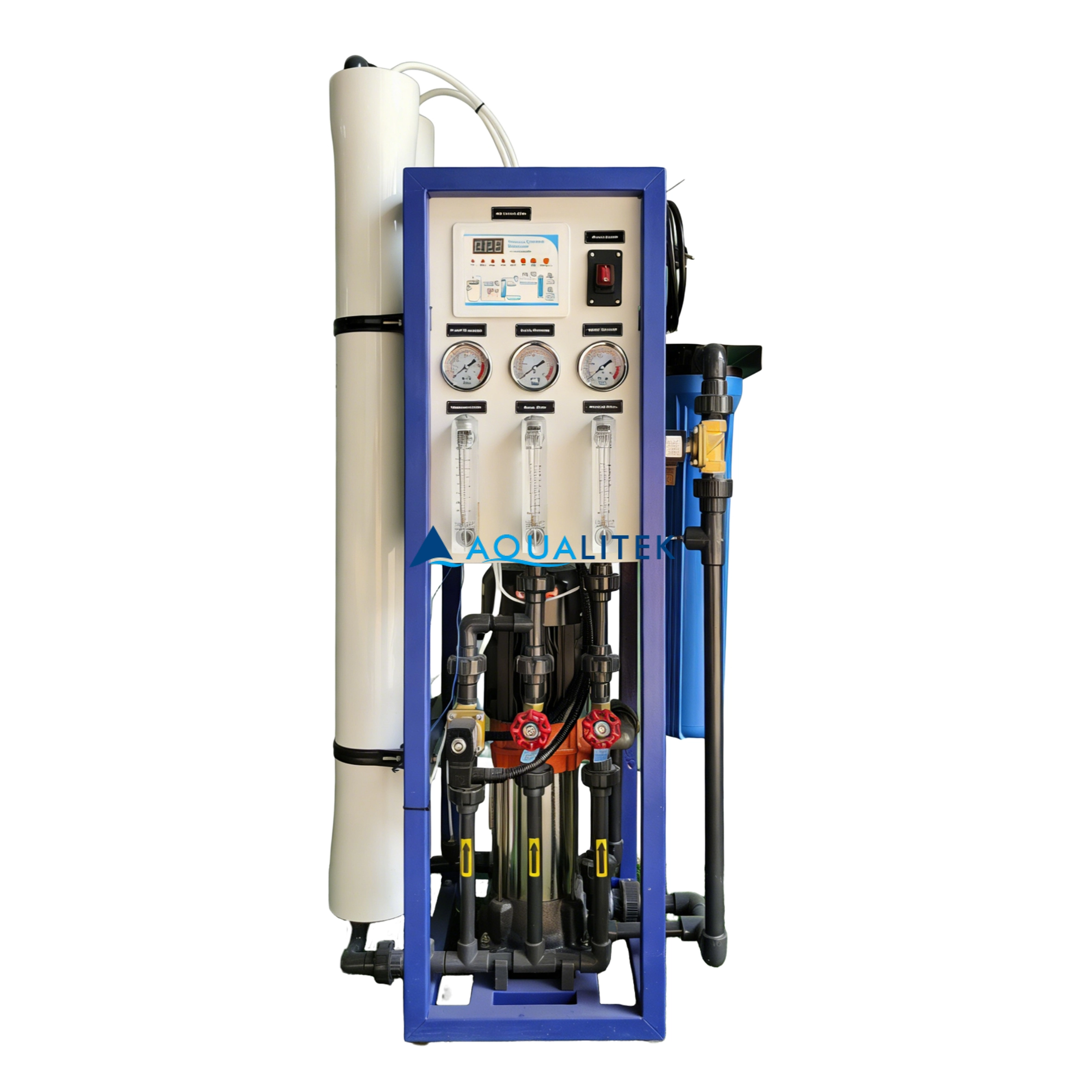
AQUALITEK's 500LPH Panel Mounted Reverse Osmosis Water Purification System delivers reliable 500 LPH RO water production. This compact industrial reverse osmosis unit is ideal for small scale industrial RO needs, ensuring efficient and high-quality purified water in a space-saving design.
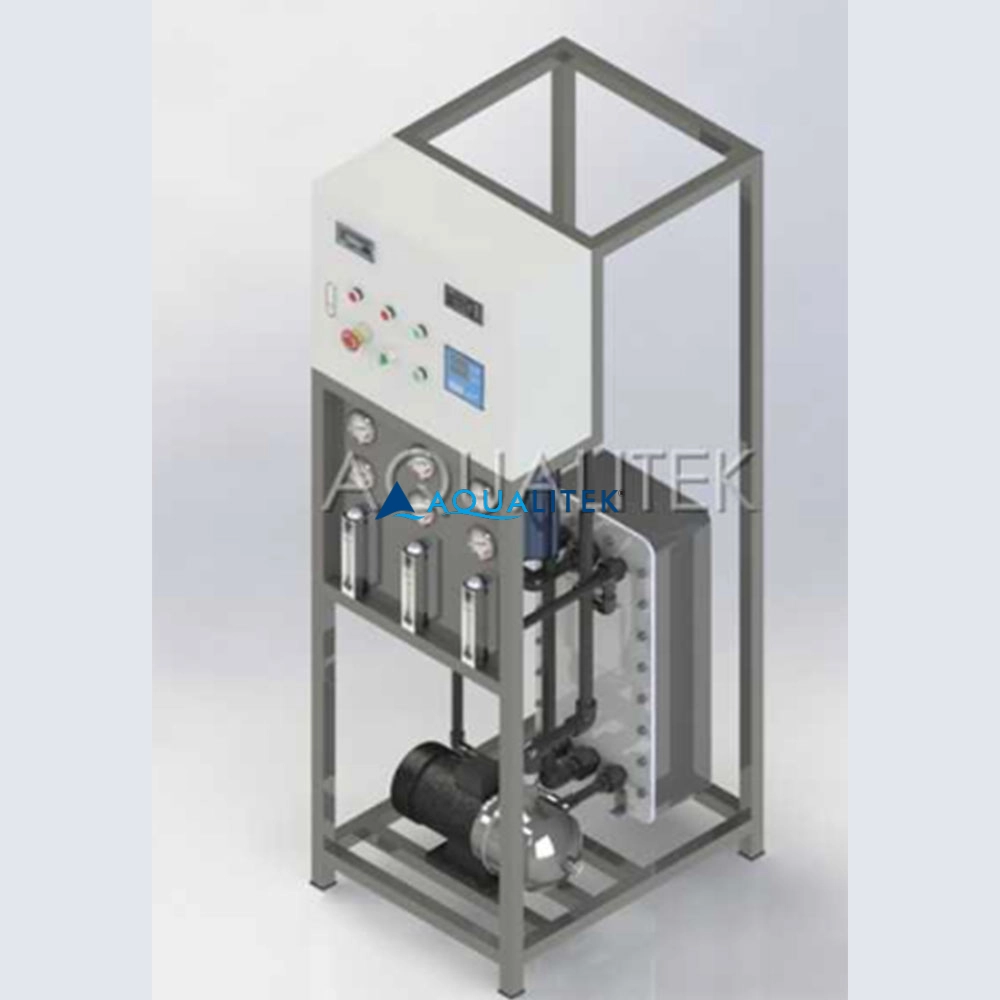
Electrodeionization (EDI) system is an advanced water purification technology that combines ion exchange and electrochemical processes to produce ultra-pure water. Unlike traditional deionization methods, which rely on chemical regeneration, EDI utilizes electric fields to drive the movement of ions through ion-exchange membranes, effectively removing dissolved salts and other ionic contaminants.
This process is continuous and does not require the use of chemicals for regeneration, making it an environmentally friendly and cost-effective solution for producing high-quality deionized water. EDI systems are widely used in applications requiring ultrapure water, such as in the pharmaceutical, semiconductor, power generation, and biotechnology industries, as well as for laboratory use.
By offering high-purity water without the need for chemical regeneration, EDI systems provide a sustainable, efficient, and reliable alternative to traditional deionization methods, making them an ideal choice for industries where water quality and process control are critical.
© 2026 AQUALITEK. All rights reserved.
AQUALITEK- Aimee Hoo
AQUALITEK - Aimee Hoo