



What Is the Most Common Way to Discharge Concentrated Brine from Large-Scale Seawater Desalination Plants?| Insights by AQUALITEK
Discover the most widely used brine discharge method in large-scale seawater desalination plants, including deep-sea outfall systems, environmental protection measures, and design principles.
- Introduction
- 1. The Most Common Method: Submarine Outfall Discharge
- 1.1 What Is Submarine Outfall Discharge?
- 1.2 Why It Is the Global Standard
- 2. Key Engineering Design Principles
- 2.1 Deep-Water Discharge Location
- 2.2 Multi-Port Diffuser Systems
- 2.3 Hydrodynamic and Environmental Modeling
- 3. Environmental Safety and Compliance
- 3.1 Dilution Requirements
- 3.2 Ecological Protection Measures
- 4. Why Alternative Brine Disposal Methods Are Rare in Large Plants
- 4.1 Evaporation Ponds
- 4.2 Zero Liquid Discharge (ZLD)
- 4.3 Deep-Well Injection
- 5. Typical Brine Discharge System Configuration
- 6. Case Examples
- Conclusion
Introduction
Large-scale seawater desalination plants typically convert only 40–50% of incoming seawater into fresh water, while the remaining 50–60% becomes high-salinity concentrated brine.
Managing this large volume of saline concentrate is one of the most critical environmental and engineering challenges in seawater desalination projects.
Globally, the most common and technically mature method for brine disposal is deep-sea outfall discharge using engineered diffuser systems.
1. The Most Common Method: Submarine Outfall Discharge
1.1 What Is Submarine Outfall Discharge?
Submarine outfall discharge involves:
•Transporting concentrated brine via pipelines
•Releasing it into deep offshore waters
•Using diffuser systems to rapidly dilute the brine
This method allows:
•Fast mixing with surrounding seawater
•Significant reduction of salinity concentration
•Minimal ecological disturbance when properly designed
1.2 Why It Is the Global Standard
Over 90% of large-scale SWRO plants worldwide use submarine outfall systems because:
•Ocean has enormous dilution capacity
•Reliable hydrodynamic dispersion
•Proven long-term environmental safety
•Lower cost compared to zero-liquid-discharge solutions
•High regulatory acceptance
Major desalination projects in:
•Middle East
•Australia
•Spain
•China
•North Africa
all rely on submarine outfalls as the primary brine discharge solution.
2. Key Engineering Design Principles
2.1 Deep-Water Discharge Location
Outfall diffusers are typically installed:
•Several hundred meters to several kilometers offshore
•At depths of 10–40 meters or more
This ensures:
•Strong natural mixing
•Rapid dilution
•Reduced shoreline environmental impact
2.2 Multi-Port Diffuser Systems
Instead of a single outlet, modern systems use:
•Multiple small-diameter nozzles
•Jet dispersion
•High-velocity mixing
This allows:
•Rapid dilution (often >100:1 within seconds)
•Prevention of localized hypersalinity zones
2.3 Hydrodynamic and Environmental Modeling
Before construction, engineers perform:
•CFD hydrodynamic simulations
•Environmental impact assessments (EIA)
•Long-term salinity dispersion modeling
Ensuring:
•No chronic salinity accumulation
•Marine ecosystem protection
•Compliance with environmental regulations
3. Environmental Safety and Compliance
3.1 Dilution Requirements
Most regulatory frameworks require:
•Salinity increase at mixing zone boundary ≤ 1–2 PSU
•No long-term accumulation
Submarine outfall systems typically achieve:
•Initial dilution > 50–100 times
•Final salinity levels close to natural seawater
3.2 Ecological Protection Measures
Additional measures often include:
•Blending brine with cooling water discharge
•Diffuser orientation optimization
•Continuous salinity monitoring
•Marine biological impact assessments
4. Why Alternative Brine Disposal Methods Are Rare in Large Plants
4.1 Evaporation Ponds
•Require huge land areas
•Extremely high cost
•Unsuitable for coastal mega-projects
4.2 Zero Liquid Discharge (ZLD)
•Extremely energy-intensive
•Very high capital and operational cost
•Mainly used in inland brackish desalination
4.3 Deep-Well Injection
•Geologically restricted
•High risk of groundwater contamination
•Rare in coastal desalination projects
Therefore, submarine outfall remains the only economically viable and environmentally accepted solution for large SWRO plants.
5. Typical Brine Discharge System Configuration
1.Brine collection manifold
2.Onshore discharge pumping station
3.Submarine pipeline
4.Offshore diffuser array
5.Environmental monitoring system
6. Case Examples
•Sorek Desalination Plant (Israel) – 624,000 m³/day → deep-sea diffuser system
•Ras Al Khair Plant (Saudi Arabia) – >1,000,000 m³/day → offshore multi-port discharge
•Sydney Desalination Plant (Australia) – multi-nozzle diffuser at 20 m depth
All use engineered submarine outfall discharge systems.
Conclusion
The most common and globally accepted method for disposing of concentrated brine from large-scale seawater desalination plants is submarine outfall discharge using engineered diffuser systems.
This method:
•Ensures rapid dilution
•Minimizes environmental impact
•Meets regulatory standards
•Provides economic feasibility at large scale
As desalination capacity continues to expand worldwide, advanced diffuser technology and environmental modeling will play an increasingly critical role in sustainable brine management.


Request More Information or Expert Advice
Share a few details, and we’ll provide deeper insights, tailored suggestions, or product support.
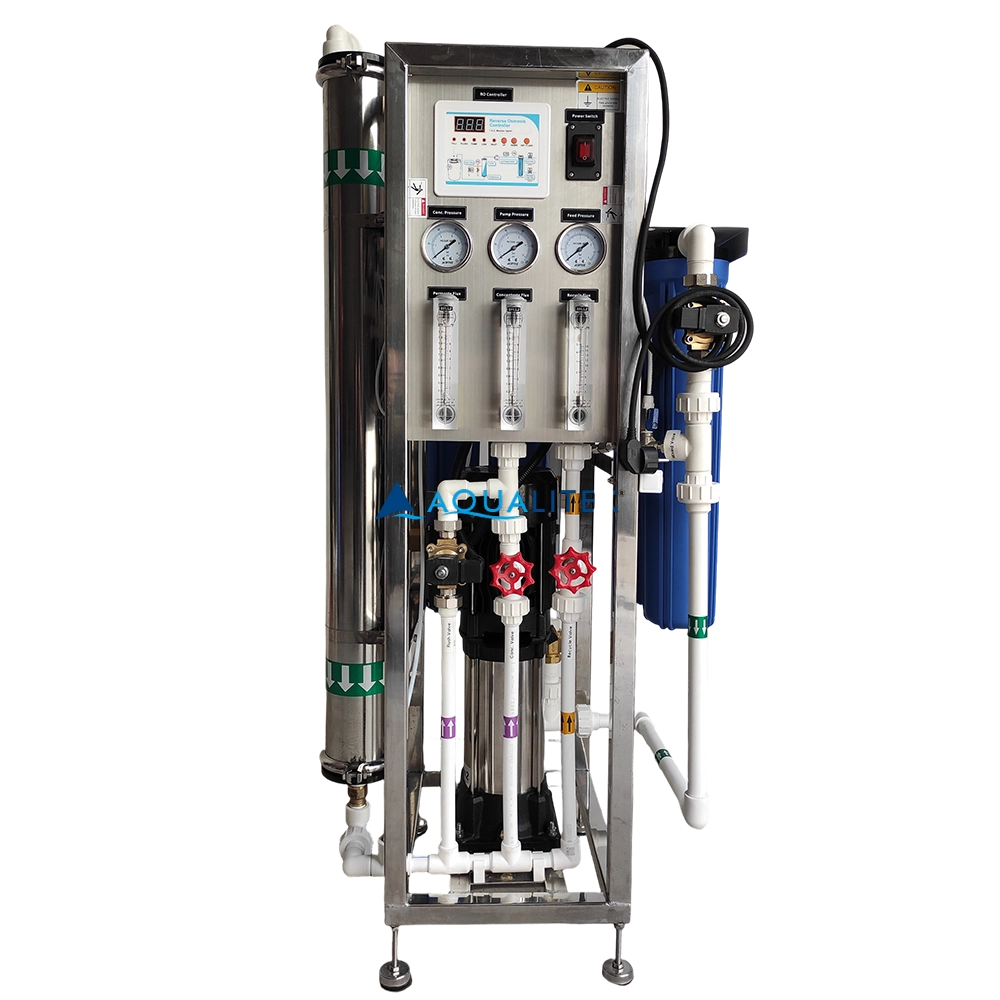
Our 500 LPH Reverse Osmosis (RO) System is engineered to provide high-quality purified water for commercial applications. Designed with advanced RO technology, durable components, and a user-friendly interface, this system ensures consistent performance, low maintenance, and long-term reliability.
With its compact design and robust skid-mounted frame, it’s an excellent choice for businesses that demand efficiency and quality in water purification.
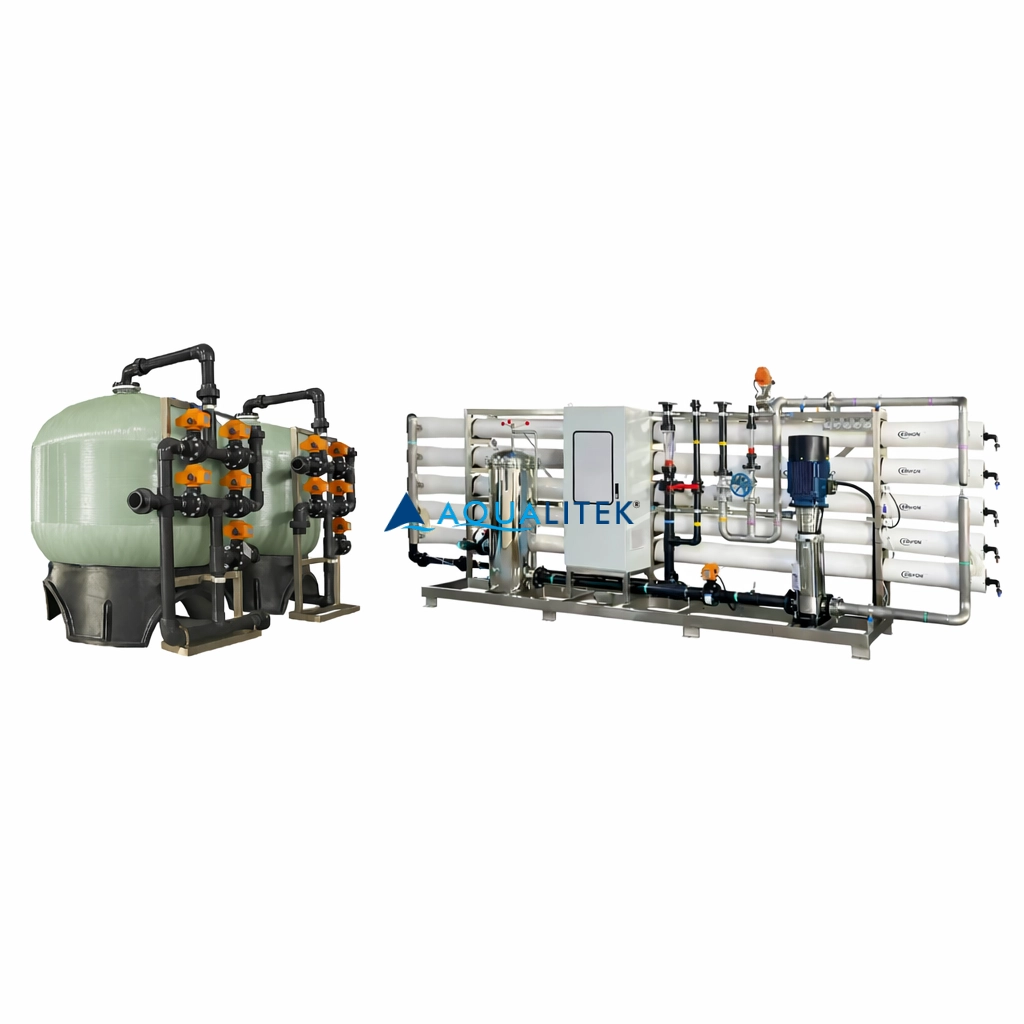
30TPH Industrial Reverse Osmosis (RO) System designed for industrial and municipal water treatment. High salt rejection, energy-efficient design, PLC control, and customizable configuration.
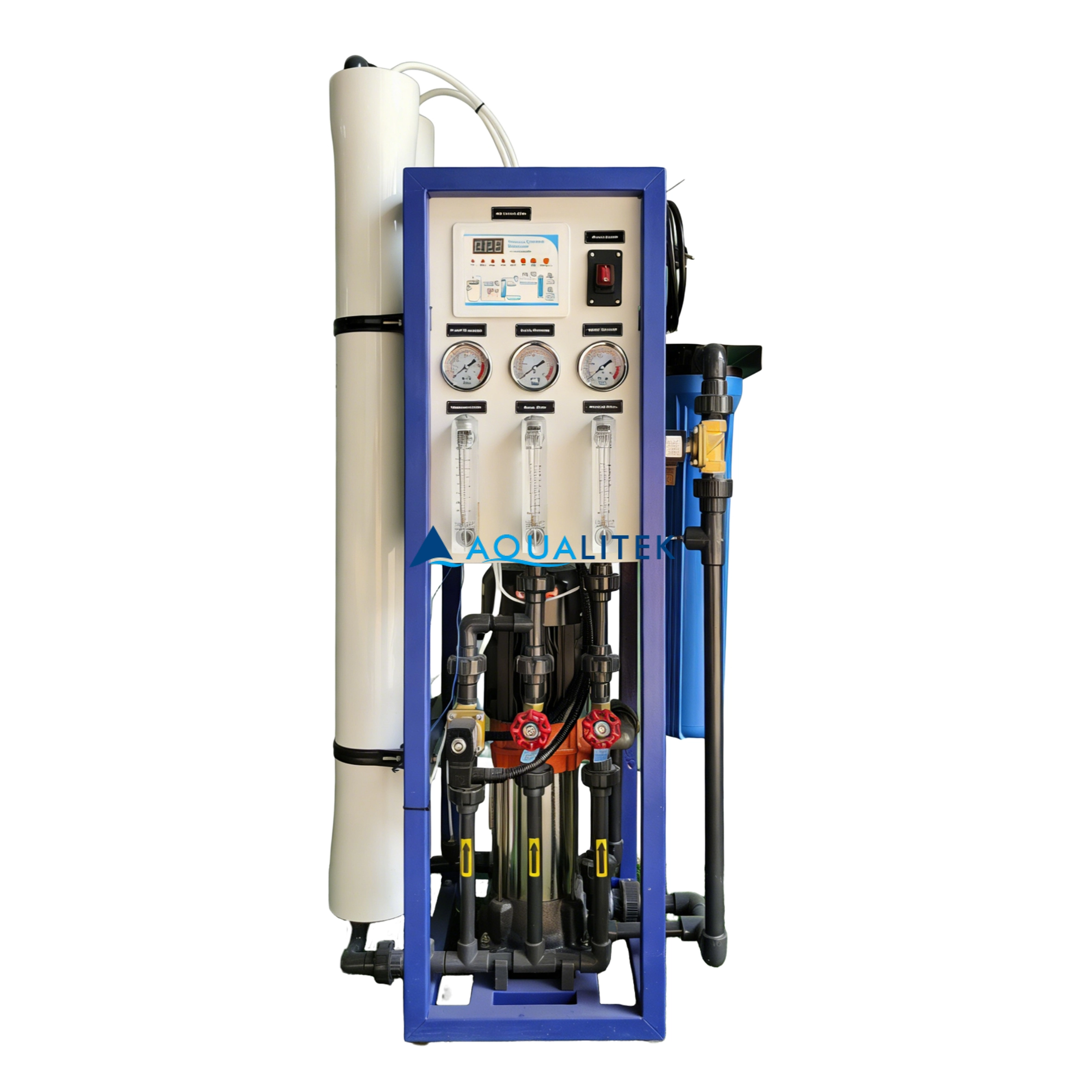
AQUALITEK's 500LPH Panel Mounted Reverse Osmosis Water Purification System delivers reliable 500 LPH RO water production. This compact industrial reverse osmosis unit is ideal for small scale industrial RO needs, ensuring efficient and high-quality purified water in a space-saving design.
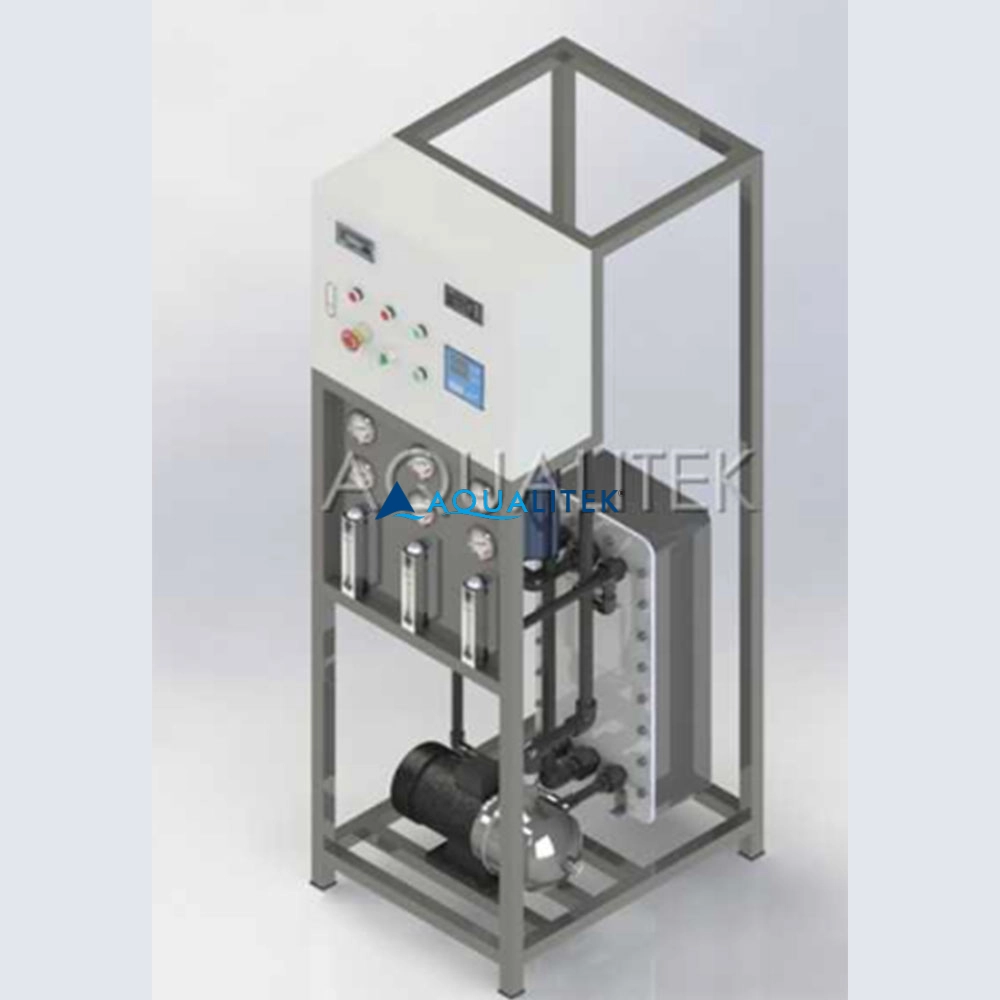
Electrodeionization (EDI) system is an advanced water purification technology that combines ion exchange and electrochemical processes to produce ultra-pure water. Unlike traditional deionization methods, which rely on chemical regeneration, EDI utilizes electric fields to drive the movement of ions through ion-exchange membranes, effectively removing dissolved salts and other ionic contaminants.
This process is continuous and does not require the use of chemicals for regeneration, making it an environmentally friendly and cost-effective solution for producing high-quality deionized water. EDI systems are widely used in applications requiring ultrapure water, such as in the pharmaceutical, semiconductor, power generation, and biotechnology industries, as well as for laboratory use.
By offering high-purity water without the need for chemical regeneration, EDI systems provide a sustainable, efficient, and reliable alternative to traditional deionization methods, making them an ideal choice for industries where water quality and process control are critical.
© 2026 AQUALITEK. All rights reserved.
AQUALITEK- Aimee Hoo
AQUALITEK - Aimee Hoo