




Typical Operating Pressure of Seawater Desalination RO Systems: Range and Reasons| Insights by AQUALITEK
What is the normal operating pressure of a seawater RO system, and why is it much higher than brackish water RO? This article explains pressure ranges, driving forces, and engineering reasons in detail.
- Introduction
- 1. Typical Operating Pressure Range of Seawater RO Systems
- 55–70 bar (800–1,000 psi)
- Typical reference ranges
- 2. The Fundamental Reason: High Osmotic Pressure of Seawater
- What Is Osmotic Pressure?
- Key principle of RO operation
- 3. High Salt Rejection Requirements Increase Pressure Demand
- 4. Membrane Flux Limitations and Productivity
- 5. System Recovery Rate Also Drives Pressure Higher
- 6. Pressure Losses Throughout the System
- 7. Comparison with Brackish Water RO Systems
- 8. Engineering Implications of High Operating Pressure
- Conclusion
Introduction
Compared with conventional brackish water reverse osmosis systems, seawater desalination RO (SWRO) systems operate at exceptionally high pressures.
For many newcomers to desalination projects, a common question is:
Why does a seawater RO system require such high operating pressure, and what is the normal pressure range?
Understanding this is critical for:
•Proper system design
•Equipment selection
•Energy consumption control
•Long-term membrane protection
This article provides a clear and practical explanation from both theoretical and engineering perspectives.
1. Typical Operating Pressure Range of Seawater RO Systems
Under normal design and operating conditions, the typical operating pressure of a seawater desalination RO system is:
55–70 bar (800–1,000 psi)
Typical reference ranges
•Open-ocean seawater (≈35,000 mg/L TDS):
60–70 bar
Coastal seawater with slightly lower salinity:
55–65 bar
•Warm seawater (higher temperature):
Slightly lower pressure
•Cold seawater (lower temperature):
Slightly higher pressure
This pressure range is 5–10 times higher than that of most brackish water RO systems.
2. The Fundamental Reason: High Osmotic Pressure of Seawater
What Is Osmotic Pressure?
Osmotic pressure is the natural pressure required to prevent water from flowing across a semi-permeable membrane from low salinity to high salinity.
For seawater:
•TDS ≈ 35,000 mg/L
•Osmotic pressure ≈ 26–28 bar
Key principle of RO operation
To produce permeate, the applied pressure must:
Exceed the osmotic pressure + provide net driving force
In practice:
•Required net driving pressure: 20–30 bar
•Total operating pressure: 55–70 bar
This is the primary physical reason for the high pressure.
3. High Salt Rejection Requirements Increase Pressure Demand
Seawater RO systems typically require:
•Salt rejection ≥ 99.7%
•Boron rejection control
•Stable permeate conductivity
To achieve this:
•Higher transmembrane pressure is needed
•Membrane flux must be carefully controlled
Lower pressure would result in:
•Insufficient water production
•Elevated permeate salinity
•Failure to meet drinking or industrial standards
4. Membrane Flux Limitations and Productivity
Unlike brackish water membranes, seawater membranes:
•Have lower permeability
•Are designed for high rejection, not high flux
To achieve reasonable production capacity:
•Pressure must compensate for lower permeability
•High pressure ensures acceptable flux rates without overloading the membrane
Thus, high pressure is a design necessity, not an inefficiency.
5. System Recovery Rate Also Drives Pressure Higher
Seawater RO systems usually operate at:
•Recovery rates of 35–45%
As recovery increases:
•Salt concentration on the concentrate side rises
•Osmotic pressure increases along the membrane
•Additional pressure is required to maintain flux at the tail end
This phenomenon makes pressure staging and high pump pressure unavoidable.
6. Pressure Losses Throughout the System
Not all applied pressure reaches the membrane effectively.
Pressure losses occur due to:
•Pretreatment filters
•High-pressure piping
•Valves and fittings
•Energy recovery devices
To ensure sufficient pressure at the membrane inlet, the pump discharge pressure must be even higher, further pushing the system into the 60–70 bar range.
7. Comparison with Brackish Water RO Systems
|
Parameter |
Seawater RO |
Brackish Water RO |
|
Feed TDS |
<35,000 ppm |
<10,000 ppm |
|
Osmotic pressure |
26–28 bar |
1–8 bar |
|
Operating pressure |
55–70 bar |
10–20 bar |
|
Recovery rate |
35–45% |
60–75% |
|
Energy demand |
High |
Moderate |
This comparison highlights why seawater RO is fundamentally a high-pressure technology.
8. Engineering Implications of High Operating Pressure
Because of the high pressure, SWRO systems require:
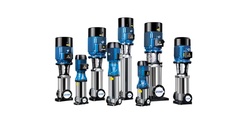
•High-pressure rated pumps
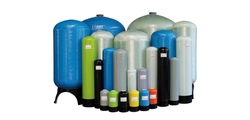
•Pressure vessels rated ≥ 1,000 psi
•Duplex or super duplex stainless steel piping
•Energy recovery devices to control operating costs
•Strict safety and protection measures
High pressure defines every aspect of SWRO system design.
Conclusion
The typical operating pressure of a seawater desalination RO system ranges from 55 to 70 bar, and this pressure level is unavoidable.
It is driven by:
•High osmotic pressure of seawater
•Strict salt rejection requirements
•Low membrane permeability
•System recovery design
•Pressure losses across the system
Rather than being a drawback, this high pressure is the core enabling condition that makes modern seawater desalination possible—especially when combined with efficient energy recovery technologies.


Request More Information or Expert Advice
Share a few details, and we’ll provide deeper insights, tailored suggestions, or product support.
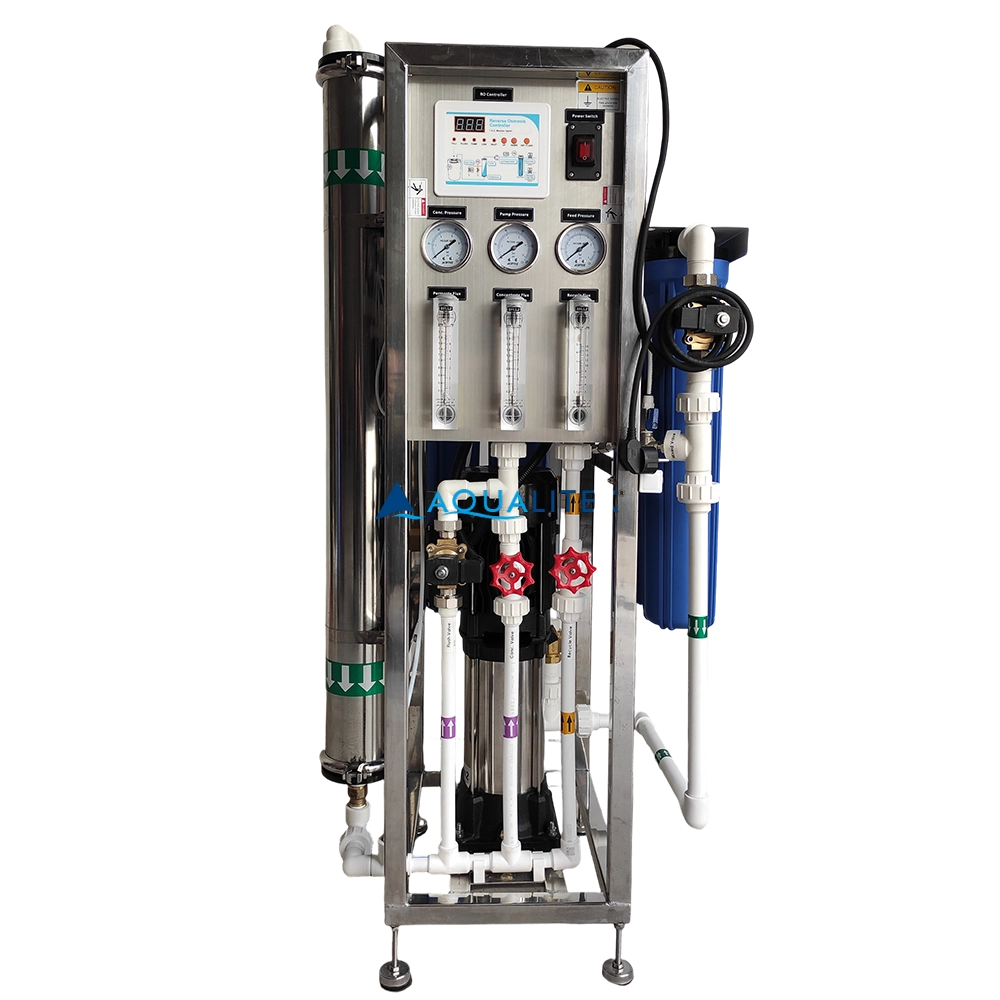
Our 500 LPH Reverse Osmosis (RO) System is engineered to provide high-quality purified water for commercial applications. Designed with advanced RO technology, durable components, and a user-friendly interface, this system ensures consistent performance, low maintenance, and long-term reliability.
With its compact design and robust skid-mounted frame, it’s an excellent choice for businesses that demand efficiency and quality in water purification.
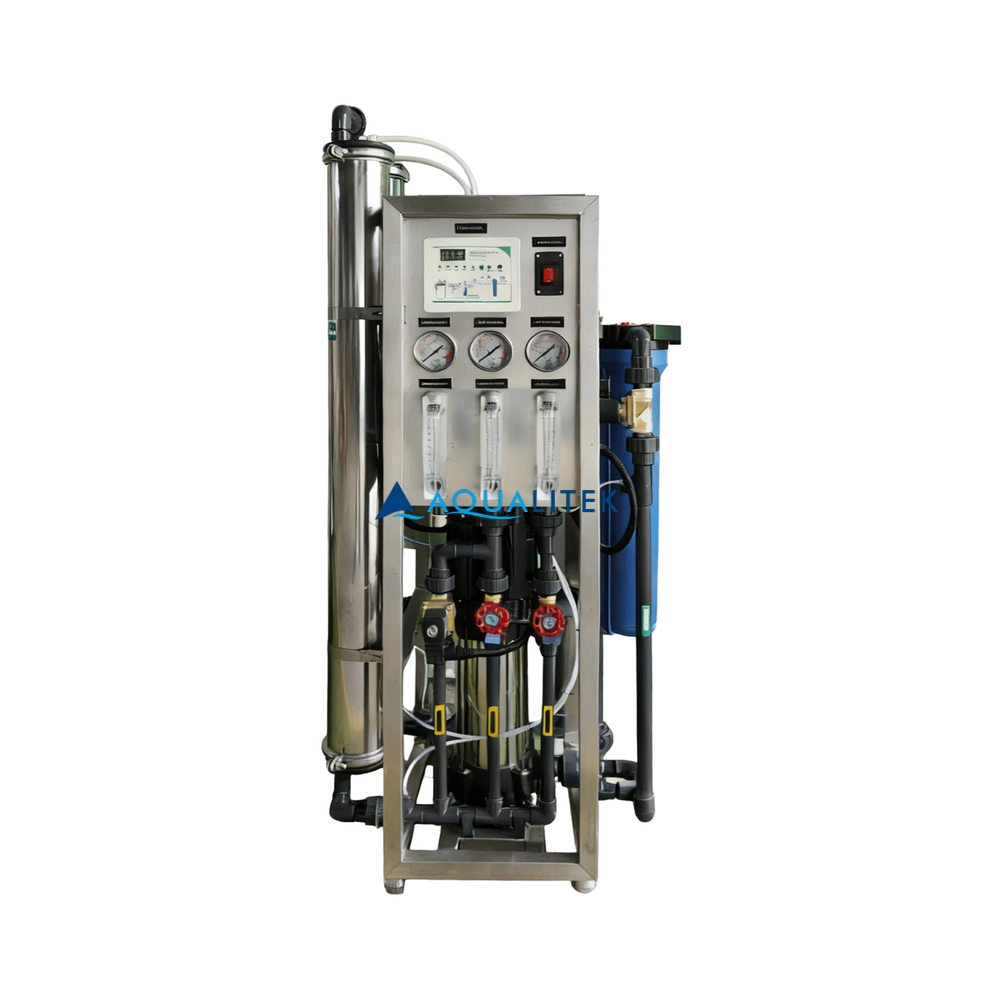
TWV series Reverse Osmosis (RO) systems are pre-engineered and pre-assembled units with 2.5”/4” membrane housings(single element type)for tap water(lower TDS).They are designed for overall superior performance, high recovery rates and offer great savings with low maintenance and operation costs.
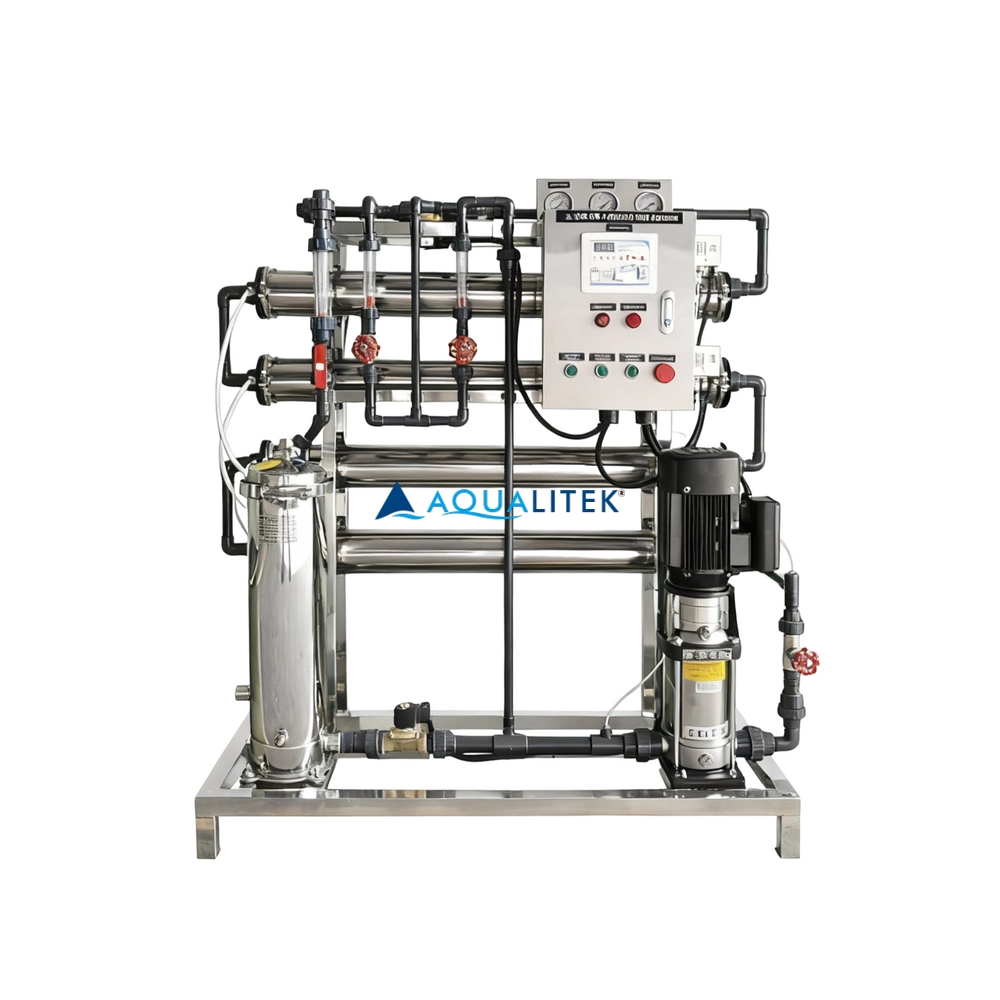
TWF series Reverse Osmosis (RO) systems are pre-engineered and pre-assembled units with 4” membrane housings(multiple elements type) for tap water(lower TDS) .The medium large volumes can help meet your a variety of commercial and industrial applications. They are designed for overall superior performance, high recovery rates and offer great savings with low maintenance and operation costs.

TWE series Reverse Osmosis (RO) systems are pre-engineered and pre-assembled units with 8” membrane housings for tap water (lower TDS). The large volumes can help meet your a variety of industrial applications. They are designed for overall superior performance, high recovery rates and offer great savings with low maintenance and operation costs.
© 2026 AQUALITEK. All rights reserved.
AQUALITEK- Aimee Hoo
AQUALITEK - Aimee Hoo