





Why Energy Recovery Devices Are Crucial in RO Desalination: Mainstream Technologies Explained| Insights by AQUALITEK
Why are energy recovery devices essential in RO desalination systems? This article explains their role, benefits, and compares the mainstream ERD technologies used in modern seawater RO plants.
- Introduction
- 1. Why Energy Recovery Is Essential in RO Desalination
- 1.1 High-Pressure Brine Contains Valuable Energy
- 1.2 Energy Costs Dominate Operating Expenses
- 2. Core Functions of Energy Recovery Devices (ERDs)
- 3. Mainstream Energy Recovery Technologies in RO Desalination
- 4. Pressure Exchanger (PX) – The Industry Gold Standard
- 5. Turbocharger (Hydraulic Turbine Booster)
- 6. Pelton Turbine Systems
- 7. Comparison of Mainstream ERD Technologies
- 8. How ERDs Transform RO Desalination Economics
- Conclusion
Introduction
Reverse osmosis (RO) desalination—especially seawater RO (SWRO)—is inherently energy-intensive due to its extremely high operating pressure.
In a typical SWRO system:
•Operating pressure reaches 55–70 bar
•Up to 60% of input energy leaves the system with high-pressure brine
Without energy recovery, desalination would be economically and environmentally unsustainable.
This is why energy recovery devices (ERDs) are not optional add-ons, but core components of modern RO desalination systems.
1. Why Energy Recovery Is Essential in RO Desalination
1.1 High-Pressure Brine Contains Valuable Energy
After passing through the membrane:
•Concentrate (brine) still retains 80–95% of feed pressure
•Direct discharge wastes a massive amount of mechanical energy
Energy recovery devices capture this pressure and reuse it to:
•Assist feed pressurization
•Reduce high-pressure pump workload
1.2 Energy Costs Dominate Operating Expenses
In seawater RO plants:
•Energy accounts for 40–60% of total OPEX
•Even small efficiency improvements deliver large cost savings
Without ERDs:
•Specific energy consumption (SEC) may exceed 7–8 kWh/m³
With modern ERDs:
•SEC can be reduced to 2.5–3.5 kWh/m³
1.3 System Stability and Equipment Protection
Energy recovery devices help:
•Smooth pressure fluctuations
•Reduce load on high-pressure pumps
•Extend pump and membrane lifespan
They contribute not only to efficiency, but also to system reliability.
2. Core Functions of Energy Recovery Devices (ERDs)
An ERD in an RO desalination system typically performs the following roles:
•Recover pressure energy from concentrate
•Transfer energy to incoming feed water
•Reduce required motor power
•Lower overall system operating pressure
•Improve plant energy efficiency (η)
3. Mainstream Energy Recovery Technologies in RO Desalination
Currently, three ERD technologies dominate the market. Each has distinct characteristics and application scenarios.
4. Pressure Exchanger (PX) – The Industry Gold Standard
Working Principle
A pressure exchanger directly transfers pressure from high-pressure brine to incoming seawater via a ceramic or stainless steel rotor.
•No intermediate conversion to mechanical energy
•Near-isobaric pressure transfer
Key Advantages
•Energy recovery efficiency: up to 95–98%
•Extremely low energy loss
•Compact footprint
•Minimal maintenance
•Excellent pressure stability
Typical Applications
•Large and medium-scale SWRO plants
•High-energy-cost regions
•Plants requiring lowest possible SEC
Industry Status
Pressure exchangers are the dominant ERD technology worldwide and are considered the benchmark for modern desalination plants.
5. Turbocharger (Hydraulic Turbine Booster)
Working Principle
High-pressure brine drives a turbine connected to a booster pump, increasing feed water pressure.
Key Advantages
•Simpler structure
•Lower initial investment than PX
•Proven technology
Limitations
•Energy recovery efficiency: 70–85%
•Mechanical wear
•Less effective at part-load conditions
•Less precise pressure control
Typical Applications
•Medium-scale systems
•Retrofit projects
•Budget-constrained installations
6. Pelton Turbine Systems
Working Principle
Concentrate flow drives a Pelton turbine, generating mechanical energy to assist pump operation or produce electricity.
Advantages
•Simple and robust
•Suitable for very high-pressure systems
Limitations
•Efficiency lower than PX
•Larger footprint
•More mechanical losses
•Rarely used in new SWRO projects
Current Status
Mostly obsolete for modern desalination, replaced by pressure exchangers.
7. Comparison of Mainstream ERD Technologies
|
Parameter |
Pressure Exchanger (PX) |
Turbocharger |
Pelton Turbine |
|
Energy recovery efficiency |
95–98% |
70–85% |
60–75% |
|
Mechanical complexity |
Low |
Medium |
High |
|
Maintenance |
Minimal |
Moderate |
High |
|
Pressure stability |
Excellent |
Moderate |
Poor |
|
Industry adoption |
Very high |
Medium |
Low |
8. How ERDs Transform RO Desalination Economics
By integrating energy recovery:
•High-pressure pump size is reduced
•Motor power demand drops significantly
•Energy cost per cubic meter decreases
•Carbon footprint is lowered
•Project ROI improves dramatically
In many regions, RO desalination without ERDs is no longer commercially viable.
Conclusion
Energy recovery devices are indispensable in modern RO desalination systems.
They transform high-pressure brine from an energy liability into a valuable resource, enabling:
•Acceptable operating costs
•Sustainable long-term operation
•Global scalability of desalination
Among all technologies, pressure exchangers have become the mainstream solution, setting the standard for efficiency, reliability, and performance in seawater RO plants.



Request More Information or Expert Advice
Share a few details, and we’ll provide deeper insights, tailored suggestions, or product support.
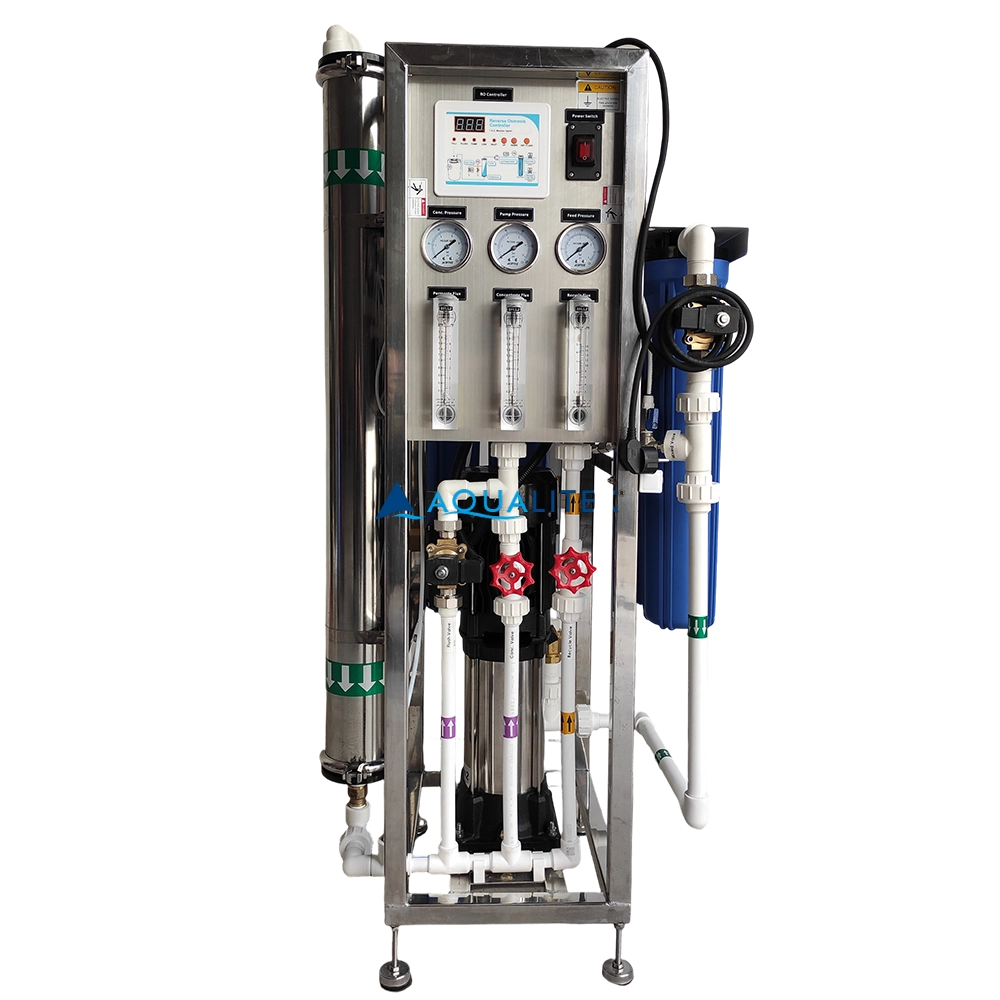
Our 500 LPH Reverse Osmosis (RO) System is engineered to provide high-quality purified water for commercial applications. Designed with advanced RO technology, durable components, and a user-friendly interface, this system ensures consistent performance, low maintenance, and long-term reliability.
With its compact design and robust skid-mounted frame, it’s an excellent choice for businesses that demand efficiency and quality in water purification.
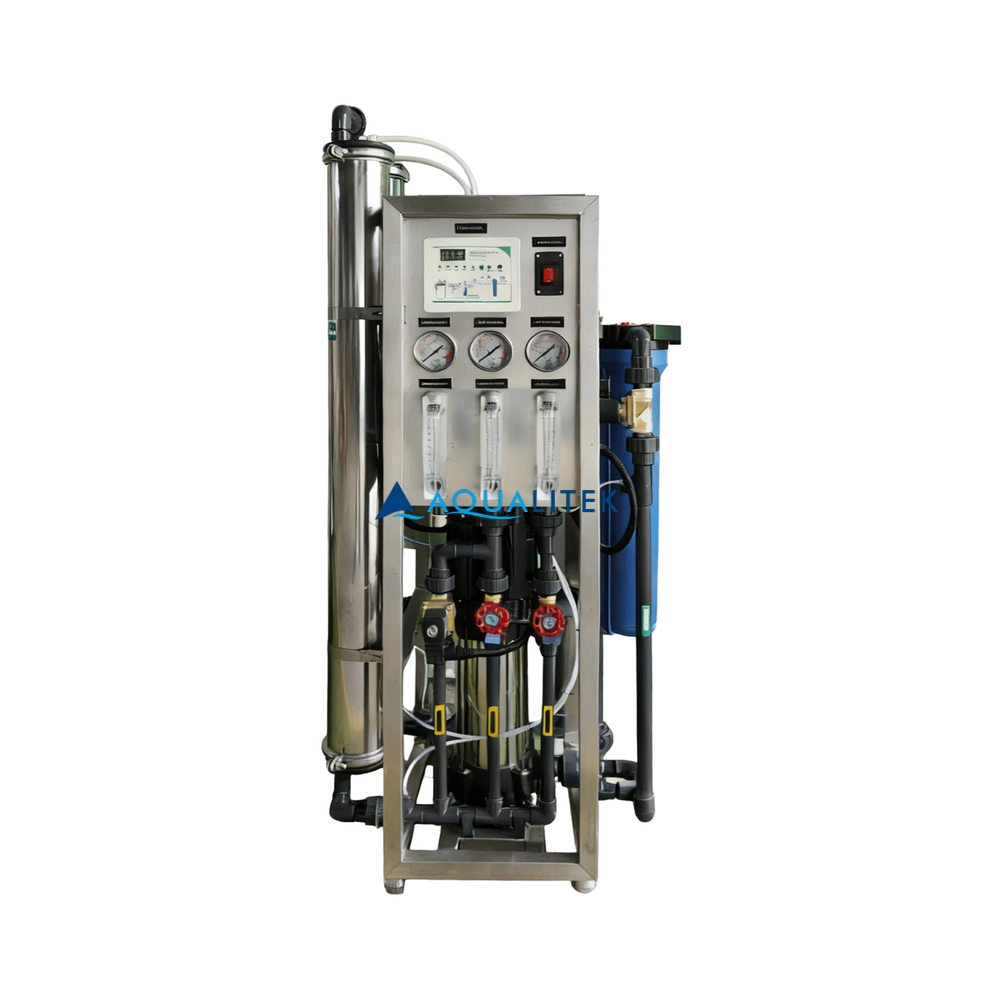
TWV series Reverse Osmosis (RO) systems are pre-engineered and pre-assembled units with 2.5”/4” membrane housings(single element type)for tap water(lower TDS).They are designed for overall superior performance, high recovery rates and offer great savings with low maintenance and operation costs.
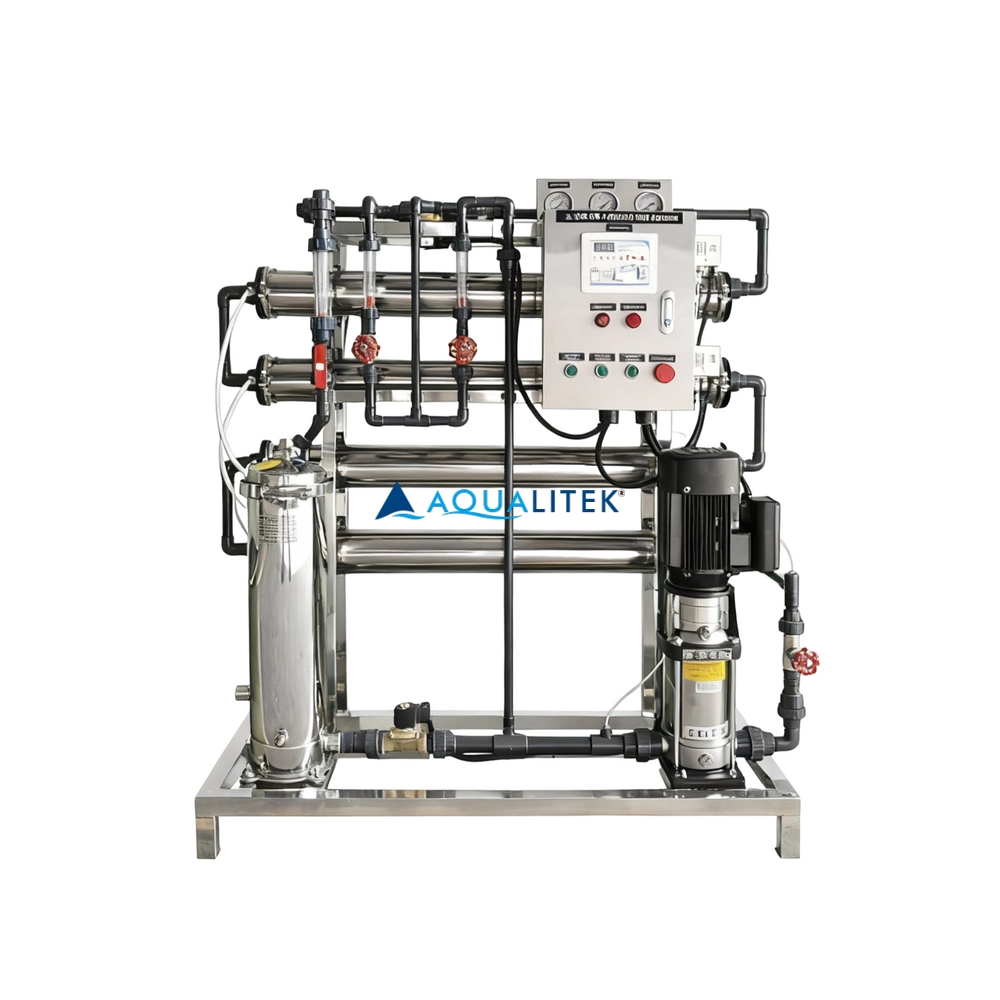
TWF series Reverse Osmosis (RO) systems are pre-engineered and pre-assembled units with 4” membrane housings(multiple elements type) for tap water(lower TDS) .The medium large volumes can help meet your a variety of commercial and industrial applications. They are designed for overall superior performance, high recovery rates and offer great savings with low maintenance and operation costs.

TWE series Reverse Osmosis (RO) systems are pre-engineered and pre-assembled units with 8” membrane housings for tap water (lower TDS). The large volumes can help meet your a variety of industrial applications. They are designed for overall superior performance, high recovery rates and offer great savings with low maintenance and operation costs.
© 2026 AQUALITEK. All rights reserved.
AQUALITEK- Aimee Hoo
AQUALITEK - Aimee Hoo