




Why Single-Pass Seawater desalination Recovery Is Typically Limited to 40–50%| Insights by AQUALITEK
Why are most RO desalination systems designed with a single-pass recovery of only 40–50%? This article explains the technical, chemical, and economic reasons behind this industry-standard design choice.
- Introduction
- 1. Understanding Single-Pass Recovery in RO
- What Is Single-Pass Recovery?
- 2. Rapid Salinity Increase Along the Membrane
- Exponential Concentration Effect
- 3. Osmotic Pressure Limits Practical Recovery
- Why Pressure Demand Rises Rapidly
- 4. Scaling Risk Becomes Unmanageable
- Supersaturation at High Recovery
- 5. Severe Concentration Polarization Effects
- Local Conditions Are Worse Than Bulk Measurements
- 6. Energy Efficiency Declines Beyond 50% Recovery
- Nonlinear Energy Consumption
- 7. System Reliability and Operability Considerations
- 8. Why Not Use Multi-Pass Instead of Higher Single-Pass Recovery?
- Industry-Preferred Strategy
- Conclusion
Introduction
At first glance, designing a reverse osmosis (RO) desalination system with only 40–50% single-pass recovery may seem inefficient.
A common question from engineers and plant owners is:
Why not increase recovery to 60%, 70%, or even higher to reduce brine discharge?
In reality, single-pass recovery is one of the most carefully balanced design parameters in RO desalination.
Pushing it too high introduces serious hydraulic, chemical, and economic risks that outweigh the apparent water-saving benefits.
This article explains why 40–50% has become the industry standard for single-pass RO desalination.
1. Understanding Single-Pass Recovery in RO
What Is Single-Pass Recovery?
Single-pass recovery refers to:
•The percentage of feed water converted into permeate in one RO pass
Recovery=Permeate Flow/Feed Flow×100%
In seawater RO (SWRO):
•Typical single-pass recovery = 40–50%
•Overall plant recovery may be higher using multi-pass or staged designs
2. Rapid Salinity Increase Along the Membrane
Exponential Concentration Effect
As recovery increases:
•Salts rejected by the membrane remain in the concentrate
•TDS near the tail elements rises sharply
For example:
•At 50% recovery → concentrate ≈ 2× feed salinity
•At 65% recovery → concentrate ≈ 3× feed salinity
•At 75% recovery → concentrate > 4× feed salinity
This exponential effect drastically increases osmotic pressure and scaling risk.
3. Osmotic Pressure Limits Practical Recovery
Why Pressure Demand Rises Rapidly
Higher salinity → higher osmotic pressure → higher required operating pressure.
In seawater:
•Feed osmotic pressure ≈ 26–28 bar
•At high recovery, tail-end osmotic pressure can exceed 45 bar
Consequences:
•Required operating pressure may exceed membrane and pump design limits
•Energy consumption rises disproportionately
•Diminishing returns on water production
4. Scaling Risk Becomes Unmanageable
Supersaturation at High Recovery
Higher recovery causes:
•Calcium carbonate
•Calcium sulfate
•Barium/strontium sulfate
to exceed their solubility limits.
Even with antiscalant:
•Risk of irreversible scaling rises sharply above 50%
•Cleaning frequency increases
•Membrane life shortens
This is especially critical for:
•Warm seawater
•High alkalinity feed
•Limited pretreatment systems
5. Severe Concentration Polarization Effects
Local Conditions Are Worse Than Bulk Measurements
At higher recovery:
•Salt concentration at membrane surface exceeds bulk concentrate values
•Effective osmotic pressure is much higher than calculated
This leads to:
•Reduced permeate flux
•Increased fouling
•Localized scaling hotspots
6. Energy Efficiency Declines Beyond 50% Recovery
Nonlinear Energy Consumption
Increasing recovery beyond 50% results in:
•Rapid pressure increase
•Higher specific energy consumption (SEC)
Example trend:
•45% recovery → 3.0 kWh/m³
•55% recovery → 3.8 kWh/m³
•65% recovery → >5.0 kWh/m³
At some point, energy cost per cubic meter increases, defeating the purpose of higher recovery.
7. System Reliability and Operability Considerations
Higher single-pass recovery leads to:
•Narrower operating margins
•Increased sensitivity to feed water fluctuation
•Higher risk during transient events (temperature, turbidity spikes)
Designing at 40–50% provides:
•Stable long-term operation
•Predictable performance
•Tolerance to feed water variability
8. Why Not Use Multi-Pass Instead of Higher Single-Pass Recovery?
Industry-Preferred Strategy
Instead of pushing single-pass recovery:
•Use second-pass RO
•Treat concentrate separately
•Blend permeate strategically
This approach:
•Controls risk
•Optimizes energy use
•Extends membrane life
Conclusion
Single-pass RO recovery is not limited by membrane capability, but by system-level optimization.
The 40–50% design range represents a balance between:
•Energy efficiency
•Scaling control
•Osmotic pressure constraints
•Equipment protection
•Long-term reliability
Pushing recovery higher may look attractive on paper, but in real-world desalination plants, it almost always results in higher costs, higher risk, and shorter membrane life.


Request More Information or Expert Advice
Share a few details, and we’ll provide deeper insights, tailored suggestions, or product support.
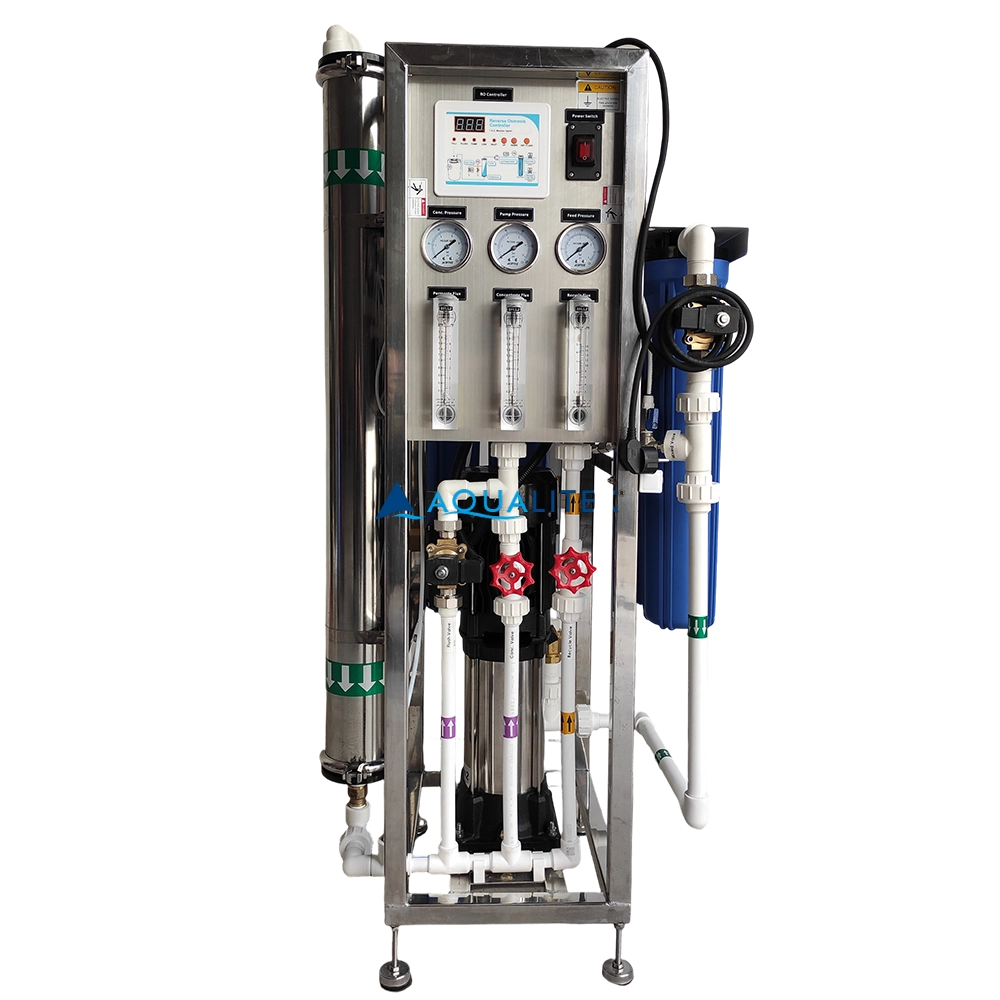
Our 500 LPH Reverse Osmosis (RO) System is engineered to provide high-quality purified water for commercial applications. Designed with advanced RO technology, durable components, and a user-friendly interface, this system ensures consistent performance, low maintenance, and long-term reliability.
With its compact design and robust skid-mounted frame, it’s an excellent choice for businesses that demand efficiency and quality in water purification.
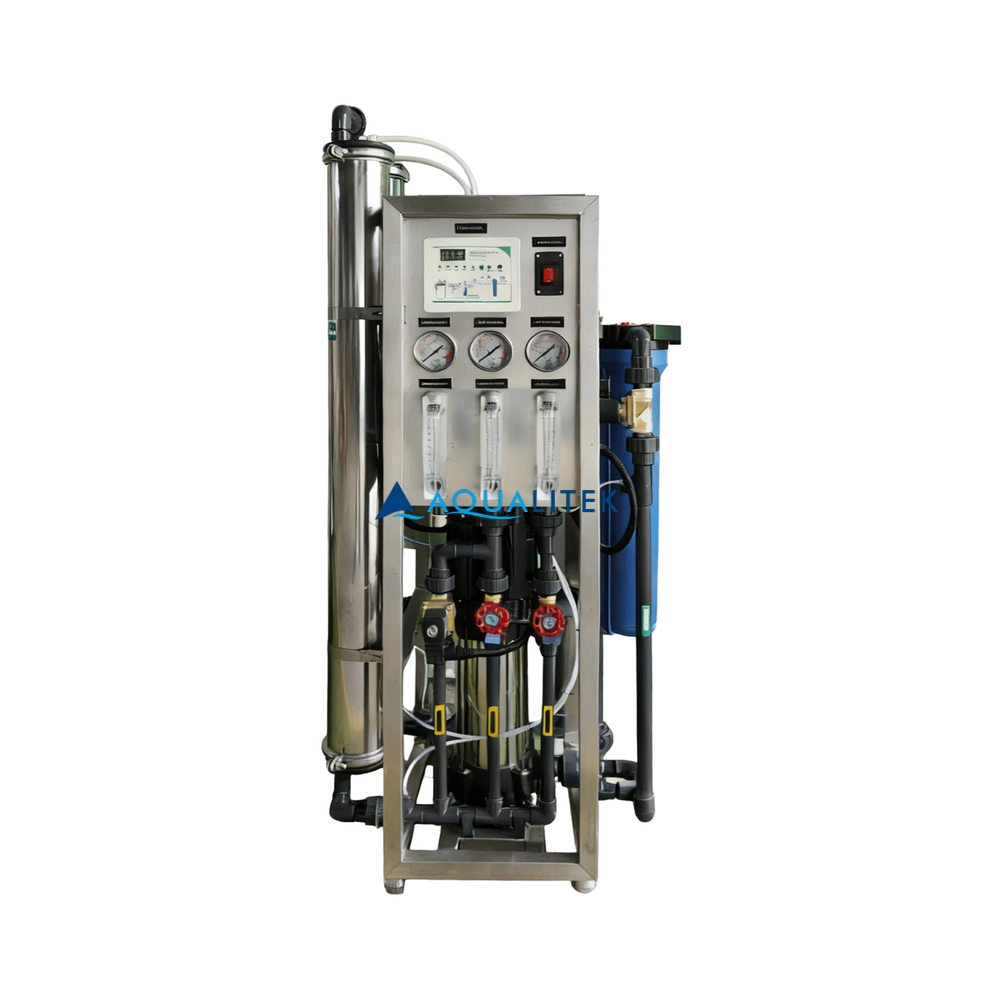
TWV series Reverse Osmosis (RO) systems are pre-engineered and pre-assembled units with 2.5”/4” membrane housings(single element type)for tap water(lower TDS).They are designed for overall superior performance, high recovery rates and offer great savings with low maintenance and operation costs.
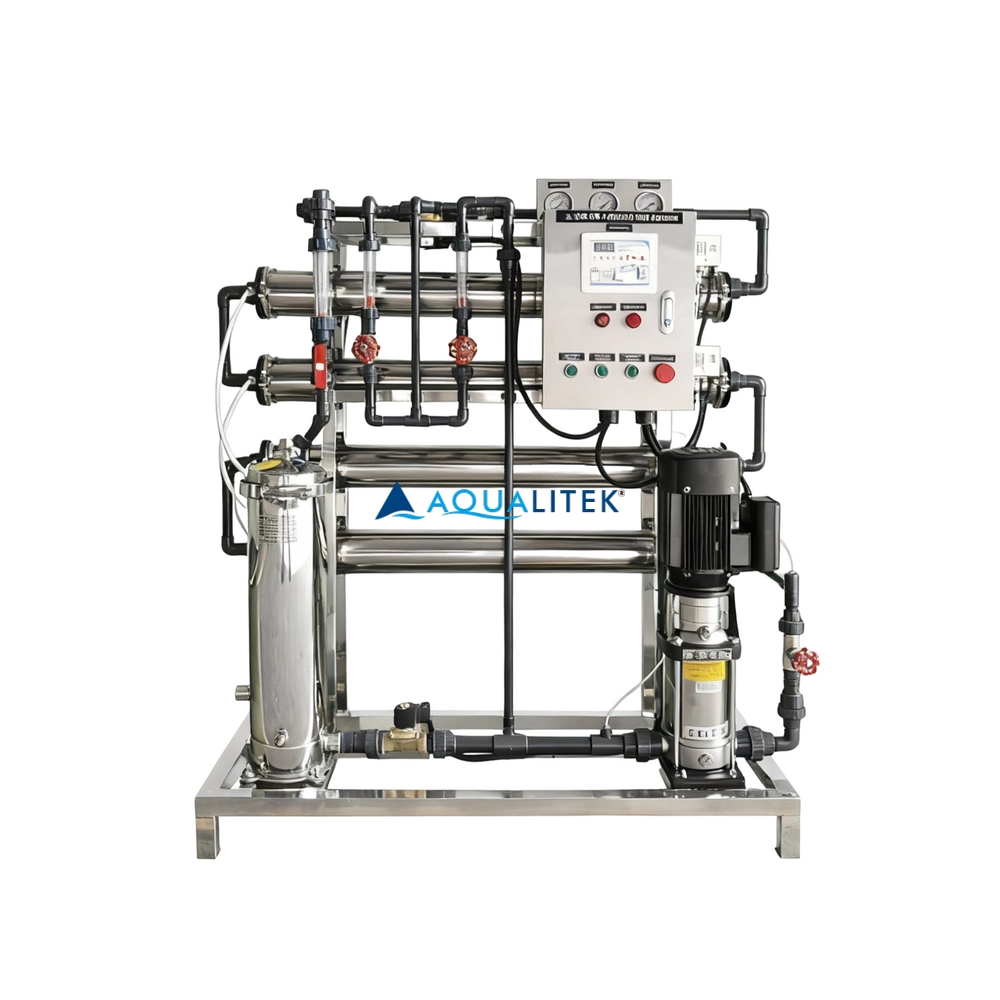
TWF series Reverse Osmosis (RO) systems are pre-engineered and pre-assembled units with 4” membrane housings(multiple elements type) for tap water(lower TDS) .The medium large volumes can help meet your a variety of commercial and industrial applications. They are designed for overall superior performance, high recovery rates and offer great savings with low maintenance and operation costs.

TWE series Reverse Osmosis (RO) systems are pre-engineered and pre-assembled units with 8” membrane housings for tap water (lower TDS). The large volumes can help meet your a variety of industrial applications. They are designed for overall superior performance, high recovery rates and offer great savings with low maintenance and operation costs.
© 2026 AQUALITEK. All rights reserved.
AQUALITEK- Aimee Hoo
AQUALITEK - Aimee Hoo