




Which Online Monitoring Instrument in a Seawater RO System Requires the Most Accurate and Frequent Calibration?| Insights by AQUALITEK
Discover which online monitoring instrument in seawater RO systems is most critical, why it requires frequent calibration, how inaccuracies impact performance, and best maintenance practices.
- Introduction
- 1. Final Answer: Conductivity (Salinity) Analyzer
- Why Conductivity?
- 2. Why Conductivity Measurement Is So Critical in SWRO Systems
- 2.1 Direct Indicator of Membrane Performance
- 2.2 Key Control Parameter for System Operation
- 2.3 Essential for Boron Removal Control
- 3. Why Conductivity Analyzers Require Frequent Calibration
- 3.1 Harsh Operating Conditions
- 3.2 Extremely High Accuracy Requirements
- 3.3 Temperature Compensation Sensitivity
- 4. Key Risks Caused by Conductivity Measurement Errors
- 5. Other Important Online Instruments (But Less Critical Than Conductivity)
- 6. Best Calibration Practices for Conductivity Analyzers
- 6.1 Recommended Calibration Frequency
- 6.2 Calibration Method Best Practices
- 6.3 Online vs Offline Verification
- 7. Best Engineering Recommendations
- 8. Future Trends: Smart Conductivity Monitoring
- Conclusion
Introduction
In seawater reverse osmosis (SWRO) desalination systems, online monitoring instruments are the eyes and nervous system of the plant. They continuously measure critical parameters such as salinity, pressure, flow, temperature, turbidity, SDI, ORP, and pH, ensuring stable operation and membrane protection.
Among all instruments, conductivity (salinity) meters stand out as the most critically accurate instruments that require the most frequent calibration.
This article provides a professional, systematic, and engineering-focused explanation of:
•Which instrument requires the highest accuracy
•Why conductivity measurement is mission-critical
•What happens if calibration drifts
•Best calibration practices for SWRO plants
1. Final Answer: Conductivity (Salinity) Analyzer
The most critically accurate and frequently calibrated online monitoring instrument in a seawater RO system is the conductivity (salinity) analyzer.
Why Conductivity?
Conductivity directly reflects:
•Total dissolved salts (TDS)
•Salt rejection performance of membranes
•System leakage and membrane integrity
•Overall product water quality
Because seawater RO systems aim to reduce salinity from ~35,000 mg/L down to <500 mg/L, extremely high measurement accuracy and stability are required.
2. Why Conductivity Measurement Is So Critical in SWRO Systems
2.1 Direct Indicator of Membrane Performance
Conductivity is the primary parameter used to evaluate:
•Salt rejection rate
•Membrane fouling condition
•Membrane damage and leakage
A deviation of just 1–2% can mean early membrane failure or serious water quality risks.
2.2 Key Control Parameter for System Operation
Conductivity readings control:
•Product water diversion valves
•Alarm triggering
•Membrane flushing sequences
•Water quality compliance
If conductivity measurement is inaccurate, the system may:
•Discharge qualified water
•Deliver substandard water to storage
•Fail regulatory standards
2.3 Essential for Boron Removal Control
In seawater desalination, boron concentration closely correlates with conductivity.
Precise conductivity monitoring ensures:
•Correct second-pass RO operation
•Stable boron removal
•Compliance with drinking and irrigation standards
3. Why Conductivity Analyzers Require Frequent Calibration
3.1 Harsh Operating Conditions
Seawater RO environments expose sensors to:
•High salinity
•Biofouling
•Scaling
•Chemical dosing (chlorine, acid, antiscalant)
This leads to:
•Sensor drift
•Electrode contamination
•Measurement bias
3.2 Extremely High Accuracy Requirements
Typical accuracy requirement:
|
Location |
Required Accuracy |
|
Seawater feed |
±1–2% |
|
Permeate |
±0.5–1% |
|
Final product |
±0.2–0.5% |
Such precision demands frequent calibration.
3.3 Temperature Compensation Sensitivity
Conductivity strongly depends on temperature. Any drift in:
•Temperature sensors
•Compensation algorithms
will directly distort conductivity readings.
4. Key Risks Caused by Conductivity Measurement Errors
|
Error Type |
Potential Consequence |
|
Under-reading |
Substandard water enters storage |
|
Over-reading |
Qualified water wasted |
|
Sensor drift |
Misjudged membrane health |
|
Temperature error |
False salt rejection calculation |
|
Calibration neglect |
Plant-wide control malfunction |
5. Other Important Online Instruments (But Less Critical Than Conductivity)
|
Instrument |
Importance |
|
SDI analyzer |
Pretreatment monitoring |
|
Turbidity meter |
Particle control |
|
ORP analyzer |
Dechlorination control |
|
pH analyzer |
Scaling and CIP management |
|
Flow meters |
System balancing |
|
Pressure transmitters |
Mechanical protection |
Among them, conductivity remains the most sensitive and critical parameter.
6. Best Calibration Practices for Conductivity Analyzers
6.1 Recommended Calibration Frequency
|
Location |
Calibration Interval |
|
Seawater feed |
Monthly |
|
RO permeate |
Weekly |
|
Final product water |
Weekly |
|
Critical compliance points |
Daily verification |
6.2 Calibration Method Best Practices
•Use traceable standard solutions (NIST)
•Perform multi-point calibration
•Clean probes before calibration
•Verify temperature compensation
6.3 Online vs Offline Verification
Always combine:
•Online continuous measurement
•Offline lab conductivity testing
This ensures data integrity and system reliability.
7. Best Engineering Recommendations
•Install dual redundant conductivity sensors
•Use automatic calibration systems
•Implement sensor cleaning systems (CIP-in-place)
•Integrate AI-based drift detection
8. Future Trends: Smart Conductivity Monitoring
•Digital sensors with auto-calibration
•Predictive drift algorithms
•Cloud-based performance analytics
•Smart alarm optimization
Conclusion
In seawater RO systems, the conductivity analyzer is the most critically accurate and frequently calibrated online monitoring instrument.
Its accuracy directly impacts:
•Product water quality
•Membrane safety
•Energy efficiency
•Regulatory compliance
Frequent calibration, redundancy design, and intelligent monitoring are essential best practices for modern desalination plants.


Request More Information or Expert Advice
Share a few details, and we’ll provide deeper insights, tailored suggestions, or product support.
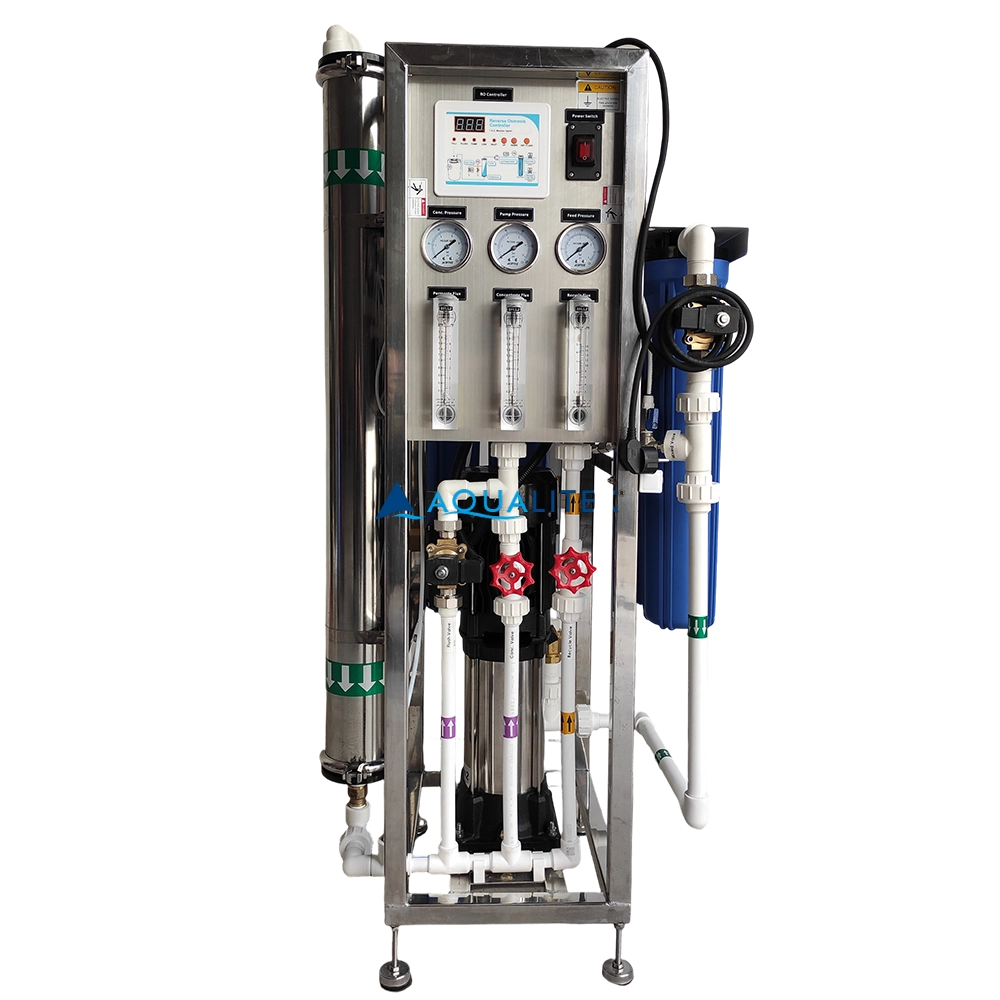
Our 500 LPH Reverse Osmosis (RO) System is engineered to provide high-quality purified water for commercial applications. Designed with advanced RO technology, durable components, and a user-friendly interface, this system ensures consistent performance, low maintenance, and long-term reliability.
With its compact design and robust skid-mounted frame, it’s an excellent choice for businesses that demand efficiency and quality in water purification.
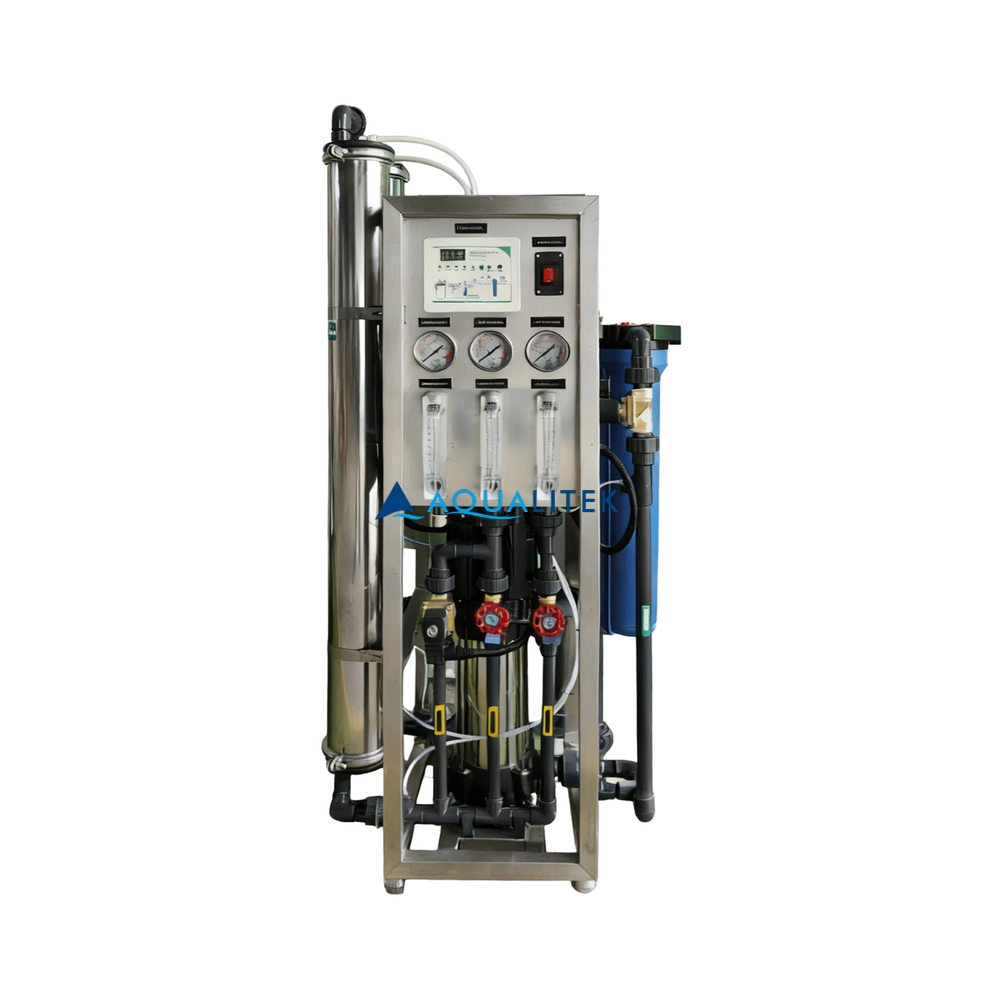
TWV series Reverse Osmosis (RO) systems are pre-engineered and pre-assembled units with 2.5”/4” membrane housings(single element type)for tap water(lower TDS).They are designed for overall superior performance, high recovery rates and offer great savings with low maintenance and operation costs.
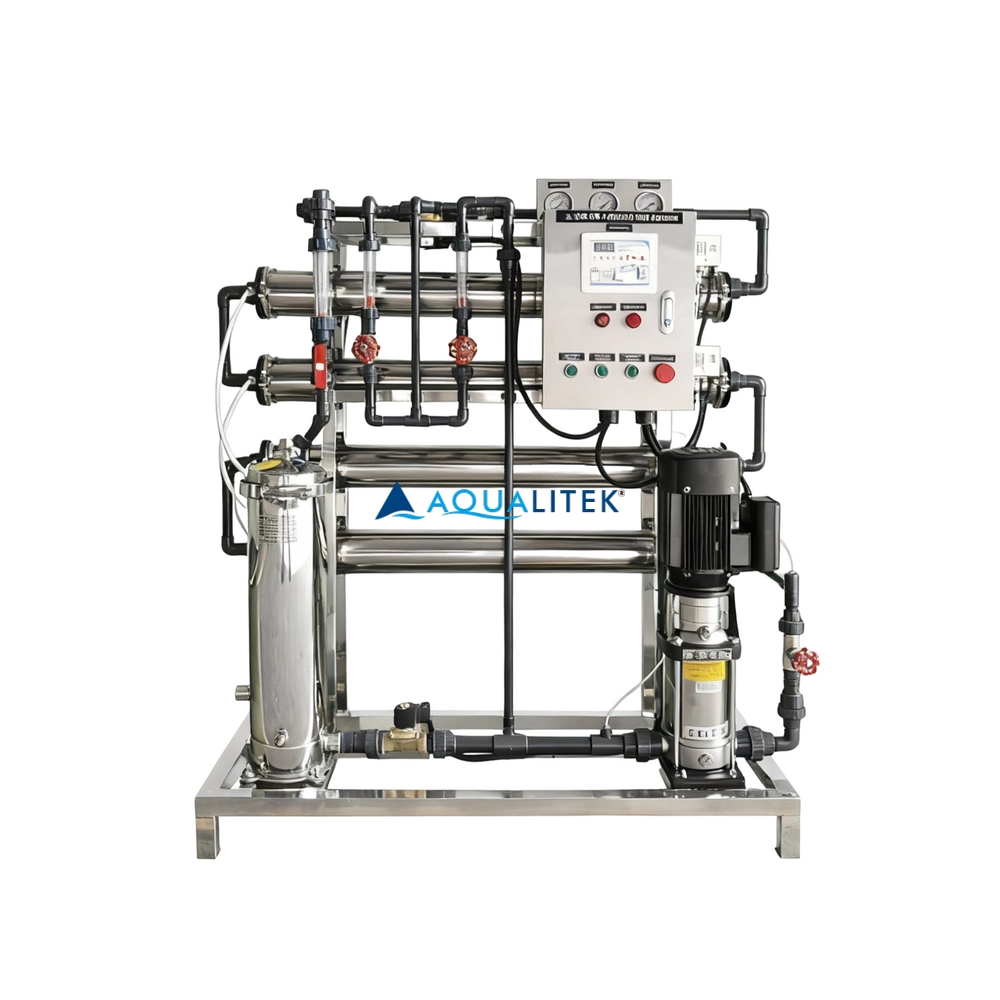
TWF series Reverse Osmosis (RO) systems are pre-engineered and pre-assembled units with 4” membrane housings(multiple elements type) for tap water(lower TDS) .The medium large volumes can help meet your a variety of commercial and industrial applications. They are designed for overall superior performance, high recovery rates and offer great savings with low maintenance and operation costs.

TWE series Reverse Osmosis (RO) systems are pre-engineered and pre-assembled units with 8” membrane housings for tap water (lower TDS). The large volumes can help meet your a variety of industrial applications. They are designed for overall superior performance, high recovery rates and offer great savings with low maintenance and operation costs.
© 2026 AQUALITEK. All rights reserved.
AQUALITEK- Aimee Hoo
AQUALITEK - Aimee Hoo