




What Is the Core Role of a Security Filter (Precision Filter) in Desalination Pretreatment?| Insights by AQUALITEK
Discover the core role of security filters (precision filters) in seawater desalination pretreatment, how they protect RO membranes, and why they are essential for stable system operation.
- Introduction
- 1. Final Answer: Core Role of a Security Filter
- 2. What Is a Security Filter (Precision Filter)?
- Typical Filtration Rating
- 3. Why Security Filters Are Critical in SWRO Pretreatment
- 3.1 Final Barrier Against Fine Particles
- 3.2 Direct Protection of High-Pressure Pumps
- 3.3 Core Defense Against RO Membrane Fouling
- 4. Key Technical Functions of Security Filters
- 5. Relationship Between Security Filters and SDI Control
- 6. Consequences of Poor Security Filtration
- 7. Typical Security Filter Configurations
- 7.1 Cartridge Materials
- 7.2 Cartridge Structure Types
- 8. Best Engineering Design Practices
- 8.1 Filtration Accuracy Selection
- 8.2 Design Flow Velocity
- 9. Operation & Maintenance Best Practices
- 9.1 Replacement Criteria
- 9.2 Online Monitoring
- 10. Future Trends in Precision Filtration for SWRO
- Conclusion
Introduction
In a seawater reverse osmosis (SWRO) desalination system, pretreatment quality directly determines membrane lifespan, system stability, operating cost, and water production efficiency.
Among all pretreatment components, the security filter (also known as the precision filter or cartridge filter) plays a critical final protection role before seawater enters the high-pressure pump and RO membranes.
This article provides a complete, engineering-level explanation of:
•What a security filter is
•Its core functional role
•Why it is indispensable
•How it protects RO membranes
•Best design and operation practices
1. Final Answer: Core Role of a Security Filter
The core role of a security filter in desalination pretreatment is to provide final mechanical filtration, intercepting fine suspended solids and particles to protect high-pressure pumps and RO membranes from fouling, abrasion, and irreversible damage.
In simple terms:
Security filter = Last safety barrier before RO membranes.
2. What Is a Security Filter (Precision Filter)?
A security filter is typically a cartridge-type filtration unit, installed after multimedia filtration / UF pretreatment and before the high-pressure pump and RO membranes.
Typical Filtration Rating
|
Application |
Filtration Precision |
|
Seawater RO |
1–5 μm |
|
Brackish water RO |
5–10 μm |
|
Industrial ultrapure systems |
0.5–1 μm |
3. Why Security Filters Are Critical in SWRO Pretreatment
3.1 Final Barrier Against Fine Particles
Even after advanced pretreatment (DAF + sand filter + UF), seawater still contains:
•Fine silt
•Colloids
•Bio-flocs
•Microplastics
•Corrosion debris
The security filter captures these particles before they reach high-pressure pumps and RO membranes.
3.2 Direct Protection of High-Pressure Pumps
High-pressure pumps operate at:
•55–80 bar (800–1,200 psi)
Any fine particles can cause:
•Seal wear
•Bearing erosion
•Impeller damage
•Cavitation
Security filters prevent mechanical failure and reduce maintenance costs.
3.3 Core Defense Against RO Membrane Fouling
Even trace solids entering RO membranes can cause:
•Channel blockage
•Rapid pressure drop increase
•Localized fouling
•Irreversible membrane damage
Security filters minimize:
•Particulate fouling
•Silt deposition
•Biofouling nucleation
4. Key Technical Functions of Security Filters
|
Function |
Engineering Impact |
|
Particle interception |
Removes >99% of >1–5 μm solids |
|
SDI stabilization |
Helps maintain SDI15 <3–5 |
|
Pressure stability |
Prevents membrane pressure spikes |
|
Flow uniformity |
Improves module hydrodynamics |
|
Emergency protection |
Blocks pretreatment breakthrough |
5. Relationship Between Security Filters and SDI Control
The Silt Density Index (SDI) is the most critical pretreatment control parameter for SWRO.
Security filters help:
•Reduce SDI15 values
•Stabilize turbidity
•Improve membrane fouling resistance
Typical SWRO SDI Targets:
|
System Type |
SDI15 Requirement |
|
SWRO |
≤3–5 |
|
High-performance SWRO |
≤2–3 |
6. Consequences of Poor Security Filtration
If security filters are ineffective, systems may experience:
|
Problem |
Consequence |
|
Rapid membrane fouling |
Increased CIP frequency |
|
High pressure drop |
Higher energy consumption |
|
Biofilm formation |
Reduced salt rejection |
|
Pump wear |
Frequent mechanical failures |
|
Short membrane life |
Increased operating costs |
7. Typical Security Filter Configurations
7.1 Cartridge Materials
|
Material |
Features |
|
Polypropylene (PP) |
Most common, chemical resistant |
|
PES |
High precision, low extractables |
|
PVDF |
Superior chemical & temperature resistance |
7.2 Cartridge Structure Types
•Melt-blown
•Pleated
•String-wound
•Depth filters
Pleated cartridges are most widely used due to:
•Large filtration area
•Low pressure drop
•High dirt-holding capacity
8. Best Engineering Design Practices
8.1 Filtration Accuracy Selection
|
Water Quality |
Recommended Micron Rating |
|
High-quality UF permeate |
5 μm |
|
Conventional pretreatment |
1–3 μm |
|
Complex raw seawater |
1 μm |
8.2 Design Flow Velocity
•Recommended: ≤3 m/h cartridge surface velocity
•Avoid excessive velocity to prevent:
Fiber breakage
Particle bypass
Pressure surges
9. Operation & Maintenance Best Practices
9.1 Replacement Criteria
•ΔP ≥ 0.1 MPa (1 bar)
•Operating time ≥ 1–3 months
•Sudden turbidity increase
9.2 Online Monitoring
•Differential pressure transmitters
•Turbidity sensors
•SDI monitoring
10. Future Trends in Precision Filtration for SWRO
•Automatic backwashable cartridge filters
•Smart differential pressure diagnostics
•Self-cleaning fine filters
•AI-based fouling prediction
Conclusion
The security filter (precision filter) plays a mission-critical role in desalination pretreatment by acting as the final mechanical barrier that protects high-pressure pumps and RO membranes.
It directly impacts:
•Membrane lifespan
•Plant energy efficiency
•System reliability
•Operating cost
Well-designed and properly maintained security filtration is one of the highest ROI investments in any SWRO project.


Request More Information or Expert Advice
Share a few details, and we’ll provide deeper insights, tailored suggestions, or product support.
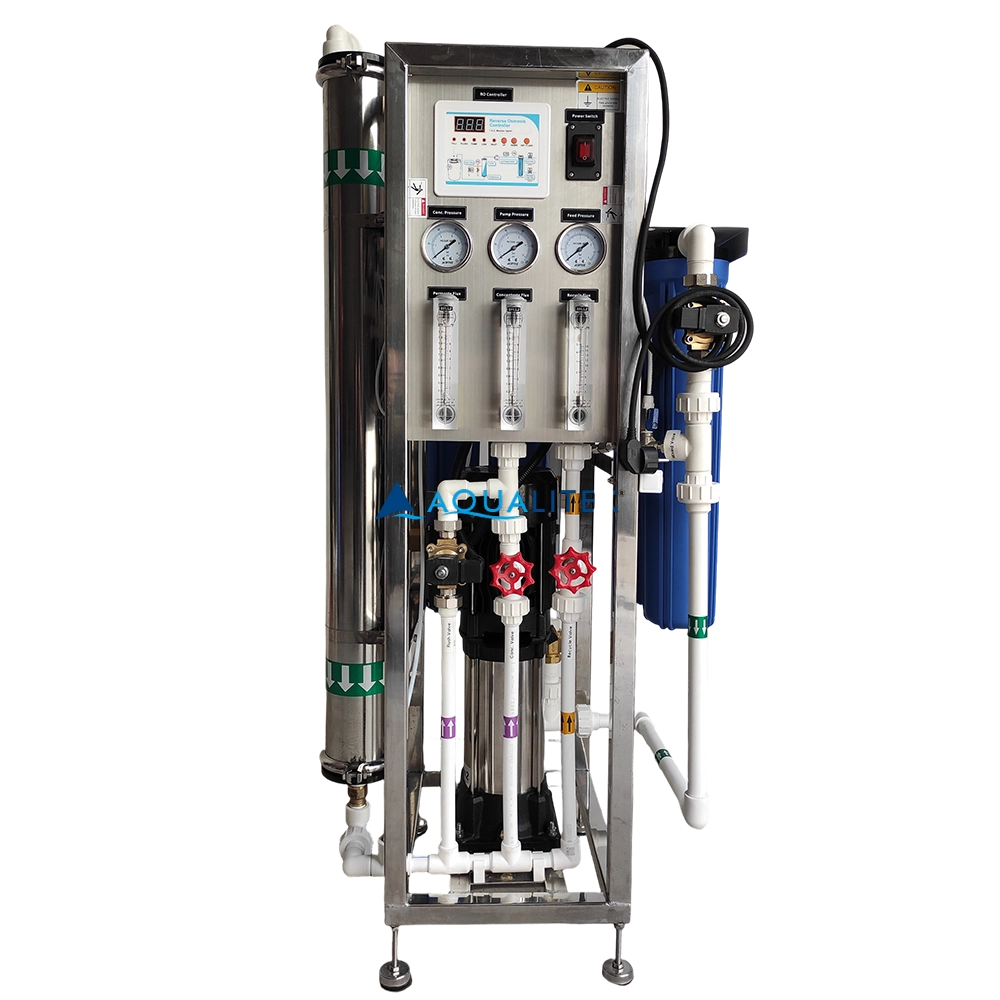
Our 500 LPH Reverse Osmosis (RO) System is engineered to provide high-quality purified water for commercial applications. Designed with advanced RO technology, durable components, and a user-friendly interface, this system ensures consistent performance, low maintenance, and long-term reliability.
With its compact design and robust skid-mounted frame, it’s an excellent choice for businesses that demand efficiency and quality in water purification.
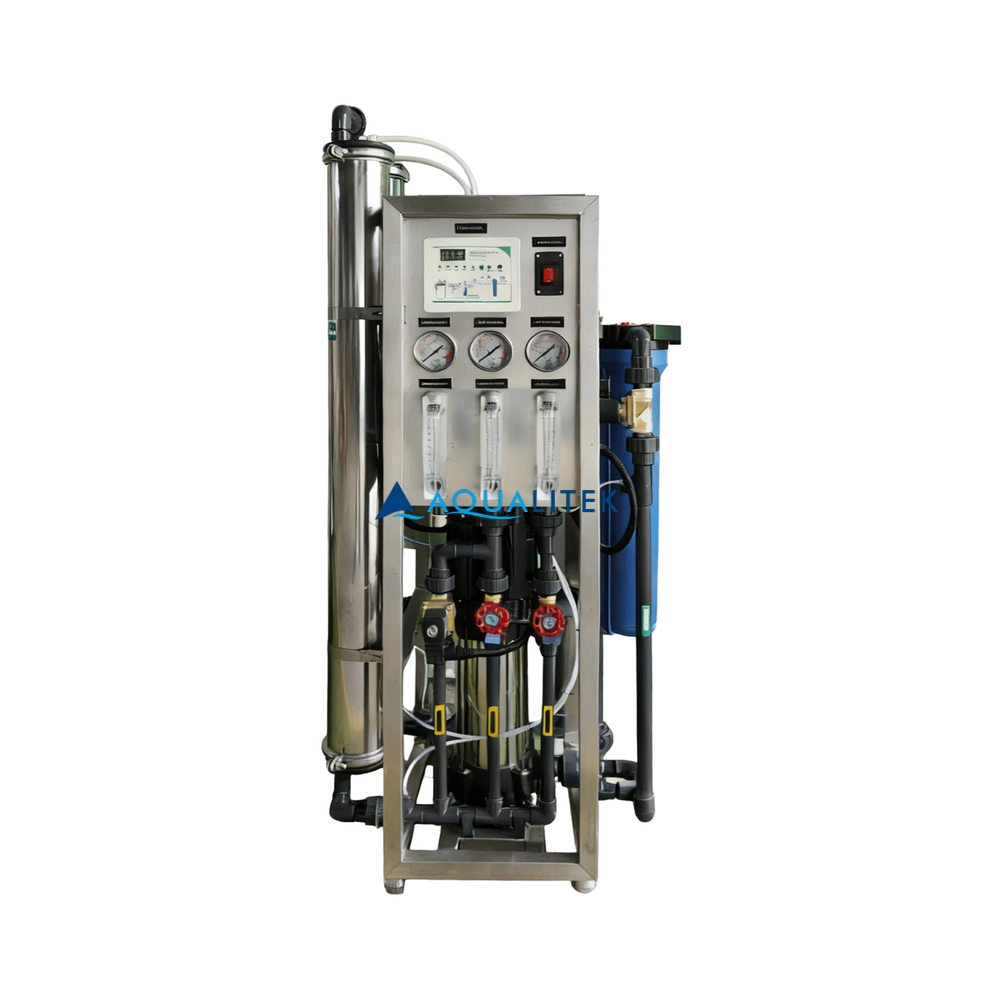
TWV series Reverse Osmosis (RO) systems are pre-engineered and pre-assembled units with 2.5”/4” membrane housings(single element type)for tap water(lower TDS).They are designed for overall superior performance, high recovery rates and offer great savings with low maintenance and operation costs.
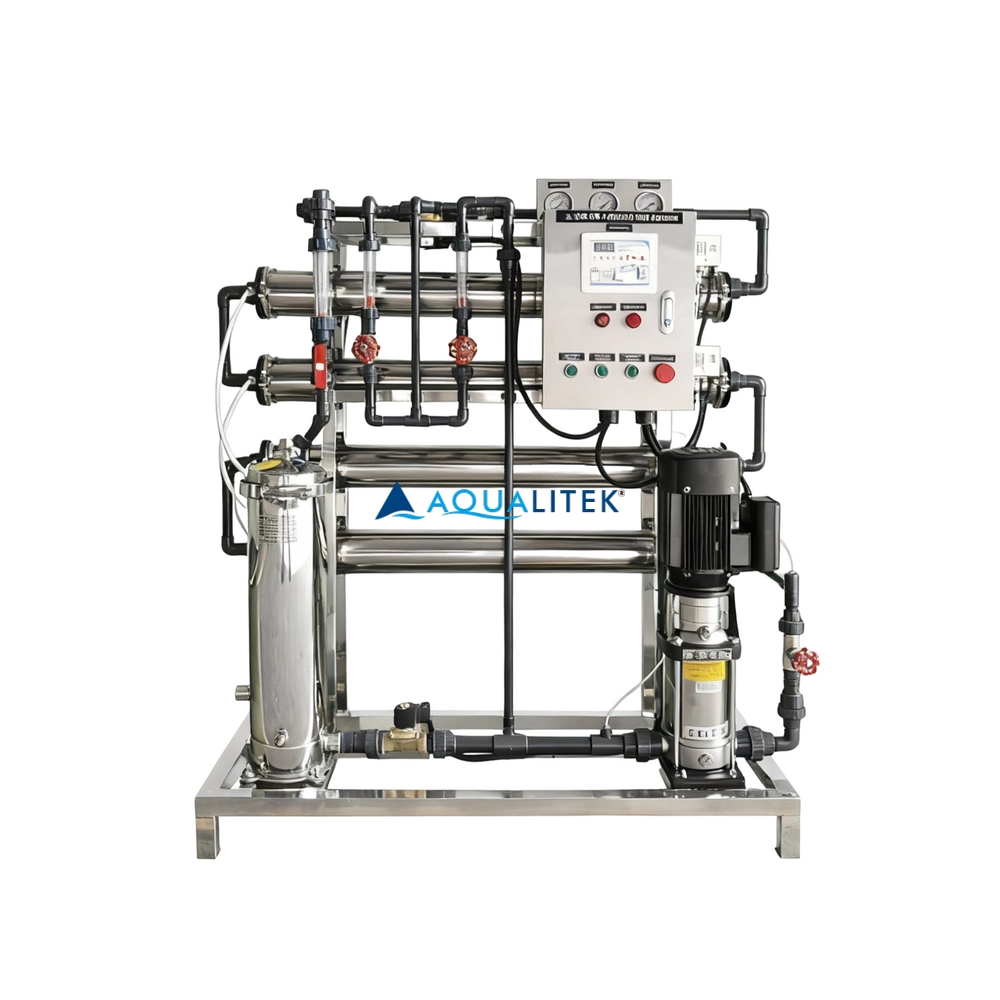
TWF series Reverse Osmosis (RO) systems are pre-engineered and pre-assembled units with 4” membrane housings(multiple elements type) for tap water(lower TDS) .The medium large volumes can help meet your a variety of commercial and industrial applications. They are designed for overall superior performance, high recovery rates and offer great savings with low maintenance and operation costs.

TWE series Reverse Osmosis (RO) systems are pre-engineered and pre-assembled units with 8” membrane housings for tap water (lower TDS). The large volumes can help meet your a variety of industrial applications. They are designed for overall superior performance, high recovery rates and offer great savings with low maintenance and operation costs.
© 2026 AQUALITEK. All rights reserved.
AQUALITEK- Aimee Hoo
AQUALITEK - Aimee Hoo