




What Are the Immediate Effects of Reducing the Concentrate Valve Opening on the High-Pressure Pump and RO Membrane?| Insights by AQUALITEK
Reducing the concentrate valve opening in an RO system has immediate effects on pressure, pump load, and membrane performance. Learn how this adjustment impacts system safety, recovery, and membrane lifespan.
- Introduction
- What Happens When the Concentrate Valve Opening Is Reduced?
- Immediate Effects on the High-Pressure Pump
- 1. Rapid Increase in Discharge Pressure
- 2. Increased Pump Load and Power Consumption
- 3. Increased Mechanical Stress and Vibration
- 4. Higher Risk of Pump Cavitation (Indirect Effect)
- Immediate Effects on the RO Membrane
- 1. Instant Increase in Transmembrane Pressure (TMP)
- 2. Short-Term Increase in Permeate Flow
- 3. Rapid Increase in Salt Concentration at the Membrane Surface
- 4. Elevated Risk of Scaling and Fouling
- 5. Potential Decline in Salt Rejection Stability
- System-Level Side Effects
- Best Practices for Adjusting the Concentrate Valve
- Key Warning Signs After Valve Adjustment
- Conclusion
Introduction
In reverse osmosis (RO) systems, adjusting the concentrate (brine) valve opening is one of the most direct ways to control operating pressure and recovery rate.
However, reducing the concentrate valve opening too quickly or excessively can trigger a chain reaction that immediately affects both:
•The high-pressure pump, and
•The RO membrane elements
Understanding these immediate effects is critical for safe operation, commissioning, and troubleshooting.
What Happens When the Concentrate Valve Opening Is Reduced?
The concentrate valve controls how much reject water exits the system. When the valve opening is reduced:
•Concentrate flow decreases
•System hydraulic resistance increases
•Feed pressure upstream of the membrane rises
This adjustment produces instantaneous mechanical and process-level impacts.
Immediate Effects on the High-Pressure Pump
1. Rapid Increase in Discharge Pressure
As the concentrate outlet is restricted:
•Backpressure builds rapidly
•Pump discharge pressure rises almost instantly
If the valve is closed too much:
•The pump may approach or exceed its design pressure
•High-pressure alarms or safety shutdowns may be triggered
2. Increased Pump Load and Power Consumption
Higher discharge pressure means:
•Higher shaft torque
•Increased motor current
•Elevated electrical energy consumption
This effect is immediate and measurable on the motor current meter.
3. Increased Mechanical Stress and Vibration
Sudden pressure increases can cause:
•Pump vibration
•Seal stress
•Accelerated bearing wear
Frequent or abrupt valve throttling significantly shortens pump service life.
4. Higher Risk of Pump Cavitation (Indirect Effect)
Although cavitation is related to suction conditions, excessive discharge pressure can:
•Reduce net positive suction head margin (NPSH)
•Exacerbate existing inlet pressure issues
This increases cavitation risk under marginal feed conditions.
Immediate Effects on the RO Membrane
1. Instant Increase in Transmembrane Pressure (TMP)
Reducing concentrate flow raises:
•Feed pressure inside the membrane housing
•Transmembrane pressure across the membrane surface
This increases the driving force for water permeation.
2. Short-Term Increase in Permeate Flow
In the short term, operators may observe:
•Increased permeate flow
•Higher apparent recovery rate
This “performance improvement” is often misleading and unsustainable.
3. Rapid Increase in Salt Concentration at the Membrane Surface
Lower concentrate flow means:
•Weaker flushing effect
•Higher salt concentration at the membrane surface
This causes:
•Increased concentration polarization
•Higher scaling and fouling risk
4. Elevated Risk of Scaling and Fouling
Immediately after reducing valve opening:
•Calcium carbonate, sulfate, or silica supersaturation may occur
•Organic and colloidal fouling accelerates
Even a short period of over-recovery can permanently damage the membrane.
5. Potential Decline in Salt Rejection Stability
Excessive pressure and concentration polarization can lead to:
•Salt passage instability
•Localized membrane stress
•Premature membrane aging
System-Level Side Effects
Beyond pump and membrane impacts, reduced concentrate flow may cause:
•Inaccurate recovery calculations
•Misleading “good-looking” operating data
•Increased frequency of chemical cleaning (CIP)
Best Practices for Adjusting the Concentrate Valve
✔ Adjust the valve slowly and incrementally
✔ Monitor pressure, flow, and motor current simultaneously
✔ Never exceed membrane design recovery limits
✔ Follow manufacturer-recommended ramp-up procedures
✔ Record operating data before and after adjustment
Key Warning Signs After Valve Adjustment
•Sudden pressure spikes
•Sharp rise in motor current
•Rapid decrease in concentrate flow
•Unstable permeate conductivity
•Increased differential pressure across the membrane
If any of these occur, immediately restore the previous valve position.
Conclusion
Reducing the concentrate valve opening has immediate and significant effects on both the high-pressure pump and RO membranes.
While it may temporarily increase water production, it also:
•Raises system pressure
•Increases pump load
•Accelerates membrane fouling and scaling
In RO operation, small valve adjustments can have large consequences. Controlled, data-driven adjustment is essential for long-term system reliability.


Request More Information or Expert Advice
Share a few details, and we’ll provide deeper insights, tailored suggestions, or product support.
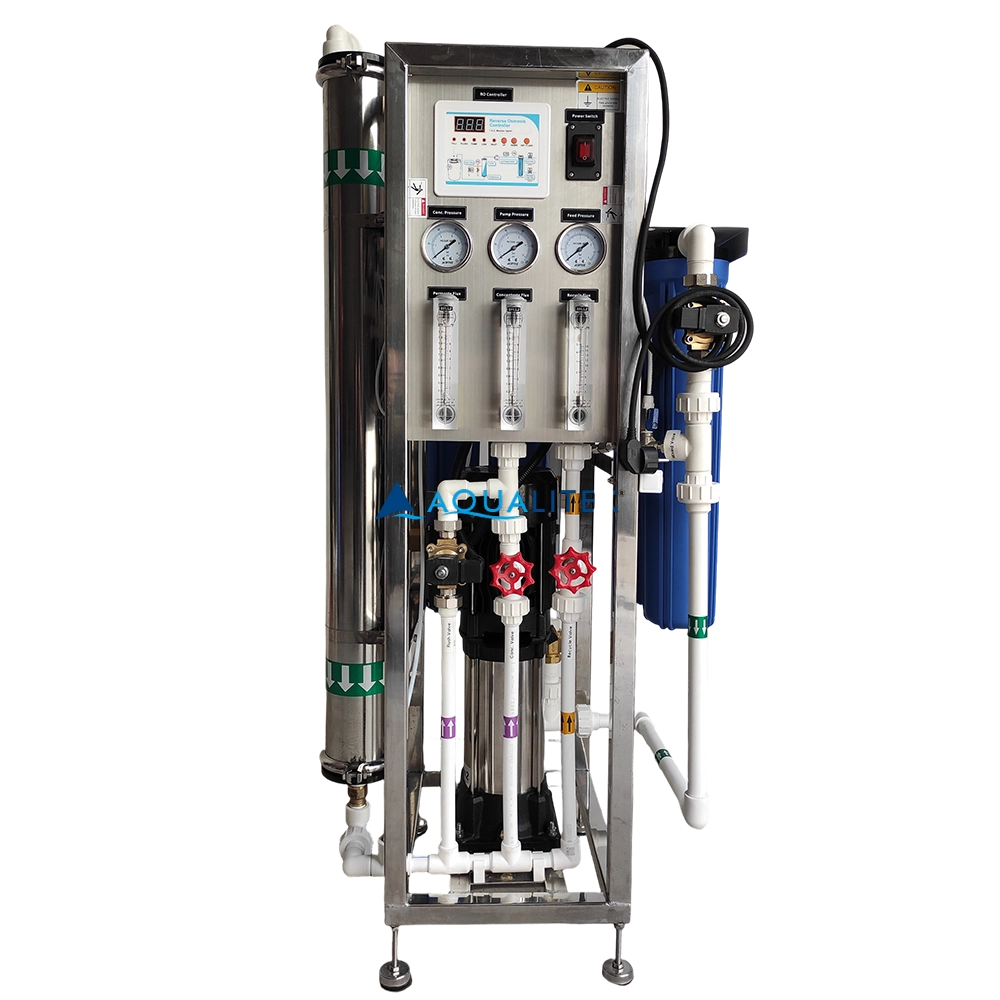
Our 500 LPH Reverse Osmosis (RO) System is engineered to provide high-quality purified water for commercial applications. Designed with advanced RO technology, durable components, and a user-friendly interface, this system ensures consistent performance, low maintenance, and long-term reliability.
With its compact design and robust skid-mounted frame, it’s an excellent choice for businesses that demand efficiency and quality in water purification.
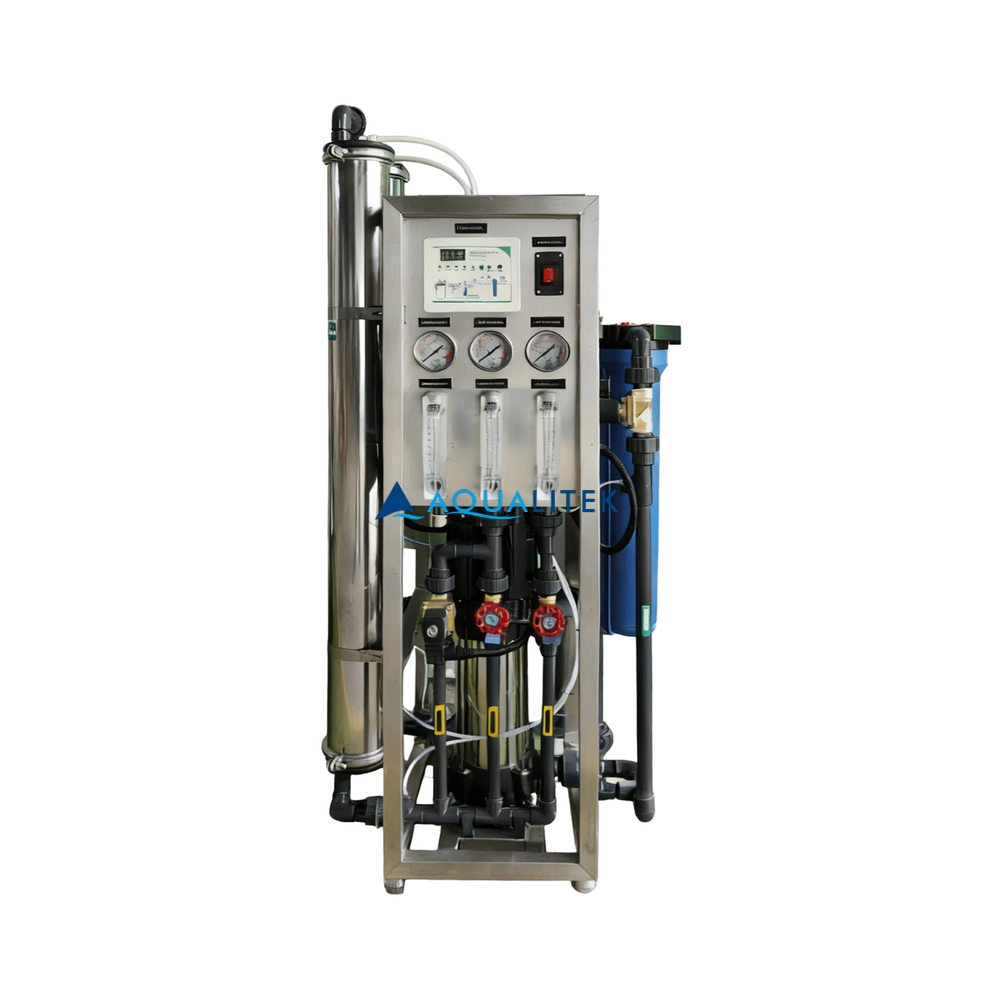
TWV series Reverse Osmosis (RO) systems are pre-engineered and pre-assembled units with 2.5”/4” membrane housings(single element type)for tap water(lower TDS).They are designed for overall superior performance, high recovery rates and offer great savings with low maintenance and operation costs.
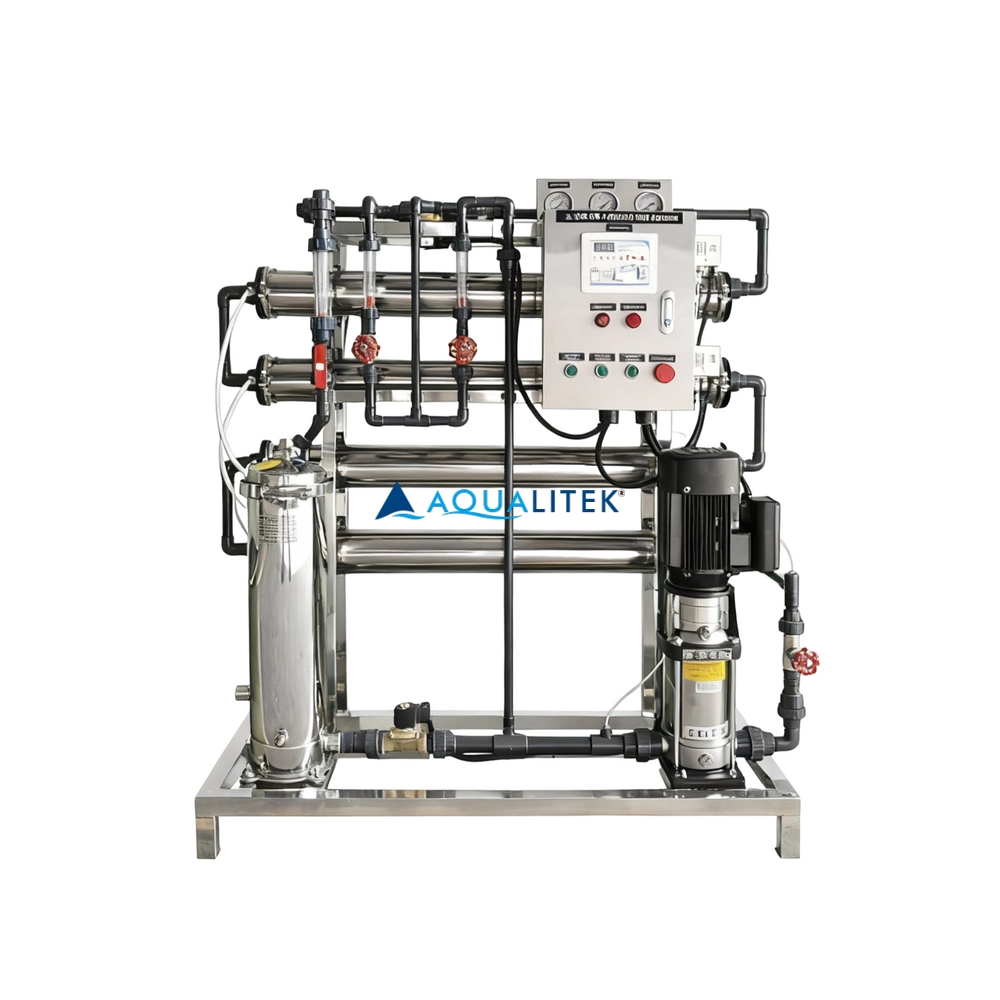
TWF series Reverse Osmosis (RO) systems are pre-engineered and pre-assembled units with 4” membrane housings(multiple elements type) for tap water(lower TDS) .The medium large volumes can help meet your a variety of commercial and industrial applications. They are designed for overall superior performance, high recovery rates and offer great savings with low maintenance and operation costs.

TWE series Reverse Osmosis (RO) systems are pre-engineered and pre-assembled units with 8” membrane housings for tap water (lower TDS). The large volumes can help meet your a variety of industrial applications. They are designed for overall superior performance, high recovery rates and offer great savings with low maintenance and operation costs.
© 2026 AQUALITEK. All rights reserved.
AQUALITEK- Aimee Hoo
AQUALITEK - Aimee Hoo