





Why Does Desalinated Seawater Require Remineralization or pH Adjustment Before Drinking?| Insights by AQUALITEK
Desalinated seawater is extremely low in minerals and often acidic. Discover why remineralization and pH adjustment are essential before potable use.
- Introduction
- 1. Desalinated Water Is “Too Pure”
- 1.1 Extremely Low Mineral Content
- 2. Low pH and Poor Chemical Stability
- 2.1 CO₂ Absorption Lowers pH
- 3. Corrosion Risk in Distribution Systems
- 3.1 Aggressive Water Attacks Infrastructure
- 4. Health and Nutritional Considerations
- 4.1 Essential Minerals Are Missing
- 5. Taste and Consumer Acceptance
- 6. Common Remineralization and pH Adjustment Methods
- 6.1 Limestone (Calcite) Contactors
- 6.2 Lime or Caustic Dosing
- 6.3 Blending with Treated Raw Water
- 6.4 Magnesium Addition (Optional)
- 7. Regulatory and Standard Compliance
- Conclusion
Introduction
Seawater desalination plants—especially those based on reverse osmosis (RO)—are capable of producing ultra-pure water by removing more than 99.5% of dissolved salts and impurities.
While this level of purification is ideal for protecting membranes and downstream equipment, it creates a new challenge:
The produced water is often chemically unstable and unsuitable for direct human consumption.
As a result, remineralization and pH adjustment are almost always required before desalinated water can be supplied as drinking water.
This article explains why desalinated water must be conditioned, what risks untreated product water presents, and how mineralization improves safety, taste, and system compatibility.
1. Desalinated Water Is “Too Pure”
1.1 Extremely Low Mineral Content
RO desalination removes:
•Calcium (Ca²⁺)
•Magnesium (Mg²⁺)
•Bicarbonate (HCO₃⁻)
•Trace elements
Typical desalinated water characteristics:
•TDS: < 50 mg/L
•Calcium hardness: near zero
•Alkalinity: almost zero
While this meets purification goals, it creates water that lacks buffering capacity and essential minerals.
2. Low pH and Poor Chemical Stability
2.1 CO₂ Absorption Lowers pH
Desalinated water contains:
•Very little alkalinity
•No natural buffering system
As a result, dissolved carbon dioxide easily lowers pH:
•Typical pH after RO: 5.5–6.5
•Drinking water standards usually require: 6.5–8.5
Low pH water is:
•Corrosive to pipelines and storage tanks
•Aggressive toward metals and concrete
•Unstable during distribution
3. Corrosion Risk in Distribution Systems
3.1 Aggressive Water Attacks Infrastructure
Without mineral stabilization, desalinated water can:
•Leach metals (iron, copper, lead)
•Corrode steel and ductile iron pipes
•Damage concrete reservoirs and linings
This leads to:
•Water quality deterioration
•Increased maintenance costs
•Regulatory non-compliance
Remineralization restores Langelier Saturation Index (LSI) to a safe range, protecting infrastructure.
4. Health and Nutritional Considerations
4.1 Essential Minerals Are Missing
Calcium and magnesium in drinking water contribute to:
•Bone health
•Cardiovascular function
•Electrolyte balance
While food is the primary mineral source, long-term consumption of demineralized water may:
•Reduce dietary mineral intake
•Affect taste acceptance
•Fail to meet public health recommendations
Many national standards now require minimum hardness or mineral content in potable water.
5. Taste and Consumer Acceptance
Desalinated water without conditioning often:
•Tastes “flat” or “empty”
•Feels unnatural compared to natural water sources
Small amounts of minerals:
•Improve mouthfeel
•Enhance palatability
•Increase consumer confidence
Taste quality is a critical factor for public acceptance of desalination projects.
6. Common Remineralization and pH Adjustment Methods
6.1 Limestone (Calcite) Contactors
•Dissolve calcium carbonate
•Raise pH and alkalinity
•Add calcium hardness
6.2 Lime or Caustic Dosing
•Precise pH control
•Fast response
•Often combined with CO₂ dosing
6.3 Blending with Treated Raw Water
•Mixes RO permeate with mineralized water
•Improves stability and taste
•Requires careful quality control
6.4 Magnesium Addition (Optional)
•Enhances health profile
•Improves water balance
•Used in many modern SWRO plants
7. Regulatory and Standard Compliance
Most drinking water standards specify:
•Minimum pH limits
•Corrosion control requirements
•Stability indices
•Recommended mineral ranges
Without post-treatment:
•Desalinated water often fails compliance
•Distribution system risks increase
•Public health concerns arise
Thus, mineralization is a regulatory necessity, not a luxury.
Conclusion
Although seawater desalination produces exceptionally clean water, that purity comes with chemical instability.
Remineralization and pH adjustment are essential to:
•Protect distribution infrastructure
•Ensure regulatory compliance
•Improve taste and acceptance
•Support long-term public health
In potable desalination projects, post-treatment is just as important as membrane performance.


Request More Information or Expert Advice
Share a few details, and we’ll provide deeper insights, tailored suggestions, or product support.
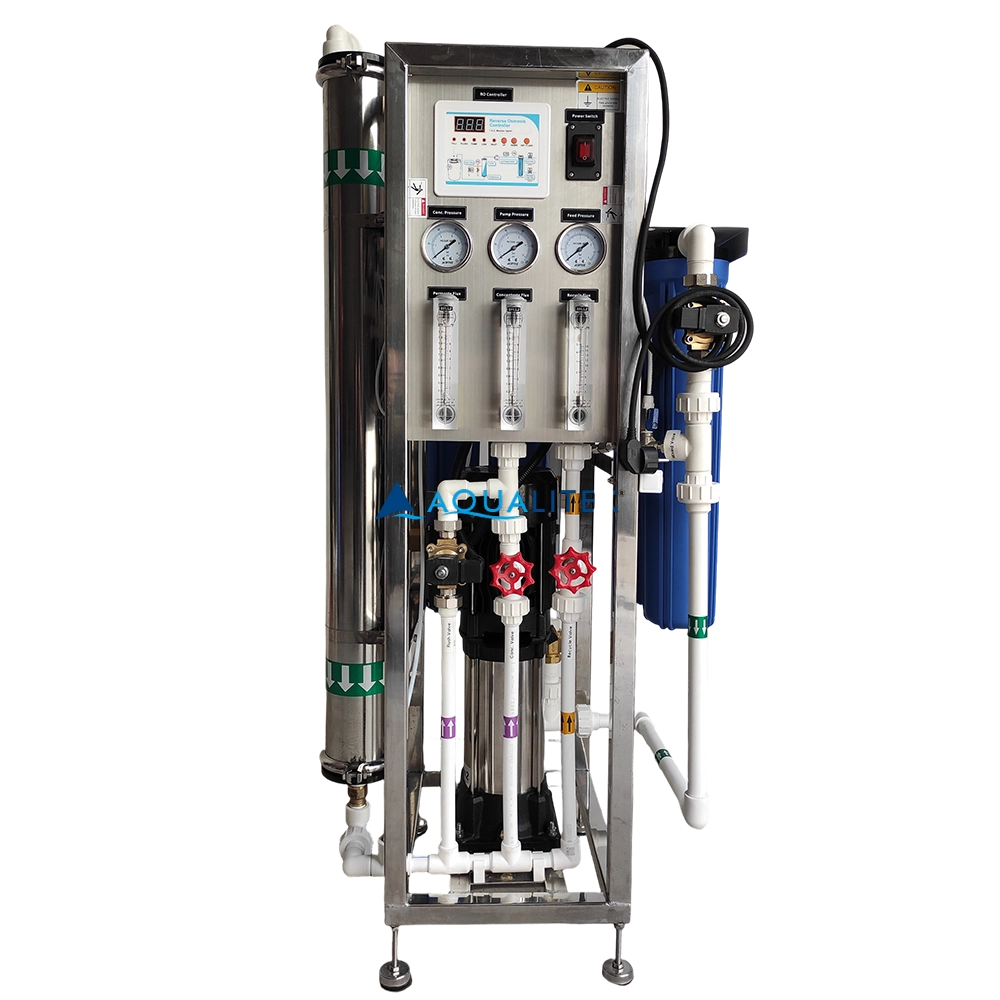
Our 500 LPH Reverse Osmosis (RO) System is engineered to provide high-quality purified water for commercial applications. Designed with advanced RO technology, durable components, and a user-friendly interface, this system ensures consistent performance, low maintenance, and long-term reliability.
With its compact design and robust skid-mounted frame, it’s an excellent choice for businesses that demand efficiency and quality in water purification.
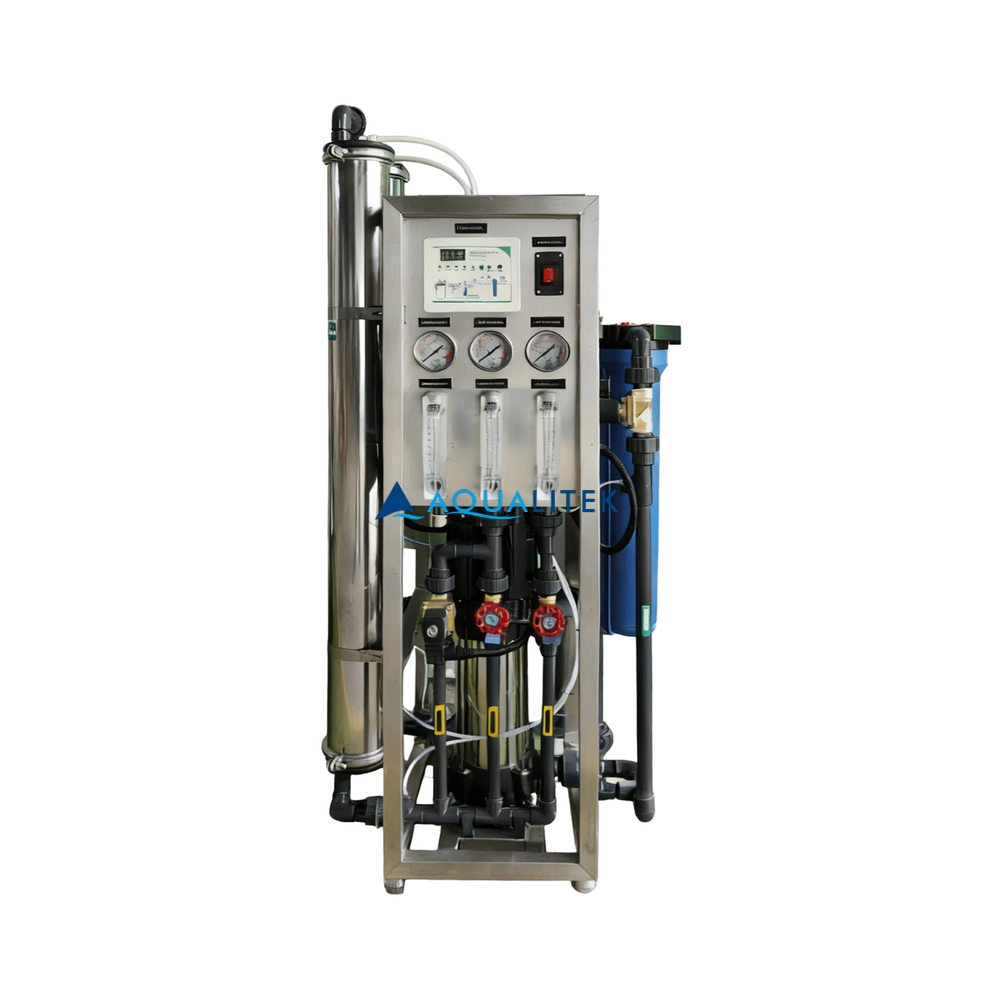
TWV series Reverse Osmosis (RO) systems are pre-engineered and pre-assembled units with 2.5”/4” membrane housings(single element type)for tap water(lower TDS).They are designed for overall superior performance, high recovery rates and offer great savings with low maintenance and operation costs.
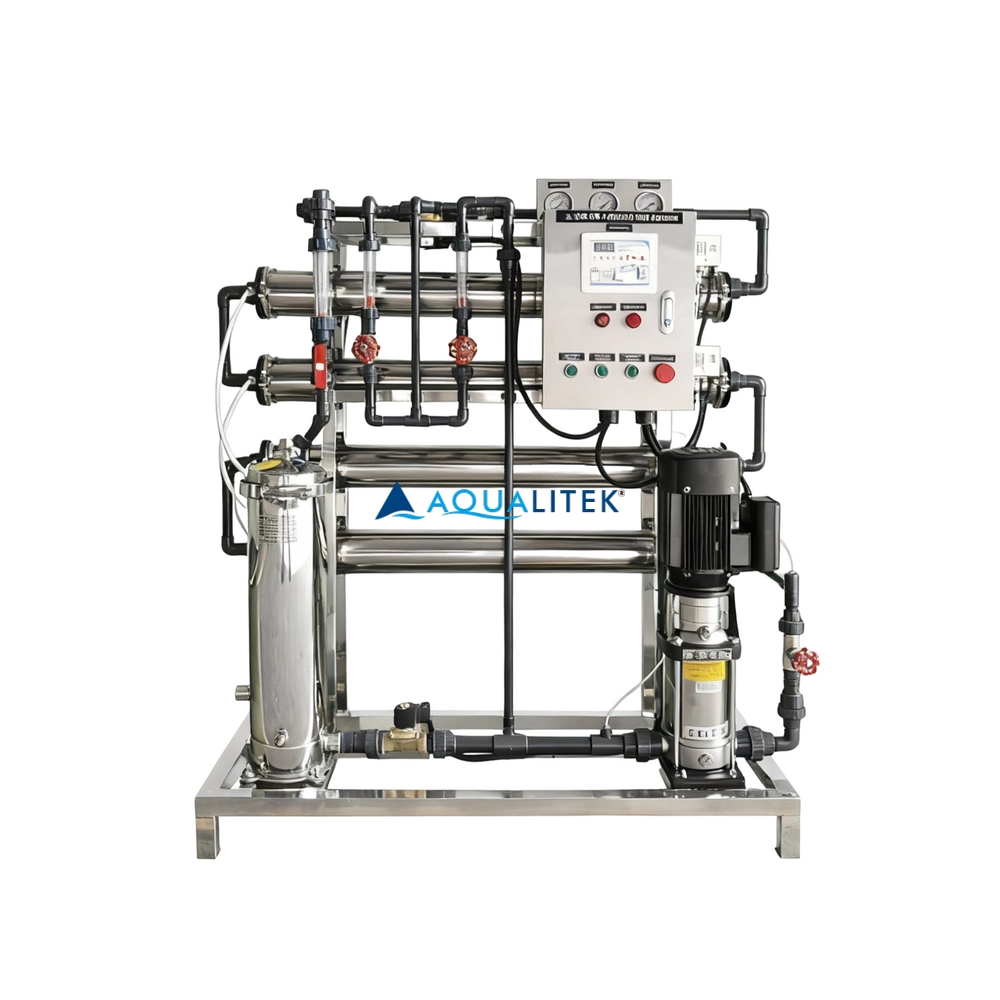
TWF series Reverse Osmosis (RO) systems are pre-engineered and pre-assembled units with 4” membrane housings(multiple elements type) for tap water(lower TDS) .The medium large volumes can help meet your a variety of commercial and industrial applications. They are designed for overall superior performance, high recovery rates and offer great savings with low maintenance and operation costs.

TWE series Reverse Osmosis (RO) systems are pre-engineered and pre-assembled units with 8” membrane housings for tap water (lower TDS). The large volumes can help meet your a variety of industrial applications. They are designed for overall superior performance, high recovery rates and offer great savings with low maintenance and operation costs.
© 2026 AQUALITEK. All rights reserved.
AQUALITEK- Aimee Hoo
AQUALITEK - Aimee Hoo