




What Are the Special Requirements for Flushing and Pressurization Before Starting a Seawater Desalination System?| Insights by AQUALITEK
Improper flushing and pressurization are major causes of early membrane damage in seawater RO systems. This article explains the special startup requirements and best practices to ensure safe desalination system operation.
- Introduction
- Why Flushing and Pressurization Are More Critical in SWRO Systems
- Special Requirements for Flushing Before Startup
- 1. Thorough Low-Pressure Flushing Is Mandatory
- 2. Use Qualified Water for Flushing
- 3. Flush Without Producing Product Water Initially
- 4. Extended Flushing Time for New or Idle Systems
- Special Requirements for Pressurization Before Operation
- 1. Pressurization Must Be Gradual and Stepwise
- 2. Maintain Adequate Crossflow During Pressurization
- 3. Avoid High Recovery During Initial Pressurization
- 4. Closely Monitor Key Parameters
- Additional Best Practices for SWRO Startup
- Common Startup Mistakes to Avoid
- Conclusion
Introduction
Compared with brackish water RO systems, seawater desalination (SWRO) systems operate at much higher pressures and face far greater fouling and scaling risks. As a result, the flushing and pressurization procedures before startup are critical and must be performed with stricter control.
Failure to follow proper startup practices can lead to:
•Irreversible membrane compaction
•Mechanical damage to membrane elements
•Sudden fouling or scaling
•High-pressure pump overload
This article outlines the special requirements and best practices for flushing and pressurization before starting a seawater desalination system.
Why Flushing and Pressurization Are More Critical in SWRO Systems
Seawater RO systems differ fundamentally from conventional RO in several ways:
•Operating pressure typically reaches 55–70 bar (800–1,000 psi)
•Feedwater contains high salinity, suspended solids, organics, and microorganisms
•Membrane elements are more sensitive to pressure shock and fouling
Therefore, startup must focus on protecting membranes, stabilizing hydraulics, and ensuring clean operating conditions before applying full pressure.
Special Requirements for Flushing Before Startup
1. Thorough Low-Pressure Flushing Is Mandatory
Before pressurization, the system must be flushed at low pressure and low flow velocity to:
•Remove preservatives from new membranes
•Flush out debris, air, oil, and installation residues
•Remove biological growth in idle systems
Key requirements:
•No backpressure on concentrate line
•Permeate valves fully open
•Pressure typically below 3 bar
2. Use Qualified Water for Flushing
Flushing water quality must meet specific criteria:
•SDI₁₅ ≤ system design limit
•Turbidity < 1 NTU
•No free chlorine or oxidants
•Temperature within membrane limits
⚠️ Using raw seawater without proper pretreatment can cause instant fouling during startup.
3. Flush Without Producing Product Water Initially
During initial flushing:
•Permeate should be discharged to drain
•Product tanks must remain isolated
This prevents:
•Contamination of storage tanks
•Residual chemicals entering downstream systems
4. Extended Flushing Time for New or Idle Systems
Typical flushing duration:
•30–60 minutes for normal restarts
•1–2 hours or longer for new installations or long shutdowns
Flushing should continue until:
•No visible air bubbles
•Stable pressure readings
•Conductivity trends stabilize
Special Requirements for Pressurization Before Operation
1. Pressurization Must Be Gradual and Stepwise
Sudden pressurization is one of the most common causes of membrane damage.
Best practice:
•Increase pressure slowly over 5–10 minutes
•Monitor differential pressure and flow continuously
•Avoid pressure spikes or oscillations
This protects membranes from:
•Mechanical shock
•Element telescoping
•Seal damage
2. Maintain Adequate Crossflow During Pressurization
During pressure ramp-up:
•Concentrate flow must be sufficient
•Concentrate valve should not be closed too early
This ensures:
•Uniform flow distribution
•Prevention of localized concentration polarization
•Reduced fouling risk
3. Avoid High Recovery During Initial Pressurization
Initial startup recovery should be lower than design recovery.
Typical recommendation:
•Start at 50–70% of design recovery
•Gradually increase after stabilization
High recovery during startup can cause:
•Rapid scaling
•Uneven membrane loading
•Premature fouling
4. Closely Monitor Key Parameters
Critical parameters to watch during pressurization:
•Feed pressure rise rate
•Differential pressure across membranes
•Permeate conductivity trend
•High-pressure pump current
Any abnormal trend indicates that pressurization should be slowed or stopped immediately.
Additional Best Practices for SWRO Startup
•Ensure complete air removal from pressure vessels
•Verify correct valve positions before startup
•Confirm energy recovery device readiness
•Synchronize high-pressure pump and ERD operation
•Follow membrane manufacturer startup guidelines strictly
Common Startup Mistakes to Avoid
|
Mistake |
Consequence |
|
Skipping low-pressure flushing |
Instant fouling |
|
Rapid pressure increase |
Membrane damage |
|
High recovery at startup |
Scaling risk |
|
Flushing with untreated seawater |
Biofouling |
|
Producing permeate too early |
Product contamination |
Conclusion
Flushing and pressurization before starting a seawater desalination system are not routine steps but critical protective procedures. Due to high operating pressures and complex feedwater quality, SWRO systems require extended low-pressure flushing, careful air removal, and slow, controlled pressurization.
Following best practices during startup significantly extends membrane life, reduces fouling risk, and ensures long-term system stability.


Request More Information or Expert Advice
Share a few details, and we’ll provide deeper insights, tailored suggestions, or product support.
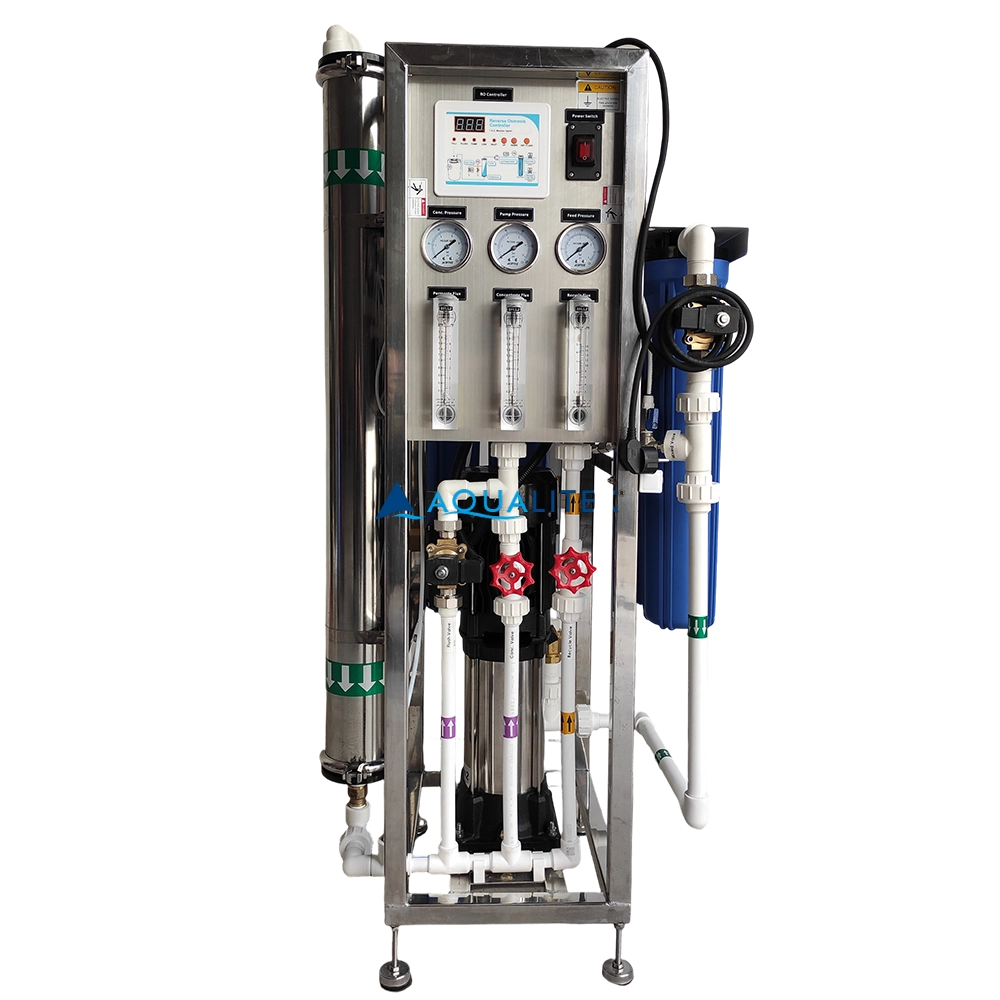
Our 500 LPH Reverse Osmosis (RO) System is engineered to provide high-quality purified water for commercial applications. Designed with advanced RO technology, durable components, and a user-friendly interface, this system ensures consistent performance, low maintenance, and long-term reliability.
With its compact design and robust skid-mounted frame, it’s an excellent choice for businesses that demand efficiency and quality in water purification.
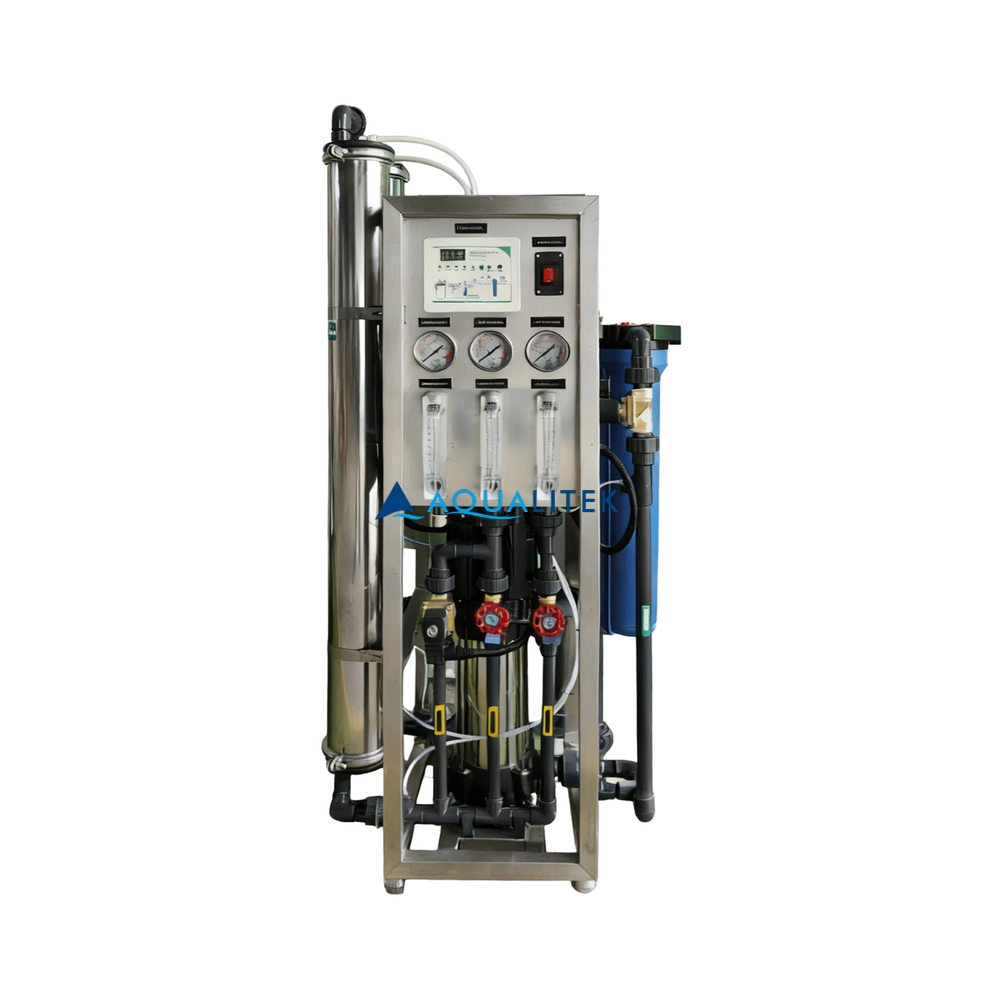
TWV series Reverse Osmosis (RO) systems are pre-engineered and pre-assembled units with 2.5”/4” membrane housings(single element type)for tap water(lower TDS).They are designed for overall superior performance, high recovery rates and offer great savings with low maintenance and operation costs.
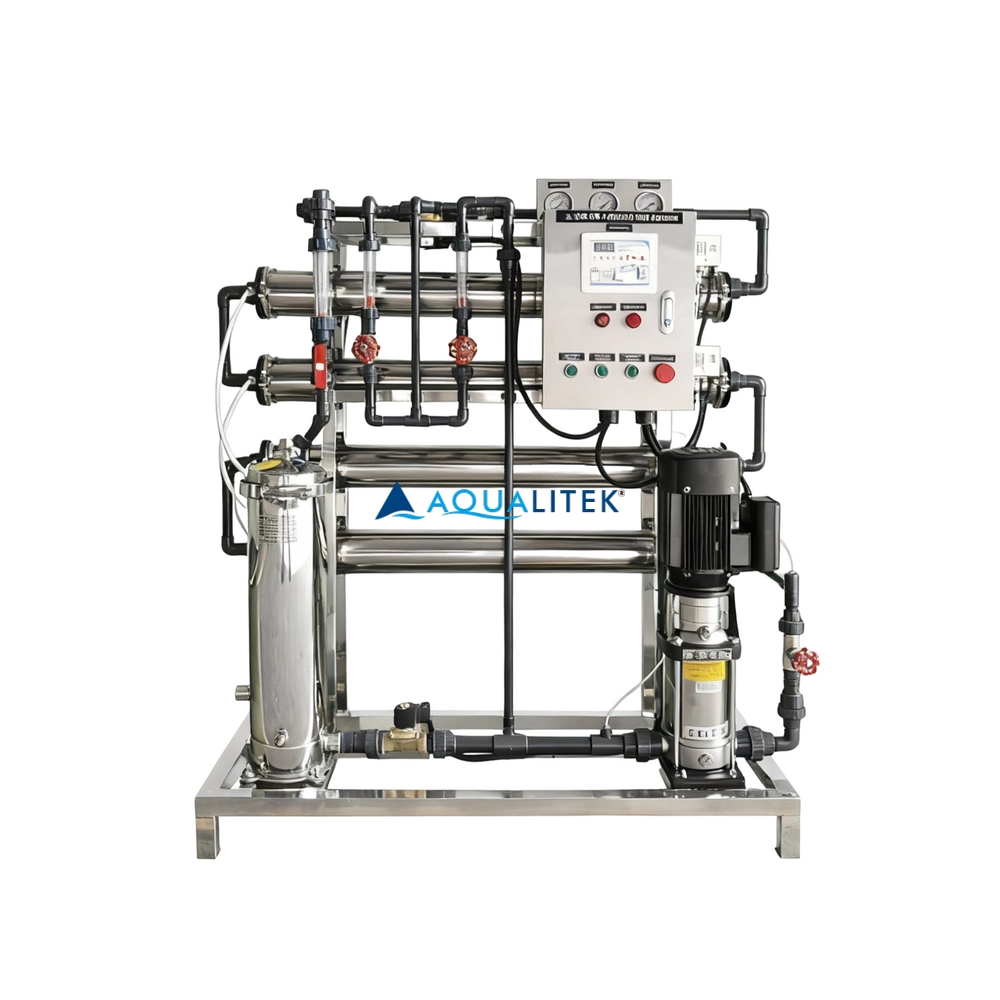
TWF series Reverse Osmosis (RO) systems are pre-engineered and pre-assembled units with 4” membrane housings(multiple elements type) for tap water(lower TDS) .The medium large volumes can help meet your a variety of commercial and industrial applications. They are designed for overall superior performance, high recovery rates and offer great savings with low maintenance and operation costs.

TWE series Reverse Osmosis (RO) systems are pre-engineered and pre-assembled units with 8” membrane housings for tap water (lower TDS). The large volumes can help meet your a variety of industrial applications. They are designed for overall superior performance, high recovery rates and offer great savings with low maintenance and operation costs.
© 2026 AQUALITEK. All rights reserved.
AQUALITEK- Aimee Hoo
AQUALITEK - Aimee Hoo