



Benefits of Electrodeionization for Continuous Ultrapure Water
- How Electrodeionization Works and Key Components
- Principles of electrodeionization
- Main components: membranes, resins and electrodes
- Feedwater requirements and pretreatment
- Benefits of Electrodeionization for Continuous Ultrapure Water Production
- Chemical-free continuous regeneration
- Stable water quality and process control
- Lower environmental footprint and operating cost
- Performance, Metrics and Comparisons
- Key performance metrics
- EDI vs. Mixed-Bed Deionization and RO (comparison table)
- When to use EDI vs other technologies
- Integrating, Operating and Maintaining EDI Systems
- System design and integration tips
- Operation, monitoring and common troubleshooting
- Maintenance best practices and expected lifecycle
- Product Overview and Why Choose Electrodeionization Systems to Get UltraPure Water
- Product introduction
- Brand strengths and service capabilities
- Case uses and industry fit
- Frequently Asked Questions (FAQ)
- Q: What is the typical resistivity achievable with EDI?
- Q: Does EDI remove dissolved organics and TOC?
- Q: Can EDI modules be retrofitted to existing RO systems?
- Q: How often do EDI modules need replacement?
- Q: Are there regulatory resources or standards for ultrapure water?

Electrodeionization (EDI) has emerged as a leading technology for continuous production of ultrapure water, combining ion-exchange resins and ion-exchange membranes with an applied electric field to remove ionic contaminants without chemical regeneration. For organizations that require consistent high resistivity (low conductivity), low TOC and stable process control — such as semiconductor fabs, pharmaceutical production, power plants, and research laboratories — EDI offers operational continuity, reduced waste, and predictable quality. Beyond efficiency and sustainability, many buyers focus on consistency, which is why it’s critical to examine how electrodeionization systems improve water purity reliability in 24/7 operations.
How Electrodeionization Works and Key Components
Principles of electrodeionization
Electrodeionization (EDI) uses the synergy of ion-exchange media and an electric field to continuously remove ions from water. Ion-exchange resins capture ionic species, and an applied DC electric field drives those ions through ion-exchange membranes into concentrate compartments. The resins are continuously regenerated in situ by the electric field, eliminating the need for chemical regeneration and the associated handling and disposal of acids and bases. For an overview of the technology, see the Wikipedia summary on Electrodeionization.
Main components: membranes, resins and electrodes
A typical EDI module contains alternating anion- and cation-exchange membranes, mixed-bed ion-exchange resin confined between membranes, and electrodes at the module ends. The feed (often RO permeate) flows through diluate compartments where ions are removed; the electric field moves ions across membranes into concentrate streams. Proper selection and stacking of membranes and resin grade are critical for achieving target resistivity and throughput.
Feedwater requirements and pretreatment
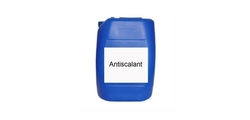
EDI performs best when preceded by reverse osmosis (RO) or ultrafiltration, which remove particulates, colloids and organic loads that could foul resins and membranes. Typical feed specifications for best EDI performance include low hardness, low silica, and low organics/TOC. Pre-filtration, softening or antiscalant dosing (when required) will extend module life and improve uptime. For background on ultrapure water needs and typical purity specifications, see the Ultrapure water article.
Benefits of Electrodeionization for Continuous Ultrapure Water Production
Chemical-free continuous regeneration
One of the most significant advantages of EDI is continuous chemical-free regeneration. Traditional mixed-bed deionizers require periodic acid/base regeneration, producing regenerant waste and downtime. EDI eliminates these cycles by regenerating resins electrically in real time, enabling nonstop production of ultrapure water with stabilized resistivity and conductivity.
Stable water quality and process control
Because regeneration is continuous and automatic, EDI provides much tighter control over effluent resistivity (often approaching 18.2 MΩ·cm for final polish applications when fed with high-quality RO permeate) and ionic contaminants. This stability minimizes process upset and reduces the need for frequent monitoring and manual intervention in critical production environments like semiconductor wafer processing and pharmaceutical water systems.
Lower environmental footprint and operating cost
EDI cuts chemical consumption and the handling/disposal costs associated with regenerants. Eliminating chemical regeneration reduces sludge and hazardous waste generation. Energy consumption for EDI is typically modest relative to the benefits of eliminating chemical logistics and regenerant disposal; lifecycle analyses often show lower total cost of ownership compared to conventional deionization when factoring labor, chemicals, downtime and waste treatment.
Performance, Metrics and Comparisons
Key performance metrics
When evaluating EDI systems, key metrics include resistivity (MΩ·cm) or conductivity (µS/cm), ion removal efficiency (rejection of Na+, Cl-, Ca2+, etc.), throughput per module (m3/h), concentrate recovery ratio, and Total Organic Carbon (TOC) levels. Many industries target final resistivity close to 18.2 MΩ·cm for ultrapure water applications; EDI is often used as a polishing step after RO to reach these levels.
EDI vs. Mixed-Bed Deionization and RO (comparison table)
| Feature | Electrodeionization (EDI) | Mixed-Bed Deionizer (MB) | Reverse Osmosis (RO) |
|---|---|---|---|
| Regeneration method | Continuous, electric (no chemicals) | Chemical (acid/base) periodic | Membrane pressure-driven, periodic cleaning |
| Downtime for regeneration | None (continuous) | Significant (manual & drain cycles) | Low (cleaning cycles required occasionally) |
| Waste/chemical handling | Minimal (concentrate stream) | Regenerant chemicals & waste | Brine concentrate, occasional cleaning chemicals |
| Typical use | Polishing/upstream continuous ultrapure water | Batch high-purity water for labs | RO permeate production from feedwater |
| Typical purity | Very high; can reach near 18.2 MΩ·cm with good feed | Very high but variable between regenerations | High removal of salts, not sufficient alone for final ultrapure water |
When to use EDI vs other technologies
EDI is especially attractive when continuous supply of ultrapure water is required, when chemical handling is undesirable, and when operational simplicity and uptime are priorities. RO remains essential as a pretreatment to remove dissolved solids and organics; EDI complements RO as a final polishing step. For batch, intermittent or small-scale needs where capital cost is a concern and chemical logistics are acceptable, mixed-bed systems may still be used.
Integrating, Operating and Maintaining EDI Systems
System design and integration tips
Successful EDI deployment begins with appropriate system design: sizing EDI modules for expected flow and resistivity targets, ensuring RO permeate quality meets EDI feedwater specifications (low SDI, low hardness, low silica), and designing a concentrate rejection or recycle strategy that fits site constraints. Instrumentation for continuous resistivity monitoring, TOC trending and automatic alarms will help maintain process control and demonstrate compliance in regulated environments.
Operation, monitoring and common troubleshooting
Key operational practices include maintaining stable feed pressure and conductivity, periodic monitoring of electrode polarity and current density, and scheduled inspections for fouling or scaling. Common issues are resin fouling due to organics or particulates, membrane scaling when feedwater has high hardness or silica, and electrical imbalances. Corrective actions typically involve improving pretreatment, implementing periodic clean-in-place (CIP) procedures approved by the supplier, and adjusting operating parameters.
Maintenance best practices and expected lifecycle
With proper pretreatment and operation, EDI modules can last several years; membranes and resin life are impacted by feedwater quality and contamination events. Regularly scheduled preventative maintenance—filter changes, RO membrane checks, monitoring of concentrate streams and electrical diagnostics—reduces the risk of unplanned downtime. Partnering with experienced service teams ensures timely diagnostics, spare parts stocking and optimized module replacement schedules.
Product Overview and Why Choose Electrodeionization Systems to Get UltraPure Water
Product introduction
Electrodeionization Systems to Get UltraPure Water
Electrodeionization (EDI) system is an advanced water purification technology that combines ion exchange and electrochemical processes to produce ultra-pure water. Unlike traditional deionization methods, which rely on chemical regeneration, EDI utilizes electric fields to drive the movement of ions through ion-exchange membranes, effectively removing dissolved salts and other ionic contaminants.
This process is continuous and does not require the use of chemicals for regeneration, making it an environmentally friendly and cost-effective solution for producing high-quality deionized water. EDI systems are widely used in applications requiring ultrapure water, such as in the pharmaceutical, semiconductor, power generation, and biotechnology industries, as well as for laboratory use.
By offering high-purity water without the need for chemical regeneration, EDI systems provide a sustainable, efficient, and reliable alternative to traditional deionization methods, making them an ideal choice for industries where water quality and process control are critical.
Brand strengths and service capabilities
Our Electrodeionization Systems to Get UltraPure Water combine industry-proven modules, robust control systems and field-tested pretreatment packages to deliver consistent ultrapure water. Key brand advantages include:
- Custom engineered solutions sized to site flow and quality requirements.
- Integrated monitoring (resistivity, TOC, conductivity) and PLC controls for automated alarms and data logging.
- Comprehensive service offering: commissioning, preventive maintenance, spare parts, and rapid response support.
Case uses and industry fit
Typical deployments are RO + EDI trains producing feed for point-of-use polishers or recirculation loops. Industries benefiting most include:
- Semiconductor manufacturing (low ionic contamination crucial for yield)
- Pharmaceuticals and biotech (WFI and process water with strict standards)
- Power generation (boiler feed water polishing for reduced corrosion and scaling)
- Analytical and research labs (consistent ultrapure water for instruments)
Frequently Asked Questions (FAQ)
Q: What is the typical resistivity achievable with EDI?
A: When fed with high-quality RO permeate, EDI can help reach resistivity levels close to the theoretical maximum of 18.2 MΩ·cm for pure water. Actual results depend on feed quality and system design; continuous monitoring is recommended.
Q: Does EDI remove dissolved organics and TOC?
A: EDI primarily targets ionic species. It reduces TOC indirectly by removing ionic organics and some low-molecular-weight compounds, but it is not a complete solution for significant organic contamination. Combining RO, activated carbon, or specialized TOC removal steps may be necessary for very low TOC targets.
Q: Can EDI modules be retrofitted to existing RO systems?
A: Yes, many RO systems can be retrofitted with EDI polishers provided the RO permeate meets the required pretreatment specs (low hardness, silica and organics). A site survey is recommended to design the integration, piping and controls.
Q: How often do EDI modules need replacement?
A: Module life varies with feedwater quality and system operation. With correct pretreatment and routine maintenance, modules can last multiple years. Monitoring performance (resistivity drift, pressure drop, concentrate conductivity) helps determine replacement timing.
Q: Are there regulatory resources or standards for ultrapure water?
A: Yes—industries follow standards and guidance such as USP for pharmaceutical water, SEMI standards for semiconductor water, and other national/international references. General background on ultrapure water properties is available on Wikipedia.
If you have technical questions, want a site assessment, or would like to view model specifications for our Electrodeionization Systems to Get UltraPure Water, please contact our sales team or view product details. Our experts can help size a system, run a feedwater evaluation and provide a lifecycle cost analysis to compare EDI vs alternative approaches.
Scalability and Modular Design of Industrial RO Systems
Optimizing BWRO BWE Performance: Pre-treatment for Well Water

Maximizing Recovery in Industrial Reverse Osmosis
Selecting Electrodeionization Systems for Semiconductor and Lab Use
Ion Exchange Water Treatment Systems
Are mixed bed systems better than two-bed systems?
Mixed bed polishers are used for final polishing after RO or two-bed deionization to achieve ultra-pure water.
Water Filters
How do I choose between a media filter and a micron filter?
Media filters are ideal for high-volume solids removal and can be backwashed. Micron filters offer precise filtration for fine particles and are best for polishing applications.
Solutions
Does AQT provide technical support and after-sales service?
Yes! We offer comprehensive technical support, including installation guidance, troubleshooting, spare parts supply, and ongoing maintenance assistance. Our after-sales team is available to ensure your water treatment system operates efficiently.
What industries does AQT serve?
We provide water treatment solutions for a wide range of industries, including:
1. Industrial Manufacturing – Process water treatment, cooling water, and boiler feed.
2. Hospitality & Commercial – Hotels, restaurants, and office buildings.
3. Residential Applications – Drinking water purification and softening.
4. Healthcare & Pharmaceuticals – Ultra-pure water for laboratories and hospitals.
5. Municipal & Public Utilities – Water supply and wastewater treatment.
6. Food & Beverage Processing – Filtration for beverage p
FAQ-aqualitek
What industries does AQT serve?
We provide water treatment solutions for a wide range of industries, including:
Industrial Manufacturing – Process water treatment, cooling water, and boiler feed.
Hospitality & Commercial – Hotels, restaurants, and office buildings.
Residential Applications – Drinking water purification and softening.
Healthcare & Pharmaceuticals – Ultra-pure water for laboratories and hospitals.
Municipal & Public Utilities – Water supply and wastewater treatment.
Food & Beverage Processing – Filtration for beverage production and food safety.
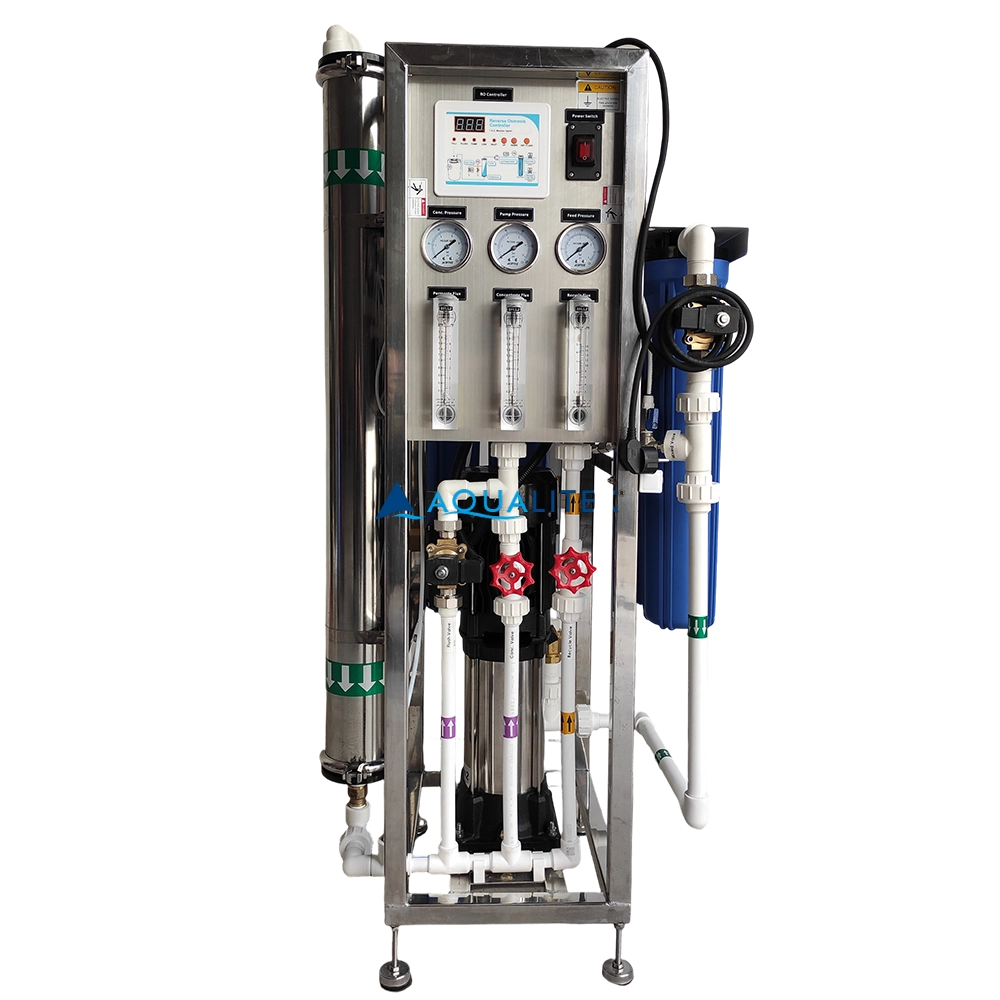
500 LPH Reverse Osmosis (RO) Water Purification Machine TWV - 412
Our 500 LPH Reverse Osmosis (RO) System is engineered to provide high-quality purified water for commercial applications. Designed with advanced RO technology, durable components, and a user-friendly interface, this system ensures consistent performance, low maintenance, and long-term reliability.
With its compact design and robust skid-mounted frame, it’s an excellent choice for businesses that demand efficiency and quality in water purification.
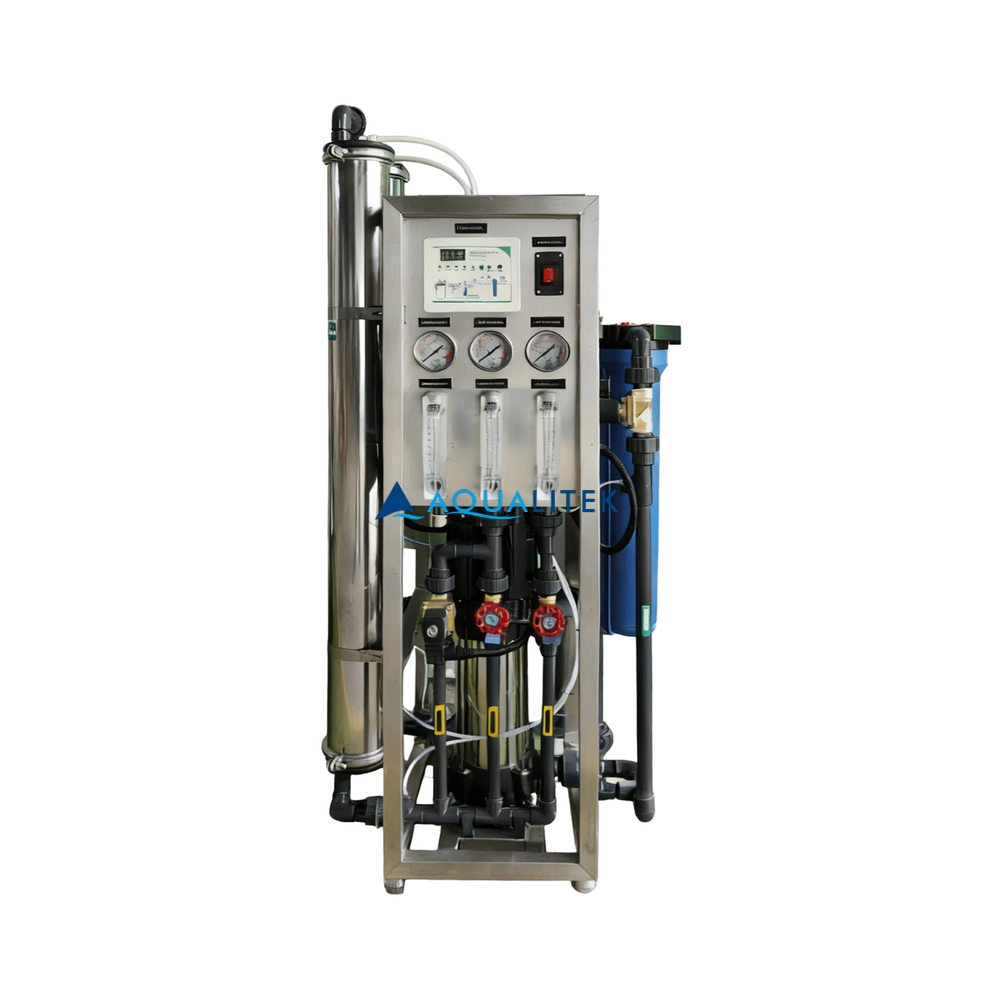
Tap Water Reverse Osmosis (TWRO) Systems TWV Series
TWV series Reverse Osmosis (RO) systems are pre-engineered and pre-assembled units with 2.5”/4” membrane housings(single element type)for tap water(lower TDS).They are designed for overall superior performance, high recovery rates and offer great savings with low maintenance and operation costs.
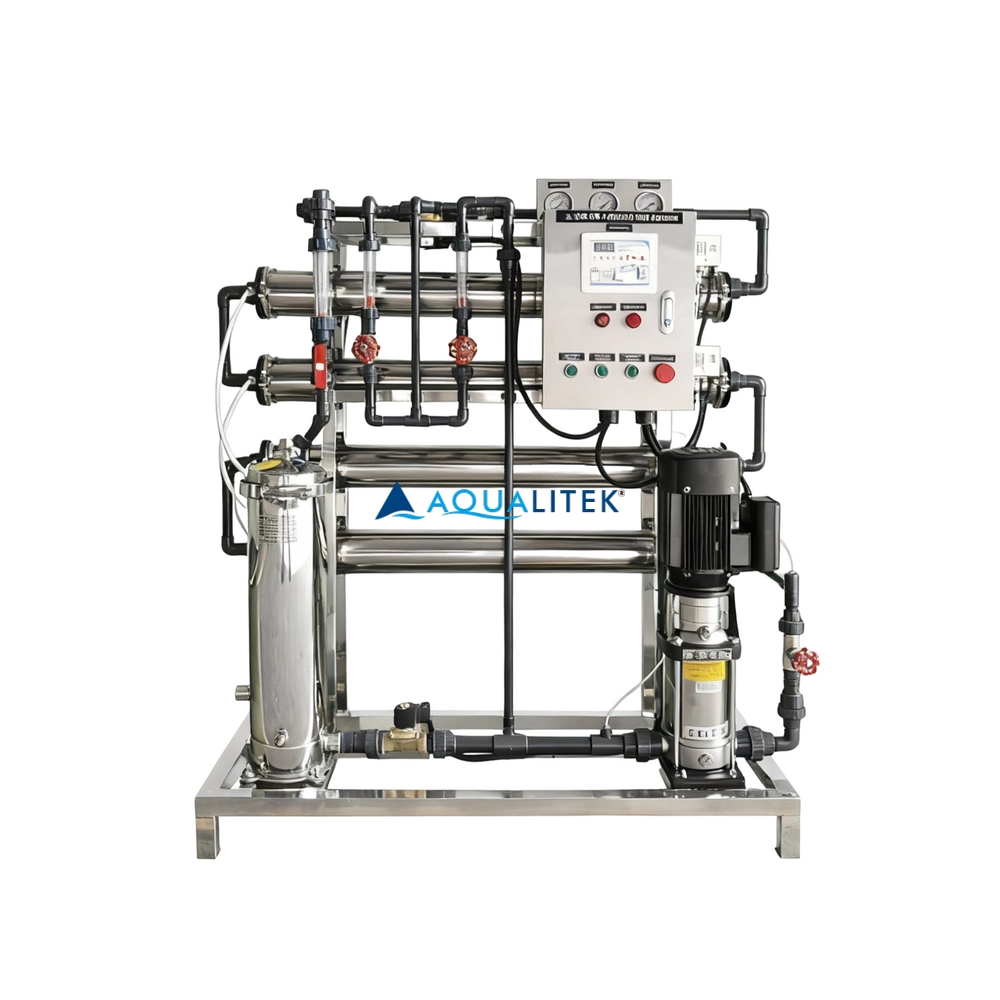
Tap Water Reverse Osmosis (TWRO) Systems TWF Series
TWF series Reverse Osmosis (RO) systems are pre-engineered and pre-assembled units with 4” membrane housings(multiple elements type) for tap water(lower TDS) .The medium large volumes can help meet your a variety of commercial and industrial applications. They are designed for overall superior performance, high recovery rates and offer great savings with low maintenance and operation costs.

Tap Water Reverse Osmosis (TWRO) Systems TWE Series
TWE series Reverse Osmosis (RO) systems are pre-engineered and pre-assembled units with 8” membrane housings for tap water (lower TDS). The large volumes can help meet your a variety of industrial applications. They are designed for overall superior performance, high recovery rates and offer great savings with low maintenance and operation costs.
Request More Information
Contact us today for product catalogs, customization options, and a free quotation designed for your business needs.
Rest assured that your privacy is important to us, and all information provided will be handled with the utmost confidentiality.
© 2026 AQUALITEK. All rights reserved.
AQUALITEK- Aimee Hoo
AQUALITEK - Aimee Hoo