



What to Pay Attention to with the Sealing Ring When Installing a Security Filter Cartridge| Insights by AQUALITEK
Improper sealing ring installation in security filter cartridges can cause bypass, membrane fouling, and system failure. Learn the key details to check for reliable RO pretreatment performance.
- Introduction
- Why the Sealing Ring Matters More Than the Cartridge Rating
- Key Sealing Ring Details That Must Be Checked During Installation
- 1. Correct Sealing Ring Position (Orientation Matters)
- 2. Sealing Ring Integrity (No Damage Allowed)
- 3. Proper Elasticity and Material Condition
- 4. Compatibility with Water and Chemicals
- 5. Cleanliness of the Sealing Surface
- 6. Proper Lubrication (If Required)
- 7. Uniform Compression During Housing Closure
- What Happens If the Sealing Ring Is Installed Incorrectly?
- How to Verify Sealing After Installation
- Best Practice Recommendations
- Conclusion
Introduction
In industrial RO pretreatment systems, the security filter (cartridge filter) is often considered a simple component. However, many serious RO membrane failures are traced back not to the filter cartridge itself—but to small mistakes in sealing ring installation.
Among all installation details, the sealing ring (O-ring or flat gasket) is the most critical yet most frequently overlooked part.
This article explains what specific sealing ring details must be checked, why they matter, and how improper sealing can directly damage downstream RO membranes.
Why the Sealing Ring Matters More Than the Cartridge Rating
A security filter is designed to:
•Trap fine suspended solids
•Protect RO membranes from particle intrusion
But if the sealing ring fails:
•Water bypasses the cartridge completely
•Filtration accuracy becomes meaningless
•Unfiltered water reaches the RO membrane
Even a 1-micron cartridge is useless if the seal is compromised.
Key Sealing Ring Details That Must Be Checked During Installation
1. Correct Sealing Ring Position (Orientation Matters)
The sealing ring must:
•Sit firmly in its designated groove
•Fully contact the sealing surface of the housing or adapter
Common mistakes include:
•Misaligned O-rings
•Sealing rings twisted or partially seated
•Flat gaskets installed upside down
➡ Result: internal bypass leakage that is invisible from outside.
2. Sealing Ring Integrity (No Damage Allowed)
Before installation, always inspect for:
•Cracks
•Cuts
•Flattening
•Permanent deformation
•Aging or hardening
Even minor defects can:
•Prevent full compression
•Create micro-gaps under pressure
A damaged sealing ring should never be reused.
3. Proper Elasticity and Material Condition
The sealing ring must:
•Be soft and elastic
•Return to its original shape after compression
Problems occur when:
•The ring is too hard (aging or chemical attack)
•The ring has lost elasticity
•Incorrect material is used
This can result in:
•Poor sealing under pressure fluctuations
•Sudden bypass during startup
4. Compatibility with Water and Chemicals
Sealing ring materials must be compatible with:
•Feed water composition
•Disinfectants
•Cleaning chemicals
Incompatible materials may:
•Swell
•Shrink
•Become brittle
➡ This often leads to delayed leakage, not immediate failure.
5. Cleanliness of the Sealing Surface
Before inserting the cartridge:
•Clean the sealing groove
•Remove sand, fibers, or debris
•Ensure no foreign particles are trapped
Even a tiny particle under the sealing ring can:
•Break the sealing line
•Create a bypass channel
6. Proper Lubrication (If Required)
If lubrication is recommended:
•Use only approved food-grade or system-compatible lubricant
•Apply a thin, even layer
Avoid:
❌ Excessive grease
❌ Petroleum-based lubricants (unless specified)
Incorrect lubrication can:
•Cause sealing ring displacement
•Attract particles
•Accelerate degradation
7. Uniform Compression During Housing Closure
When closing the filter housing:
•Tighten evenly
•Avoid sudden force
•Ensure proper alignment
Uneven compression can:
•Pinch the sealing ring
•Cause partial sealing failure
•Lead to one-sided bypass
What Happens If the Sealing Ring Is Installed Incorrectly?
Improper sealing can cause:
•Filter bypass
•Sudden RO membrane fouling
•Rapid pressure drop increase
•Unexpected SDI spikes
•Shortened membrane lifespan
Many operators mistakenly blame cartridge quality, while the real cause is sealing failure.
How to Verify Sealing After Installation
After installation:
•Slowly pressurize the system
•Monitor differential pressure stability
•Check for sudden downstream turbidity changes
•Observe RO inlet pressure fluctuations
If abnormal behavior appears, stop and recheck the sealing immediately.
Best Practice Recommendations
✔ Always replace sealing rings together with cartridges
✔ Never reuse hardened or damaged seals
✔ Keep spare sealing rings on-site
✔ Train operators on seal inspection
✔ Treat sealing checks as a standard SOP step
Conclusion
The sealing ring of a security filter cartridge is a small component with a large responsibility. Its correct installation determines whether the cartridge truly performs its filtration function—or becomes a hidden bypass path.
Paying attention to sealing ring position, integrity, elasticity, compatibility, and cleanliness is essential to:
•Protect RO membranes
•Ensure pretreatment effectiveness
•Prevent avoidable system failures
In RO systems, details decide reliability.


Request More Information or Expert Advice
Share a few details, and we’ll provide deeper insights, tailored suggestions, or product support.
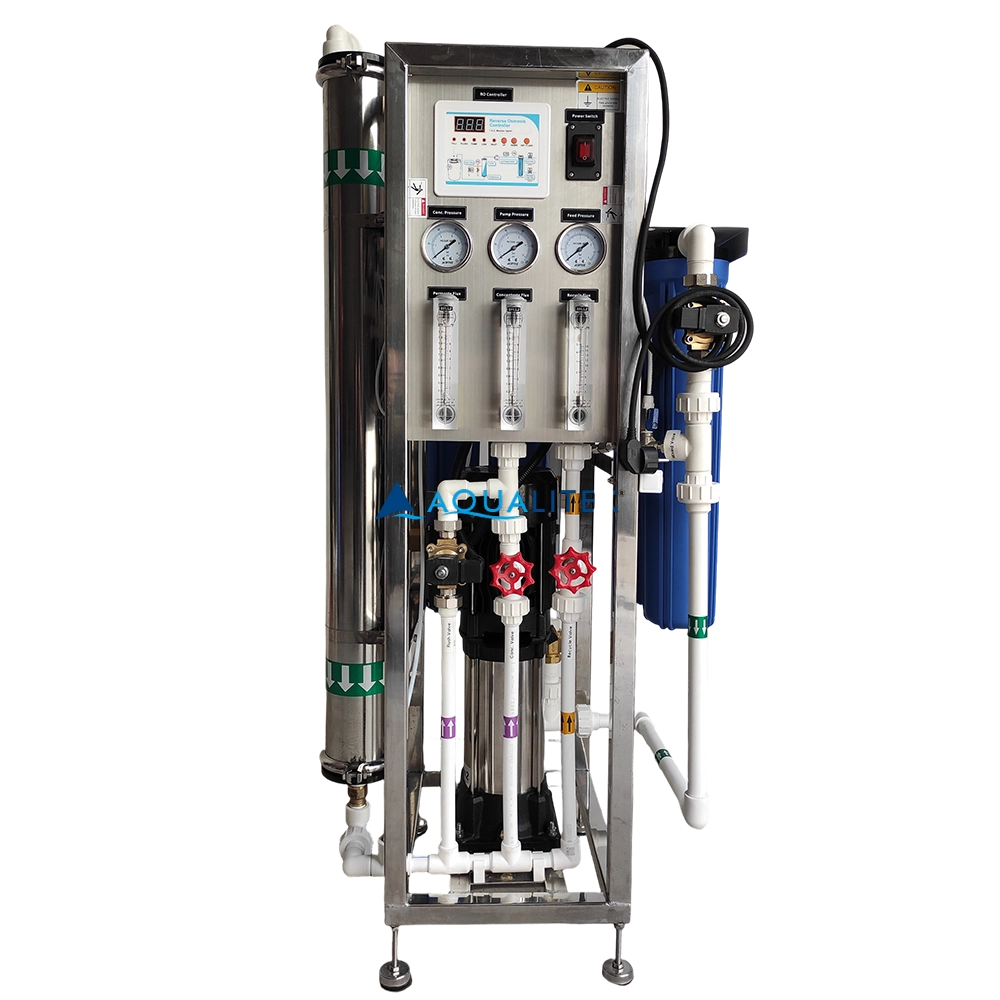
Our 500 LPH Reverse Osmosis (RO) System is engineered to provide high-quality purified water for commercial applications. Designed with advanced RO technology, durable components, and a user-friendly interface, this system ensures consistent performance, low maintenance, and long-term reliability.
With its compact design and robust skid-mounted frame, it’s an excellent choice for businesses that demand efficiency and quality in water purification.
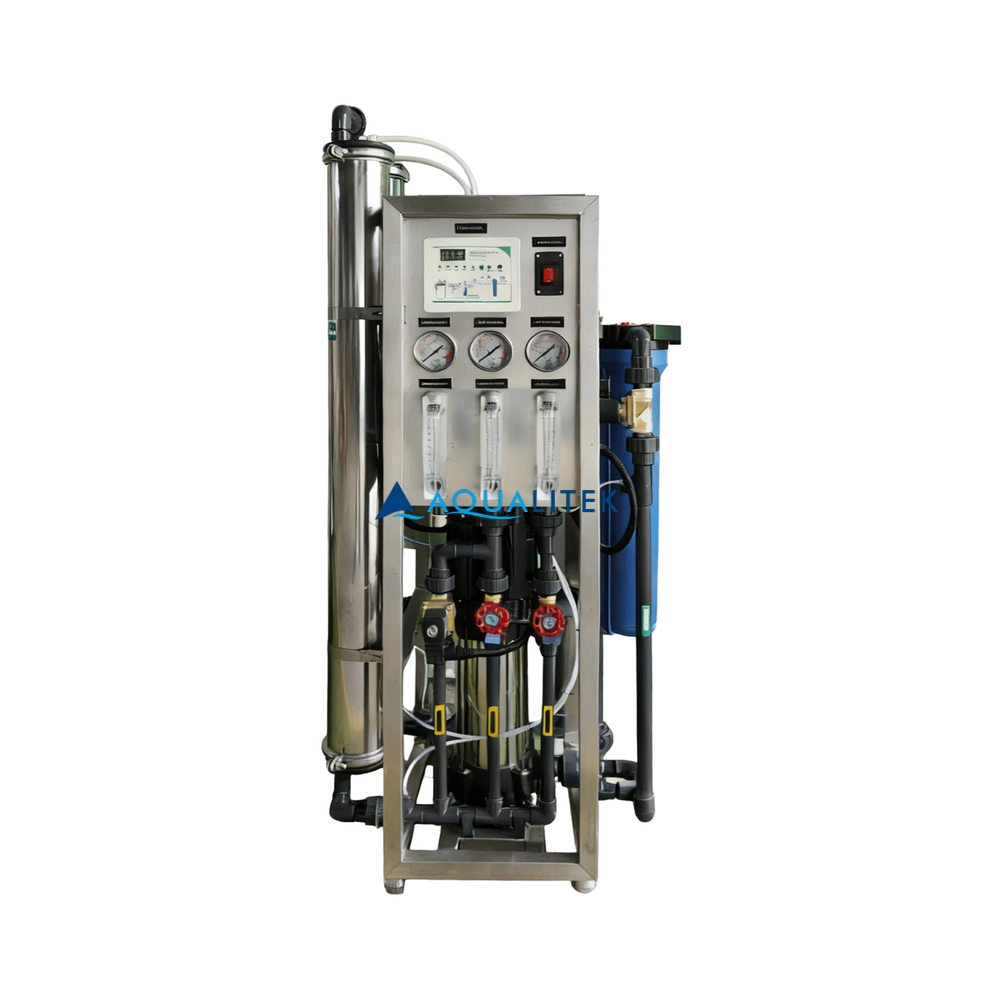
TWV series Reverse Osmosis (RO) systems are pre-engineered and pre-assembled units with 2.5”/4” membrane housings(single element type)for tap water(lower TDS).They are designed for overall superior performance, high recovery rates and offer great savings with low maintenance and operation costs.
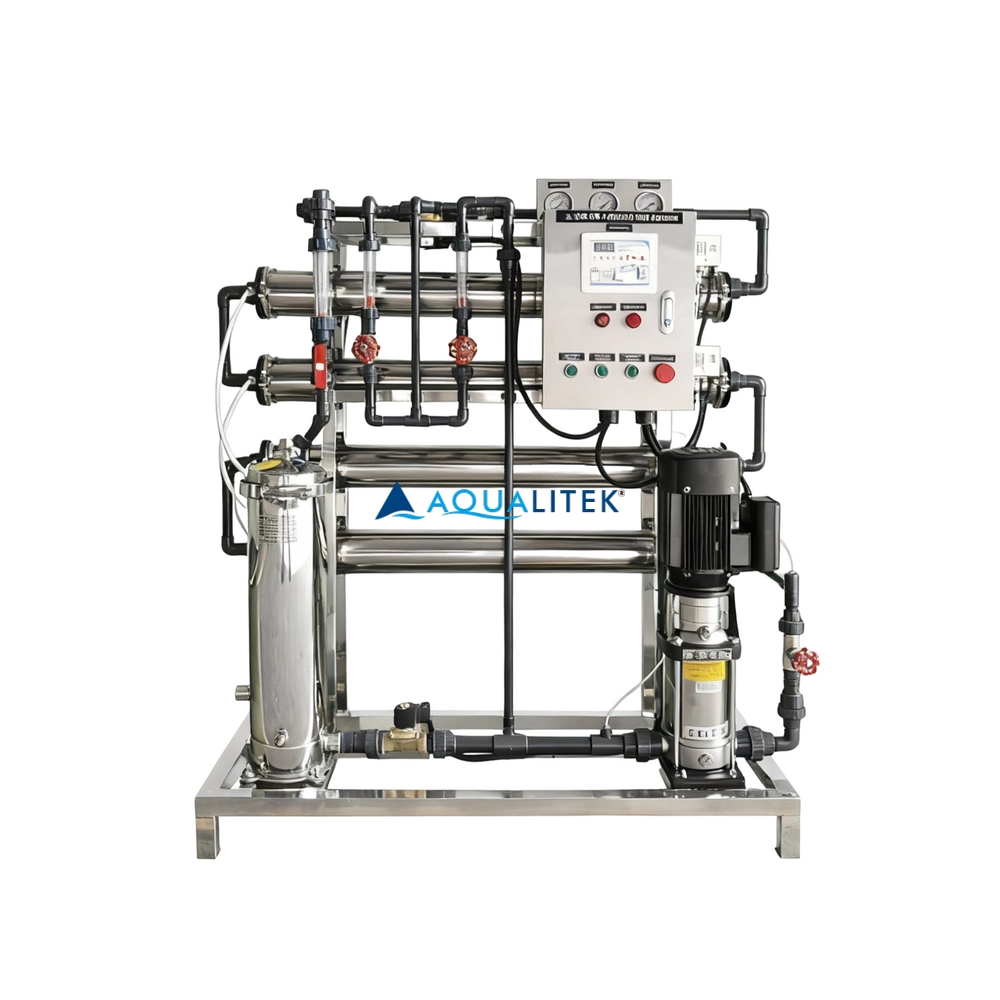
TWF series Reverse Osmosis (RO) systems are pre-engineered and pre-assembled units with 4” membrane housings(multiple elements type) for tap water(lower TDS) .The medium large volumes can help meet your a variety of commercial and industrial applications. They are designed for overall superior performance, high recovery rates and offer great savings with low maintenance and operation costs.

TWE series Reverse Osmosis (RO) systems are pre-engineered and pre-assembled units with 8” membrane housings for tap water (lower TDS). The large volumes can help meet your a variety of industrial applications. They are designed for overall superior performance, high recovery rates and offer great savings with low maintenance and operation costs.
© 2026 AQUALITEK. All rights reserved.
AQUALITEK- Aimee Hoo
AQUALITEK - Aimee Hoo