




How Does the Two-Pass SWRO + BWRO Process Achieve High Recovery and Low Energy Consumption? | Best Desalination System Design Guide| Insights by AQUAL
Learn how the two-pass SWRO + BWRO process significantly increases recovery rate while reducing energy consumption. A complete guide to system design, energy optimization, and performance benefits.
- How Does the Two-Pass SWRO + BWRO Process Achieve High Recovery and Low Energy Consumption?
- 1. What Is the Two-Pass SWRO + BWRO Process?
- Process Flow Overview:
- Key Design Concept:
- 2. Why Single-Pass SWRO Recovery Is Limited to 40–50%
- 3. How the Two-Pass Design Breaks the Recovery Limitation
- Step 1: First-Pass SWRO (40–45% Recovery)
- Step 2: Second-Pass BWRO (80–90% Recovery)
- Overall System Recovery Formula:
- 4. How the Two-Pass System Reduces Energy Consumption
- 4.1 Pressure Level Decoupling
- 4.2 Maximized Use of Energy Recovery Devices (ERD)
- 4.3 Lower Osmotic Pressure in Second Pass
- 5. Key Technical Advantages of Two-Pass SWRO + BWRO
- 6. Additional Functional Benefits
- 6.1 Superior Boron Removal
- 6.2 Improved System Flexibility
- 7. Typical Application Scenarios
- 8. Economic Advantages
- Conclusion
How Does the Two-Pass SWRO + BWRO Process Achieve High Recovery and Low Energy Consumption?
Seawater desalination systems traditionally operate at relatively low single-pass recovery rates, typically 40–50%, to ensure membrane safety, stable performance, and manageable scaling risks. However, modern desalination plants increasingly adopt the two-pass SWRO + BWRO series process, enabling overall recovery rates above 65–75% while simultaneously achieving lower specific energy consumption.
This advanced configuration has become one of the most energy-efficient and cost-effective solutions for large-scale seawater desalination projects worldwide.
This article provides a comprehensive explanation of the working principle, design logic, energy-saving mechanisms, and operational advantages of the two-pass SWRO + BWRO process.
1. What Is the Two-Pass SWRO + BWRO Process?
The two-pass SWRO + BWRO process combines:
•First Pass: Seawater Reverse Osmosis (SWRO)
•Second Pass: Brackish Water Reverse Osmosis (BWRO)
Process Flow Overview:
1.Raw seawater → Pretreatment → SWRO membrane system
2.SWRO permeate → Intermediate storage / conditioning → BWRO membrane system
3.Final product water → Remineralization → Distribution
Key Design Concept:
Instead of pushing seawater RO recovery beyond safe limits, the system splits the desalination task into two optimized stages, allowing:
•Safe operation of SWRO membranes
•Higher total system recovery
•Lower total energy consumption
2. Why Single-Pass SWRO Recovery Is Limited to 40–50%
Single-pass SWRO recovery is constrained mainly by:
•High scaling risk
•Severe concentration polarization
•Excessive osmotic pressure rise
•Rapid membrane fouling
As recovery increases:
•Brine salinity rises sharply
•Osmotic pressure increases exponentially
•Required operating pressure skyrockets
This results in:
•Dramatic energy consumption increase
•Accelerated membrane degradation
•Higher chemical cleaning frequency
Therefore, most SWRO systems are intentionally designed at 40–50% recovery for optimal stability.
3. How the Two-Pass Design Breaks the Recovery Limitation
The two-pass SWRO + BWRO configuration achieves high overall recovery through pressure-stage separation and salt concentration control.
Step 1: First-Pass SWRO (40–45% Recovery)
•Handles extremely high salinity seawater
•Operates at high pressure (55–70 bar)
•Produces low-salinity permeate (~300–800 ppm TDS)
Step 2: Second-Pass BWRO (80–90% Recovery)
•Treats low-salinity SWRO permeate
•Operates at much lower pressure (8–16 bar)
•Achieves very high recovery efficiently
Overall System Recovery Formula:
Total Recovery = 1 − (1 − SWRO Recovery) × (1 − BWRO Recovery)
Example:
•SWRO = 45%
•BWRO = 85%
Total Recovery = 1 − (0.55 × 0.15) = 91.75%
In practical engineering, total system recovery of 65–75% is easily achievable with high operational safety.
4. How the Two-Pass System Reduces Energy Consumption
4.1 Pressure Level Decoupling
High-pressure operation is limited only to the first SWRO stage, while the second BWRO stage operates under low pressure, dramatically lowering average energy demand.
4.2 Maximized Use of Energy Recovery Devices (ERD)
The SWRO concentrate contains massive hydraulic energy. Advanced ERDs (e.g., pressure exchangers) can recover 95–98% of this energy, transferring it directly to incoming seawater feed.
This reduces net SWRO pumping energy by up to 60%.
4.3 Lower Osmotic Pressure in Second Pass
Because SWRO permeate salinity is low:
•BWRO membranes face minimal osmotic resistance
•High recovery is achieved with very low operating pressure
Thus, the second pass contributes high water yield with minimal energy input.
5. Key Technical Advantages of Two-Pass SWRO + BWRO
|
Aspect |
Advantage |
|
Total Recovery |
65–75% achievable |
|
Energy Consumption |
2.5–3.5 kWh/m³ |
|
Membrane Life |
Extended by 30–50% |
|
Operating Stability |
High |
|
Boron Removal |
Easily enhanced |
|
Water Quality |
Ultra-high |
6. Additional Functional Benefits
6.1 Superior Boron Removal
Boron is difficult to remove in single-pass SWRO. The second-pass BWRO, especially at high pH conditions, enables boron removal below 0.5 mg/L, meeting strict drinking water and irrigation standards.
6.2 Improved System Flexibility
Operators can:
•Adjust second-pass recovery
•Optimize pressure balance
•Improve seasonal operational adaptability
This enhances long-term operational reliability.
7. Typical Application Scenarios
The two-pass SWRO + BWRO system is ideal for:
•Municipal seawater desalination plants
•Industrial ultrapure water production
•Power plant boiler feed systems
•Semiconductor manufacturing
•High-end commercial water supply
8. Economic Advantages
Despite higher initial CAPEX, the system provides:
•Lower long-term OPEX
•Reduced membrane replacement cost
•Lower chemical consumption
•Extended equipment lifespan
Over the system lifecycle, the total cost of water production is significantly reduced.
Conclusion
The two-pass SWRO + BWRO configuration represents the most advanced desalination system architecture currently available. By intelligently splitting pressure stages, optimizing osmotic conditions, and maximizing energy recovery, it successfully achieves both high recovery and low energy consumption, solving the fundamental contradiction of traditional seawater desalination.
For large-scale, energy-efficient, and high-quality desalination projects, this process is now widely regarded as the best-practice engineering solution.


Request More Information or Expert Advice
Share a few details, and we’ll provide deeper insights, tailored suggestions, or product support.
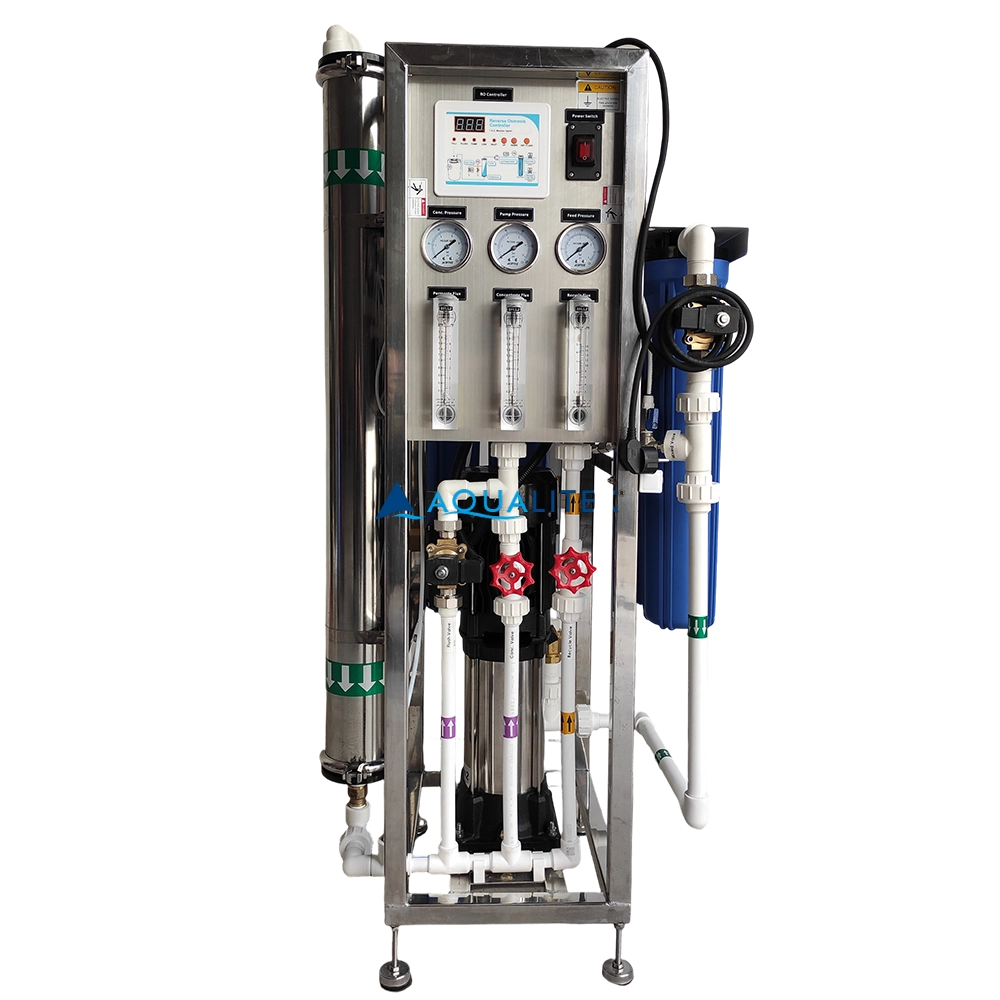
Our 500 LPH Reverse Osmosis (RO) System is engineered to provide high-quality purified water for commercial applications. Designed with advanced RO technology, durable components, and a user-friendly interface, this system ensures consistent performance, low maintenance, and long-term reliability.
With its compact design and robust skid-mounted frame, it’s an excellent choice for businesses that demand efficiency and quality in water purification.
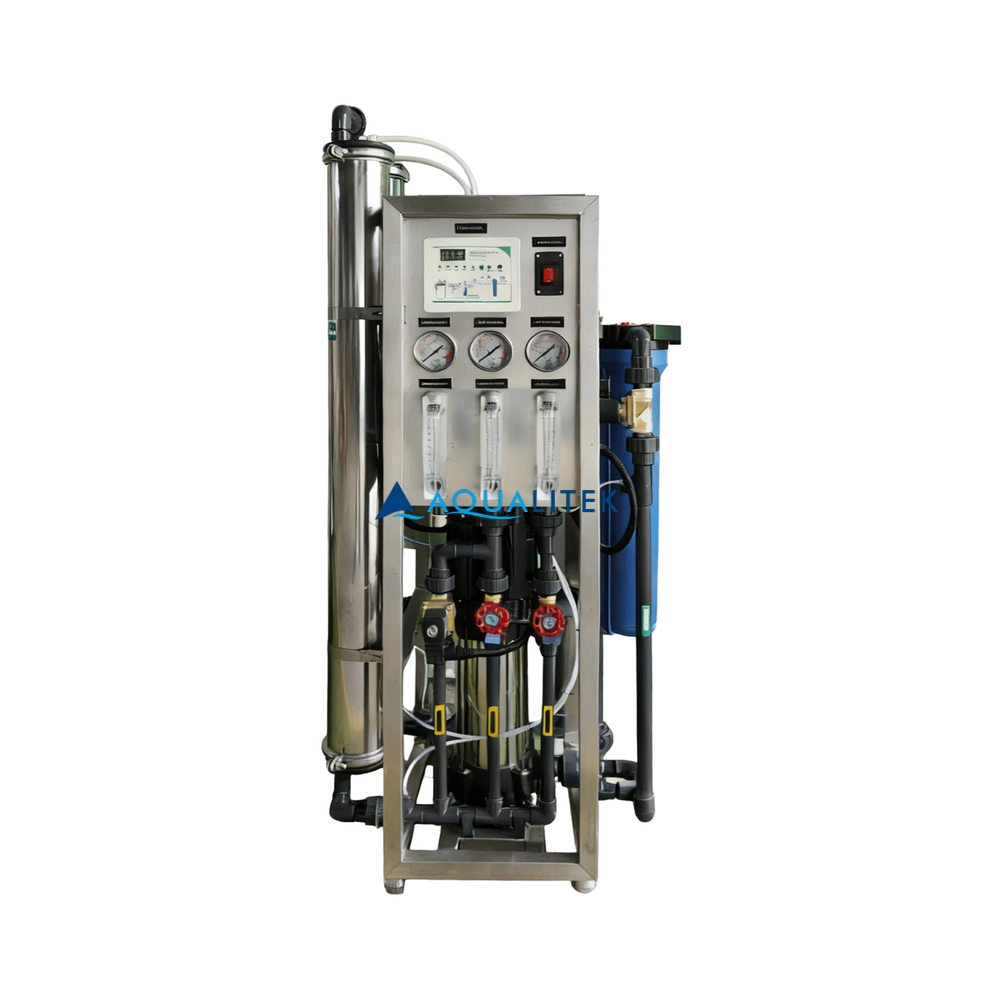
TWV series Reverse Osmosis (RO) systems are pre-engineered and pre-assembled units with 2.5”/4” membrane housings(single element type)for tap water(lower TDS).They are designed for overall superior performance, high recovery rates and offer great savings with low maintenance and operation costs.
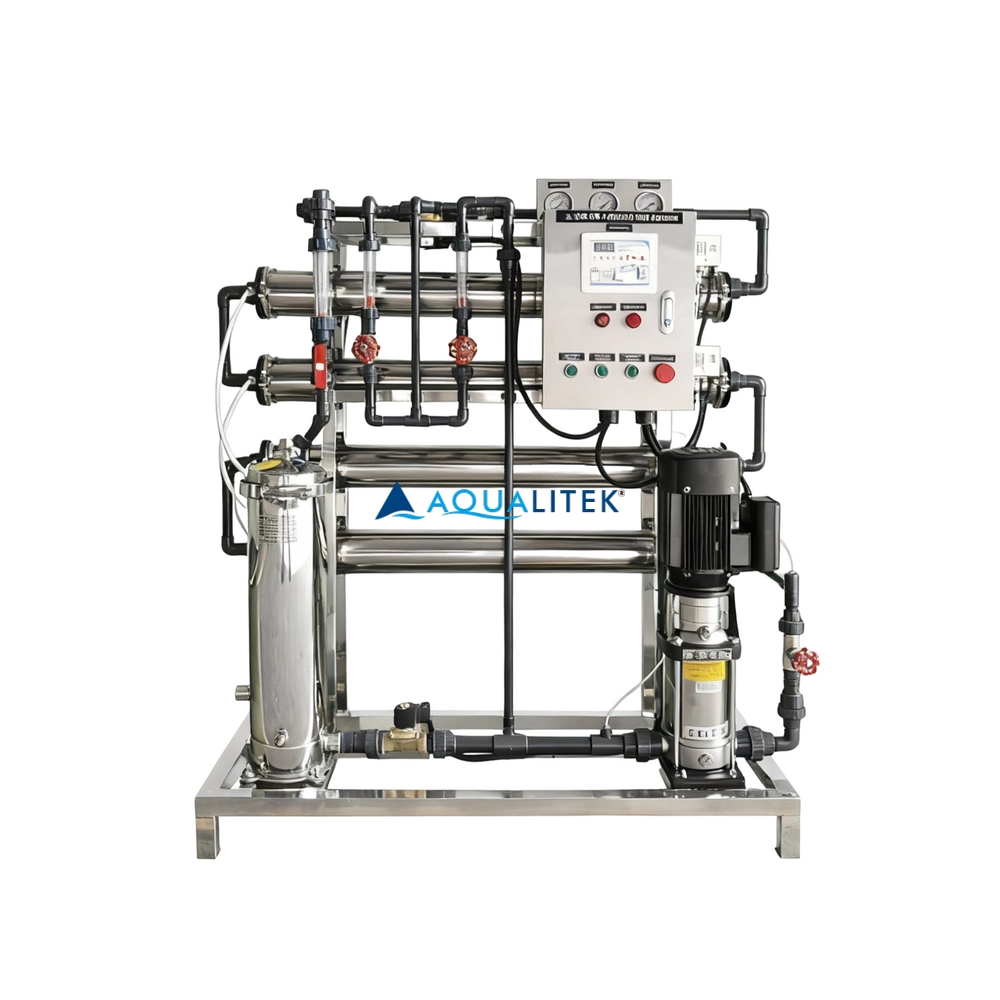
TWF series Reverse Osmosis (RO) systems are pre-engineered and pre-assembled units with 4” membrane housings(multiple elements type) for tap water(lower TDS) .The medium large volumes can help meet your a variety of commercial and industrial applications. They are designed for overall superior performance, high recovery rates and offer great savings with low maintenance and operation costs.

TWE series Reverse Osmosis (RO) systems are pre-engineered and pre-assembled units with 8” membrane housings for tap water (lower TDS). The large volumes can help meet your a variety of industrial applications. They are designed for overall superior performance, high recovery rates and offer great savings with low maintenance and operation costs.
© 2026 AQUALITEK. All rights reserved.
AQUALITEK- Aimee Hoo
AQUALITEK - Aimee Hoo