




What Is the Seawater RO–Brackish Water RO Two-Stage Series Process? How Does It Achieve Higher Recovery and Lower Energy Consumption?| Insights by AQU
Learn how the seawater RO–brackish water RO (SWRO–BWRO) two-stage series process improves overall recovery and reduces energy consumption in modern desalination systems.
- Introduction
- 1. What Is the SWRO–BWRO Two-Stage Series Process?
- 1.1 Basic Process Concept
- 2. Why the SWRO Concentrate Is Suitable for BWRO Treatment
- 3. How the Two-Stage Process Achieves Higher Overall Recovery
- 3.1 Recovery Breakdown Example
- 3.2 Reduced Scaling Risk per Stage
- 4. How the SWRO–BWRO Process Reduces Energy Consumption
- 4.1 Lower Average Operating Pressure
- 4.2 Improved Use of Energy Recovery Devices (ERDs)
- 4.3 Lower Specific Energy Consumption (SEC)
- 5. Additional Operational Advantages
- 5.1 Reduced Brine Discharge Volume
- 5.2 Increased Plant Capacity Without Larger Intake
- 5.3 Greater System Flexibility
- 6. Key Design Considerations for SWRO–BWRO Systems
- 6.1 Antiscalant and Chemistry Control
- 6.2 Membrane Selection
- 6.3 Pretreatment Quality
- 7. Typical Applications of SWRO–BWRO Two-Stage Systems
- Conclusion
Introduction
Traditional single-pass seawater reverse osmosis (SWRO) systems are limited by:
•High operating pressure
•Scaling risk at high recovery
•Concentrate disposal challenges
To overcome these constraints, advanced desalination plants increasingly adopt the SWRO–BWRO two-stage series process, also known as seawater RO concentrate re-treatment.
This hybrid configuration combines:
•SWRO for primary desalination
•BWRO for secondary recovery from SWRO brine
The result is a system that delivers:
•Higher overall water recovery
•Lower specific energy consumption (SEC)
•Reduced brine discharge volume
1. What Is the SWRO–BWRO Two-Stage Series Process?
1.1 Basic Process Concept
The SWRO–BWRO process consists of two RO stages connected in series:
Stage 1 – Seawater RO (SWRO):
•Treats raw seawater (≈ 35,000 mg/L TDS)
•Operates at high pressure (55–70 bar)
•Produces low-salinity permeate
•Discharges moderately concentrated brine
Stage 2 – Brackish Water RO (BWRO):
•Treats the SWRO concentrate
•Operates at lower pressure than SWRO
•Further recovers water from the brine
•Produces additional permeate
This configuration allows more freshwater to be extracted from the same seawater intake.
2. Why the SWRO Concentrate Is Suitable for BWRO Treatment
Although SWRO brine has higher salinity than seawater, it differs from raw seawater in several critical ways:
•Lower suspended solids
•Reduced biological activity
•Stable water quality
•No oil or large particulates
With proper antiscalant control, the concentrate can be safely treated using high-pressure BWRO membranes, making secondary recovery technically feasible.
3. How the Two-Stage Process Achieves Higher Overall Recovery
3.1 Recovery Breakdown Example
|
Process Stage |
Typical Recovery |
|
SWRO Stage |
40–45% |
|
BWRO Stage (on SWRO brine) |
30–50% |
|
Overall System Recovery |
55–65% |
Compared to single-pass SWRO systems (35–45%), the two-stage approach significantly increases freshwater yield.
3.2 Reduced Scaling Risk per Stage
Instead of pushing SWRO membranes to very high recovery (which increases scaling risk), recovery is distributed across two membrane stages, improving operational stability.
4. How the SWRO–BWRO Process Reduces Energy Consumption
4.1 Lower Average Operating Pressure
•SWRO handles only the first portion of desalination
•BWRO operates at significantly lower pressure than SWRO
•Less energy is required per cubic meter of recovered water
4.2 Improved Use of Energy Recovery Devices (ERDs)
•SWRO brine energy can be partially recovered
•Smaller SWRO brine flow due to higher total recovery
•Lower total hydraulic losses
4.3 Lower Specific Energy Consumption (SEC)
Typical SEC comparison:
|
System Type |
SEC (kWh/m³) |
|
Conventional SWRO |
3.5–4.5 |
|
SWRO + ERD |
3.0–3.8 |
|
SWRO–BWRO Series |
2.6–3.2 |
5. Additional Operational Advantages
5.1 Reduced Brine Discharge Volume
•Less environmental impact
•Smaller outfall structures
•Lower discharge compliance cost
5.2 Increased Plant Capacity Without Larger Intake
•Same seawater intake produces more freshwater
•Ideal for retrofit or expansion projects
5.3 Greater System Flexibility
•Independent optimization of SWRO and BWRO stages
•Easier control of fouling and scaling
•Improved membrane lifespan
6. Key Design Considerations for SWRO–BWRO Systems
6.1 Antiscalant and Chemistry Control
•Precise dosing for calcium carbonate, sulfate, and silica
•pH adjustment when necessary
•Continuous monitoring of LSI and scaling indices
6.2 Membrane Selection
•SWRO membranes for high rejection and pressure resistance
•BWRO membranes for high permeability and moderate salinity tolerance
6.3 Pretreatment Quality
•SWRO pretreatment must be robust (UF/MF + media filtration)
•Protects both SWRO and BWRO membranes
7. Typical Applications of SWRO–BWRO Two-Stage Systems
•Large municipal desalination plants
•Industrial water reuse with seawater intake
•Island and coastal water supply projects
•High-cost energy regions requiring efficiency optimization
Conclusion
The seawater RO–brackish water RO two-stage series process represents a highly efficient evolution of desalination system design.
By:
•Re-treating SWRO concentrate instead of discharging it
•Distributing recovery across multiple membrane stages
•Reducing average operating pressure
•Maximizing energy recovery efficiency
this approach achieves higher overall recovery, lower energy consumption, and improved environmental performance, making it a preferred solution for modern high-efficiency seawater desalination projects.


Request More Information or Expert Advice
Share a few details, and we’ll provide deeper insights, tailored suggestions, or product support.
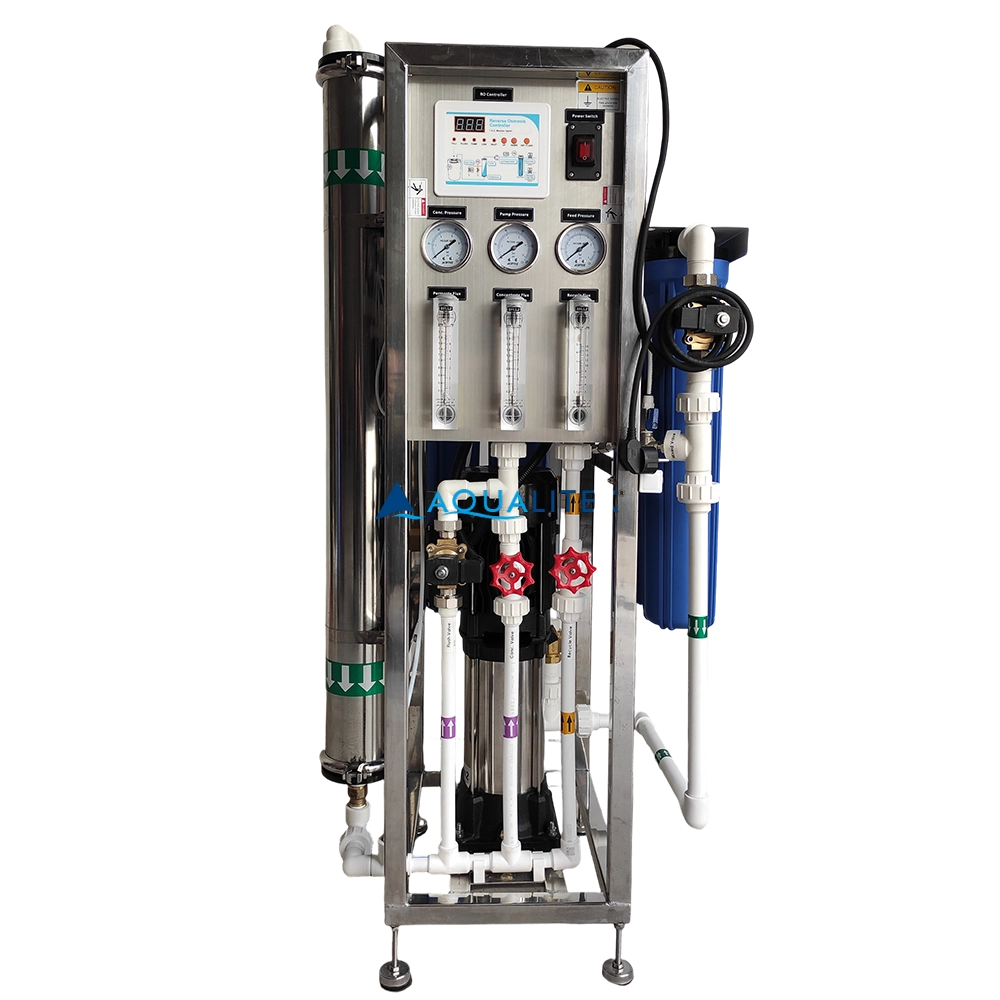
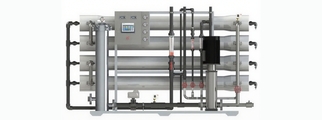
Our 500 LPH Reverse Osmosis (RO) System is engineered to provide high-quality purified water for commercial applications. Designed with advanced RO technology, durable components, and a user-friendly interface, this system ensures consistent performance, low maintenance, and long-term reliability.
With its compact design and robust skid-mounted frame, it’s an excellent choice for businesses that demand efficiency and quality in water purification.
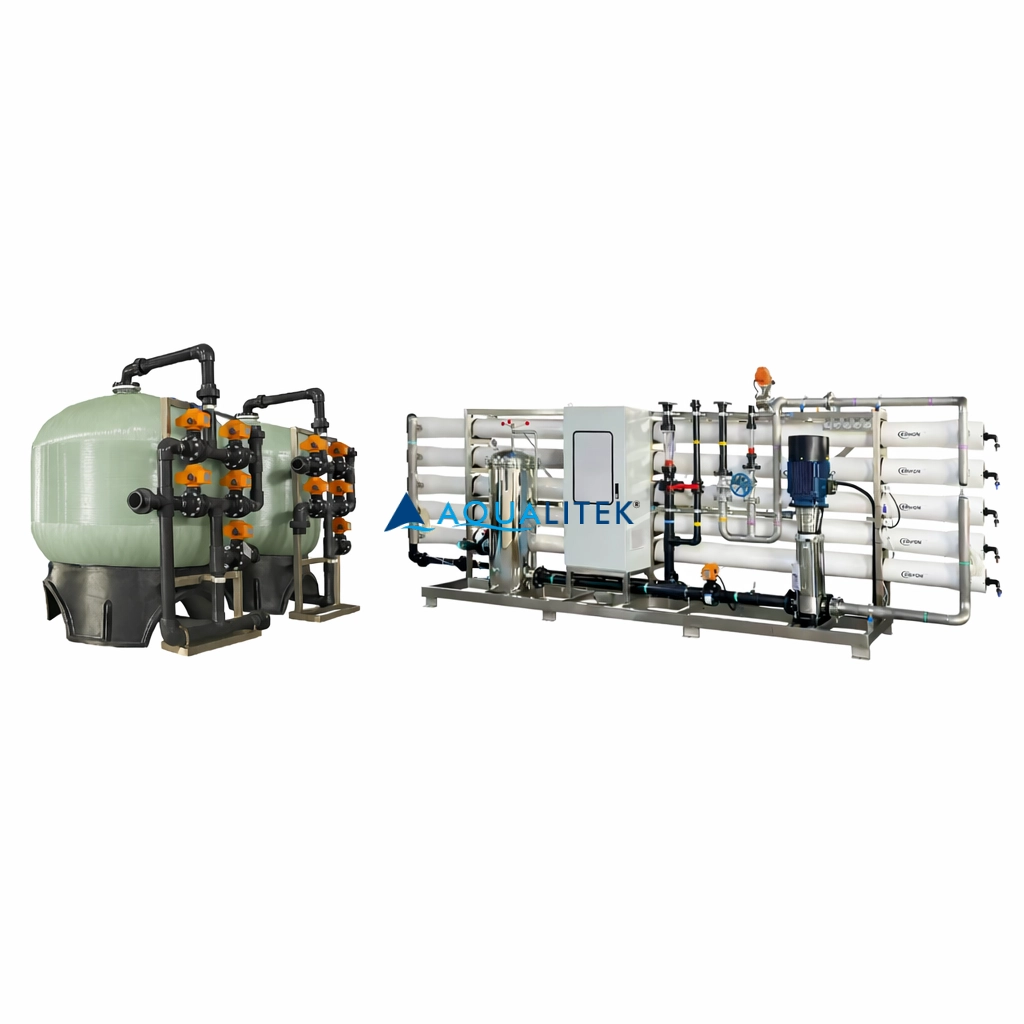
30TPH Industrial Reverse Osmosis (RO) System designed for industrial and municipal water treatment. High salt rejection, energy-efficient design, PLC control, and customizable configuration.
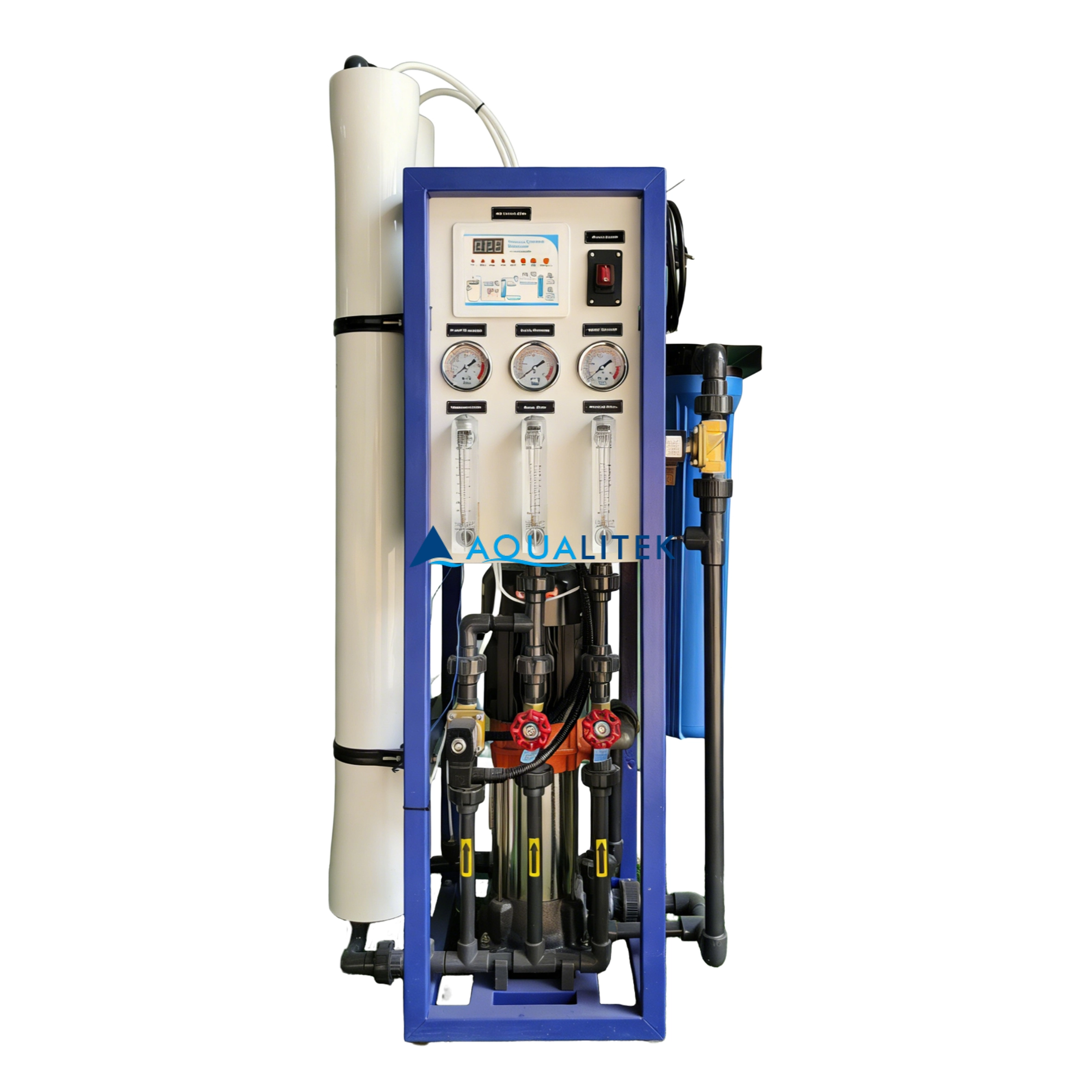
AQUALITEK's 500LPH Panel Mounted Reverse Osmosis Water Purification System delivers reliable 500 LPH RO water production. This compact industrial reverse osmosis unit is ideal for small scale industrial RO needs, ensuring efficient and high-quality purified water in a space-saving design.
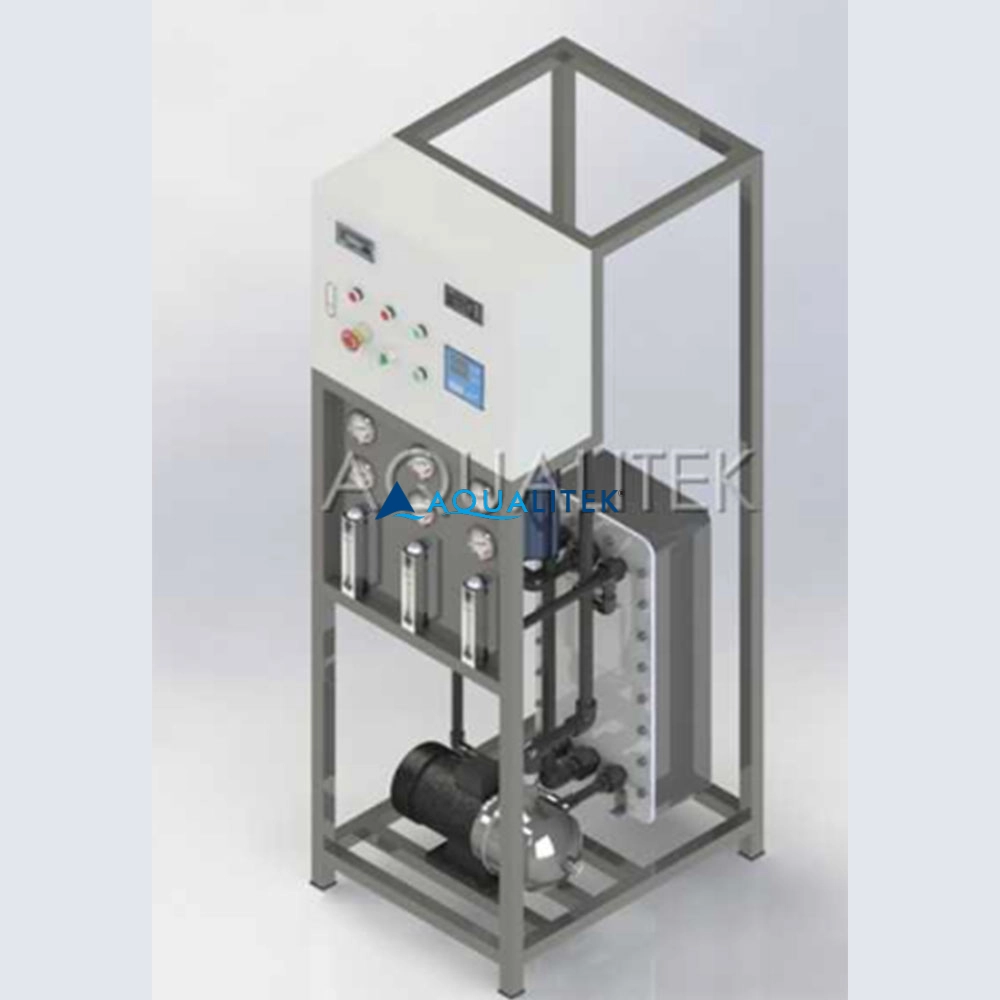
Electrodeionization (EDI) system is an advanced water purification technology that combines ion exchange and electrochemical processes to produce ultra-pure water. Unlike traditional deionization methods, which rely on chemical regeneration, EDI utilizes electric fields to drive the movement of ions through ion-exchange membranes, effectively removing dissolved salts and other ionic contaminants.
This process is continuous and does not require the use of chemicals for regeneration, making it an environmentally friendly and cost-effective solution for producing high-quality deionized water. EDI systems are widely used in applications requiring ultrapure water, such as in the pharmaceutical, semiconductor, power generation, and biotechnology industries, as well as for laboratory use.
By offering high-purity water without the need for chemical regeneration, EDI systems provide a sustainable, efficient, and reliable alternative to traditional deionization methods, making them an ideal choice for industries where water quality and process control are critical.
© 2026 AQUALITEK. All rights reserved.
AQUALITEK- Aimee Hoo
AQUALITEK - Aimee Hoo