




How Much Energy Can Advanced Energy Recovery Devices Theoretically Recover from High-Pressure Brine in Seawater Desalination Systems?| Insights by AQU
Discover how much energy modern energy recovery devices can theoretically recover from high-pressure brine in seawater desalination and how this impacts overall desalination efficiency.
- Introduction
- 1. Where Does the Recoverable Energy in Brine Come From?
- 2. Types of Energy Recovery Devices Used in SWRO
- 2.1 Main ERD Categories
- 3. Theoretical Energy Recovery Efficiency of Advanced ERDs
- 3.1 Hydraulic Efficiency of the Device Itself
- 3.2 System-Level Energy Reuse Efficiency
- 4. How Much Energy Can Be Recovered in Absolute Terms?
- 4.1 Energy Balance Example
- 4.2 Theoretical Maximum Energy Recovery
- 5. Why 100% Energy Recovery Is Not Possible
- 6. Impact of High-Efficiency ERDs on Desalination Economics
- 6.1 Reduction in Specific Energy Consumption (SEC)
- 6.2 Long-Term Benefits
- 7. Future Outlook: Are We Near the Physical Limit?
- Conclusion
Introduction
Energy consumption remains the single largest operating cost in seawater desalination.
In a conventional SWRO system, up to 50–60% of the input energy exits the system as pressure energy in the high-salinity concentrate (brine).
Modern energy recovery devices (ERDs) are specifically designed to capture this otherwise wasted hydraulic energy and reuse it to pressurize incoming seawater.
This article answers a critical question frequently asked by designers, EPC contractors, and plant owners:
Theoretically, how much energy from high-pressure brine can today’s most advanced ERDs recover and reuse?
1. Where Does the Recoverable Energy in Brine Come From?
In an SWRO system:
•Feed seawater is pressurized to 55–70 bar
•Only 35–45% becomes permeate
•The remaining 55–65% exits as high-pressure concentrate
This concentrate still carries:
•Nearly the same pressure as the feed
•Slightly reduced flow energy losses
•Significant hydraulic power
Without ERDs, this energy is lost through throttling valves.
2. Types of Energy Recovery Devices Used in SWRO
Modern desalination plants use several ERD technologies, but isobaric pressure exchangers dominate advanced systems.
2.1 Main ERD Categories
|
ERD Type |
Typical Efficiency |
|
Pelton turbine |
80–85% |
|
Turbocharger |
85–90% |
|
Isobaric pressure exchanger (PX, DWEER, iSave, etc.) |
95–98% |
Today’s best-performing systems almost exclusively use isobaric ERDs.
3. Theoretical Energy Recovery Efficiency of Advanced ERDs
3.1 Hydraulic Efficiency of the Device Itself
State-of-the-art isobaric ERDs achieve:
•Hydraulic efficiency: 96–98%
•Pressure loss: typically < 1 bar
•Mechanical energy loss: extremely low
This means up to 98% of the brine’s pressure energy can be directly transferred to incoming seawater.
3.2 System-Level Energy Reuse Efficiency
When accounting for:
•Booster pump losses
•Minor pressure mismatches
•Control and piping losses
The practical system-level energy reuse is typically:
90–95% of the theoretical recoverable brine energy
4. How Much Energy Can Be Recovered in Absolute Terms?
4.1 Energy Balance Example
Typical SWRO system values:
•Operating pressure: 60 bar
•Recovery: 45%
•Brine flow: 55%
Without ERD:
•Energy consumption: 6–8 kWh/m³ (old systems)
With advanced ERD:
•Recovered energy: ~2.5–3.5 kWh/m³
•Net SEC: 2.6–3.2 kWh/m³
4.2 Theoretical Maximum Energy Recovery
From a thermodynamic and hydraulic perspective:
Up to 60% of the total pressurization energy input can theoretically be recovered from the brine stream, and
up to 95–98% of that recoverable portion can be reused using advanced ERDs.
5. Why 100% Energy Recovery Is Not Possible
Even in theory, total energy recovery cannot reach 100% due to:
•Fluid friction losses
•Pressure matching constraints
•Salinity-induced density differences
•Mechanical inefficiencies
•Required residual pressure for flow control
Thus, ~95% system-level reuse is considered near the practical theoretical limit for real-world desalination plants.
6. Impact of High-Efficiency ERDs on Desalination Economics
6.1 Reduction in Specific Energy Consumption (SEC)
|
System Configuration |
SEC (kWh/m³) |
|
No ERD |
5.5–7.5 |
|
Turbine-based ERD |
3.8–4.5 |
|
Isobaric ERD (modern) |
2.6–3.2 |
6.2 Long-Term Benefits
•Lower OPEX
•Smaller high-pressure pumps
•Reduced carbon footprint
•Improved system reliability
7. Future Outlook: Are We Near the Physical Limit?
Current isobaric ERDs are already operating very close to thermodynamic and hydraulic limits.
Future improvements will likely focus on:
•Reduced pressure losses
•Better materials for corrosive seawater
•Integrated digital control
•Lower lifecycle cost, rather than higher efficiency
In terms of pure energy recovery percentage, major breakthroughs beyond 98% are unlikely.
Conclusion
From a theoretical and practical standpoint:
•Up to 60% of SWRO input energy exists in high-pressure brine
•95–98% of that energy can be recovered by advanced isobaric ERDs
•90–95% can be effectively reused at the system level
This makes modern energy recovery devices one of the most impactful technologies in seawater desalination, enabling today’s ultra-low energy SWRO plants.


Request More Information or Expert Advice
Share a few details, and we’ll provide deeper insights, tailored suggestions, or product support.
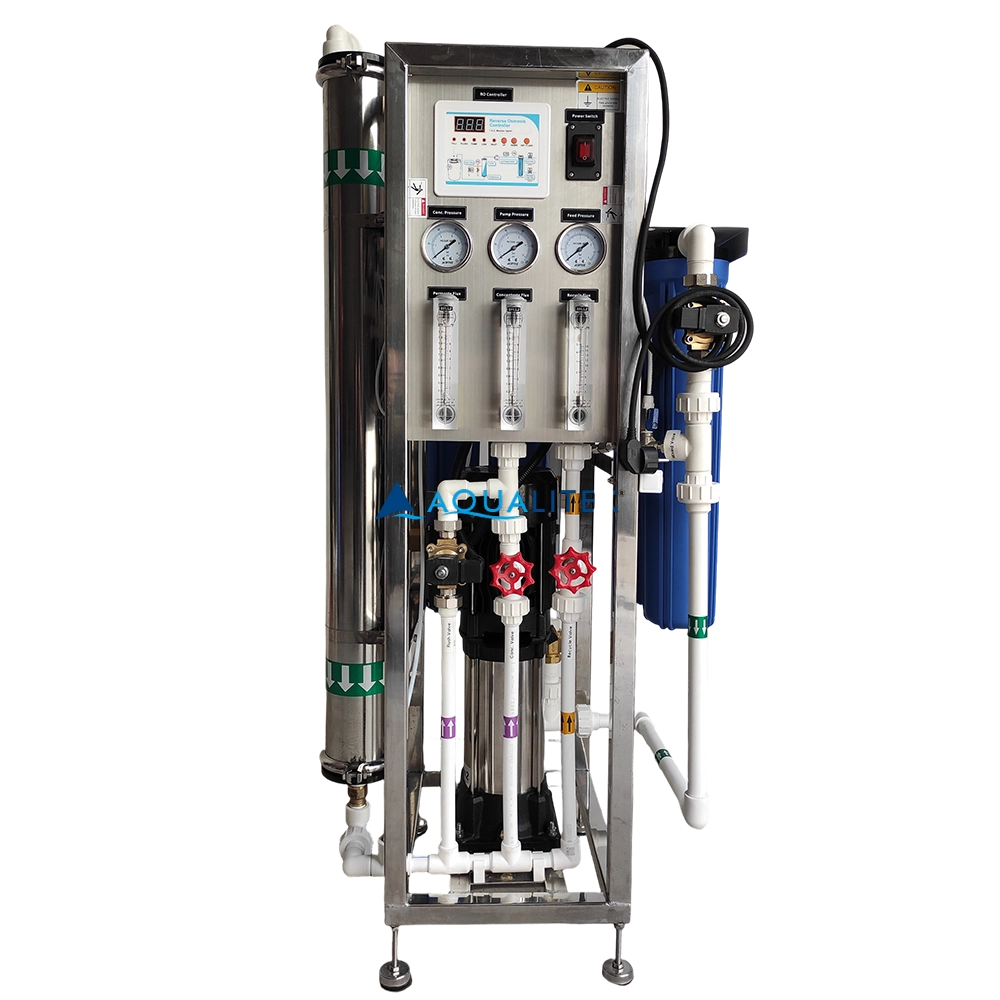
Our 500 LPH Reverse Osmosis (RO) System is engineered to provide high-quality purified water for commercial applications. Designed with advanced RO technology, durable components, and a user-friendly interface, this system ensures consistent performance, low maintenance, and long-term reliability.
With its compact design and robust skid-mounted frame, it’s an excellent choice for businesses that demand efficiency and quality in water purification.
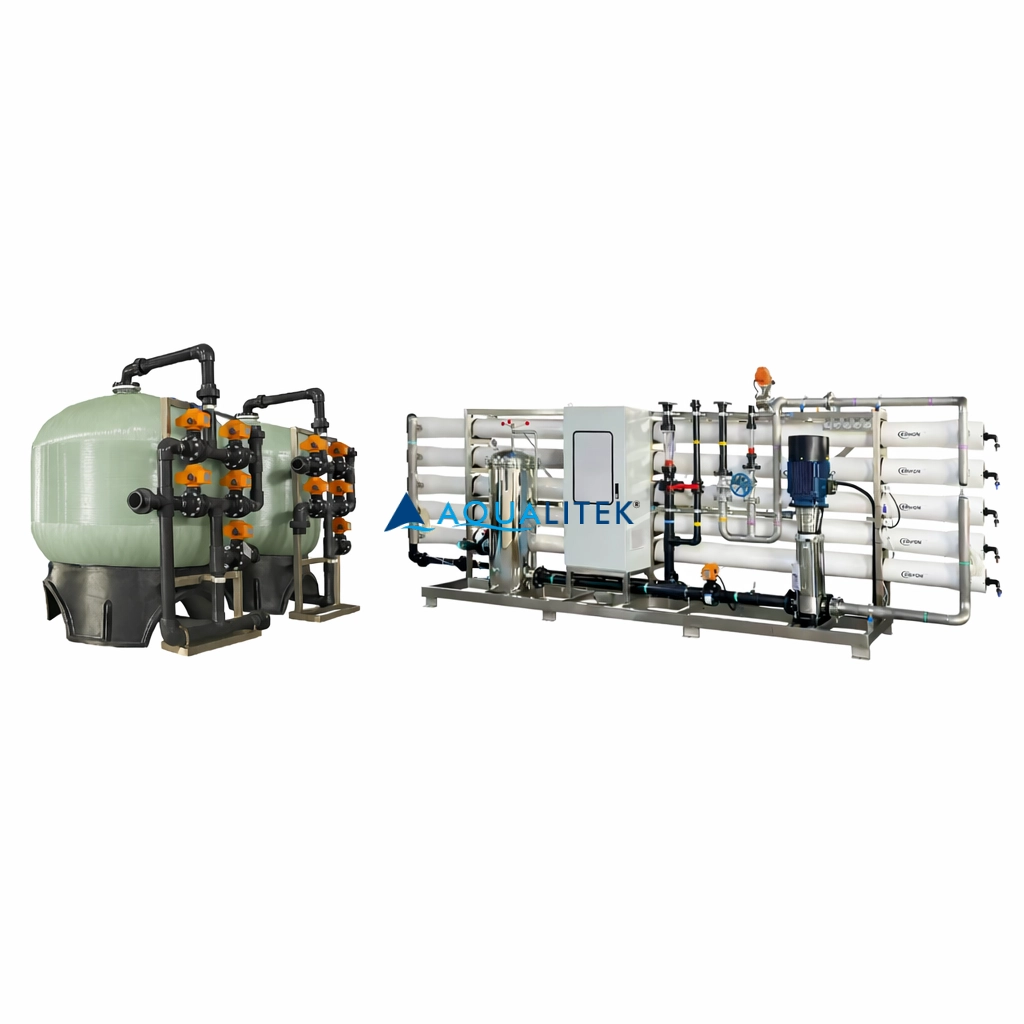
30TPH Industrial Reverse Osmosis (RO) System designed for industrial and municipal water treatment. High salt rejection, energy-efficient design, PLC control, and customizable configuration.
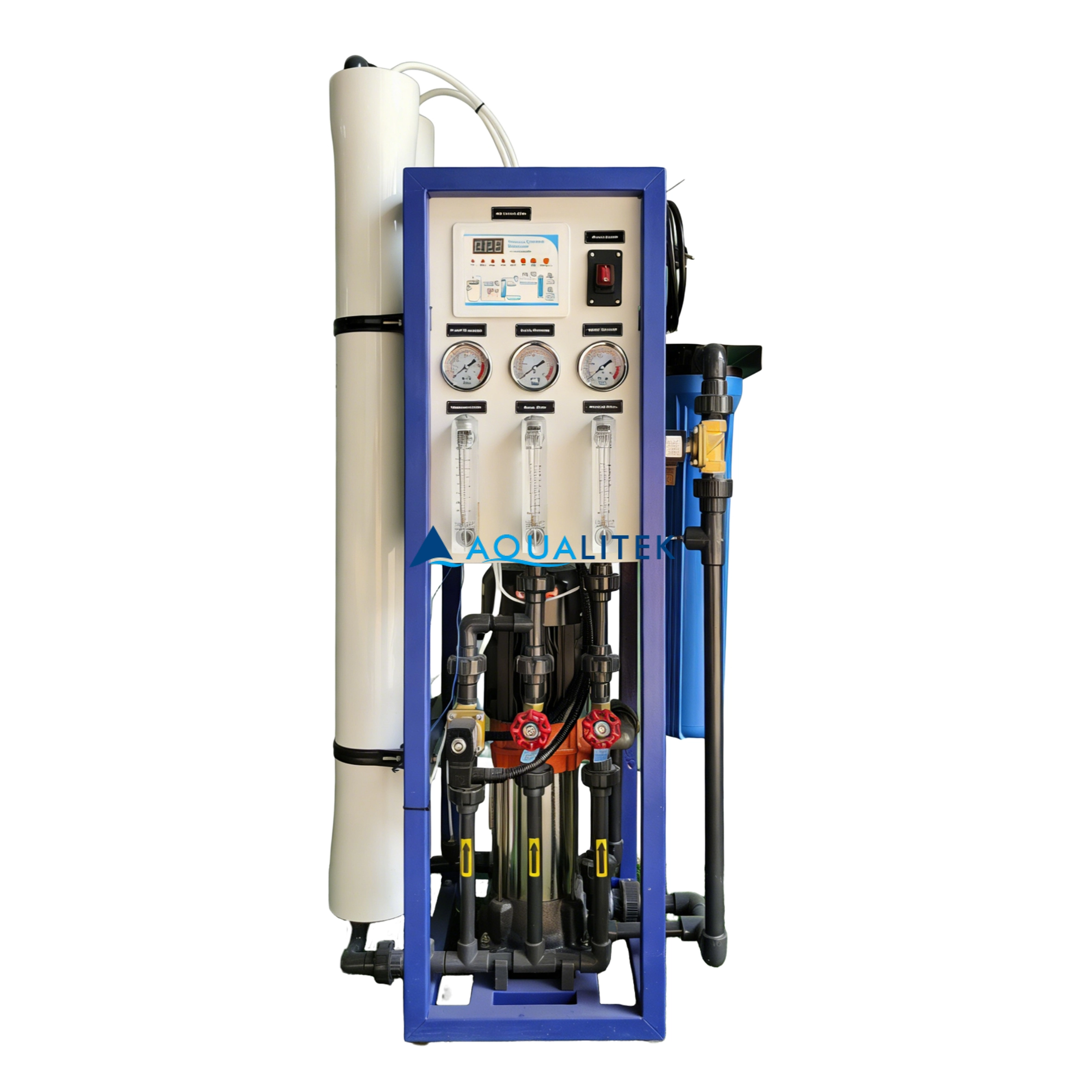
AQUALITEK's 500LPH Panel Mounted Reverse Osmosis Water Purification System delivers reliable 500 LPH RO water production. This compact industrial reverse osmosis unit is ideal for small scale industrial RO needs, ensuring efficient and high-quality purified water in a space-saving design.
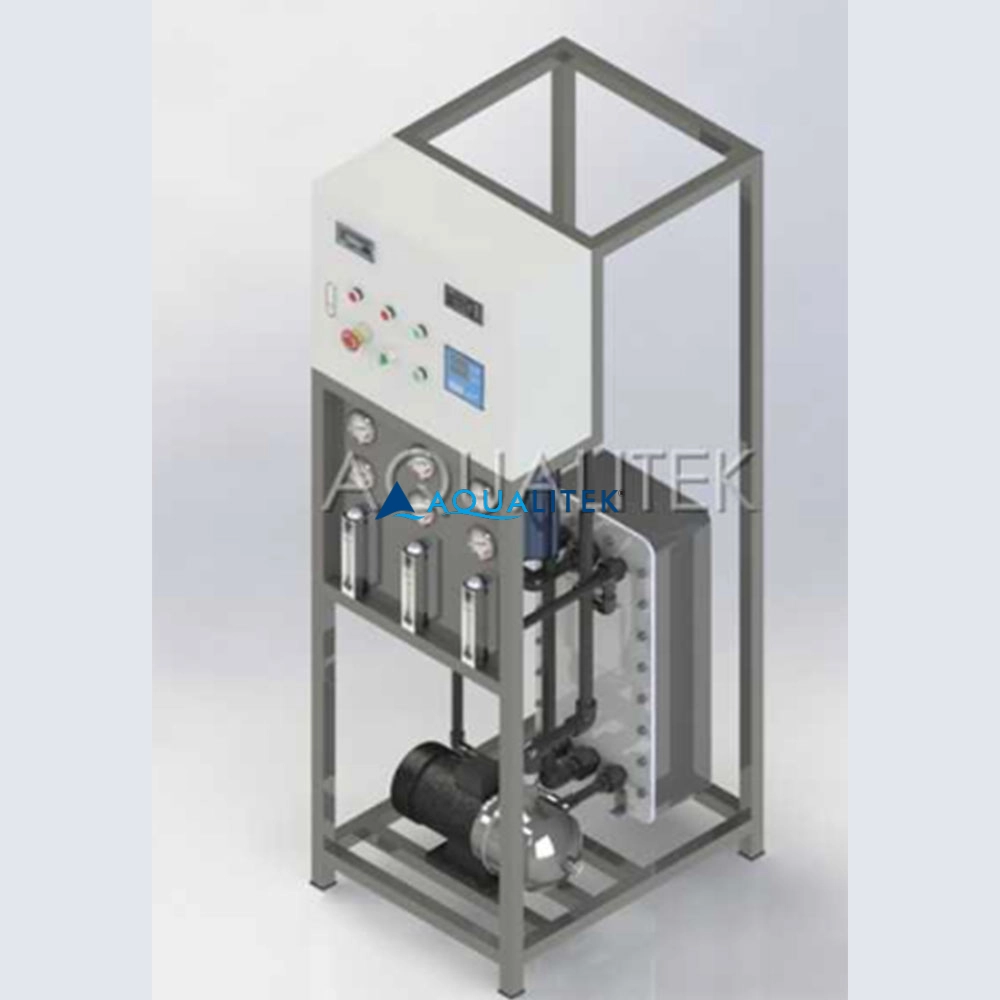
Electrodeionization (EDI) system is an advanced water purification technology that combines ion exchange and electrochemical processes to produce ultra-pure water. Unlike traditional deionization methods, which rely on chemical regeneration, EDI utilizes electric fields to drive the movement of ions through ion-exchange membranes, effectively removing dissolved salts and other ionic contaminants.
This process is continuous and does not require the use of chemicals for regeneration, making it an environmentally friendly and cost-effective solution for producing high-quality deionized water. EDI systems are widely used in applications requiring ultrapure water, such as in the pharmaceutical, semiconductor, power generation, and biotechnology industries, as well as for laboratory use.
By offering high-purity water without the need for chemical regeneration, EDI systems provide a sustainable, efficient, and reliable alternative to traditional deionization methods, making them an ideal choice for industries where water quality and process control are critical.
© 2026 AQUALITEK. All rights reserved.
AQUALITEK- Aimee Hoo
AQUALITEK - Aimee Hoo