




Why Is the Operating Pressure of a Seawater Desalination RO System Much Higher Than That of Tap Water RO Systems?| Insights by AQUALITEK
Learn why seawater RO systems require much higher operating pressure than tap water RO, focusing on osmotic pressure, salinity, membrane design, and energy considerations.
- Introduction
- 1. The Core Reason: Osmotic Pressure
- 1.1 What Is Osmotic Pressure?
- 1.2 Osmotic Pressure Comparison
- 2. Pressure Must Exceed Osmotic Pressure by a Large Margin
- 2.1 Required Net Driving Pressure (NDP)
- 3. Much Higher Salinity Means Lower Water Permeability
- 3.1 Salt Concentration Effects
- 4. Seawater RO Membranes Are Structurally Different
- 4.1 Membrane Strength Requirements
- 5. Higher Recovery Rates Increase Local Osmotic Pressure
- 6. Fouling and Scaling Safety Margins
- 7. Energy Recovery Makes High Pressure Economically Viable
- 8. Summary: Key Reasons for Higher SWRO Operating Pressure
- Conclusion
Introduction
Reverse osmosis (RO) is widely used for both tap water purification and seawater desalination, yet the operating pressures of these systems differ dramatically.
•Tap water RO systems: typically operate at 3–10 bar
•Seawater desalination RO (SWRO) systems: often require 55–70 bar
This large pressure gap is not caused by equipment preference or conservative design—it is fundamentally driven by thermodynamics, seawater chemistry, and membrane separation physics.
This article explains why seawater RO must operate at much higher pressure and what factors determine that requirement.
1. The Core Reason: Osmotic Pressure
1.1 What Is Osmotic Pressure?
Osmotic pressure is the pressure required to prevent water from naturally flowing across a semi-permeable membrane from low salinity to high salinity.
In RO systems:
•Applied pressure must exceed the osmotic pressure
•Only then can water flow against the natural osmotic direction
1.2 Osmotic Pressure Comparison
|
Water Type |
Typical TDS (mg/L) |
Osmotic Pressure |
|
Tap water |
200–500 |
< 1 bar |
|
Brackish water |
2,000–10,000 |
5–10 bar |
|
Seawater |
35,000–40,000 |
25–30 bar |
Seawater’s osmotic pressure alone is 25–30 times higher than that of tap water, before any productive permeation can occur.
2. Pressure Must Exceed Osmotic Pressure by a Large Margin
To produce water at an economically viable flux, RO systems must operate at pressures well above osmotic pressure.
2.1 Required Net Driving Pressure (NDP)
Net Driving Pressure =
Applied Pressure − Osmotic Pressure − Pressure Losses
For seawater:
•Osmotic pressure: ~27 bar
•Required NDP for flux: 15–25 bar
•Pressure losses: 3–5 bar
➡️ Total operating pressure: 55–70 bar
For tap water:
•Osmotic pressure: < 1 bar
•NDP needed: 2–4 bar
•Total pressure: 3–10 bar
3. Much Higher Salinity Means Lower Water Permeability
3.1 Salt Concentration Effects
High salt concentration in seawater causes:
•Reduced water activity
•Higher resistance to water transport
•Increased concentration polarization at the membrane surface
As a result, higher pressure is required to achieve acceptable water flux through SWRO membranes.
4. Seawater RO Membranes Are Structurally Different
4.1 Membrane Strength Requirements
SWRO membranes must withstand:
•Operating pressures up to 70 bar
•Long-term mechanical stress
•High chloride environments
Compared to tap water or brackish water membranes, SWRO membranes have:
•Thicker support layers
•Higher mechanical strength
•Slightly lower intrinsic permeability
This design trade-off improves durability but requires higher pressure to drive flux.
5. Higher Recovery Rates Increase Local Osmotic Pressure
As seawater flows through the membrane element:
•Water permeates
•Salt concentration increases along the membrane
•Local osmotic pressure rises significantly
To maintain permeation across the full membrane length:
Feed pressure must be high enough to overcome peak local osmotic pressure at the concentrate end
This effect is far less pronounced in tap water RO systems.
6. Fouling and Scaling Safety Margins
Seawater contains:
•Suspended solids
•Organic matter
•Microorganisms
•Sparingly soluble salts
To ensure stable operation despite fouling tendencies:
•Systems are designed with pressure margins
•Higher pressure compensates for gradual permeability loss
Tap water RO systems face much lower fouling stress.
7. Energy Recovery Makes High Pressure Economically Viable
Without energy recovery devices (ERDs), high-pressure SWRO would be prohibitively expensive.
Modern SWRO systems use:
•Isobaric pressure exchangers
•Energy recovery efficiencies of 95–98%
This allows operation at:
•High pressure
•Low net energy consumption (≈2.6–3.2 kWh/m³)
8. Summary: Key Reasons for Higher SWRO Operating Pressure
|
Factor |
Impact |
|
Very high osmotic pressure |
Primary reason |
|
High salinity (35,000+ mg/L) |
Reduced permeability |
|
Stronger membrane structure |
Requires higher driving force |
|
High recovery operation |
Increases local osmotic pressure |
|
Fouling and scaling margins |
Additional pressure buffer |
|
Energy recovery technology |
Enables high-pressure feasibility |
Conclusion
The much higher operating pressure of seawater desalination RO systems is not optional—it is a fundamental physical requirement.
In short:
•High salinity = high osmotic pressure
•High osmotic pressure = high applied pressure
•Modern membranes and ERDs make this technically and economically viable
Understanding this principle is essential for anyone involved in SWRO design, operation, or optimization.



Request More Information or Expert Advice
Share a few details, and we’ll provide deeper insights, tailored suggestions, or product support.
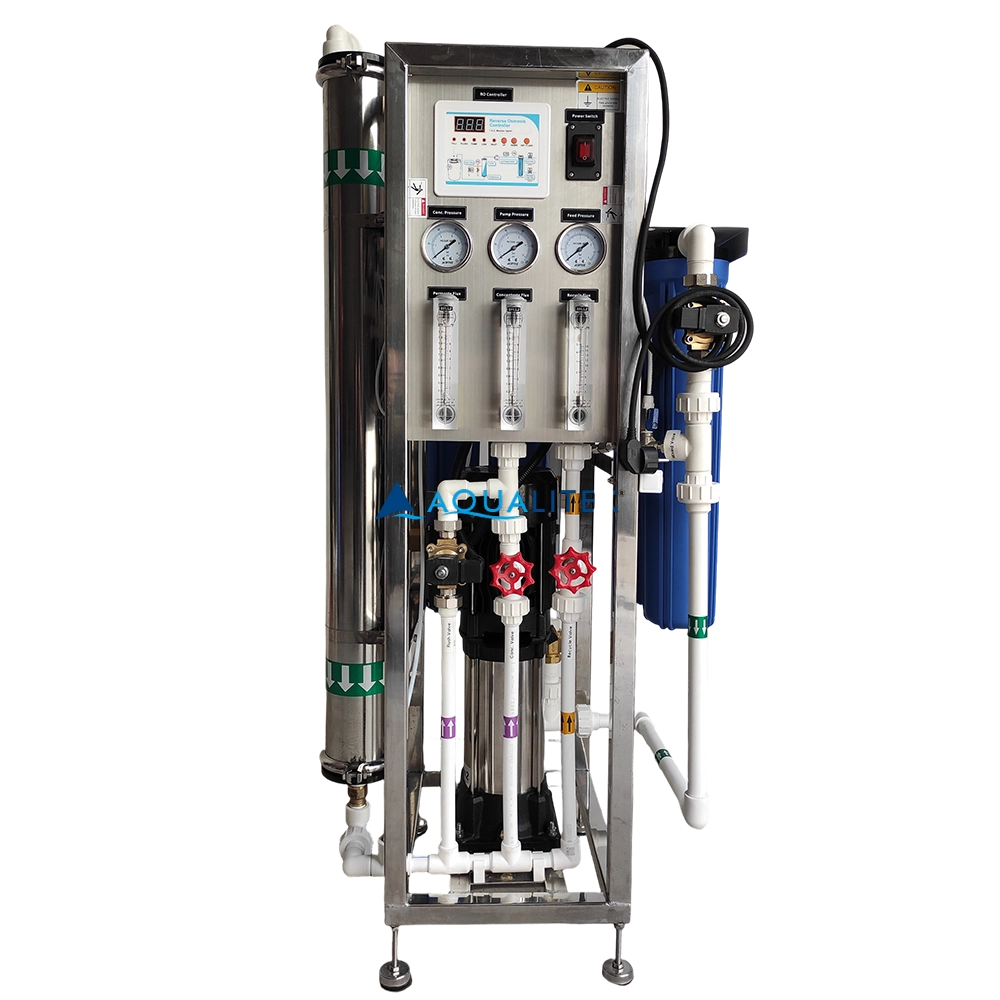
Our 500 LPH Reverse Osmosis (RO) System is engineered to provide high-quality purified water for commercial applications. Designed with advanced RO technology, durable components, and a user-friendly interface, this system ensures consistent performance, low maintenance, and long-term reliability.
With its compact design and robust skid-mounted frame, it’s an excellent choice for businesses that demand efficiency and quality in water purification.
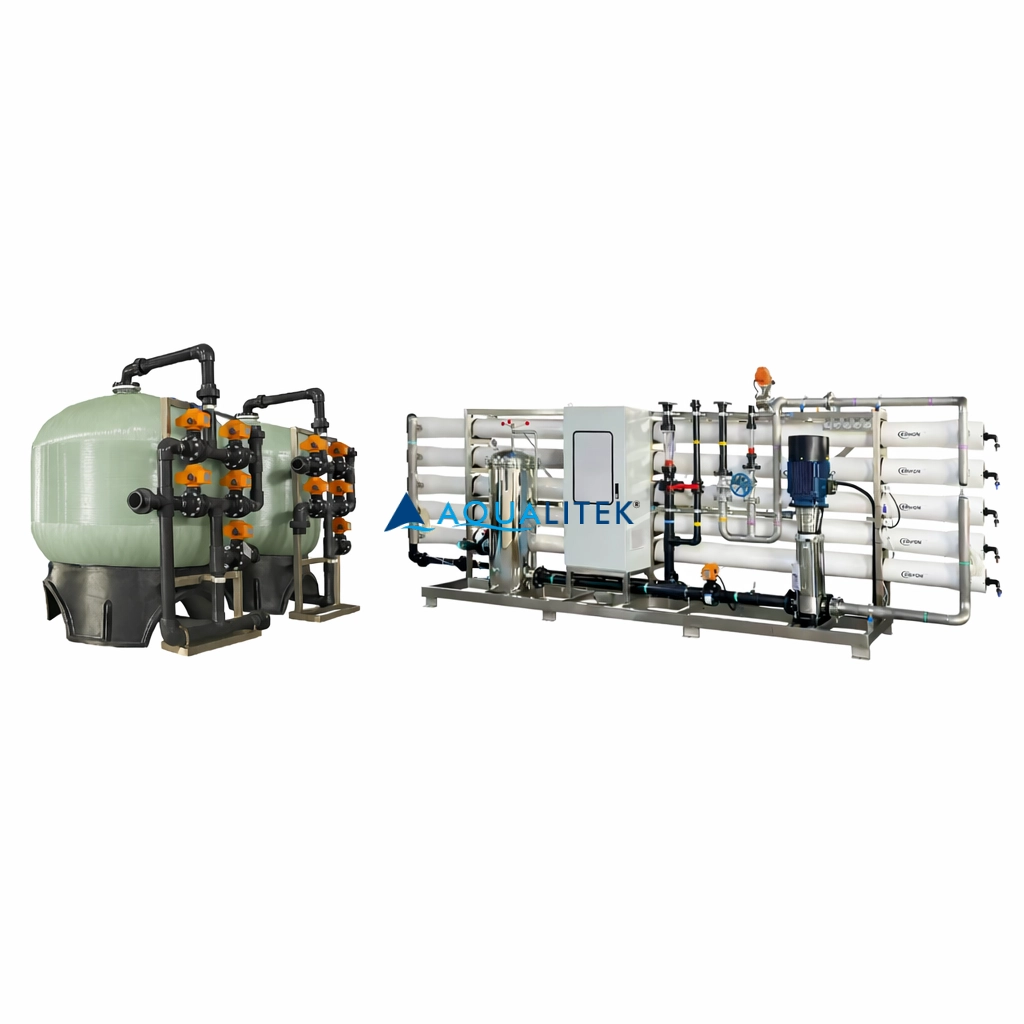
30TPH Industrial Reverse Osmosis (RO) System designed for industrial and municipal water treatment. High salt rejection, energy-efficient design, PLC control, and customizable configuration.
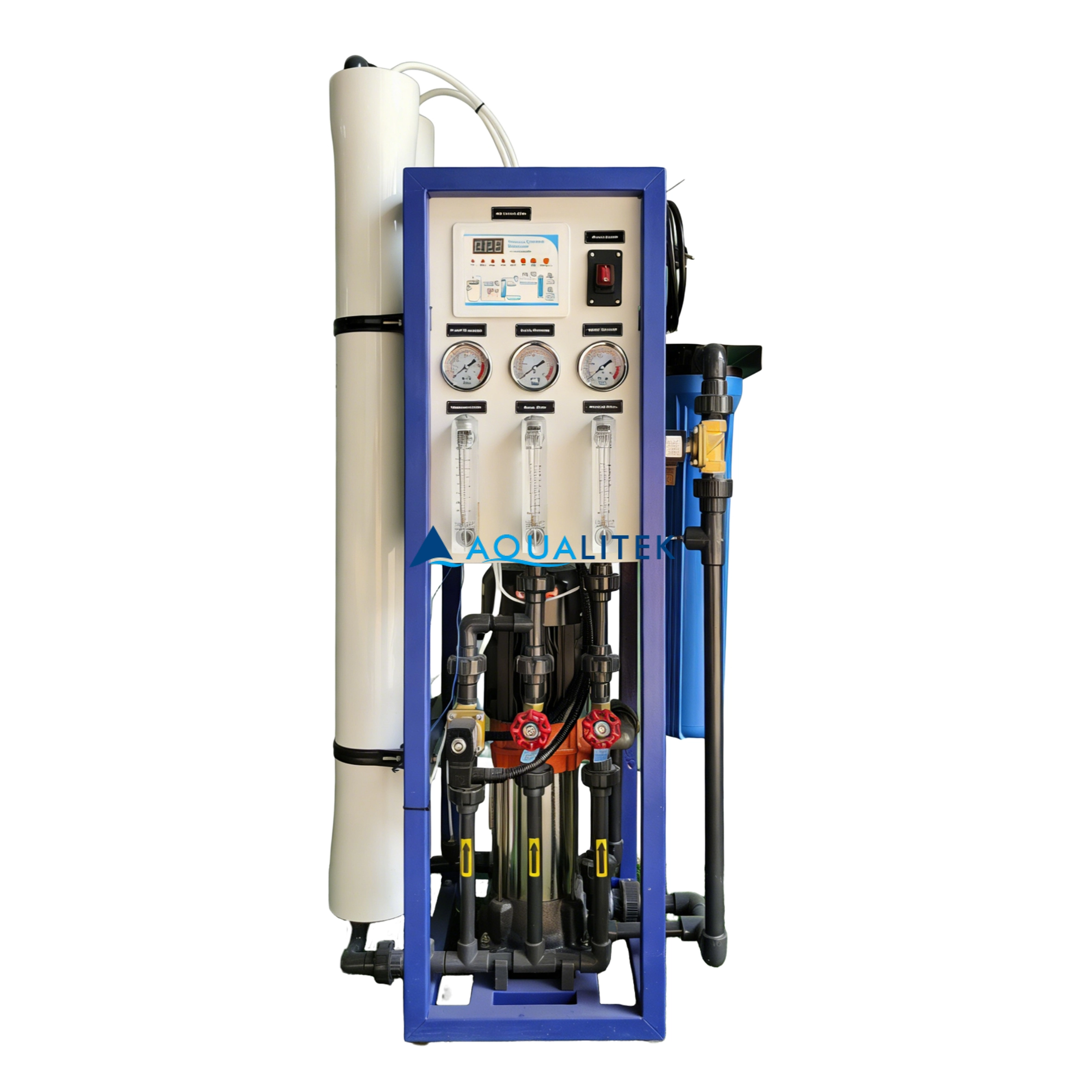
AQUALITEK's 500LPH Panel Mounted Reverse Osmosis Water Purification System delivers reliable 500 LPH RO water production. This compact industrial reverse osmosis unit is ideal for small scale industrial RO needs, ensuring efficient and high-quality purified water in a space-saving design.
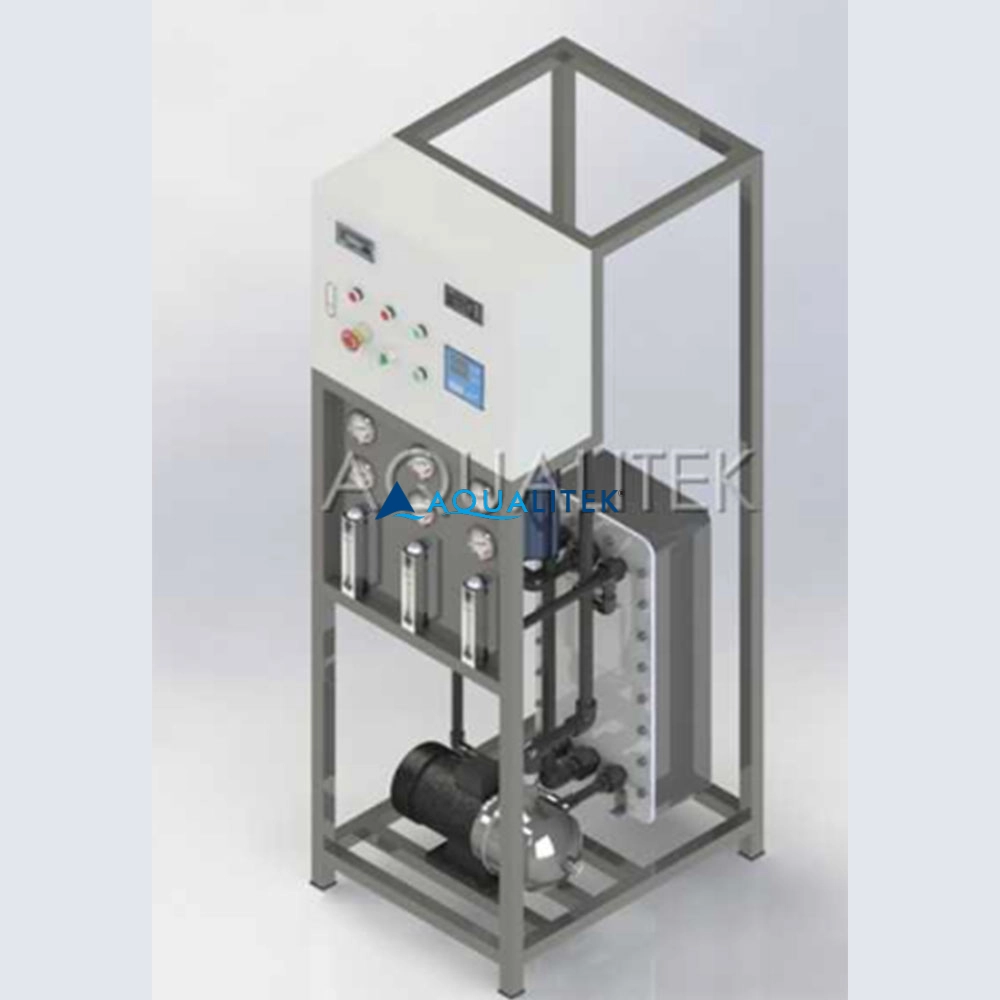
Electrodeionization (EDI) system is an advanced water purification technology that combines ion exchange and electrochemical processes to produce ultra-pure water. Unlike traditional deionization methods, which rely on chemical regeneration, EDI utilizes electric fields to drive the movement of ions through ion-exchange membranes, effectively removing dissolved salts and other ionic contaminants.
This process is continuous and does not require the use of chemicals for regeneration, making it an environmentally friendly and cost-effective solution for producing high-quality deionized water. EDI systems are widely used in applications requiring ultrapure water, such as in the pharmaceutical, semiconductor, power generation, and biotechnology industries, as well as for laboratory use.
By offering high-purity water without the need for chemical regeneration, EDI systems provide a sustainable, efficient, and reliable alternative to traditional deionization methods, making them an ideal choice for industries where water quality and process control are critical.
© 2026 AQUALITEK. All rights reserved.
AQUALITEK- Aimee Hoo
AQUALITEK - Aimee Hoo