




Besides the RO Membrane and High-Pressure Pump, What Is the Key Energy-Saving Device Unique to Seawater Desalination Systems?| Insights by AQUALITEK
Discover why energy recovery devices (ERDs) are essential in seawater desalination systems but absent in household RO, and how they dramatically reduce energy consumption.
- Introduction
- 1. The Missing Component in Household RO: Energy Recovery Devices (ERDs)
- 1.1 What Is an Energy Recovery Device?
- 2. Why Household RO Systems Do Not Use ERDs
- 3. Why ERDs Are Essential in Seawater Desalination
- 3.1 Energy Without Recovery: Not Economically Feasible
- 4. Main Types of Energy Recovery Devices in SWRO Systems
- 4.1 Isobaric Pressure Exchangers (Mainstream Technology)
- 4.2 Turbochargers / Hydraulic Turbines (Older Technology)
- 5. How ERDs Reduce Overall System Energy Consumption
- 5.1 Energy Flow Comparison
- 6. Additional Benefits Beyond Energy Savings
- 7. Why ERDs Are Considered the “Third Core Component” of SWRO
- Conclusion
Introduction
When comparing seawater desalination RO (SWRO) systems with household RO units, most people immediately notice the differences in:
•RO membrane type
•Operating pressure
•High-pressure pump capacity
•However, one critical energy-saving device plays a decisive role in making seawater desalination economically viable—yet it is completely absent from household RO systems.
That device is the Energy Recovery Device (ERD).
1. The Missing Component in Household RO: Energy Recovery Devices (ERDs)
1.1 What Is an Energy Recovery Device?
An energy recovery device captures the hydraulic energy stored in high-pressure concentrate (brine) leaving the RO membrane and reuses it to pressurize incoming seawater.
In SWRO systems:
•Brine pressure can reach 55–70 bar
•Discharging this energy directly would result in massive losses
ERDs recover and recycle this energy, dramatically reducing power demand.
2. Why Household RO Systems Do Not Use ERDs
Household RO systems:
•Operate at 3–7 bar
•Use small booster pumps
•Discharge minimal-pressure concentrate
At such low pressures:
•Recoverable energy is negligible
•ERDs would add cost, complexity, and maintenance without benefit
ERDs only become meaningful at the high pressures typical of seawater desalination.
3. Why ERDs Are Essential in Seawater Desalination
3.1 Energy Without Recovery: Not Economically Feasible
Without ERDs:
•SWRO energy consumption would exceed 6–8 kWh/m³
•Operating costs would be prohibitive
With modern ERDs:
•Energy consumption drops to 2.5–3.5 kWh/m³
•Energy savings of 40–60% are common
4. Main Types of Energy Recovery Devices in SWRO Systems
4.1 Isobaric Pressure Exchangers (Mainstream Technology)
Examples: PX devices, DWEER, iSave
How they work:
•Transfer pressure directly from brine to incoming seawater
•Minimal energy loss
•No conversion to mechanical or electrical energy
Key advantages:
•95–98% energy recovery efficiency
•Compact and reliable
•Industry-standard for large SWRO plants
This is the dominant ERD technology used worldwide today.
4.2 Turbochargers / Hydraulic Turbines (Older Technology)
How they work:
•Use brine flow to drive a turbine
•Turbine assists the high-pressure pump
Limitations:
•Lower efficiency (70–85%)
•Mechanical losses
•Less suitable for variable loads
Still used in:
•Some medium-sized plants
•Retrofit projects
5. How ERDs Reduce Overall System Energy Consumption
5.1 Energy Flow Comparison
Without ERD:
•High-pressure pump supplies 100% of required energy
With ERD:
•High-pressure pump supplies only 40–50%
•ERD supplies the rest from recovered brine pressure
This fundamentally changes SWRO economics.
6. Additional Benefits Beyond Energy Savings
ERDs also provide:
•Reduced high-pressure pump size
•Lower mechanical stress
•More stable operating pressure
•Extended equipment lifespan
•Improved system control under variable conditions
These benefits are unnecessary—and impossible to justify—in household RO systems.
7. Why ERDs Are Considered the “Third Core Component” of SWRO
In modern seawater desalination design, three components define system performance:
1.SWRO membrane – determines salt rejection and flux
2.High-pressure pump – supplies driving pressure
3.Energy recovery device – minimizes energy consumption
Without ERDs, large-scale seawater desalination would not be commercially viable.
Conclusion
Besides the RO membrane and high-pressure pump, the energy recovery device (ERD) is the most critical energy-saving component unique to seawater desalination systems.
In summary:
•Household RO systems do not need ERDs due to low pressure
•SWRO systems rely on ERDs to recover high-pressure brine energy
•Modern isobaric ERDs achieve up to 98% energy recovery
•ERDs enable seawater desalination to be both technically and economically sustainable


Request More Information or Expert Advice
Share a few details, and we’ll provide deeper insights, tailored suggestions, or product support.
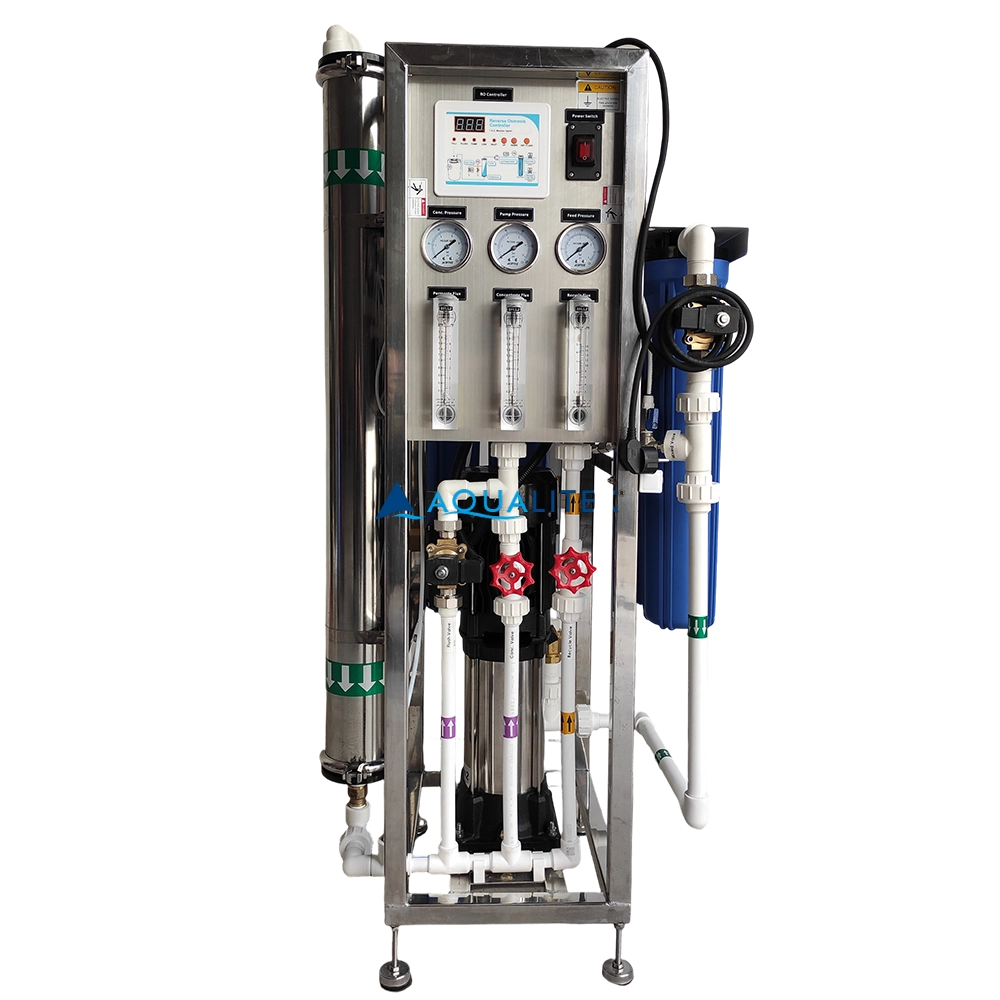
Our 500 LPH Reverse Osmosis (RO) System is engineered to provide high-quality purified water for commercial applications. Designed with advanced RO technology, durable components, and a user-friendly interface, this system ensures consistent performance, low maintenance, and long-term reliability.
With its compact design and robust skid-mounted frame, it’s an excellent choice for businesses that demand efficiency and quality in water purification.
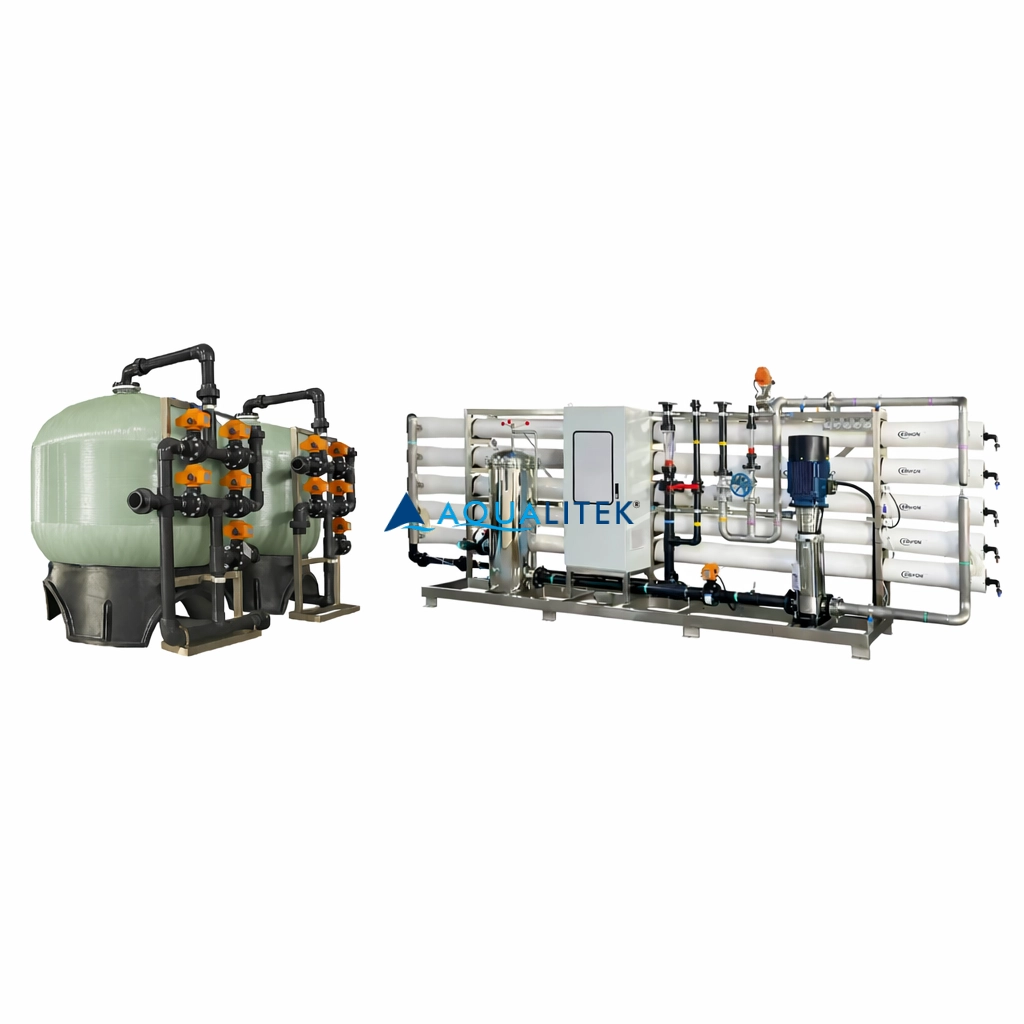
30TPH Industrial Reverse Osmosis (RO) System designed for industrial and municipal water treatment. High salt rejection, energy-efficient design, PLC control, and customizable configuration.
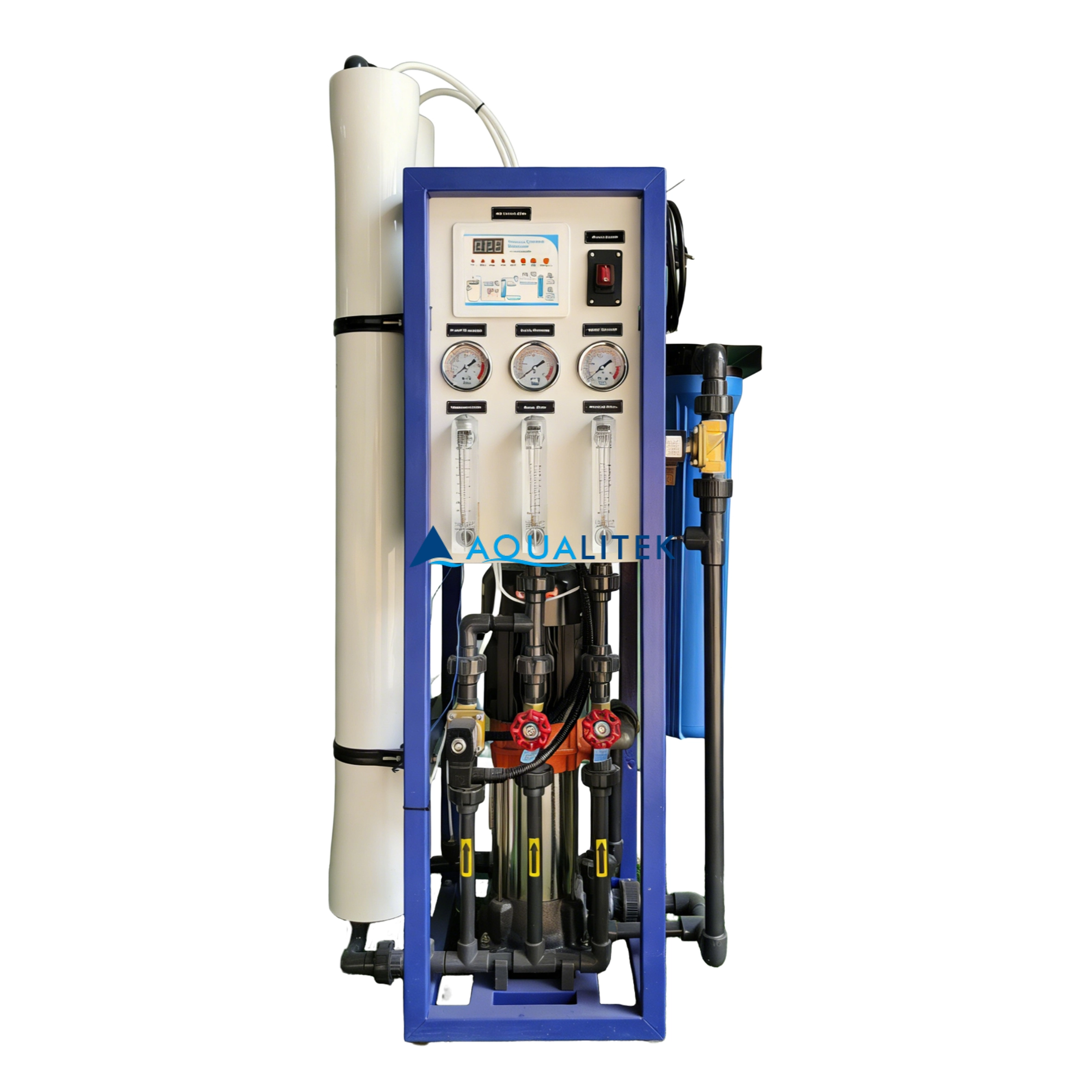
AQUALITEK's 500LPH Panel Mounted Reverse Osmosis Water Purification System delivers reliable 500 LPH RO water production. This compact industrial reverse osmosis unit is ideal for small scale industrial RO needs, ensuring efficient and high-quality purified water in a space-saving design.
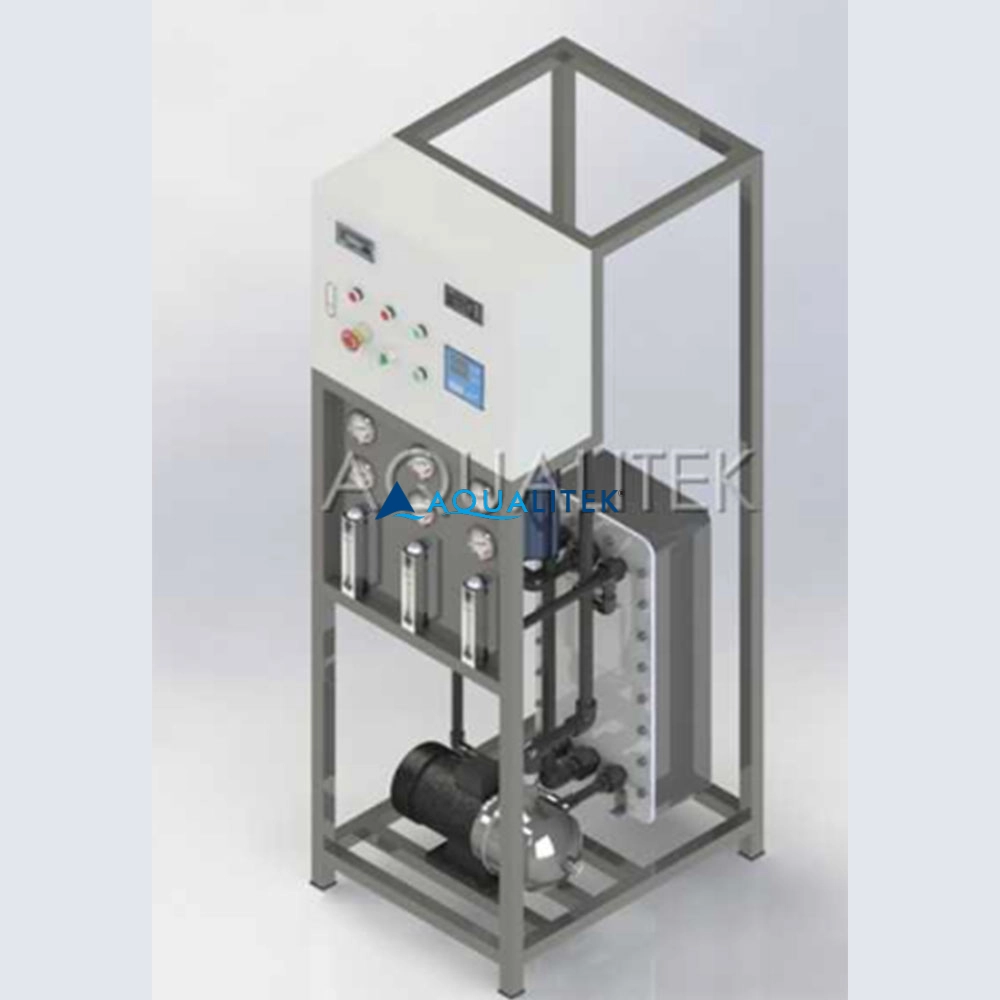
Electrodeionization (EDI) system is an advanced water purification technology that combines ion exchange and electrochemical processes to produce ultra-pure water. Unlike traditional deionization methods, which rely on chemical regeneration, EDI utilizes electric fields to drive the movement of ions through ion-exchange membranes, effectively removing dissolved salts and other ionic contaminants.
This process is continuous and does not require the use of chemicals for regeneration, making it an environmentally friendly and cost-effective solution for producing high-quality deionized water. EDI systems are widely used in applications requiring ultrapure water, such as in the pharmaceutical, semiconductor, power generation, and biotechnology industries, as well as for laboratory use.
By offering high-purity water without the need for chemical regeneration, EDI systems provide a sustainable, efficient, and reliable alternative to traditional deionization methods, making them an ideal choice for industries where water quality and process control are critical.
© 2026 AQUALITEK. All rights reserved.
AQUALITEK- Aimee Hoo
AQUALITEK - Aimee Hoo