




Before Seawater Enters the RO Membrane, What SDI Level Must Pretreatment Achieve?| Insights by AQUALITEK
Learn what SDI level seawater pretreatment must reach before RO membranes, why SDI control is critical, and how modern desalination plants achieve stable low SDI.
- Introduction
- 1. What Is SDI and Why Is It So Important?
- 1.1 Definition of SDI
- 2. Standard SDI Requirements for Seawater RO Systems
- 2.1 Widely Accepted Industry Targets
- 3. Why Must SDI Be So Low for Seawater RO?
- 3.1 High Fouling Sensitivity of SWRO Membranes
- 3.2 SDI Above 5: What Happens?
- 4. SDI vs Turbidity: Why SDI Is More Critical
- 5. How Do Seawater Pretreatment Systems Achieve SDI ≤ 3?
- 5.1 Typical Pretreatment Process Trains
- 5.2 Role of Ultrafiltration (UF)
- 6. SDI Control During Seasonal and Algal Events
- 7. Operational Monitoring and Best Practices
- Conclusion
Introduction
In seawater reverse osmosis (SWRO) systems, pretreatment quality directly determines membrane performance, lifespan, and operating cost. Among all pretreatment indicators, SDI (Silt Density Index) is one of the most critical.
A common question in desalination design and operation is:
Before seawater enters the RO membrane, to what SDI level must it be reduced?
The short answer is:
SDI₁₅ ≤ 3 is the industry best practice, while SDI₁₅ ≤ 5 is often considered the absolute upper limit.
1. What Is SDI and Why Is It So Important?
1.1 Definition of SDI
SDI (Silt Density Index) measures the fouling potential of water caused by suspended solids, colloids, and fine particles.
•Typically measured as SDI₁₅ (15-minute test)
•Indicates how quickly a 0.45 μm filter clogs under pressure
SDI does not measure salinity or dissolved ions—it reflects particulate fouling risk.
2. Standard SDI Requirements for Seawater RO Systems
2.1 Widely Accepted Industry Targets
|
Application |
Recommended SDI₁₅ |
|
Seawater RO (Best Practice) |
≤ 3 |
|
Seawater RO (Acceptable Maximum) |
≤ 5 |
|
Brackish Water RO |
≤ 5–6 |
|
Ultra-conservative SWRO design |
≤ 2 |
Conclusion:
✅ SDI₁₅ ≤ 3 is the preferred design and operational target for modern SWRO plants.
3. Why Must SDI Be So Low for Seawater RO?
3.1 High Fouling Sensitivity of SWRO Membranes
Compared with brackish water RO membranes, SWRO membranes operate under:
•Much higher pressure (55–70 bar)
•Higher salinity and density
•Higher concentration polarization
Even small amounts of particulate matter can lead to:
•Rapid membrane fouling
•Flux decline
•Increased differential pressure
•More frequent chemical cleaning (CIP)
3.2 SDI Above 5: What Happens?
If SDI₁₅ exceeds 5:
•Fouling rate increases exponentially
•CIP frequency may double or triple
•Membrane lifespan may drop by 30–50%
•Energy consumption rises due to pressure loss
4. SDI vs Turbidity: Why SDI Is More Critical
|
Parameter |
What It Measures |
Limitation |
|
Turbidity |
Light scattering by particles |
Misses colloids |
|
TSS |
Mass of suspended solids |
Poor sensitivity |
|
SDI |
Fouling tendency |
Best predictor for RO |
Low turbidity does not guarantee low SDI, which is why SDI is mandatory for SWRO.
5. How Do Seawater Pretreatment Systems Achieve SDI ≤ 3?
5.1 Typical Pretreatment Process Trains
Common combinations include:
•Coagulation + Flocculation
•Dual-media or multimedia filtration
•Ultrafiltration (UF) or Microfiltration (MF)
•Cartridge filtration (1–5 μm final protection)
UF-based pretreatment is increasingly preferred because it consistently delivers SDI₁₅ ≤ 2–3.
5.2 Role of Ultrafiltration (UF)
UF advantages:
•Physical barrier to particles and colloids
•Stable SDI regardless of raw seawater fluctuation
•Better protection against algae blooms
Many large SWRO plants now specify:
UF permeate SDI₁₅ ≤ 2.5
6. SDI Control During Seasonal and Algal Events
During red tides or plankton blooms:
•Raw seawater SDI may exceed 10–15
•Conventional filtration may struggle
Mitigation strategies:
•Enhanced coagulation
•Inline coagulation before UF
•Lower filtration flux
•Frequent backwashing and chemical enhanced backwash (CEB)
Maintaining SDI ≤ 3 under these conditions is a mark of robust pretreatment design.
7. Operational Monitoring and Best Practices
Best practices for SDI control include:
•Daily SDI₁₅ testing
•Trend monitoring instead of single values
•Correlating SDI with RO differential pressure
•Immediate action when SDI rises above 3.5
Conclusion
Before seawater enters an RO membrane system:
•SDI₁₅ must be reduced to ≤ 3 for optimal and stable operation
•SDI₁₅ = 5 should be treated as an absolute maximum, not a target
•Lower SDI directly translates into:
Longer membrane life
Lower energy consumption
Fewer cleanings
More reliable plant operation
In modern seawater desalination, SDI control is not optional—it is fundamental.



Request More Information or Expert Advice
Share a few details, and we’ll provide deeper insights, tailored suggestions, or product support.
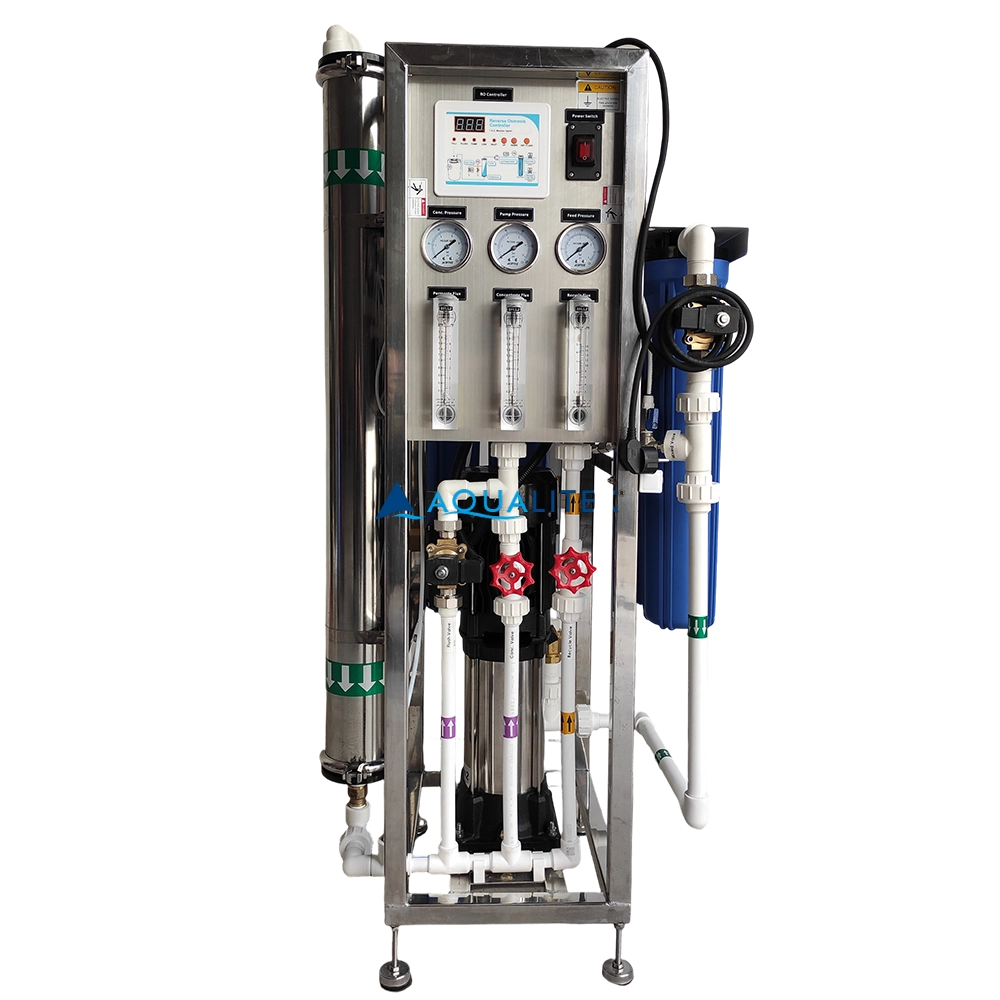
Our 500 LPH Reverse Osmosis (RO) System is engineered to provide high-quality purified water for commercial applications. Designed with advanced RO technology, durable components, and a user-friendly interface, this system ensures consistent performance, low maintenance, and long-term reliability.
With its compact design and robust skid-mounted frame, it’s an excellent choice for businesses that demand efficiency and quality in water purification.
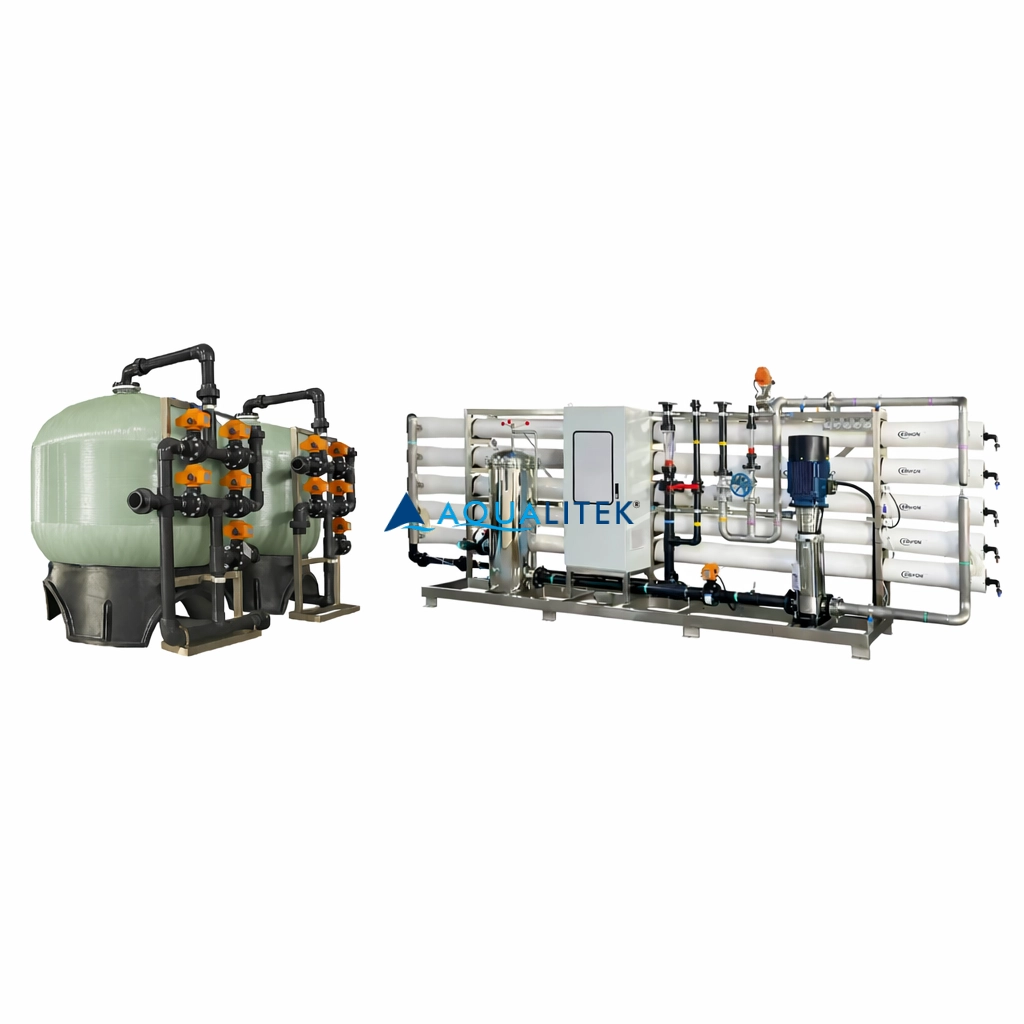
30TPH Industrial Reverse Osmosis (RO) System designed for industrial and municipal water treatment. High salt rejection, energy-efficient design, PLC control, and customizable configuration.
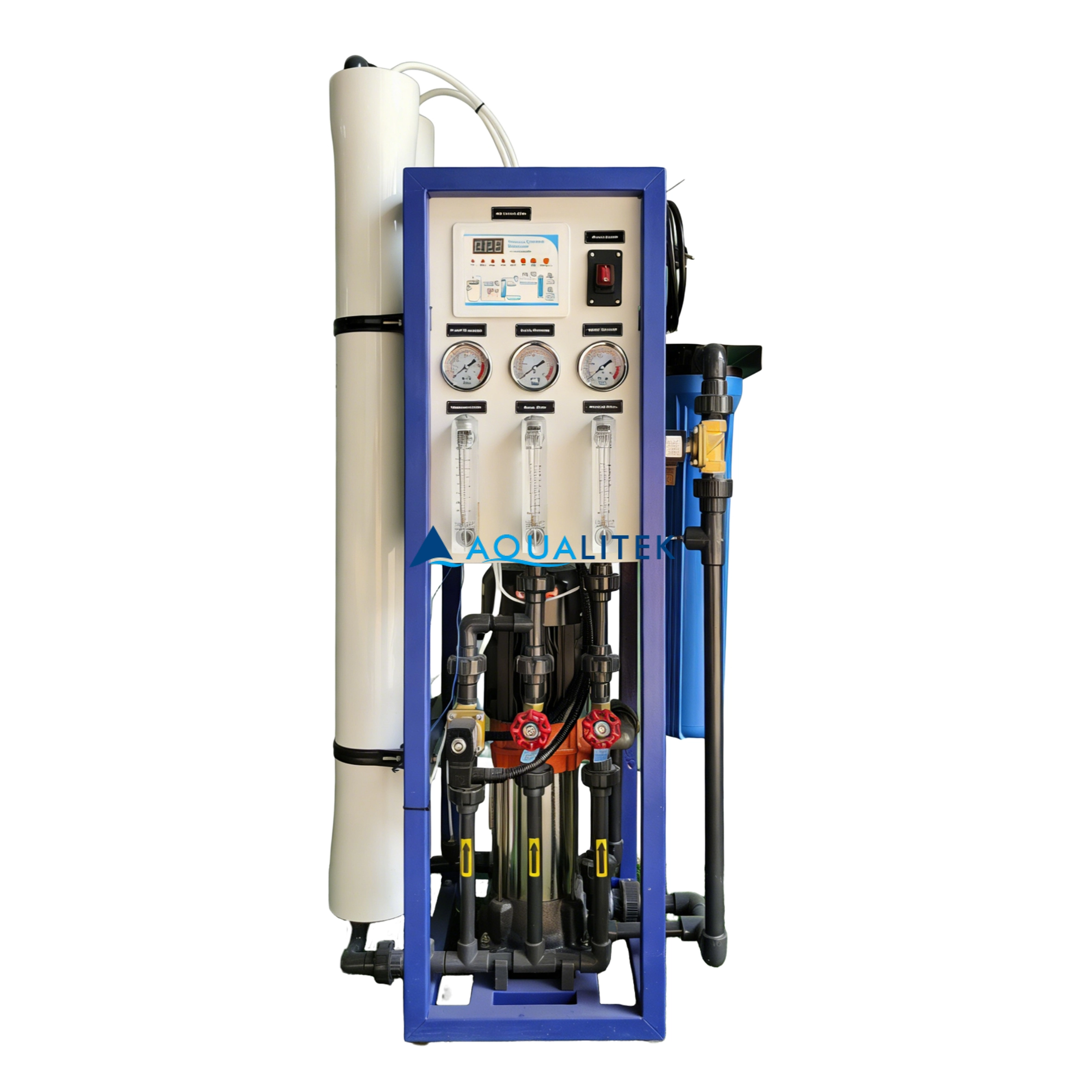
AQUALITEK's 500LPH Panel Mounted Reverse Osmosis Water Purification System delivers reliable 500 LPH RO water production. This compact industrial reverse osmosis unit is ideal for small scale industrial RO needs, ensuring efficient and high-quality purified water in a space-saving design.
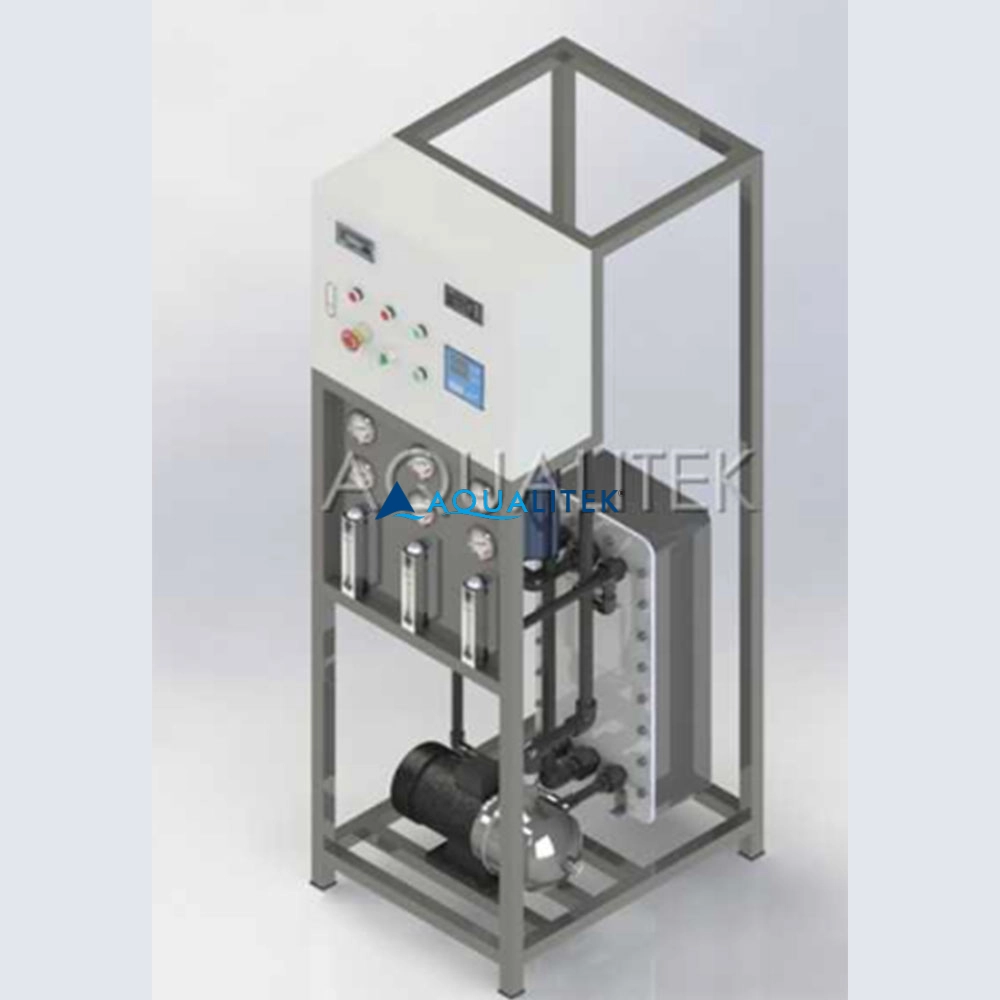
Electrodeionization (EDI) system is an advanced water purification technology that combines ion exchange and electrochemical processes to produce ultra-pure water. Unlike traditional deionization methods, which rely on chemical regeneration, EDI utilizes electric fields to drive the movement of ions through ion-exchange membranes, effectively removing dissolved salts and other ionic contaminants.
This process is continuous and does not require the use of chemicals for regeneration, making it an environmentally friendly and cost-effective solution for producing high-quality deionized water. EDI systems are widely used in applications requiring ultrapure water, such as in the pharmaceutical, semiconductor, power generation, and biotechnology industries, as well as for laboratory use.
By offering high-purity water without the need for chemical regeneration, EDI systems provide a sustainable, efficient, and reliable alternative to traditional deionization methods, making them an ideal choice for industries where water quality and process control are critical.
© 2026 AQUALITEK. All rights reserved.
AQUALITEK- Aimee Hoo
AQUALITEK - Aimee Hoo