




How Next-Generation High-Flux Seawater Desalination Membranes Achieve High Salt Rejection While Increasing Water Flux| Insights by AQUALITEK
Discover how new-generation high-flux seawater desalination membranes use advanced materials and structural design to increase water permeability without compromising salt rejection.
- Introduction
- 1. Advanced Polyamide Chemistry for Selective Transport
- 1.1 Optimized Cross-Linking Density
- 2. Ultra-Thin Active Layers with Structural Integrity
- 2.1 Thinner Is Better—But Only When Controlled
- 3. Nano-Engineered Surface Morphology
- 3.1 Optimized “Leaf-Like” or Ridge-Valley Structures
- 4. Hydrophilic Surface Modification
- 4.1 Enhanced Water Affinity
- 5. Charge-Based Ion Rejection Mechanisms
- 5.1 Electrostatic Exclusion (Donnan Effect)
- 6. Low-Resistance Support Layer Design
- 6.1 Reduced Internal Concentration Polarization
- 7. Mechanical Reinforcement for High-Pressure Operation
- 8. Fouling-Resistant Design for Long-Term Performance
- 8.1 Flux Is Meaningless Without Stability
- 9. System-Level Compatibility and Energy Efficiency
- Conclusion
Introduction
In seawater reverse osmosis (SWRO) systems, membrane performance has traditionally faced a fundamental trade-off:
higher water flux often leads to lower salt rejection.
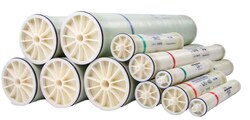
However, the new generation of high-flux seawater desalination membranes has successfully broken this limitation. Through innovations in polymer chemistry, membrane morphology, surface engineering, and support-layer optimization, modern SWRO membranes now deliver:
•Higher water permeability
•Stable salt rejection (>99.8%)
•Lower operating pressure
•Reduced energy consumption
This article explores how material and structural design enable high desalination efficiency while increasing water flux.
1. Advanced Polyamide Chemistry for Selective Transport
1.1 Optimized Cross-Linking Density
Modern SWRO membranes rely on ultra-thin aromatic polyamide layers formed via interfacial polymerization.
Key improvements include:
•Precisely controlled cross-linking density
•Narrow pore size distribution at the molecular level
•Enhanced water transport pathways without enlarging salt passage channels
This allows:
•Rapid water diffusion
•Strong electrostatic and steric exclusion of salt ions
2. Ultra-Thin Active Layers with Structural Integrity
2.1 Thinner Is Better—But Only When Controlled
New-generation membranes feature:
•Active layers reduced to tens of nanometers
•Uniform thickness across the membrane surface
•Fewer defects and pinholes
Benefits:
•Shorter water transport distance
•Higher intrinsic permeability
•Maintained mechanical and chemical stability under high pressure
3. Nano-Engineered Surface Morphology
3.1 Optimized “Leaf-Like” or Ridge-Valley Structures
Advanced surface topologies:
•Increase effective membrane surface area
•Enhance local turbulence at the membrane interface
•Reduce concentration polarization
Results:
•Higher effective flux under the same operating pressure
•Sustained salt rejection even at high recovery rates
4. Hydrophilic Surface Modification
4.1 Enhanced Water Affinity
Surface engineering techniques include:
•Grafting hydrophilic functional groups
•Incorporating zwitterionic or polar moieties
•Plasma or coating-based surface activation
This improves:
•Water molecule attraction and transport
•Initial flux and long-term stability
•Resistance to fouling-induced flux decline
5. Charge-Based Ion Rejection Mechanisms
5.1 Electrostatic Exclusion (Donnan Effect)
New membrane materials are designed with:
•Stable surface charge distribution
•Negative charge dominance at operating pH
This enhances:
•Repulsion of chloride and sulfate ions
•Improved salt rejection without reducing permeability
•Better performance under variable salinity conditions
6. Low-Resistance Support Layer Design
6.1 Reduced Internal Concentration Polarization
The porous support layer is optimized through:
•Higher porosity
•Lower tortuosity
•Improved pore interconnectivity
Advantages:
•Reduced hydraulic resistance
•Enhanced water flow to the active layer
•Better performance at lower operating pressures
7. Mechanical Reinforcement for High-Pressure Operation
High-flux membranes must withstand:
•Operating pressures of 55–70 bar
•Pressure fluctuations and transient conditions
Structural enhancements include:
•Reinforced backing materials
•Optimized fiber orientation
•Improved bonding between active and support layers
This ensures:
•Flux stability
•Long membrane lifespan
•Consistent salt rejection over time
8. Fouling-Resistant Design for Long-Term Performance
8.1 Flux Is Meaningless Without Stability
High-flux membranes integrate:
•Smoother surface finish
•Lower surface roughness
•Anti-adhesion surface chemistry
Benefits:
•Reduced biofouling and organic fouling
•Slower flux decay
•Sustained desalination performance between cleanings
9. System-Level Compatibility and Energy Efficiency
High-flux membranes are designed to work with:
•Advanced energy recovery devices (ERDs)
•Lower feed pressures
•Optimized array configurations
System-level results:
•Reduced specific energy consumption (SEC)
•Lower operating cost per cubic meter
•Higher overall plant efficiency
Conclusion
The new generation of high-flux seawater desalination membranes achieves high desalination rates not by compromising selectivity, but by redefining membrane materials and internal structure at the molecular and nano scale.
Through:
•Advanced polyamide chemistry
•Ultra-thin, defect-free active layers
•Hydrophilic and charge-optimized surfaces
•Low-resistance support structures
modern SWRO membranes deliver higher water flux, stable salt rejection, and improved energy efficiency, making them a cornerstone of next-generation desalination plants.


Request More Information or Expert Advice
Share a few details, and we’ll provide deeper insights, tailored suggestions, or product support.
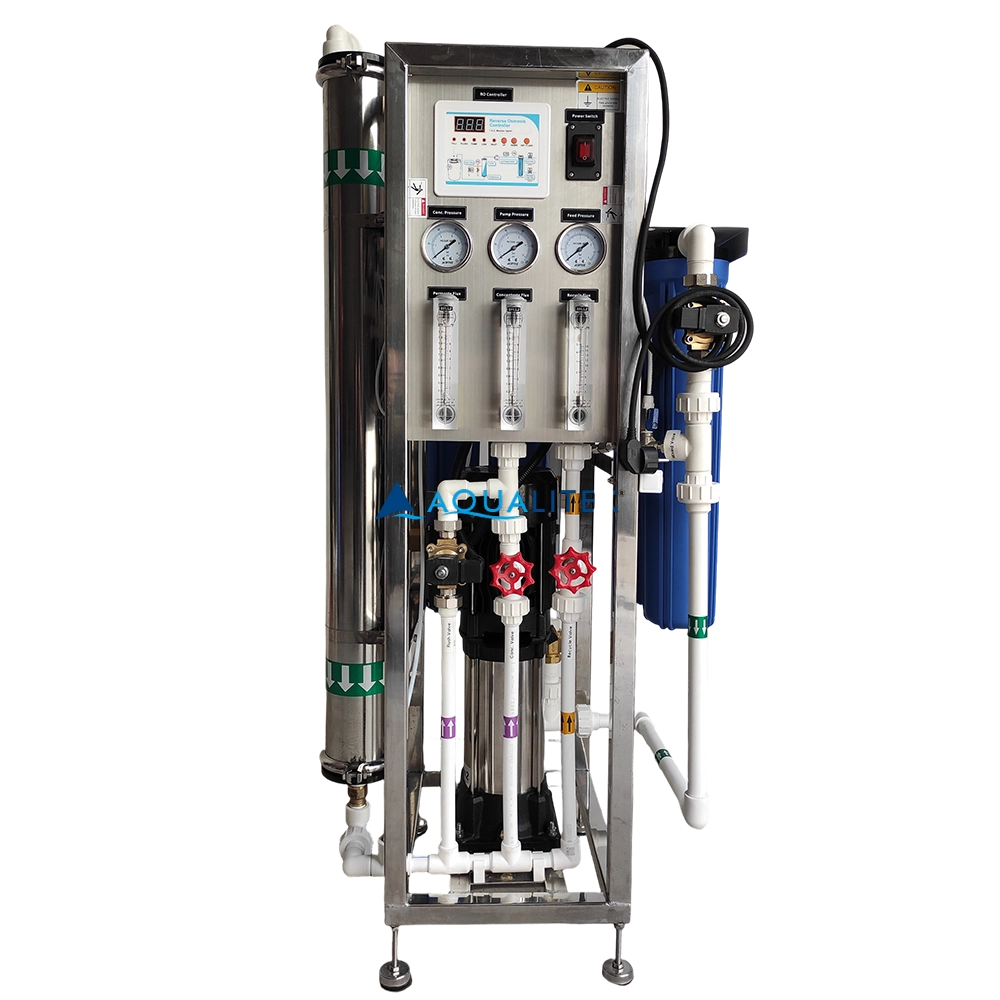
Our 500 LPH Reverse Osmosis (RO) System is engineered to provide high-quality purified water for commercial applications. Designed with advanced RO technology, durable components, and a user-friendly interface, this system ensures consistent performance, low maintenance, and long-term reliability.
With its compact design and robust skid-mounted frame, it’s an excellent choice for businesses that demand efficiency and quality in water purification.
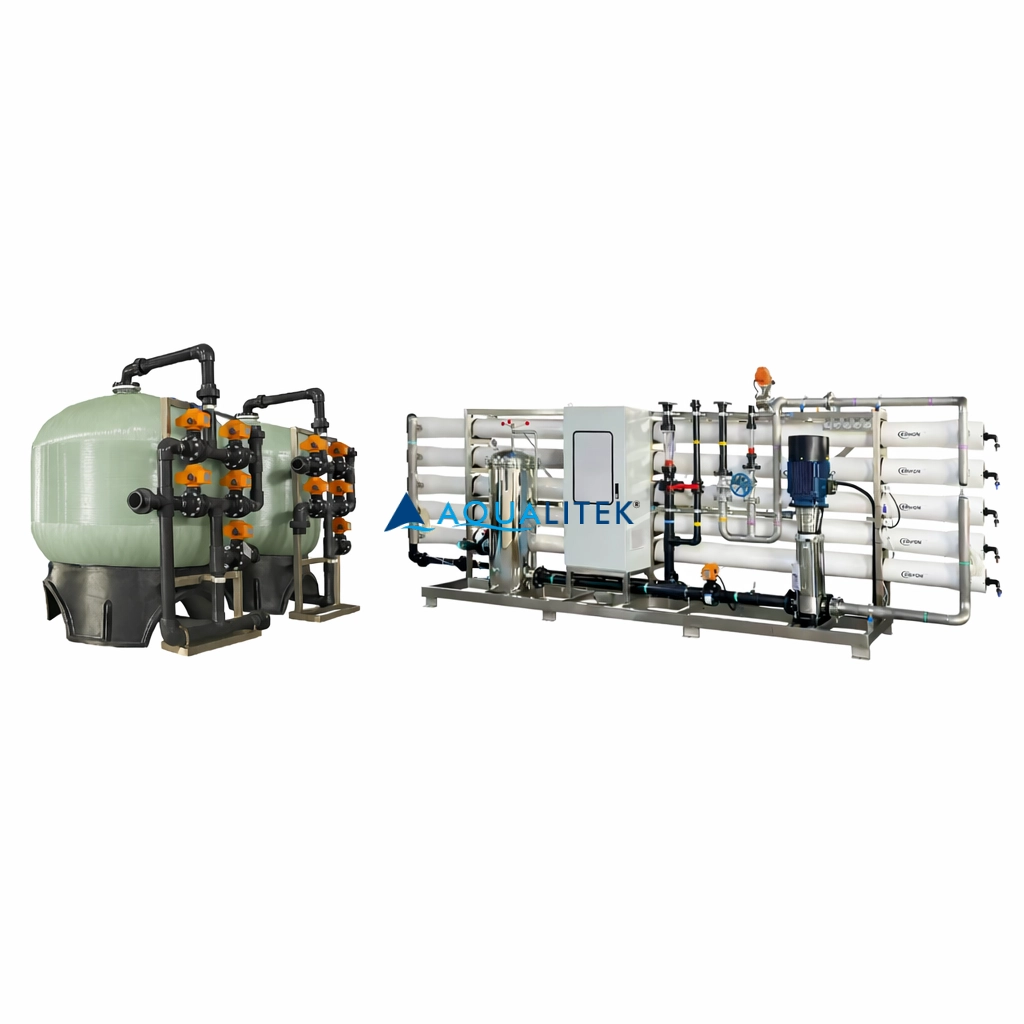
30TPH Industrial Reverse Osmosis (RO) System designed for industrial and municipal water treatment. High salt rejection, energy-efficient design, PLC control, and customizable configuration.
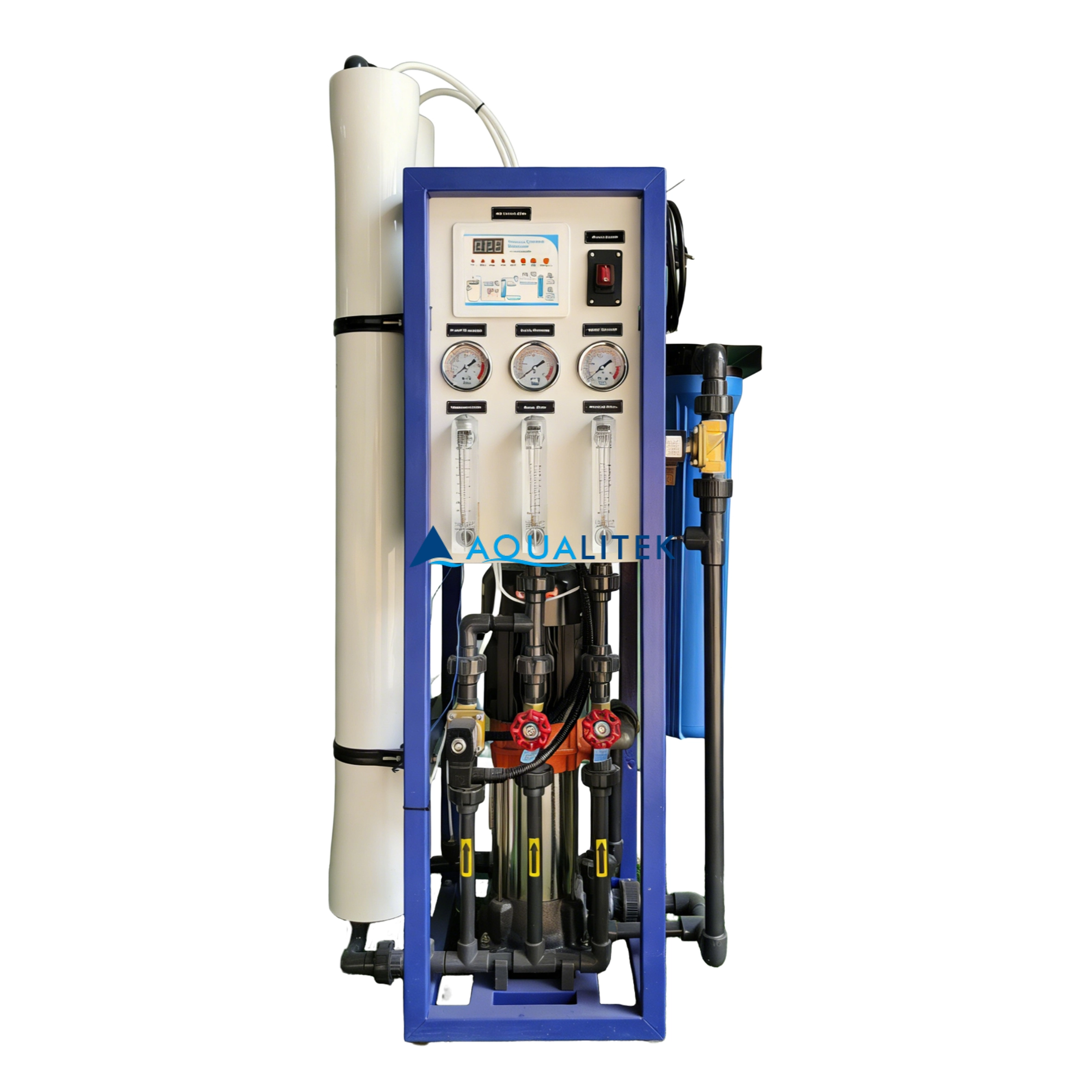
AQUALITEK's 500LPH Panel Mounted Reverse Osmosis Water Purification System delivers reliable 500 LPH RO water production. This compact industrial reverse osmosis unit is ideal for small scale industrial RO needs, ensuring efficient and high-quality purified water in a space-saving design.
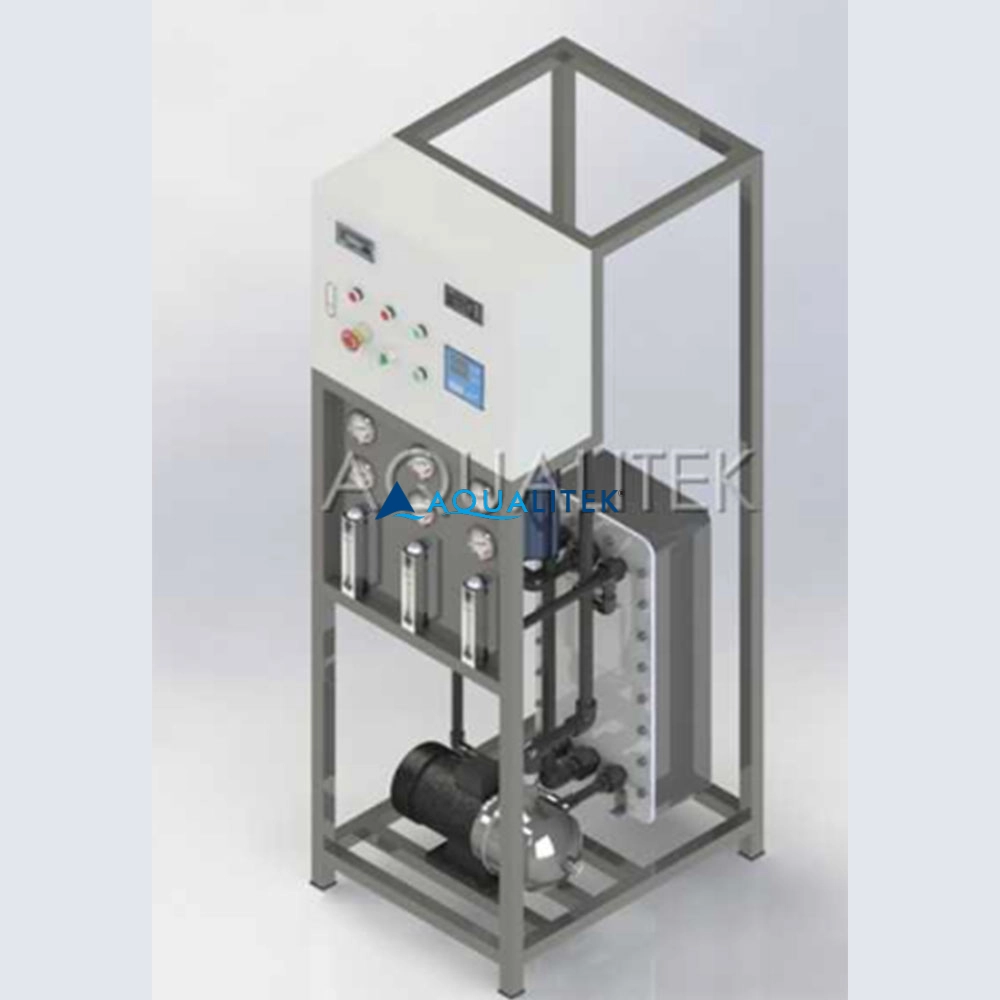
Electrodeionization (EDI) system is an advanced water purification technology that combines ion exchange and electrochemical processes to produce ultra-pure water. Unlike traditional deionization methods, which rely on chemical regeneration, EDI utilizes electric fields to drive the movement of ions through ion-exchange membranes, effectively removing dissolved salts and other ionic contaminants.
This process is continuous and does not require the use of chemicals for regeneration, making it an environmentally friendly and cost-effective solution for producing high-quality deionized water. EDI systems are widely used in applications requiring ultrapure water, such as in the pharmaceutical, semiconductor, power generation, and biotechnology industries, as well as for laboratory use.
By offering high-purity water without the need for chemical regeneration, EDI systems provide a sustainable, efficient, and reliable alternative to traditional deionization methods, making them an ideal choice for industries where water quality and process control are critical.
© 2026 AQUALITEK. All rights reserved.
AQUALITEK- Aimee Hoo
AQUALITEK - Aimee Hoo