




Environmental Impacts of High-Salinity Brine Discharge from Seawater Desalination Plants and How to Mitigate Them| Insights by AQUALITEK
High-salinity brine discharge is a major environmental concern in seawater desalination. Learn the key ecological risks and proven mitigation strategies used worldwide.
- Introduction
- 1. Elevated Salinity and Osmotic Stress on Marine Life
- 1.1 Impact on Marine Organisms
- 2. Density Effects and Seabed Accumulation
- 2.1 Brine Is Denser Than Seawater
- 3. Residual Chemicals and Toxicity Concerns
- 3.1 Chemical Additives in Brine
- 4. Thermal Pollution (Site-Specific)
- 5. Cumulative and Long-Term Ecological Effects
- How Environmental Impacts of Brine Discharge Can Be Mitigated
- 6. Dilution Through Engineered Outfall Design
- 6.1 Multiport Diffusers (Best Practice)
- 7. Strategic Site Selection
- 7.1 Favor High-Energy Marine Environments
- 8. Blending Brine with Other Water Streams
- 9. Chemical Optimization and Control
- 9.1 Minimizing Chemical Load
- 10. Energy Recovery and Reduced Brine Volume
- 11. Environmental Monitoring and Adaptive Management
- 11.1 Continuous and Periodic Monitoring
- 12. Zero Liquid Discharge (ZLD) – Special Cases
- Conclusion
Introduction
Seawater desalination plays a critical role in addressing global water scarcity, but it also generates a by-product that must be carefully managed: high-salinity brine.
This brine stream typically contains:
•Salinity 1.5–2 times higher than seawater
•Residual treatment chemicals
•Elevated temperature (in some cases)
•Trace metals or cleaning residues
If discharged improperly, concentrated brine can pose significant environmental risks, particularly to sensitive marine ecosystems.
This article examines:
1.The main environmental concerns associated with brine discharge
2.The engineering and operational measures used to mitigate these impacts
1. Elevated Salinity and Osmotic Stress on Marine Life
1.1 Impact on Marine Organisms
High-salinity brine increases the local salinity of receiving waters, which can:
•Disrupt osmotic balance in fish and invertebrates
•Cause dehydration stress
•Reduce reproduction and larval survival rates
Sessile organisms such as:
•Corals
•Seagrass
•Benthic invertebrates
are particularly vulnerable due to their limited mobility.
2. Density Effects and Seabed Accumulation
2.1 Brine Is Denser Than Seawater
Brine typically sinks after discharge, leading to:
•Accumulation near the seabed
•Long residence time
•Localized “salinity pools”
This can cause:
•Reduced oxygen exchange
•Altered benthic habitats
•Loss of biodiversity in bottom-dwelling communities
3. Residual Chemicals and Toxicity Concerns
3.1 Chemical Additives in Brine
Brine may contain residual:
•Antiscalants
•Biocides (or neutralized byproducts)
•Coagulants or flocculants
•Cleaning chemicals (during CIP events)
Even at low concentrations, these substances can:
•Affect plankton and microorganisms
•Accumulate in sediments
•Interfere with marine food chains
4. Thermal Pollution (Site-Specific)
In some desalination configurations:
•Intake water may be warmer
•Brine discharge temperature may exceed ambient seawater
Elevated temperature can:
•Reduce dissolved oxygen
•Stress temperature-sensitive species
•Intensify the impact of salinity changes
5. Cumulative and Long-Term Ecological Effects
While short-term impacts may be localized, long-term or cumulative discharge can:
•Shift species composition
•Reduce ecosystem resilience
•Alter nutrient cycling
•Increase vulnerability to climate change stressors
Environmental risks increase significantly when:
•Discharge occurs in enclosed or low-circulation areas
•Multiple plants discharge into the same coastal zone
How Environmental Impacts of Brine Discharge Can Be Mitigated
6. Dilution Through Engineered Outfall Design
6.1 Multiport Diffusers (Best Practice)
Modern desalination plants use:
•Submerged multiport diffusers
•High-velocity jet mixing
•Rapid initial dilution (often >20:1 within meters)
This reduces:
•Salinity peaks
•Exposure time for marine organisms
7. Strategic Site Selection
7.1 Favor High-Energy Marine Environments
Preferred discharge locations include:
•Open coastlines
•Areas with strong currents
•High natural mixing zones
Avoid:
•Enclosed bays
•Lagoons
•Coral reefs
•Seagrass meadows
8. Blending Brine with Other Water Streams
Brine can be blended with:
•Power plant cooling water
•Treated wastewater effluent
•Other low-salinity discharges
This reduces:
•Overall salinity
•Density difference
•Environmental footprint
9. Chemical Optimization and Control
9.1 Minimizing Chemical Load
Best practices include:
•Using environmentally friendly antiscalants
•Avoiding continuous biocide dosing
•Neutralizing cleaning chemicals before discharge
•Strict chemical mass balance control
10. Energy Recovery and Reduced Brine Volume
Advanced energy recovery devices (ERDs):
•Reduce overall seawater intake
•Lower brine flow rate
•Decrease discharge volume
Lower discharge volume = lower environmental impact.
11. Environmental Monitoring and Adaptive Management
11.1 Continuous and Periodic Monitoring
Key monitoring parameters:
•Salinity profiles
•Temperature
•Dissolved oxygen
•Benthic biodiversity
•Chemical residuals
Data-driven monitoring allows:
•Early detection of impacts
•Adjustment of discharge strategy
•Regulatory compliance
12. Zero Liquid Discharge (ZLD) – Special Cases
In environmentally sensitive areas, ZLD solutions may be considered:
•Evaporation ponds
•Crystallizers
•Salt recovery systems
Although costly, ZLD can:
•Eliminate marine discharge
•Enable resource recovery
•Meet strict regulatory requirements
Conclusion
High-salinity brine discharge is one of the most important environmental challenges associated with seawater desalination.
However, with:
•Proper outfall design
•Strategic site selection
•Chemical control
•Advanced energy recovery
•Continuous environmental monitoring
its ecological impact can be effectively minimized.
Sustainable desalination is not just about producing fresh water—it is about protecting the marine environment that makes desalination possible.


Request More Information or Expert Advice
Share a few details, and we’ll provide deeper insights, tailored suggestions, or product support.
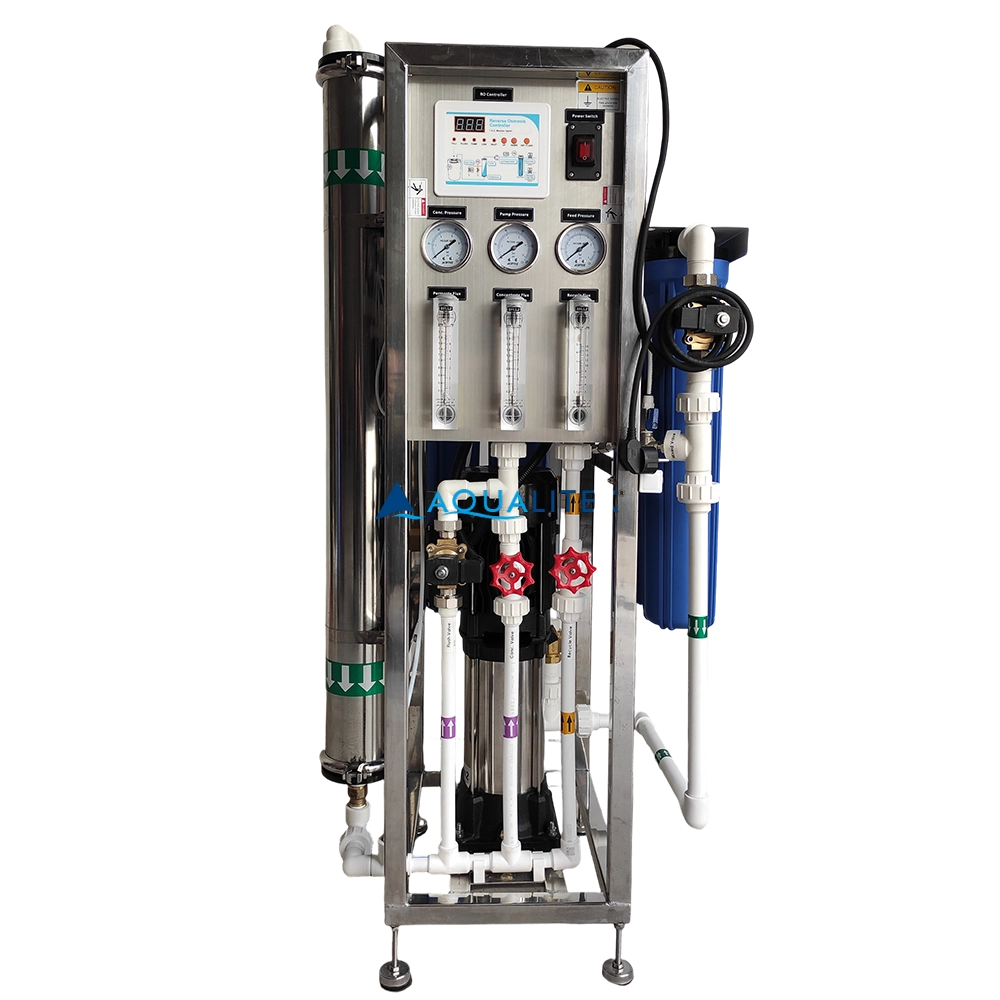
Our 500 LPH Reverse Osmosis (RO) System is engineered to provide high-quality purified water for commercial applications. Designed with advanced RO technology, durable components, and a user-friendly interface, this system ensures consistent performance, low maintenance, and long-term reliability.
With its compact design and robust skid-mounted frame, it’s an excellent choice for businesses that demand efficiency and quality in water purification.
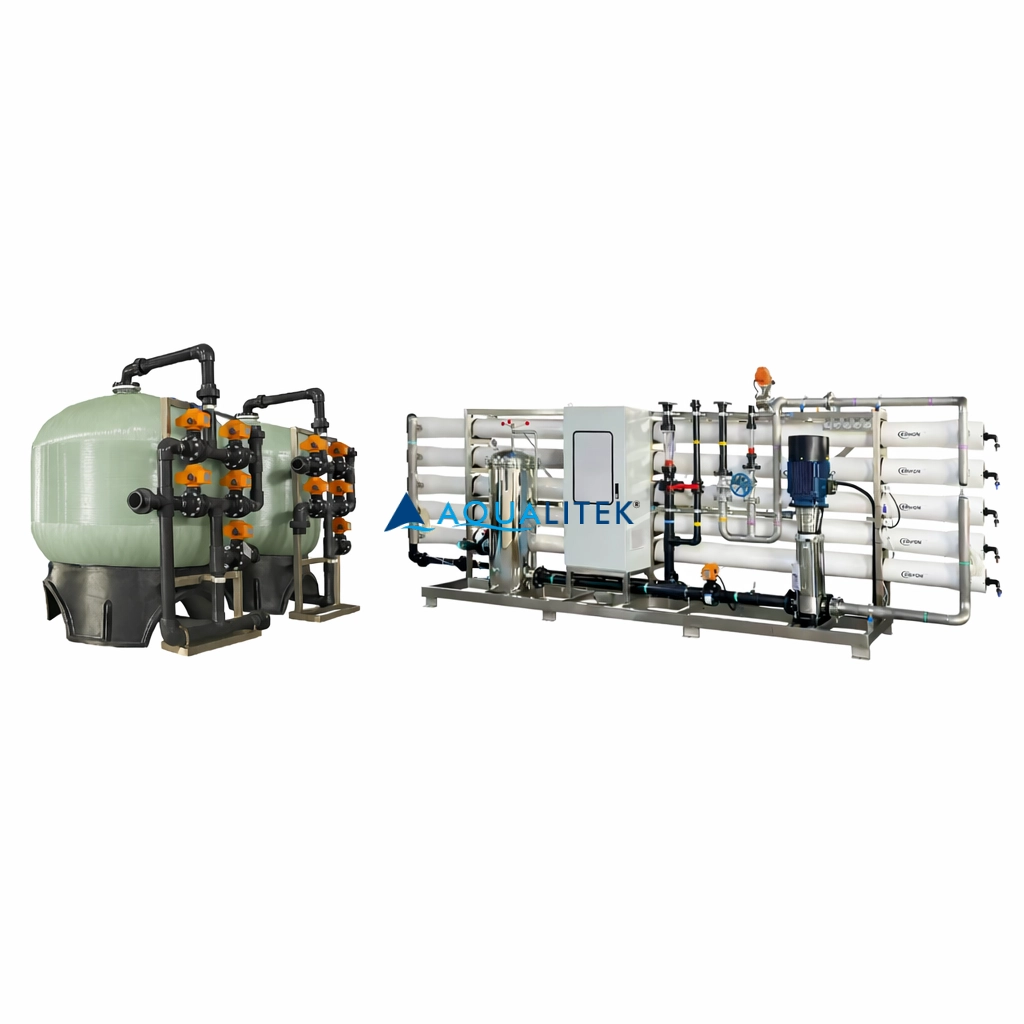
30TPH Industrial Reverse Osmosis (RO) System designed for industrial and municipal water treatment. High salt rejection, energy-efficient design, PLC control, and customizable configuration.
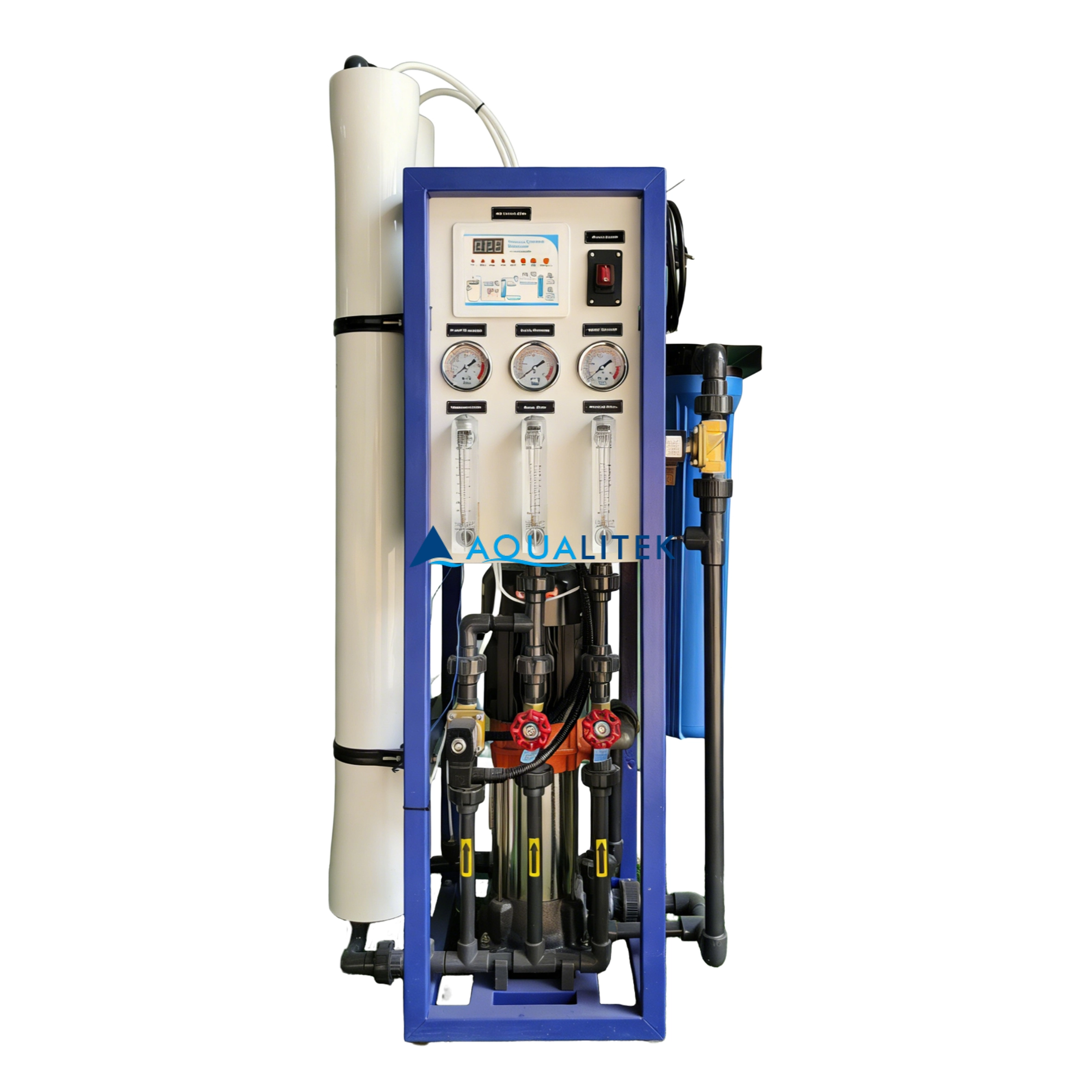
AQUALITEK's 500LPH Panel Mounted Reverse Osmosis Water Purification System delivers reliable 500 LPH RO water production. This compact industrial reverse osmosis unit is ideal for small scale industrial RO needs, ensuring efficient and high-quality purified water in a space-saving design.
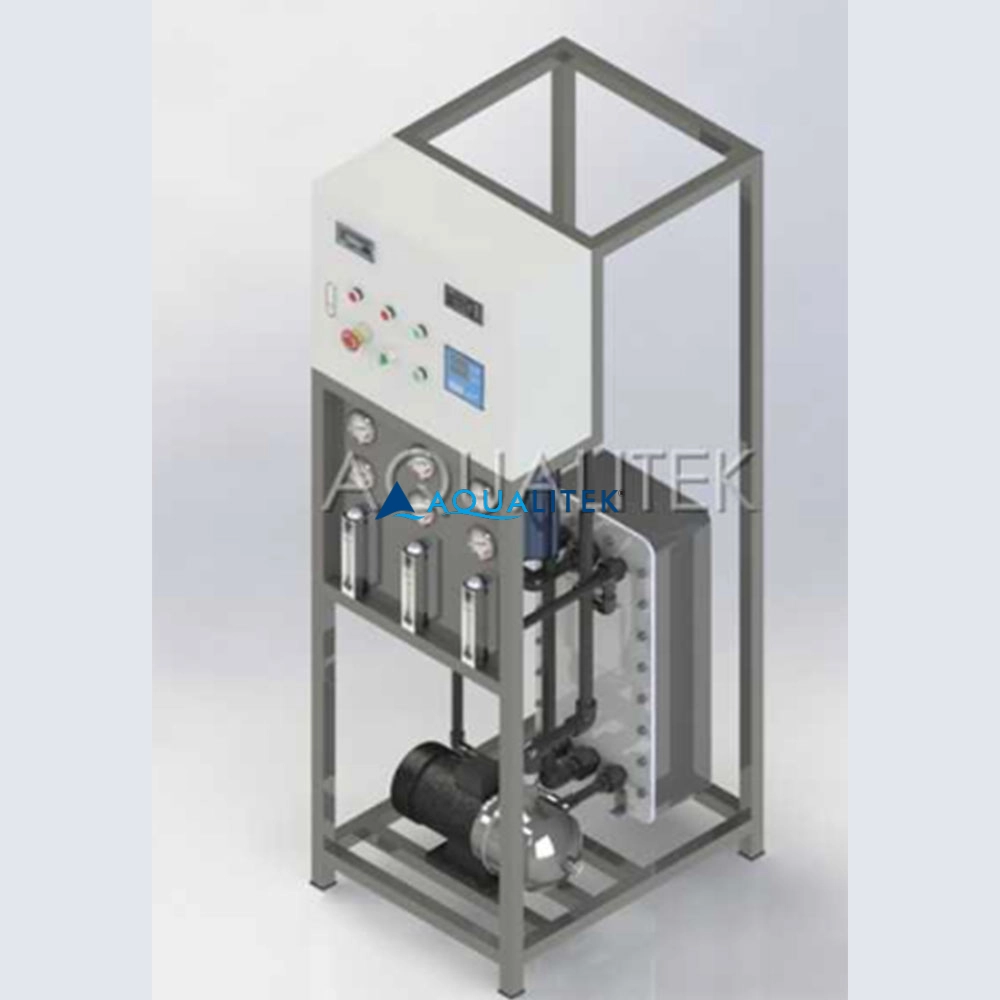
Electrodeionization (EDI) system is an advanced water purification technology that combines ion exchange and electrochemical processes to produce ultra-pure water. Unlike traditional deionization methods, which rely on chemical regeneration, EDI utilizes electric fields to drive the movement of ions through ion-exchange membranes, effectively removing dissolved salts and other ionic contaminants.
This process is continuous and does not require the use of chemicals for regeneration, making it an environmentally friendly and cost-effective solution for producing high-quality deionized water. EDI systems are widely used in applications requiring ultrapure water, such as in the pharmaceutical, semiconductor, power generation, and biotechnology industries, as well as for laboratory use.
By offering high-purity water without the need for chemical regeneration, EDI systems provide a sustainable, efficient, and reliable alternative to traditional deionization methods, making them an ideal choice for industries where water quality and process control are critical.
© 2026 AQUALITEK. All rights reserved.
AQUALITEK- Aimee Hoo
AQUALITEK - Aimee Hoo