



Brine Disposal Options for Industrial RO Systems
- Understanding Brine: Characteristics and Challenges
- What is RO brine (concentrate) and why it matters
- Main operational and environmental issues with concentrate
- Relevant guidance and standards
- Comparing Brine Disposal and Recovery Options
- Surface discharge (treated or dilution to receiving waters)
- Deep-well (injection) disposal
- Evaporation ponds and solar evaporation
- Zero Liquid Discharge (ZLD) — thermal/mechanical crystallization
- Brine minimization and beneficial reuse
- Emerging membrane and hybrid approaches
- Design and Operational Strategies to Reduce Brine Impact
- Optimize recovery and pretreatment
- Equalization and blending
- Monitoring and automated control
- Lifecycle and cost considerations
- Practical Recommendations for Industrial Facilities
- Selecting the right option for an industrial RO plant
- Case-by-case assessment workflow
- Example comparison table
- Design note for 4TPH Industrial Reverse Osmosis systems
- Permitting, Monitoring and Long-Term Risk Management
- Regulatory permits and compliance
- Monitoring, record-keeping and contingency planning
- Environmental and corporate sustainability goals
- Frequently Asked Questions (FAQ)
- Q: What is the cheapest brine disposal option?
- Q: Is Zero Liquid Discharge (ZLD) necessary for a small industrial RO plant?
- Q: How can I reduce the volume of RO brine without ZLD?
- Q: What special considerations apply if I use RO for electronic component cleaning?
- Q: Which authority documents should I consult when planning concentrate disposal?
Effective brine management is a critical component of any industrial reverse osmosis (RO) installation. For manufacturing and processing facilities that use RO to produce high-purity water — such as electronic component cleaning — selecting the right concentrate handling strategy affects compliance, operating cost, plant uptime and sustainability. This guide explains practical brine disposal and recovery options for industrial reverse osmosis systems, assesses trade-offs (energy, footprint, capital), and provides design and operational recommendations grounded in industry guidance and standards. Key references include EPA guidance on desalination concentrate management, WHO water reuse guidance, and technical resources from the desalination community (EPA, WHO, Reverse osmosis overview).
Understanding Brine: Characteristics and Challenges
What is RO brine (concentrate) and why it matters
RO brine — also called concentrate — is the waste stream left after water passes through membranes in an industrial reverse osmosis system. It contains the salts, organics, and other contaminants rejected by the membranes at higher concentrations. For electronic component cleaning water and similar high-purity applications, the concentrate chemistry can include dissolved salts (chlorides, sulfates, sodium), hardness ions (calcium, magnesium), silica, and trace organics. Because brine composition and temperature affect discharge rules and environmental risk, accurate characterization is the first step in disposal planning.
Main operational and environmental issues with concentrate
Common problems with RO concentrate include scaling and membrane fouling if recycle is attempted, corrosivity, high total dissolved solids (TDS), and potential toxicity to aquatic life if discharged untreated. Industrial facilities must also consider seasonal variations, local discharge limits, and cumulative impacts (for example if multiple plants discharge to the same watershed or sewer).
Relevant guidance and standards
Facility operators should consult authoritative resources when planning brine handling. The U.S. EPA provides desalination/concentrate management research and policy guidance (EPA: Desalination and Concentrate). For broader reuse and health considerations, WHO guidance on wastewater reuse and safe reuse frameworks is useful (WHO reuse guidelines). For technology background, see a concise review of reverse osmosis technology (Wikipedia: Reverse osmosis).
Comparing Brine Disposal and Recovery Options
Surface discharge (treated or dilution to receiving waters)
Surface discharge involves moving concentrate to a stream, estuary or ocean, either directly (if permitted and if water quality criteria are met) or mixed with larger flows to achieve dilution. Pros: typically lower capital cost than thermal systems; low operational energy. Cons: stringent discharge permits, potential ecological impacts, limited feasibility for inland plants. Many coastal desalination plants use controlled ocean discharge with diffusers to reduce near-field salinity effects.
Deep-well (injection) disposal
Deep-well injection places brine into a subsurface formation that is isolated from freshwater aquifers. Pros: small surface footprint and reliable containment when hydrogeologically suitable. Cons: requires geologic suitability, high permitting costs, potential induced seismicity concerns in some regions, and possible long-term liability.
Evaporation ponds and solar evaporation
Evaporation ponds concentrate brine until salts precipitate. Pros: simple, low-tech, can be economical in arid climates with land availability. Cons: large land footprint, risk of leakage, odor and bird/wildlife concerns, slow process and often not suitable for industrial sites with limited space.
Zero Liquid Discharge (ZLD) — thermal/mechanical crystallization
ZLD systems combine brine concentrators (mechanical vapor compression, multi-effect evaporation) and crystallizers to recover water and produce dry salts. Pros: eliminates liquid discharge, maximizes water recovery — attractive where water is scarce or discharge is prohibited. Cons: very high capital and energy costs, complex operation and maintenance.
Brine minimization and beneficial reuse
Where feasible, concentrate can be blended into industrial processes, used for dust control, or processed for recovered salts and chemicals. Beneficial reuse reduces volume to be disposed and can create value streams, but feasibility depends on brine chemistry and market demand for recovered products.
Emerging membrane and hybrid approaches
Technologies such as high-recovery RO trains, forward osmosis (FO) for volume reduction, and electrodialysis metathesis (EDM) for selective ion removal are becoming more common as pretreatment and polishing steps in brine minimization schemes. These can lower the thermal load on subsequent evaporators or reduce concentrate volume for more economical disposal.
Design and Operational Strategies to Reduce Brine Impact
Optimize recovery and pretreatment
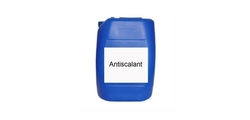
Improving recovery in the RO system reduces brine volume but increases concentration of sparingly soluble salts, escalating scale risk. Effective pretreatment (softening, antiscalants, pH control, cartridge filtration) and staged RO trains (two-pass RO or intermediate polishing) balance high recovery with membrane longevity. For example, increasing recovery from 75% to 85% reduces brine volume by ~40% but may require a brine concentrator to manage scale-prone ions.
Equalization and blending
Equalization tanks buffer flow and chemistry variations, enabling controlled discharge or further treatment. Blending concentrate with higher-flow, lower-salt streams (e.g., process wastewaters) can be a regulatory-compliant option when permitted. Proper mixing and monitoring ensure compliance with concentration-based limits.
Monitoring and automated control
Continuous monitoring of TDS, pH, temperature and specific ions (e.g., chloride, silica) helps operators avoid excursions that trigger permit violations or scaling events. Automated controls can adjust recovery, initiate cleaning cycles, or divert flows to alternative streams when thresholds are reached.
Lifecycle and cost considerations
When evaluating options consider capital expenditure (CAPEX), operating expenses (OPEX, especially energy), footprint, maintenance complexity, and residual disposal cost (e.g., hauling solid salts). ZLD systems may have high OPEX due to thermal energy demand; however, in areas with high disposal costs or strict permits, ZLD can be economically justified.
Practical Recommendations for Industrial Facilities
Selecting the right option for an industrial RO plant
Key decision drivers include proximity to permitted discharge points, land availability, local regulations, water scarcity, and the chemical profile of the brine. For manufacturing sites using RO for electronic component cleaning (where consistent conductivity and low ionic contaminants are required), the typical pathway is: (1) robust pretreatment to protect membranes, (2) high-quality two-pass RO for product water, and (3) evaluated concentrate strategy — often blending to sewer where permitted or modular ZLD for strict discharge environments.
Case-by-case assessment workflow
- Characterize influent and expected concentrate chemistry (major ions, silica, hardness, organics, metals).
- Estimate flows and recovery targets for the RO train (e.g., 4TPH system producing product water and X m3/day concentrate).
- Evaluate local discharge regulation, sewer acceptance, and cost of off-site disposal.
- Perform techno-economic comparison: CAPEX, OPEX (energy), footprint, lifecycle costs.
- Pilot test any novel brine treatment (e.g., brine concentrator, FO pre-concentration) and confirm scaling propensity.
Example comparison table
| Option | Typical CAPEX | Typical OPEX (energy) | Footprint | Regulatory complexity | Recovery potential |
|---|---|---|---|---|---|
| Surface discharge (dilution) | Low–Medium | Low | Small | Medium–High | 0–85% (depends on RO) |
| Deep-well injection | Medium–High | Low–Medium | Small | High | 0–85% |
| Evaporation ponds | Low | Very low | Large | Medium | Up to 100% (slow) |
| ZLD (thermal/crystallizer) | High | High | Medium–Large | High (but ends discharge) | ~100% |
| Beneficial reuse / salt recovery | Variable | Variable | Variable | Low–Medium | Partial–High |
Design note for 4TPH Industrial Reverse Osmosis systems
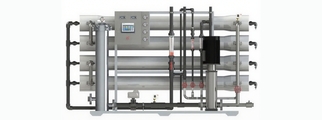
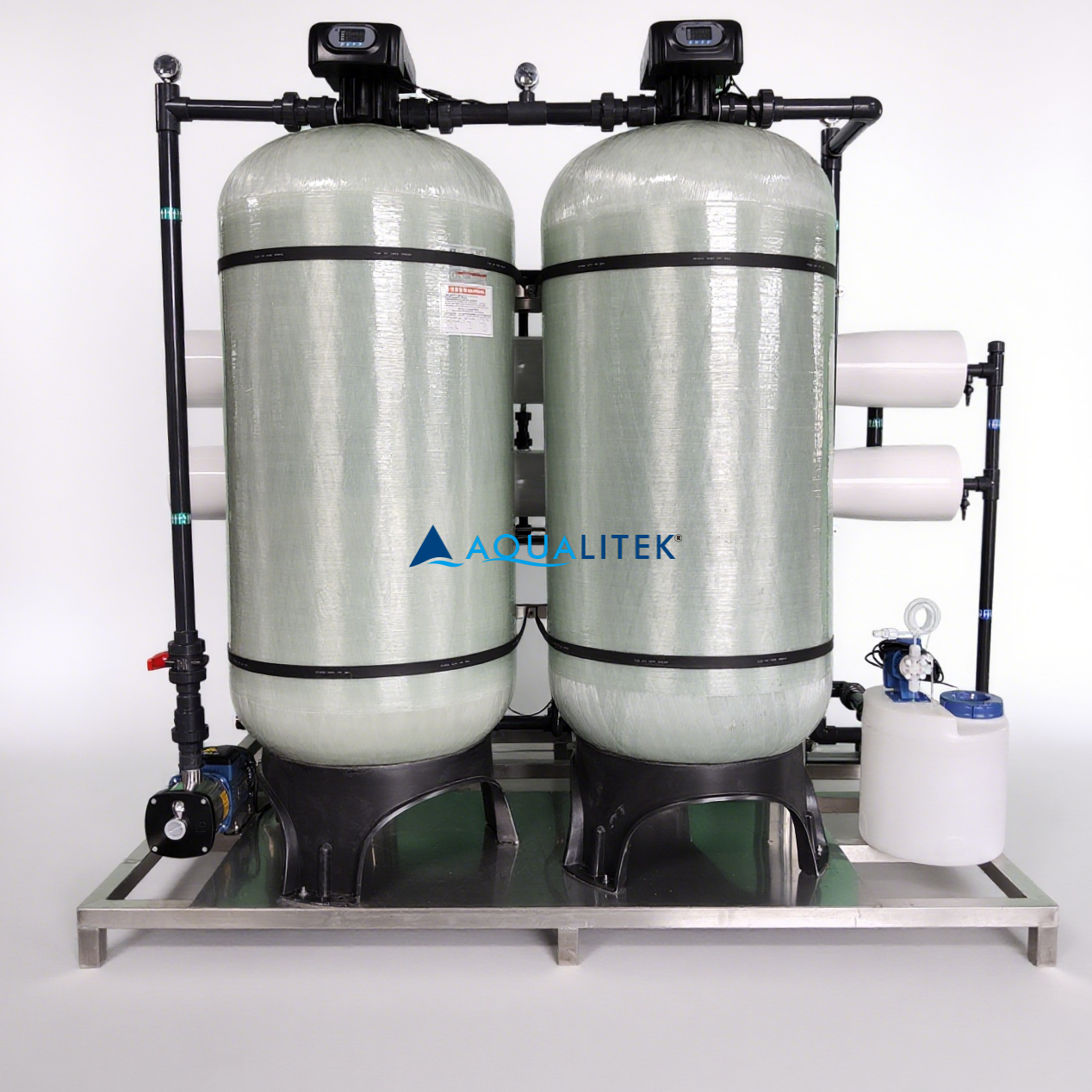
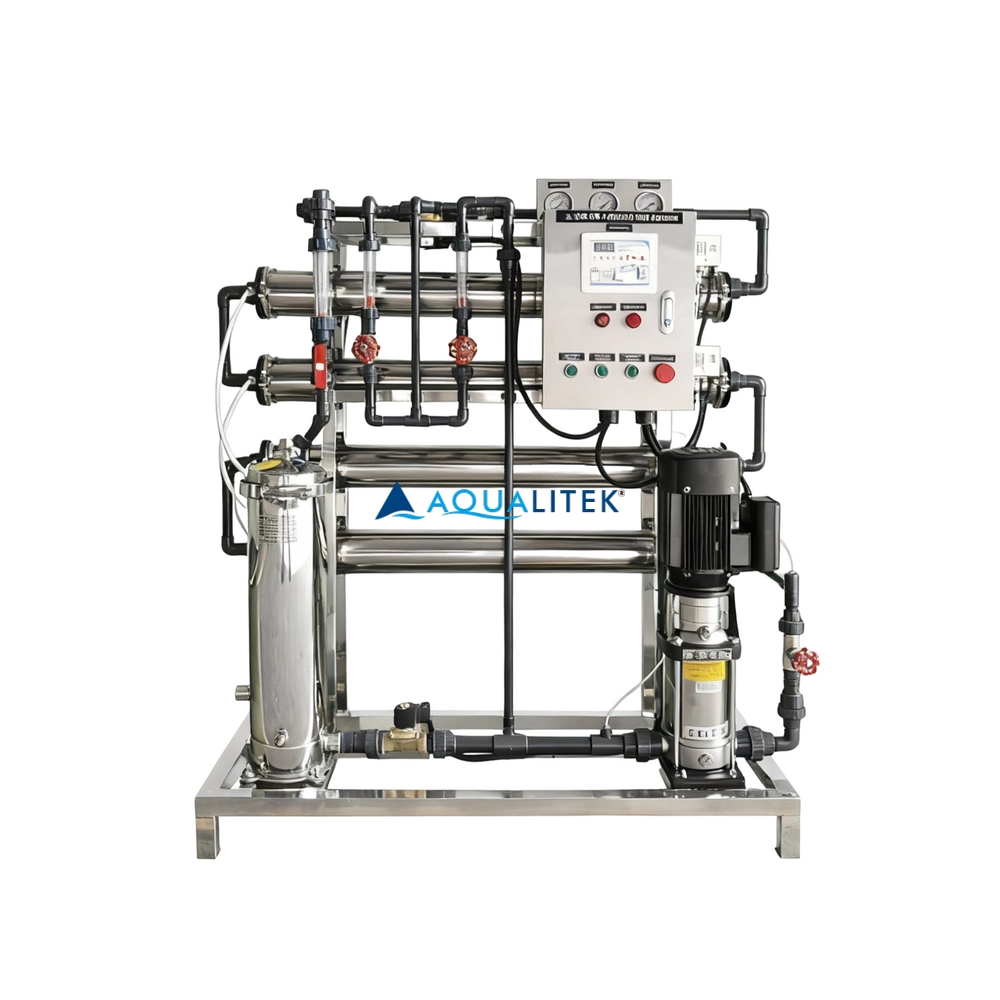
The AQUALITEK 4TPH Industrial Reverse Osmosis Water Purification RO System is a compact industrial-grade RO plant designed for manufacturing and processing environments, including electronic component cleaning where product water quality is critical. For a 4TPH (4 tons per hour) RO system, brine volume is typically proportional to recovery: at 75% recovery the system produces ~1 TPH (ton/hour) of concentrate. That concentrate must be managed in a way consistent with plant constraints — often a combination of equalization, blending to sewer (if permitted), or modular brine concentrators if space and regulation require higher recovery. Operators should use membrane supplier guidelines and pilot testing to confirm achievable recovery without excessive scaling.
Permitting, Monitoring and Long-Term Risk Management
Regulatory permits and compliance
Discharge to surface water or sewer usually requires permits that specify limits for TDS, chloride, specific toxic ions and possibly acute toxicity testing. Deep-well injection requires geological assessment and permits. Work closely with environmental consultants and local authorities early in project design to avoid retrofits.
Monitoring, record-keeping and contingency planning
Maintain logs of concentrate composition, flow rates, cleaning cycles and any diversion events. Prepare contingency plans for permit exceedances — for example temporary storage, flow reduction, or routing to an alternative disposal route. Regularly review pretreatment effectiveness and adjust antiscalant dosing as feedwater chemistry changes.
Environmental and corporate sustainability goals
Many companies set targets for water reuse and minimum discharge. Brine minimization via higher recovery or partial ZLD, combined with energy recovery and renewable energy for thermal processes, can reduce lifecycle impacts. Consider life cycle assessment (LCA) when comparing ZLD vs paid disposal, particularly where freshwater scarcity or corporate sustainability commitments make onsite reuse attractive.
Frequently Asked Questions (FAQ)
Q: What is the cheapest brine disposal option?
A: The lowest immediate CAPEX and OPEX is usually permitted surface discharge or sewering of dilute concentrate. However, permit fees, surcharges, seasonal restrictions, and long-term liabilities can change the economics. Always compare lifecycle costs.
Q: Is Zero Liquid Discharge (ZLD) necessary for a small industrial RO plant?
A: Not always. ZLD is most appropriate where discharge is prohibited, water scarcity is extreme, or disposal costs exceed ZLD lifecycle costs. For many small plants, optimizing recovery, pretreatment, and permitted blending or sewering is more economical.
Q: How can I reduce the volume of RO brine without ZLD?
A: Increase RO recovery carefully with improved pretreatment, implement brine minimization technologies (e.g., secondary RO, forward osmosis pre-concentration), recover usable salts where possible, and explore beneficial reuse or blending with other process streams.
Q: What special considerations apply if I use RO for electronic component cleaning?
A: Electronic cleaning requires very low conductivity and low ionic contaminants. This often means two-pass RO and strict monitoring of product water. Brine from these trains can have concentrated silicates or other ionic contaminants that require careful scaling control and may limit recovery without advanced concentrate treatment.
Q: Which authority documents should I consult when planning concentrate disposal?
A: Consult local environmental regulators first. Useful global resources include the U.S. EPA desalination/concentrate materials (EPA) and WHO guidance on water reuse (WHO).
Product information:
AQUALITEK 4TPH Industrial Reverse Osmosis Water Purification RO System, high-efficiency industrial-grade RO water treatment plant for manufacturing & processing, commercial reverse osmosis filtration system ideal for electronic component cleaning water use.
If you need a tailored assessment for your facility, pilot testing for brine minimization, or a quote for a modular brine concentrator to pair with a 4TPH industrial reverse osmosis system, contact our technical sales team or view the product page to learn more. For regulatory guidance and design support, our engineering team can provide site-specific options and lifecycle cost comparisons.
Contact us: Reach out to discuss an on-site evaluation, pilot program, or proposal for integrating brine handling with your AQUALITEK RO system.
Protecting RO Membranes from Chlorine Damage
Antiscalant Selection for Industrial Reverse Osmosis
Scaling and Fouling Control Strategies for BWRO BWE Systems
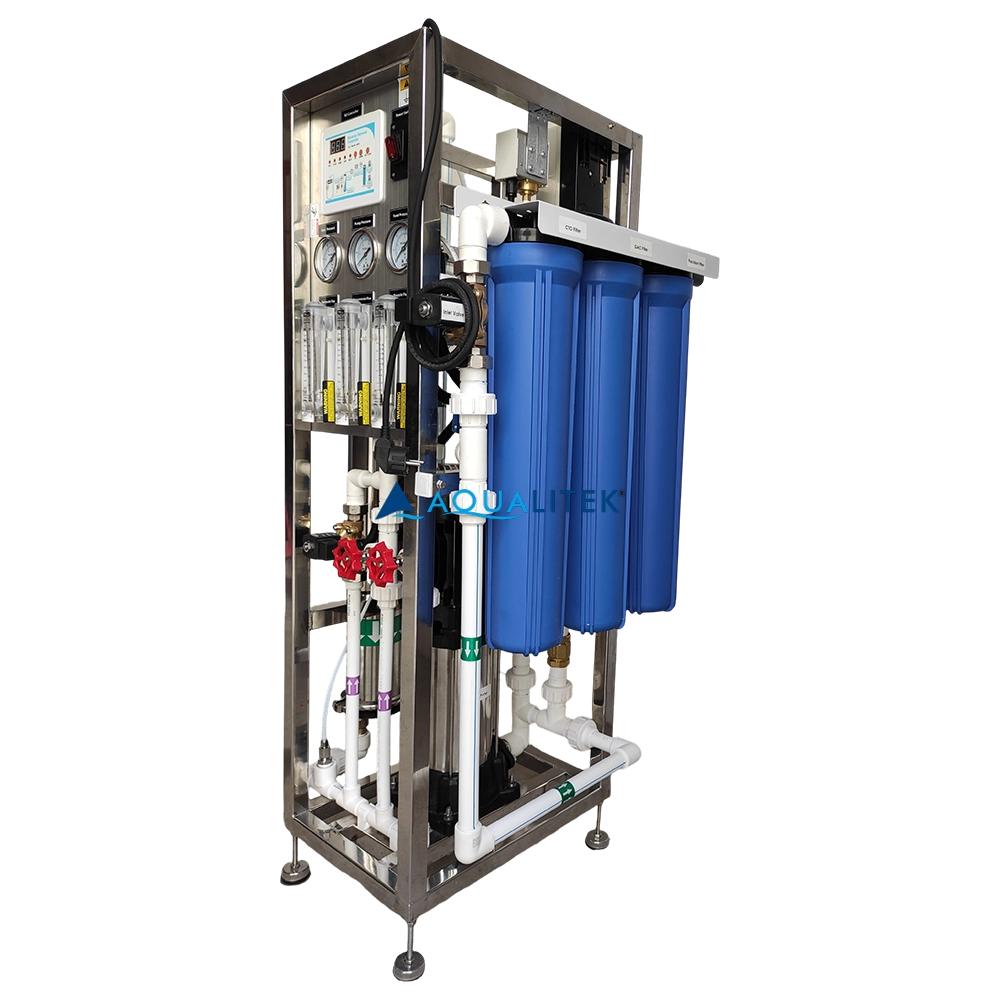
Installation Checklist for 500 LPH Reverse Osmosis TWV - 412
Solutions
What industries does AQT serve?
We provide water treatment solutions for a wide range of industries, including:
1. Industrial Manufacturing – Process water treatment, cooling water, and boiler feed.
2. Hospitality & Commercial – Hotels, restaurants, and office buildings.
3. Residential Applications – Drinking water purification and softening.
4. Healthcare & Pharmaceuticals – Ultra-pure water for laboratories and hospitals.
5. Municipal & Public Utilities – Water supply and wastewater treatment.
6. Food & Beverage Processing – Filtration for beverage p
Can I use AQT’s water treatment systems for seawater desalination?
Yes! We provide seawater desalination systems using advanced reverse osmosis (RO) technology, specifically designed to convert seawater into fresh, drinkable water. These systems are ideal for coastal communities, marine applications, and industrial desalination projects.
FAQ-aqualitek
What is the difference between Reverse Osmosis (RO), Ultrafiltration (UF), and Nanofiltration (NF)?
1. Reverse Osmosis (RO): Removes up to 99.9% of contaminants, including salts, bacteria, viruses, and heavy metals.
2. Ultrafiltration (UF): Uses a membrane filtration process to remove bacteria and particles, while retaining essential minerals.
3. Nanofiltration (NF): Falls between RO and UF, removing some salts and organic compounds while allowing certain minerals to pass through.
Water Filters
How do I choose between a media filter and a micron filter?
Media filters are ideal for high-volume solids removal and can be backwashed. Micron filters offer precise filtration for fine particles and are best for polishing applications.
Membrane Water Treatment Systems
Can your membrane systems treat seawater?
Yes. Our seawater RO systems are designed to handle high salinity with corrosion-resistant materials and energy recovery devices.
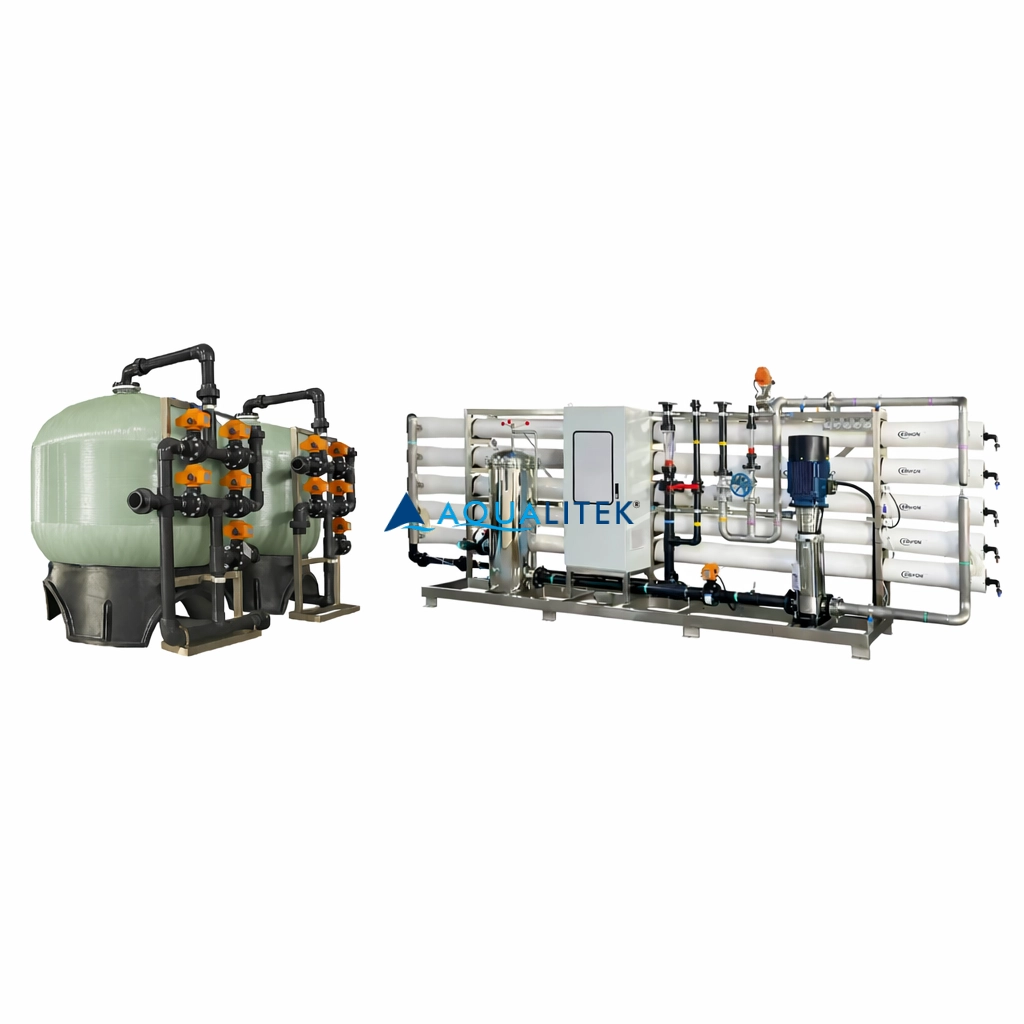
30TPH Industrial Reverse Osmosis (RO) System
30TPH Industrial Reverse Osmosis (RO) System designed for industrial and municipal water treatment. High salt rejection, energy-efficient design, PLC control, and customizable configuration.
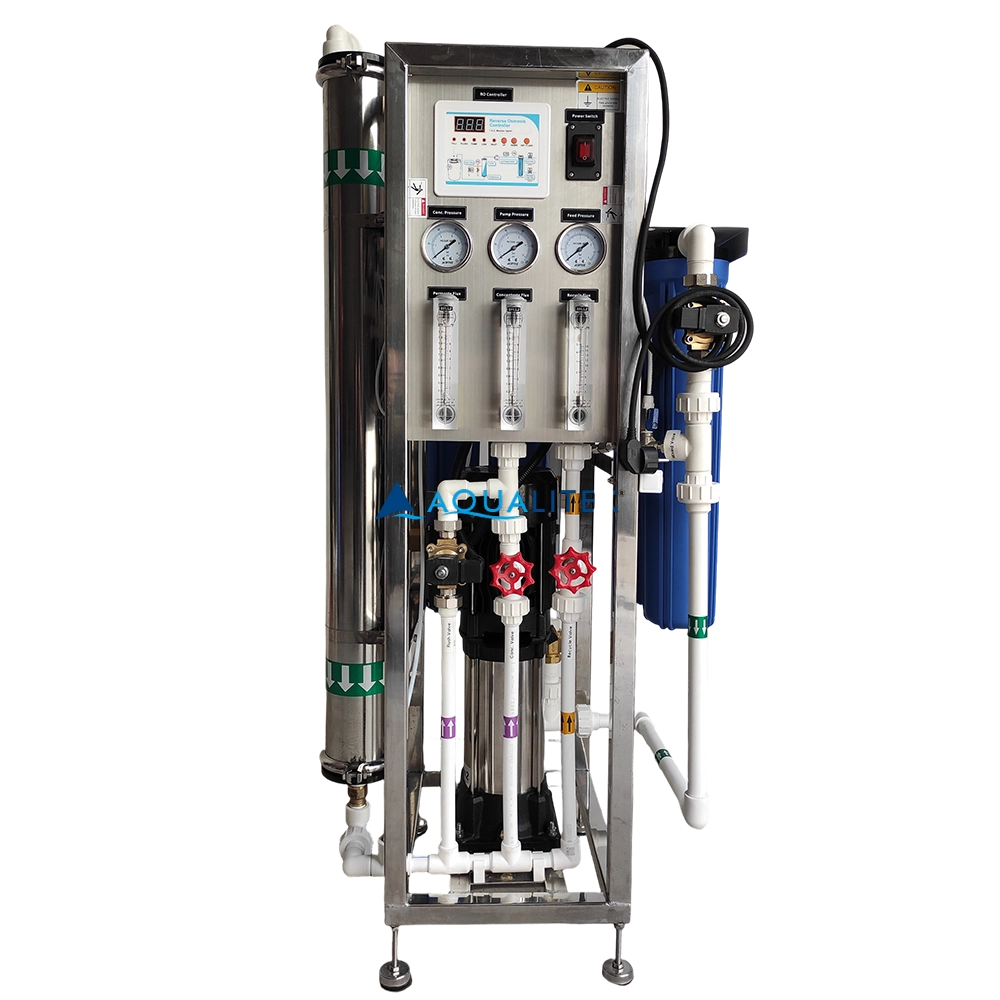
500 LPH Reverse Osmosis (RO) Water Purification Machine TWV - 412
Our 500 LPH Reverse Osmosis (RO) System is engineered to provide high-quality purified water for commercial applications. Designed with advanced RO technology, durable components, and a user-friendly interface, this system ensures consistent performance, low maintenance, and long-term reliability.
With its compact design and robust skid-mounted frame, it’s an excellent choice for businesses that demand efficiency and quality in water purification.
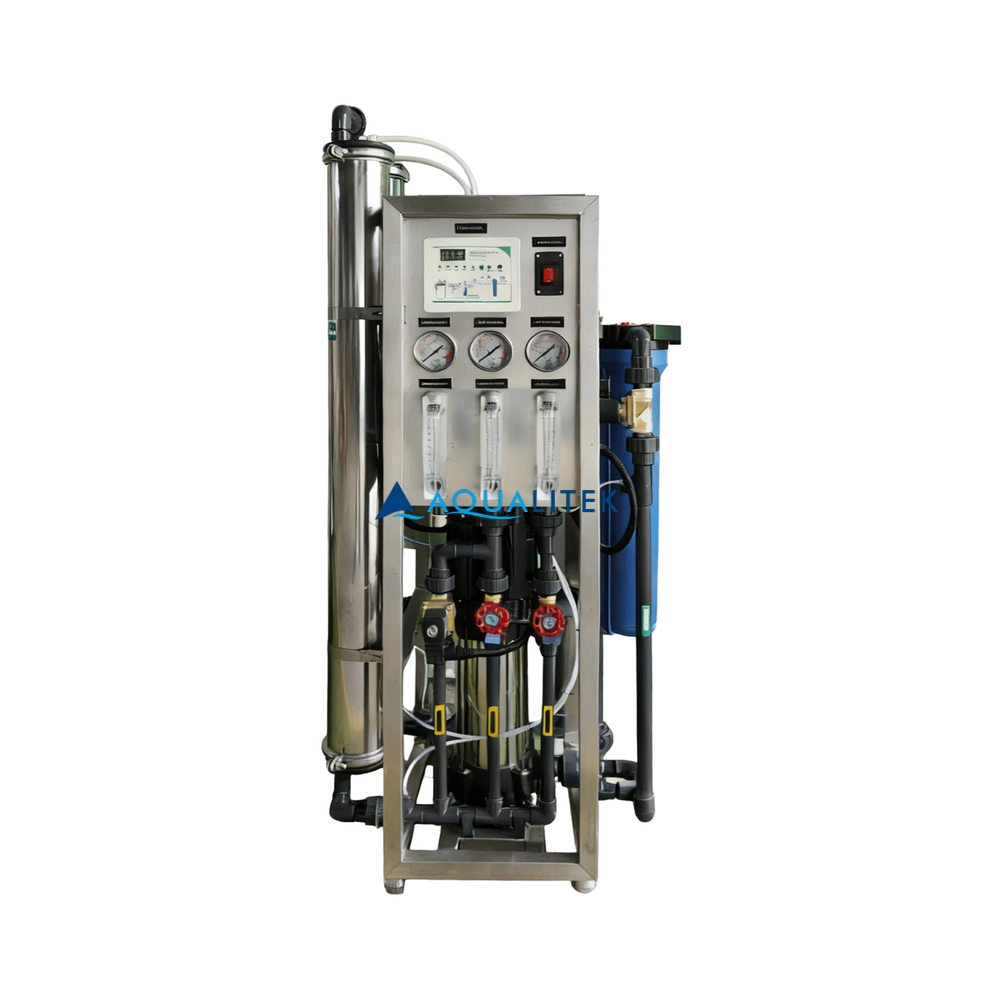
Tap Water Reverse Osmosis (TWRO) Systems TWV Series
TWV series Reverse Osmosis (RO) systems are pre-engineered and pre-assembled units with 2.5”/4” membrane housings(single element type)for tap water(lower TDS).They are designed for overall superior performance, high recovery rates and offer great savings with low maintenance and operation costs.
Tap Water Reverse Osmosis (TWRO) Systems TWF Series
TWF series Reverse Osmosis (RO) systems are pre-engineered and pre-assembled units with 4” membrane housings(multiple elements type) for tap water(lower TDS) .The medium large volumes can help meet your a variety of commercial and industrial applications. They are designed for overall superior performance, high recovery rates and offer great savings with low maintenance and operation costs.
Request More Information
Contact us today for product catalogs, customization options, and a free quotation designed for your business needs.
Rest assured that your privacy is important to us, and all information provided will be handled with the utmost confidentiality.
© 2026 AQUALITEK. All rights reserved.
AQUALITEK- Aimee Hoo
AQUALITEK - Aimee Hoo