




Best Reverse Osmosis Water Filter System for High Capacity Use
- Best Reverse Osmosis Water Filter System for High Capacity Use: 500 LPH RO System TWV-412
- Overview: Choosing the best reverse osmosis water filter system for commercial high-capacity needs
- Product Introduction: 500 LPH Reverse Osmosis (RO) Water Purification Machine TWV - 412
- Key performance factors that define the best reverse osmosis water filter system
- Technical features to look for in the best reverse osmosis water filter system
- Installation and maintenance considerations for the best reverse osmosis water filter system
- Comparing the best reverse osmosis water filter system options: where TWV-412 fits
- Operational cost components for the best reverse osmosis water filter system
- Compliance, certifications, and why they matter for the best reverse osmosis water filter system
- How to choose the best reverse osmosis water filter system for your business: a purchase checklist
- Why the 500 LPH Reverse Osmosis (RO) Water Purification Machine TWV - 412 is an excellent choice for high-capacity needs
- Frequently Asked Questions (FAQ) about the best reverse osmosis water filter system and TWV-412
- Q1: What feed water parameters are acceptable for the TWV-412?
- Q2: How often do RO membranes need replacement?
- Q3: How much wastewater (reject) does a 500 LPH system produce?
- Q4: Can I parallel multiple TWV-412 units for redundancy?
- Q5: Does the system require chemical dosing?
- Contact us / See the product
- Authoritative references and further reading

Best Reverse Osmosis Water Filter System for High Capacity Use: 500 LPH RO System TWV-412
Overview: Choosing the best reverse osmosis water filter system for commercial high-capacity needs
Selecting the best reverse osmosis water filter system for high capacity use requires balancing production rate, water quality, reliability, energy consumption, and lifecycle costs. Businesses — from restaurants and hotels to small beverage plants and laboratories — need systems that deliver consistent purity at commercial flow rates without excessive downtime or maintenance complexity. This article reviews the critical decision factors and introduces the 500 LPH Reverse Osmosis (RO) Water Purification Machine TWV - 412 as a solution tailored for commercial demands. High-capacity RO systems require careful attention to operating life and consumables. Understanding longevity and filter replacement for 500 LPH RO TWV-412 helps operators plan maintenance schedules and control long-term costs.
Product Introduction: 500 LPH Reverse Osmosis (RO) Water Purification Machine TWV - 412
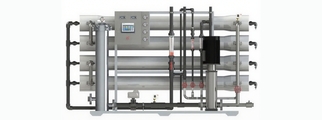
Our 500 LPH Reverse Osmosis (RO) System is engineered to provide high-quality purified water for commercial applications. Designed with advanced RO technology, durable components, and a user-friendly interface, this system ensures consistent performance, low maintenance, and long-term reliability.
With its compact design and robust skid-mounted frame, it’s an excellent choice for businesses that demand efficiency and quality in water purification.
Key performance factors that define the best reverse osmosis water filter system
When evaluating systems for high-capacity use, prioritize the following measurable criteria so you can compare options objectively:
- Capacity (LPH or GPH): Match the system output to peak and average demand. A 500 LPH unit like the TWV-412 is aimed at small-to-mid commercial operations requiring continuous output.
- Feed water quality and pretreatment needs: High TDS, hardness, iron, or organics require robust pretreatment (media filters, activated carbon, water softening, antiscalant feed) to protect membranes and maximize recovery.
- Membrane rejection and recovery: High-quality RO membranes typically remove 95–99% of dissolved salts and reduce microbiological load. Recovery rate affects wastewater volume and operating cost.
- Materials and build quality: Stainless steel skid, reliable high-pressure pumps, quality pressure vessels, and certified plumbing extend system life in commercial environments.
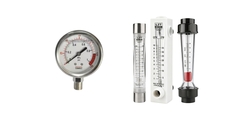
- Automation and controls: PLCs, flow meters, conductivity/TDS monitoring, and alarm systems reduce labor and ensure consistent output.
- Serviceability and spare parts availability: Fast access to membranes, pumps, and filters reduces downtime — critical for businesses relying on continuous water supply.
Technical features to look for in the best reverse osmosis water filter system
A true commercial-grade RO system will combine several features that reduce total cost of ownership while maintaining water quality:
- Commercial-grade membranes: High rejection thin-film composite (TFC) membranes are standard for commercial RO due to stable rejection across a broad pH and temperature range.
- High-pressure pump and energy considerations: Efficient pumps with variable-frequency drives (VFDs) help match energy use to load and improve recovery in some designs.
- Robust skid-mounted construction: A preassembled skid like the TWV-412 simplifies installation and ensures mechanical integrity under continuous operation.
- Integrated monitoring: Conductivity/TDS sensors on permeate and concentrate streams with automatic flushing and alarms prevent unnoticed degradation of water quality.
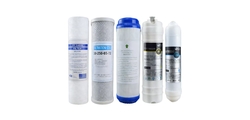
- Low-maintenance design: Cartridge prefilters with easy-change housings, accessible membranes, and clear maintenance schedules reduce technician time.
Installation and maintenance considerations for the best reverse osmosis water filter system
Proper installation and preventative maintenance are essential to ensure that a high-capacity RO operates at peak efficiency.
- Site assessment: Analyze feed water chemistry (TDS, hardness, iron, manganese, organics, silica, chlorine). This dictates pretreatment and materials.
- Pretreatment setup: Sediment filters, activated carbon to remove chlorine (which damages TFC membranes), and antiscalant dosing for hard water protect membranes and reduce downtime.
- Scheduled maintenance: Replace cartridge filters typically every 3–6 months (or by pressure drop), clean membranes when permeate quality declines, and service pumps per manufacturer intervals.
- Membrane lifespan: With proper pretreatment and operation, membranes last 2–5 years; operational extremes shorten that life.
- Water quality monitoring: Continuous TDS/ conductivity checks on permeate allow immediate response to performance changes.
Comparing the best reverse osmosis water filter system options: where TWV-412 fits
Below is a compact comparison of common RO system classes, showing where a 500 LPH skid-mounted system typically sits in terms of use and trade-offs.
| System Type | Capacity (LPH) | Typical Use | Advantages | Disadvantages |
|---|---|---|---|---|
| Domestic RO | 5–30 | Households, small offices | Low cost, compact | Low output, frequent tank refills |
| Small Commercial (e.g., TWV-412) | 200–1,000 (500 LPH example) | Restaurants, cafés, labs, small beverage lines | Continuous output, skid-mounted, scalable | Requires pretreatment, higher initial cost |
| Industrial RO | 1,000–50,000+ | Bottling, large process plants | High throughput, custom designs | High CAPEX, complex maintenance |
Operational cost components for the best reverse osmosis water filter system
Understanding operational costs helps determine ROI and which high-capacity system is truly the best fit:
- Energy: Pump power is the main energy draw. Efficiency and recovery influence kWh per cubic meter of permeate.
- Consumables: Cartridge filters, antiscalant, carbon, and occasional chemical cleanings.
- Membrane replacement: Major periodic cost every 2–5 years depending on feed water and maintenance.
- Wastewater (concentrate): RO produces reject water; lower recovery means higher water waste and potentially higher disposal costs.
- Labor and service contracts: Regular servicing or a maintenance contract can stabilize uptime but adds recurring expense.
Example cost estimate (illustrative only): assume 500 LPH operating 16 hours/day = 8,000 L/day. If energy and consumables cost $0.15/m3 (hypothetical), monthly operating cost = 8 m3/day * 30 * $0.15 ≈ $36/month, excluding membrane replacement and labor. Actual costs vary by region, water quality, and system settings.
Compliance, certifications, and why they matter for the best reverse osmosis water filter system
Compliant systems provide assurance that treated water meets regulatory and health standards. For commercial systems consider:
- NSF/ANSI certifications for materials and components where applicable (e.g., NSF/ANSI 61 for drinking water system components).
- Local potable water regulations and permits — some regions require registration or testing.
- WHO and EPA guidance on water treatment and membrane filtration as reference for best practices.
Always ask suppliers for documented test results, third-party certifications, and references from similar installations.
How to choose the best reverse osmosis water filter system for your business: a purchase checklist
Use this checklist to evaluate options and suppliers before committing:
- Collect a complete feed water analysis (TDS, hardness, chlorine, iron, manganese, turbidity, organics).
- Calculate peak and average daily demand plus growth margin.
- Evaluate space and utility availability (electrical supply, drains, floor load).
- Verify pretreatment needs and costs for your feed water quality.
- Request performance data: permeate TDS, recovery rate, permeate flow at given feed TDS and temp.
- Confirm warranties, local support, and spare parts lead times.
- Ask for references and case studies in your industry or region.
Why the 500 LPH Reverse Osmosis (RO) Water Purification Machine TWV - 412 is an excellent choice for high-capacity needs
The TWV-412 aligns with the criteria that define the best reverse osmosis water filter system for commercial operations:
- Commercial throughput: With 500 LPH capability, it meets continuous demand for many restaurants, labs, and small production lines.
- Skid-mounted compact design: Minimizes installation time and simplifies mechanical integrity and portability.
- Durability and low maintenance: Engineered with robust components to reduce downtime and lifecycle costs.
- User-friendly controls: Automation and monitoring reduce manual oversight and help maintain consistent water quality.
- Scalability: Multiple units can be paralleled for higher flows and redundancy, an important benefit for growing operations.
Frequently Asked Questions (FAQ) about the best reverse osmosis water filter system and TWV-412
Q1: What feed water parameters are acceptable for the TWV-412?
A: Acceptable feed water varies by pretreatment. Generally, RO systems need low turbidity, chlorine-free water (or activated carbon prefilter), and limits on iron and manganese. A full feed water test is required to size appropriate pretreatment. Consult supplier specifications for exact limits.
Q2: How often do RO membranes need replacement?
A: Membrane life depends on feed water and maintenance. With correct pretreatment and operation, membranes typically last 2–5 years. Regular monitoring and cleaning can extend life.
Q3: How much wastewater (reject) does a 500 LPH system produce?
A: Wastewater volume depends on recovery ratio. Typical recovery for small commercial RO systems ranges from 40% to 70%. At 50% recovery, producing 500 L/h permeate means ~500 L/h reject. Recovery can be improved with pretreatment and system design.
Q4: Can I parallel multiple TWV-412 units for redundancy?
A: Yes. Skid-mounted commercial RO units like the TWV-412 are commonly paralleled to increase capacity or provide failover, making them flexible for scaling operations.
Q5: Does the system require chemical dosing?
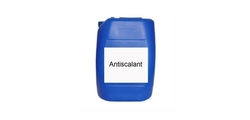
A: In many installations antiscalant dosing is recommended to protect membranes against scaling when hardness or silica is elevated. Biocides or cleaning chemicals may be used during maintenance cycles.
Contact us / See the product
To discuss whether the 500 LPH Reverse Osmosis (RO) Water Purification Machine TWV - 412 is the best reverse osmosis water filter system for your application, contact our sales team for a site assessment, feed water analysis, and customized quote. Request a datasheet or a site visit to see installation examples and lifecycle cost estimates.
Authoritative references and further reading
- Reverse osmosis — Wikipedia: https://en.wikipedia.org/wiki/Reverse_osmosis
- World Health Organization — Guidelines for Drinking-water Quality: https://www.who.int/publications/guidelines-for-drinking-water-quality
- U.S. Environmental Protection Agency — Drinking Water Requirements: https://www.epa.gov/dwreginfo
- NSF International — Water Treatment Standards: https://www.nsf.org
- United States Geological Survey (USGS) — Water Treatment Overview: https://www.usgs.gov/special-topics/water-science-school
Compliance and Quality Standards for Ultrafiltration Water Systems
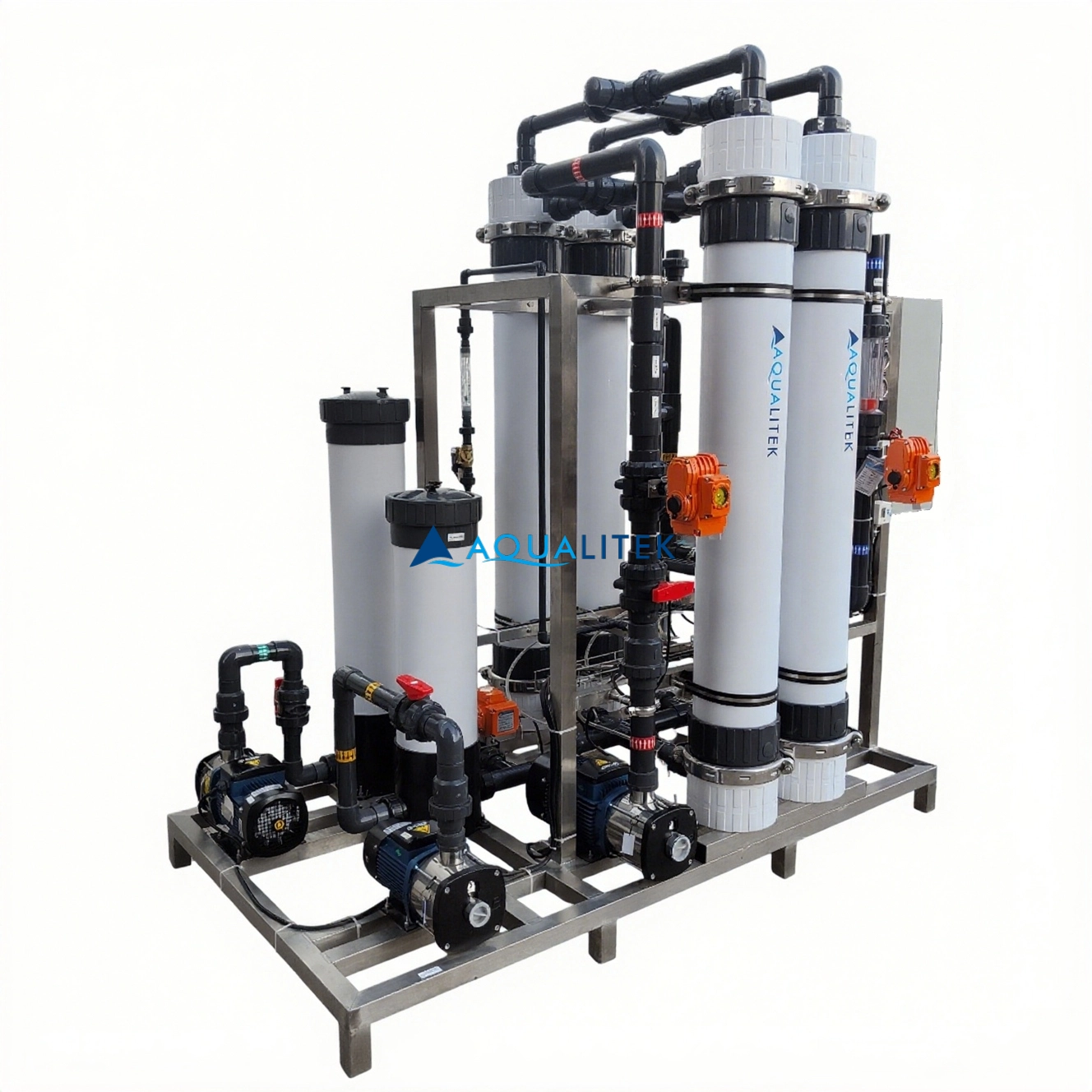
Ultrafiltration Water Treatment: Procurement Checklist for B2B Buyers
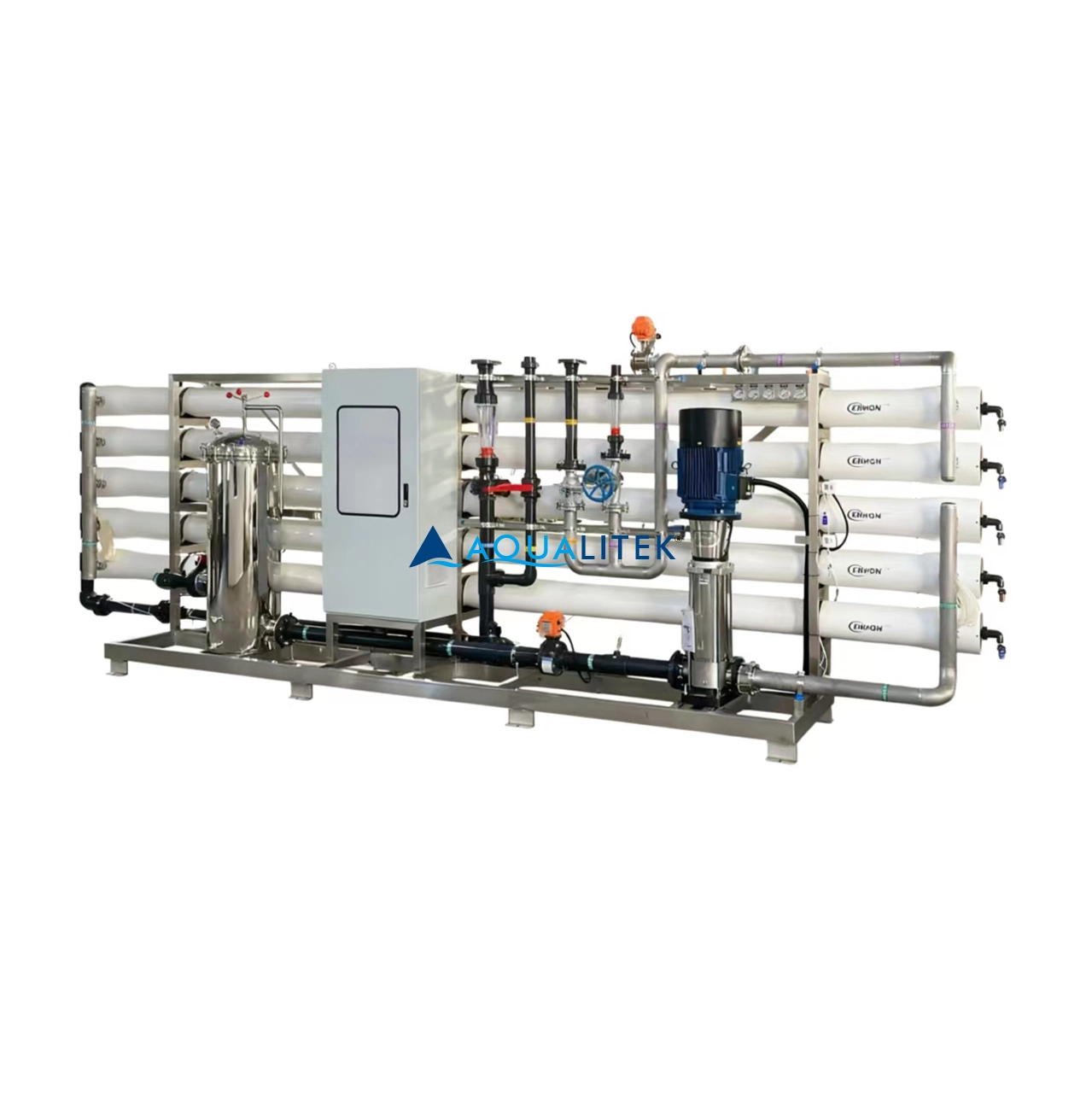
Buying Guide: Commercial Reverse Osmosis System Essentials
Best Industrial RO Machines for Factories 2026
FAQ-aqualitek
What types of water treatment systems does AQT offer?
AQT provides a wide range of water purification solutions, including reverse osmosis (RO) systems, ultrafiltration (UF) systems, nanofiltration (NF) systems, deionization (DI) systems, electro-deionization (EDI) systems, chemical dosing systems, and water softeners. We also supply spare parts and components for water treatment systems.
Does AQT provide technical support and after-sales service?
Yes! We offer comprehensive technical support, including installation guidance, troubleshooting, spare parts supply, and ongoing maintenance assistance. Our after-sales team is available to ensure your water treatment system operates efficiently.
Ion Exchange Water Treatment Systems
What is the difference between softening and deionization?
Softening removes only hardness ions (Ca²⁺, Mg²⁺), while deionization removes both cations and anions to produce high-purity water.
Membrane Water Treatment Systems
Can your membrane systems treat seawater?
Yes. Our seawater RO systems are designed to handle high salinity with corrosion-resistant materials and energy recovery devices.
Solutions
How do I choose the right water treatment system for my needs?
The choice depends on factors such as water quality, application, flow rate, and purification requirements. Our team of experts can analyze your water source and recommend the most suitable solution for residential, commercial, or industrial applications.
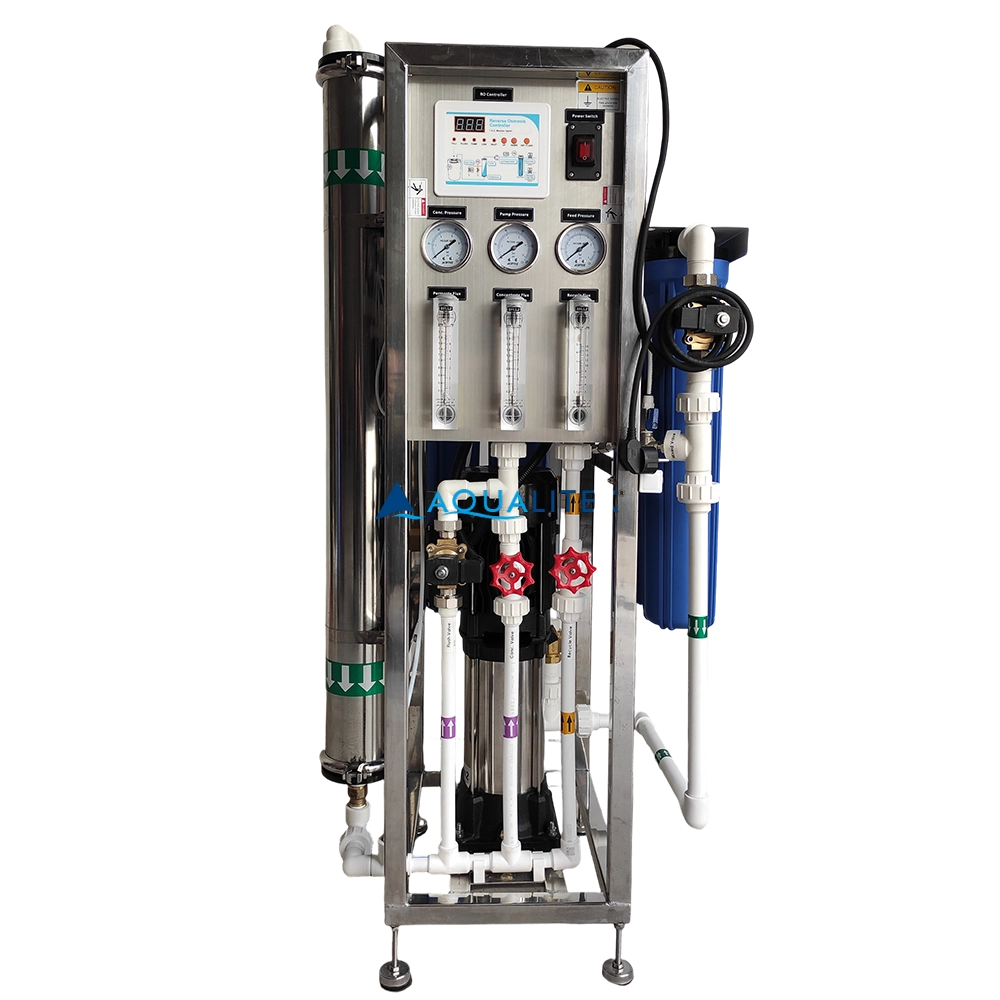
500 LPH Reverse Osmosis (RO) Water Purification Machine TWV - 412
Our 500 LPH Reverse Osmosis (RO) System is engineered to provide high-quality purified water for commercial applications. Designed with advanced RO technology, durable components, and a user-friendly interface, this system ensures consistent performance, low maintenance, and long-term reliability.
With its compact design and robust skid-mounted frame, it’s an excellent choice for businesses that demand efficiency and quality in water purification.
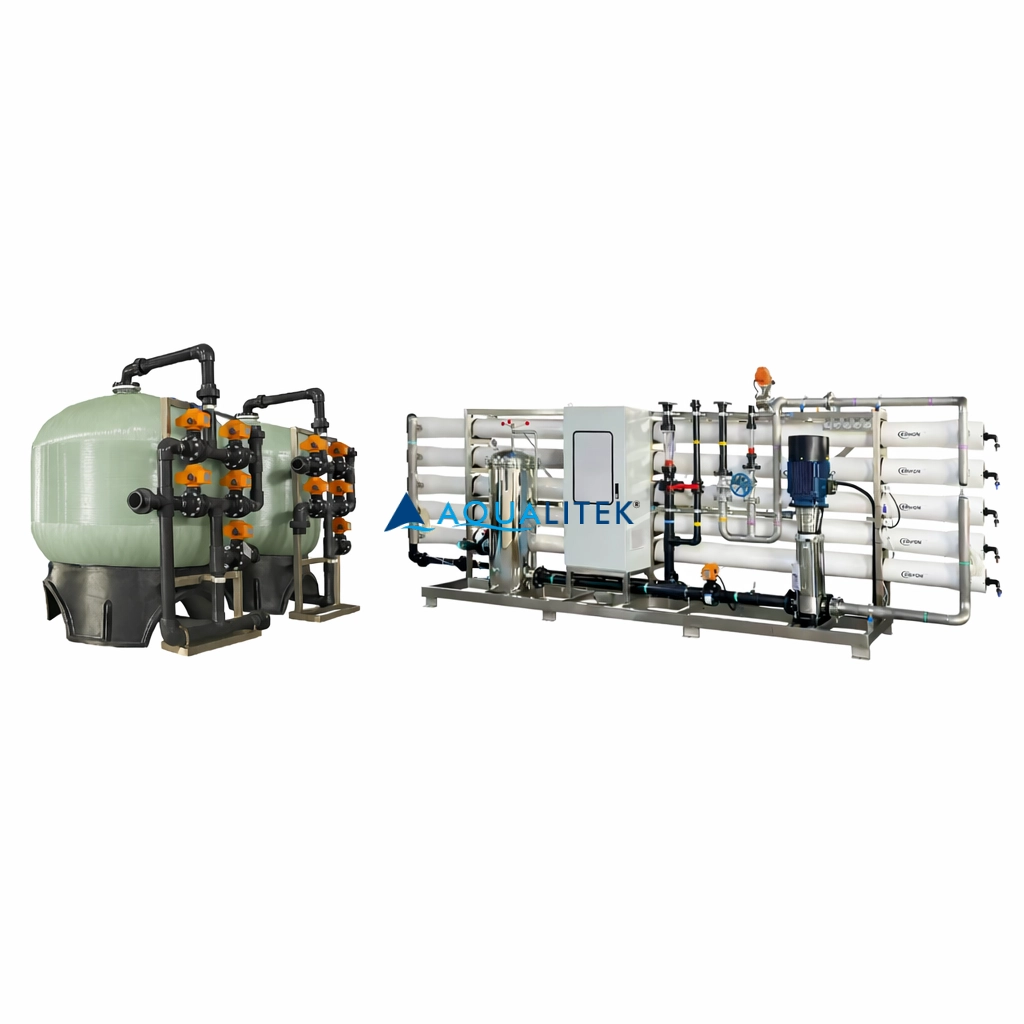
30TPH Industrial Reverse Osmosis (RO) System
30TPH Industrial Reverse Osmosis (RO) System designed for industrial and municipal water treatment. High salt rejection, energy-efficient design, PLC control, and customizable configuration.
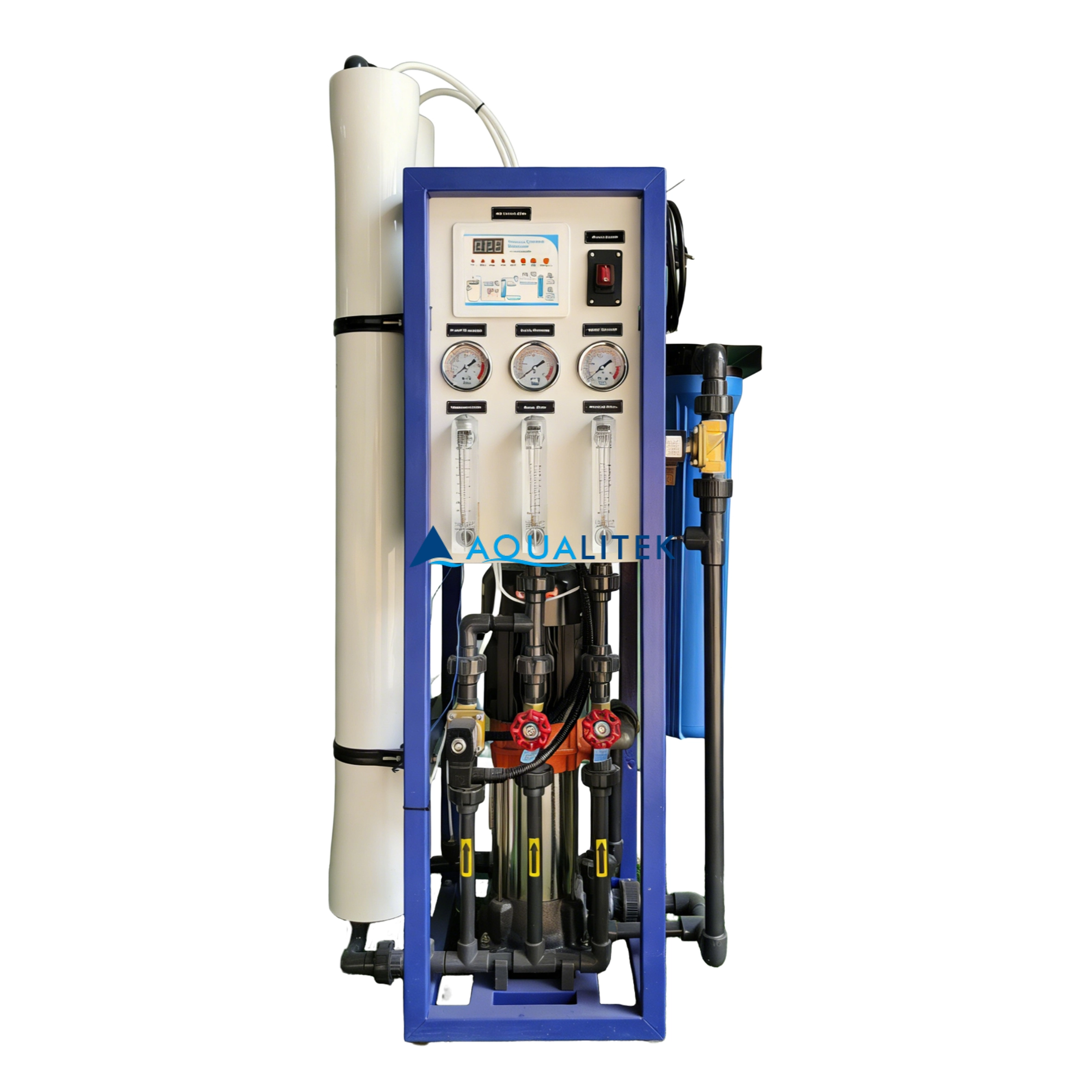
500LPH Panel Mounted Reverse Osmosis Water Purification System
AQUALITEK's 500LPH Panel Mounted Reverse Osmosis Water Purification System delivers reliable 500 LPH RO water production. This compact industrial reverse osmosis unit is ideal for small scale industrial RO needs, ensuring efficient and high-quality purified water in a space-saving design.
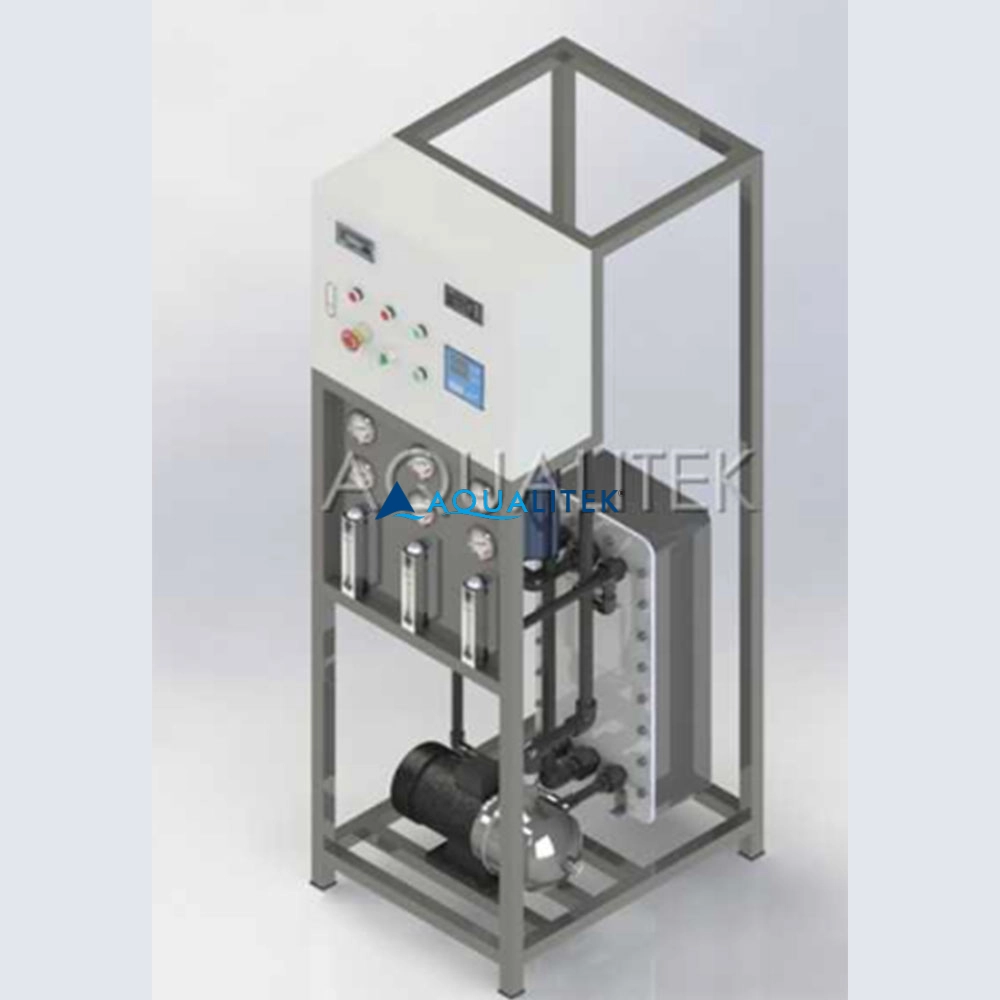
Electrodeionization Systems to Get UltraPure Water
Electrodeionization (EDI) system is an advanced water purification technology that combines ion exchange and electrochemical processes to produce ultra-pure water. Unlike traditional deionization methods, which rely on chemical regeneration, EDI utilizes electric fields to drive the movement of ions through ion-exchange membranes, effectively removing dissolved salts and other ionic contaminants.
This process is continuous and does not require the use of chemicals for regeneration, making it an environmentally friendly and cost-effective solution for producing high-quality deionized water. EDI systems are widely used in applications requiring ultrapure water, such as in the pharmaceutical, semiconductor, power generation, and biotechnology industries, as well as for laboratory use.
By offering high-purity water without the need for chemical regeneration, EDI systems provide a sustainable, efficient, and reliable alternative to traditional deionization methods, making them an ideal choice for industries where water quality and process control are critical.
Request More Information
Contact us today for product catalogs, customization options, and a free quotation designed for your business needs.
Rest assured that your privacy is important to us, and all information provided will be handled with the utmost confidentiality.
© 2026 AQUALITEK. All rights reserved.
AQUALITEK- Aimee Hoo
AQUALITEK - Aimee Hoo