




Choosing a 12TPH Industrial UF Water Treatment Device for Plants
- Choosing a 12TPH Industrial UF Water Treatment Device for Plants
- Understanding Ultrafiltration Water Treatment and Where a 12TPH Device Fits
- Product Overview: 12TPH Industrial UF Water Treatment Device with High Throughput
- Key Technical Metrics to Evaluate for Ultrafiltration Water Treatment
- How Automatic Backwash Technology Improves UF Performance
- Feedwater Characterization: What You Must Test Before Selection
- Installation, Integration and Plant Footprint Considerations
- Operational Best Practices to Maximize Throughput and Minimize Costs
- Comparing Ultrafiltration with Other Technologies (MF, RO) for Industrial Plants
- Lifecycle Costs: CAPEX, OPEX and ROI Considerations
- Maintenance, Membrane Longevity and Troubleshooting
- Regulatory Compliance and Water Quality Targets
- How to Run an Effective Vendor Evaluation for a 12TPH UF Device
- Brand Summary: Why Choose AQUALITEK for High-Throughput Ultrafiltration
- Frequently Asked Questions (FAQ)
- Q1: What feedwater turbidity can a 12TPH UF device handle?
- Q2: How often is chemical CIP required?
- Q3: Does UF remove dissolved salts?
- Q4: What is the expected membrane lifespan?
- Q5: Can a 12TPH UF device be installed outdoors?
- Contact Sales / View Product
- Authoritative References and Further Reading

Choosing a 12TPH Industrial UF Water Treatment Device for Plants
Understanding Ultrafiltration Water Treatment and Where a 12TPH Device Fits
Ultrafiltration Water Treatment is a membrane separation process that removes suspended solids, colloids, bacteria and some large viruses by size exclusion while allowing dissolved salts and small organics to pass through. For many industrial processes, ultrafiltration (UF) serves as the primary pretreatment before reverse osmosis (RO), boiler feed, or process water reuse. A 12TPH Industrial UF Water Treatment Device (12 tons per hour, roughly 12,000 liters per hour) occupies a key niche for mid-to-large plants requiring continuous, reliable turbidity reduction and solids removal without the high capital and energy cost of full-scale RO systems.
Product Overview: 12TPH Industrial UF Water Treatment Device with High Throughput
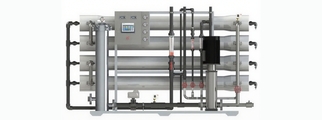
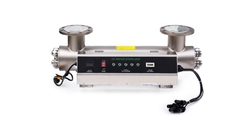
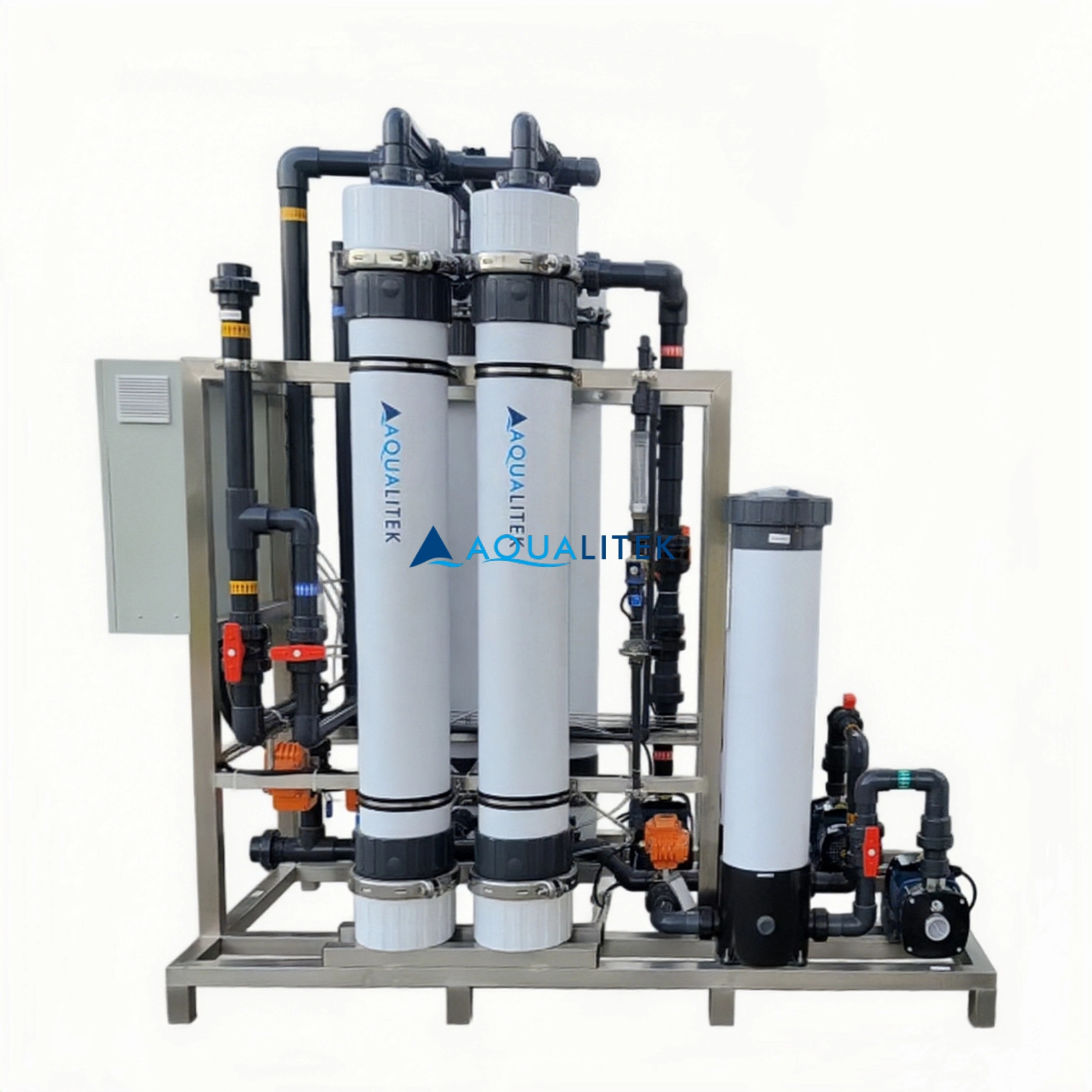
AQUALITEK 12TPH Industrial UF Water Treatment Device (UFL-4 Series) delivers high-efficiency, high-throughput ultrafiltration with Automatic Backwash Technology, high fouling-resistance membrane modules for efficient pretreatment and turbidity reduction in industrial and commercial applications.
Key Technical Metrics to Evaluate for Ultrafiltration Water Treatment
When choosing a 12TPH UF device, focus on the parameters that directly affect performance, reliability and operating cost:
- Rated Throughput (Flow): Confirm the device’s nominal 12TPH rating under your feedwater conditions. Manufacturers usually rate capacity at a given transmembrane pressure and temperature.
- Transmembrane Pressure (TMP) and Flux: Typical UF operates at low TMP (0.1–2 bar). Check recommended operating flux (L/m2·h) so membrane life and fouling propensity are balanced.
- Recovery Rate: Fraction of feed that becomes permeate. For UF systems, recovery can vary from 80–95% depending on feed solids and concentrate handling.
- Influent Quality Range: Maximum turbidity, silt density index (SDI), and suspended solids the unit can handle without frequent chemical cleaning.
- Automatic Backwash & Cleaning-In-Place (CIP): Automatic Backwash Technology reduces downtime and cleaning chemical use; ensure the backwash logic and CIP cycles fit your feed variability.
- Membrane Type & Fouling Resistance: PVDF or PES hollow-fiber or flat-sheet modules with anti-fouling surface treatments provide robust fouling resistance.
- Energy Consumption: UF energy usage is typically dominated by feed pumps; compare kWh/m3 for realistic operating scenarios.
- Footprint & Skid Integration: Check skid-mounted vs field-built options, and the available space and piping interfaces at the plant.
- Control & Monitoring: PLC/SCADA compatibility, remote monitoring for TMP, flux, permeate quality and automated alarms.
How Automatic Backwash Technology Improves UF Performance
Automatic backwash is central to maintaining high throughput and minimizing chemical cleaning. Backwash sequences reverse flow briefly or use air scouring and permeate flush to dislodge cake layers on the membrane. For the AQUALITEK 12TPH device, built-in Automatic Backwash Technology means:
- Consistent permeate flux and turbidity removal over long runs.
- Reduced frequency and volume of CIP, lowering chemical cost and downtime.
- Predictable maintenance intervals that let plant teams schedule servicing with minimal disruption.
When evaluating systems, request data showing flux decline curves with and without backwash, and the impact on membrane lifespan.
Feedwater Characterization: What You Must Test Before Selection
Selecting correctly requires real feedwater analysis. Typical tests to provide vendors:
- Turbidity (NTU)
- Silt Density Index (SDI)
- Total Suspended Solids (TSS)
- Particle size distribution
- Organic load (TOC / COD / BOD)
- TDS and conductivity (to evaluate post-treatment needs)
- pH, alkalinity, hardness and specific scaling ions (Ca, Mg, silica, iron, manganese)
- Microbiological indicators if biological fouling is a risk
Good feedwater data allow the vendor to size pretreatment steps, backwash strategies, and CIP frequency recommendations for a 12TPH UF installation.
Installation, Integration and Plant Footprint Considerations
Ensure the UF unit integrates with existing process lines and utility systems. Key points:
- Space & Access: Skid dimensions, clearance for maintenance, and weight for structural assessment.
- Piping & Valves: Feed and concentrate piping, backwash and drain routing—ensure valves and piping are sized for high solids events.
- Raw Water Pumping: Ensure feed pumps can handle worst-case headloss with spare capacity for backwash cycles.
- Electrical & Controls: Local control panel with PLC, remote telemetry, and clear alarm configurations.
- Drain & Waste Handling: Disposal of backwash and CIP effluent per local regulations; consider recovery/recycle if water scarcity or cost demands.
Operational Best Practices to Maximize Throughput and Minimize Costs
To get the expected 12TPH throughput and long membrane life, adopt these operating best practices:
- Operate at recommended flux, monitor TMP, and adjust backwash frequency dynamically.
- Use automatic backwash and air scouring where applicable to reduce cake formation.
- Optimize CIP using condition-based triggers (e.g., sustained TMP rise or flux drop) rather than fixed schedules.
- Maintain a small inventory of critical spare modules and parts and set up a service agreement for timely replacements.
- Track operating costs in kWh/m3, chemicals/m2, and membrane replacement frequency to calculate true lifecycle cost.
Comparing Ultrafiltration with Other Technologies (MF, RO) for Industrial Plants
Choosing UF often depends on whether dissolved salts must be removed. The table below summarizes how UF compares with microfiltration (MF) and reverse osmosis (RO) for common industrial needs.
| Parameter | Microfiltration (MF) | Ultrafiltration (UF) | Reverse Osmosis (RO) |
|---|---|---|---|
| Particle/Organism Removal | ≥0.1 µm (particles, some bacteria) | 0.01–0.1 µm (bacteria, colloids, most viruses) | <0.001 µm (dissolved ions, small organics) |
| Typical Use | Pre-filtration, solids removal | Pretreatment for RO, turbidity control, reuse | Desalination, demineralization, high-purity water |
| Energy & Cost | Low | Low–Moderate | High (high pressure) |
| Fouling Risk | Lower | Moderate (cake & biofouling) | High (scaling and fouling) |
| When to Choose | Large particle removal only | When turbidity, bacteria removal and RO pretreatment needed | Dissolved solids removal required |
Lifecycle Costs: CAPEX, OPEX and ROI Considerations
While CAPEX for a 12TPH UF unit is higher than simple media filters, the total cost of ownership can be attractive because of:
- Lower chemical and energy consumption compared with RO pretreatment and conventional coagulation-flocculation if managed correctly.
- Smaller footprint and faster payback when reclaimed water reduces freshwater purchases or when UF protects downstream high-value equipment (e.g., RO membranes, boilers).
- Extended downstream equipment life and reduced maintenance costs by consistently lowering turbidity and particle load.
Ask vendors for a modeled lifecycle cost sheet including expected membrane life, cleaning chemical volumes, energy use, and predicted downtime. Real-world case studies and references are critical to validate vendor claims.
Maintenance, Membrane Longevity and Troubleshooting
Membrane life depends on feedwater quality, operational discipline and proper CIP. Key maintenance items:
- Regular inspection of hollow-fiber integrity or module housings.
- Timely replacement of seals, valves and sensors to prevent small leaks causing biofouling.
- Condition-based CIP triggers and correct chemical formulations (acid for scaling, alkaline/oxidant for organics and biofilms).
- Keep detailed logs of TMP, flux, permeate quality and cleaning events to diagnose trends early.
Regulatory Compliance and Water Quality Targets
Confirm that the UF system can meet your local discharge and product water quality standards. UF is effective at turbidity and micro-organism control but does not remove dissolved salts—so if your target requires low conductivity or specific ion limits, plan additional RO or ion exchange stages. For potable reuse, verify compliance with local health authority guidelines for membrane barrier performance.
How to Run an Effective Vendor Evaluation for a 12TPH UF Device
To select the best system, request from vendors:
- Guaranteed performance data under your feedwater conditions (flux, TMP, permeate turbidity).
- References and case studies for similar flows and feed quality.
- Detailed CAPEX and OPEX breakdown and warranty terms.
- On-site pilot testing or mobile skid trials to validate performance.
- Service level agreements (SLA) for spare parts and technical support.
Brand Summary: Why Choose AQUALITEK for High-Throughput Ultrafiltration
AQUALITEK’s UFL-4 Series 12TPH Industrial UF Water Treatment Device is engineered for continuous high-throughput applications with features that matter to plants: integrated Automatic Backwash Technology to reduce chemical cleaning, high fouling-resistance membranes for extended runs, and skid-based modular construction for predictable installation and commissioning. AQUALITEK emphasizes operational transparency through PLC control, condition-based maintenance guidance and local service support—factors that align with industry expectations for vendor expertise and accountability.
Frequently Asked Questions (FAQ)
Q1: What feedwater turbidity can a 12TPH UF device handle?
A: Many industrial UF systems are designed to handle influent turbidity up to 100 NTU for short durations, but continuous operation is typically recommended at much lower levels (1–50 NTU depending on membrane type). Provide a representative feedwater profile to the vendor for accurate sizing and pretreatment recommendations.
Q2: How often is chemical CIP required?
A: CIP frequency depends on feedwater composition and operational discipline; with effective Automatic Backwash Technology and proper prefiltration, CIP intervals can range from weeks to months. Condition-based triggers using TMP rise or flux decline are best practice.
Q3: Does UF remove dissolved salts?
A: No. UF is a size-exclusion process and does not remove dissolved salts or low-molecular-weight organics. For desalination or demineralization, pair UF with RO or ion-exchange processes.
Q4: What is the expected membrane lifespan?
A: Typical membrane lifespans range from 3–7 years depending on feedwater quality, cleaning regimen and mechanical stress. Proper maintenance and optimized backwash/CIP practices can extend life beyond baseline expectations.
Q5: Can a 12TPH UF device be installed outdoors?
A: Yes, many UF systems are skid-mounted with outdoor-rated enclosures for electrical and control components. Insulation and freeze-protection may be required in cold climates.
Contact Sales / View Product
Once capacity and application are defined, decision-makers typically evaluate investment performance through an ROI and TCO analysis for a 12TPH industrial UF water treatment device.If you are evaluating ultrafiltration solutions for your plant and want a tailored proposal or onsite pilot, contact our sales team to discuss the AQUALITEK 12TPH Industrial UF Water Treatment Device (UFL-4 Series). We offer technical audits, pilot trials, and lifecycle cost analyses to help you choose the right configuration.
Authoritative References and Further Reading
The following authoritative sources provide technical background and guidance on membrane technology and water treatment standards:
- Ultrafiltration — Wikipedia: https://en.wikipedia.org/wiki/Ultrafiltration
- Water Environment Federation (membranes topic): https://www.wef.org/knowledge-center/topics/membranes/
- International Water Association: https://iwa-network.org/
- NSF International (drinking water and treatment standards): https://www.nsf.org/
- American Water Works Association (AWWA): https://www.awwa.org/
For a product demo, technical datasheet, or to schedule an on-site evaluation, contact our team through the website or by phone. We can deliver a pilot skid and provide a site-specific performance guarantee after evaluation.
Performance Testing and QA for Stainless Micron Filter Housings
Maintenance and regeneration of activated carbon filters
Compliance and Quality Standards for Ultrafiltration Water Systems
Water Purification Filters: Types, Lifespans, and Costs
FAQ-aqualitek
What is the difference between Reverse Osmosis (RO), Ultrafiltration (UF), and Nanofiltration (NF)?
1. Reverse Osmosis (RO): Removes up to 99.9% of contaminants, including salts, bacteria, viruses, and heavy metals.
2. Ultrafiltration (UF): Uses a membrane filtration process to remove bacteria and particles, while retaining essential minerals.
3. Nanofiltration (NF): Falls between RO and UF, removing some salts and organic compounds while allowing certain minerals to pass through.
Does AQT provide technical support and after-sales service?
Yes! We offer comprehensive technical support, including installation guidance, troubleshooting, spare parts supply, and ongoing maintenance assistance. Our after-sales team is available to ensure your water treatment system operates efficiently.
Can AQT provide custom water treatment solutions?
Yes! We specialize in OEM/ODM water treatment solutions and can design custom filtration systems tailored to your business, industry, or brand requirements. Our team can assist with system design, branding, private labeling, and technical support.
Ion Exchange Water Treatment Systems
Which chemicals are required for regeneration?
Softening uses NaCl. Demineralization uses HCl or H₂SO₄ for cation resin and NaOH for anion resin.
What is the difference between softening and deionization?
Softening removes only hardness ions (Ca²⁺, Mg²⁺), while deionization removes both cations and anions to produce high-purity water.
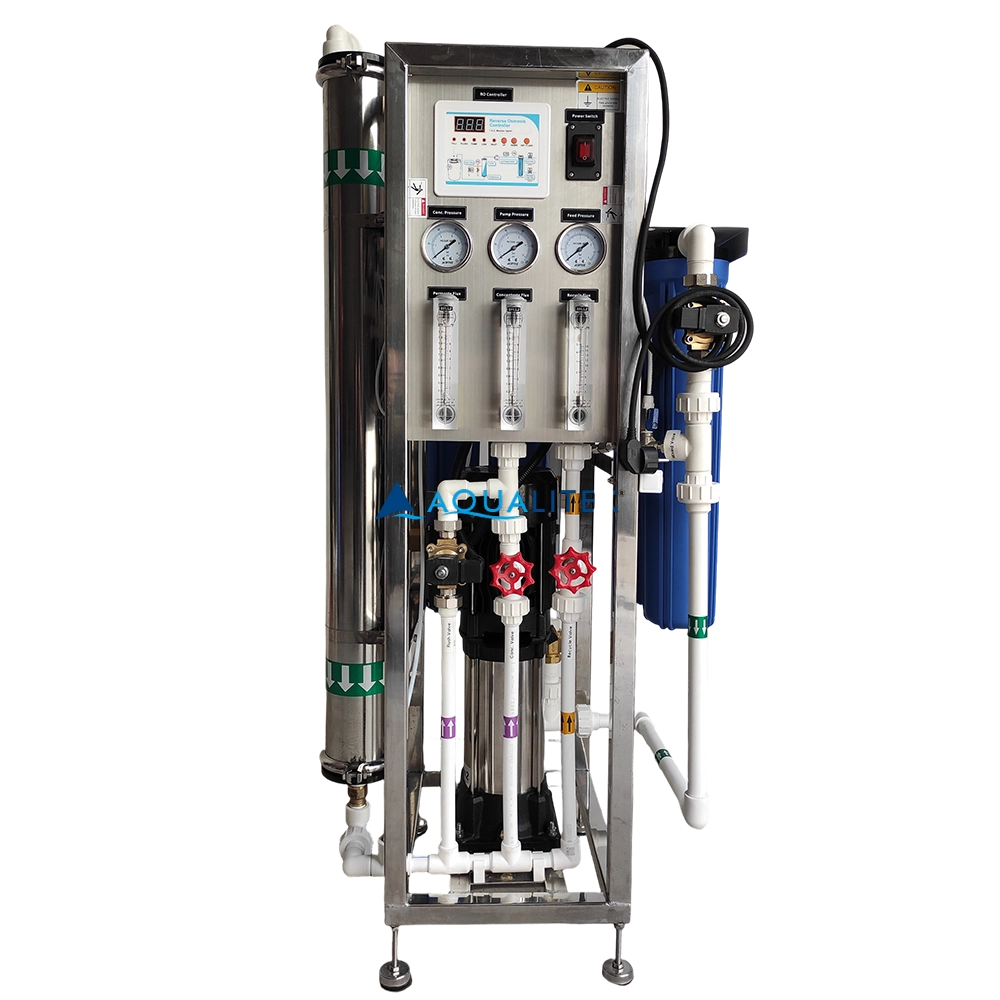
500 LPH Reverse Osmosis (RO) Water Purification Machine TWV - 412
Our 500 LPH Reverse Osmosis (RO) System is engineered to provide high-quality purified water for commercial applications. Designed with advanced RO technology, durable components, and a user-friendly interface, this system ensures consistent performance, low maintenance, and long-term reliability.
With its compact design and robust skid-mounted frame, it’s an excellent choice for businesses that demand efficiency and quality in water purification.
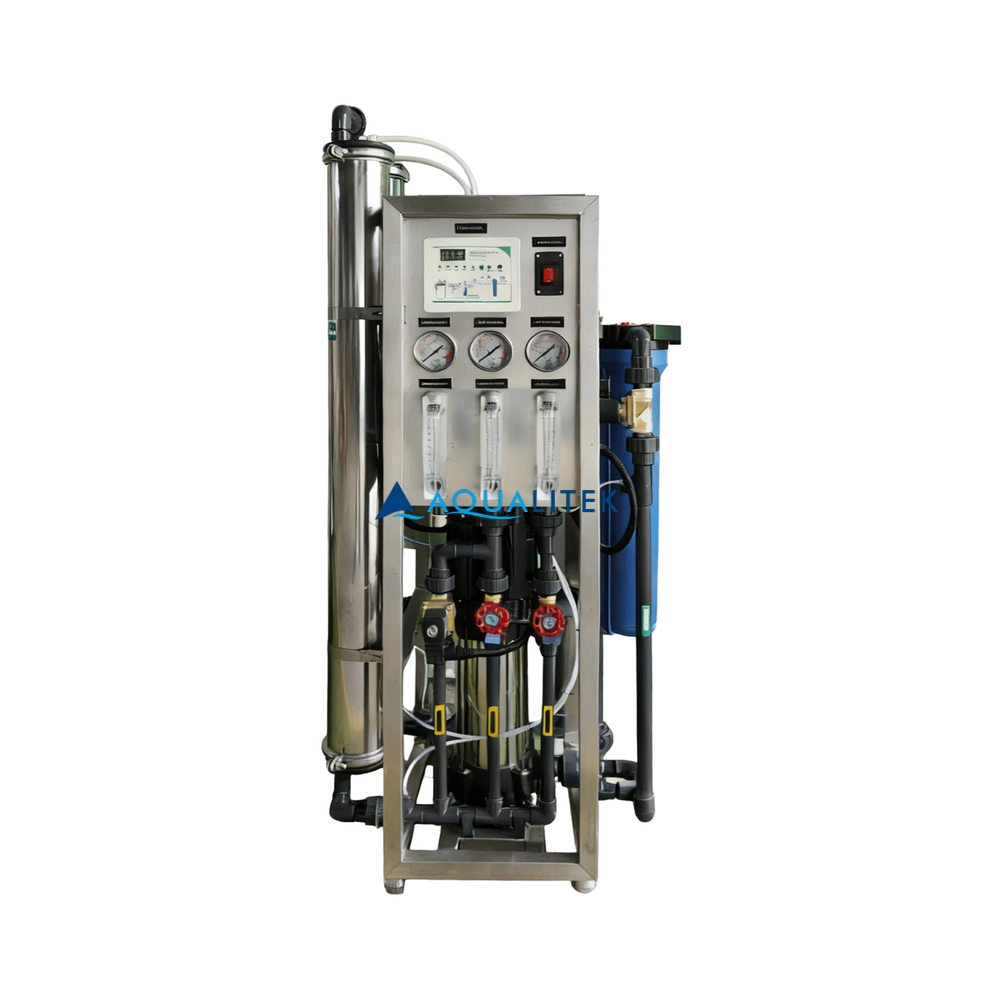
Tap Water Reverse Osmosis (TWRO) Systems TWV Series
TWV series Reverse Osmosis (RO) systems are pre-engineered and pre-assembled units with 2.5”/4” membrane housings(single element type)for tap water(lower TDS).They are designed for overall superior performance, high recovery rates and offer great savings with low maintenance and operation costs.
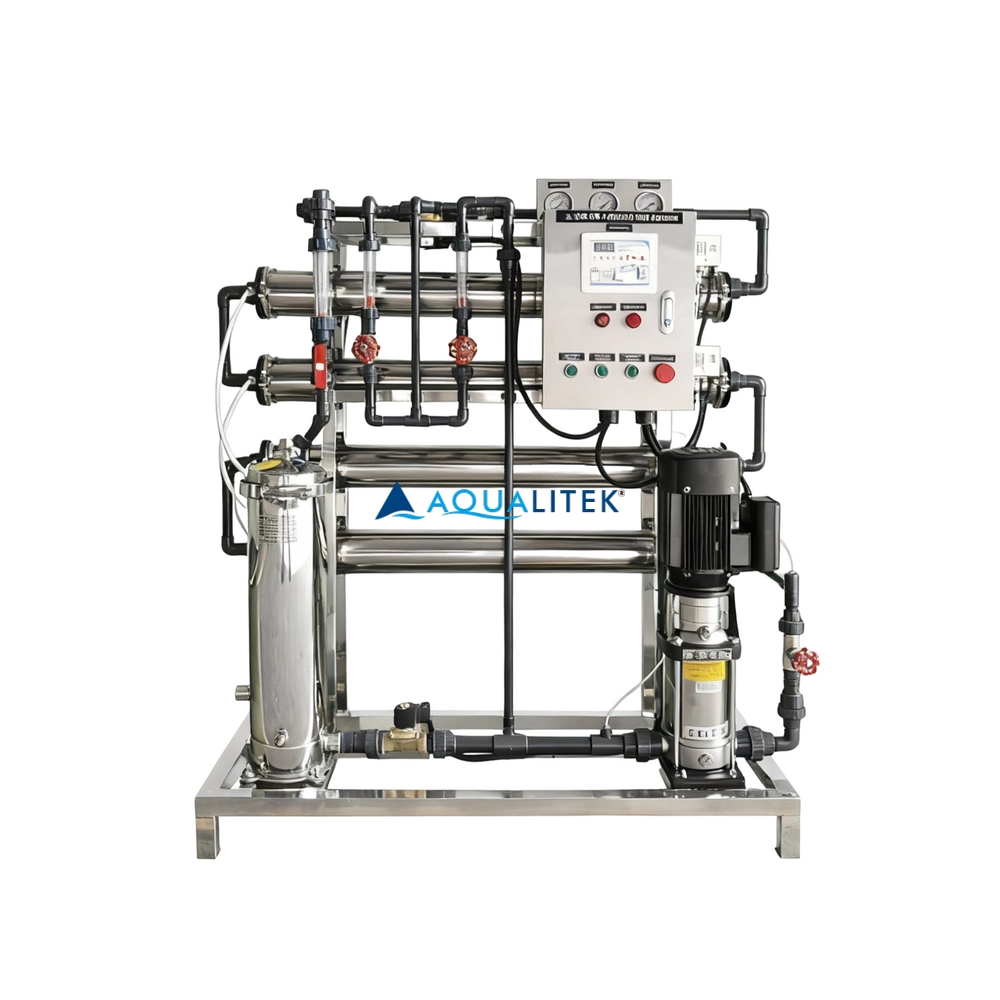
Tap Water Reverse Osmosis (TWRO) Systems TWF Series
TWF series Reverse Osmosis (RO) systems are pre-engineered and pre-assembled units with 4” membrane housings(multiple elements type) for tap water(lower TDS) .The medium large volumes can help meet your a variety of commercial and industrial applications. They are designed for overall superior performance, high recovery rates and offer great savings with low maintenance and operation costs.

Tap Water Reverse Osmosis (TWRO) Systems TWE Series
TWE series Reverse Osmosis (RO) systems are pre-engineered and pre-assembled units with 8” membrane housings for tap water (lower TDS). The large volumes can help meet your a variety of industrial applications. They are designed for overall superior performance, high recovery rates and offer great savings with low maintenance and operation costs.
Request More Information
Contact us today for product catalogs, customization options, and a free quotation designed for your business needs.
Rest assured that your privacy is important to us, and all information provided will be handled with the utmost confidentiality.
© 2026 AQUALITEK. All rights reserved.
AQUALITEK- Aimee Hoo
AQUALITEK - Aimee Hoo