



When Should RO Membrane Elements Be Sent for Offline Cleaning?| Insights by AQUALITEK
Learn when RO membranes require offline cleaning, the signs of severe fouling, situations where on-site CIP is no longer effective, and how professional offline restoration improves performance and extends membrane life.
- When Should RO Membrane Elements Be Sent Out for Offline Cleaning? — Best Expert Guide
- ✔ What Is Offline Cleaning?
- ✔ When Should RO Membranes Be Sent Out for Offline Cleaning?
- 1. On-site CIP Has Been Performed Repeatedly Without Recovery
- 2. ΔP (Differential Pressure) Is Extremely High
- 3. Severe Biological Contamination
- 4. Long-Term System Shutdown Without Preservation
- 5. Unknown or Mixed-Type Fouling
- 6. System Was Exposed to Abnormal Operating Conditions
- 7. When Performance Needs to Be Verified Independently
- ✔ What Benefits Does Offline Cleaning Provide?
- 1. Higher Restoration Rate
- 2. More Effective Cleaning Chemicals
- 3. Advanced Diagnostics
- 4. Longer Membrane Life
- ✔ Conclusion
When Should RO Membrane Elements Be Sent Out for Offline Cleaning? — Best Expert Guide
In industrial RO systems, chemical cleaning-in-place (CIP) is the standard method used to control fouling and maintain membrane performance. However, in some situations, on-site cleaning is no longer sufficient, and membrane elements must be removed and sent to a professional offline cleaning and restoration facility.
This Best-style guide explains the exact conditions under which offline cleaning becomes necessary, how to identify severe fouling, and what results you can expect from professional membrane restoration.
✔ What Is Offline Cleaning?
Offline cleaning involves removing RO membrane elements from the pressure vessels and sending them to a specialized service center for:
•Deep cleaning with controlled chemicals
•High-flow flushing
•Soaking protocols not possible on-site
•Integrity testing
•Fouling diagnosis (SEM, EDX, ATP, etc.)
This method is used when standard CIP can no longer restore performance.
✔ When Should RO Membranes Be Sent Out for Offline Cleaning?
1. On-site CIP Has Been Performed Repeatedly Without Recovery
If the system has undergone:
•2–3 consecutive CIPs
•Recovery < 80–90% of original normalized performance
This indicates severe or persistent fouling that typical CIP cannot remove.
2. ΔP (Differential Pressure) Is Extremely High
If the pressure drop across the membrane vessel is:
•More than 30–40% above baseline
•And does not decrease significantly after CIP
This often suggests:
•Heavy solids deposition
•Biofilm accumulation
•Sludge or mudball formation
Offline cleaning can break down these compacted fouling layers more effectively.
3. Severe Biological Contamination
Signs include:
•Slimy, sticky biofilm
•Brown or green organic deposits
•Odor from membrane elements
When biofouling becomes gel-like and resistant, CIP is usually insufficient. Professional cleaning uses specialized biocides, enzymes, and mechanical flushing techniques.
4. Long-Term System Shutdown Without Preservation
If RO membranes were:
•Idle for months
•Stored improperly
•Exposed to stagnant water
Then microbial growth and irreversible fouling may occur. Offline cleaning is required to restore performance and assess damage.
5. Unknown or Mixed-Type Fouling
Situations where fouling type cannot be identified:
•Scaling + organics
•Biofilm + colloidal materials
•Heavy colored deposits
Professional labs conduct:
•SEM imaging
•EDX composition analysis
•Sludge characterization
This determines the correct cleaning cocktail and prevents further damage.
6. System Was Exposed to Abnormal Operating Conditions
Examples include:
•Chemical overdose
•Oxidation exposure (chlorine, ozone)
•pH shock
•Incorrect CIP sequence
•Process upsets that caused solid precipitation
Offline cleaning helps restore the membrane and verify integrity.
7. When Performance Needs to Be Verified Independently
Factories often send membranes for third-party evaluations when:
•Disputes occur between suppliers and operators
•Audits require membrane condition reports
•Performance deviation cannot be explained
The service center provides:
•Flow and rejection testing
•Integrity and autopsy reports
•Fouling identification
✔ What Benefits Does Offline Cleaning Provide?
1. Higher Restoration Rate
Professional centers often recover:
•90–98% of original flow
•Very high salt rejection restoration
Especially for severe fouling.
2. More Effective Cleaning Chemicals
Strictly controlled concentrations and soaking times.
3. Advanced Diagnostics
Offline labs provide detailed diagnostics to prevent recurrence.
4. Longer Membrane Life
Proper restoration can add months to years of usable membrane life.
✔ Conclusion
RO membranes should be sent for offline cleaning only when regular CIP cannot restore performance, or when fouling has become too severe, mixed, or biologically resistant. Offline cleaning offers deeper restoration, accurate diagnosis, and longer membrane lifespan — making it essential for high-value industrial RO systems.


Request More Information or Expert Advice
Share a few details, and we’ll provide deeper insights, tailored suggestions, or product support.
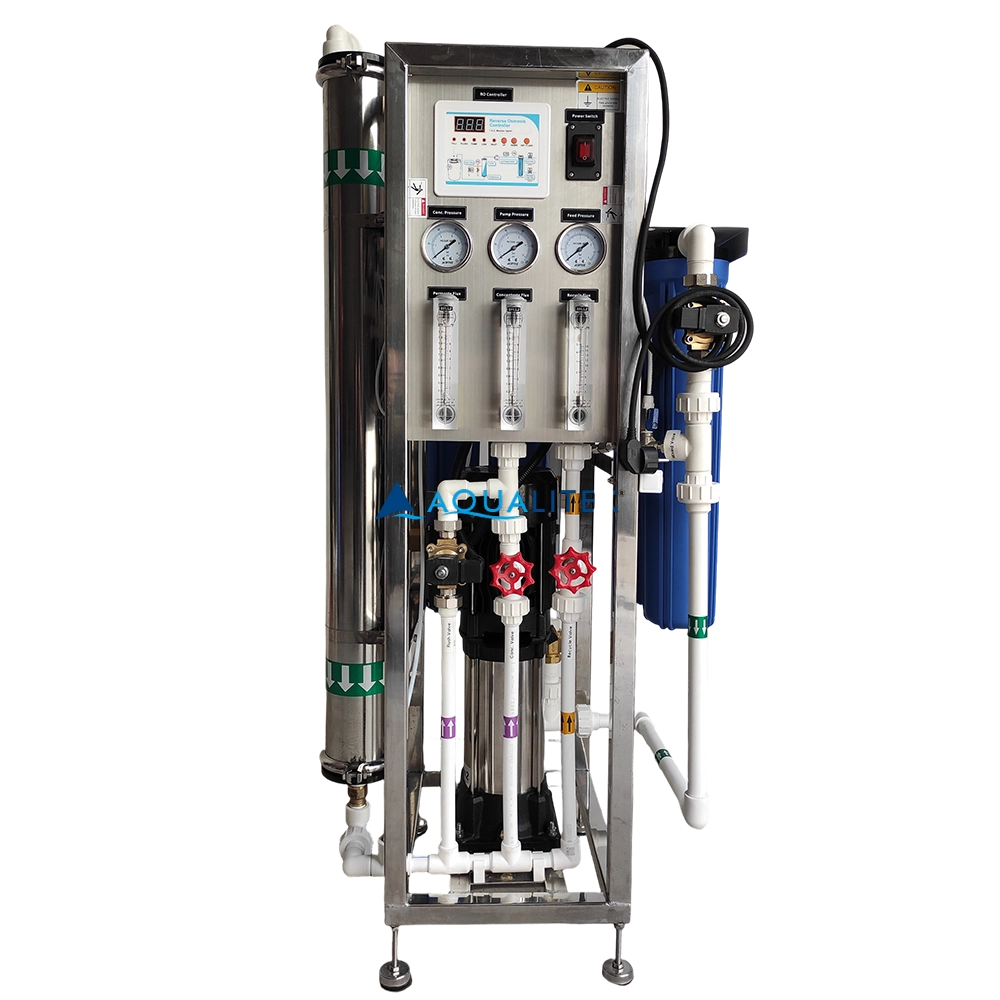
Our 500 LPH Reverse Osmosis (RO) System is engineered to provide high-quality purified water for commercial applications. Designed with advanced RO technology, durable components, and a user-friendly interface, this system ensures consistent performance, low maintenance, and long-term reliability.
With its compact design and robust skid-mounted frame, it’s an excellent choice for businesses that demand efficiency and quality in water purification.
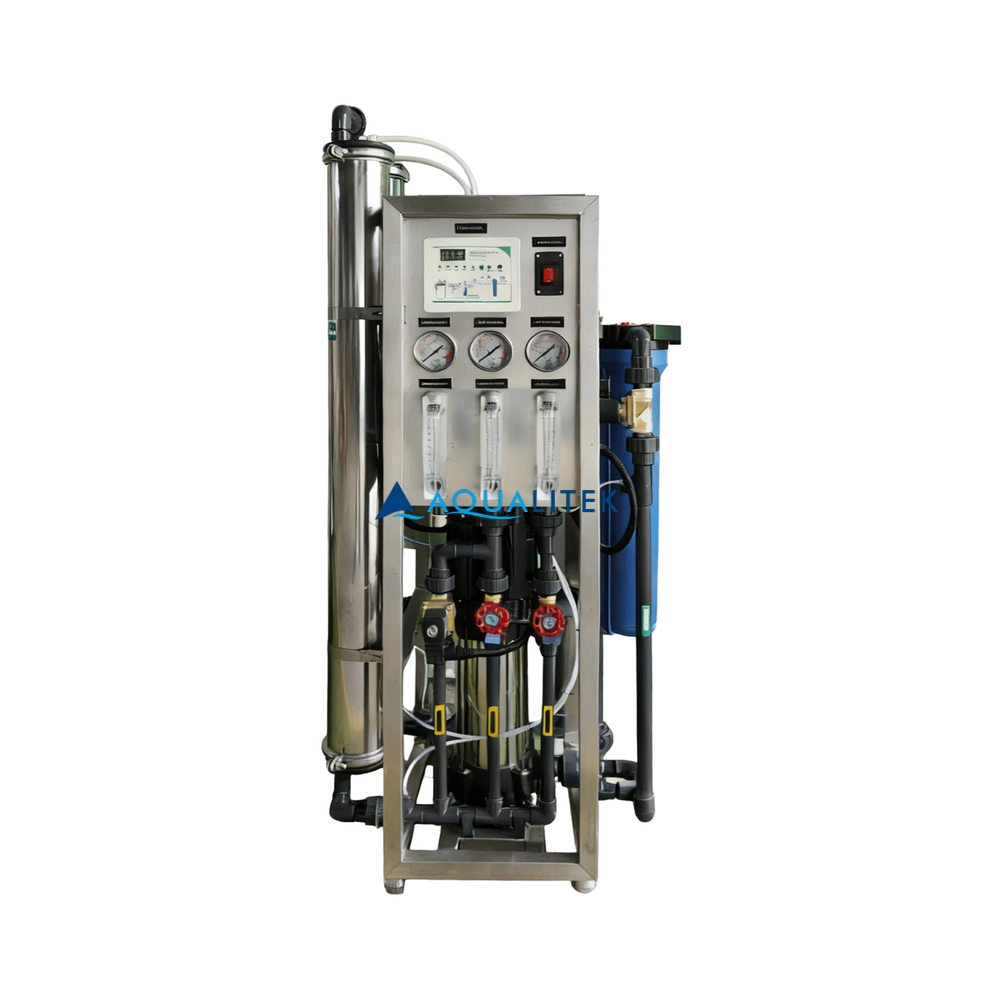
TWV series Reverse Osmosis (RO) systems are pre-engineered and pre-assembled units with 2.5”/4” membrane housings(single element type)for tap water(lower TDS).They are designed for overall superior performance, high recovery rates and offer great savings with low maintenance and operation costs.
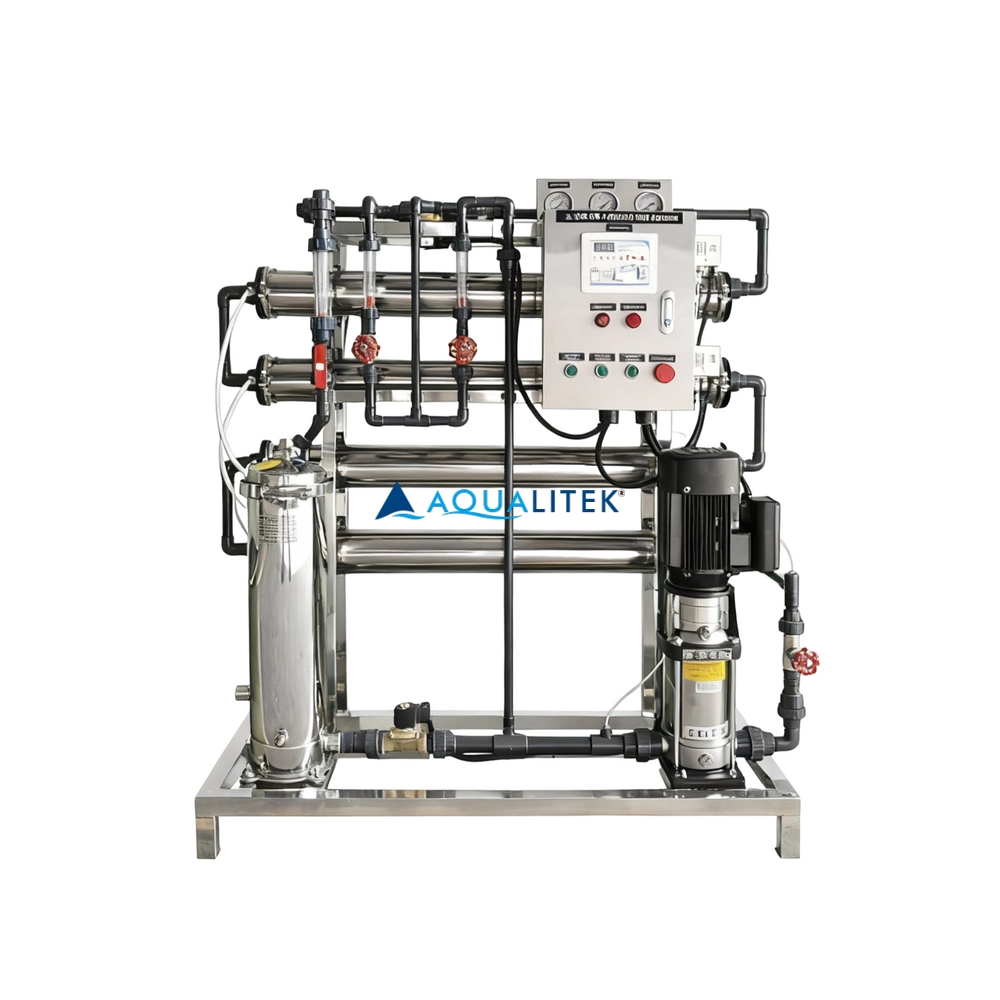
TWF series Reverse Osmosis (RO) systems are pre-engineered and pre-assembled units with 4” membrane housings(multiple elements type) for tap water(lower TDS) .The medium large volumes can help meet your a variety of commercial and industrial applications. They are designed for overall superior performance, high recovery rates and offer great savings with low maintenance and operation costs.

TWE series Reverse Osmosis (RO) systems are pre-engineered and pre-assembled units with 8” membrane housings for tap water (lower TDS). The large volumes can help meet your a variety of industrial applications. They are designed for overall superior performance, high recovery rates and offer great savings with low maintenance and operation costs.
© 2026 AQUALITEK. All rights reserved.
AQUALITEK- Aimee Hoo
AQUALITEK - Aimee Hoo